
November 16, 2026
Mind blown in Karnak.
The Karnak temple complex is probably one of the largest in the world – and certainly the oldest. The site is vast, the structures monumental, the antiquity profound…
Of course, the temple wasn’t built in a day. Most likely, back in early ancient Egyptian times there were already some religious buildings here, which (alas) haven’t survived to present day. The internet tells me that construction of the surviving structures began during the reign of Pharaoh Senusret I – that is, almost four thousand years ago! – and that the work was completed under the Roman emperor Domitian, somewhere around the start of our modern era – the one counted from the birth of Christ.
In other words, Karnak took around two thousand years to build! It wasn’t all done to a single plan, of course – all sorts of other structures kept being added to the existing temple buildings. And of course, construction wasn’t entirely continuous either. But still – TWO THOUSAND years of construction for one temple! In that span of time, many other historical sites get built, fall into ruin, and are forgotten forever – whereas here it’s merely how long the work took from start to finish! Monumentally colossal…
Why am I going into so much detail about all this? Well, simply because an inner Egyptologist might just awaken in one of you; or in your kids – if you show them this text. And who knows – maybe they’ll go on to discover something more here, amazing themselves and delighting me too with new facts and revelations about ancient Egypt.
But I seem to be writing too much; it’s high time we looked at some pictures. It’s just insanely magnificent here!…
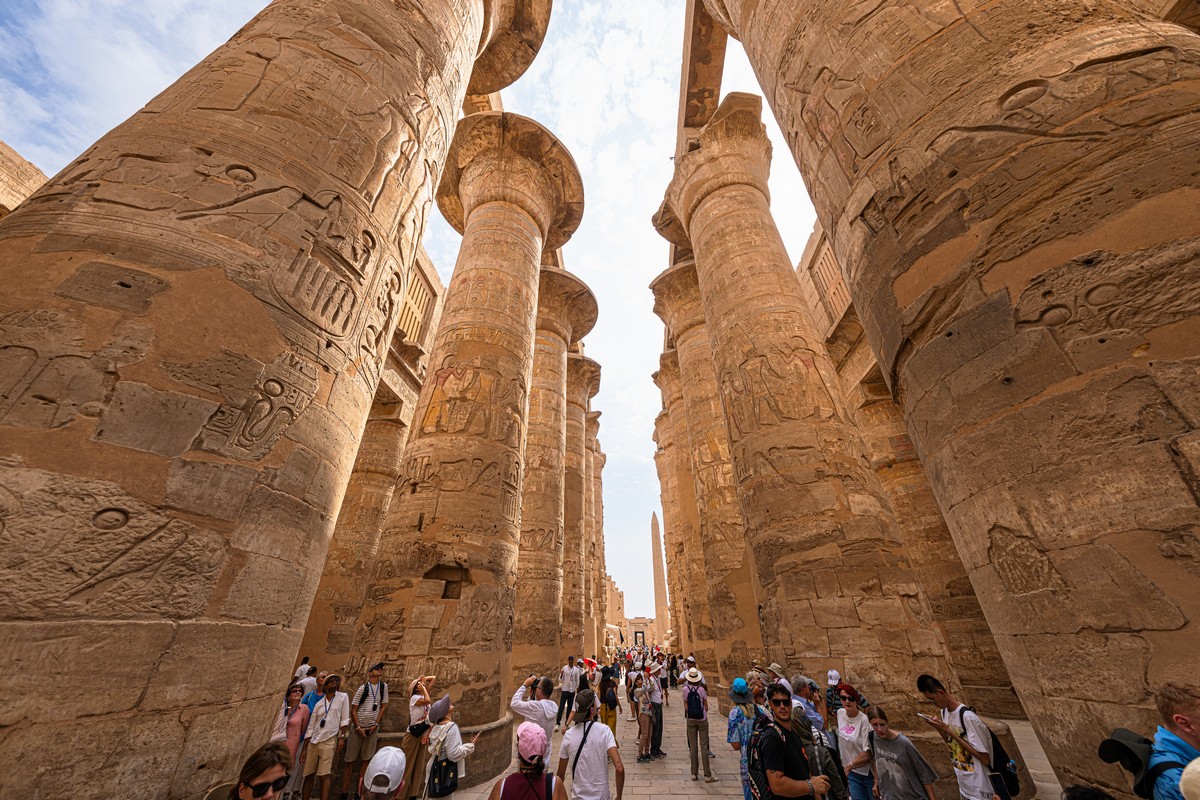
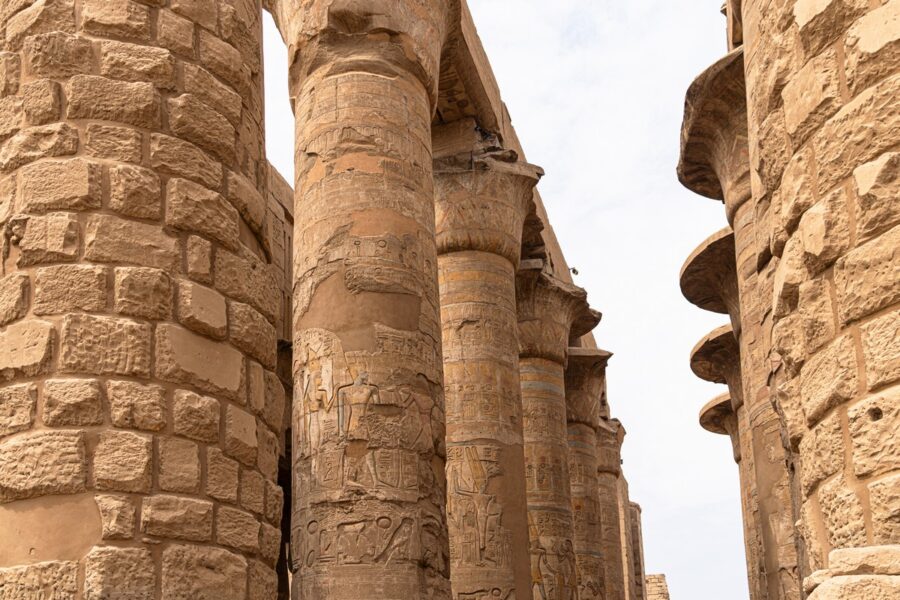
The colonnades are so enormous that looking up at them from below makes your head spin…
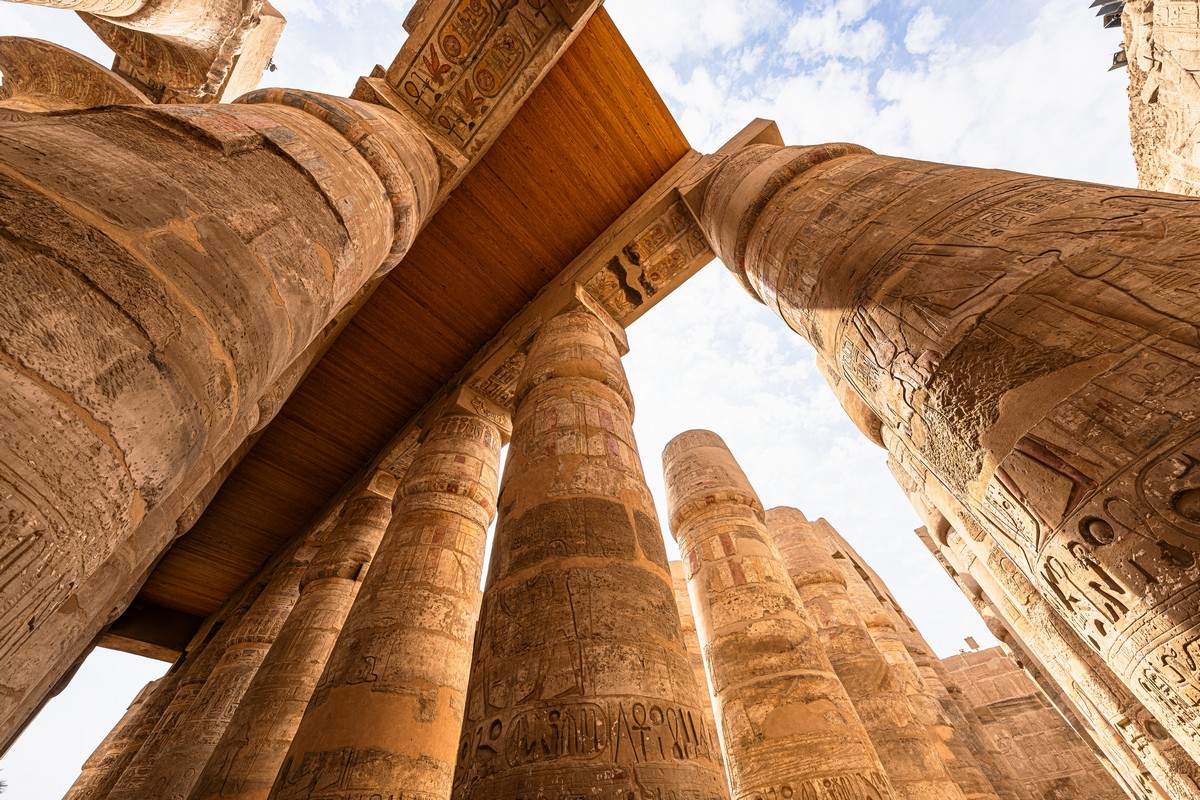
Carved bas-reliefs, inscribed messages of some kind – all at least two to three thousand years old!
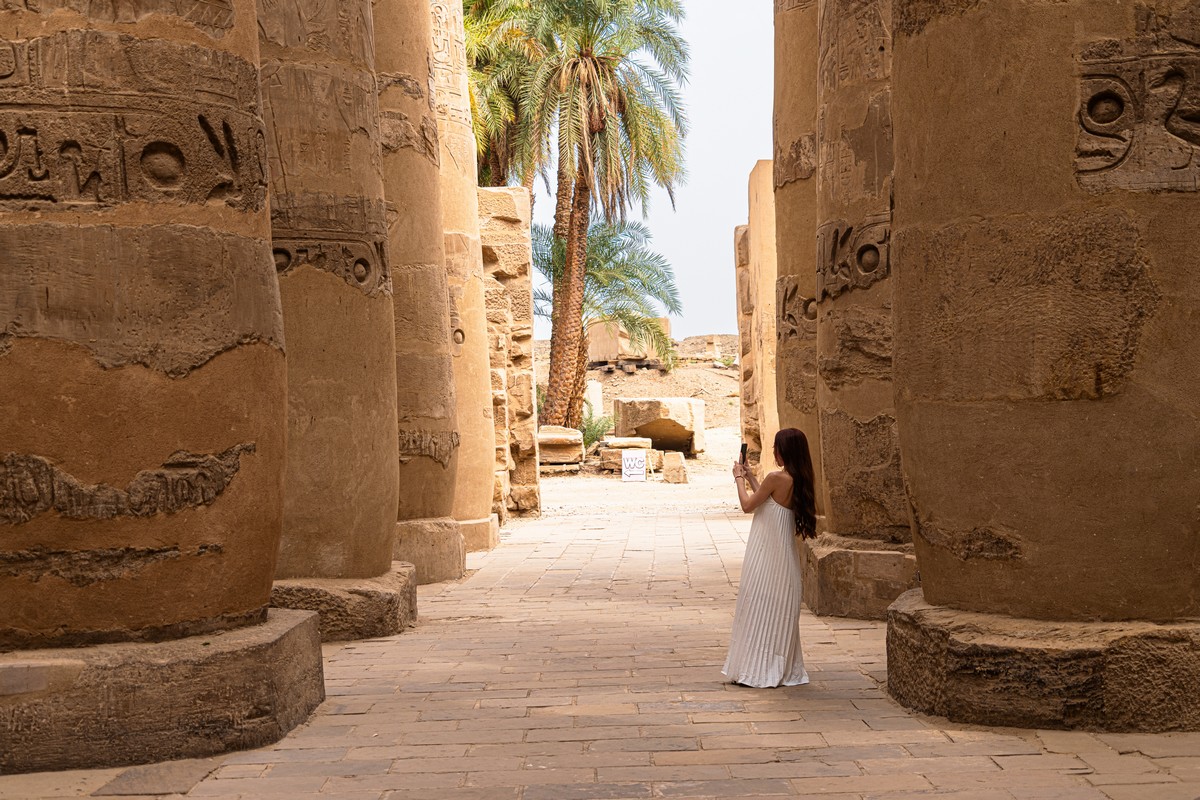
To give you an idea of the size and scale, let’s have a lady stand next to the columns:
The grounds of the temple complex are pretty sizable, and there’s plenty of interesting stuff beyond the partially restored buildings too:
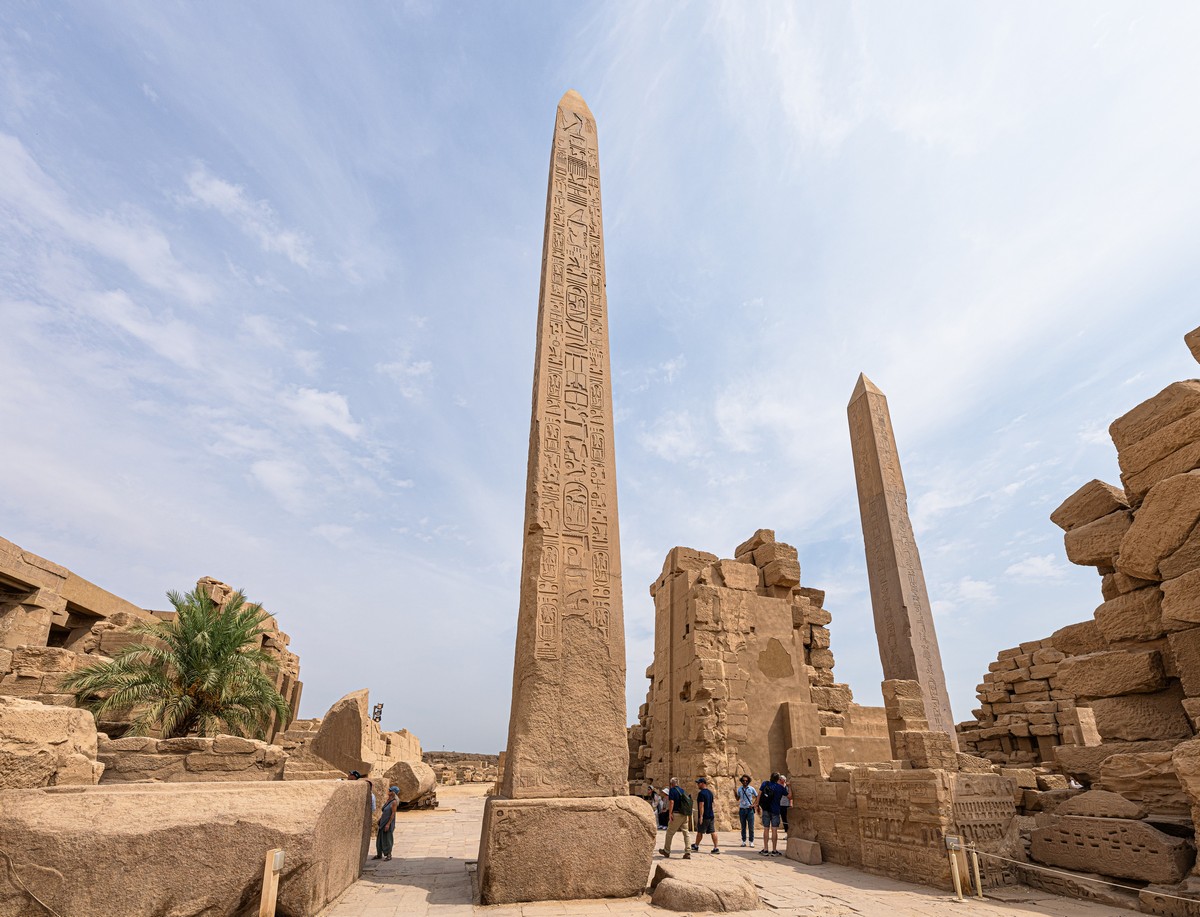
I never worked out what order the Karnak temple structures were built in, or which side they let the tourists in from – the main entrance or some side one. Not that it matters.
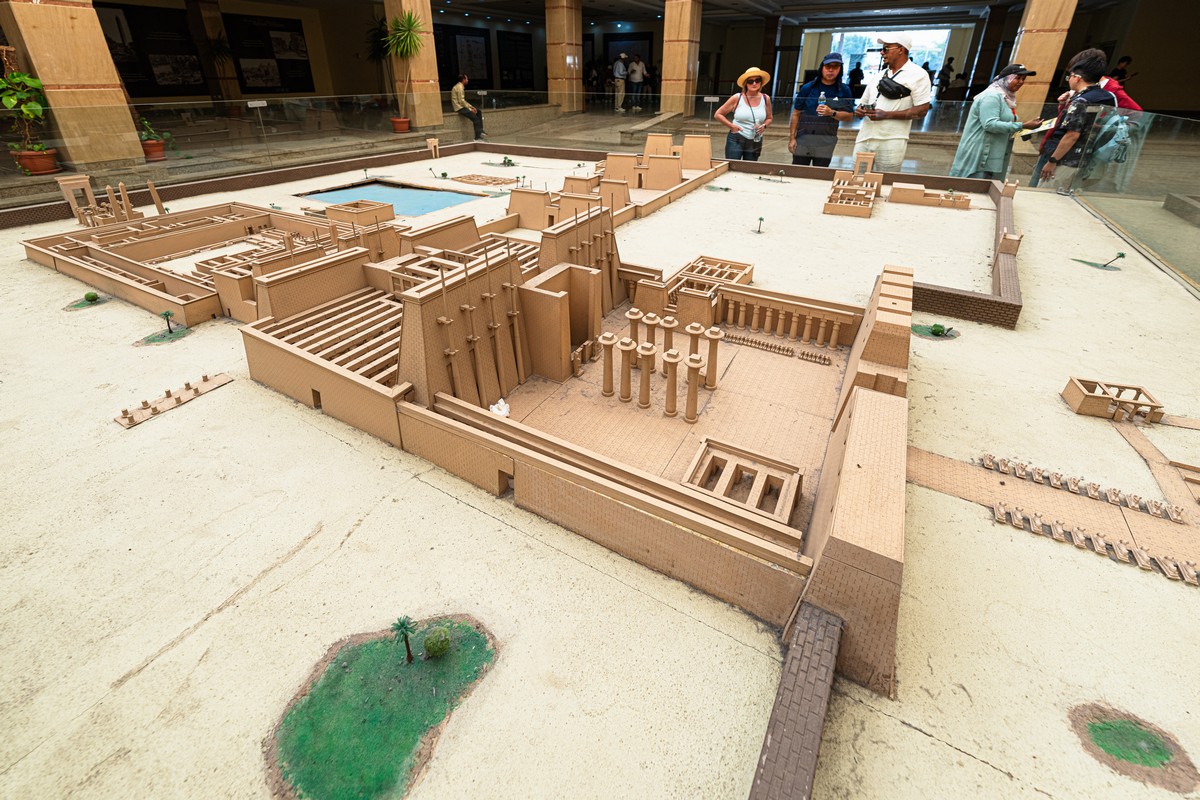
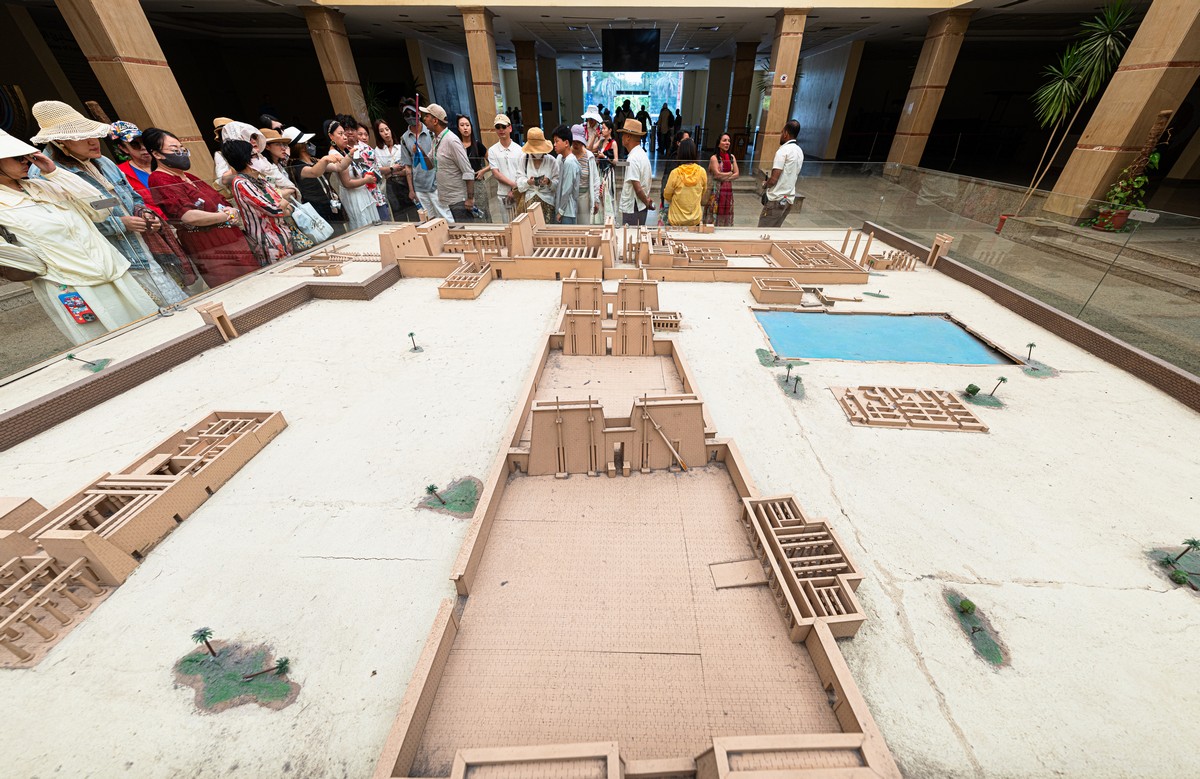
On the map of the complex, the tourist entrance is at the bottom right, and the route heads up and to the left – through the monumental walls and on toward the courtyard with the columns:
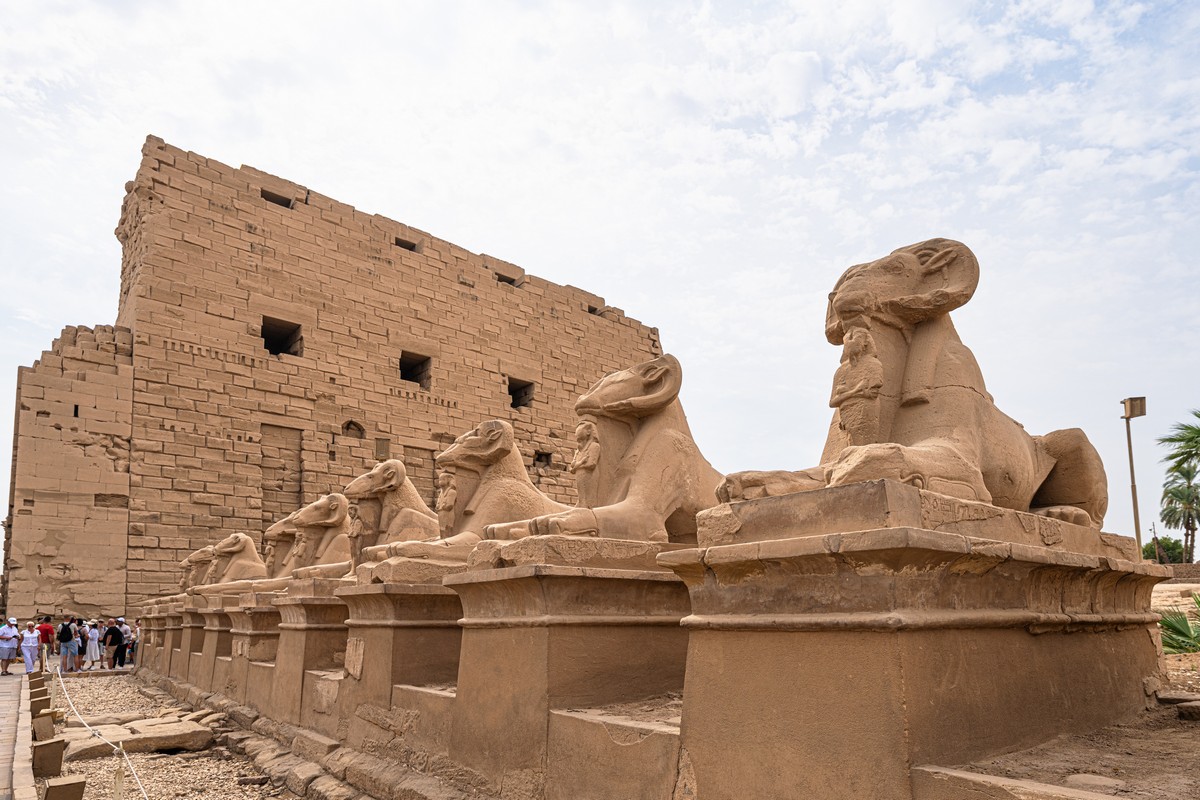
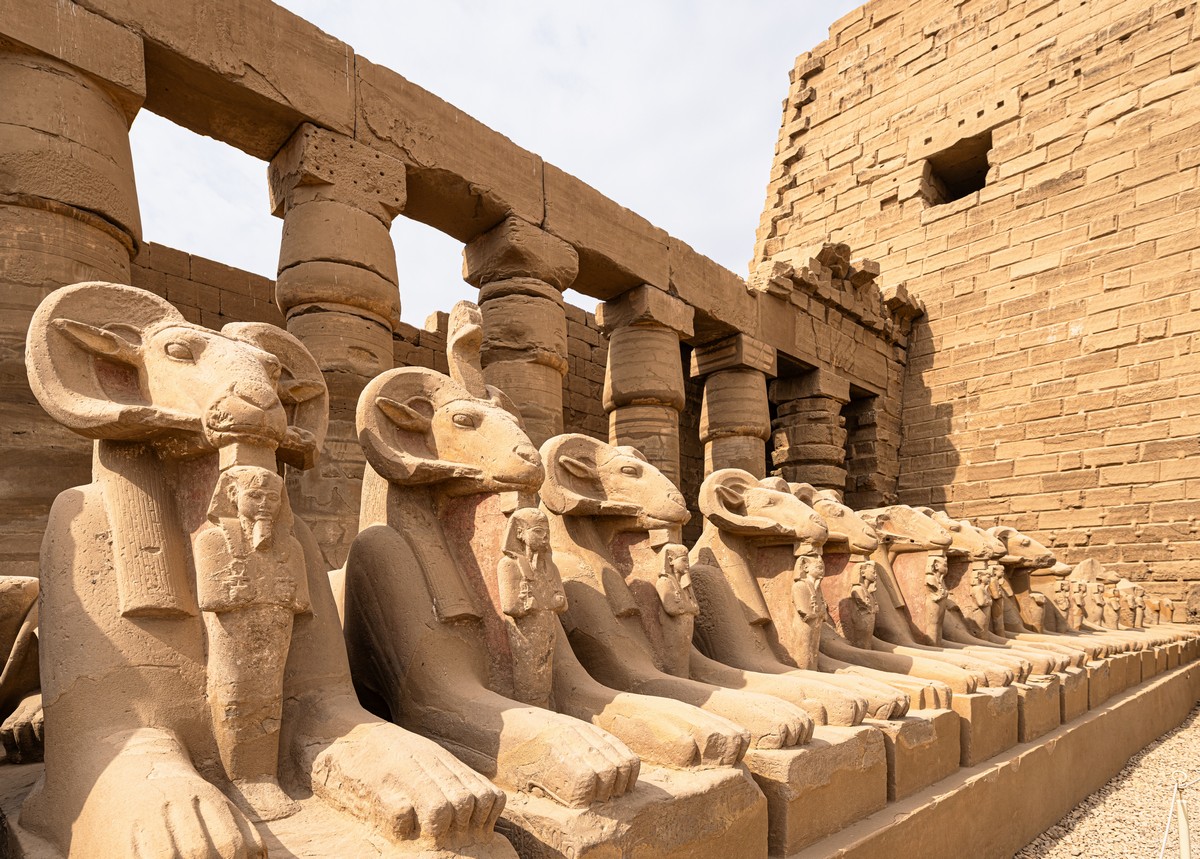
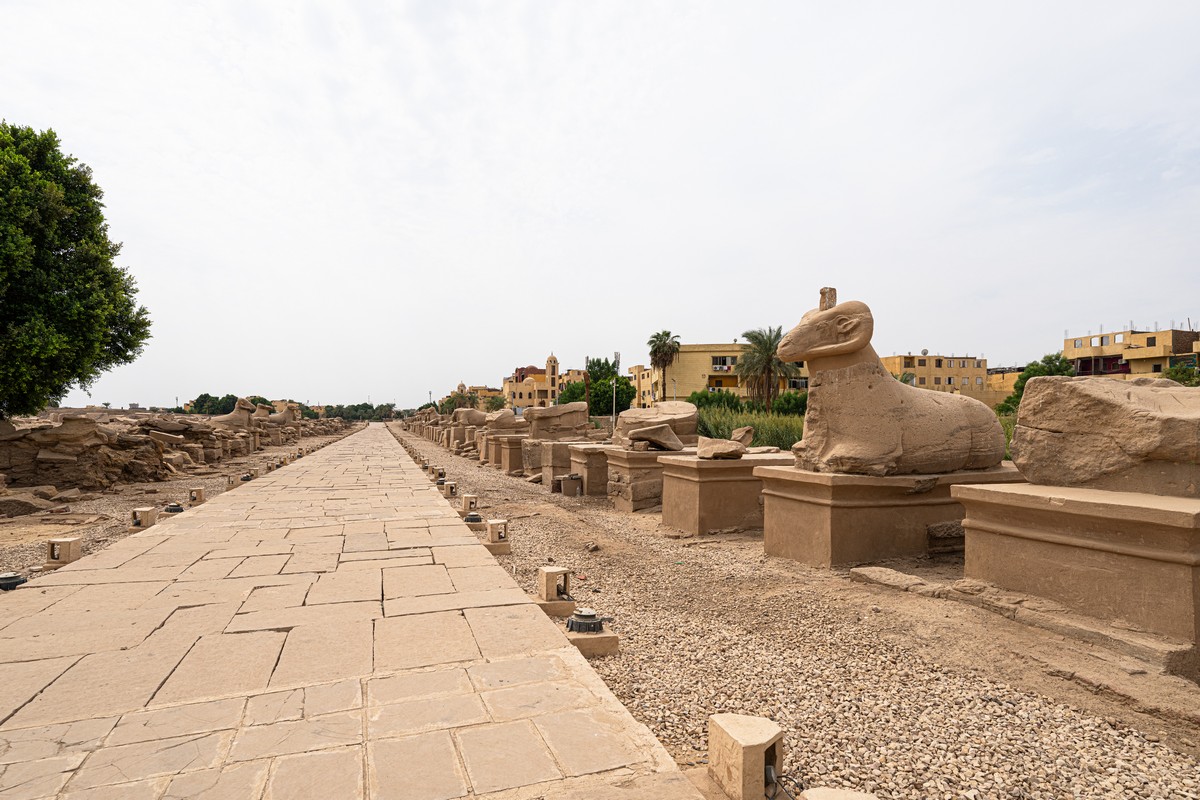
The way in takes you past ram-sphinxes like these, which in Greek were called criosphinxes. How come? I haven’t figured that out yet…
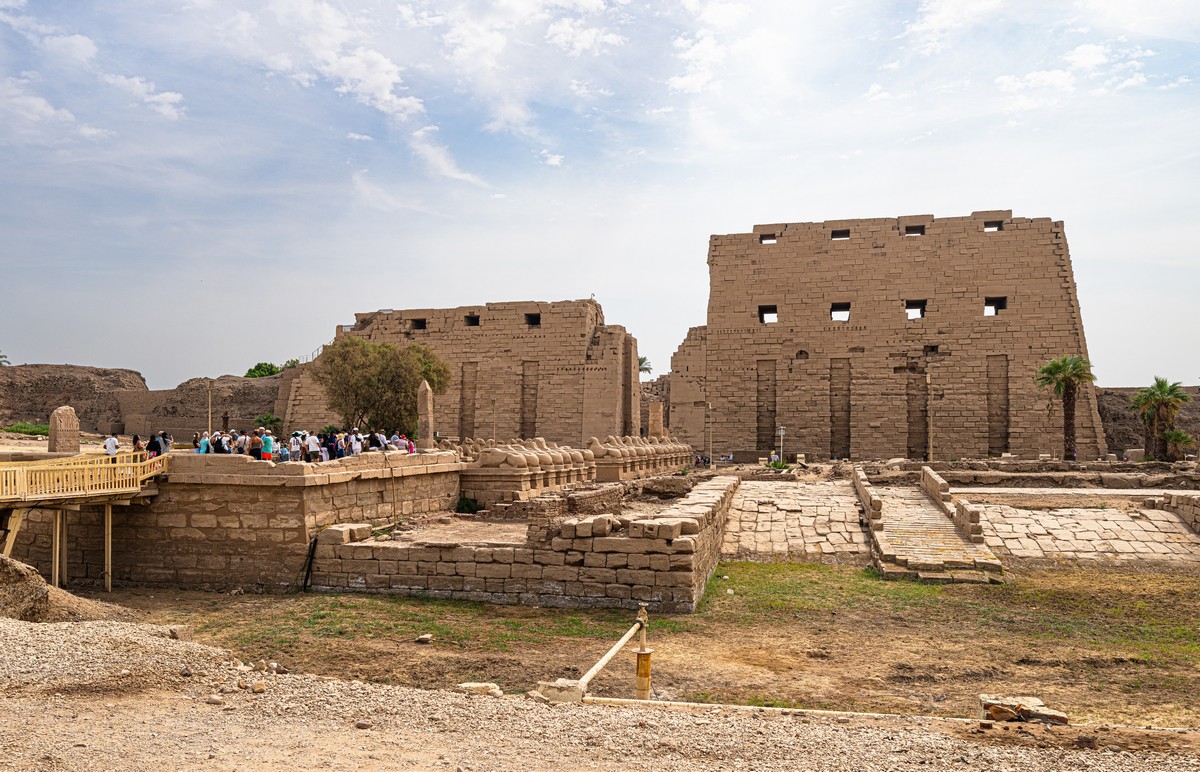
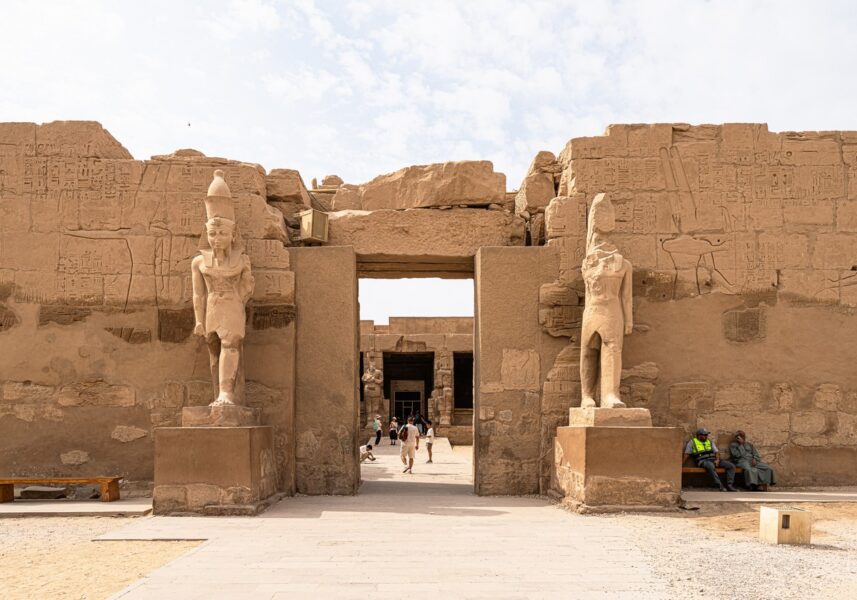
In we go – through a gateway in this here wall:
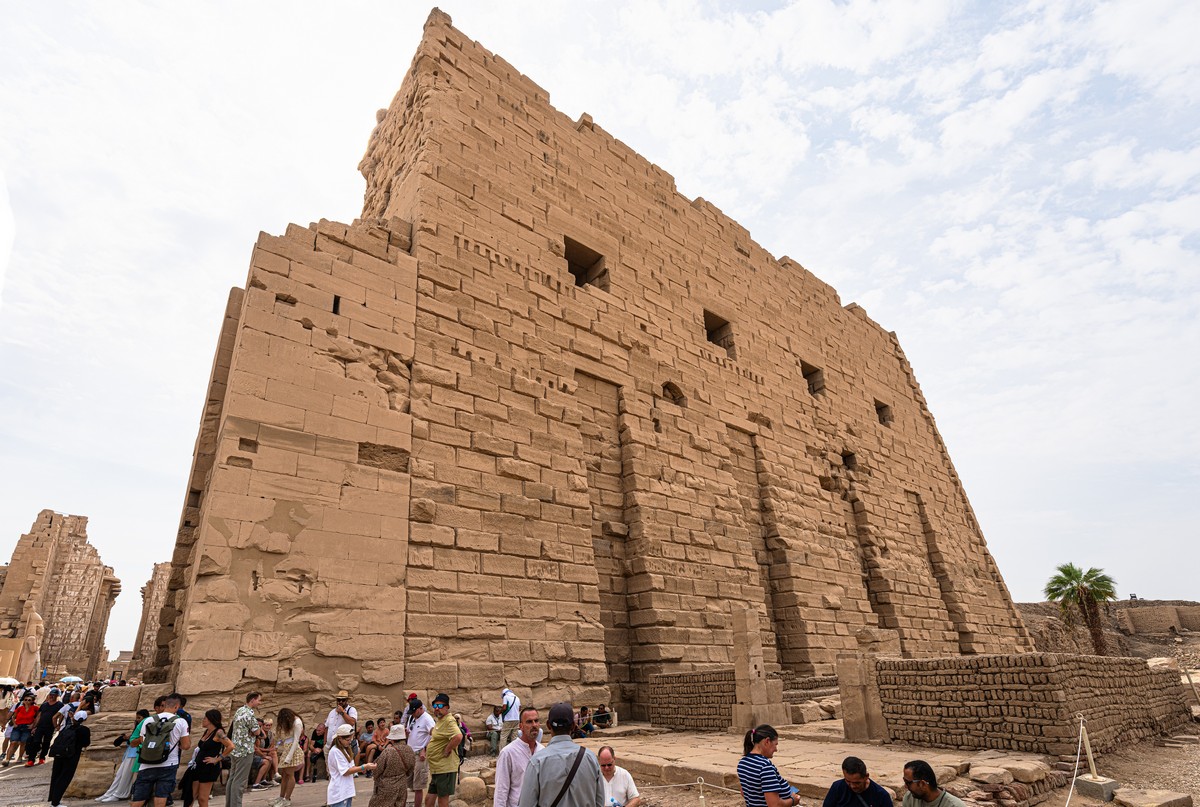
Apparently, thousands of years ago there really were full-height gates standing here:
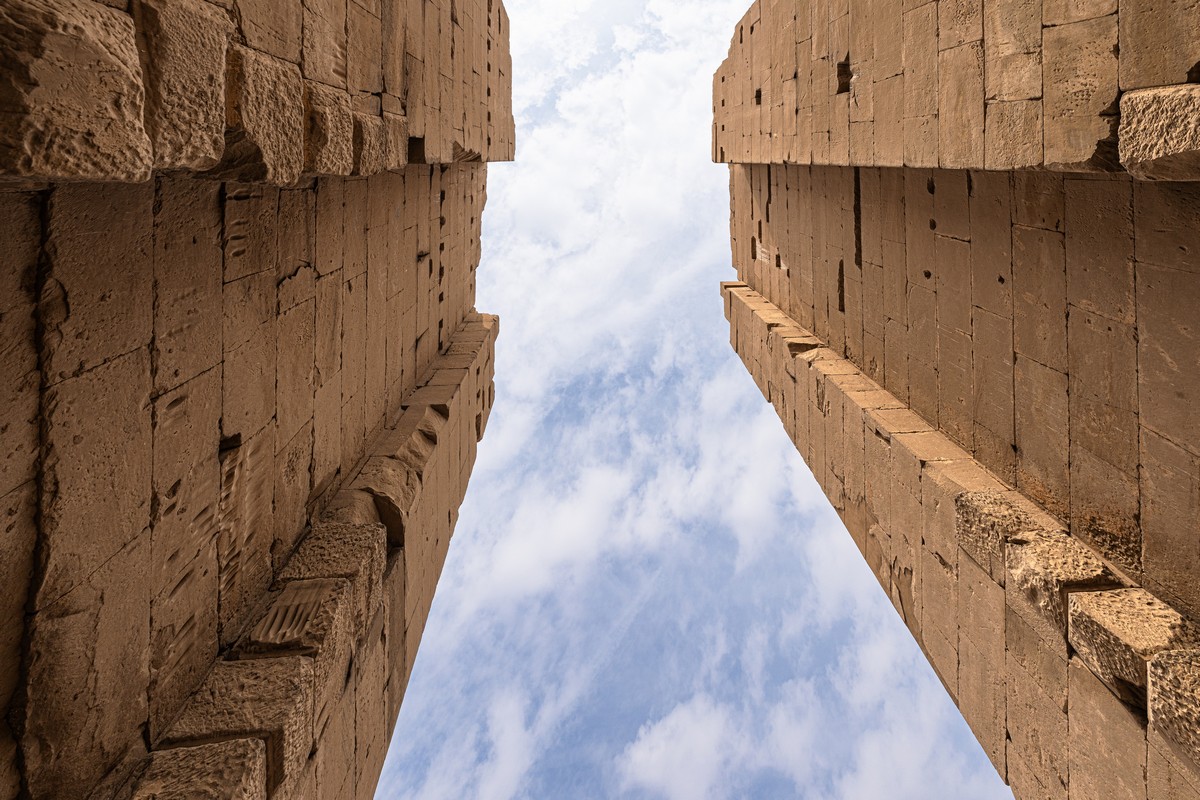
And then we were inside the temple buildings.
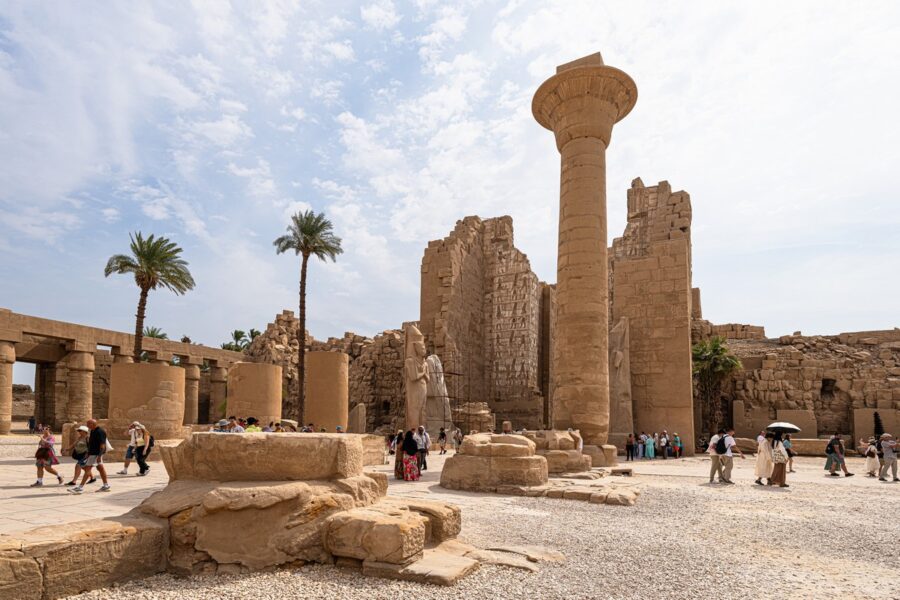
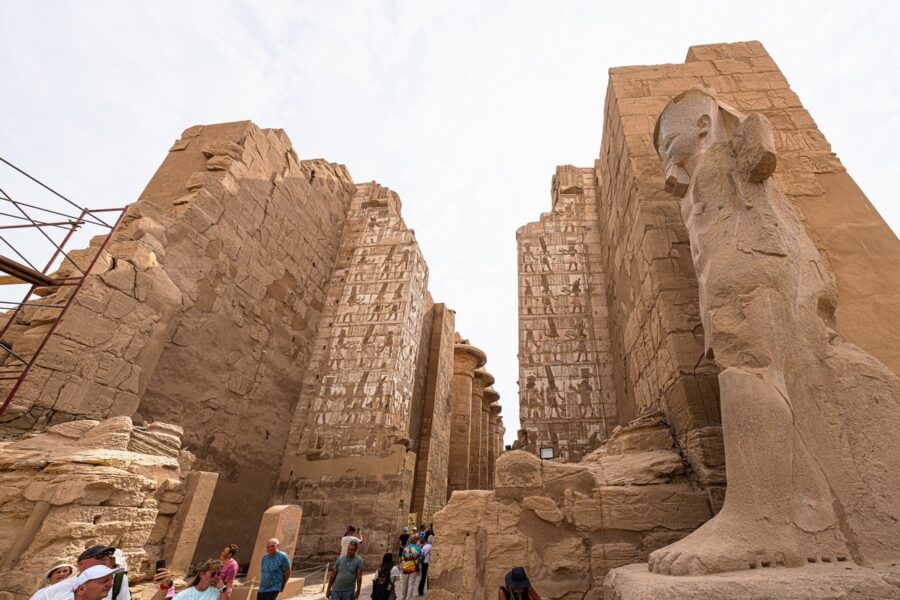
Aha – criosphinxes again: a perfectly matched set, like on a store shelf. I very nearly guessed what they’re all about, but more on that a little later…
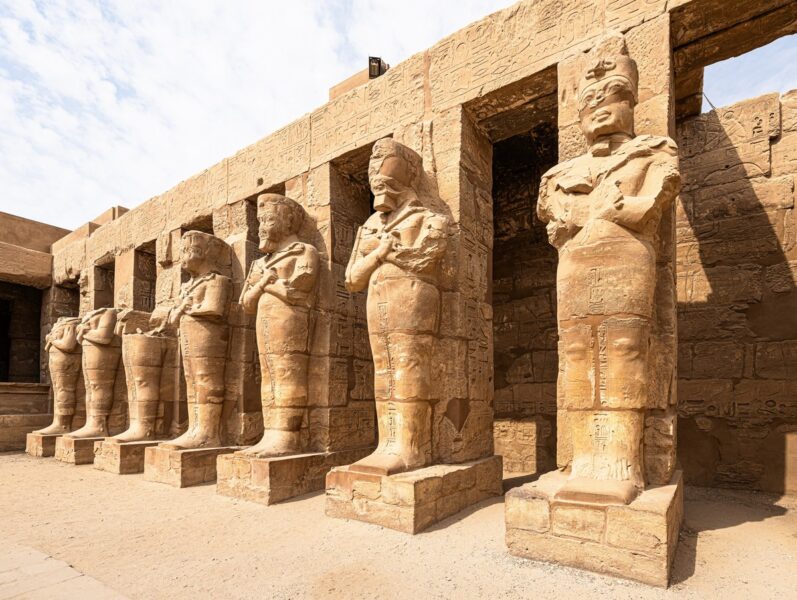
Before moving on to the main sights, a certain amount of acclimatization is needed (or decompression: call it what you like). To the right of the entrance courtyard there’s a smallish, somewhat puzzling temple annex. Our guide didn’t always keep his story straight, so he can’t be trusted. And I couldn’t quickly find any coherent information about this historical site on the internet either (plenty of fibs there too), but many accounts claim that it’s the mortuary temple of Pharaoh Ramesses III, built around 3,200 years ago. Three thousand two hundred years ago!
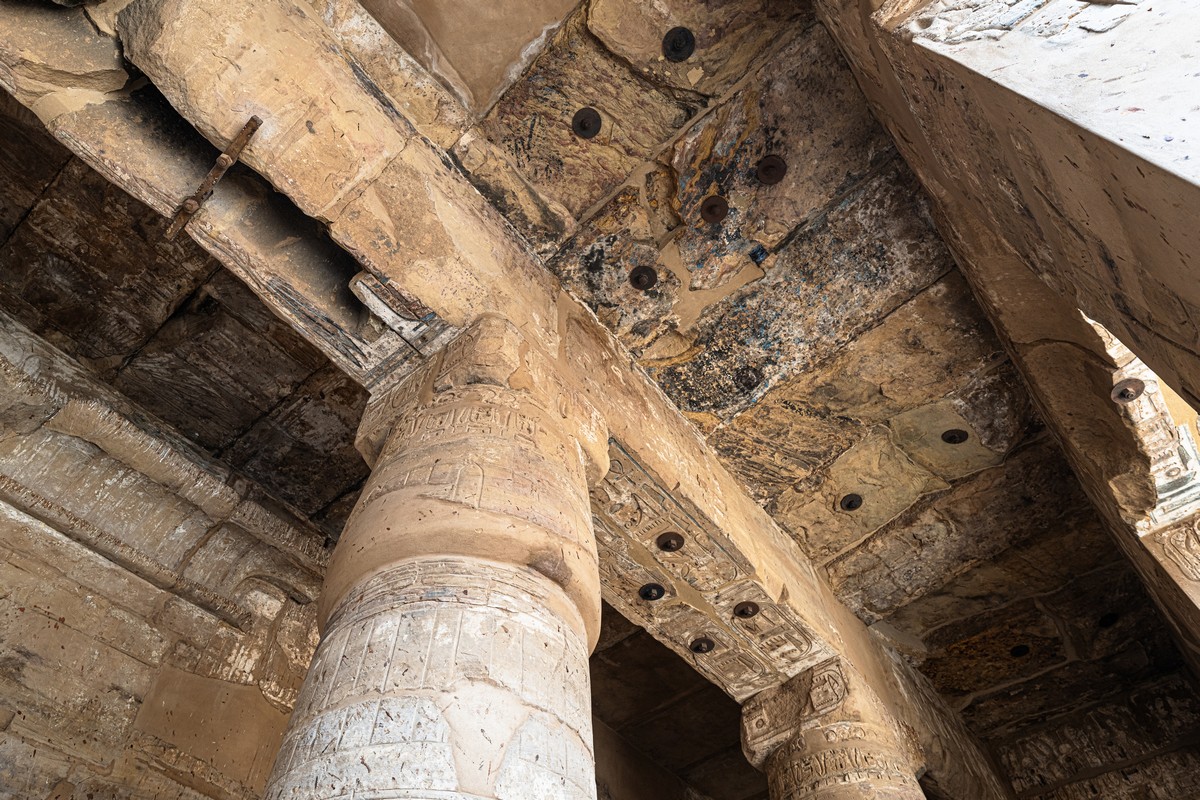
Alas, the roof had to be reinforced with modern technology:
And now for the “main courses”! We headed deeper into the temple complex. First up, the Great Hypostyle Hall, measuring roughly 100×60 meters:
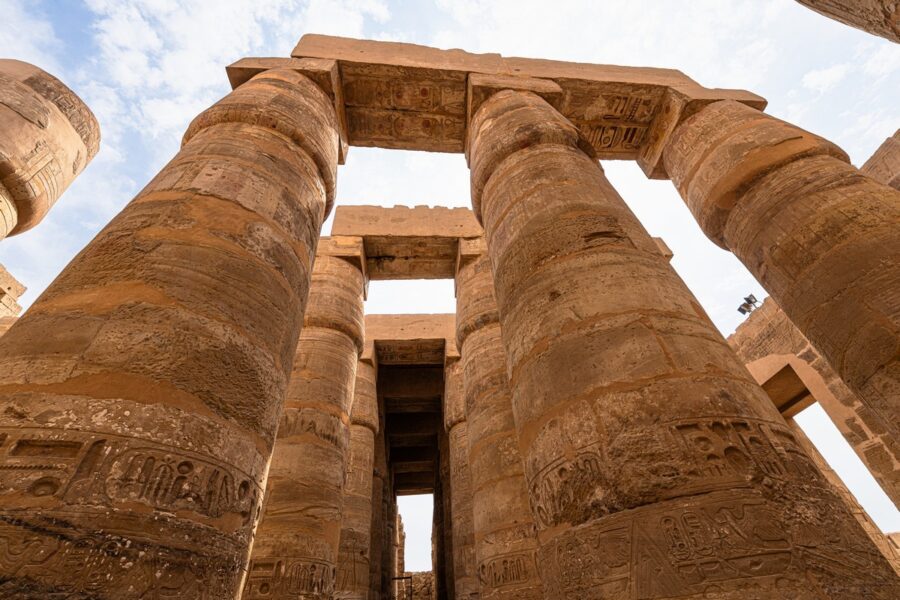
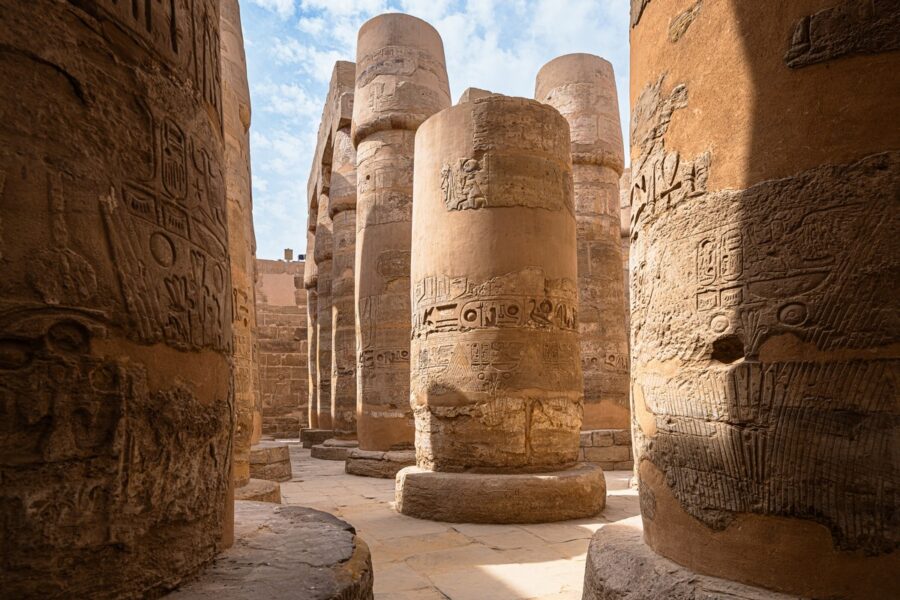
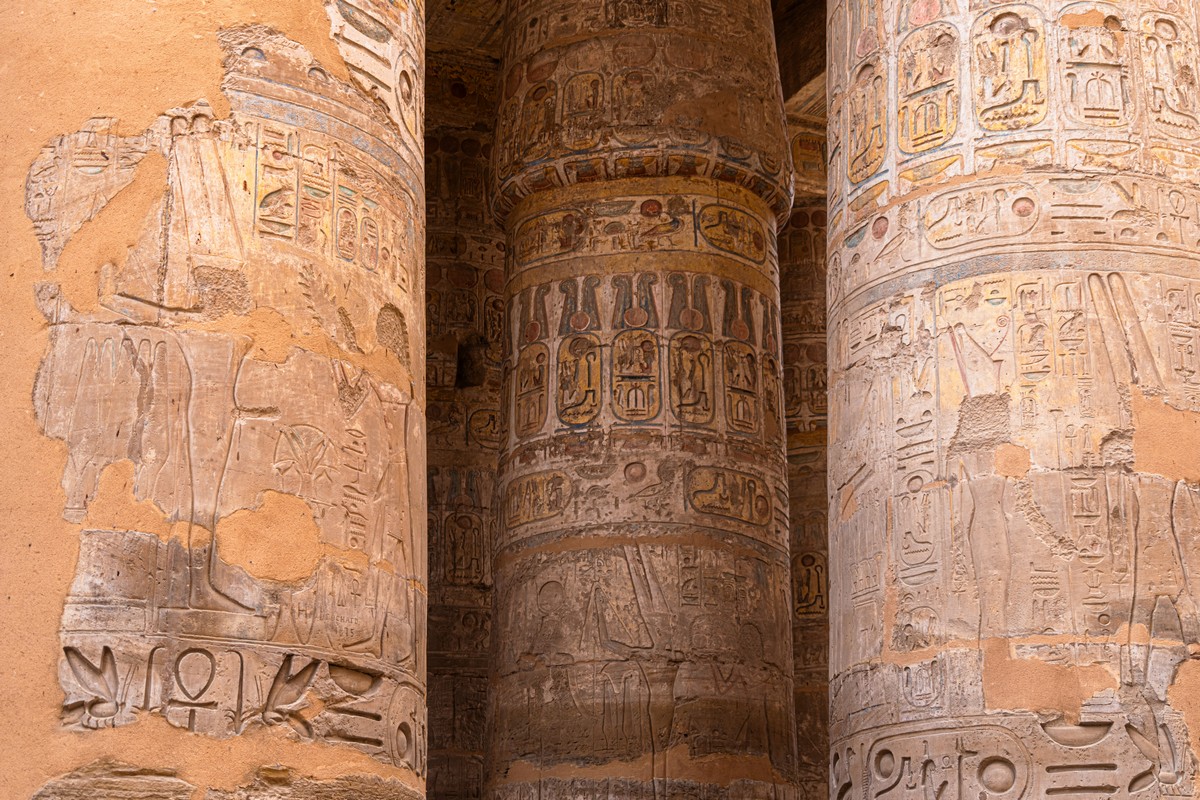
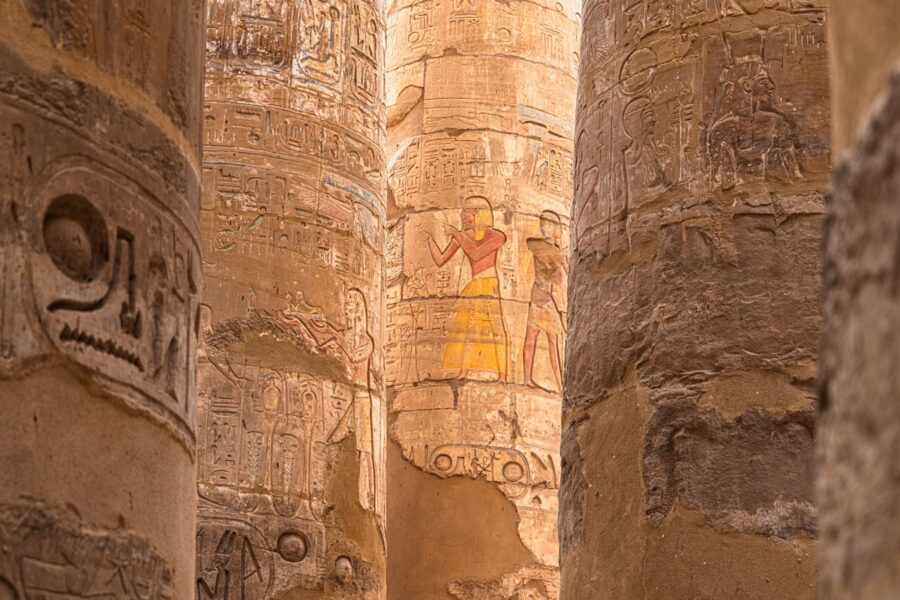
And all the walls, the columns, everything, is covered in bas-relief pictures and texts from those times:
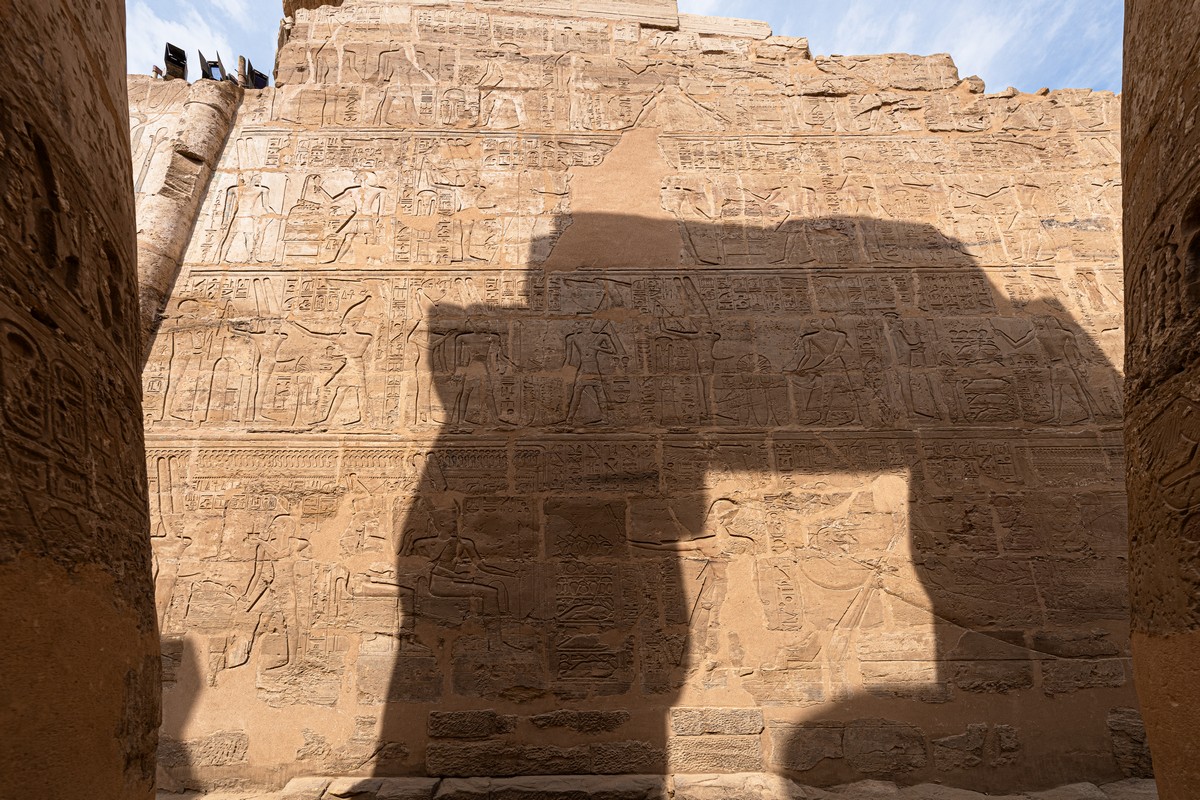
And so on – you just wander and wander, gazing and gasping…
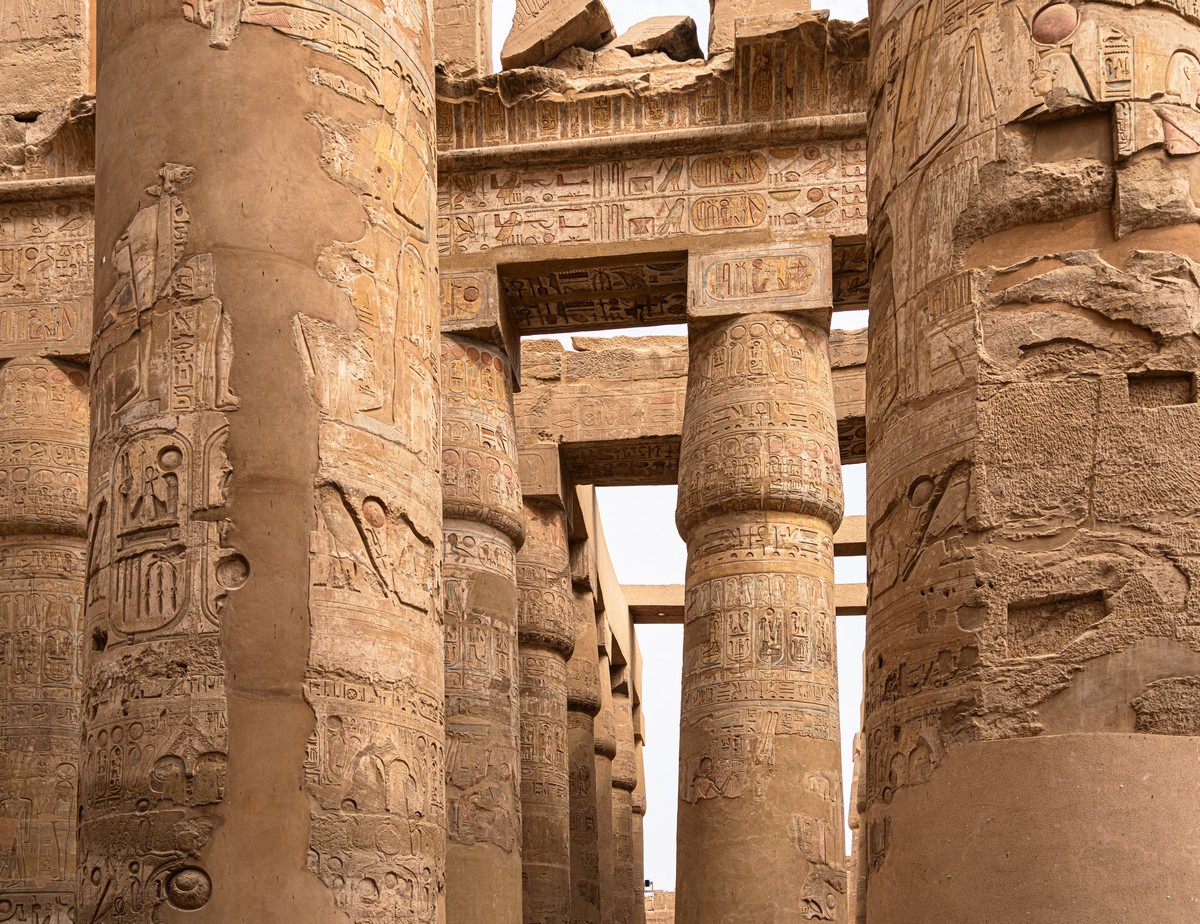
The next hall is apparently called the “Sanctuary of the Sacred Boats”, though quite what it is I’ve yet to find out. What I did find out was that this is where the famous Egyptian granite obelisks stand:
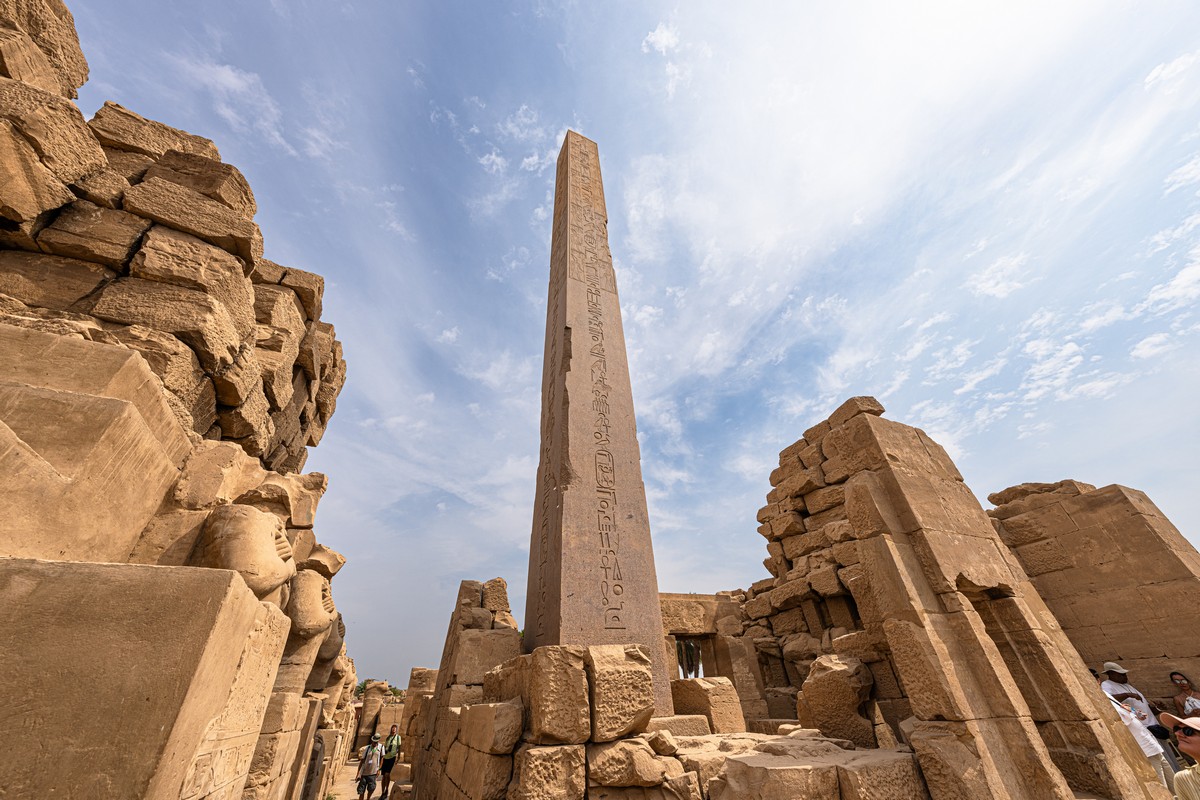
Just how many such obelisks were carved and erected in ancient Egypt, nobody knows. Our guide assured us there were more than two hundred, though the internet reports several dozen. It probably comes down to what you count as an obelisk and where you set the height cutoff – what qualifies as an obelisk, and what’s just a tall hewn stone. That must be it.
What’s more, most of them were taken out of Egypt – a mere five or six remain in their homeland. And nearly all of those are in Luxor.
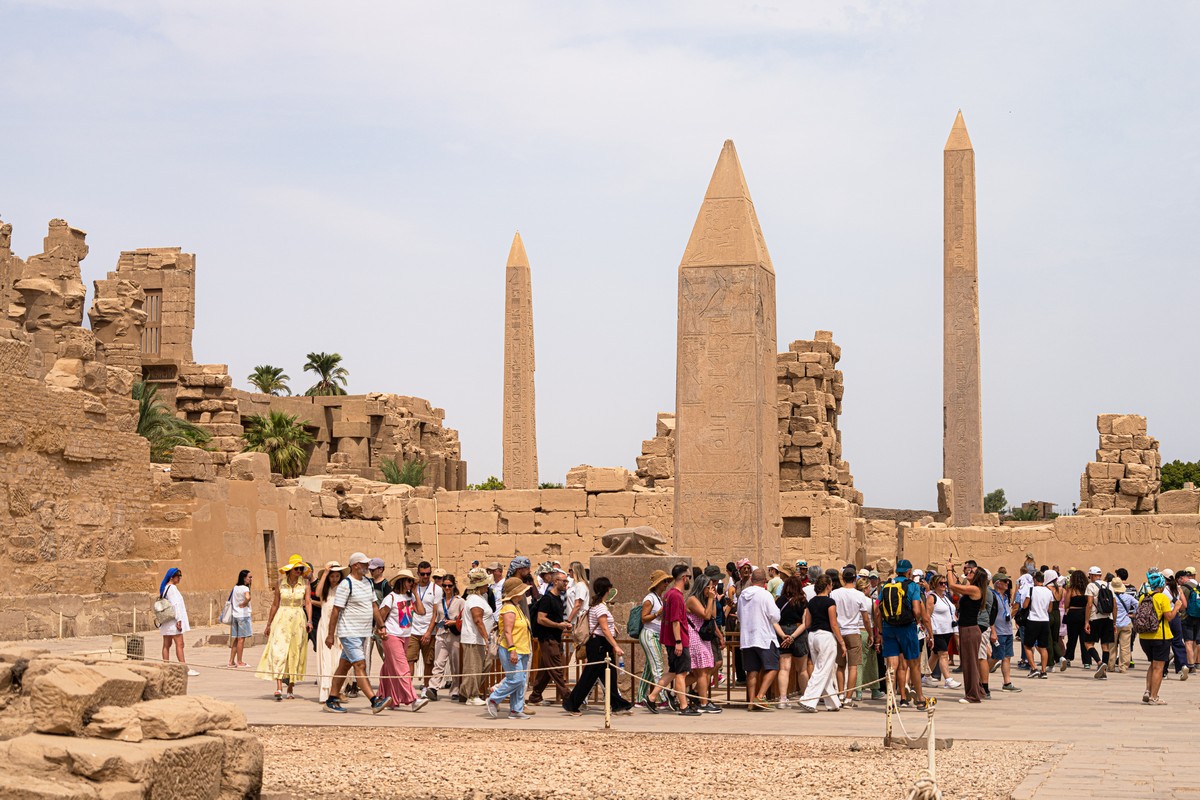
For the most part, the obelisks are pretty sizable – 20–30 meters tall:
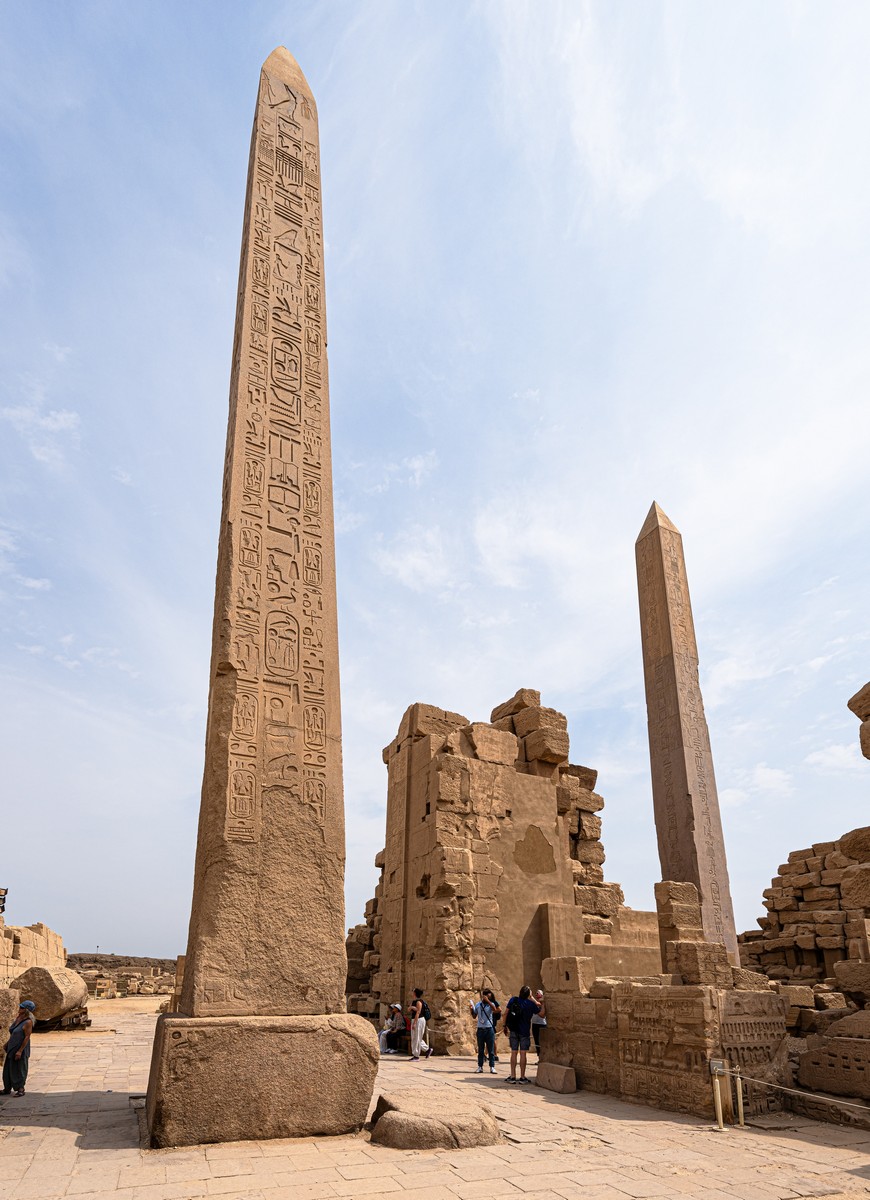
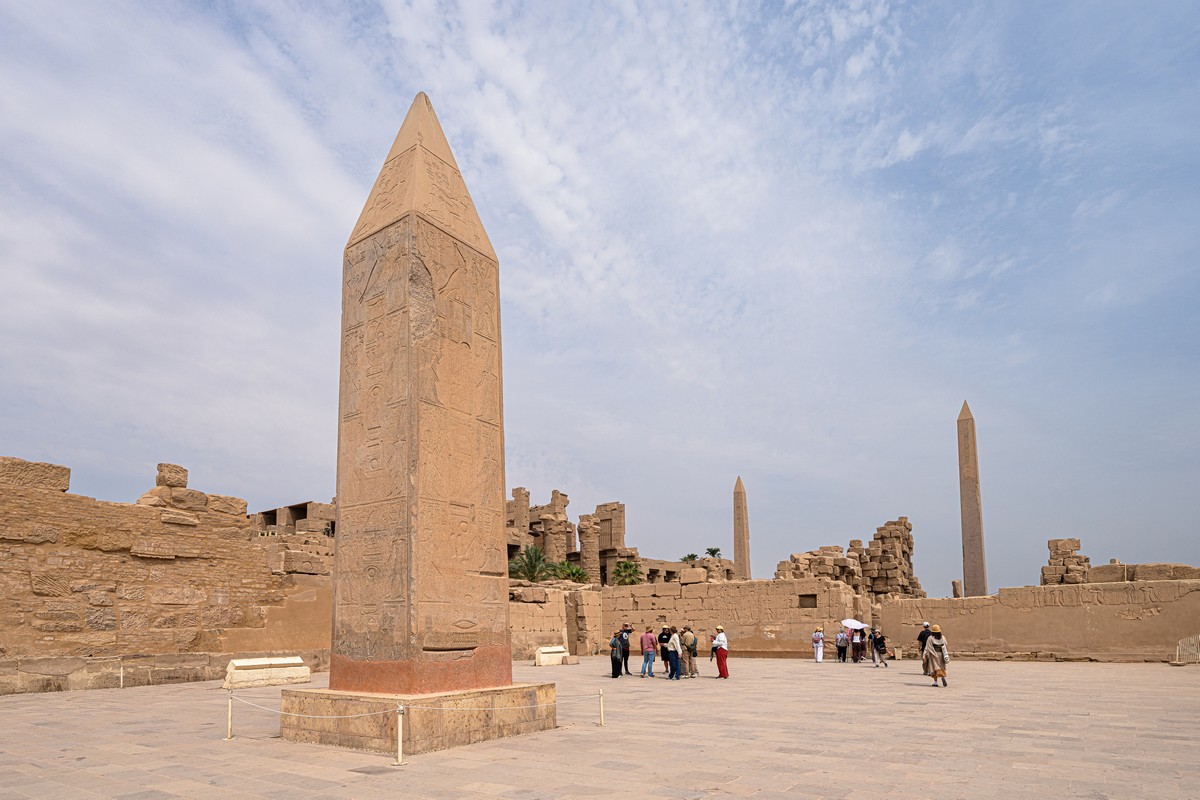
Others are vertically challenged:
On a granite pedestal stands a statue of a scarab beetle, which was a sacred symbol in ancient Egypt. Our guide fed us a line about the beetle being sacred because it will help the god of darkness break free of the earth and… destroy the whole world. I’ll leave that one on the guide’s own karma. The beetle was sacred for entirely different reasons.
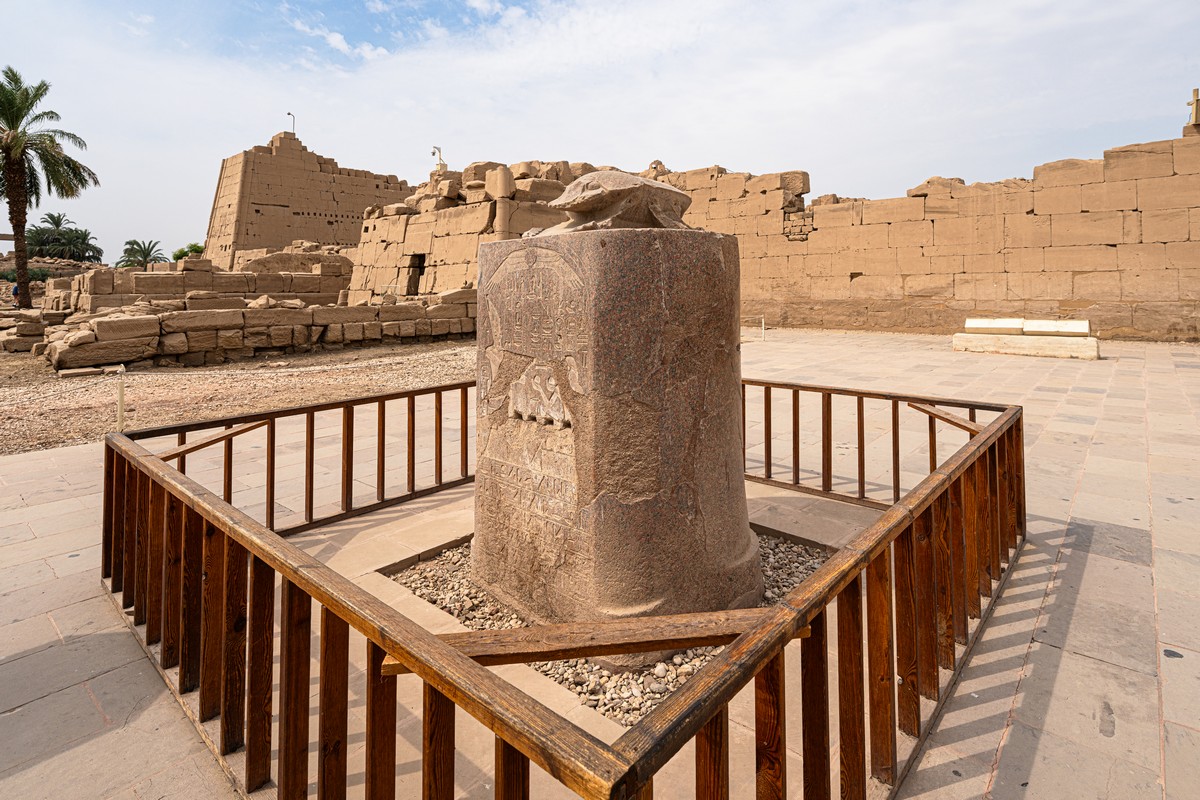
The second story from our inventive guide however I’ll tell in full…
There’s a tradition of walking unhurriedly around the beetle monument seven times counterclockwise, and as you do you make a wish that’s bound to come true. In this pic, tourists are busy doing just that:
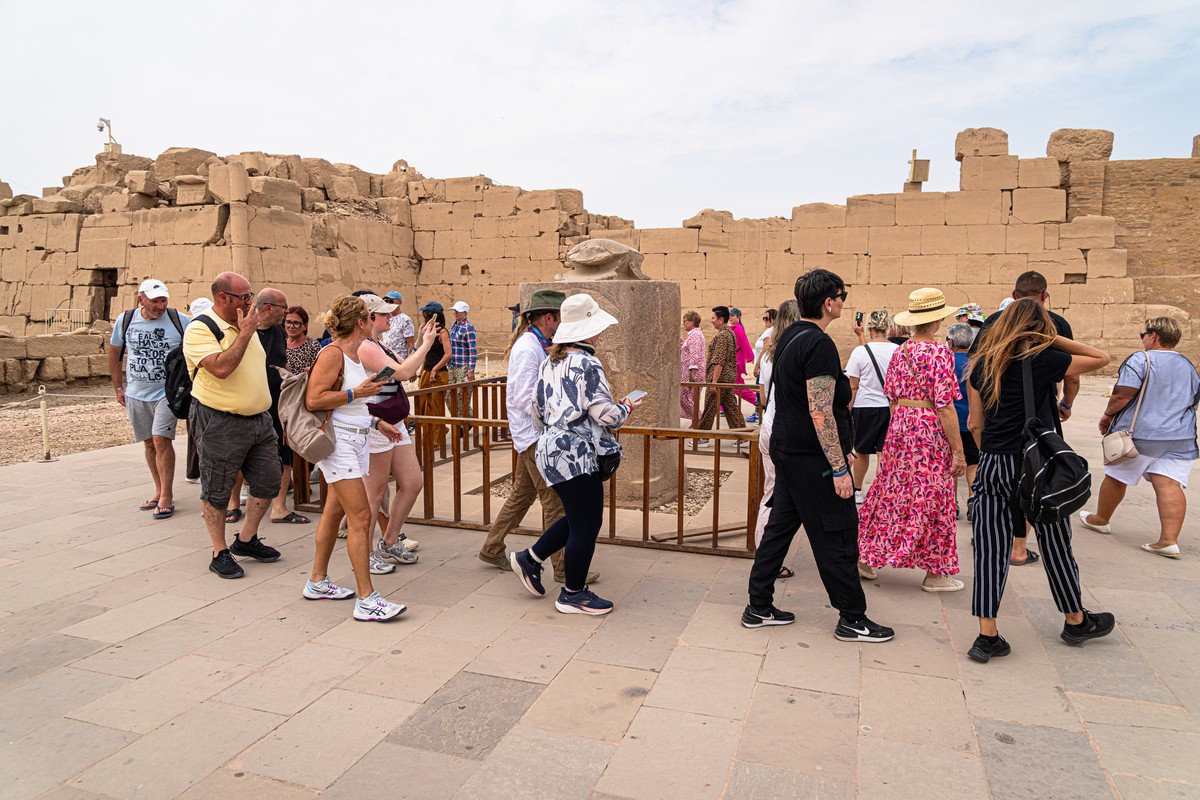
We were told that this superstition was invented in 2003, and here’s how it came about. A local guide was showing a group of French tourists around, but the guide was nursing a hangover since he’d been out on a bender the night before. All he wanted was a cigarette and a cup of coffee, but the tourists kept pestering him with questions and demanding more information (fancy that?!). So the crafty guide led them over to the scarab statue and told them that if they walk slowly around it seven times anticlockwise and make a wish the wish will come true. So the trusting tourists promptly set off, counting their laps around the scarab – and the guide had just enough time for both a smoke and a coffee 😊.
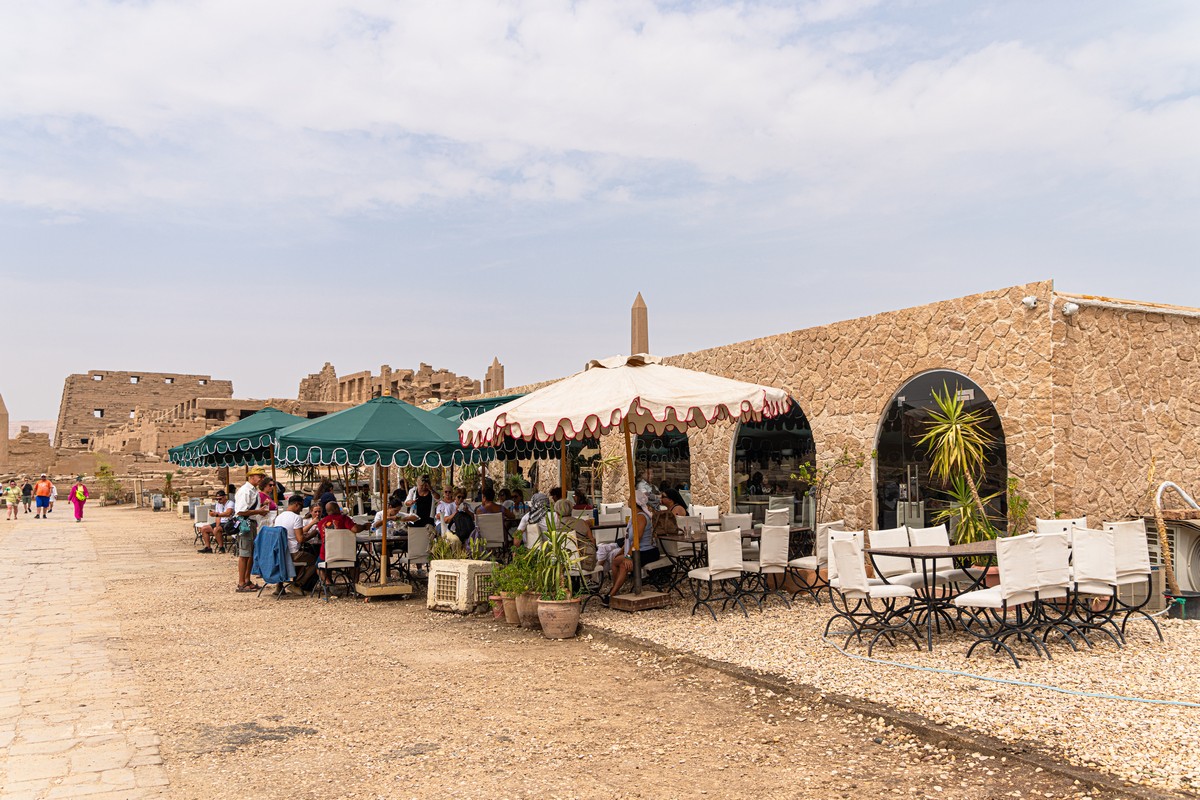
And here’s the café where that coffee was purchased from! ->
Meanwhile… ->
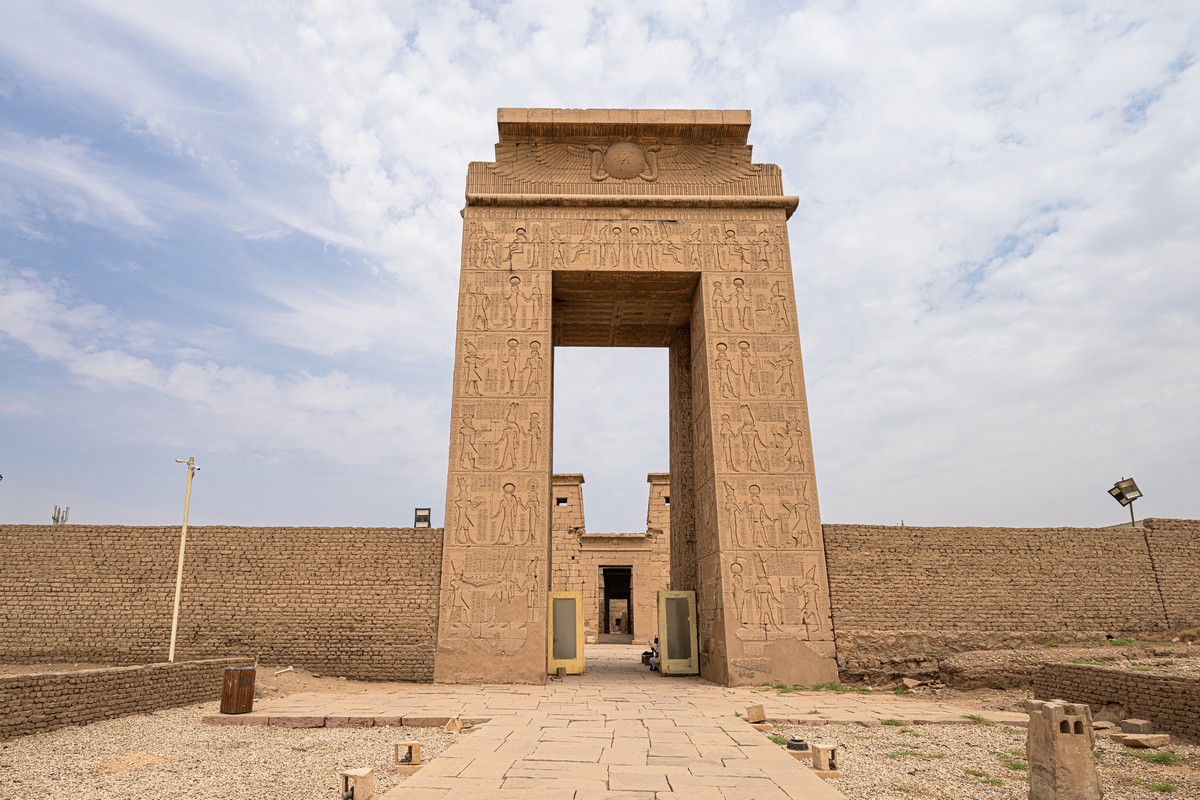
There are places in the complex where you can wander off the standard tourist routes. Take, for example, the second gate into the temple, which was built later on, under the Hellenistic Ptolemaic dynasty (Alexander the Great, satrapies, and all that – from the 300s BC right up until being swallowed up by the Roman Empire somewhere around the year zero). These structures are every bit as mighty as the ancient Egyptian ones, yet were built about a thousand years later. Which says a lot about the scale and capabilities of pre-Hellenistic Egypt.
Note: in the middle of the 3-D map there’s an entrance complex from around 2,300 years ago, while to the left and a little higher up are the old gates, which are 3,000+ years old.
Here’s the newly restored road that once connected the two temples – Karnak (where we are now) and Luxor (where we were in previous post). And the sphinx figures here have rams’ heads only:
Head back the other way, though, and you find yourself among completely different temple structures:
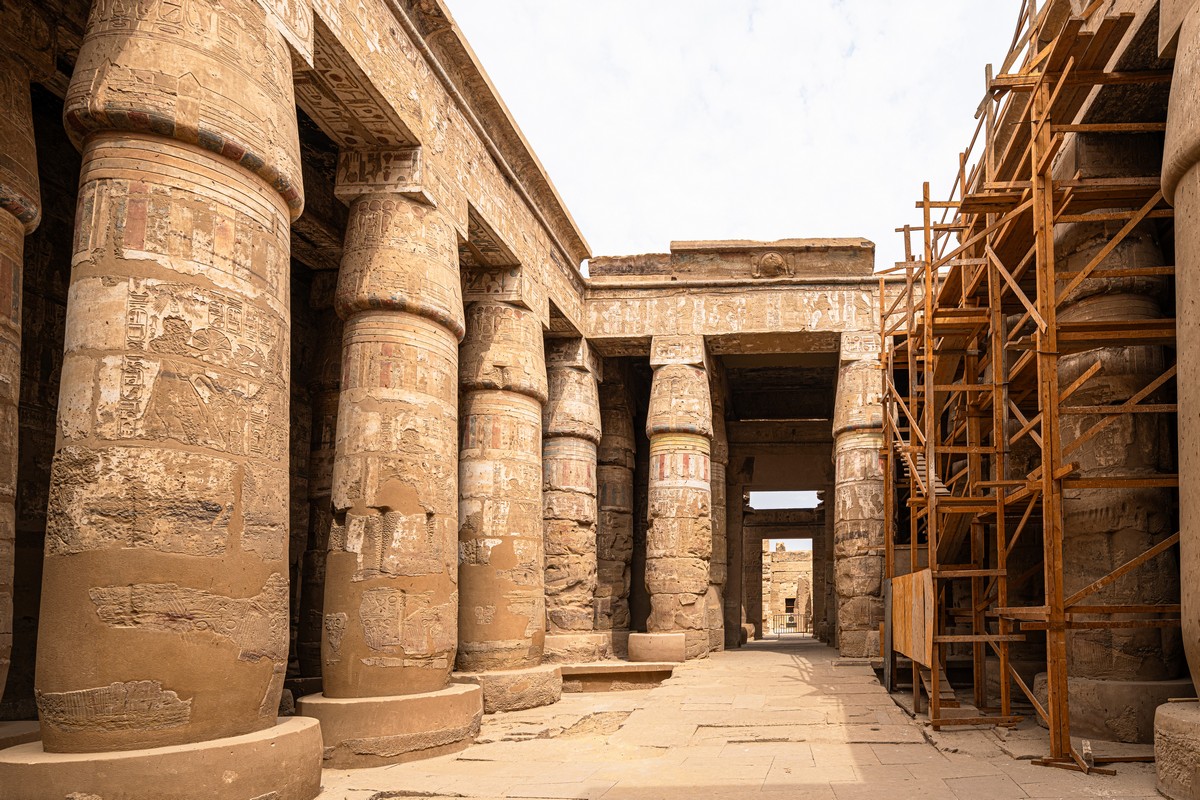
Restoration work is still underway here, so the way through is closed:
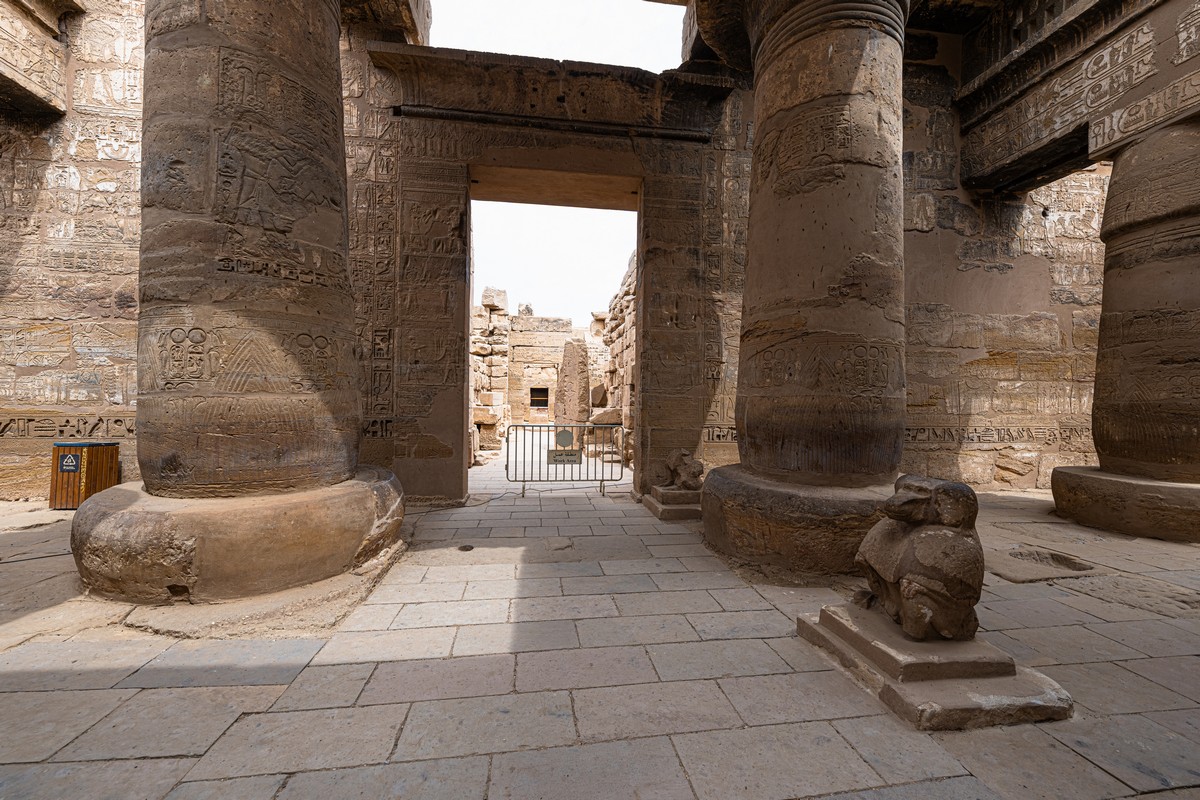
Magical. Monumental…
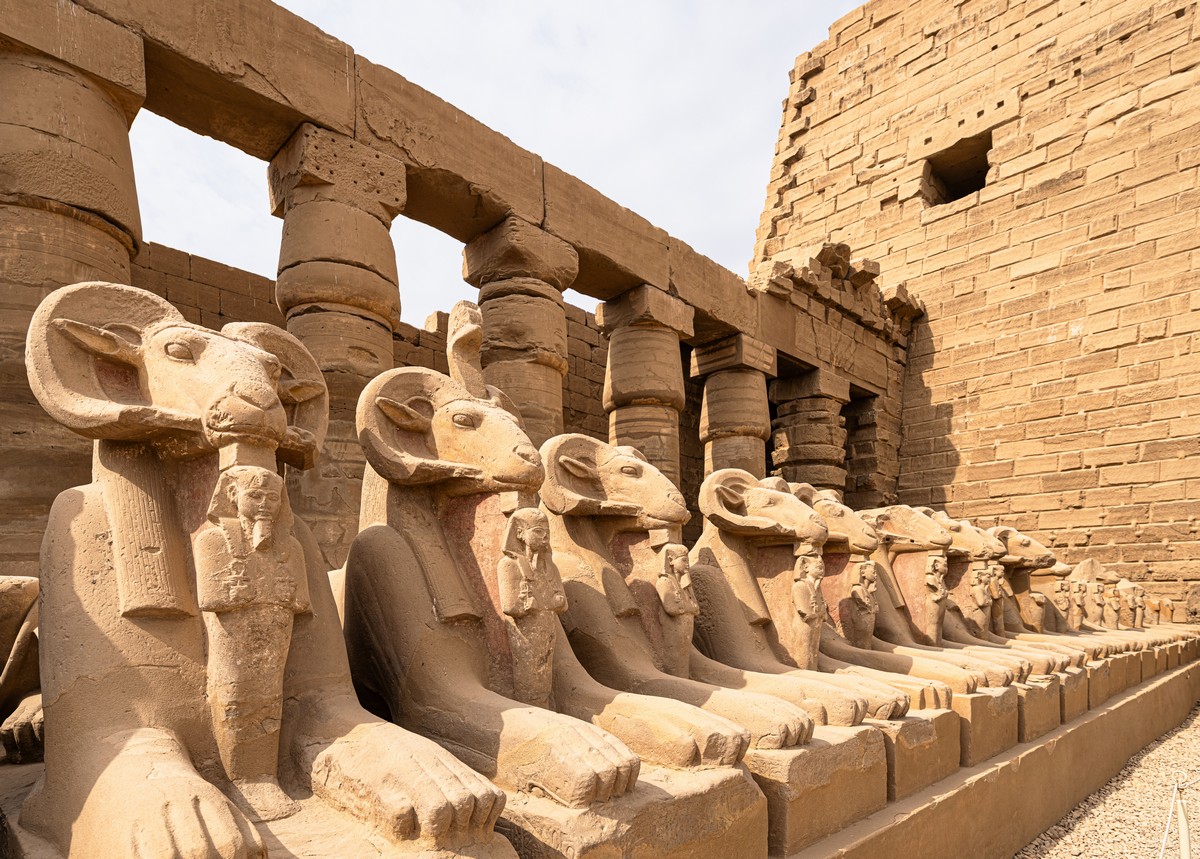
By the way, the sphinx-rams mentioned earlier – here they are, looking like brand-new replicas. Evidently, they were going to adorn the Avenue of Sphinxes from Luxor Temple to Karnak Temple.
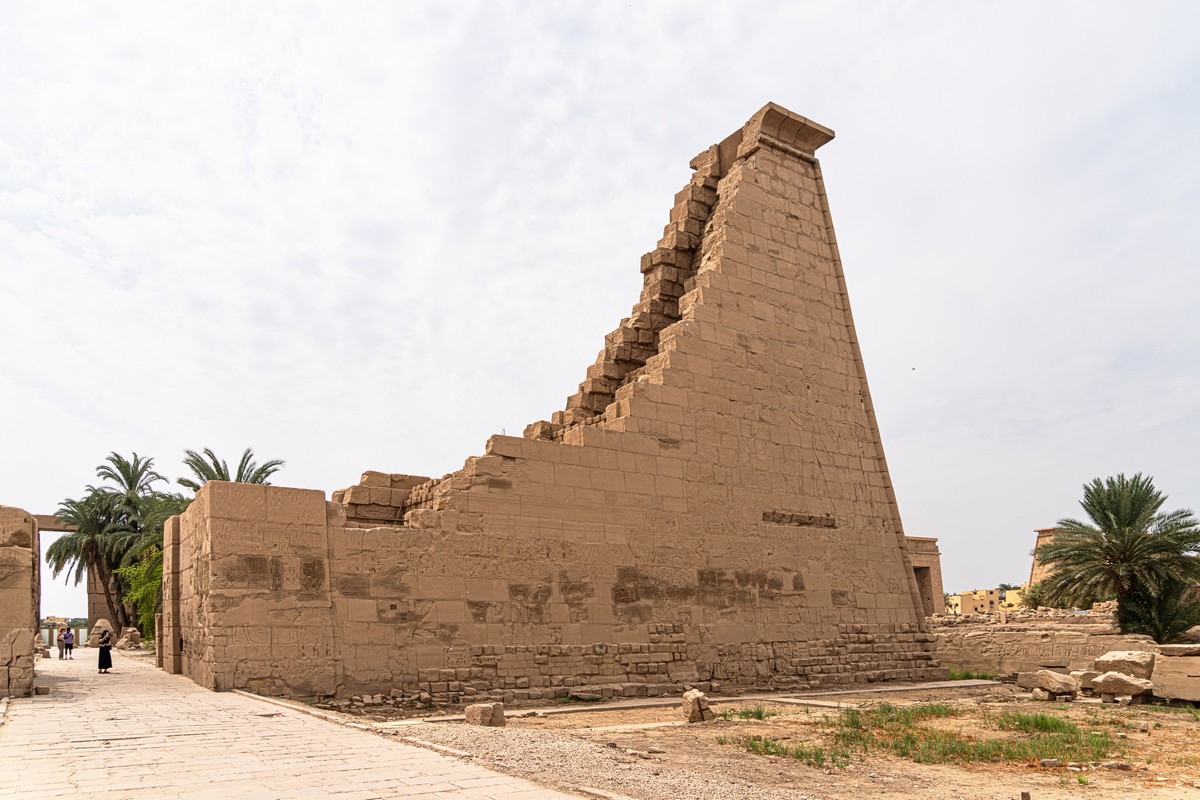
As for archaeological digs and restoration work, there’s no end in sight for them around here. This is a partially restored gate:
And here’s a “spare part” from I-don’t-know-what:
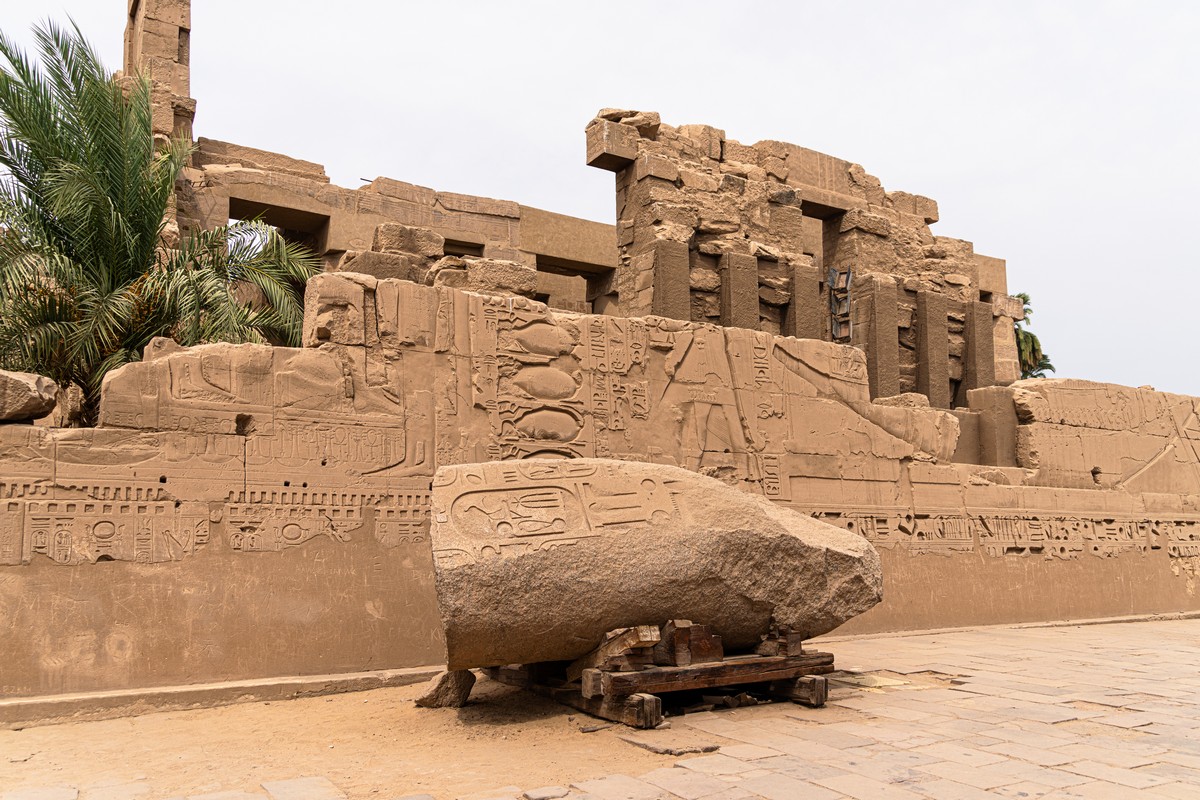
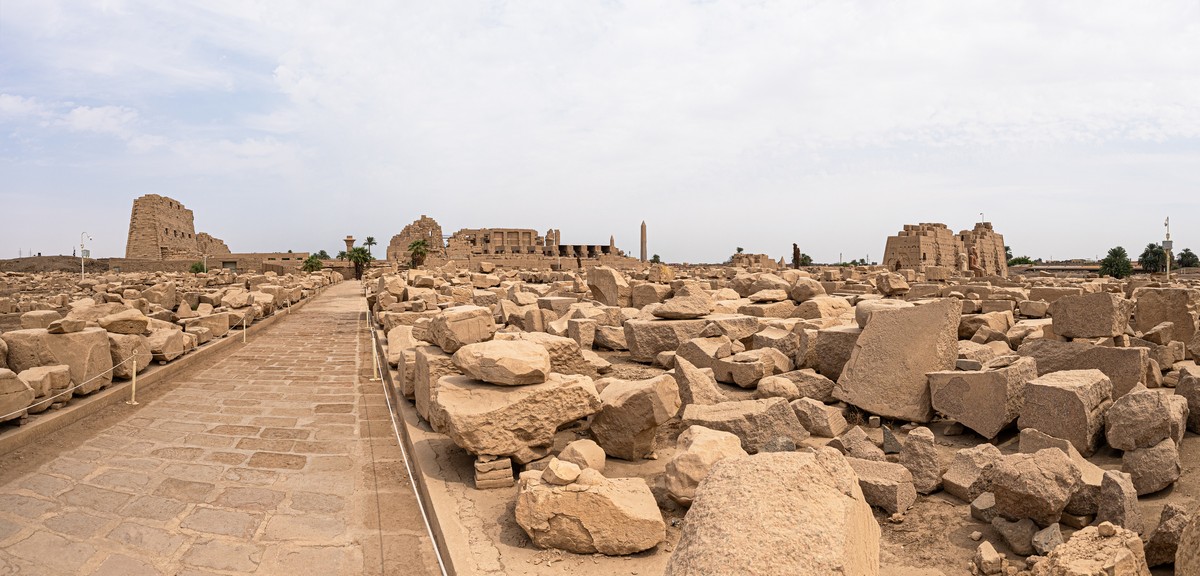
And there are vast expanses of such “spare parts” and as-yet-unrestored structures here:
I headed back to the main pillared hall:
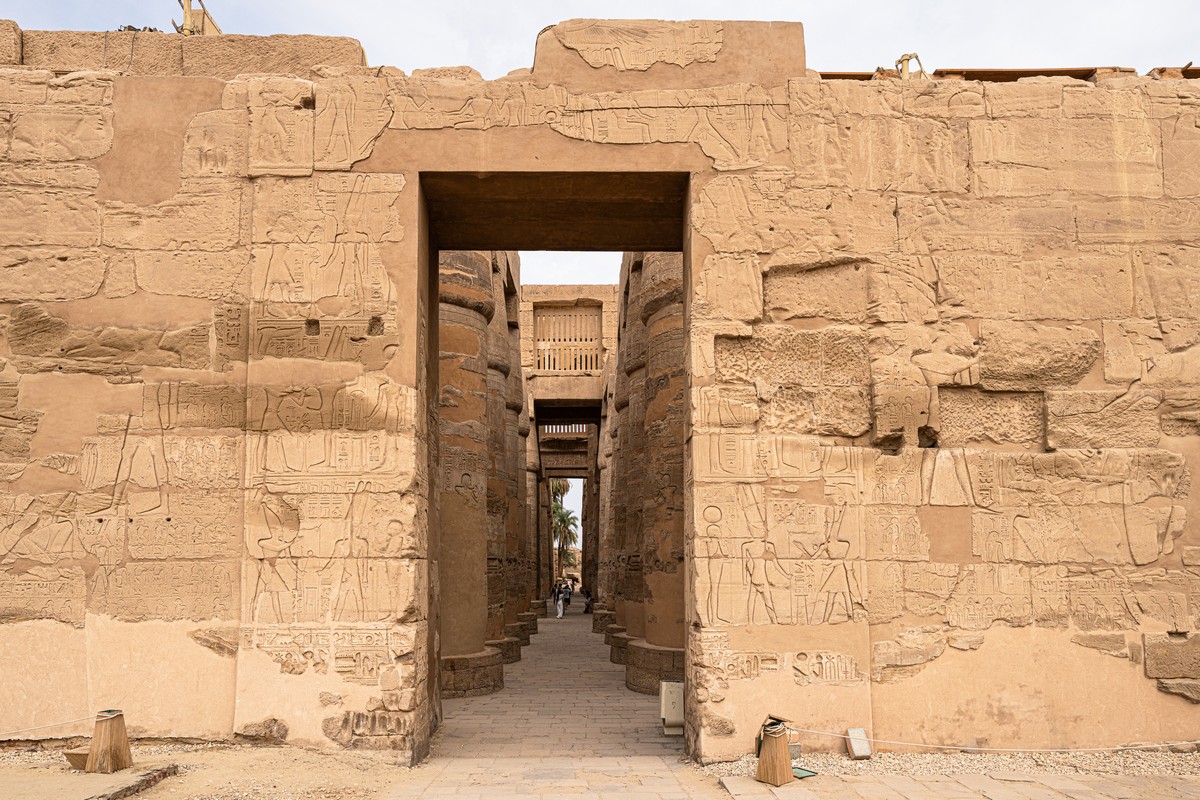
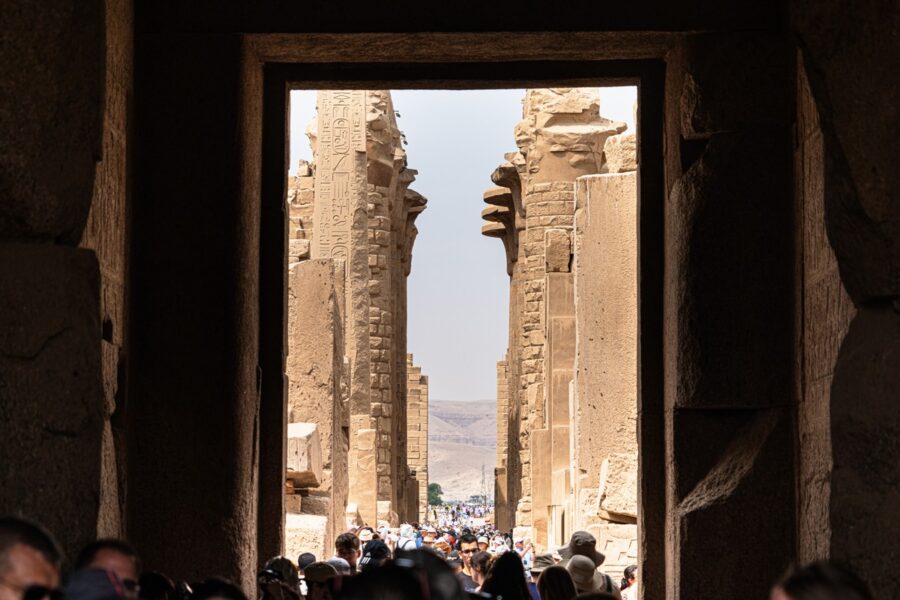
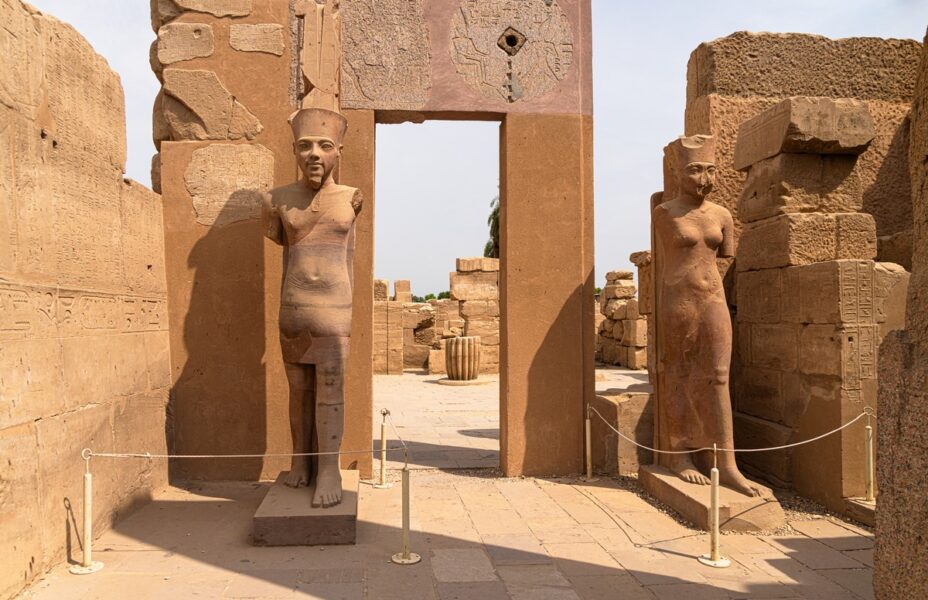
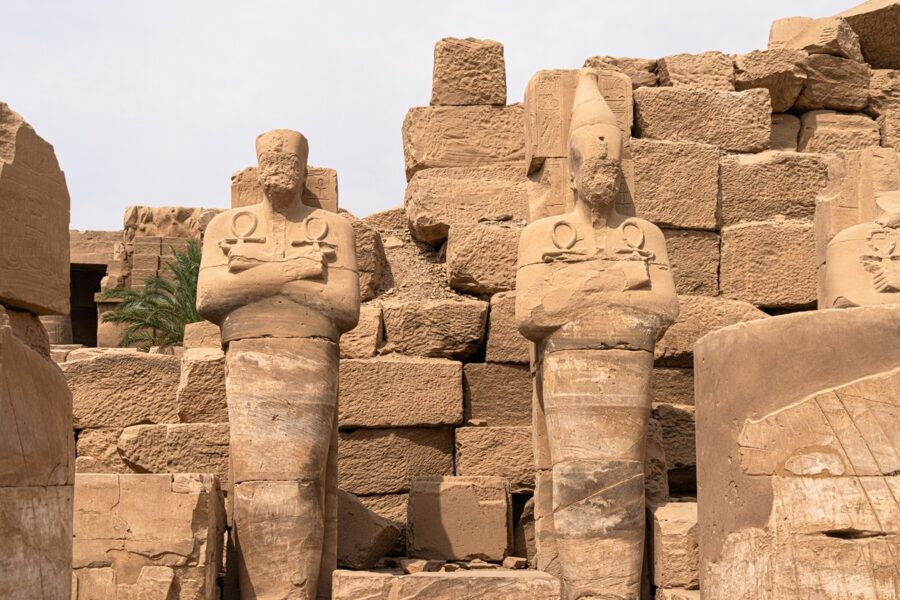
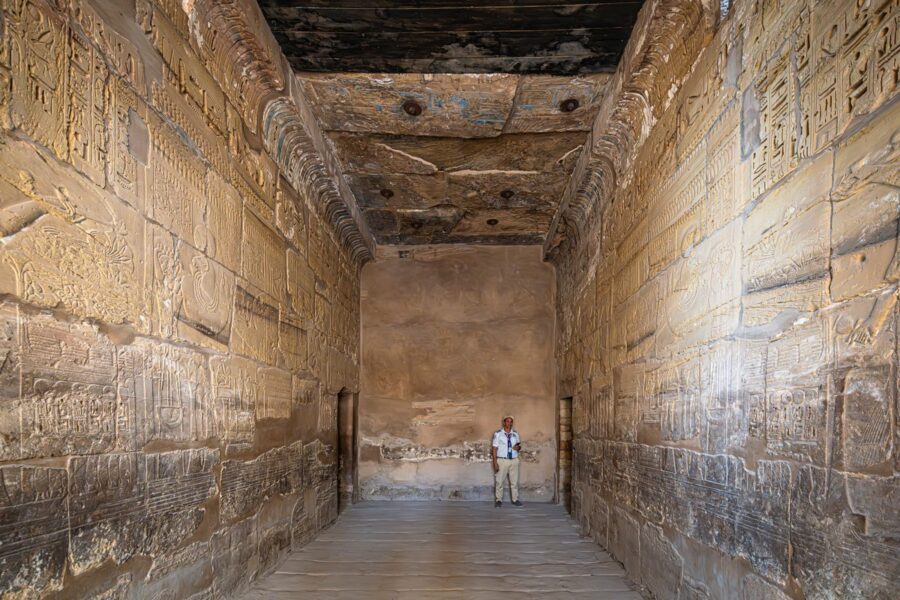
You could spend forever walking the corridors and paths here, studying the monumental structures and peering at the details…
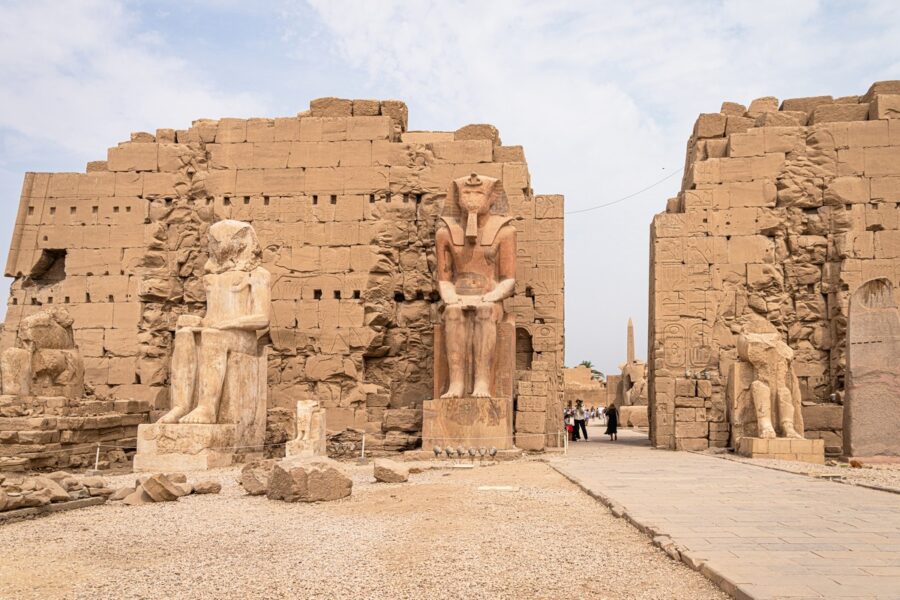
And that was that for Karnak Temple. It was time to head for the exit…
Oh – and that was that for our Egyptian tourism. And spectacular tourism it was too!…

