November 10, 2026
The Temple of Edfu: protected by sands; attacked by fanatical religious bands.
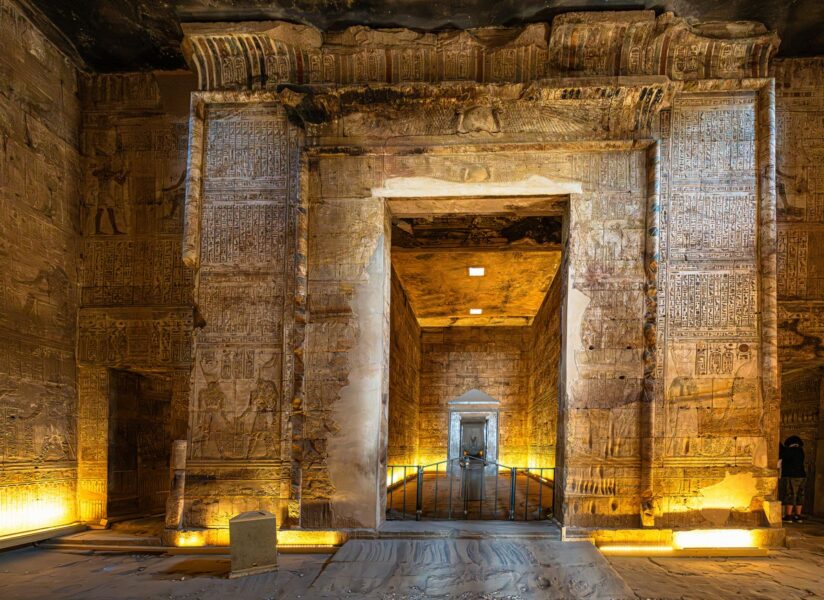
Sixty kilometers down the Nile from Aswan in the town of Edfu, there’s another ancient Egyptian temple complex that shares the town’s name: the Temple of Edfu. It’s one of the largest temples of ancient Egypt – and a pretty well-preserved one at that. Alas, the oldest structures have been almost completely destroyed, and what stands today is a complex rebuilt during the Hellenistic period.
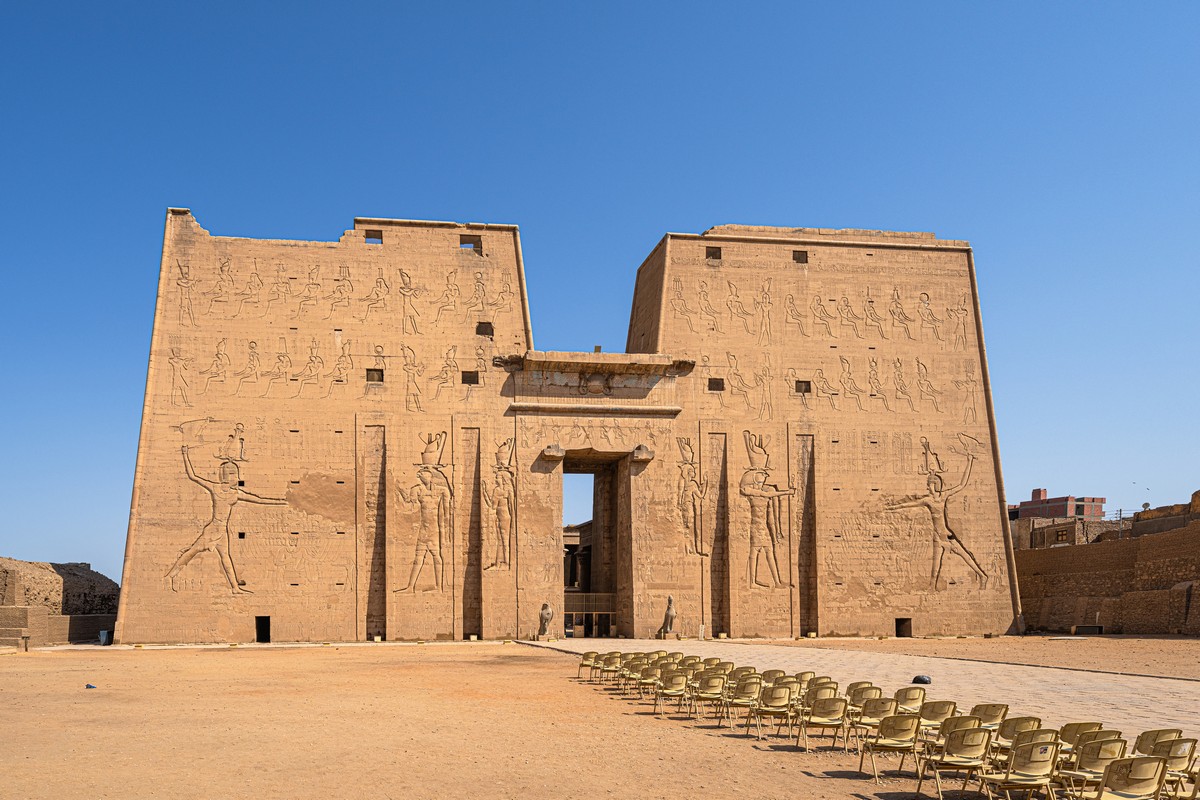
As our guide told us, some of the ruins (ancient walls) date back to prehistoric times – some of the stonework here is around four thousand years old. We’ll take his word for it…
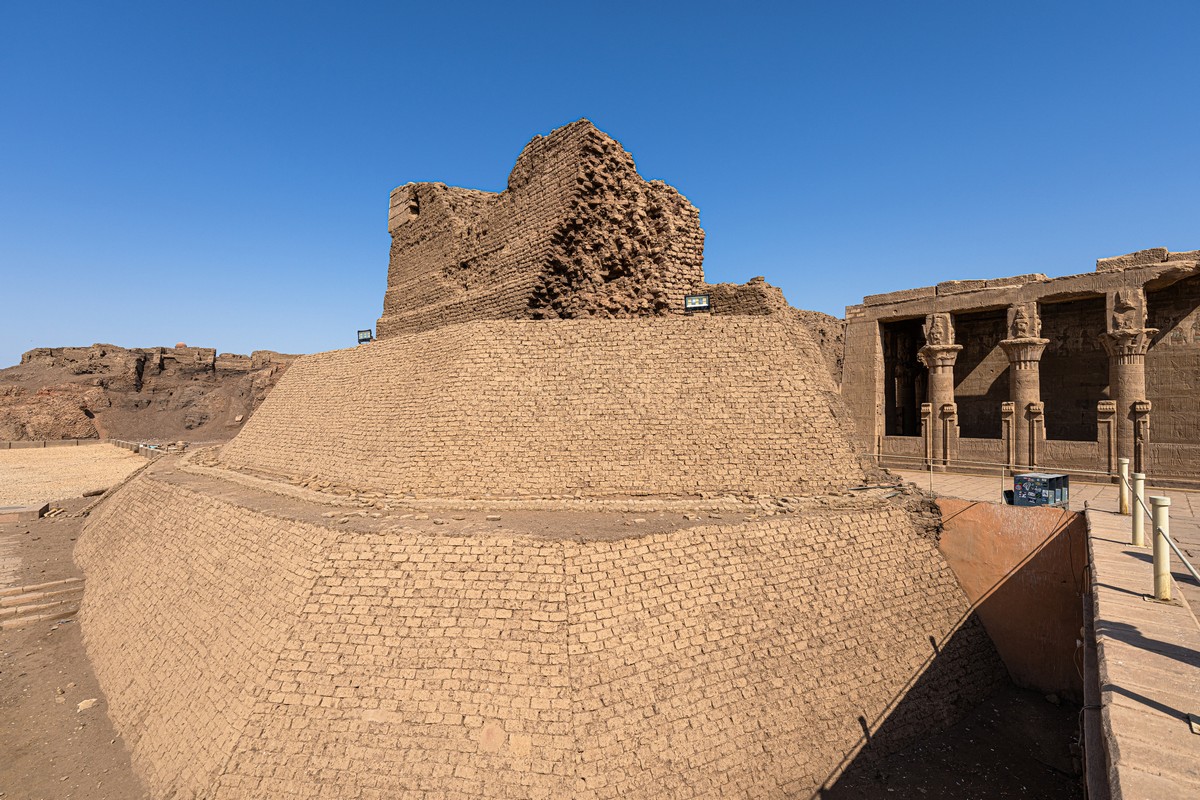
Our walk, though, took us around the Hellenistic “new build”:
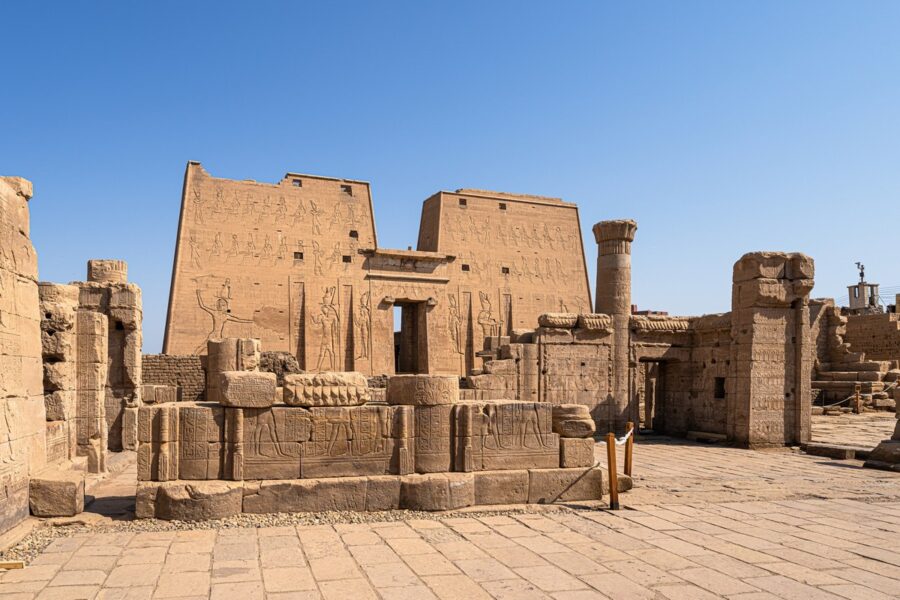
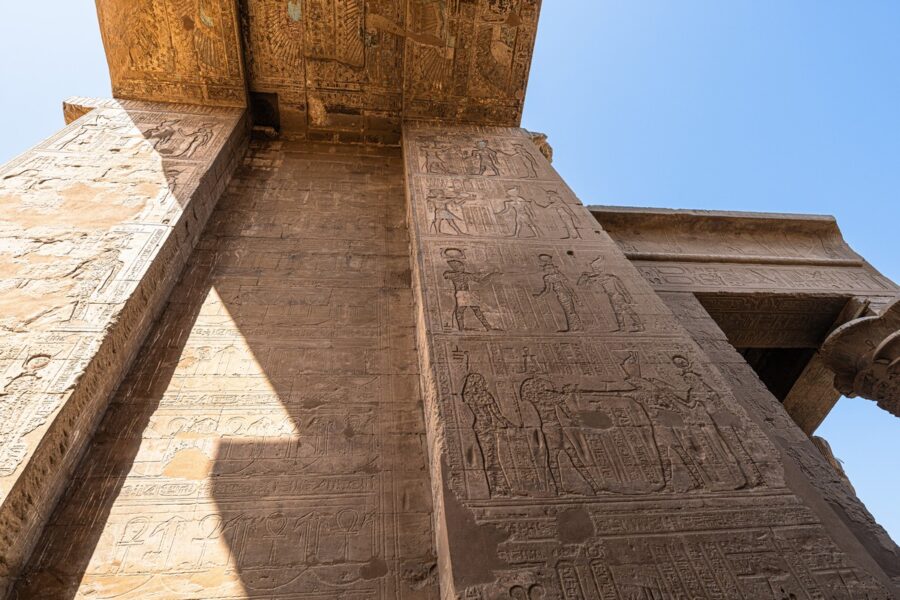
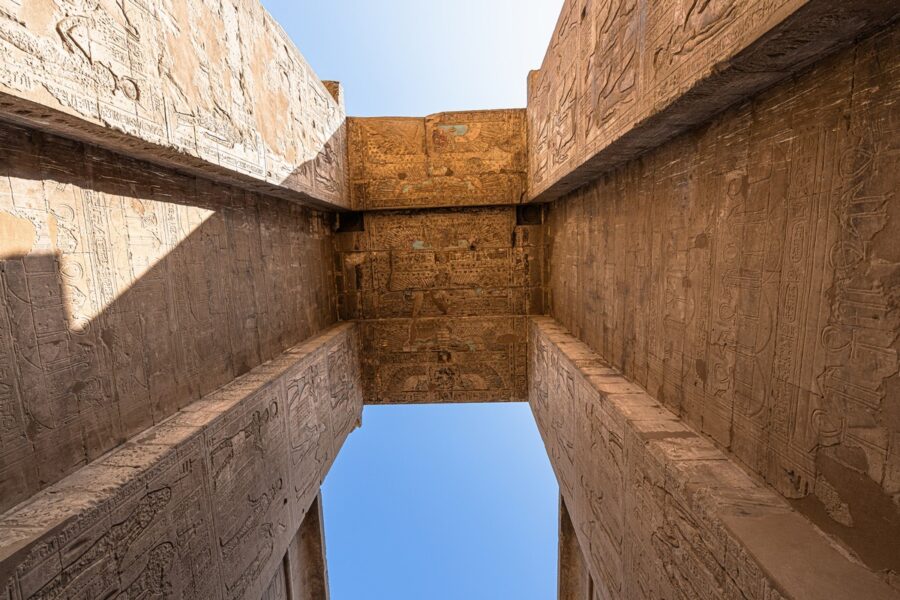
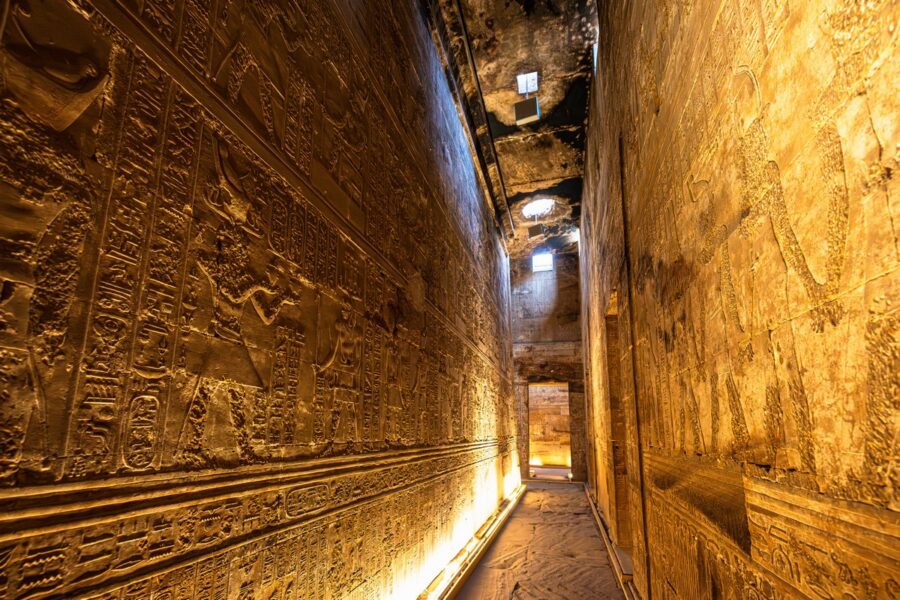
Sadly, many of the images were hacked off by early Christians, who couldn’t tolerate alternative gods.
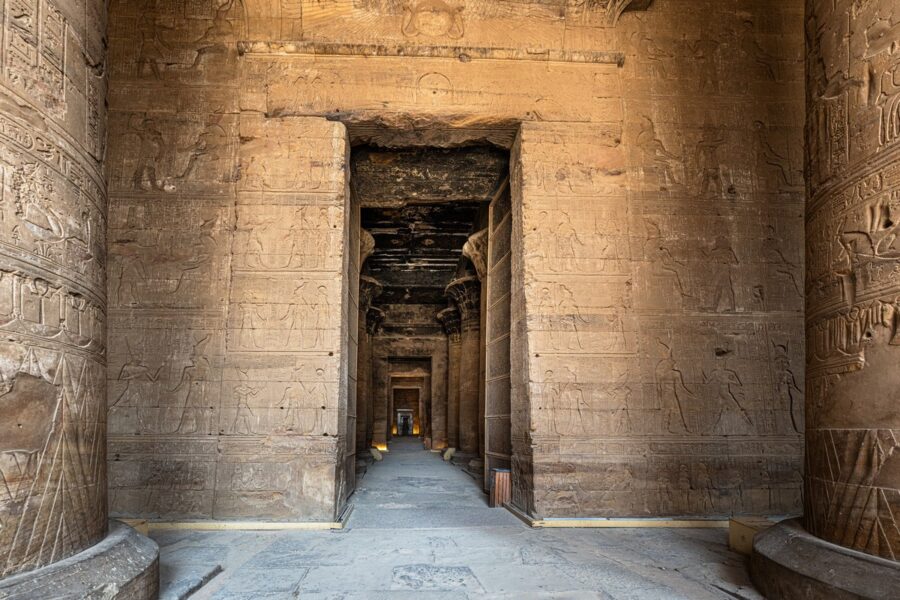
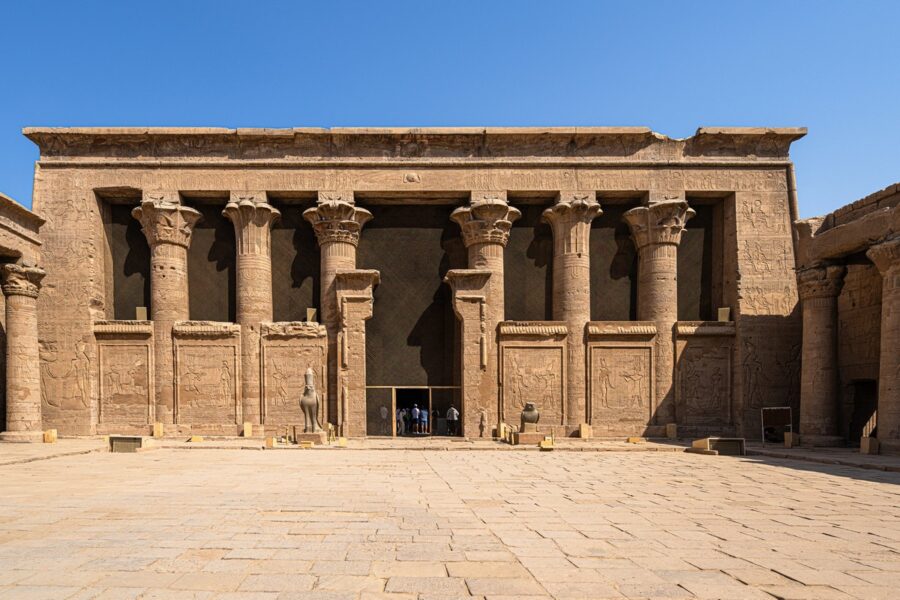
But on the whole, the temple has held up reasonably well. That’s probably because it simply got buried in the desert sand – and by the 18th century only the tops of its columns were poking out (if the internet is to be believed).
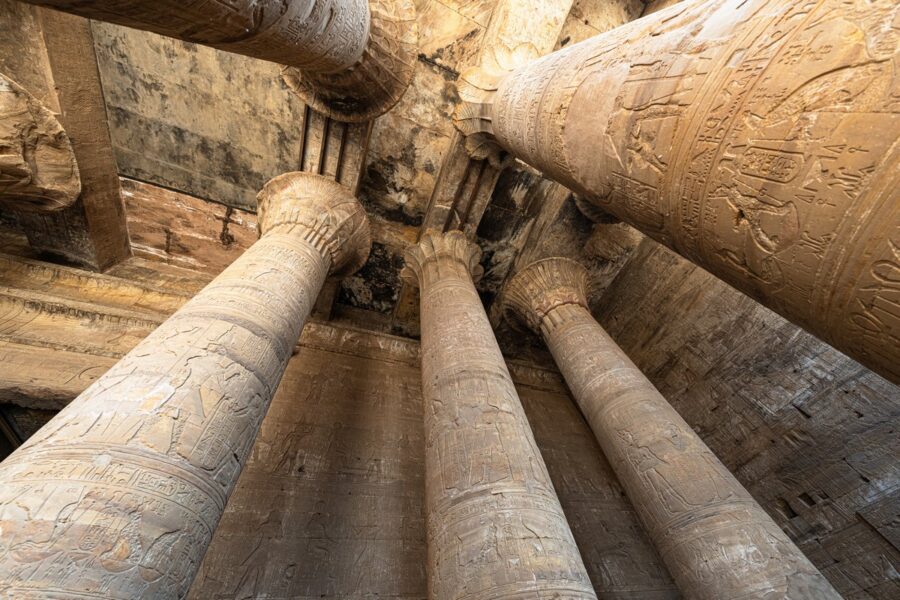
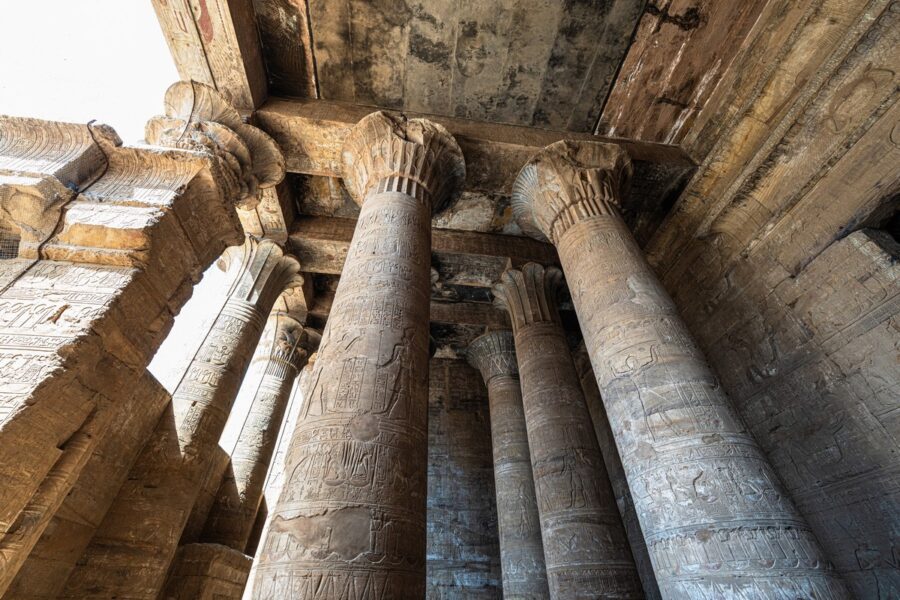
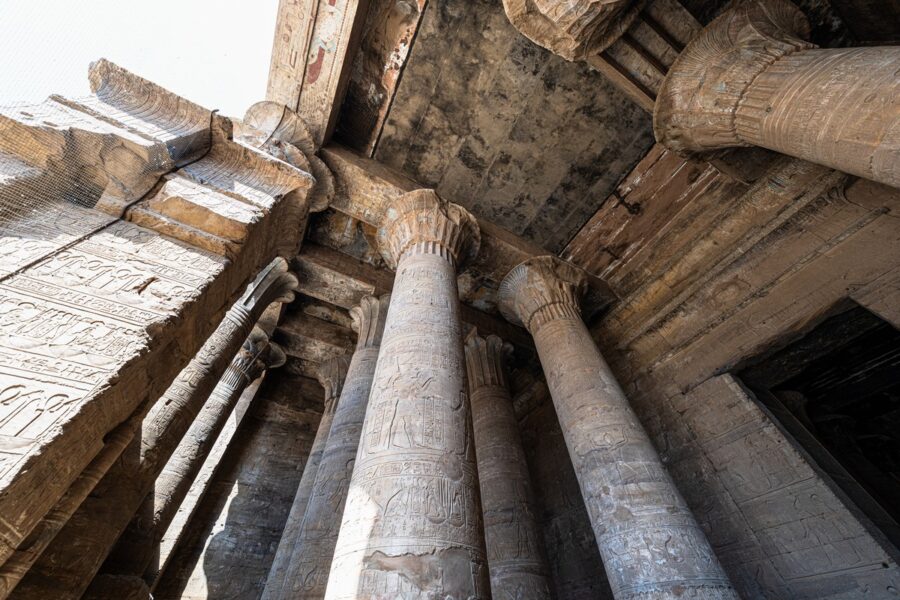
The ceiling is black because the half-buried temple was used as a shelter by locals and caravan drivers, and the black is simply soot from the fires they used to light inside the building.
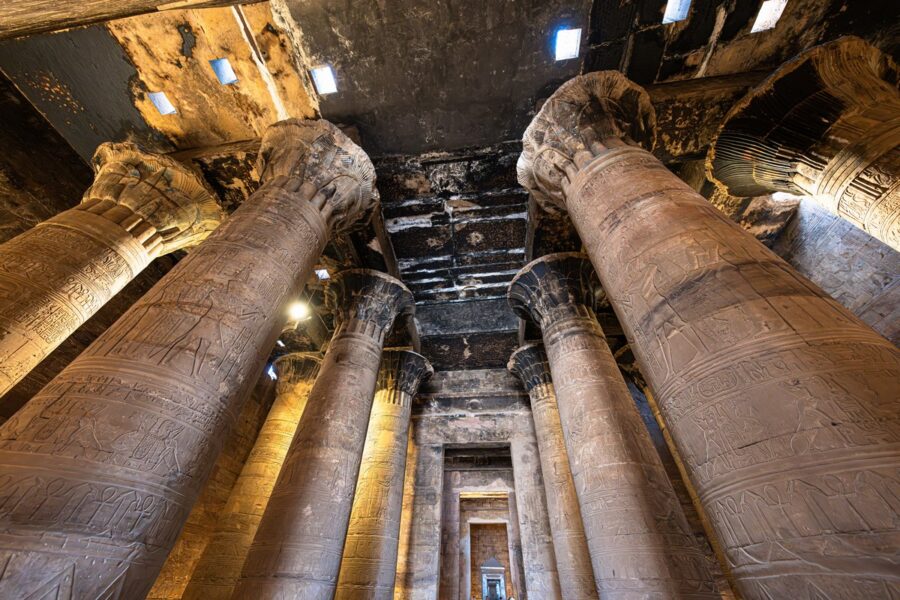
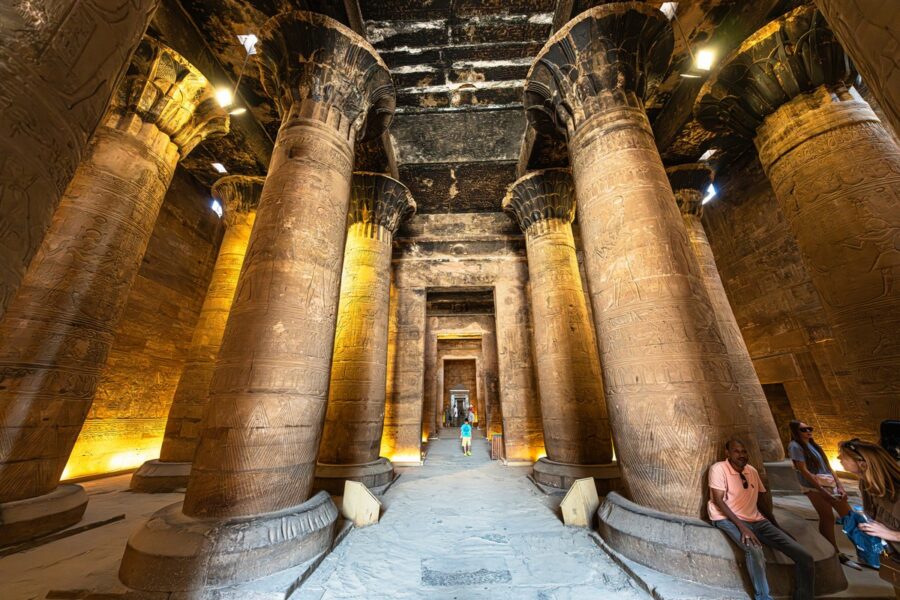
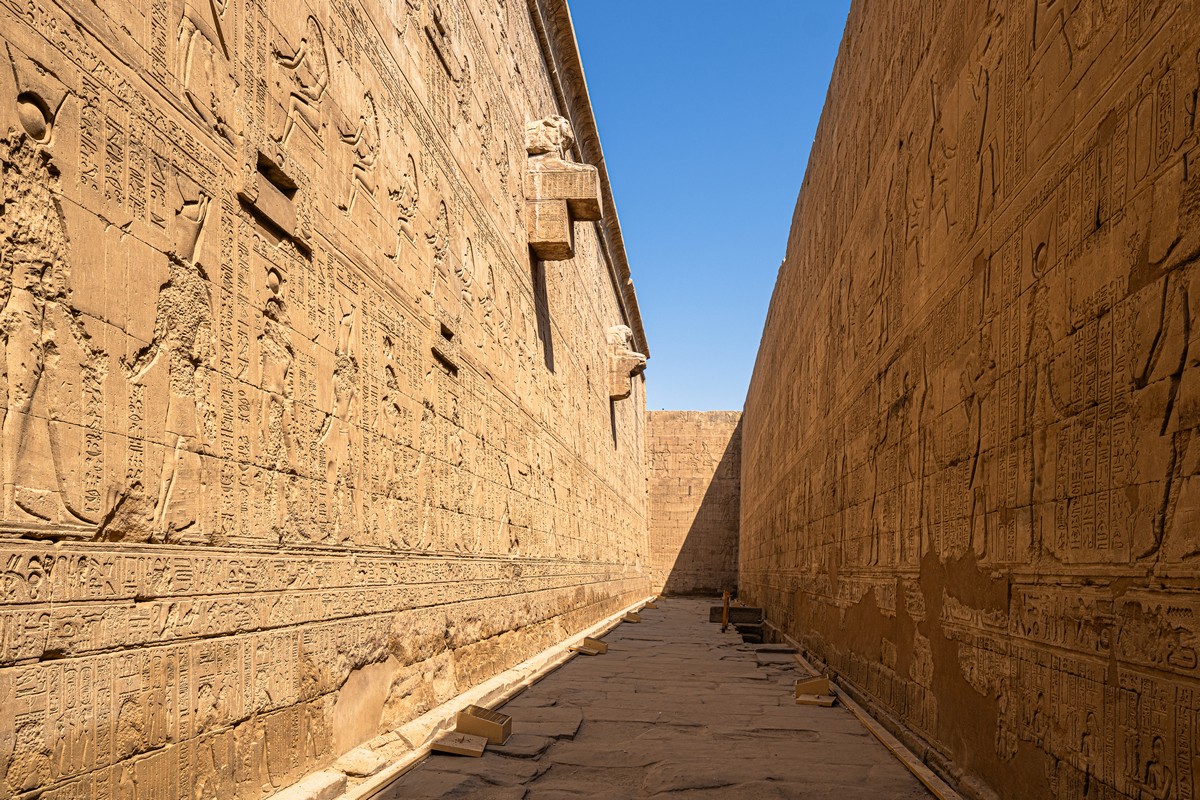
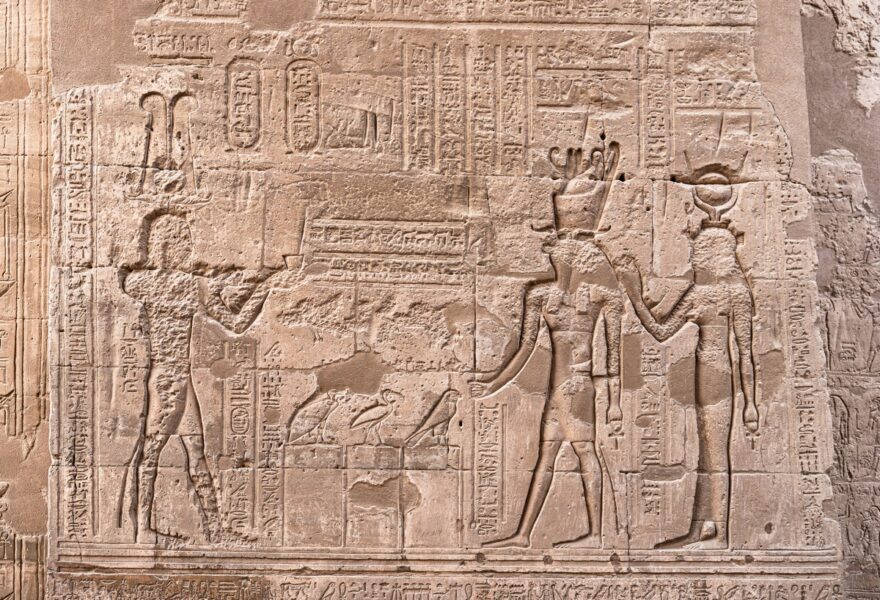
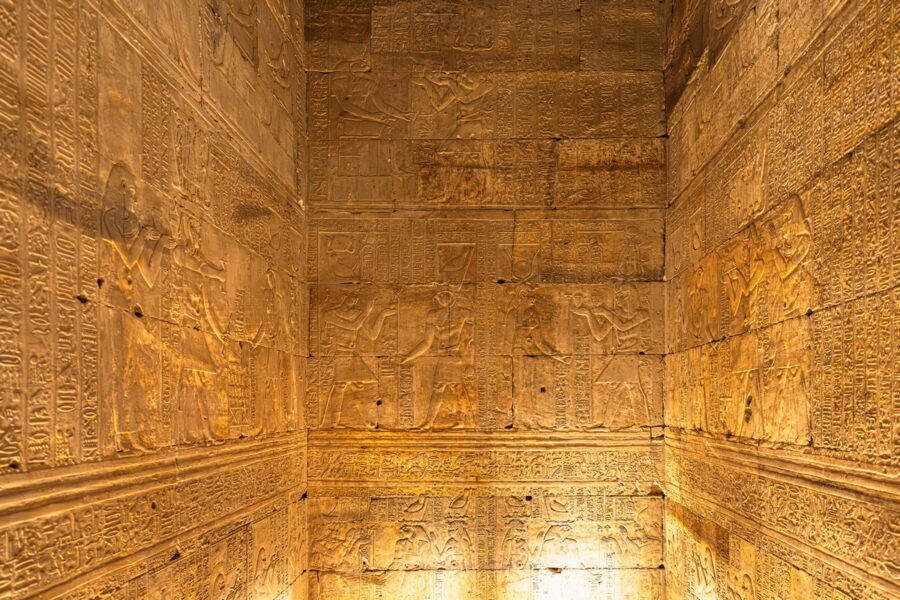
Some of the stone carvings (bas-reliefs) are in quite good shape – apparently thanks to the very same sand that once covered everything here:
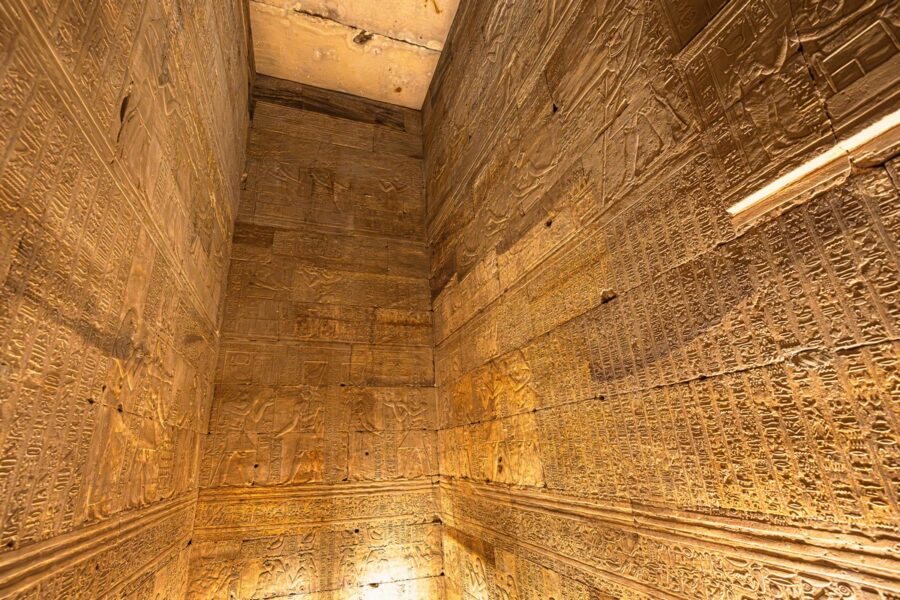
Aha – some kind of critters were hanging from the ceiling:
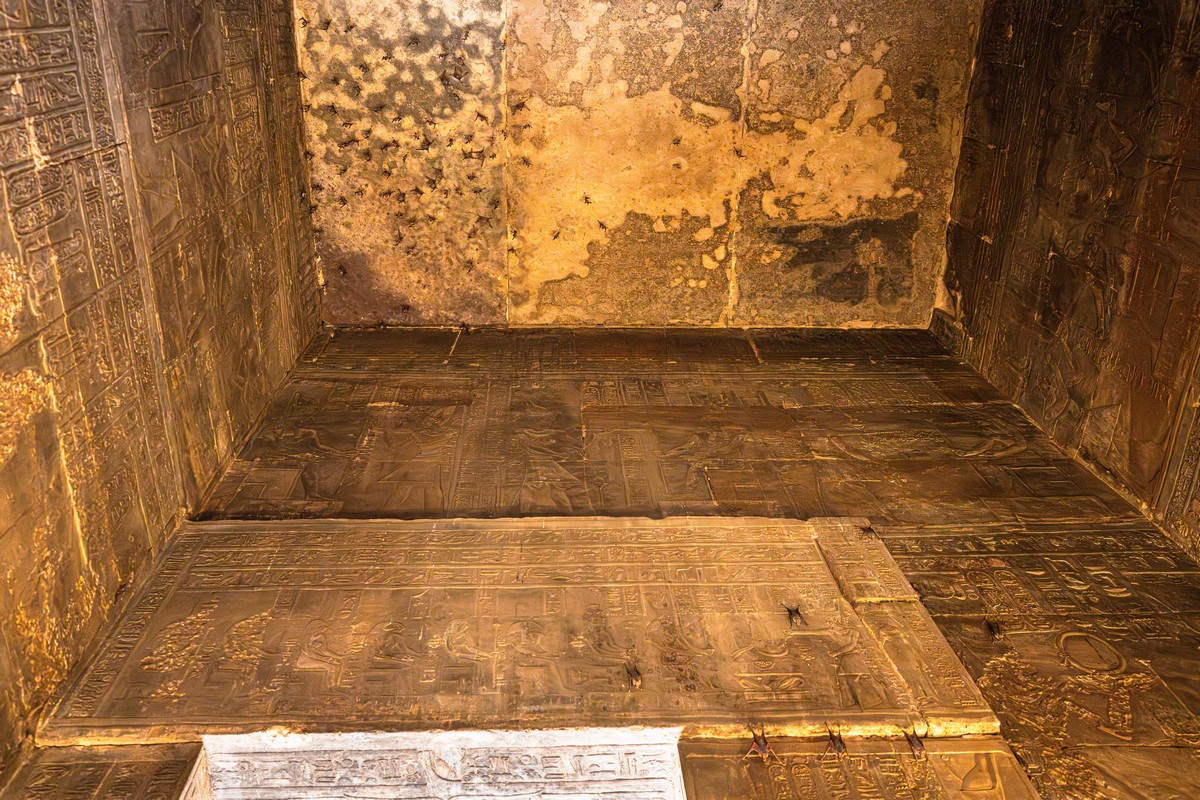
Bats!
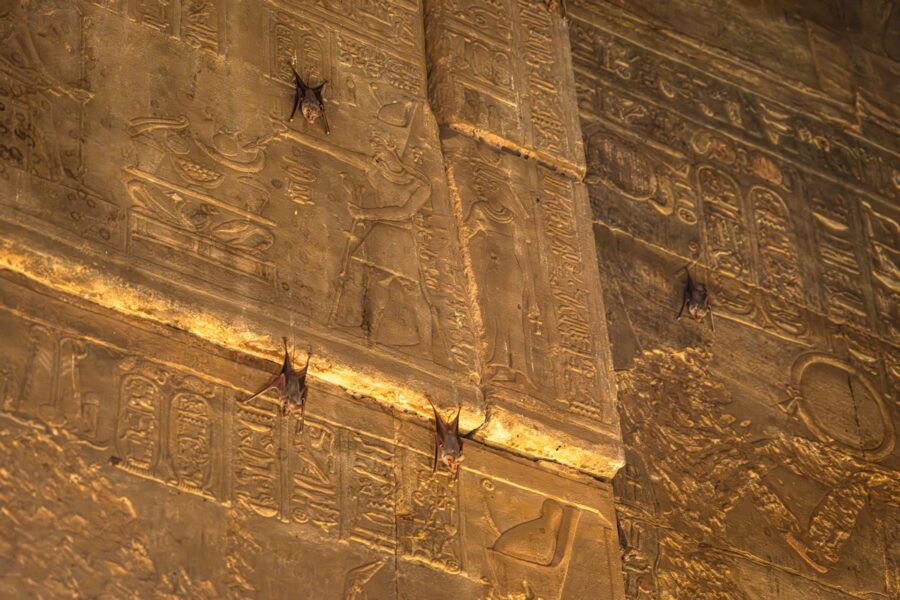
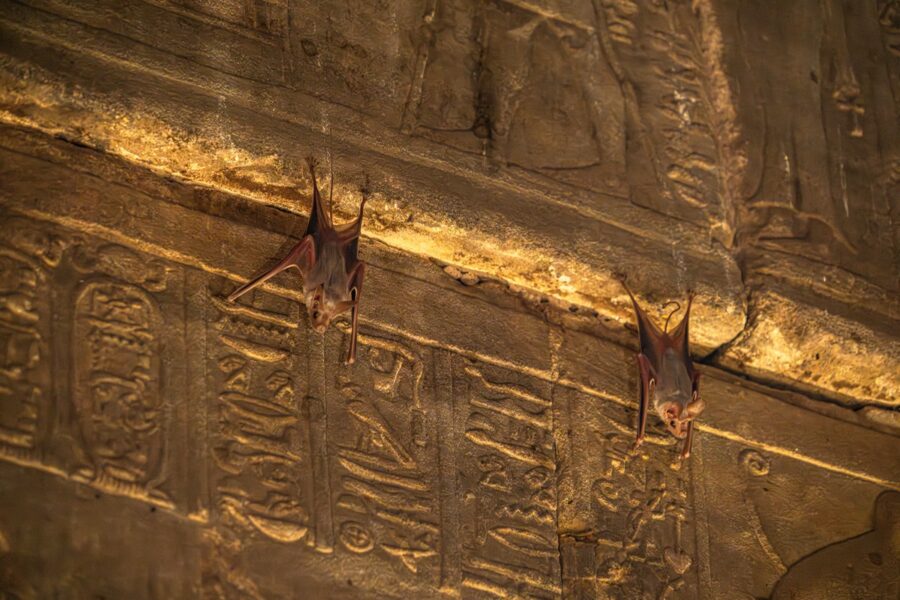
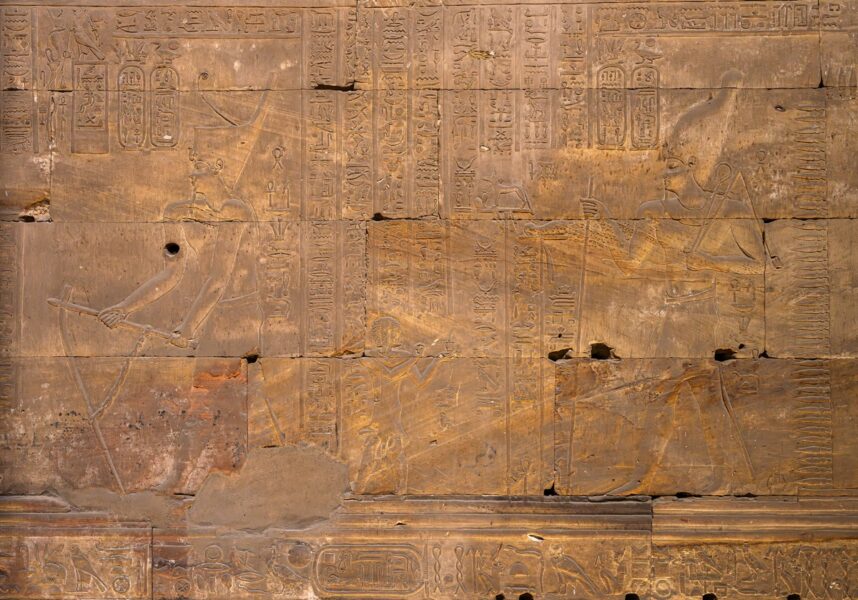
But the ancient Egyptian stone bas-reliefs are more interesting all the same:
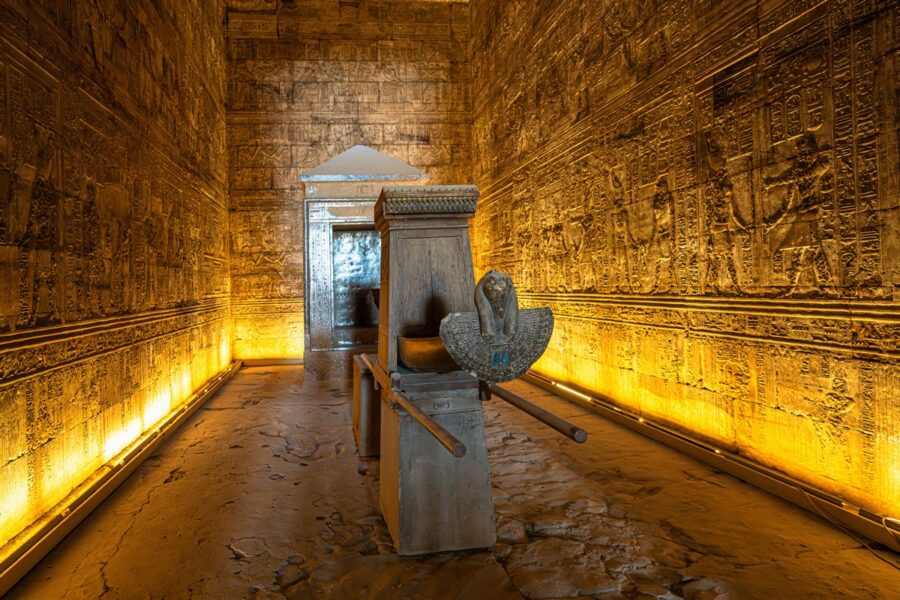
Here’s an Egyptian pharaoh hugging Hathor – the goddess of the sky, love, and joy. Pharaohs had divine status, so they could get away with it.
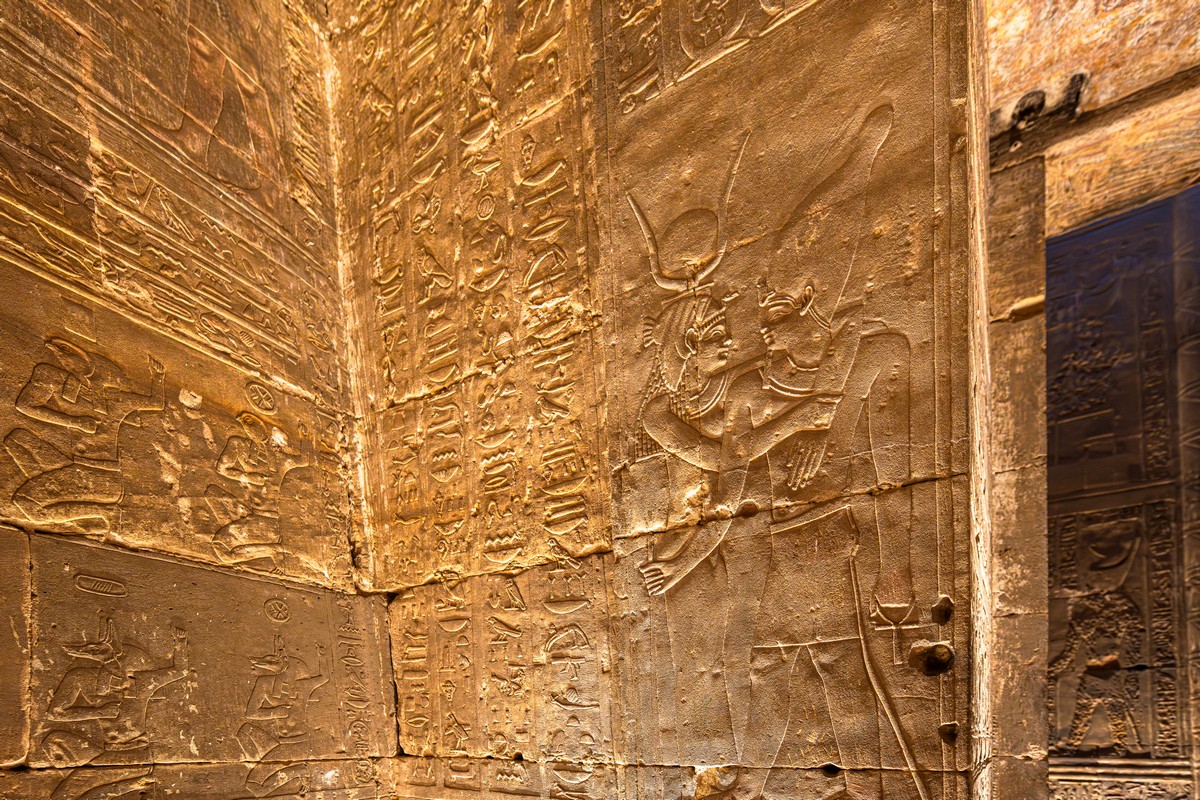
And here’s Horus, the god of the sky and the sun, blessing the pharaoh:
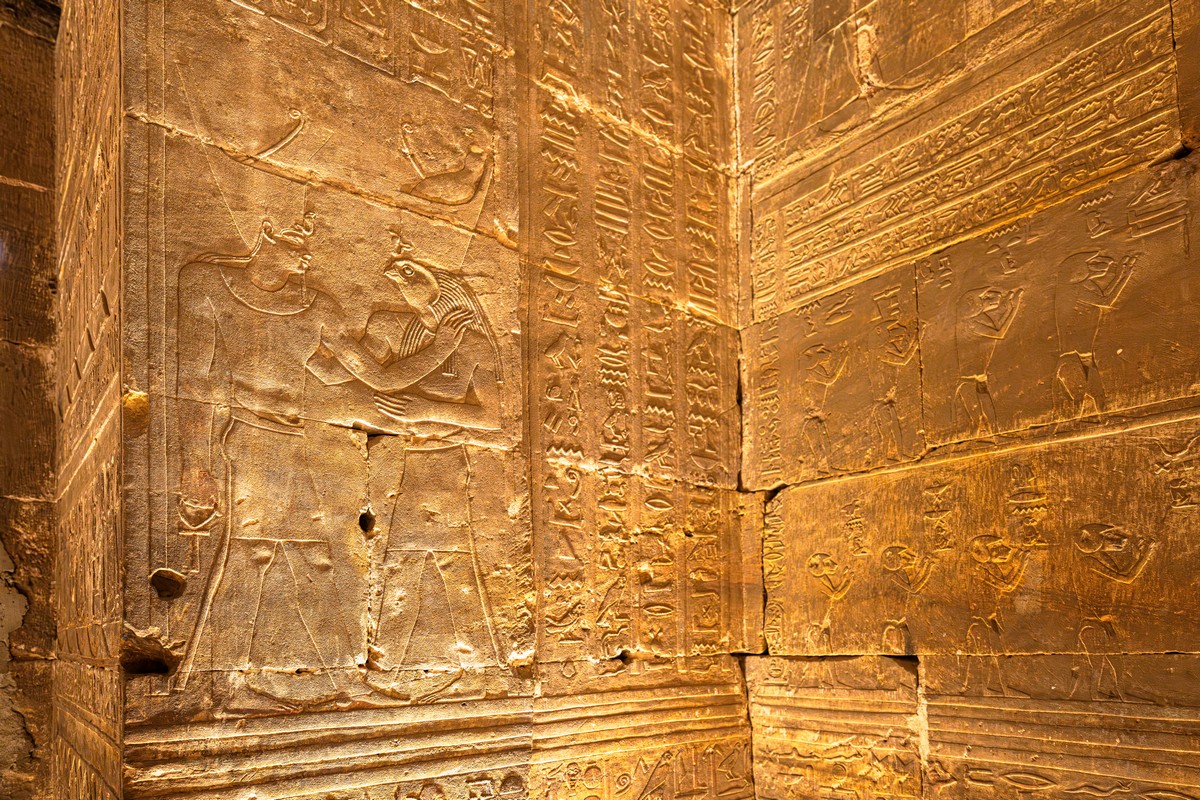
Wandering around looking at the carvings – especially if there’s someone to fill you in on the details – is something you could do here forever.
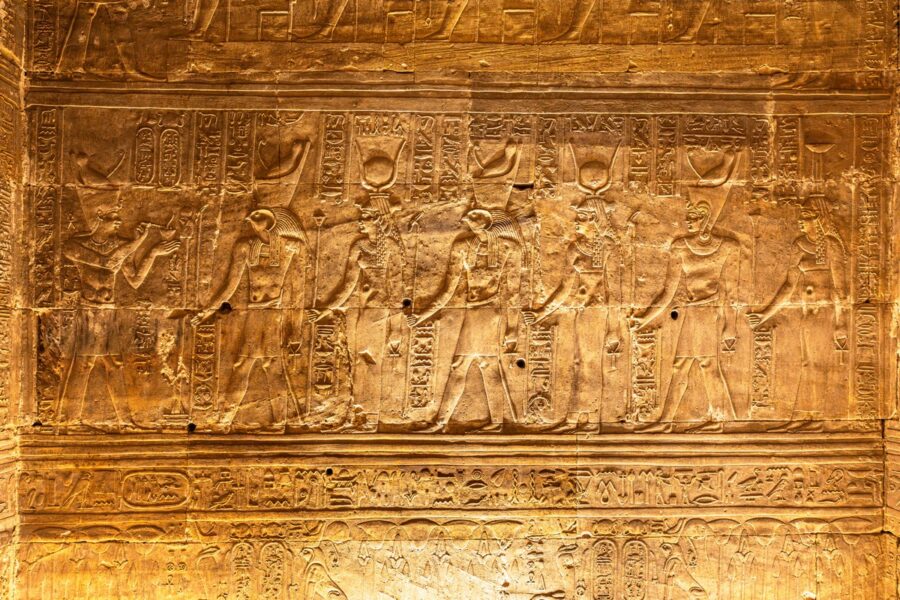
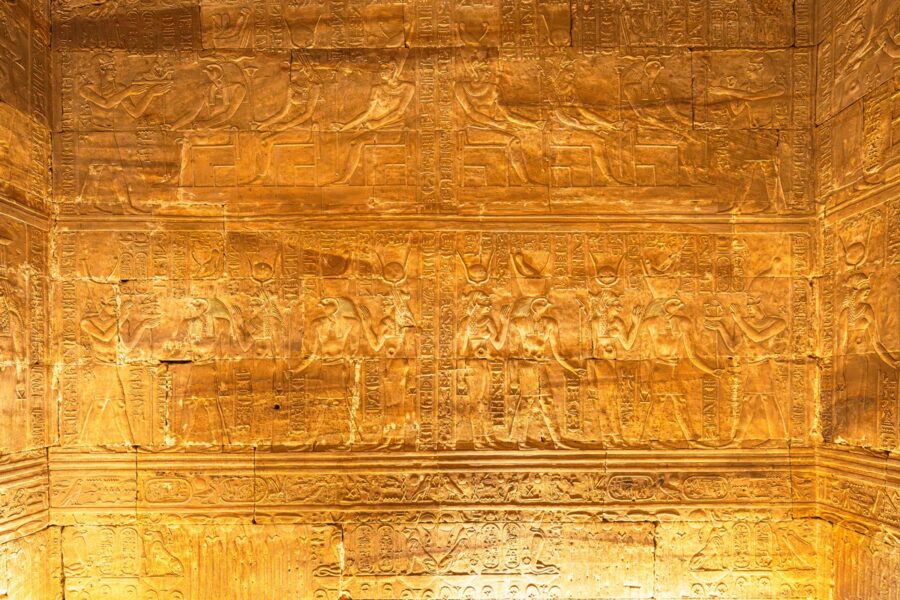
But the clock was ticking, our boat (well, barge) was waiting, and it was time to head for the exit.