November 11, 2026
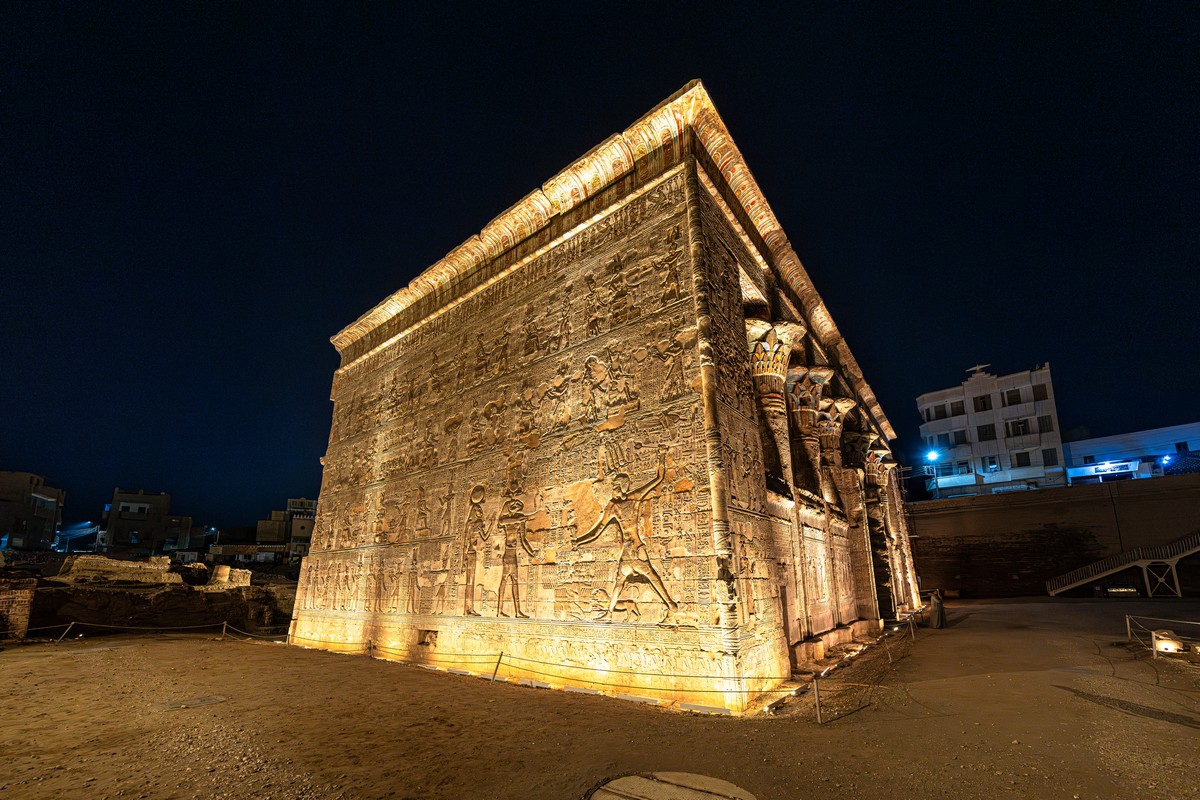
An ancient Egyptian temple at night – illuminated by lights so bright.
The next stop on our Nile boat-trip from Aswan to Luxor, the ancient capital of the Upper Kingdom, was the city of Esna, home to the temple of the ancient Egyptian god Khnum. The ancient Egyptians had a great many gods (here’s the list); Khnum was a creator-god who molded the first humans out of clay. But to study all that in detail you’d need to dive into further reading; we, meanwhile, just headed for the temple:
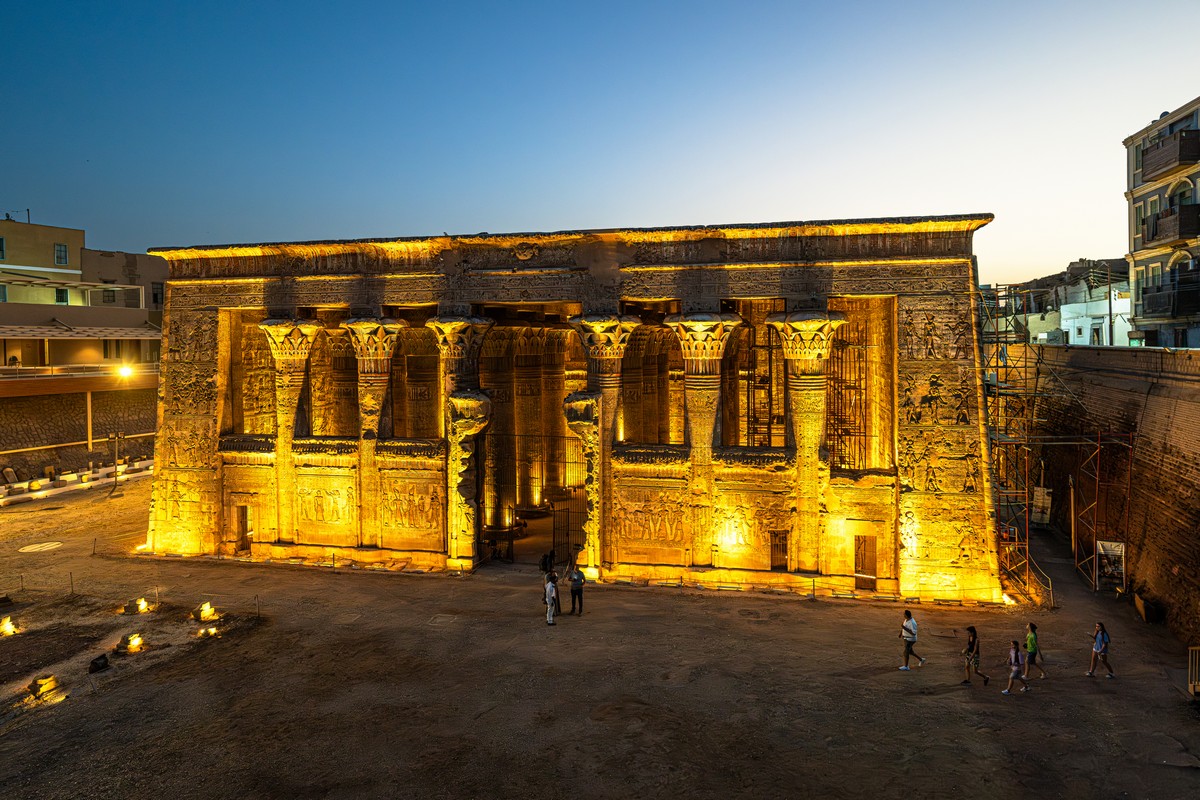
On the way to the temple we were told that, over thousands of years, the temple had sunk down through the soft rock beneath it, and that’s why it had sunk so deep into the ground – by some 15 meters. But somehow I don’t buy it. The earth’s strata aren’t uniform, so a temple “sinking” down through them would most likely have simply fallen apart. So the earthen walls around it are probably the cultural layer built up over the millennia, plus the desert sands, which have buried a great many structures along the Nile.
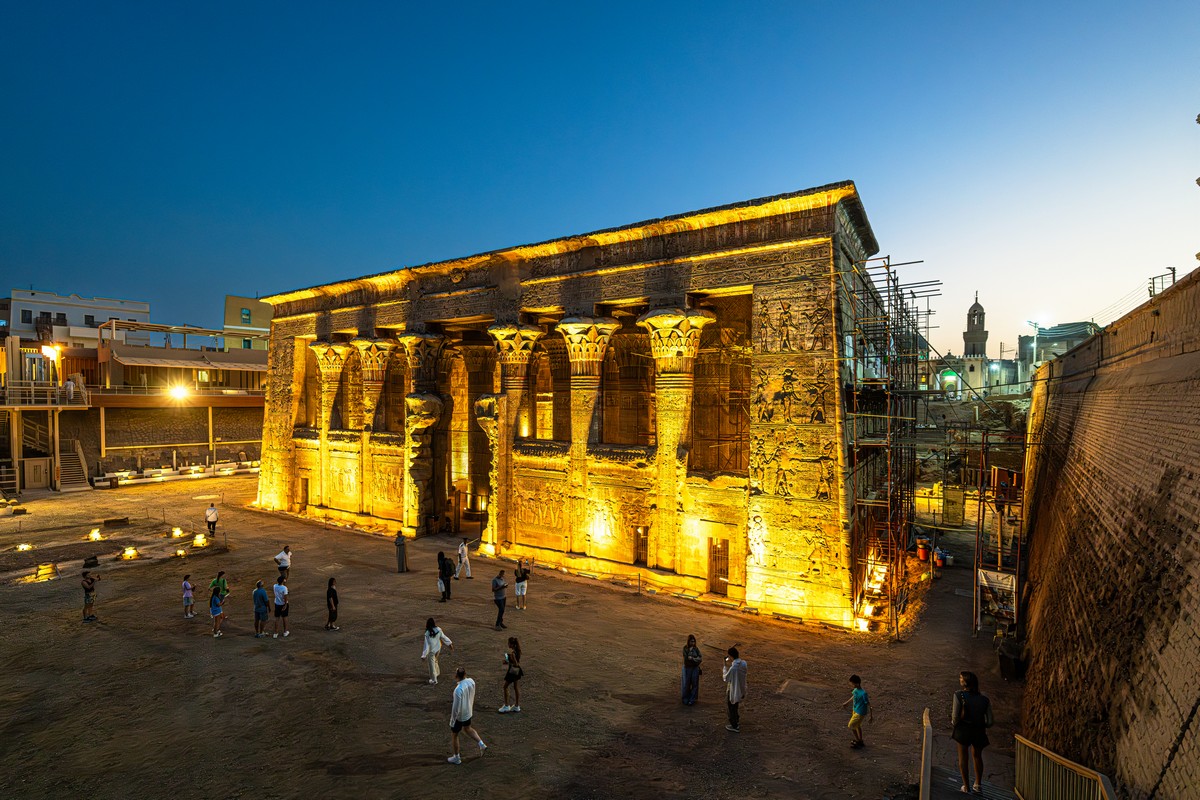
And thank goodness for all those processes – natural preservation like that is what’s allowed the temple to survive through to modern day with minimal damage:
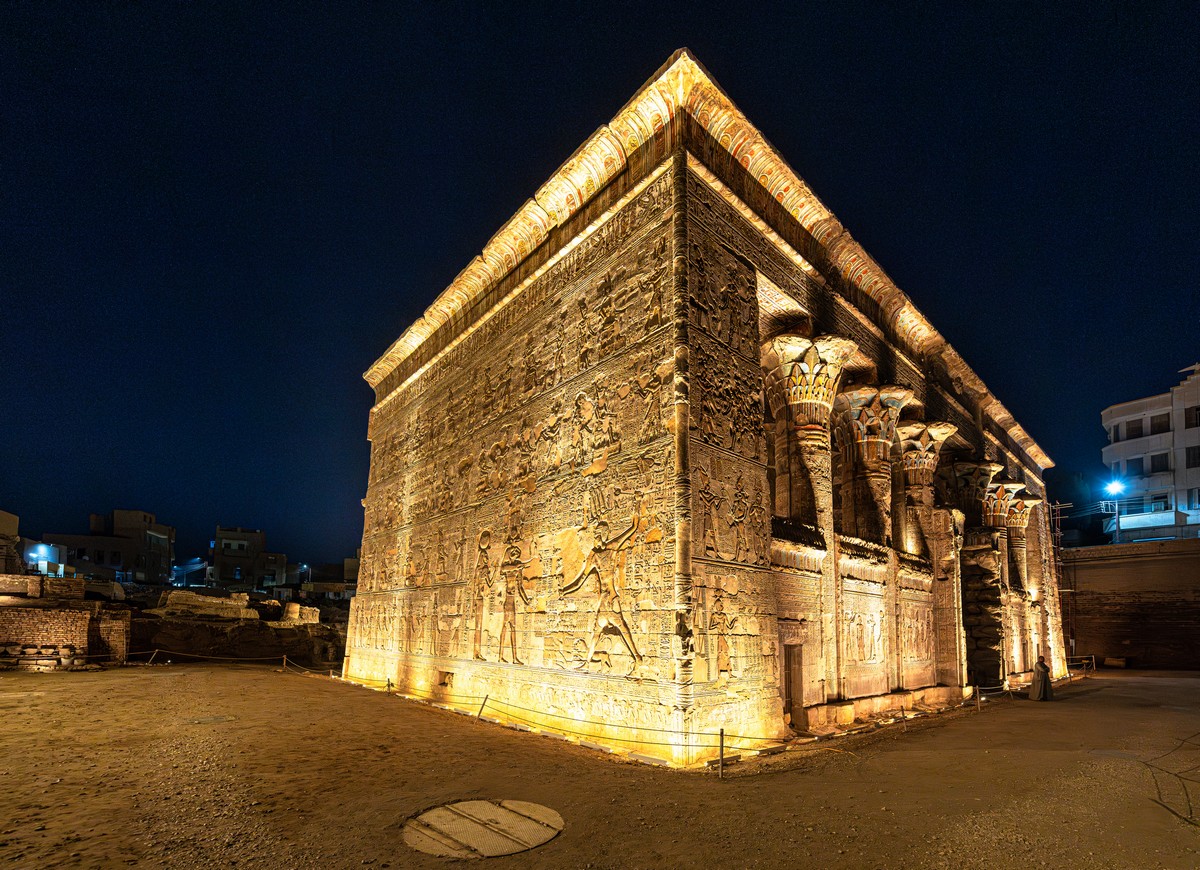
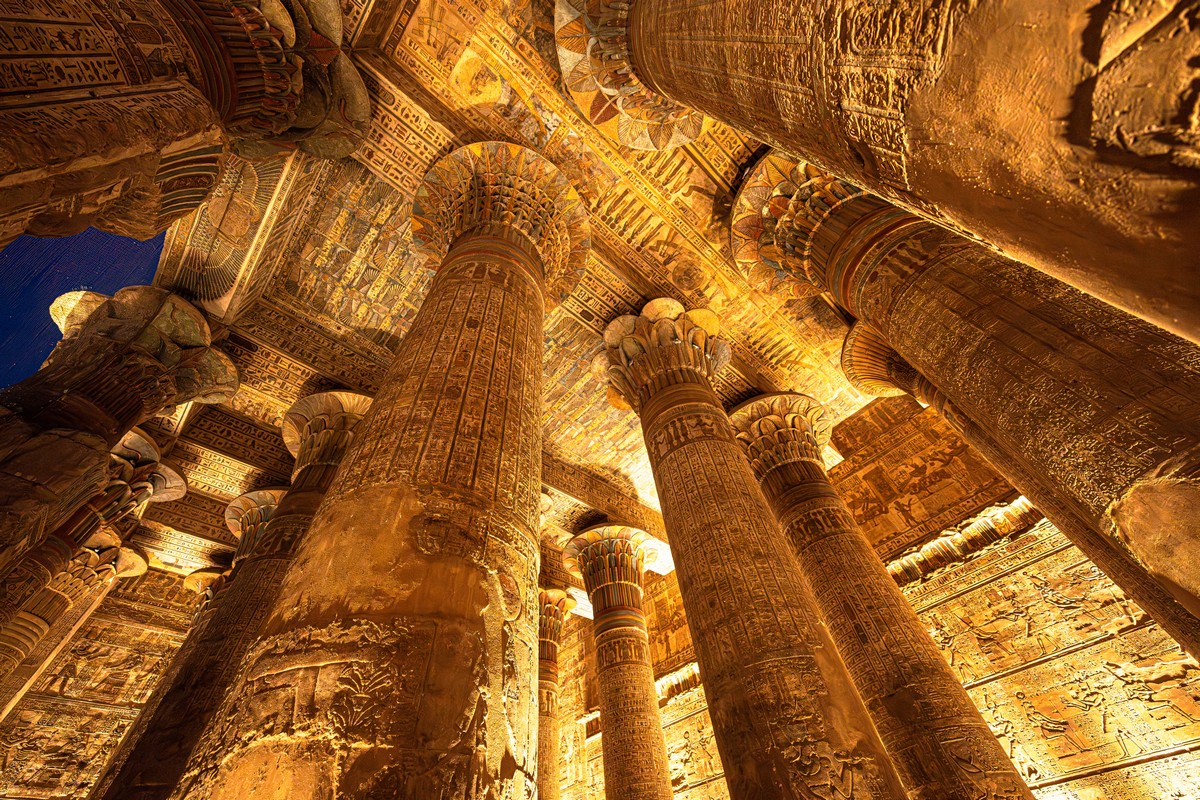
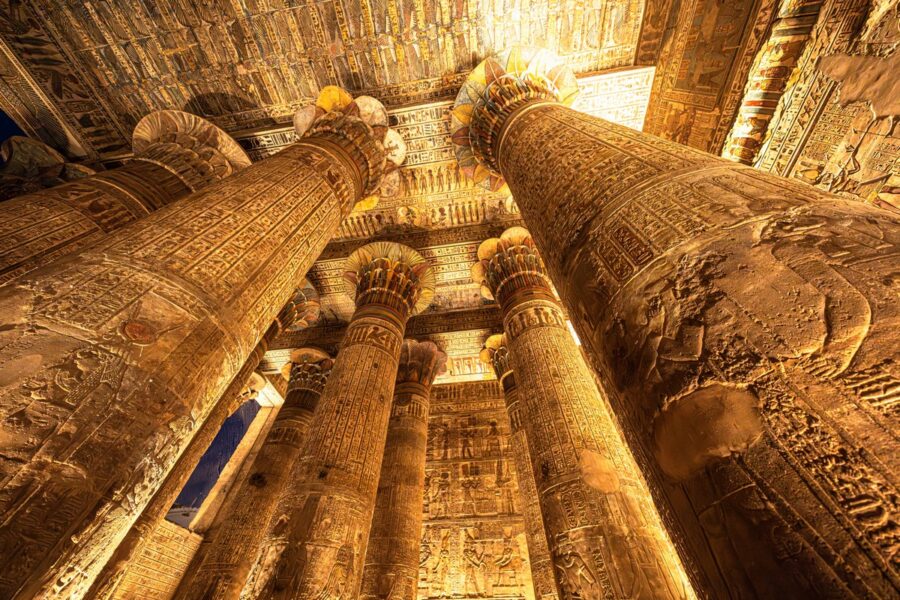
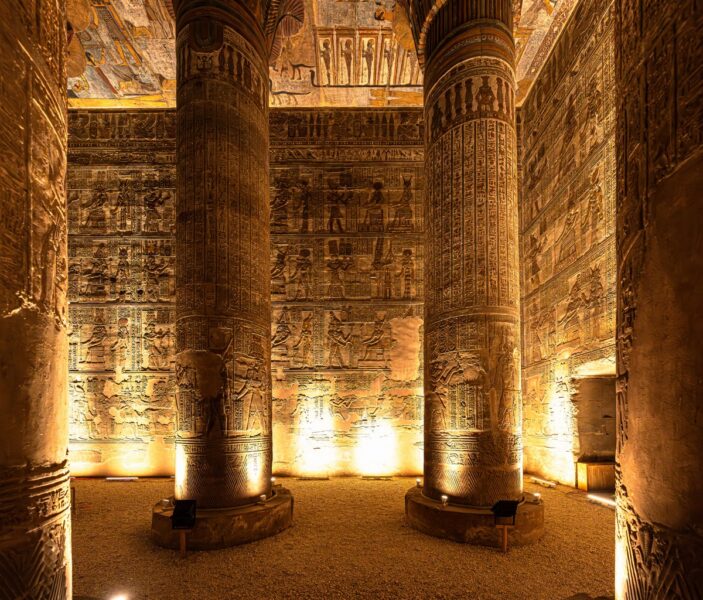
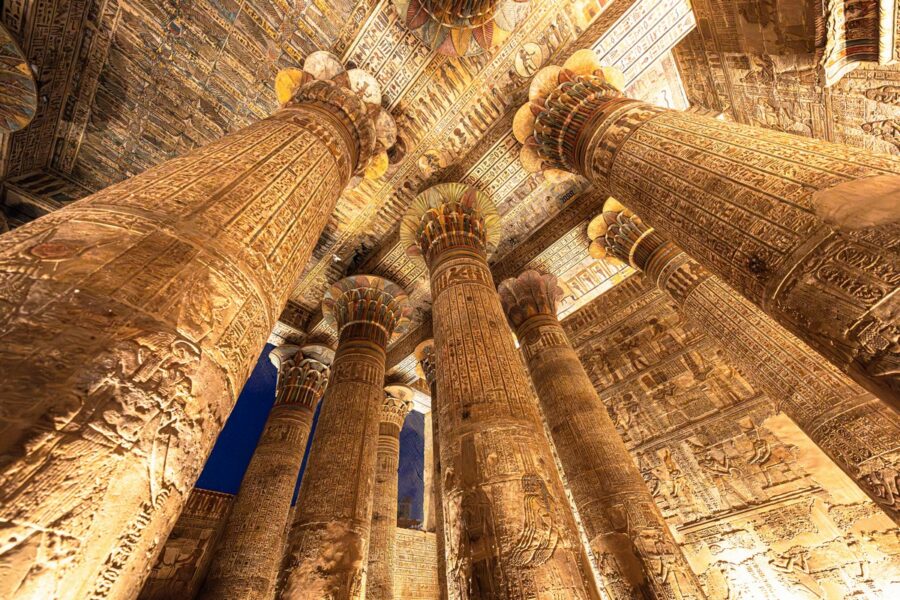
And here, after dark, we finally got to see the colors that all these carved bas-reliefs, ceilings, and columns were painted in:
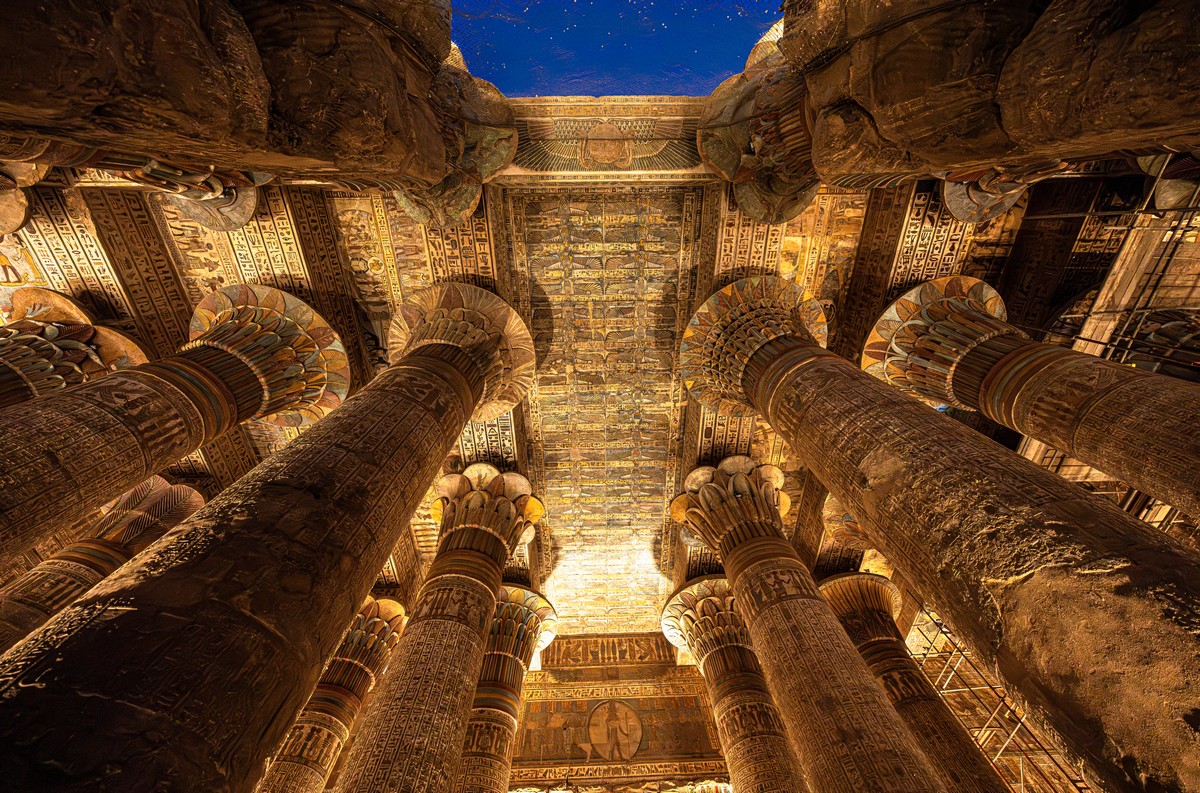
It was simply mind-blowing – pure delight!
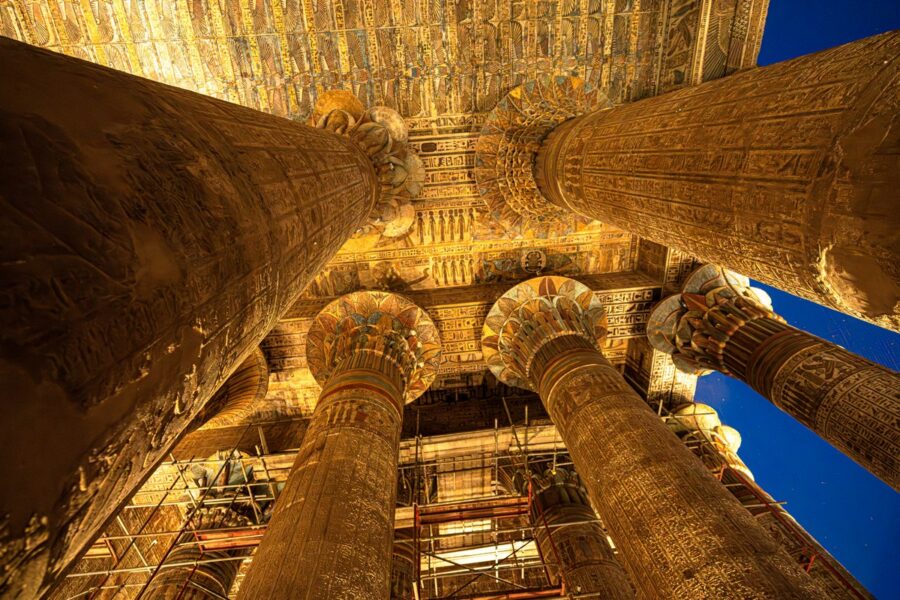
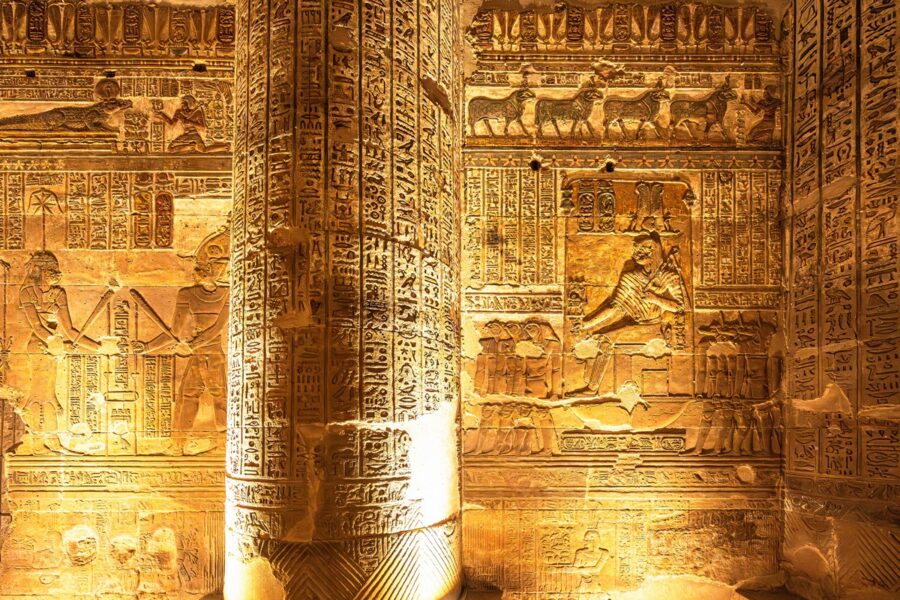
It’s amazing that paint more than two thousand years old has survived to this day! // A reminder: this isn’t “that ancient Egypt – the one with the pyramids and mummies”, but Hellenistic period Egypt – from roughly 2,300–2,050 years ago.
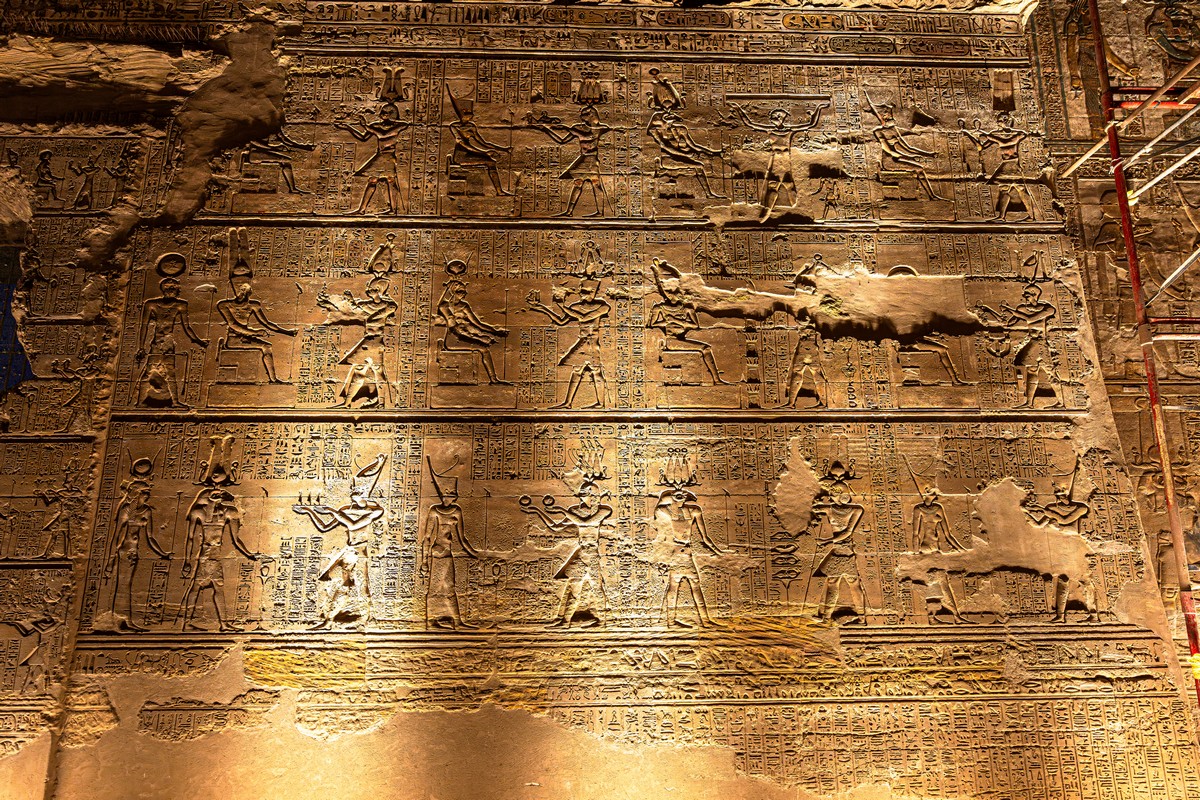
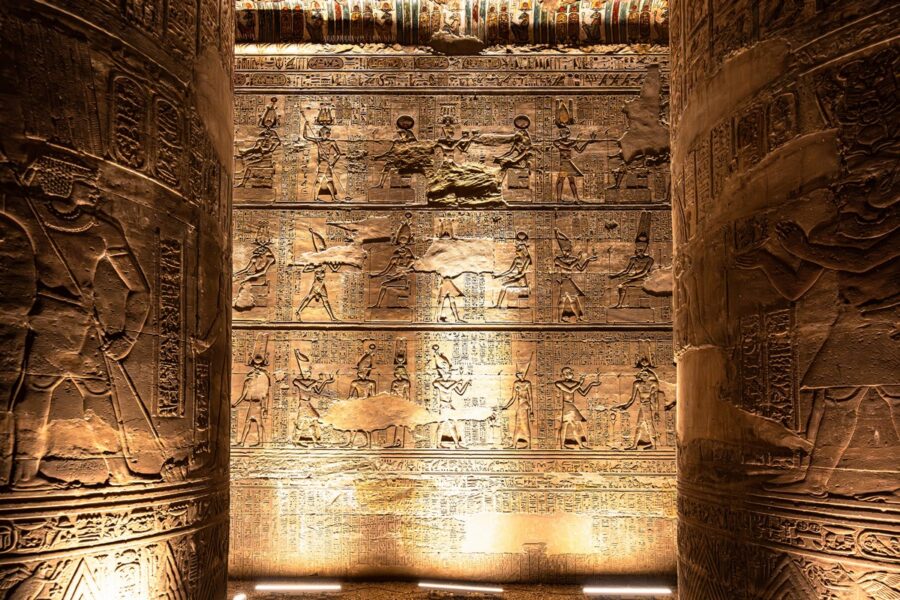
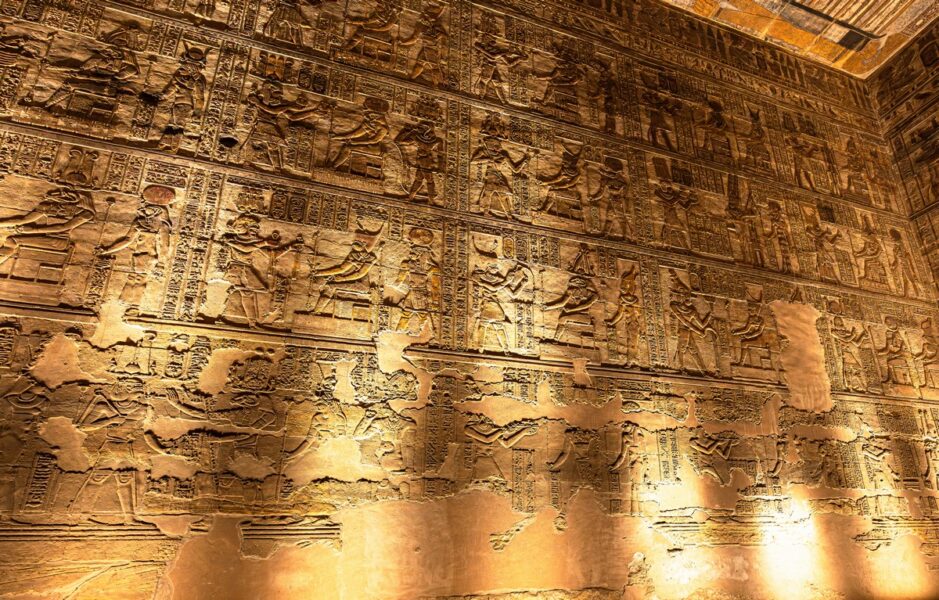
The bas-reliefs on the walls may be battered by time, but they’ve held up pretty well.
You could wander among these columns forever…
And here are yet more carved wall pictures telling stories of some kind (alas, I’m not fluent in ancient Egyptian, but it can all be translated into a modern language):
By the way, if you’d like to bone up on the history of Egypt from the very earliest times all the way through to practically present day in a popular, not-too-taxing format, I can recommend the BBC series Immortal Egypt with Joann Fletcher. I’d strongly advise giving it a watch – it’s a really interesting account. That said, in places it’s at odds with modern views on the history of ancient Egypt. For example, regarding the tomb of Cheops (which has never been found), the presenter in the documentary enthuses over a false chamber discovered earlier. The same goes for the screaming mummy in the Egyptian Museum in Cairo – and that’s an altogether horrific story, in which a rival heir to the pharaoh’s throne was mummified alive and died in terrible agony.
But let’s not dwell on that; let’s just look up and around instead:
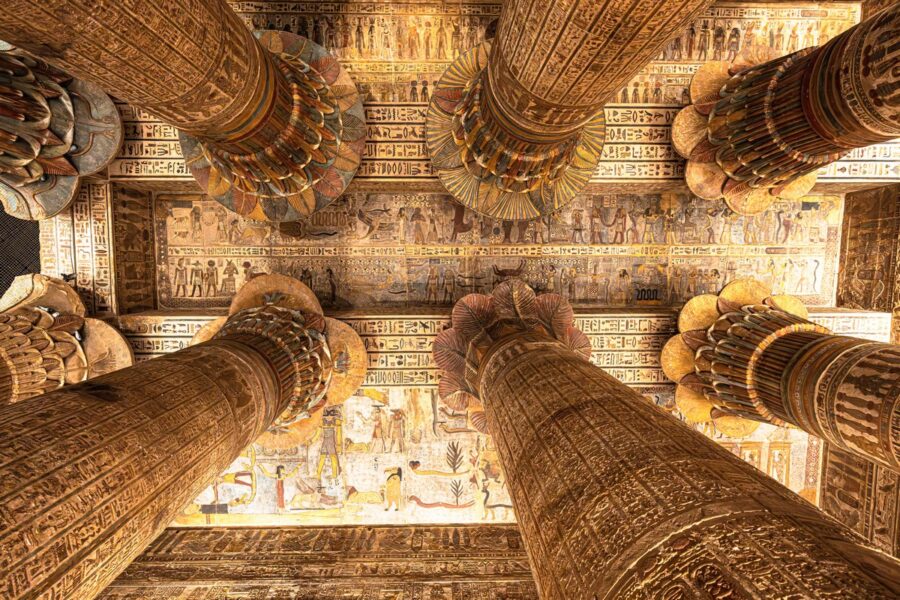
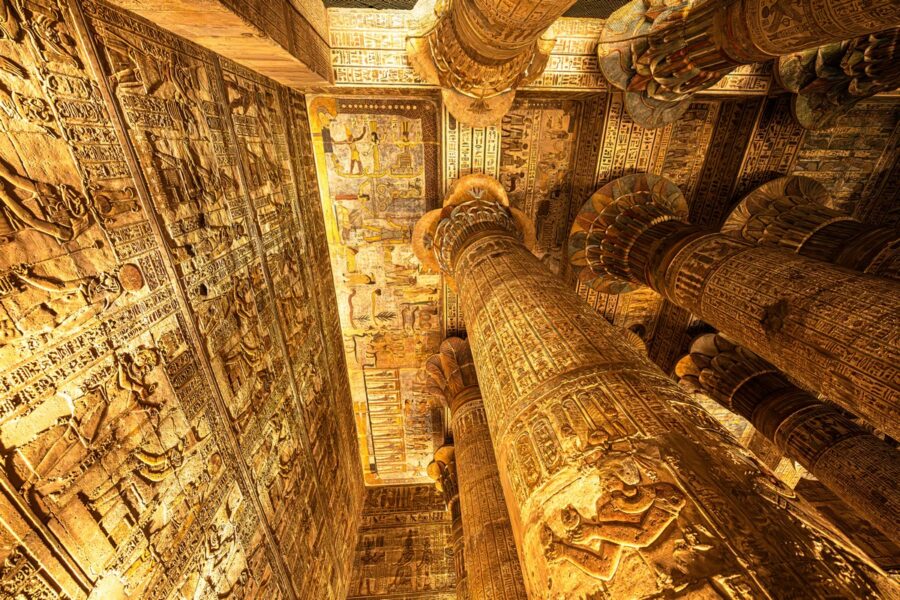
The scale is just gigantic; the columns – colossal. And yes, this is the very last period of ancient Egypt. But it was an absolutely grandiose civilization: the very first empire in human history.
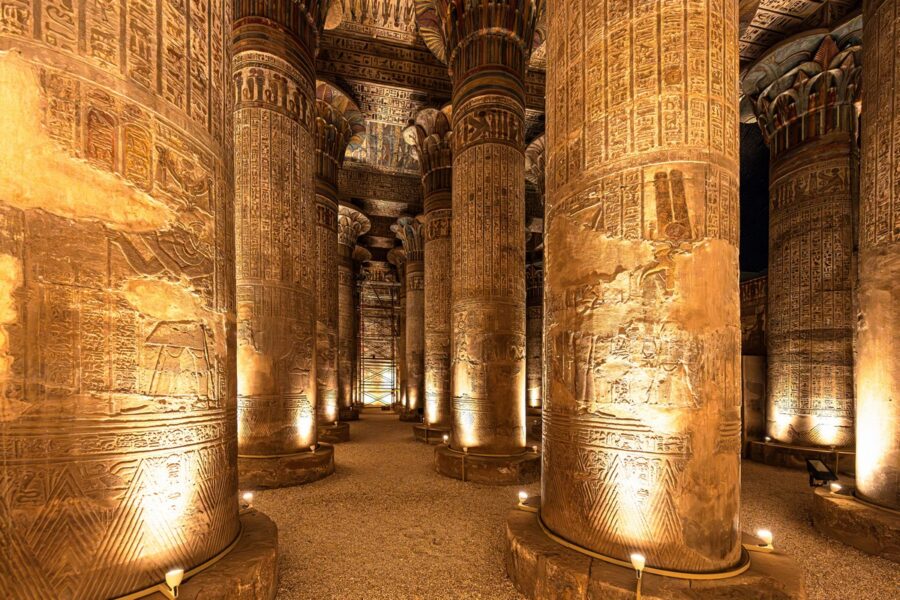
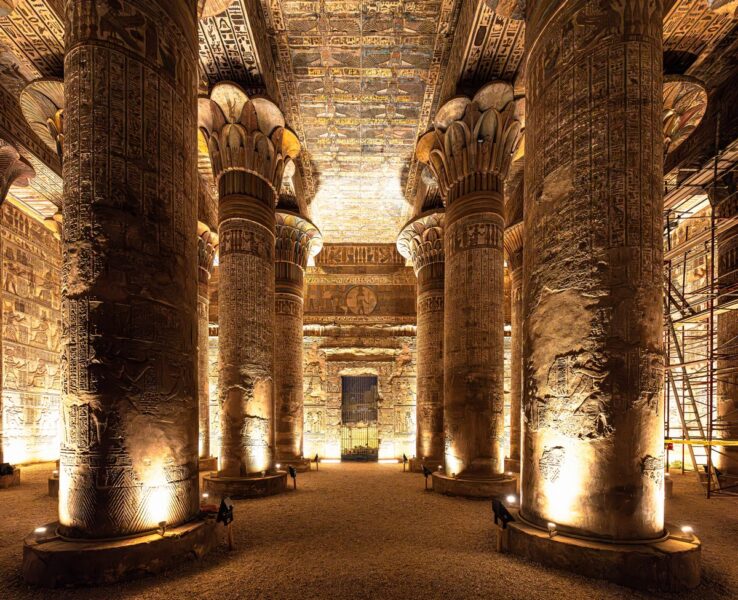
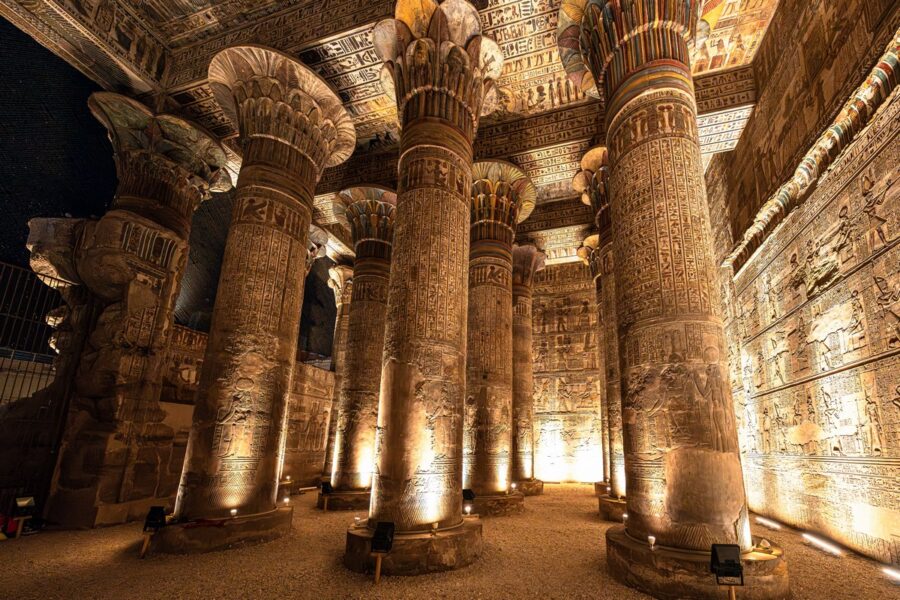
Yes, these structures date back from when Egyptian civilization was already nearing its decline.
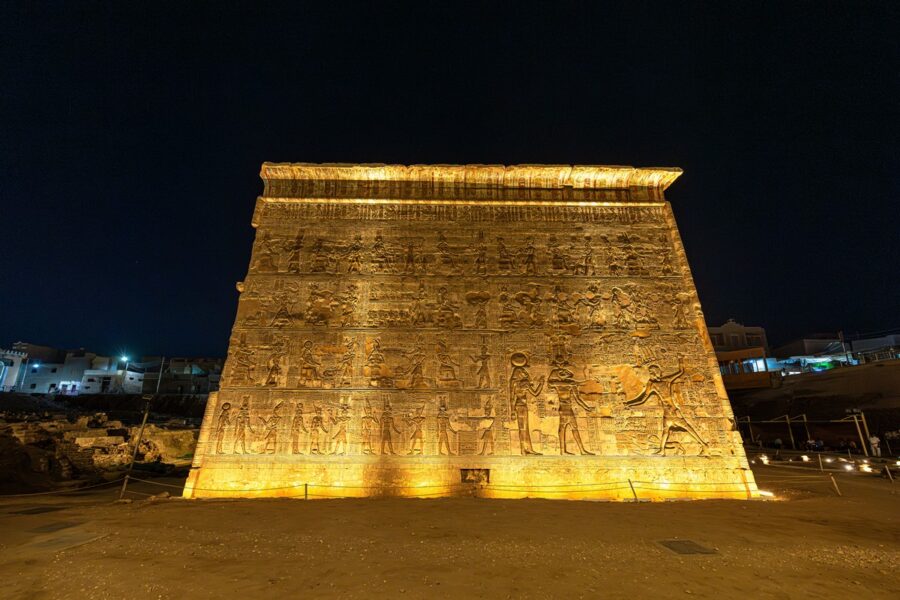
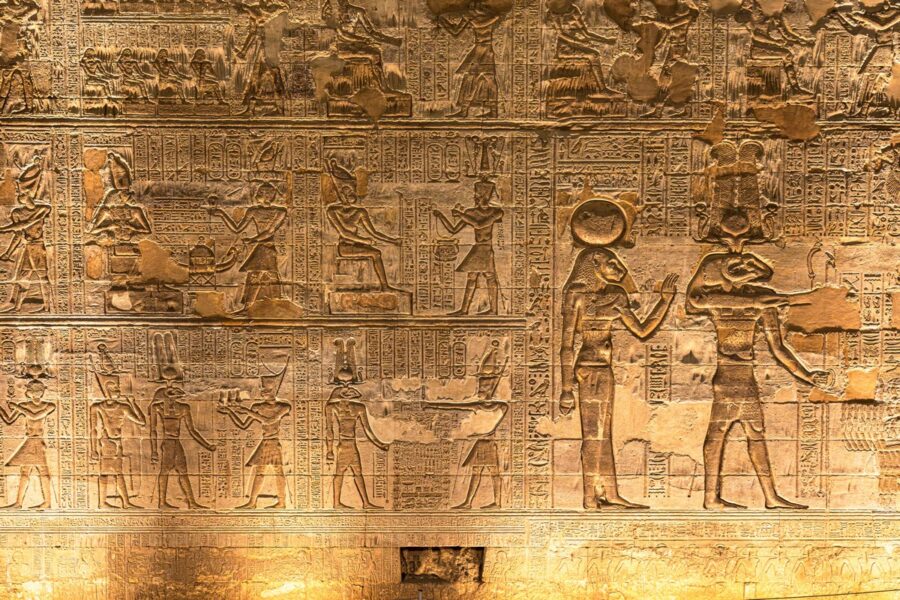
And that was that for the ancient world of Egypt.
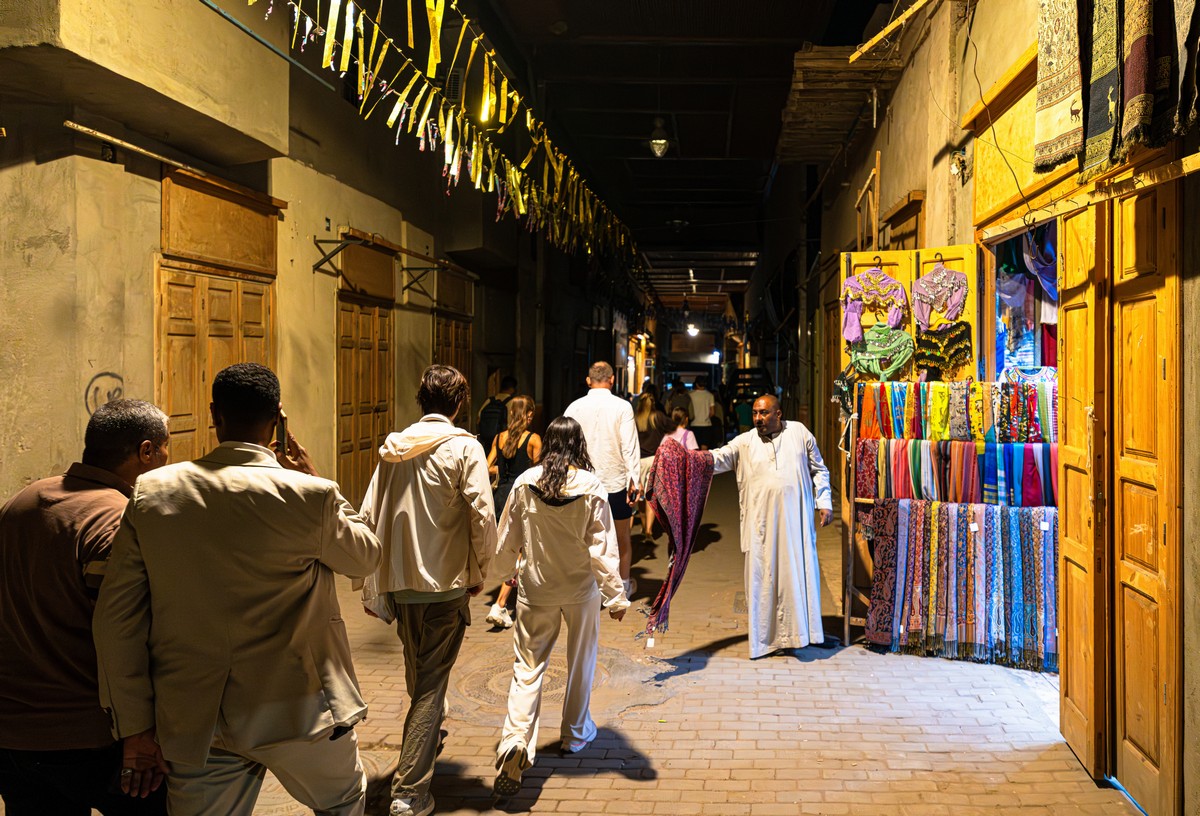
And that wraps up our trip down the Nile from Aswan to Luxor!
Later, it was time to disembark for the last time from the boat barge. But there are still some more tales from the (ancient) Egyptian side to come!…