
November 12, 2026
Luxurious Luxor – daytime version.
A long, long time ago – way back in the fall of… 2022 – my colleagues (from work, conferences, exhibitions, and other travels) and I found ourselves in Luxor, the ancient capital of the kingdom of Upper Egypt. But we only got to visit the main temples of the city in the evening, in the dark ->
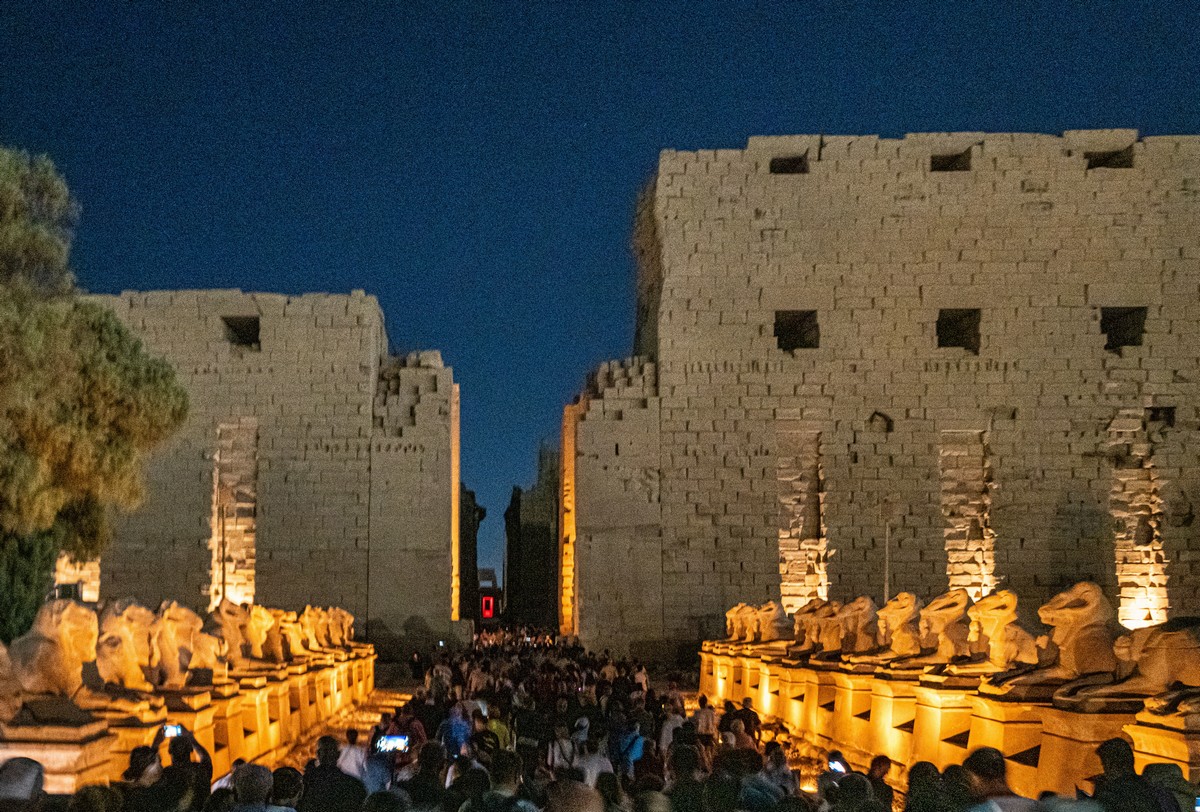
And that’s when it was decided that we simply, absolutely, categorically, mandatorily had to return one day to see the ancient temples by the light of day. And never mind how fiercely the sun would be beating down, or how tough it would be in that furnace for the poor, wretched tourist soaked in sweat from head to toe. Ancient Egypt is one of the most important cradles of world civilization. For any reasonably curious person, a visit here is nothing short of an absolute must. You just need to pick the right season to avoid the very worst of the heat (winter is best, but for us – alas – it was October), plus, ideally, have plenty of free time so you can stroll around everywhere and see as much as you possibly can.
It’s more than worth it!
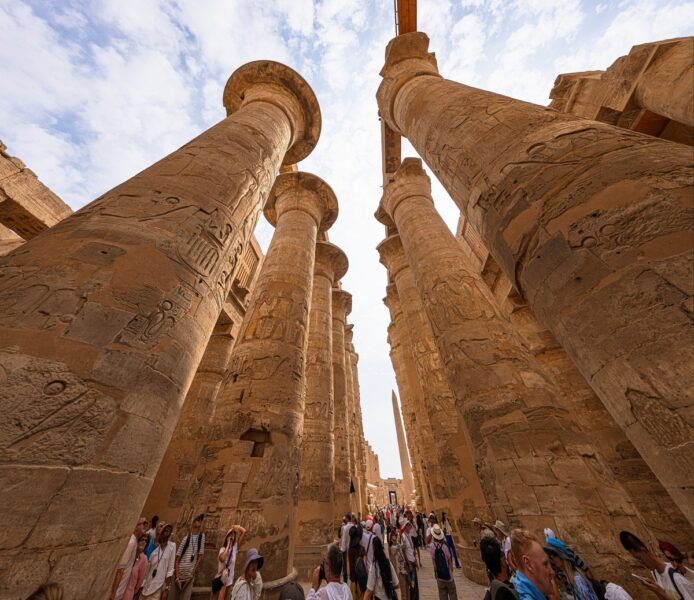
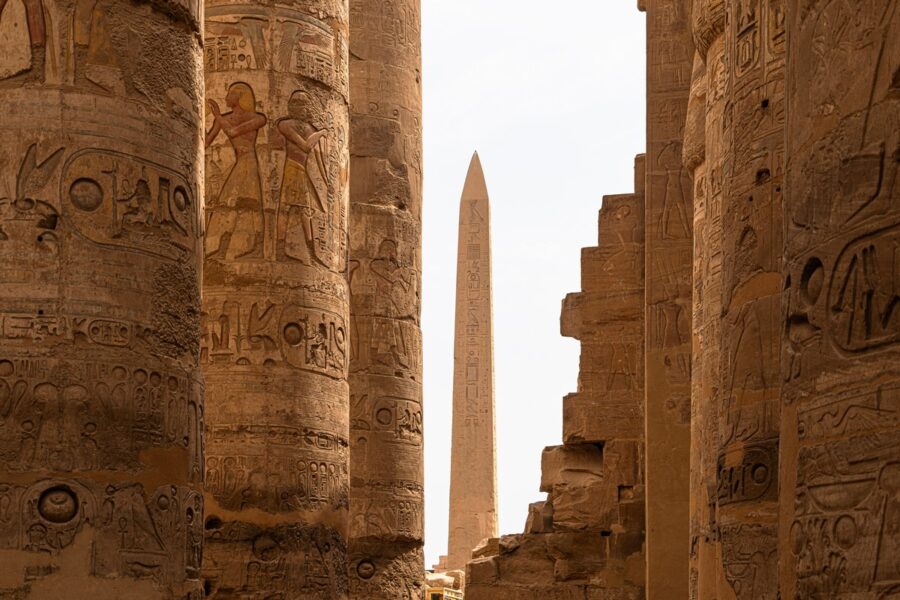
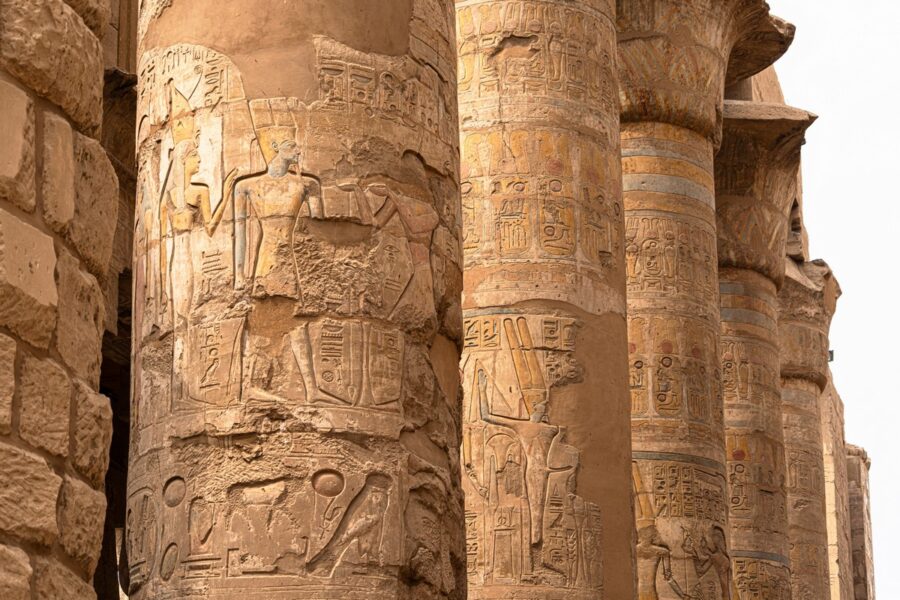
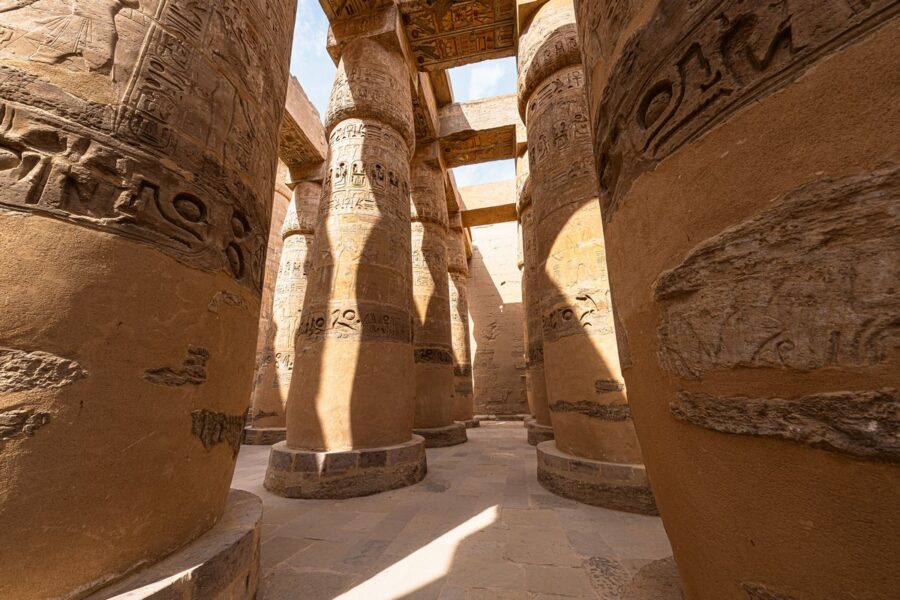
I’ll start with the slightly less significant – but still absolutely magnificent – Luxor Temple.
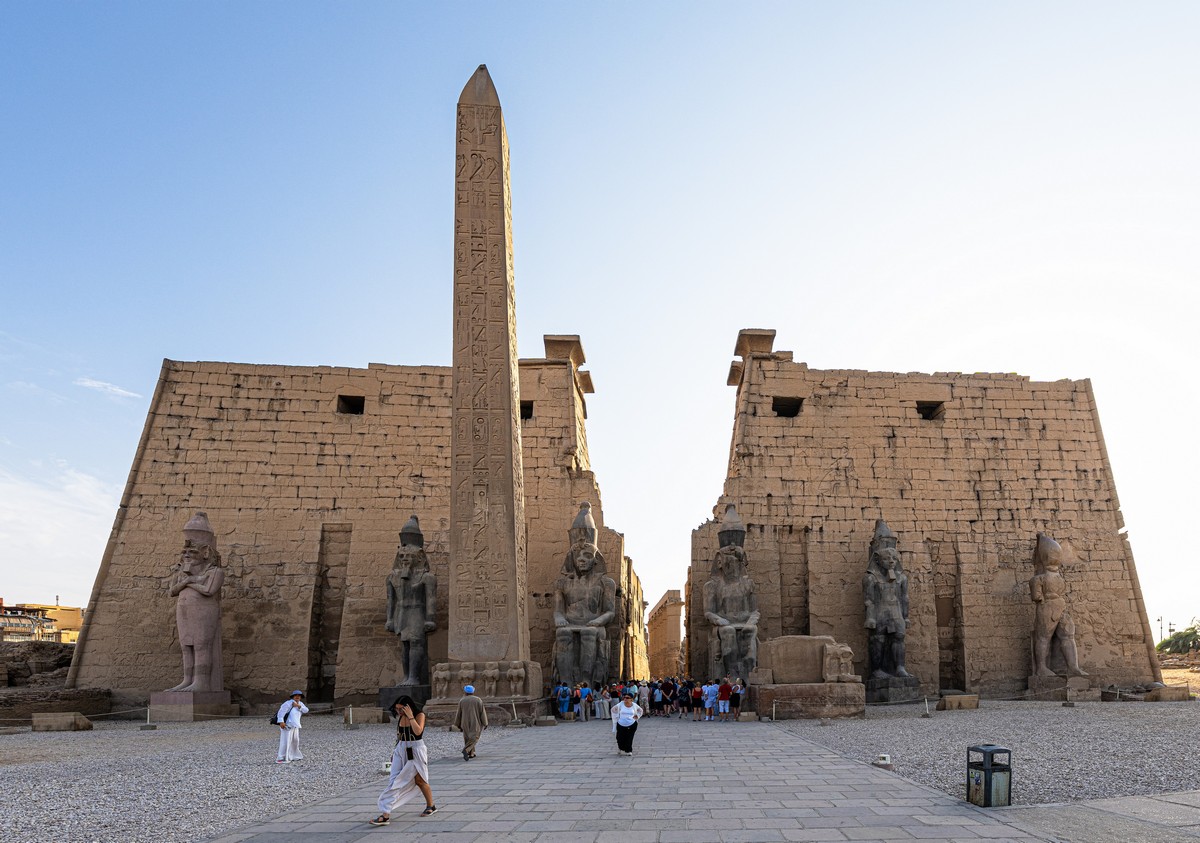
The history of ancient Egypt is a truly bottomless well of discoveries and archaeological digs, plus historical artifacts rooted in all those ancient religions and stories/legends – some already unearthed, others still unknown, buried beneath the sands of the surrounding deserts. Its history as a state begins somewhere around five thousand years ago!
That’s a very, very long time ago – before the first civilizations of the Mediterranean, and all the others too, for that matter. Sure – Mesopotamia (the Sumerians, Babylon, and so on) was also around and flourishing at about the same time, but the quantity and quality of its historically valuable artifacts pale in comparison with the historical legacy of ancient Egypt, which was waaay cooler than all the other civilizations of its day.
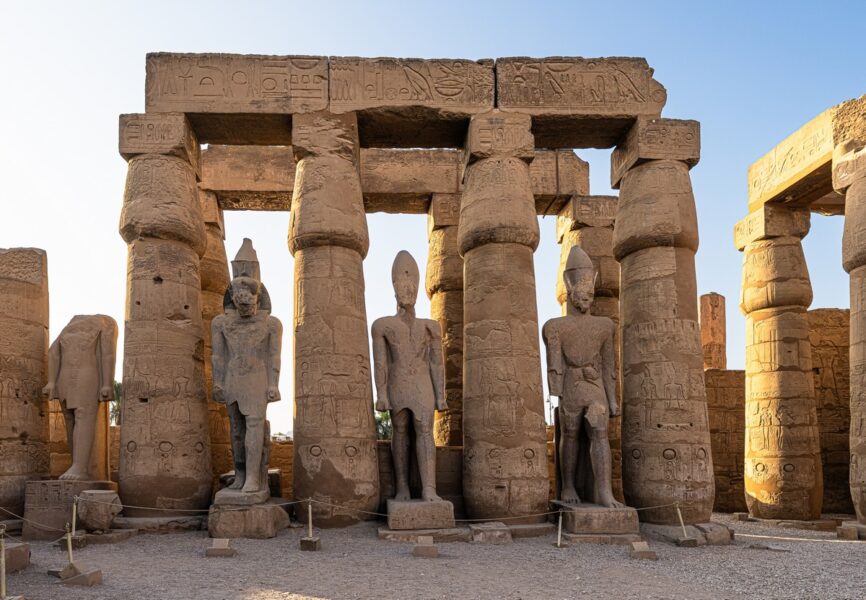
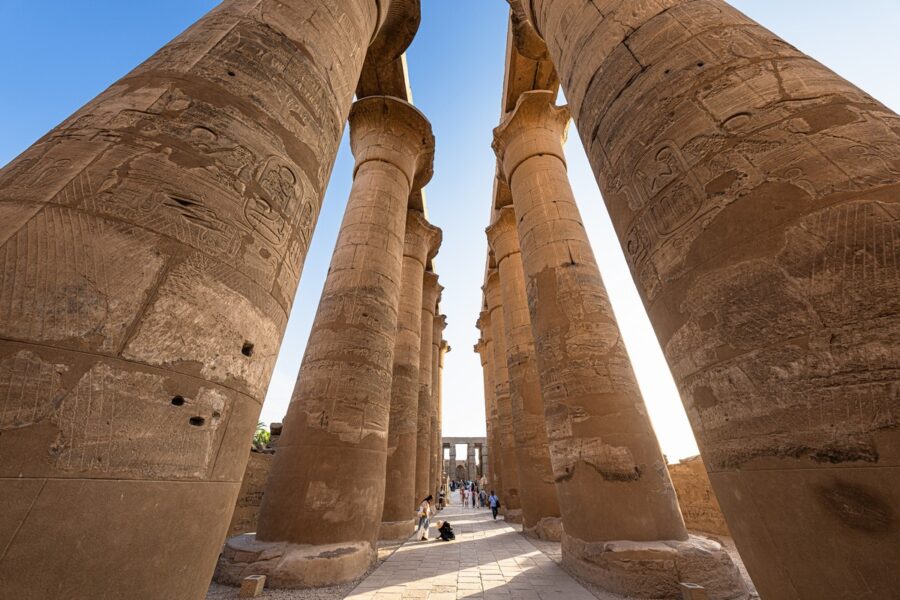
And the proof of that lies in the splendid temple complexes, which are more than three thousand years old and still look mighty impressive today:
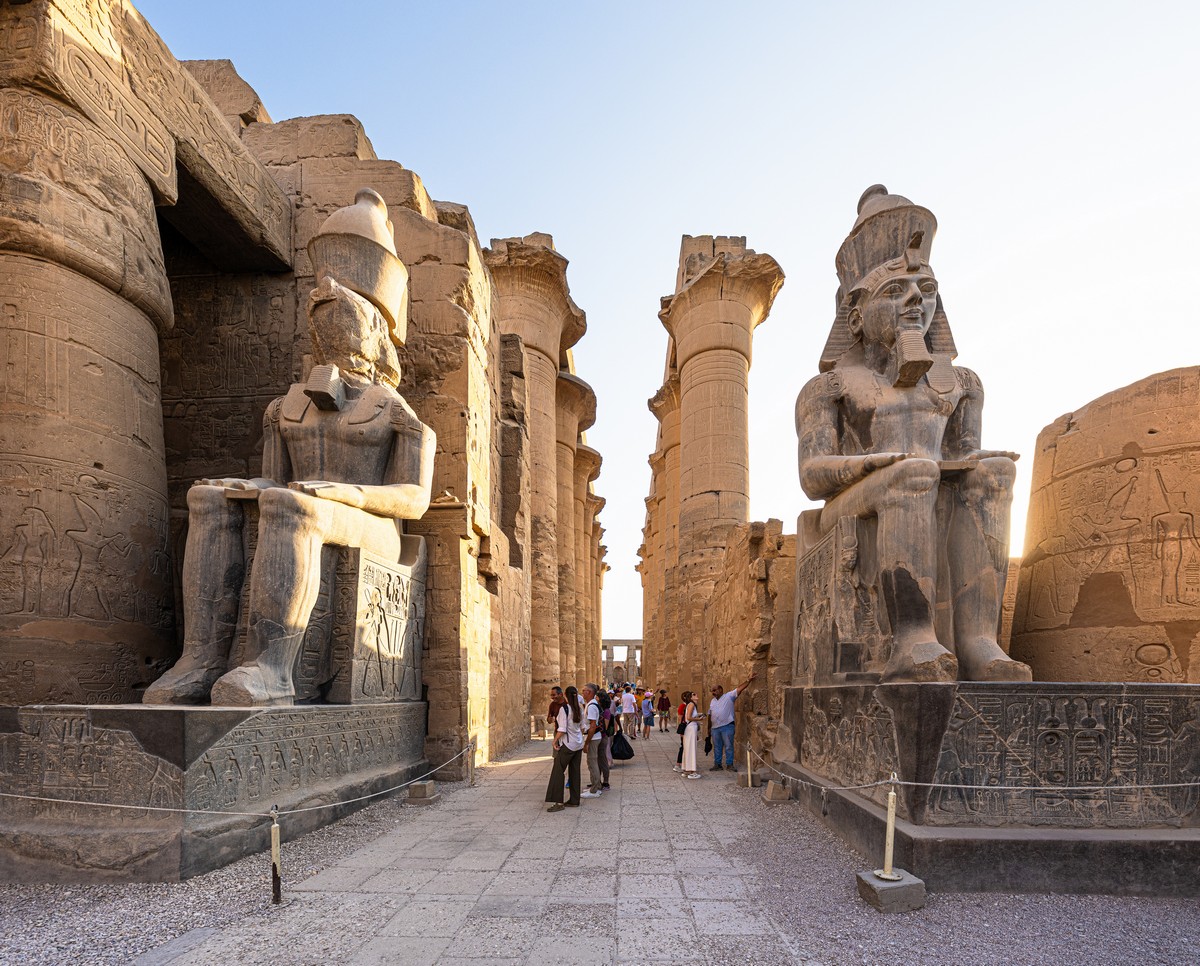
All this was built 3,000+ years ago!!!
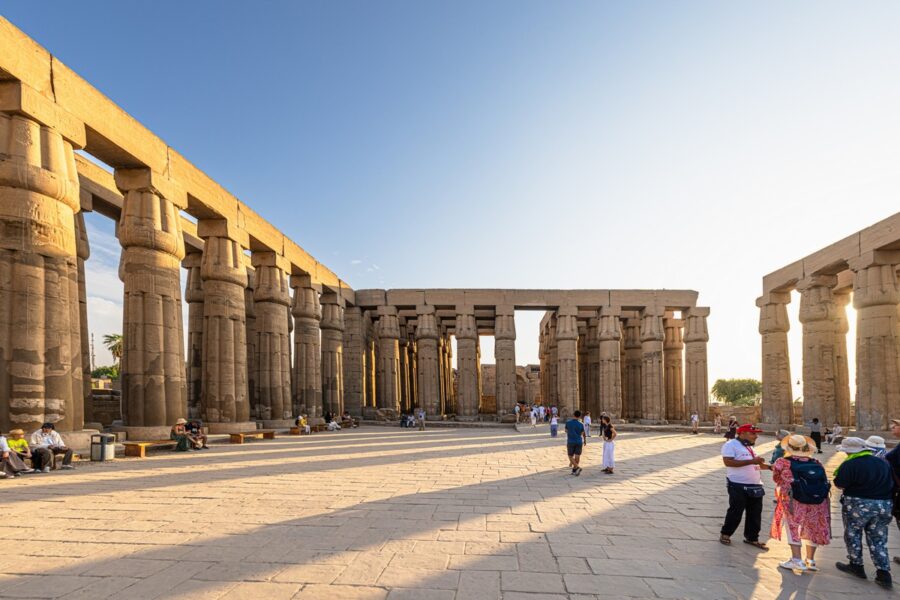
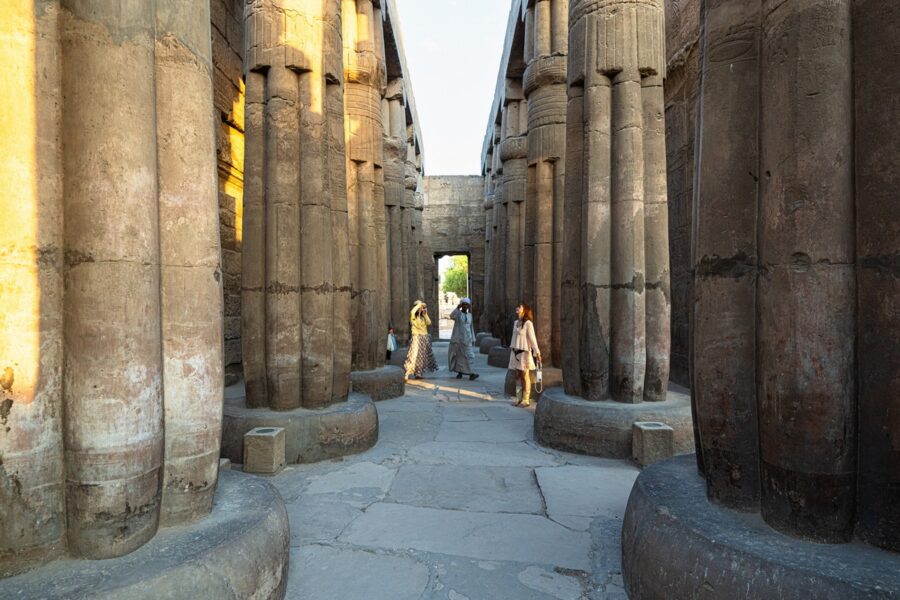
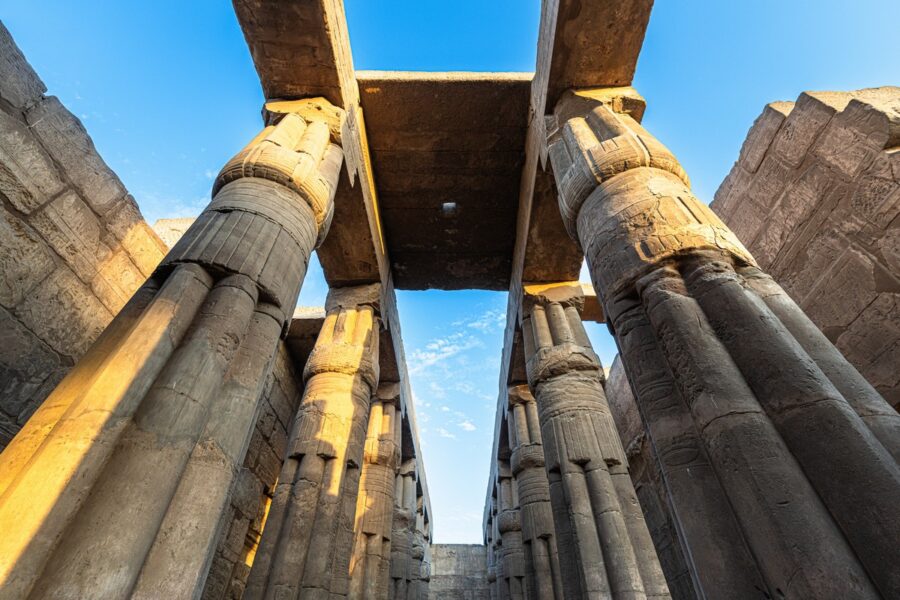
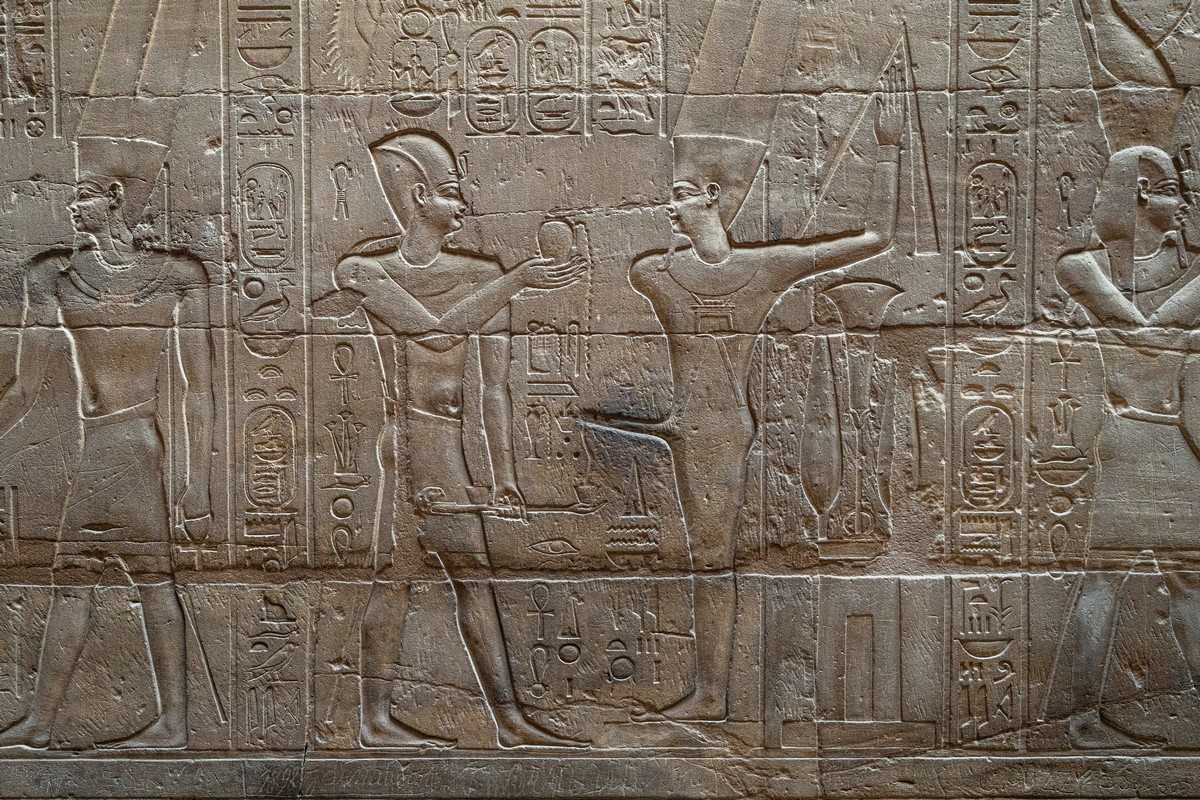
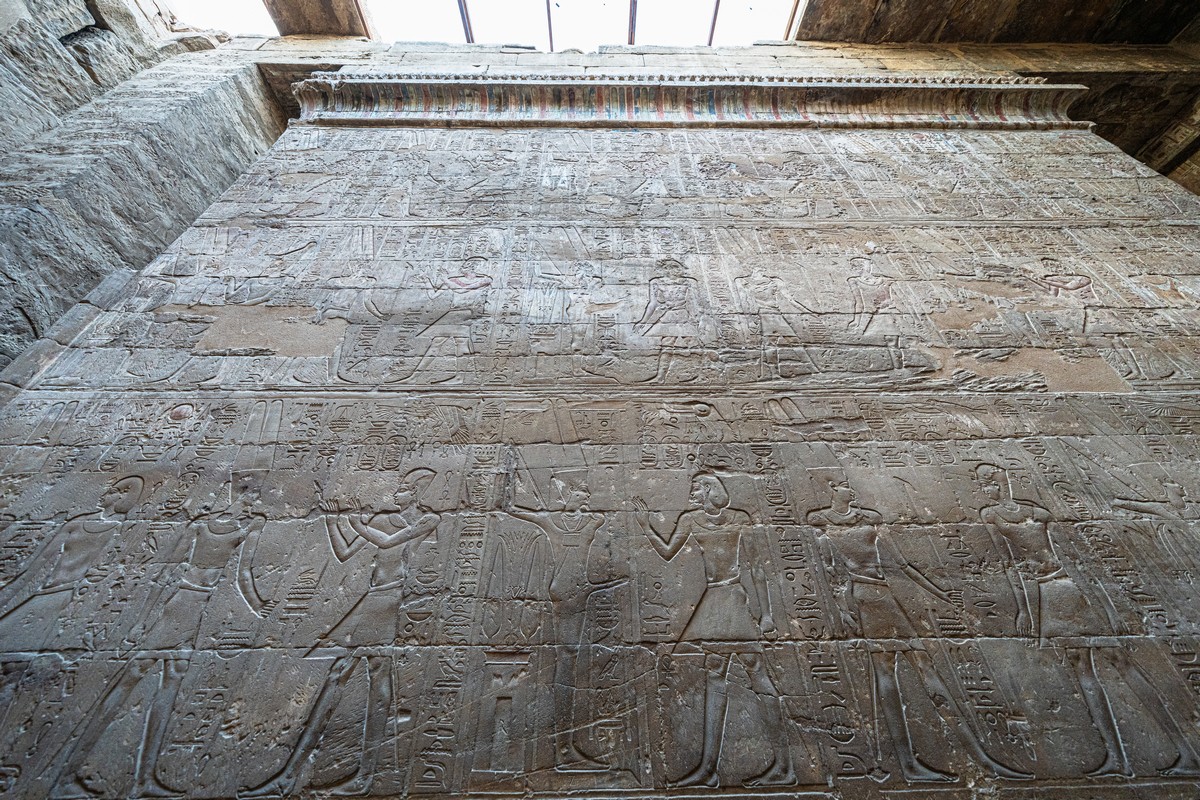
And here they are – the bas-reliefs on the walls! Yes, this is a depiction of the ancient Egyptian god Min – the god of fertility and all that. He’s the one on the right…
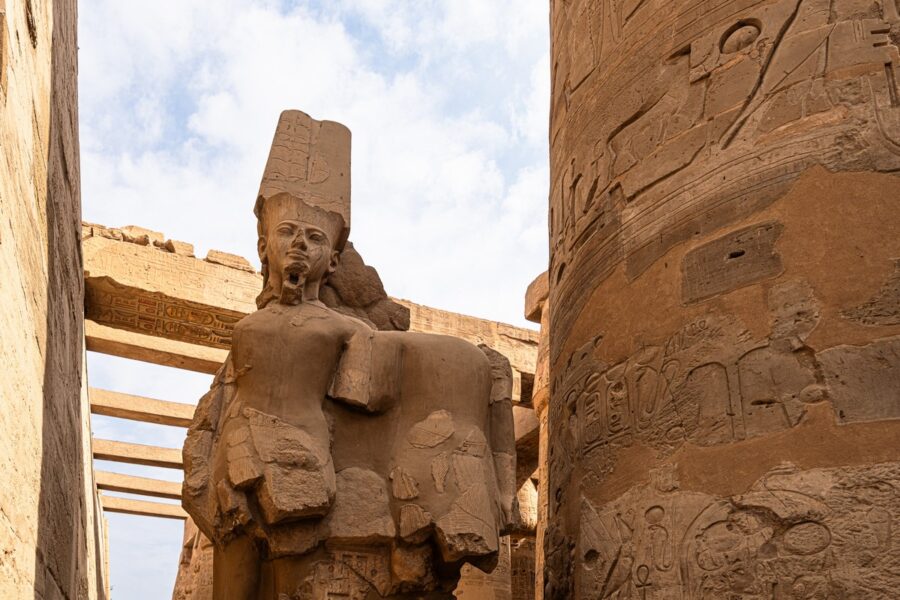
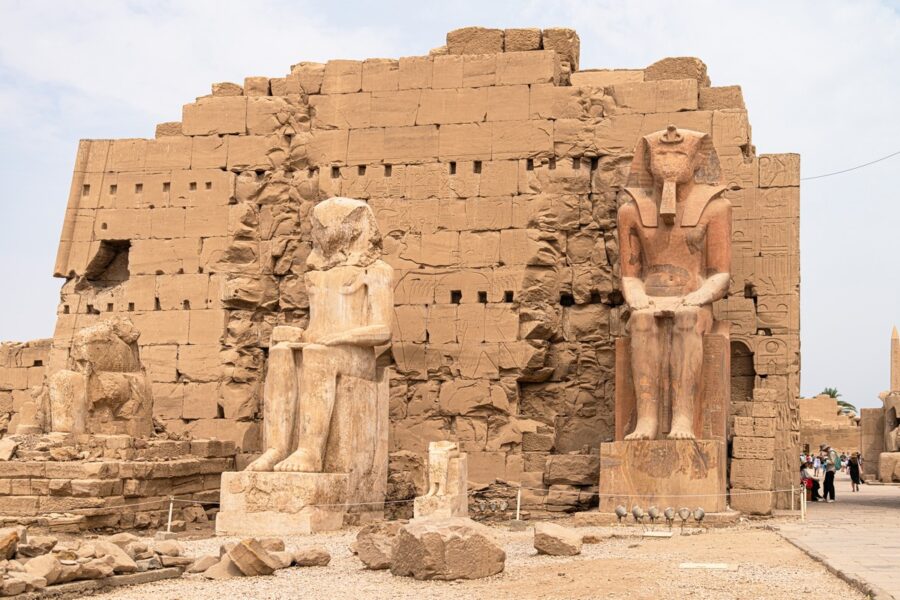
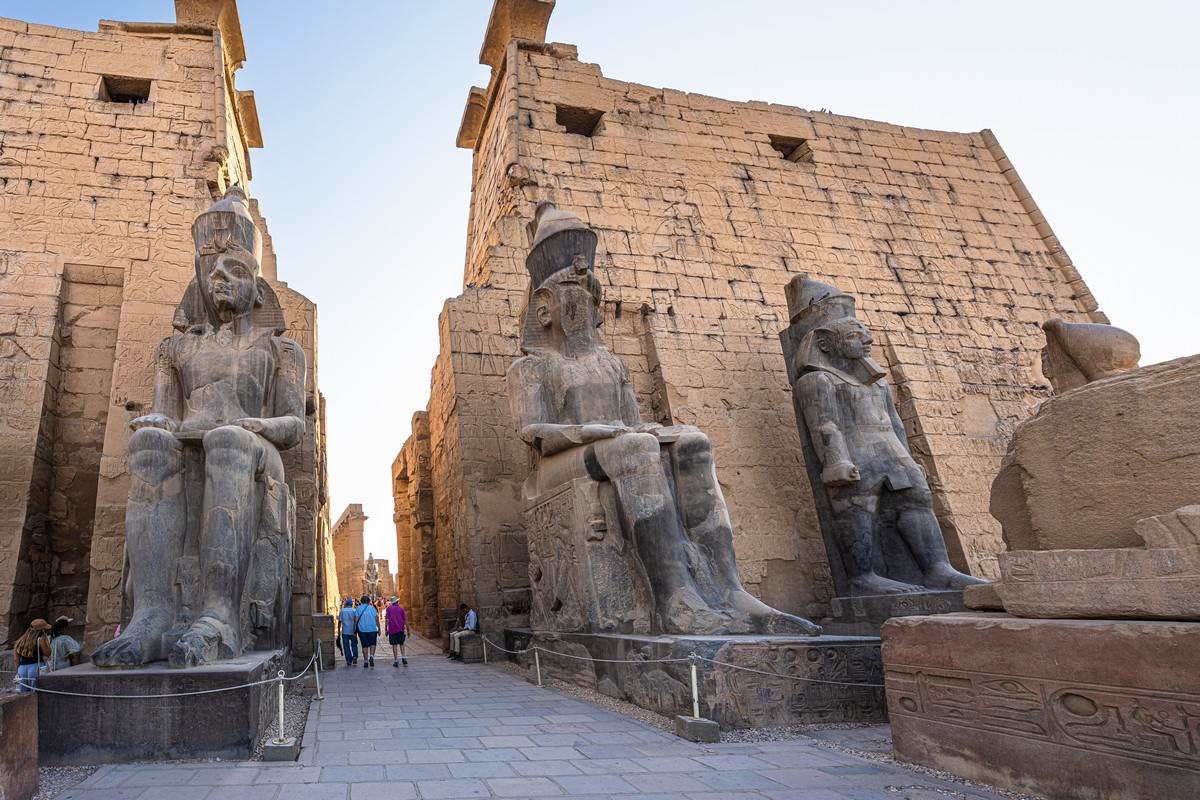
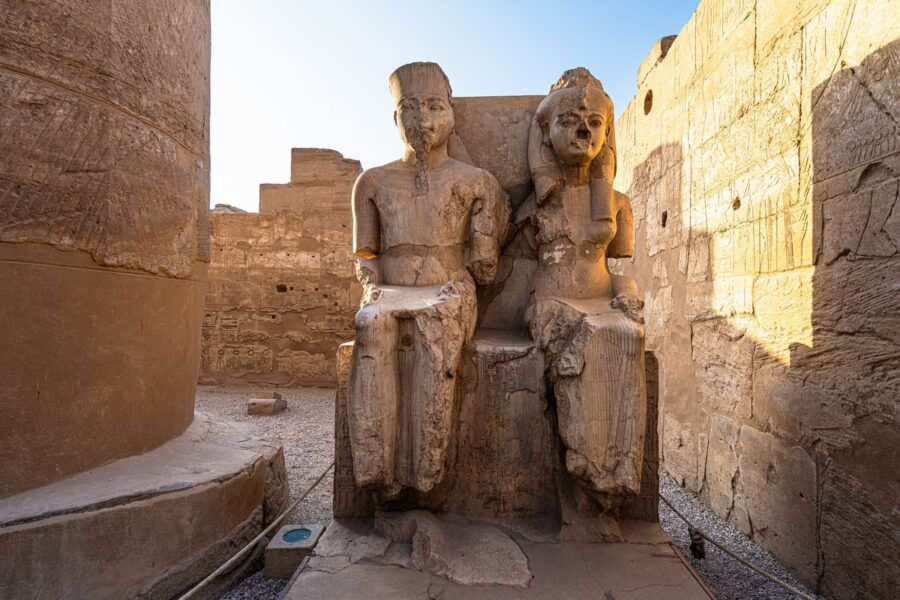
It’s really hard… to get your head around the scale – in terms of both size and time. These walls and sculptures were built and chiseled so far back that we’re on the kind of timescale where you can safely start talking about shifts between the phases of geological epochs – global warmings and coolings, for example. Oh yes – these sculptures hewn from granite have seen practically everything.
It’d be interesting to find out what the texts carved on their thrones say:
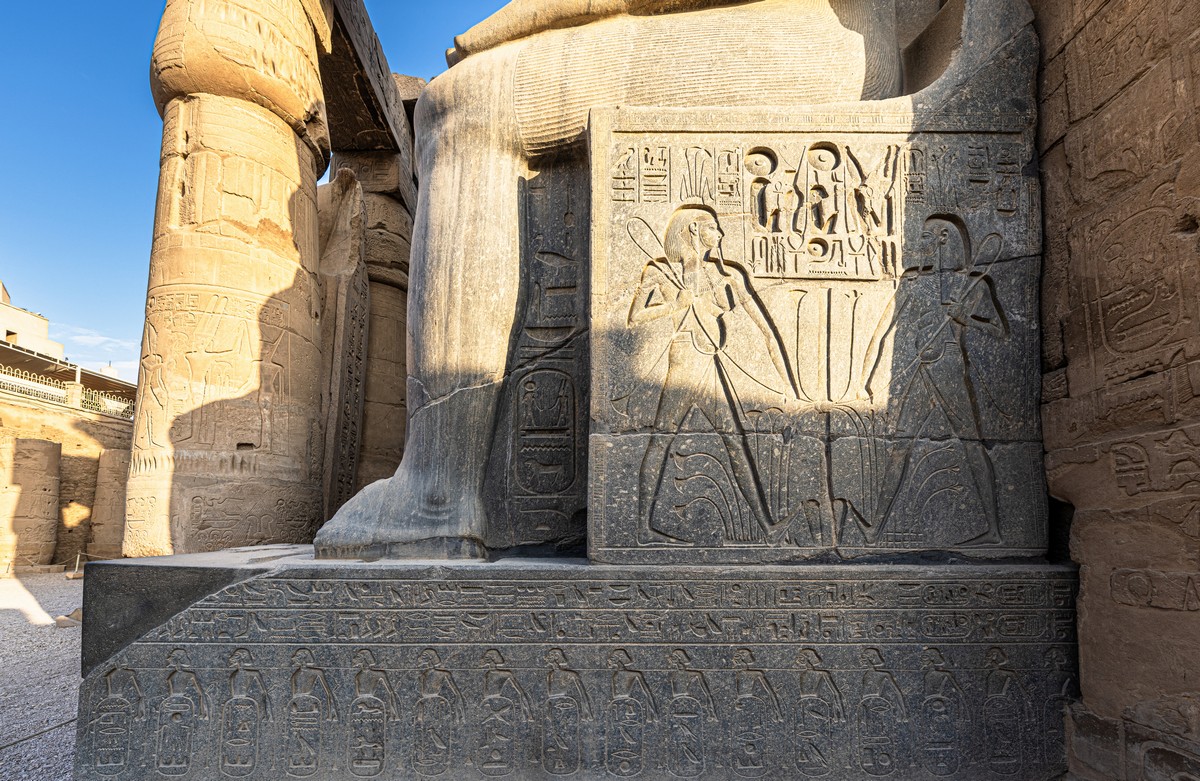
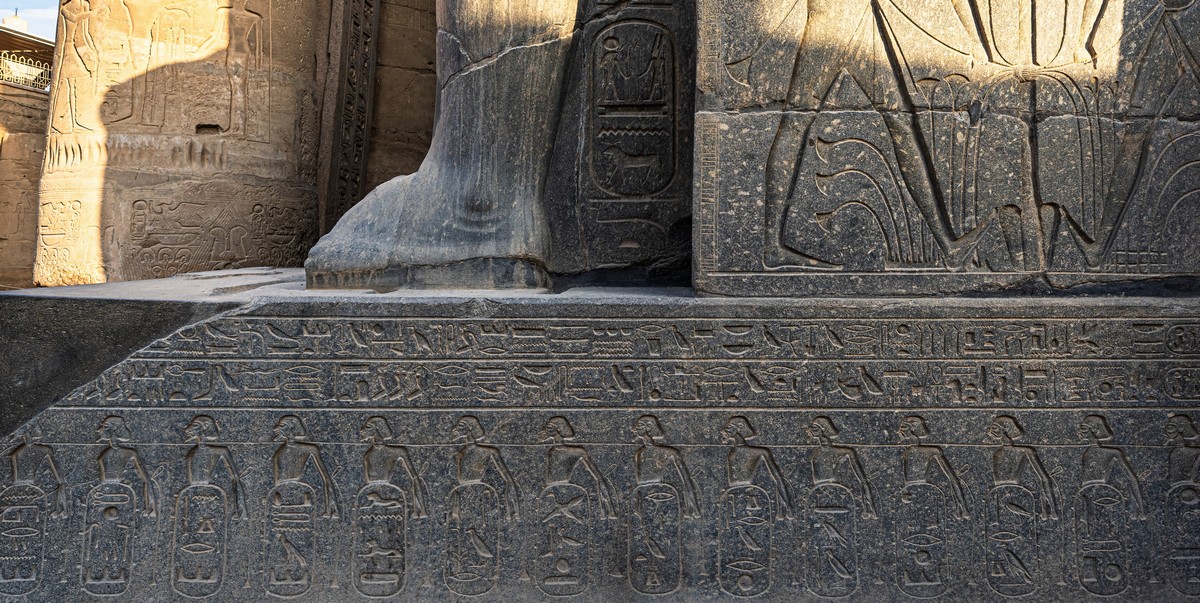
But I’m no Egyptologist. Still, I’d hazard a guess that down at the bottom it’s just the names of all the previous rulers of Egypt:
We continued to just stroll, look, marvel…
Some tourists had decided to stage a photo shoot. Ooh – I think I might have photo-bombed them 😊:
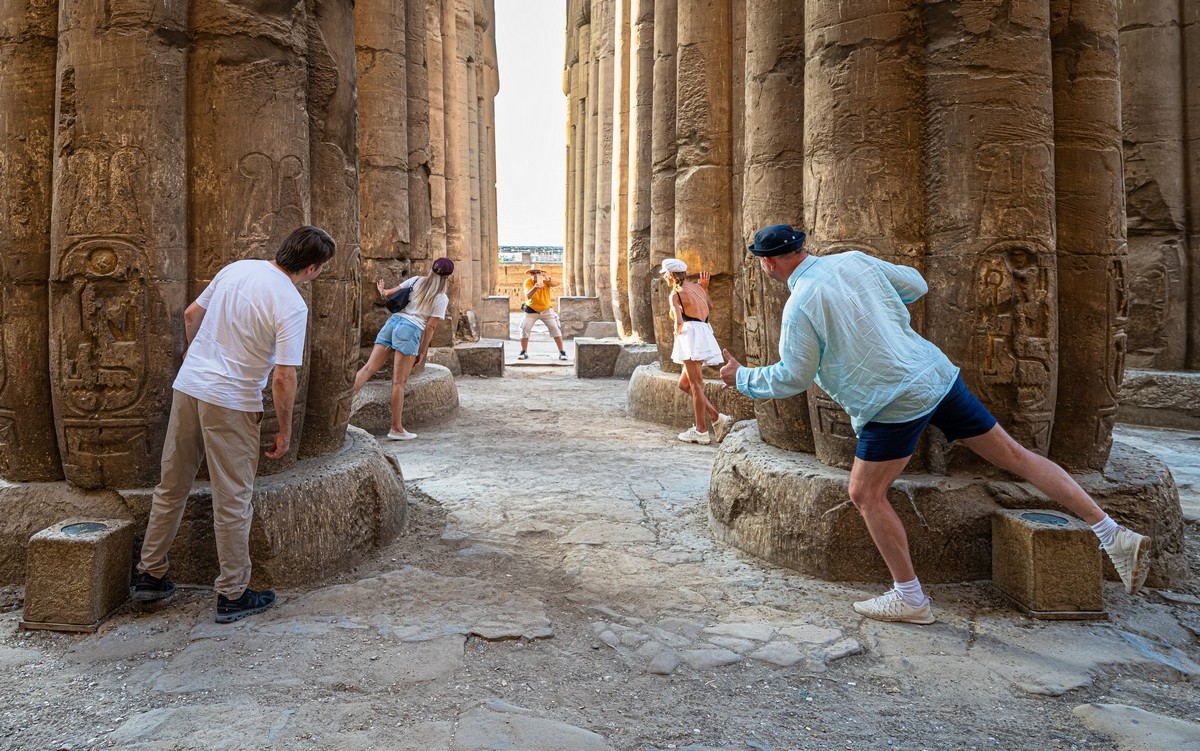
The monumentality of the structures is off the scale!
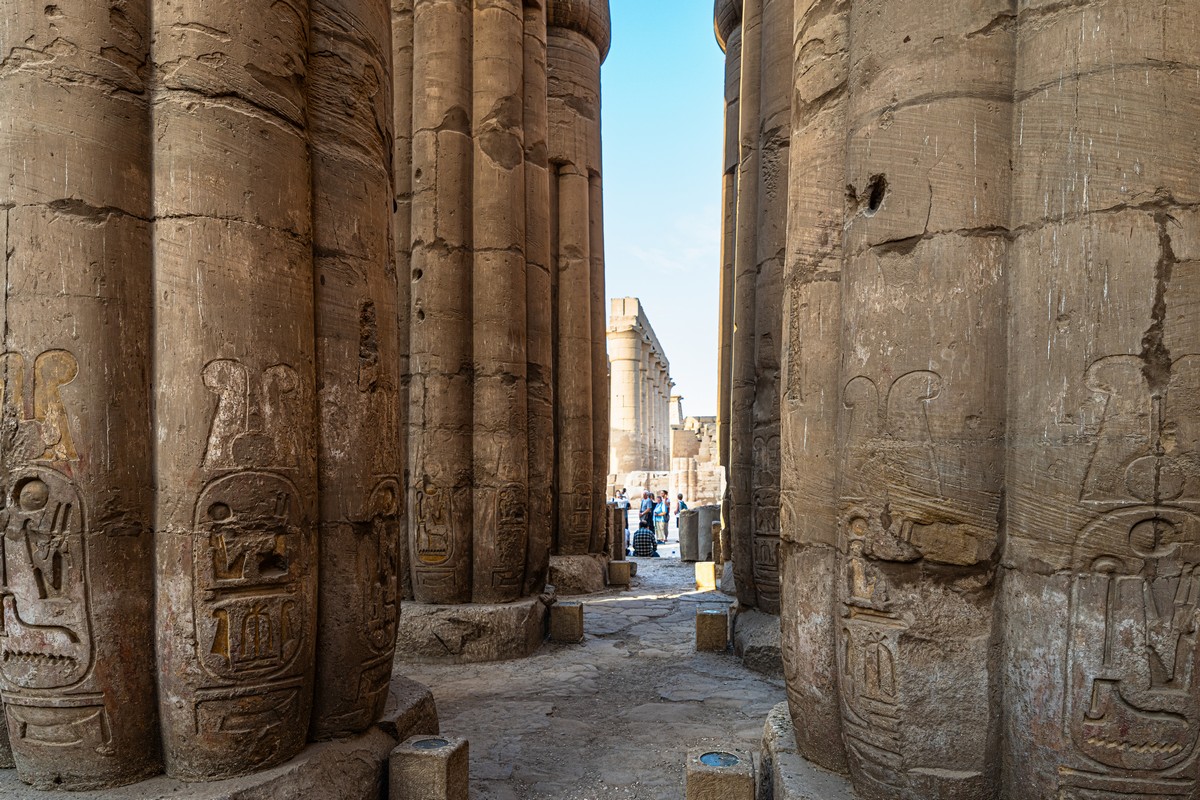
Plenty of the bas-reliefs carved in the stone have survived too:
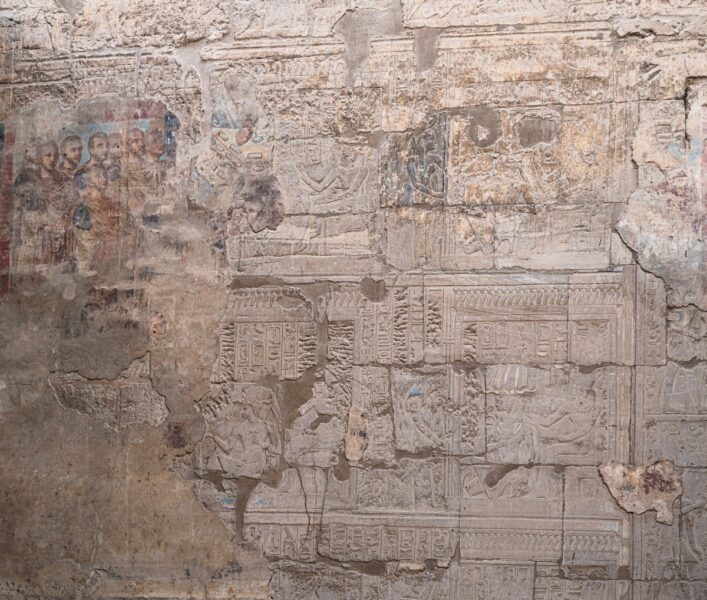
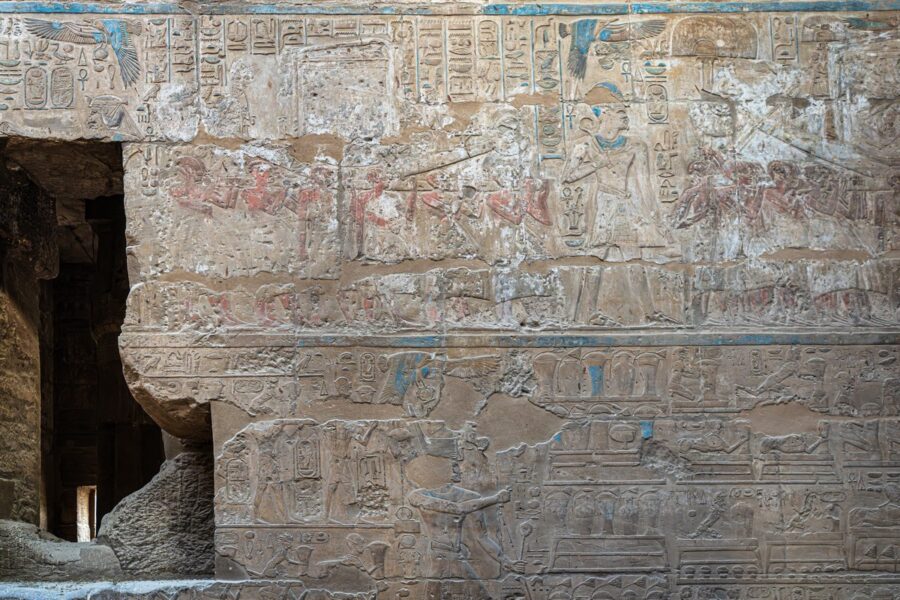
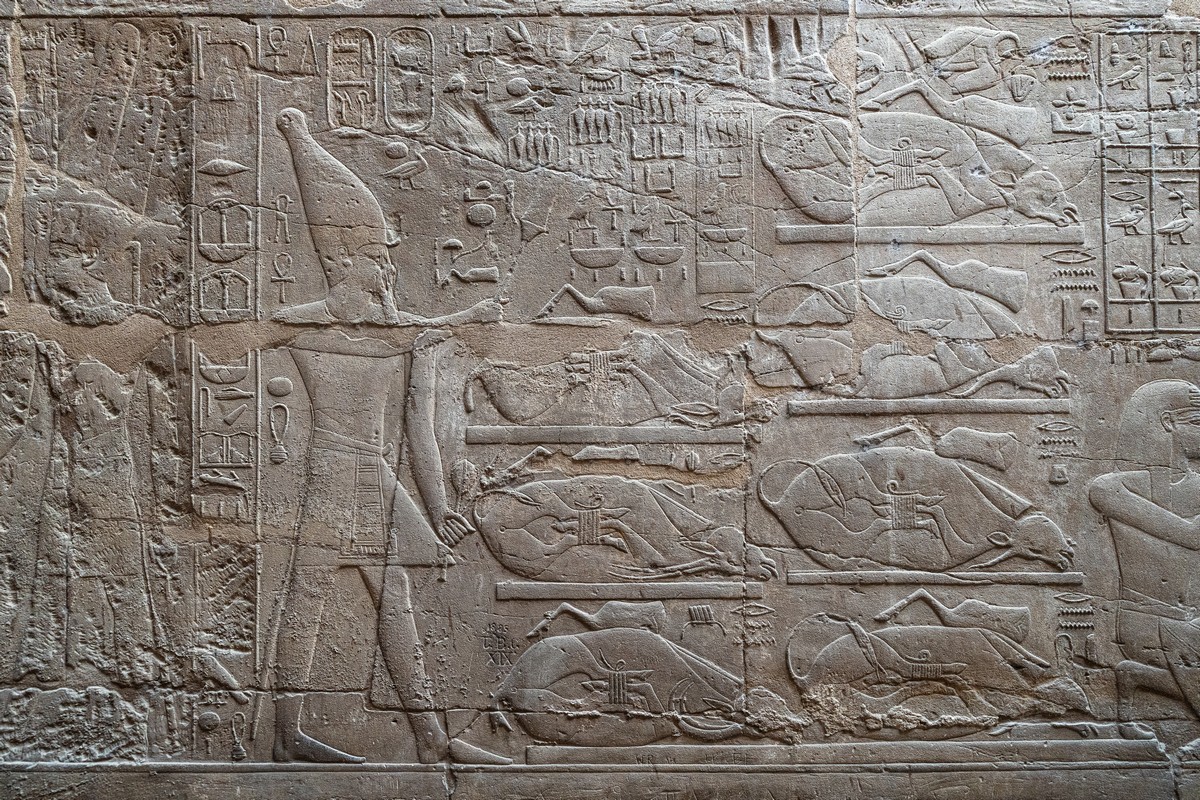
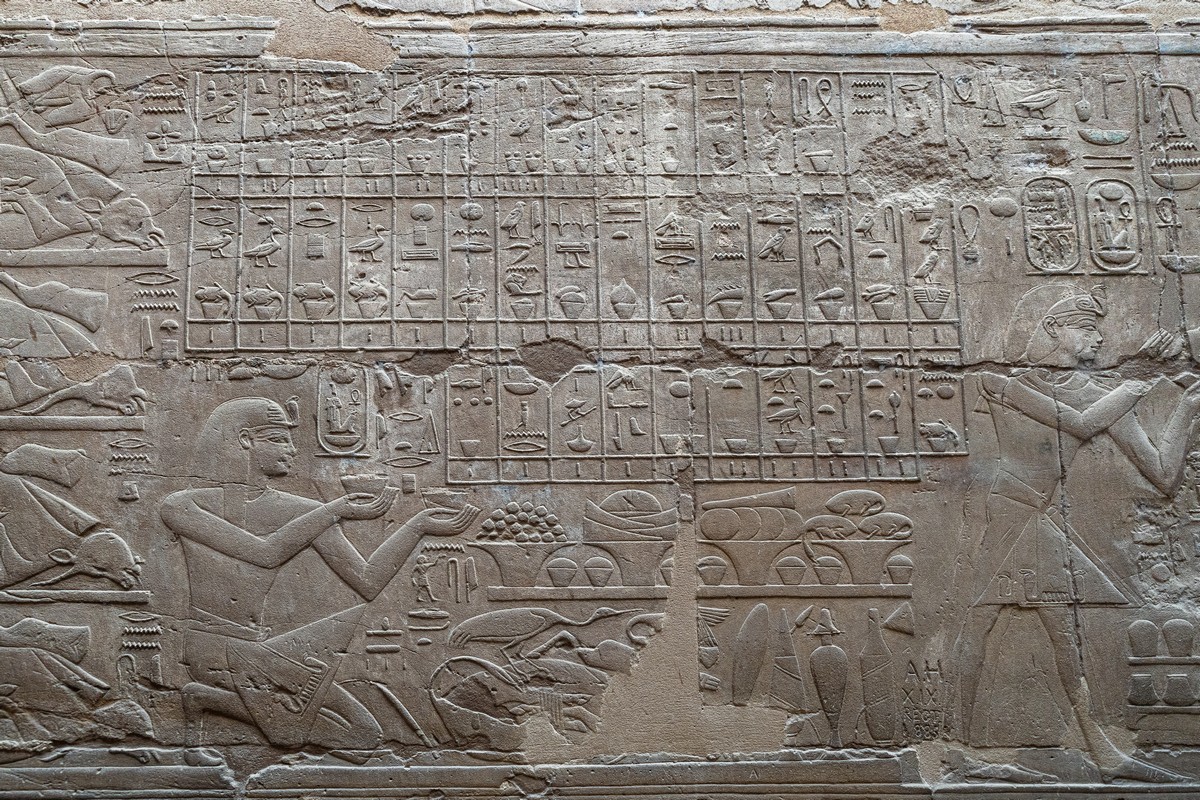
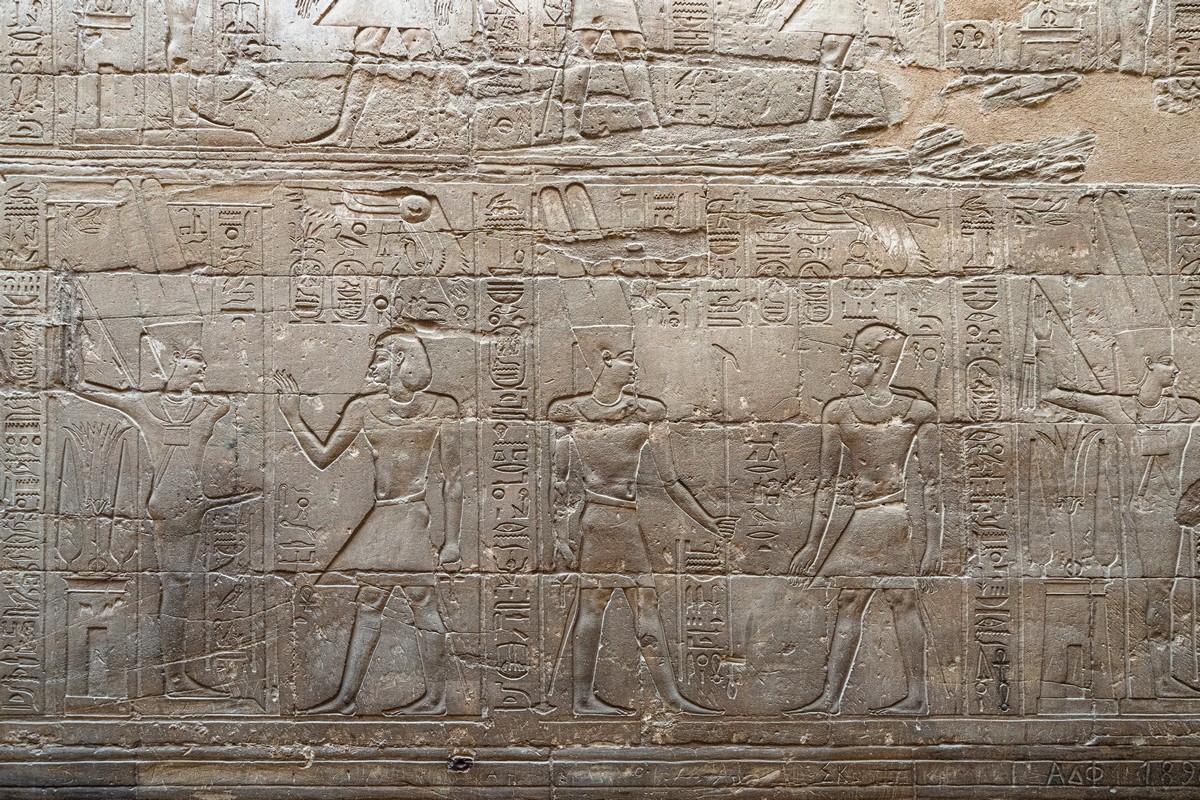
These tell the story of what life was like for a pharaoh: the heroic feats he performed, what he was fed day to day – and so on.
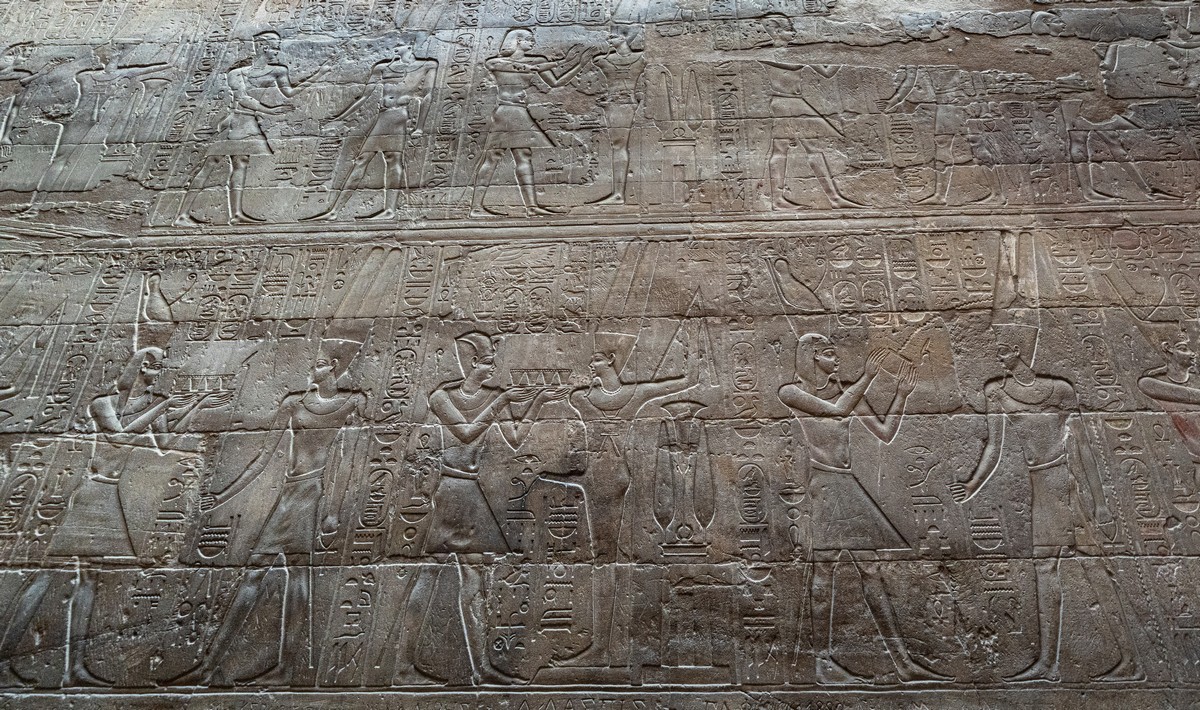
It’s just the place for contemplating eternity – and your own contribution to its existence…
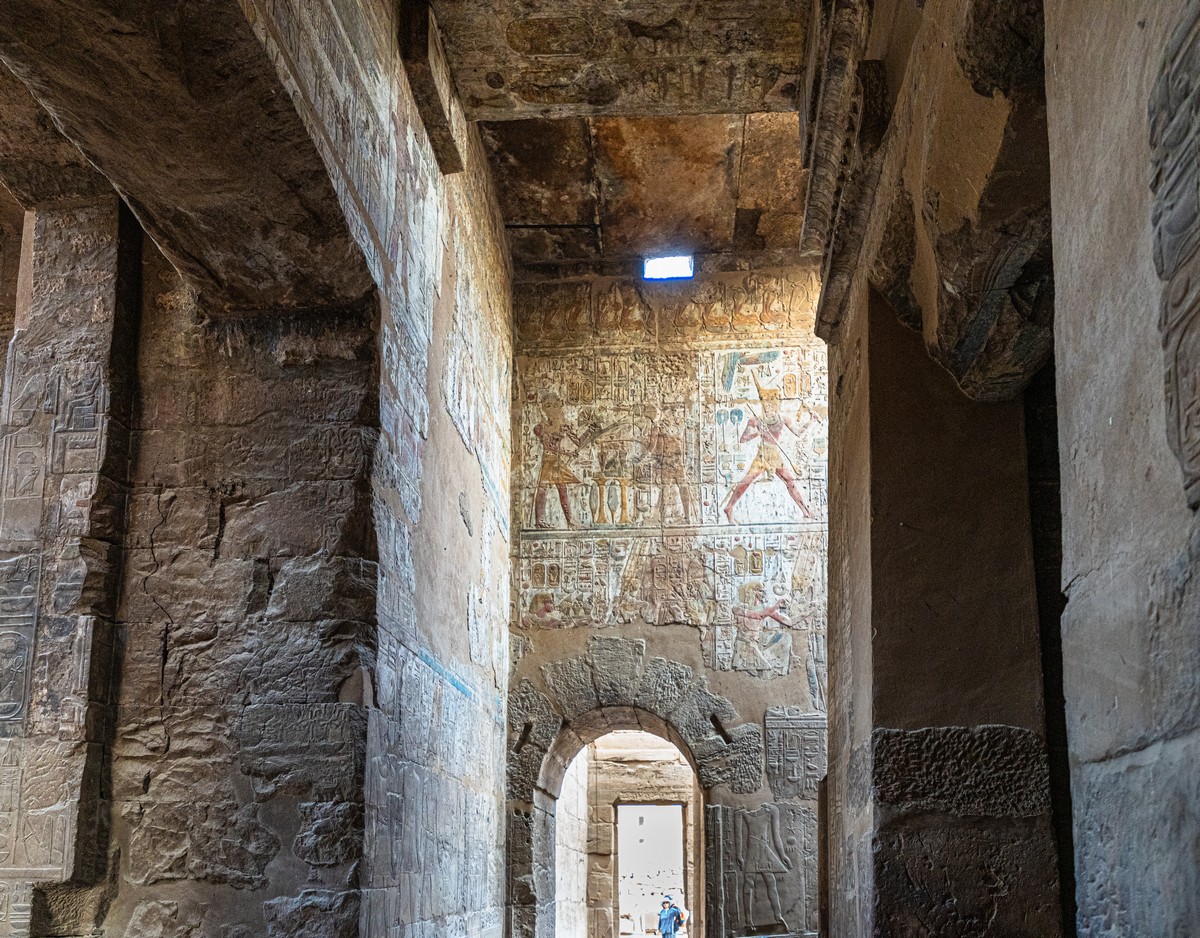
Gifts to the pharaoh: sheep, cows, and other livestock:
Beneath the names of his predecessors, here’s the pharaoh dining:
The pharaoh is also on pretty solid terms with the supreme deities:
And that’s how the story goes. I strongly recommend immersing yourself in it firsthand!
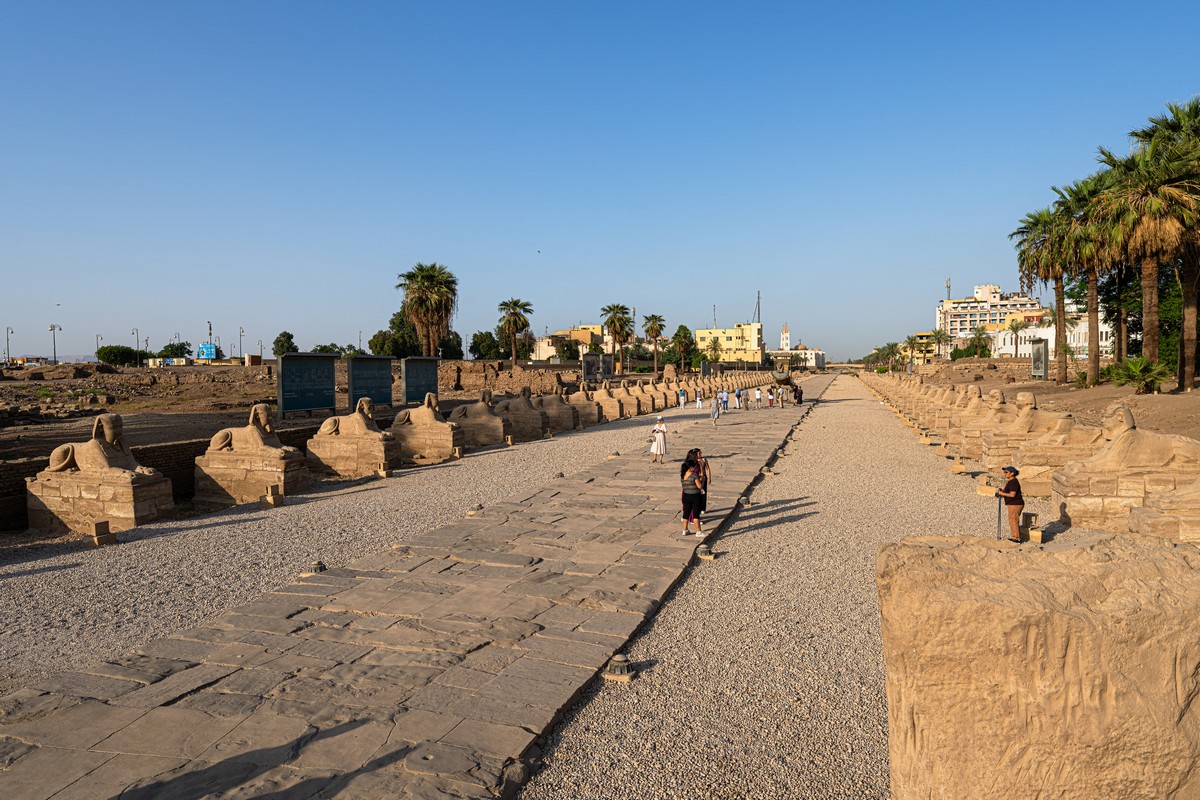
Back in ancient times, a road was laid from Luxor Temple to Karnak Temple – lined with hundreds of stone sphinx statues, which is why it’s now called the Avenue of Sphinxes (as for what it was called back then – who’s to say?).
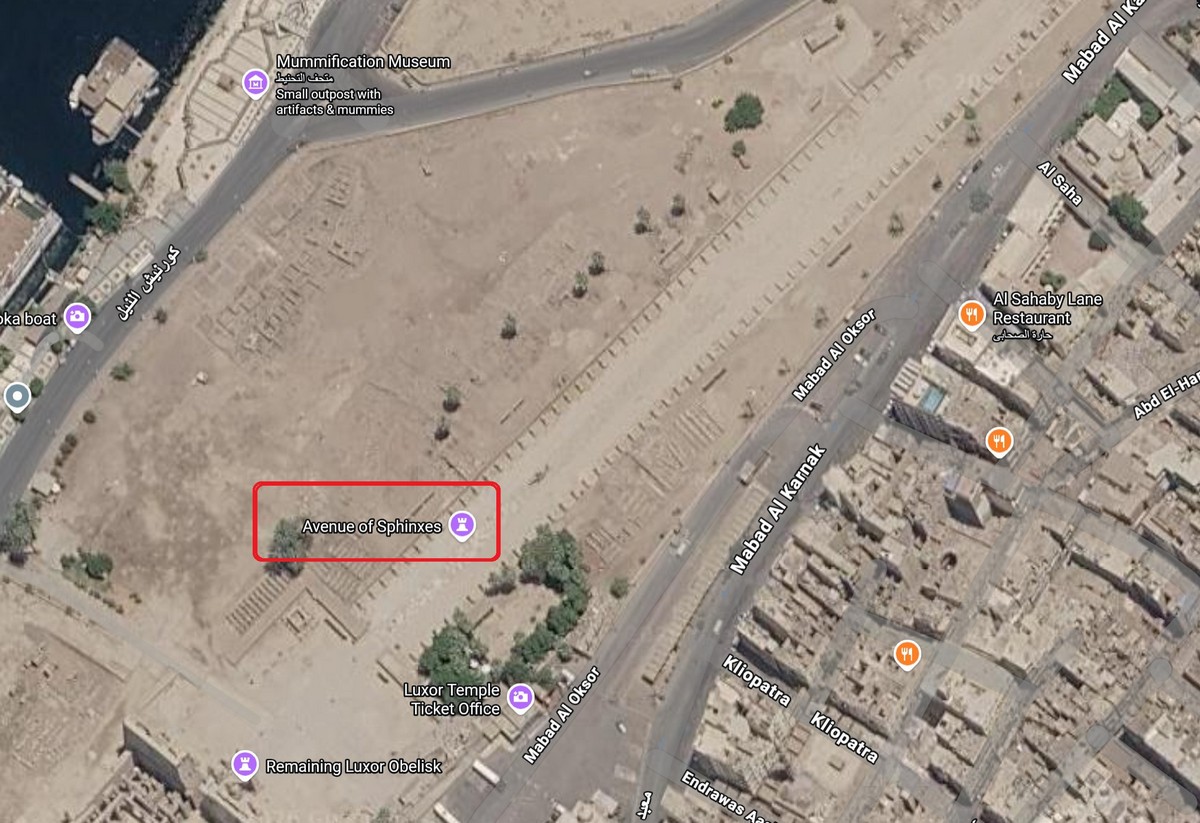
On the map, the start of the road is roughly here:
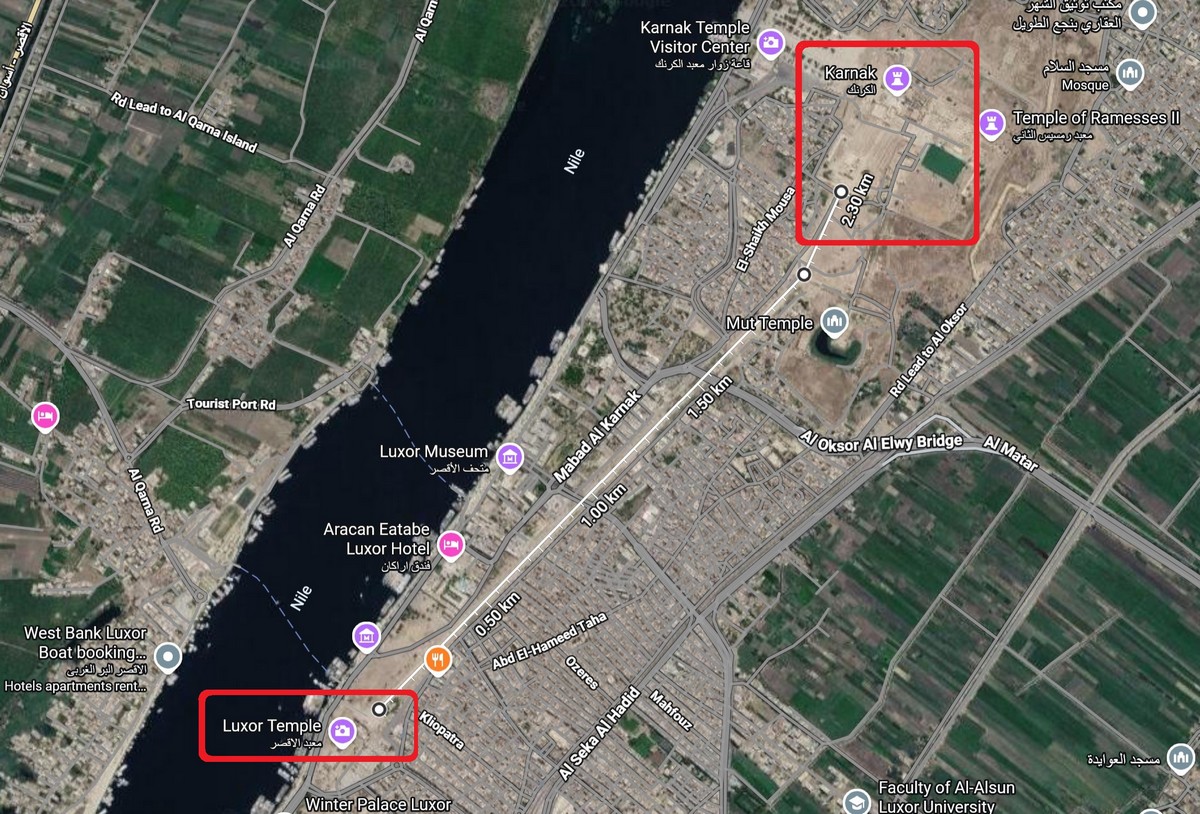
The road’s total length is a little over two kilometers:
What makes it so remarkable? Well, simply that this road is – give or take – a little over four thousand years old!! Numbers and thoughts like that make your head start to spin – and droop somewhere downward along the gravity vector…
Not so long ago, this road lay abandoned, buried by the sands and covered with assorted other historical-cultural (or quite the opposite) layers, but it’s since been dug out and restored – and now it’s open for strolling! So off we went!…
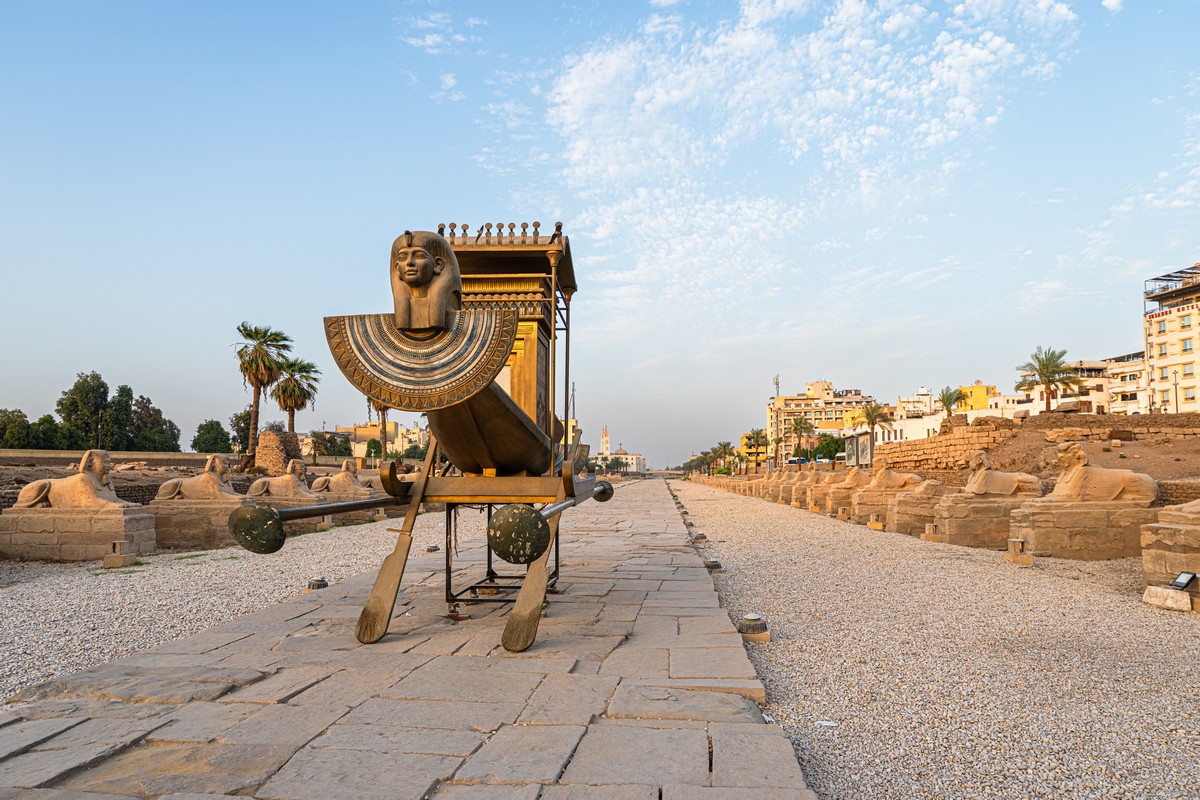
The sphinx statues originally stood along both sides of the road – but, alas, only a tiny fraction of that ancient splendor has survived.
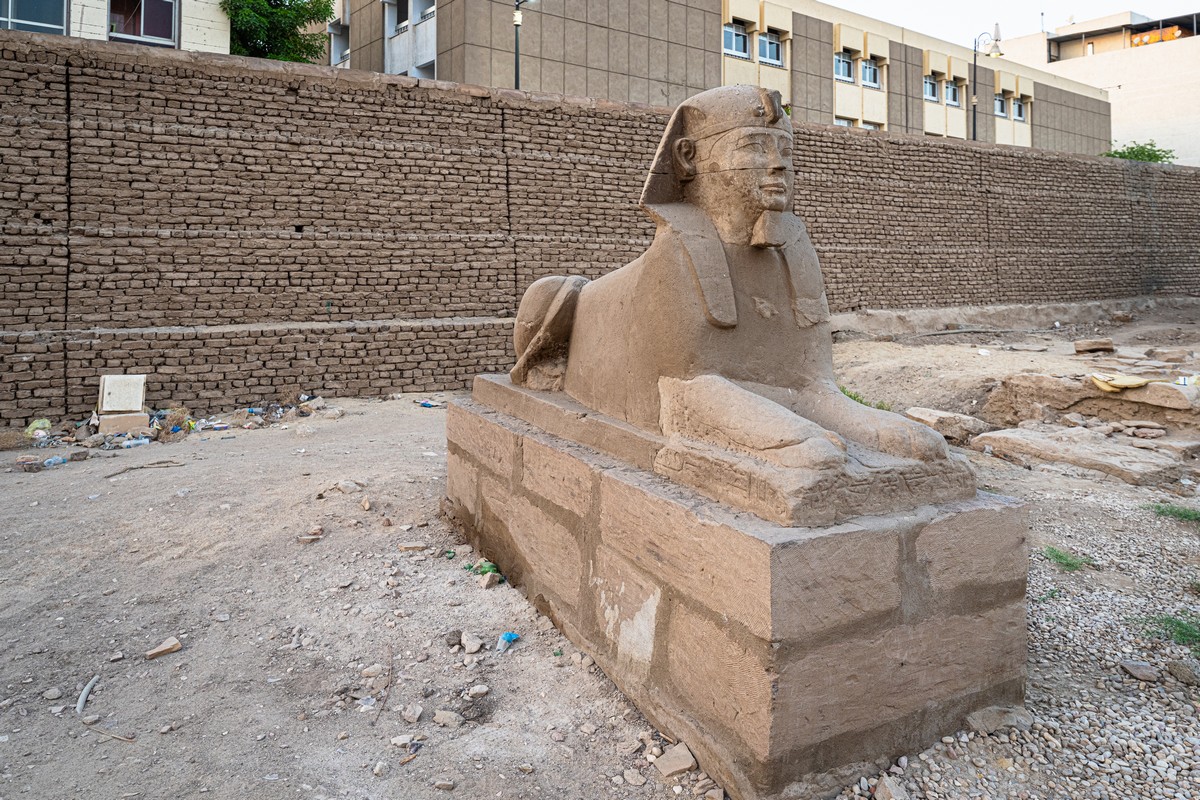
But we just kept on strolling down the road. The sphinxes ran out before our walk did, and there were no other tourists crazy enough to be out walking here either – only the local police, who shouted to us a couple of times, “Don’t go that way – there’s no road further on!”
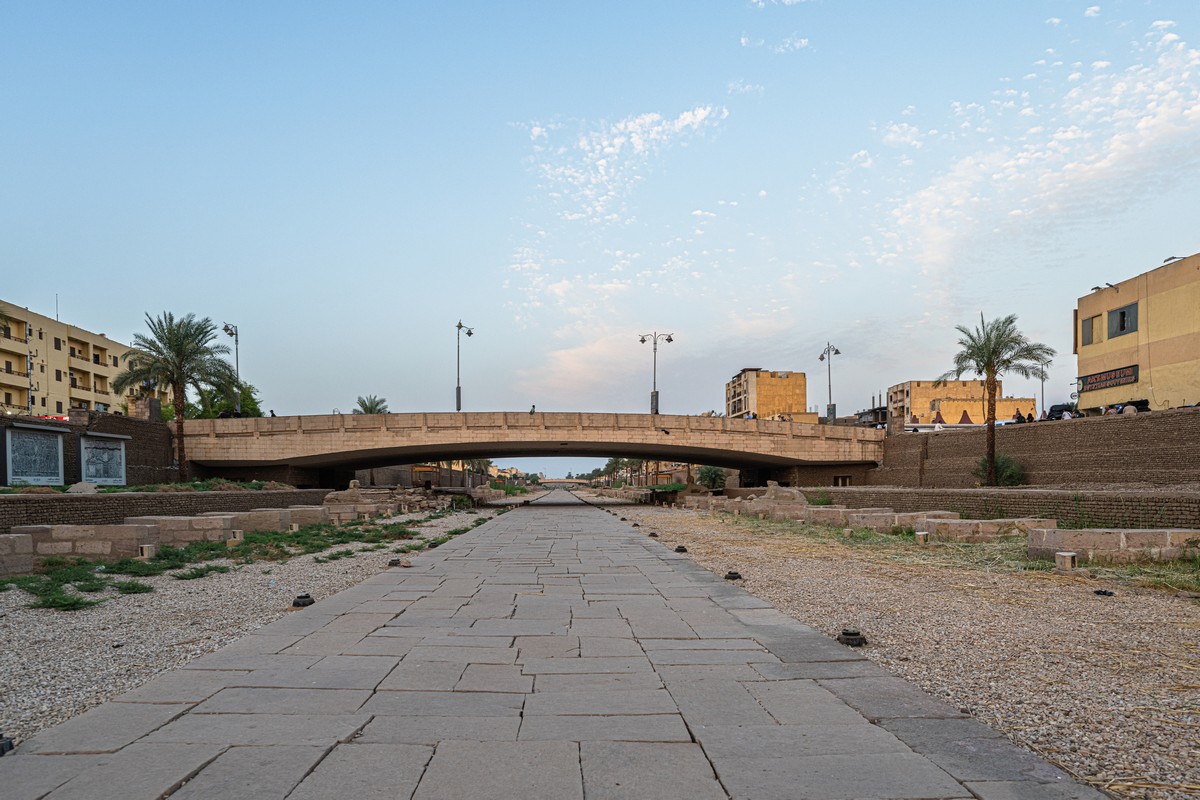
And they were quite right: here’s the finish line. Beyond this point the restoration wasn’t finished. One way, from Luxor Temple to the end of the path, it’s 1.4 kilometers on foot – not all that far. Makes for a perfectly manageable stroll.
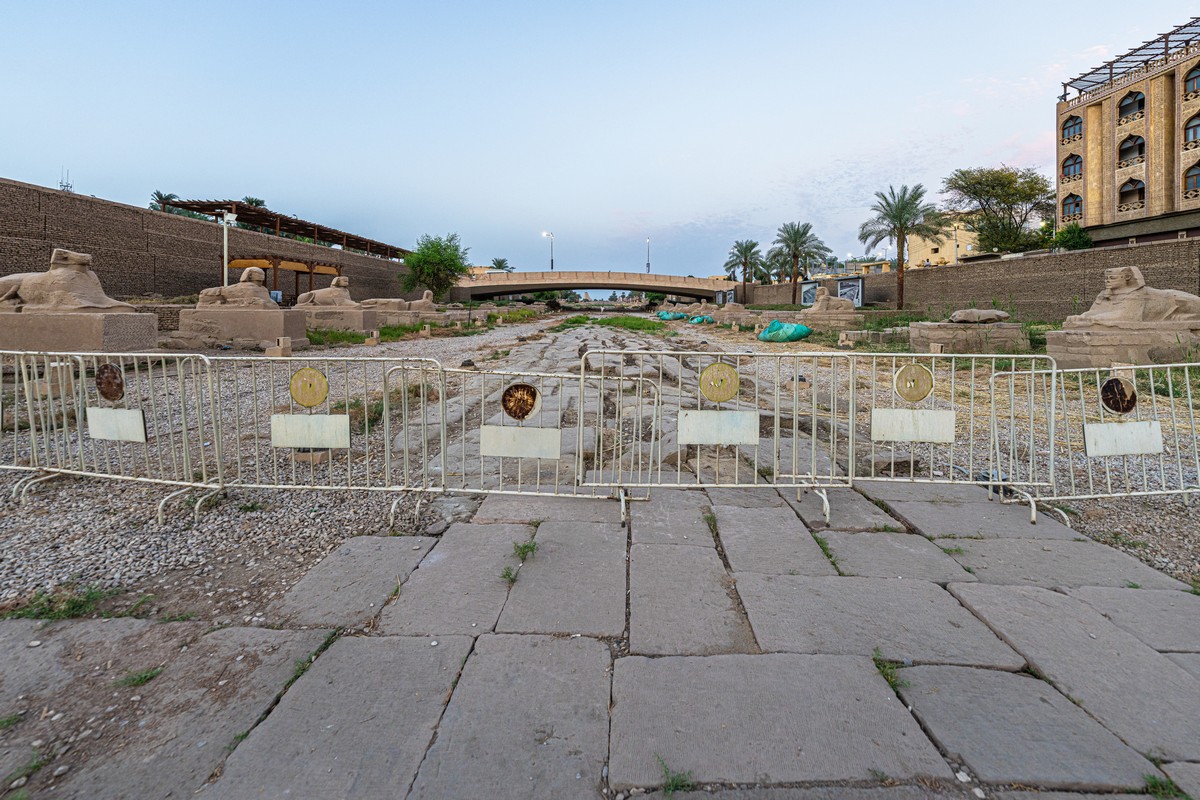
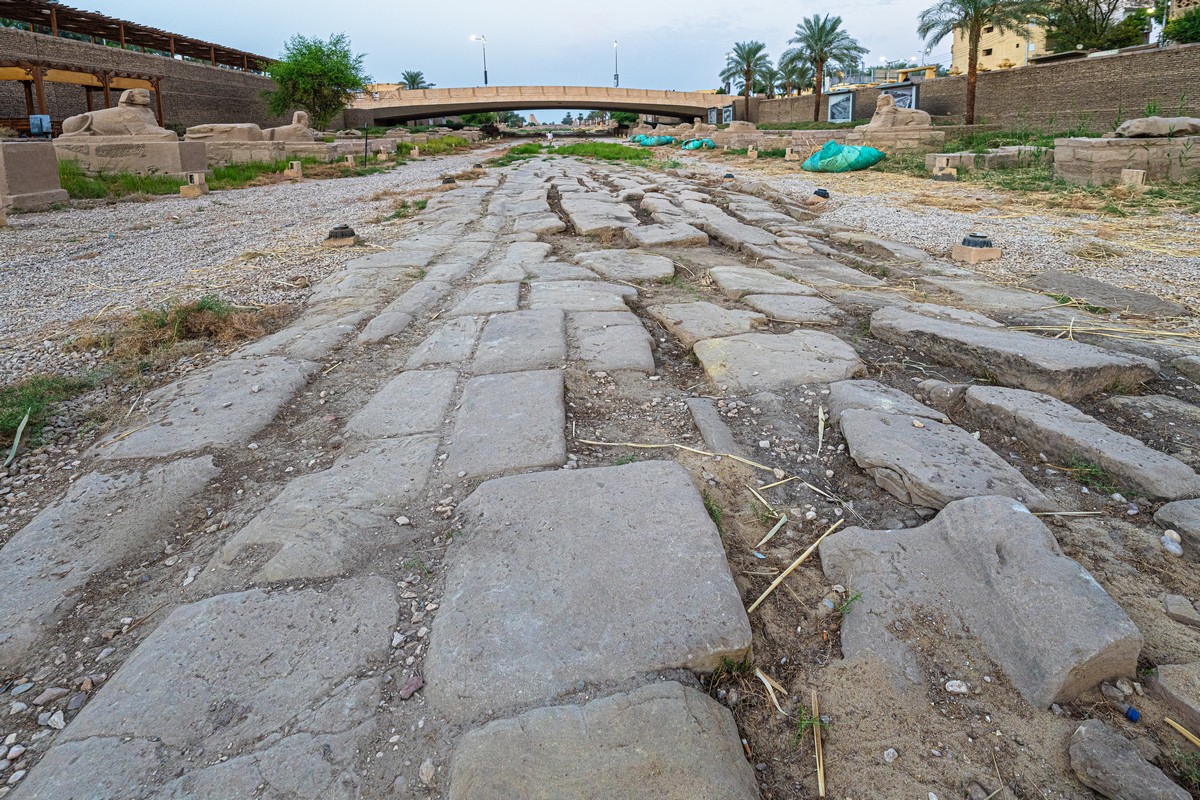
Curiously, you can see the ruts left by the wheels of ancient carts in the old stones! Much like in Pompeii…
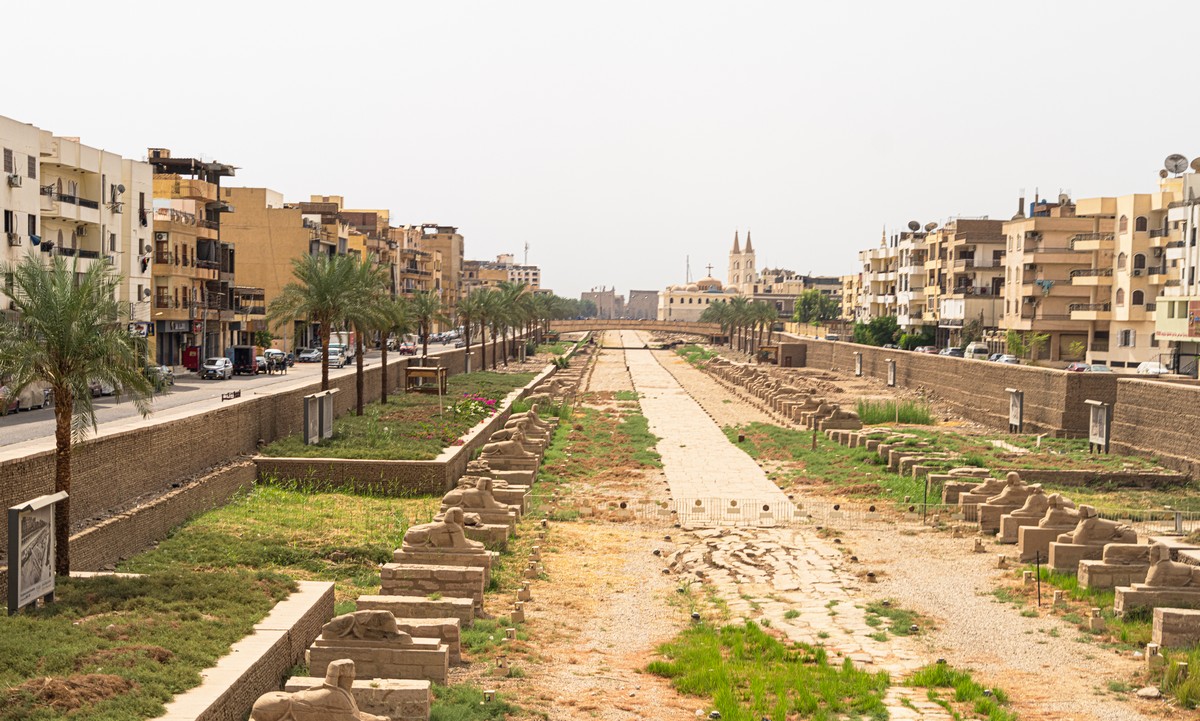
So that was that – we turned around and hoofed it back, much to the delight of the local police, who’d been getting ready to come and rescue us. And here’s a view of the road from above, taken from the bus crossing the bridge:
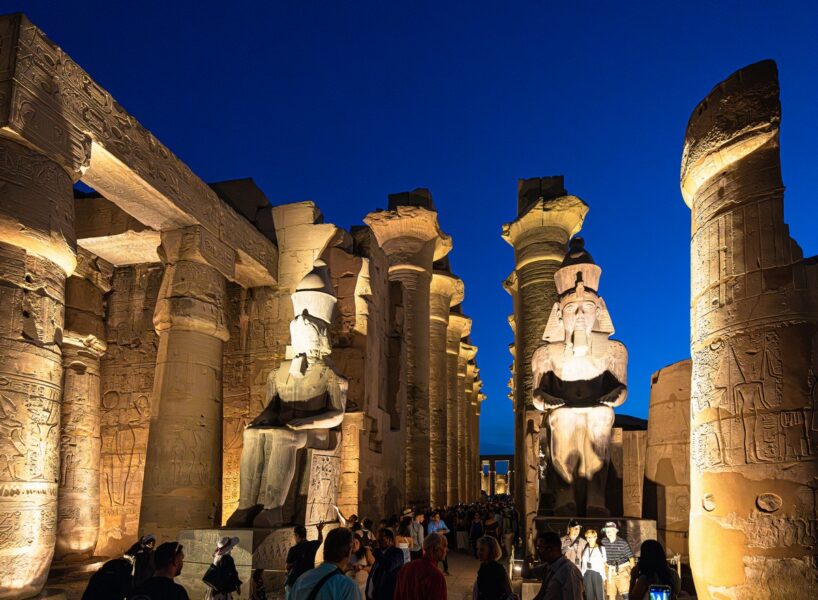
In the evening, once the sun goes down, Luxor Temple gets lit up – and the views are simply mind-blowing! I wonder: back in the days of those pharaohs, when all this was being built, did they perhaps put on light shows at night too – with bonfires and (analogue) torches? Who’s to tell us now?
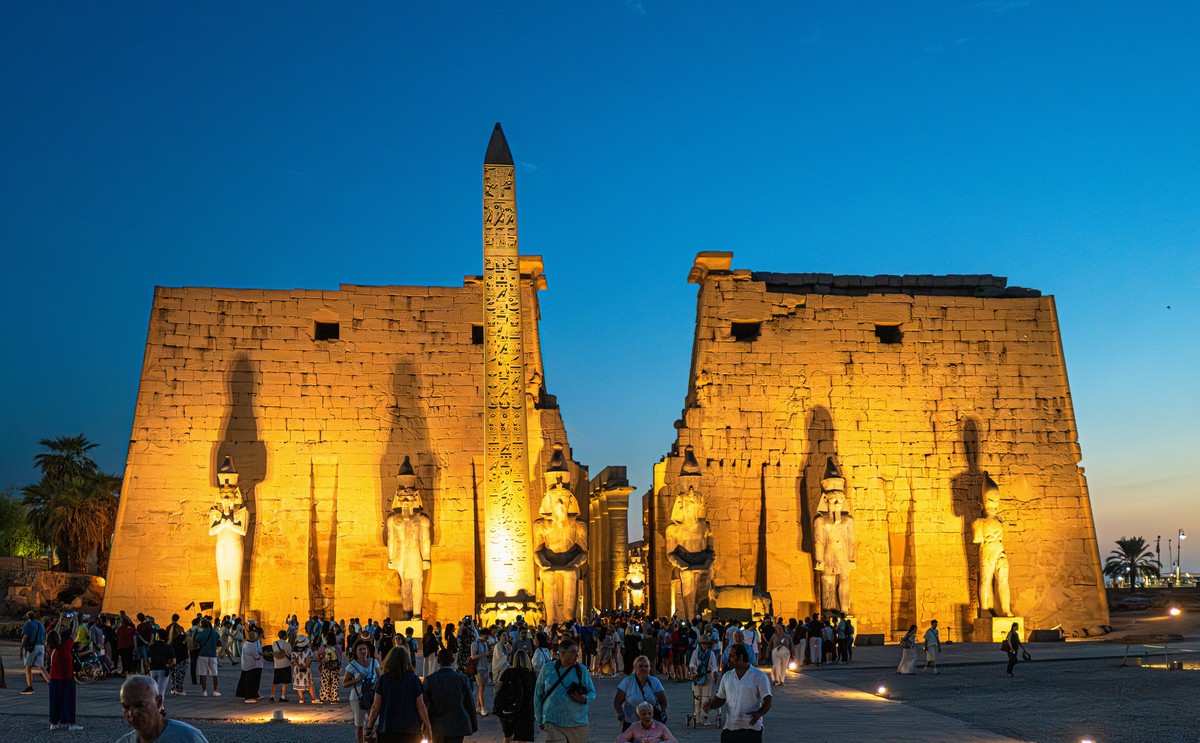
These days the bright (electric) spotlights really do bring the ancient installations to life at night:
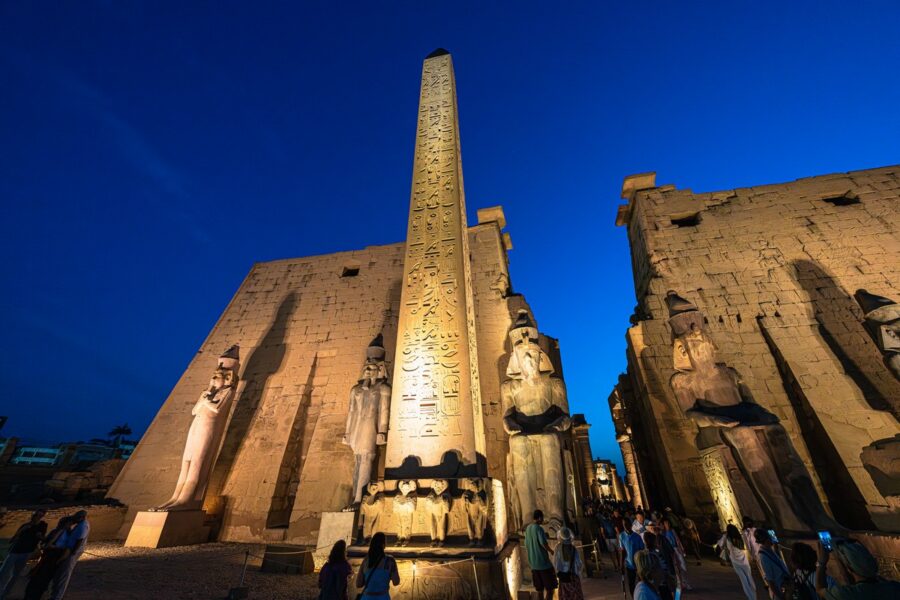
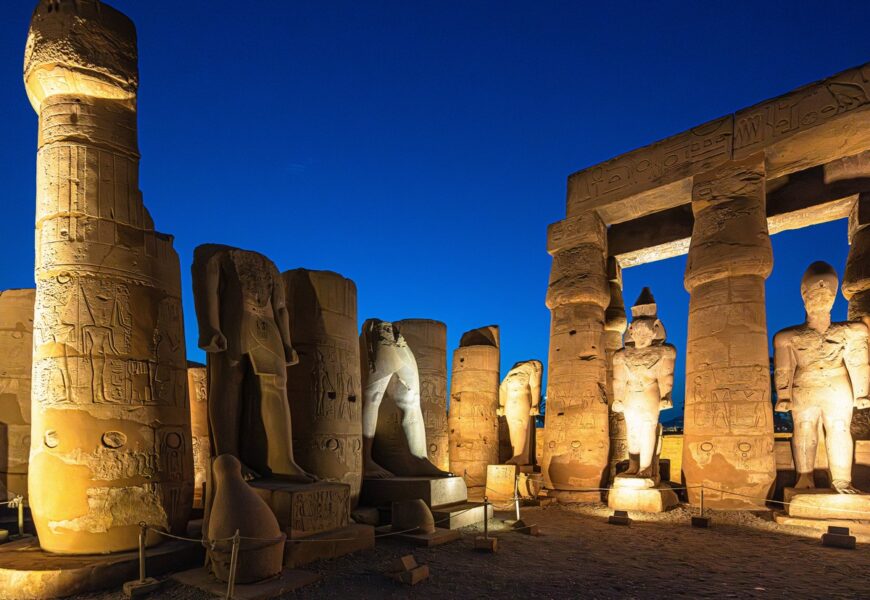
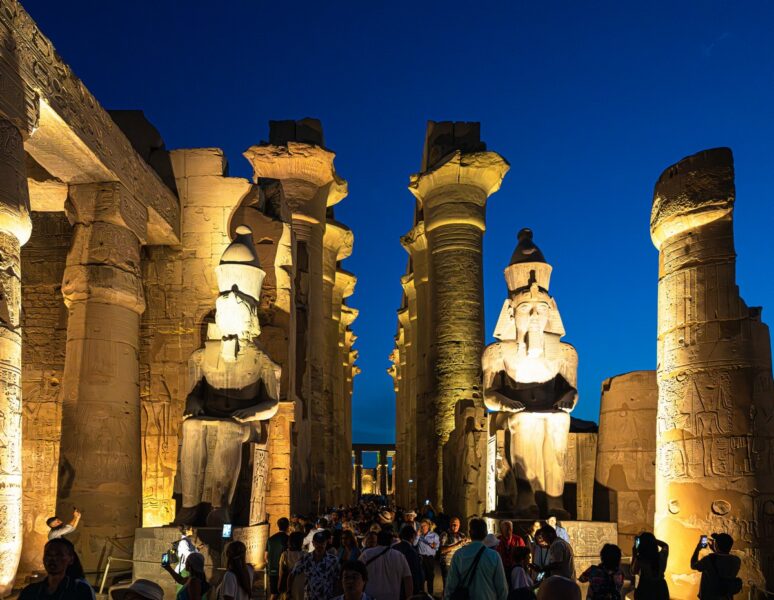
Gorgeous! Unimaginably gorgeous!
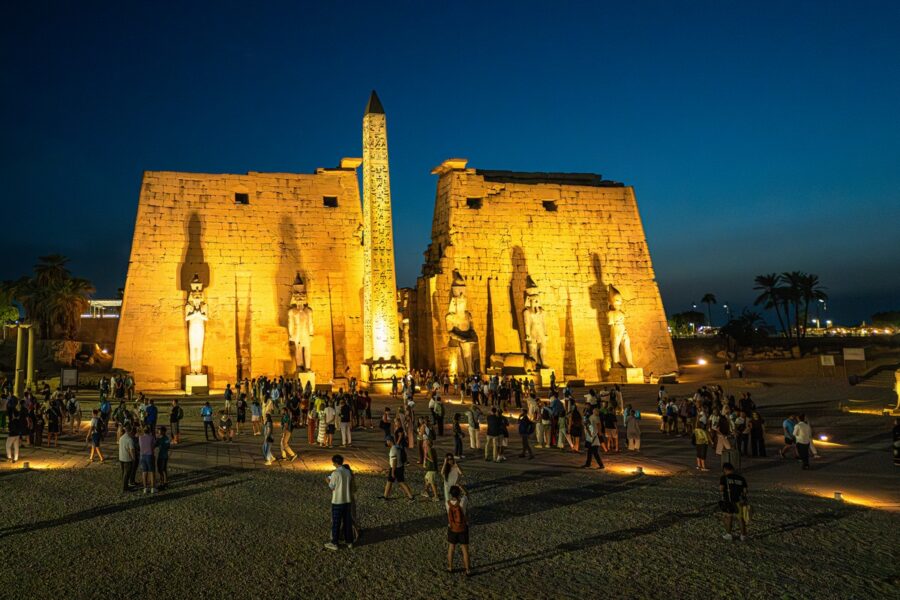
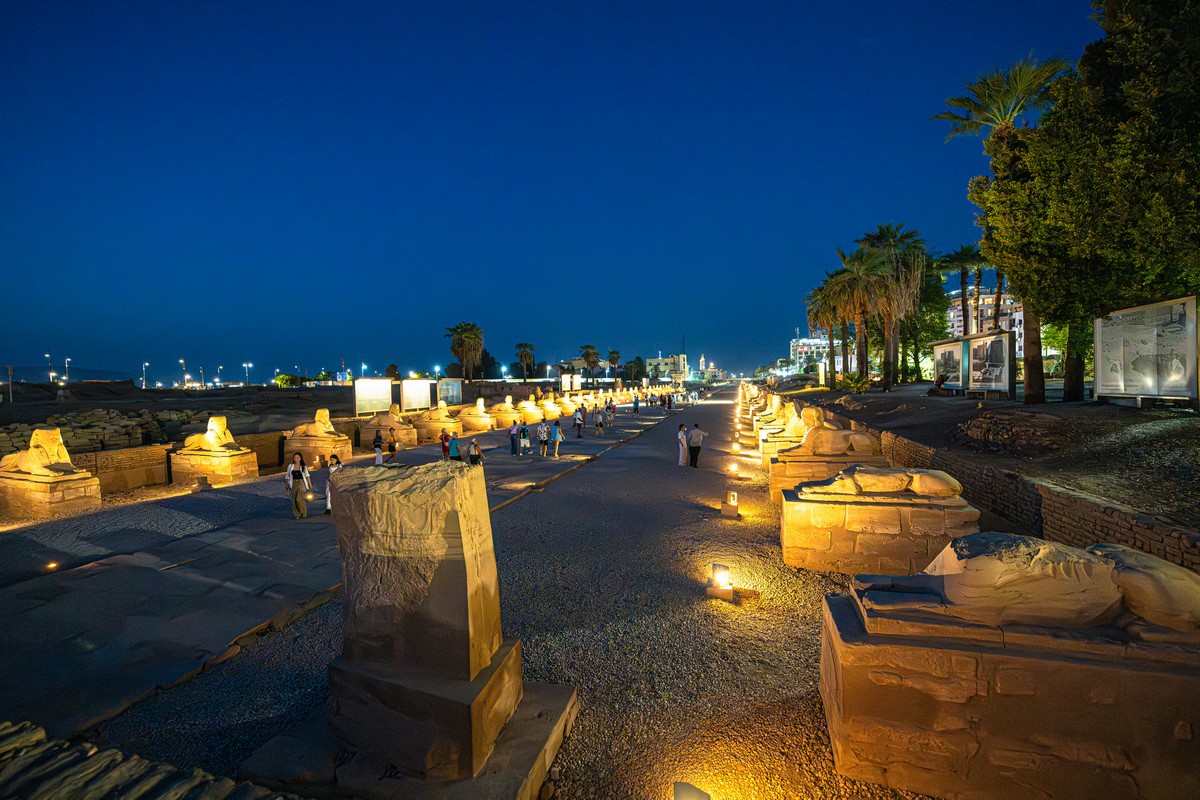
And here’s the “temple-to-temple” road we’d walked along earlier:
Next up for us: Karnak Temple. But all about that in the next post…

