
October 19, 2026
Lao’s hidden gem: the museum of wooden carvings in Vientiane.
With our tourist weekend in Luang Prabang over, it was time to get down to business. The next couple of days in Vientiane were pretty much all work, work, work (meetings, introductions, handshakes, negotiations, and so on – business as usual), but we still had some time left over for sightseeing: perfect! And the highlight, without a doubt, was the Lao Art Museum.
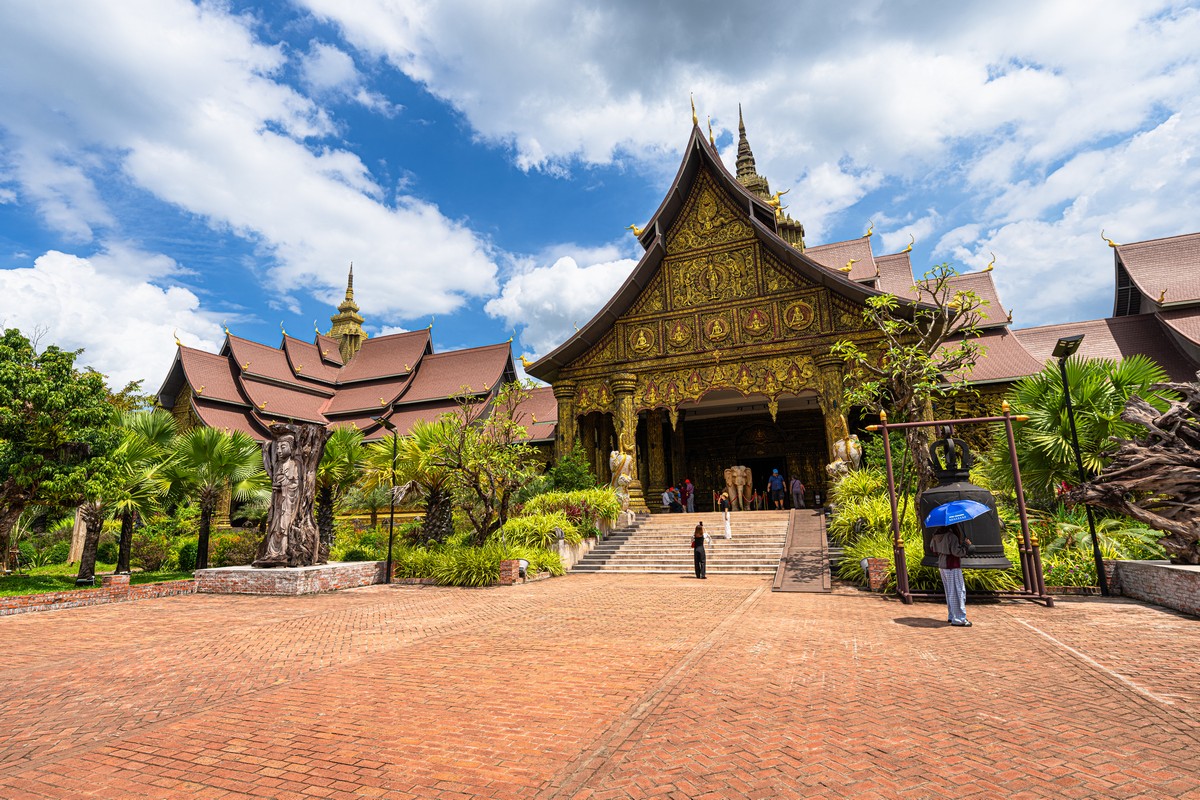
I’d say it’s a very strange place…
First, it’s sumptuous – a real masterpiece:
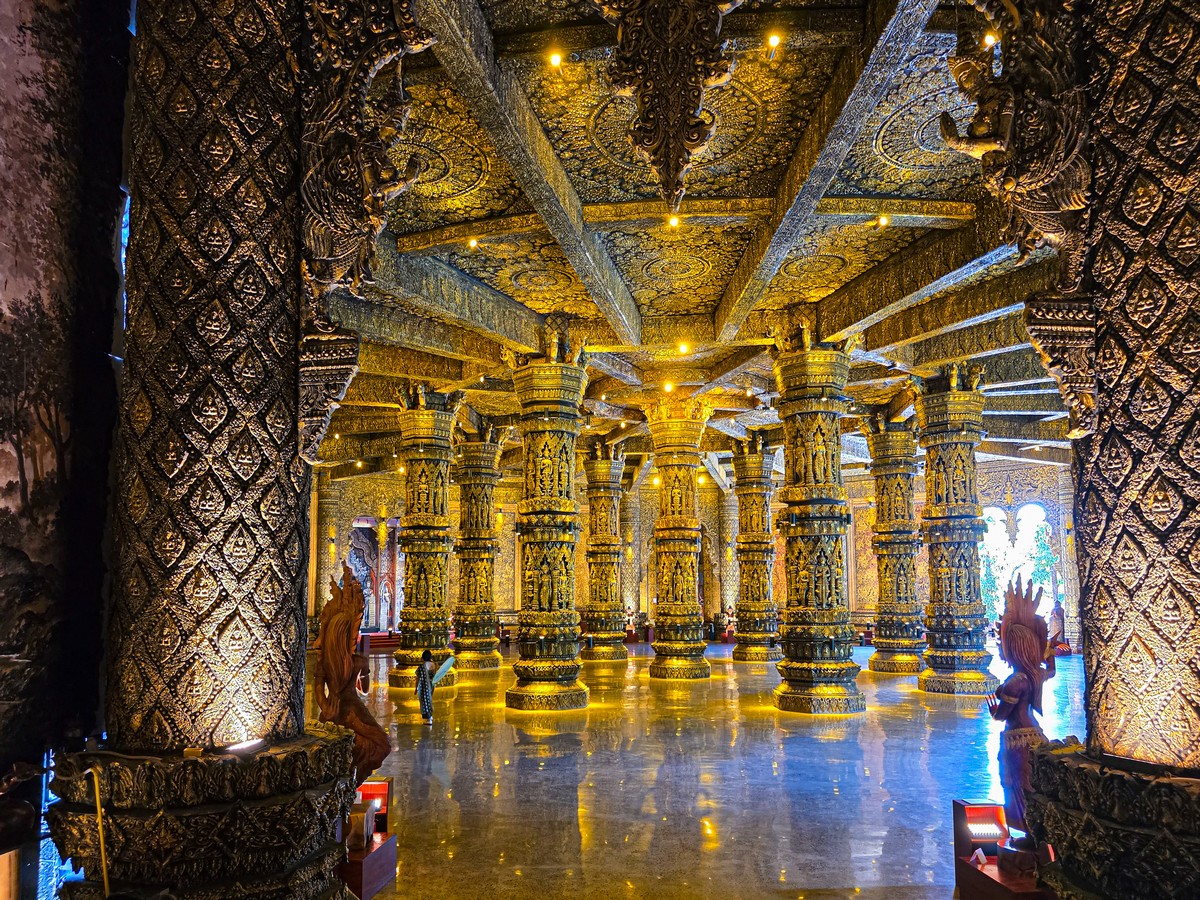
Second, there’s no website, no Wikipedia page, and in fact no other official online presence whatsoever!
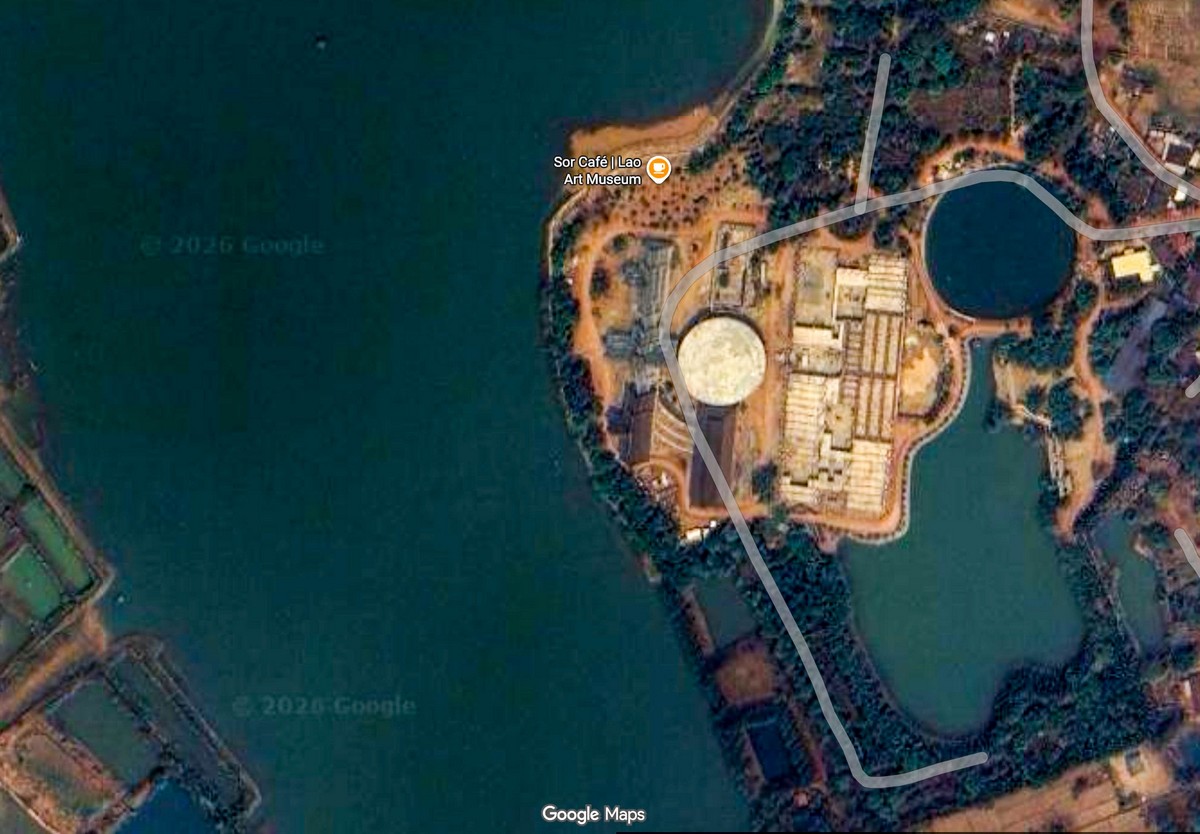
Third, it opened in 2025, having been built at breakneck speed on the shore of a lake 20km north of central Vientiane – and I really do mean breakneck. On Google Maps, you can still see the construction site:
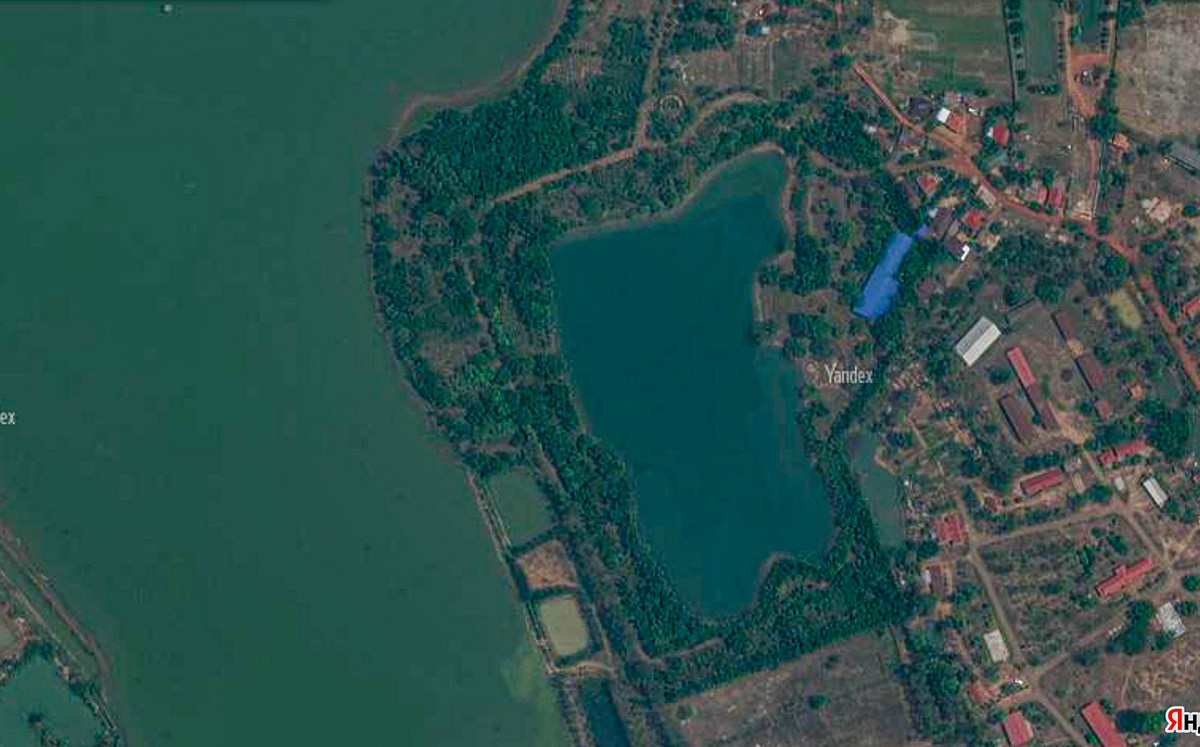
Yandex Maps goes even further back through time) – showing nothing but pristine, overgrown shores:
Fourth, apparently it’s a private project (costing hundreds of billions of Lao kip – that’s tens of millions of US dollars) – the brainchild of a local businessman who also happens to be a… woodcarver! And the museum is how he turned his hobby into a megaproject.
Fifth, the collection of wooden sculptures in the museum is just unreally mega-cool! IMHO, it alone is worth flying to Laos for.
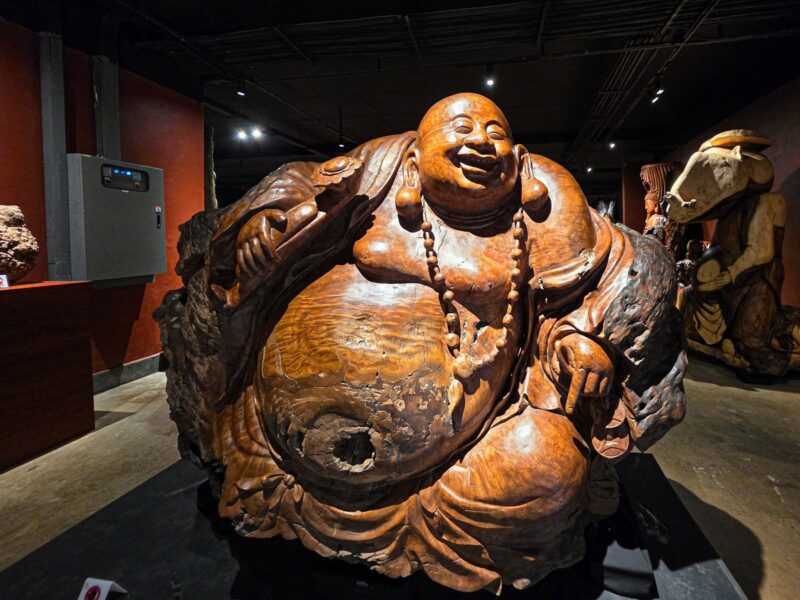
So, what’s here, and why? There are several sizable halls filled with all kinds of woodcarvings. All the works are of considerable size, and we’re not talking Russian matryoshka dolls here, but genuine works of art. Take this picture, for instance – carved from a single piece of wood, and all by hand and analogue tools and with no AI whatsoever!
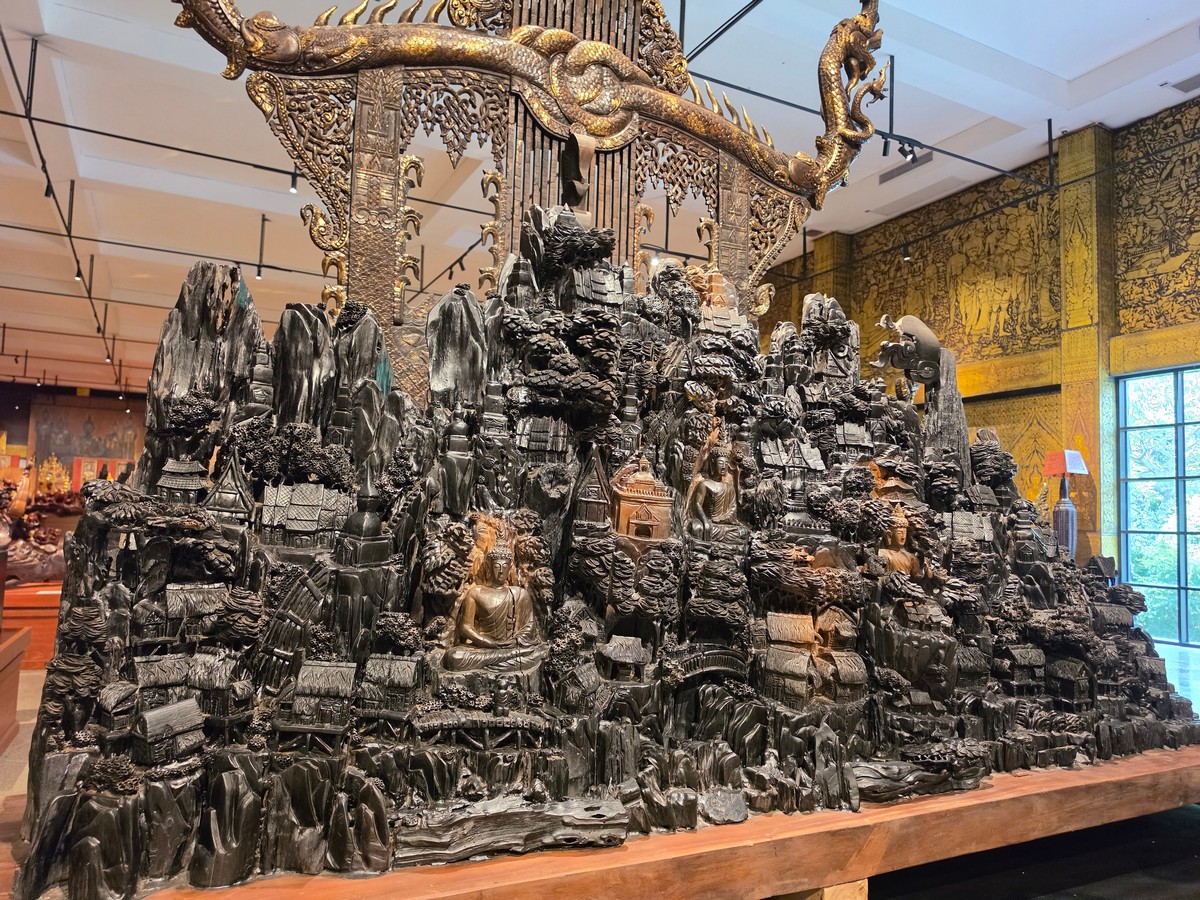
On many of the works the carved detail is just incredible:
Here’s another piece – nine (9!) meters long.
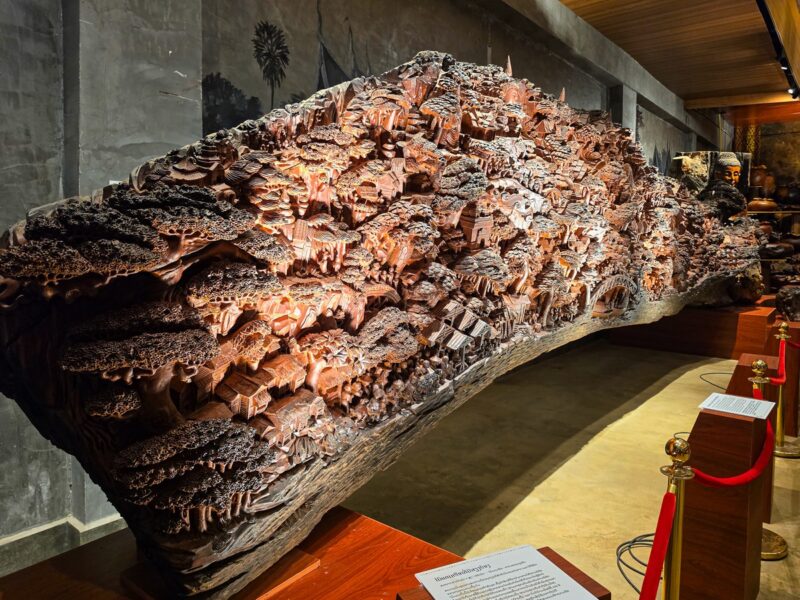
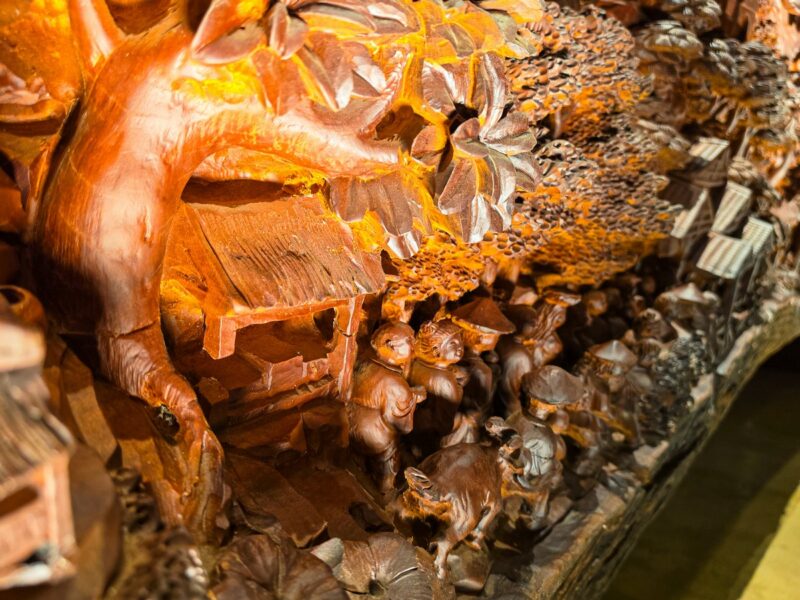
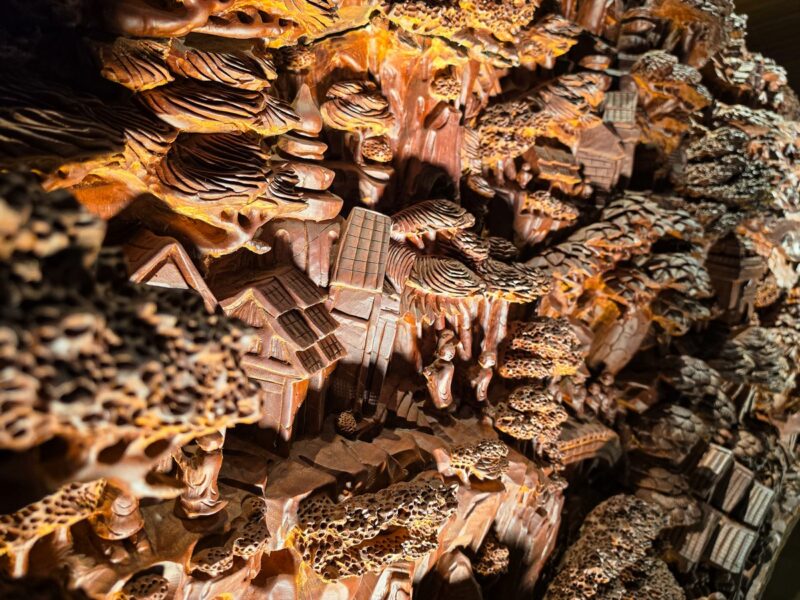
And it goes on and on and on. In all, the museum’s exhibition halls and storerooms hold around 30,000 such works!
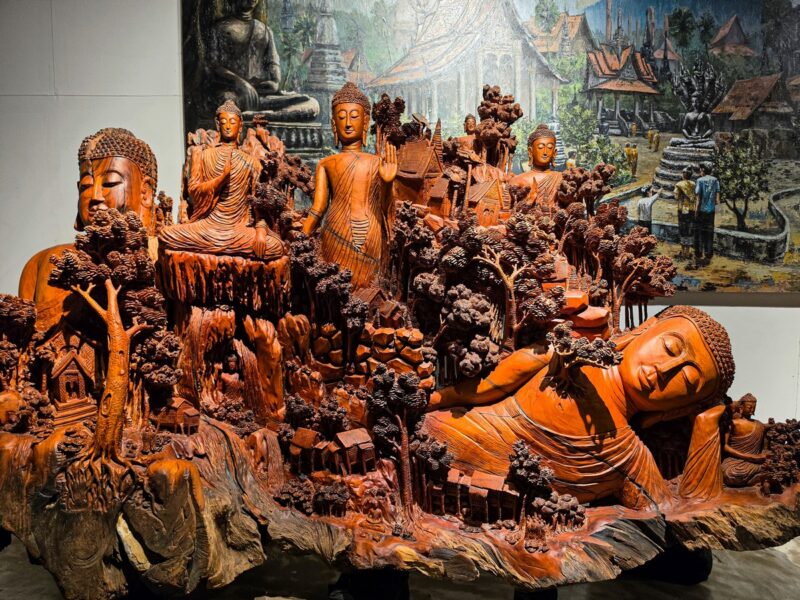
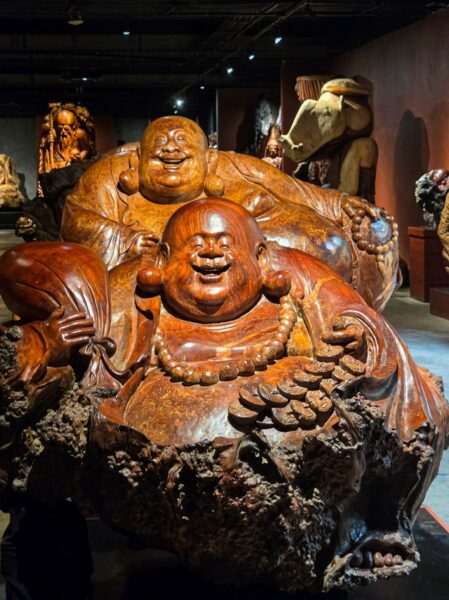
What a mind-blowing place!
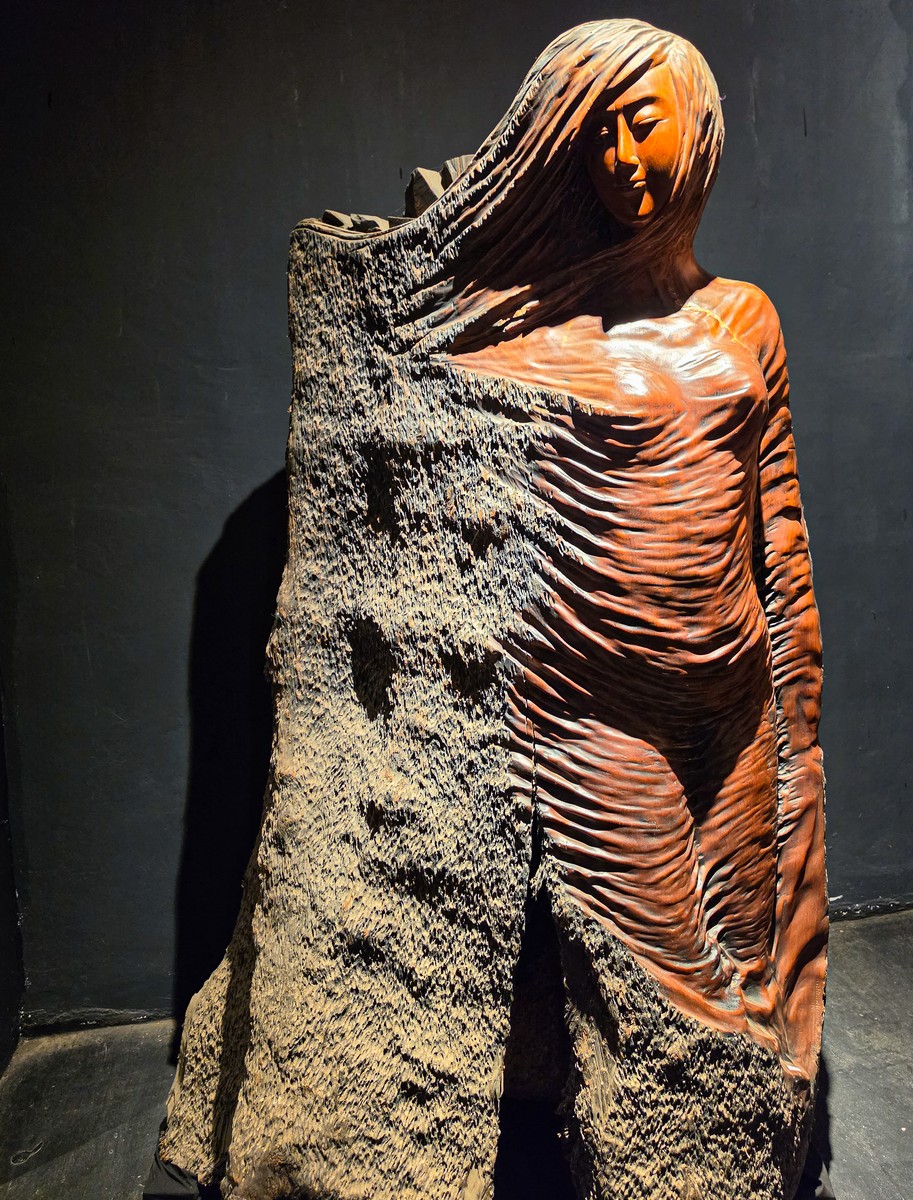
Impressed already? But that was just the warm-up. Now, on to the details…
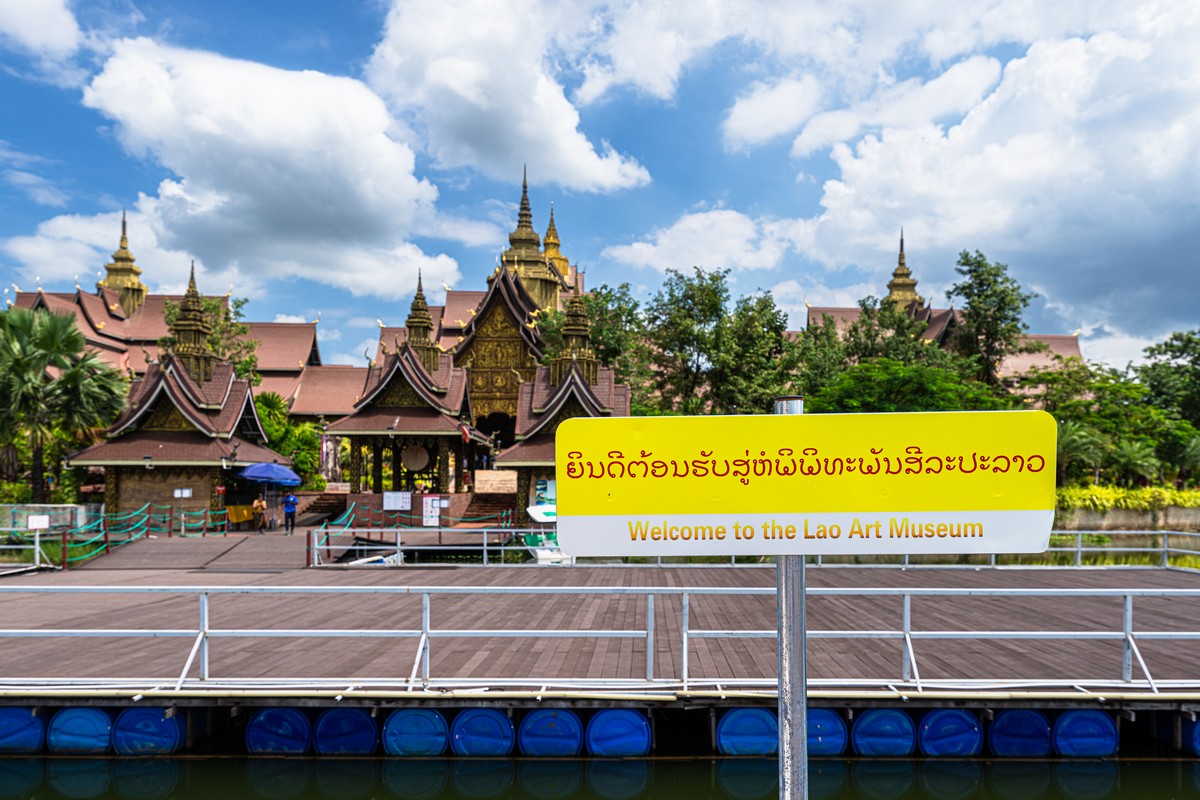
A visit to the museum begins with… the parking lot – where the bus drops you off. That’s also where you find the standard-issue visitor center with ticket booths, little cafés, and ice cream. We buy our tickets – and then it turns out that to get to the museum you have to ride golf carts across a pontoon bridge. I figured the museum must be on an island; turns out it isn’t. Yet for some reason (either it’s by design, or no one would sell them the land they needed) the only way to reach the exhibits is across the water.

And here we are!
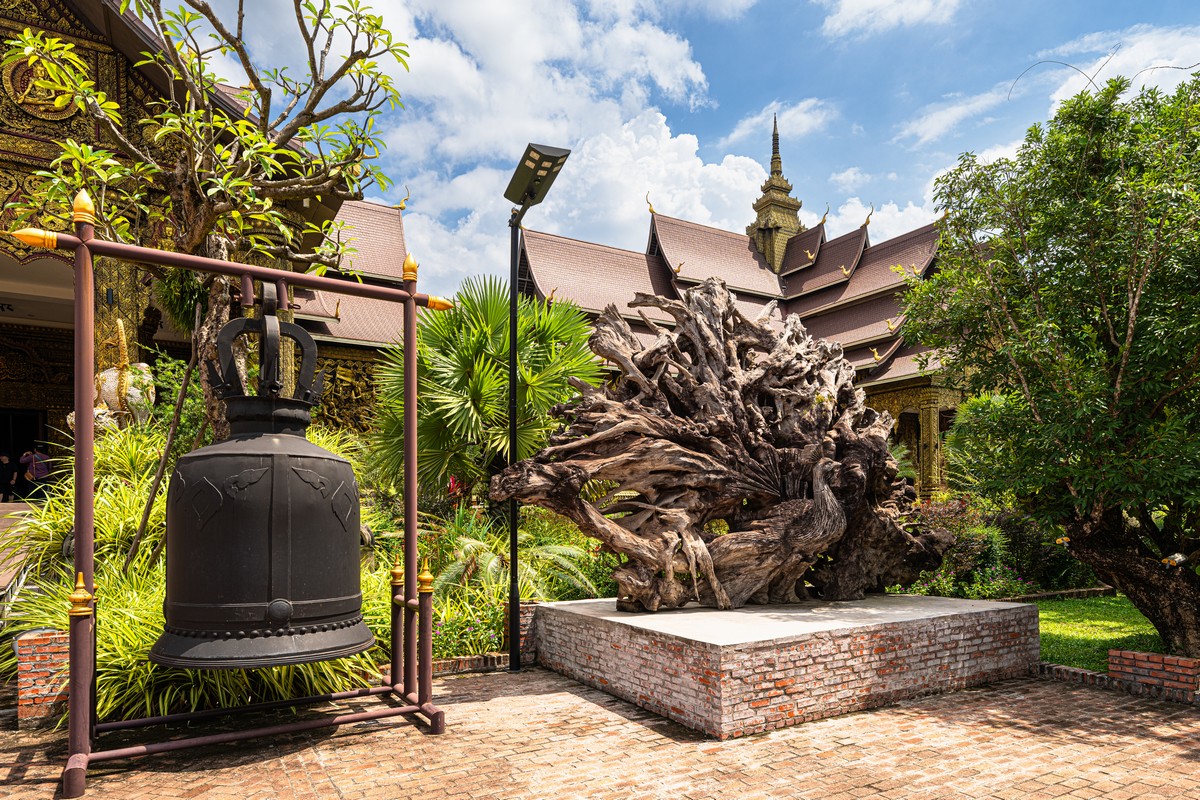
Right at the entrance there’s this installation made from the root of some tree or other:
The museum entrance is decked out in Southeast Asian styles:
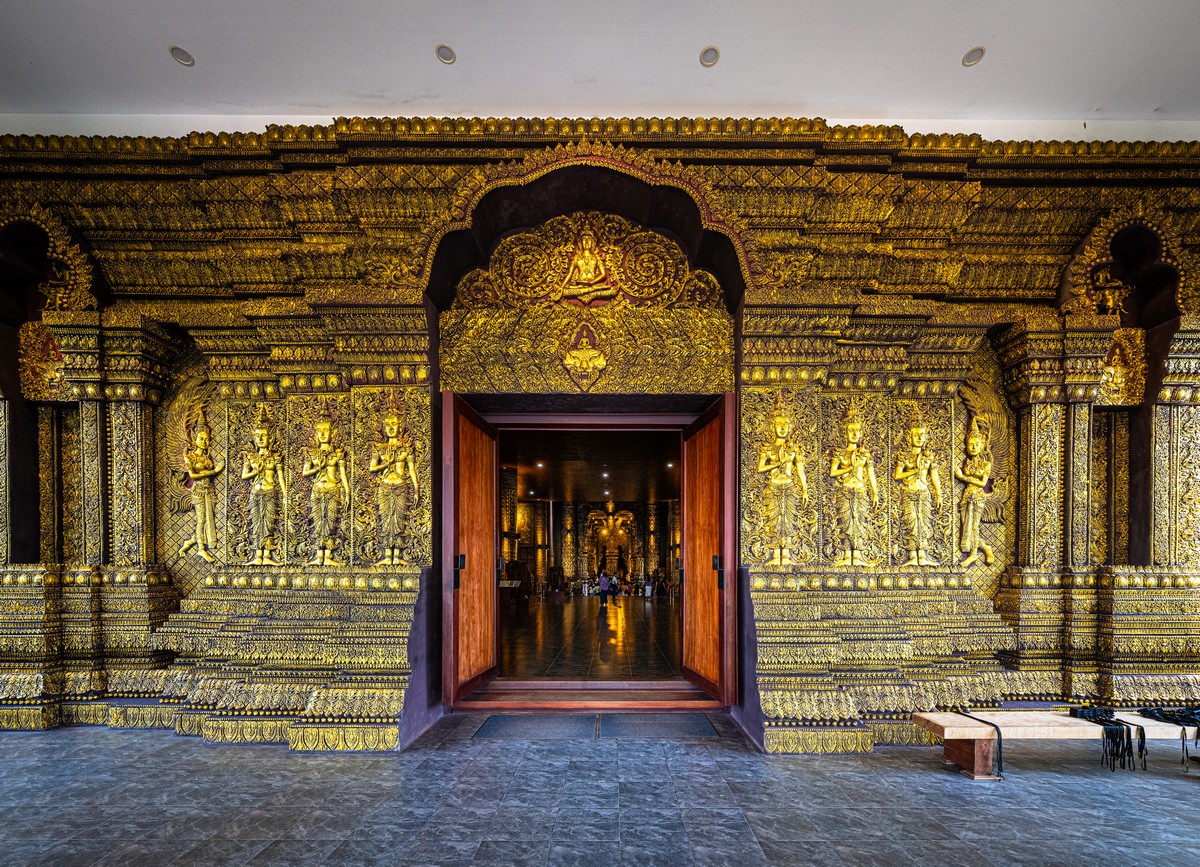
Looks like something rather grand awaits in here…
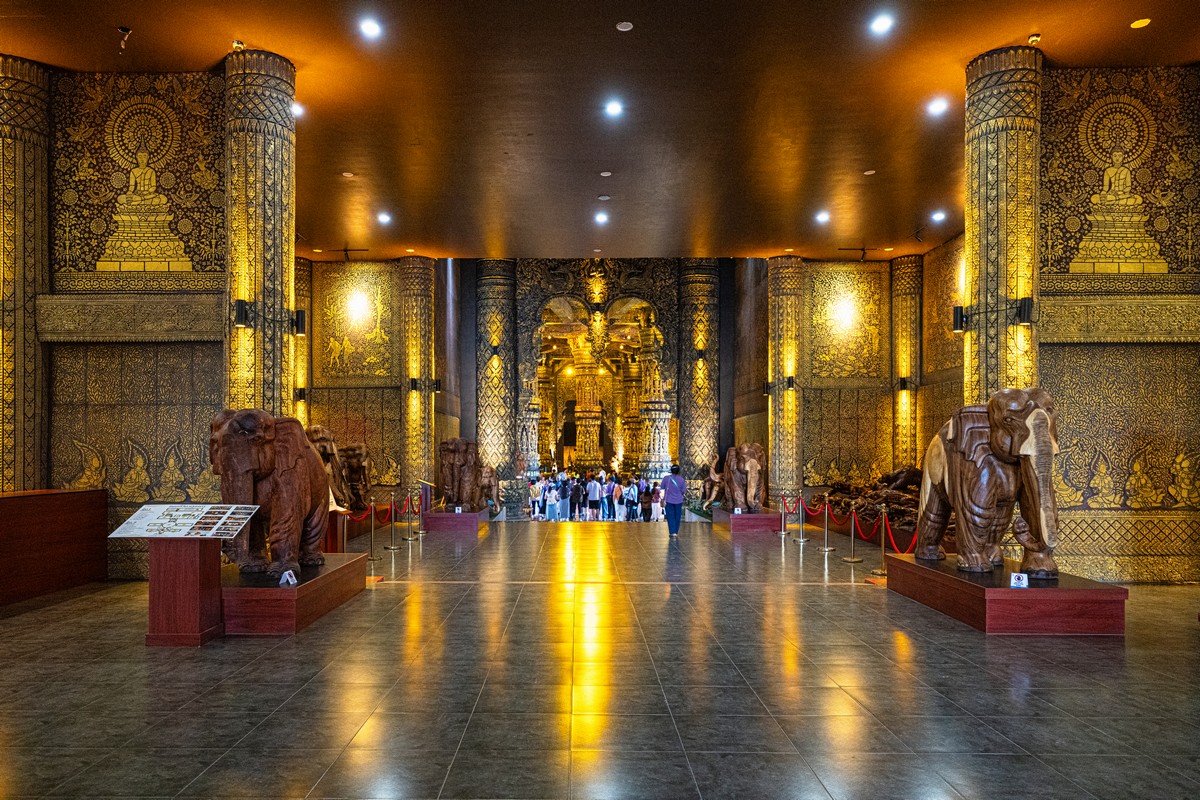
And then – bam! Turns out that taking photos with any sizable camera gear (which is exactly what I’ve got) is prohibited! With a phone – be my guest; but with my beloved Sony Alpha – no way! WHAT? I’ve run into this kind of thing a few times before. And half the time it’s just plain daft. At one place, someone once explained to me that photography there is banned so that folks would come and see the place with their own eyes. I was told that in Lebanon, at the utterly magnificent Jeita Grotto. Heard of it? No? Well, the photography ban is precisely the reason why! And yet it’s a natural masterpiece of the very highest order! I got lucky: one morning, before the caves opened, I managed to get in privately and photograph everything (lots of gorgeous stuff at the link above!). But the regular tourist crowds have to leave their cameras – and phones – in lockers at the entrance.
Another place where photography is banned is the Guggenheim Museum (of modern art) in Bilbao. To quote myself: “[No photography?] WHAT? But this is… A MUSEUM! Isn’t that what museums are for? Taking pictures?! Wait – but this is a ‘modern’ museum too!! Ha! And the ‘guards’ here are everywhere – enforcing the rules!” That said, the mystery in Bilbao was solved pretty quickly. There’s simply nothing of note in there at all! They must be ashamed of how worthless their collection is – hence the ban on photos, videos, and the like. Yes – strong words; but it still riles me to this day!
Taking pics is also forbidden in Japan’s Yushukan War Museum in Tokyo. The explanation there is pretty obvious, if you ask me. The Japanese have a great deal to answer for from World War II (in places they did some truly hellish, monstrous things; even reading up on it sends a shiver down the spine – see the “Nanjing Massacre“, for example). So showing everything just as it was in their own museum must have been out of the question. Yet keeping silent about it isn’t an option either, IMHO. So what they present there is a somewhat sanitized – and in places alternative – history of those terrible years. In fairness, this happens practically everywhere in the world when it comes to history.
But I digress. So, anyway… since I just had to get some photos regardless (what’s a story without pics?), my dearest wife’s fancy smartphone with its good camera (though not as good as my Sony) was promptly commandeered, and on I went – happy snapping as per my usual MO. Phew! :)
The central hall – oh my golden!
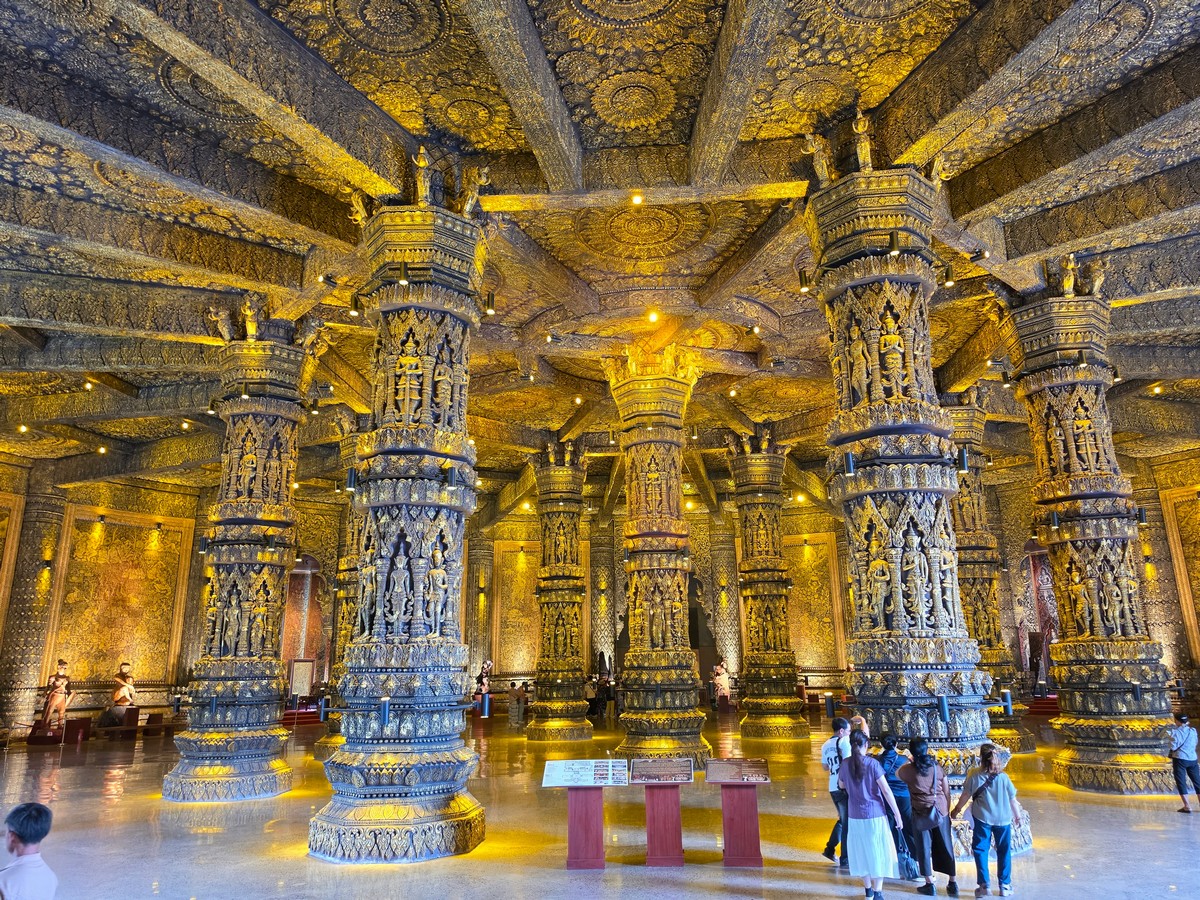
From this palatial cavern three routes branch off in different directions to the different exhibition halls, of which there are in all seven (unless my memory’s failing me). The first hall is to the right of the entrance. And in hindsight it does seem to be the coolest one of all. To get inside, off come the shoes; yep, you can only go in barefoot – leaving your shoes at the door (just like in many Buddhist temples – a hint at the sanctity of the place).
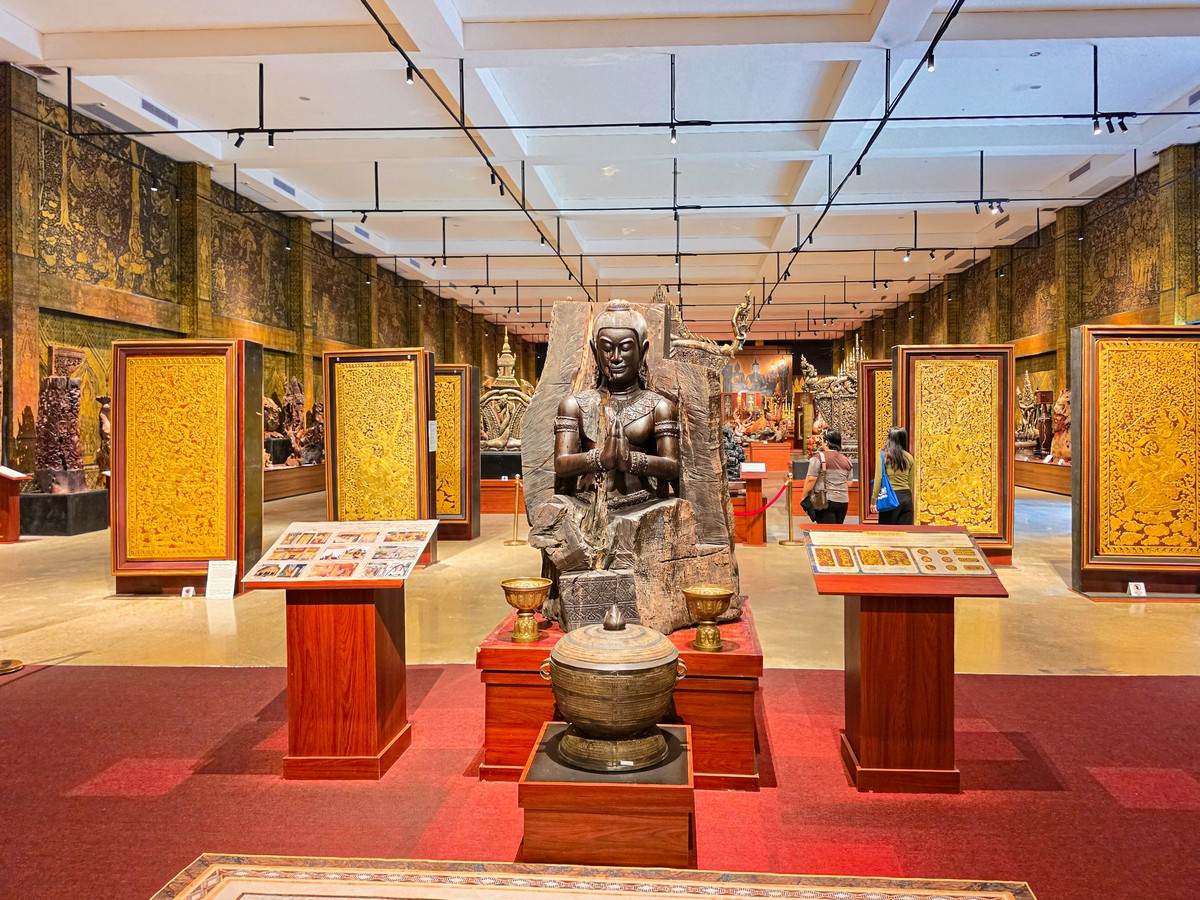
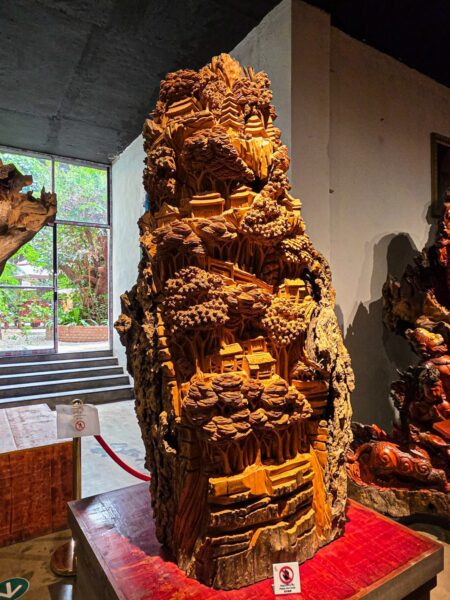
Talk about in at the deep best end: the first piece is probably the most magnificent and flawless of them all.
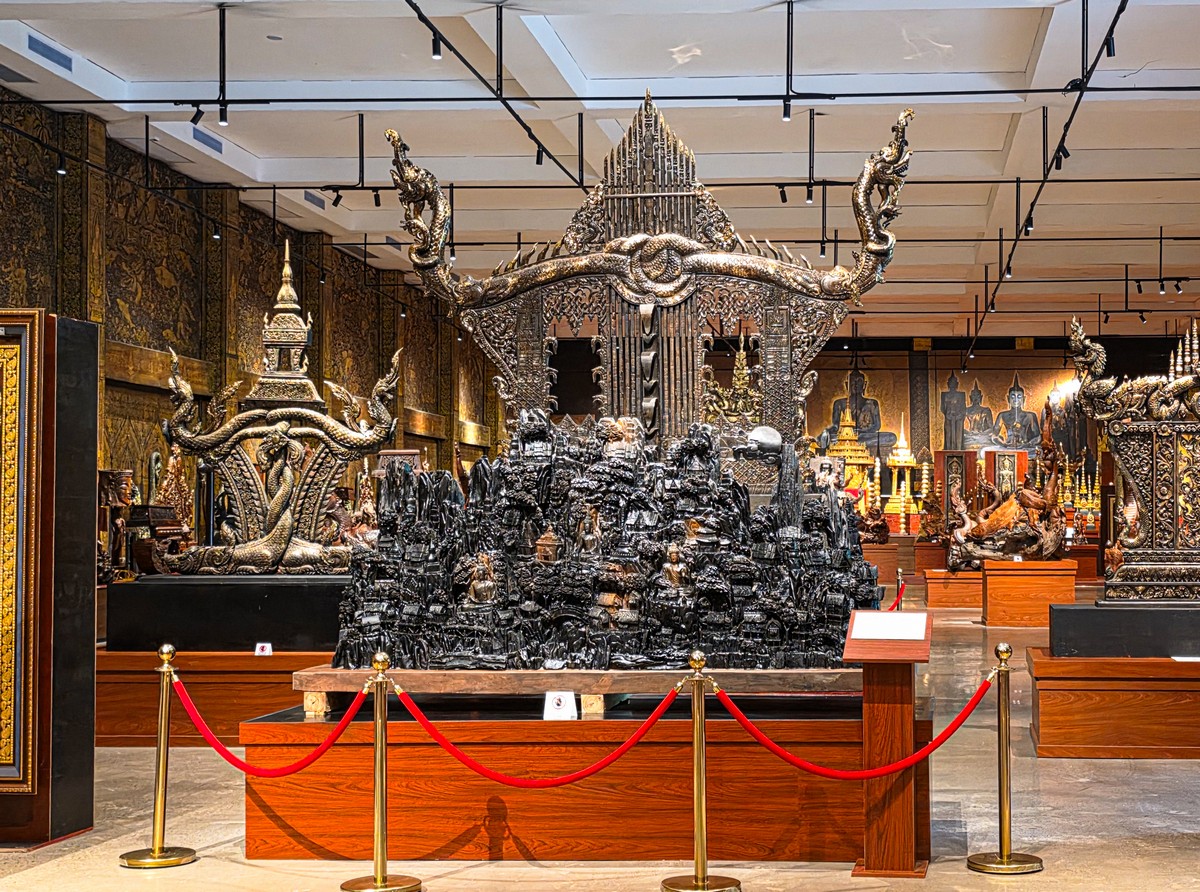
We were told it’s a single piece of wood. However, here’s a view from behind – it looks to me like it’s been put together from several pieces. Not that that makes this art object any less of a masterpiece.
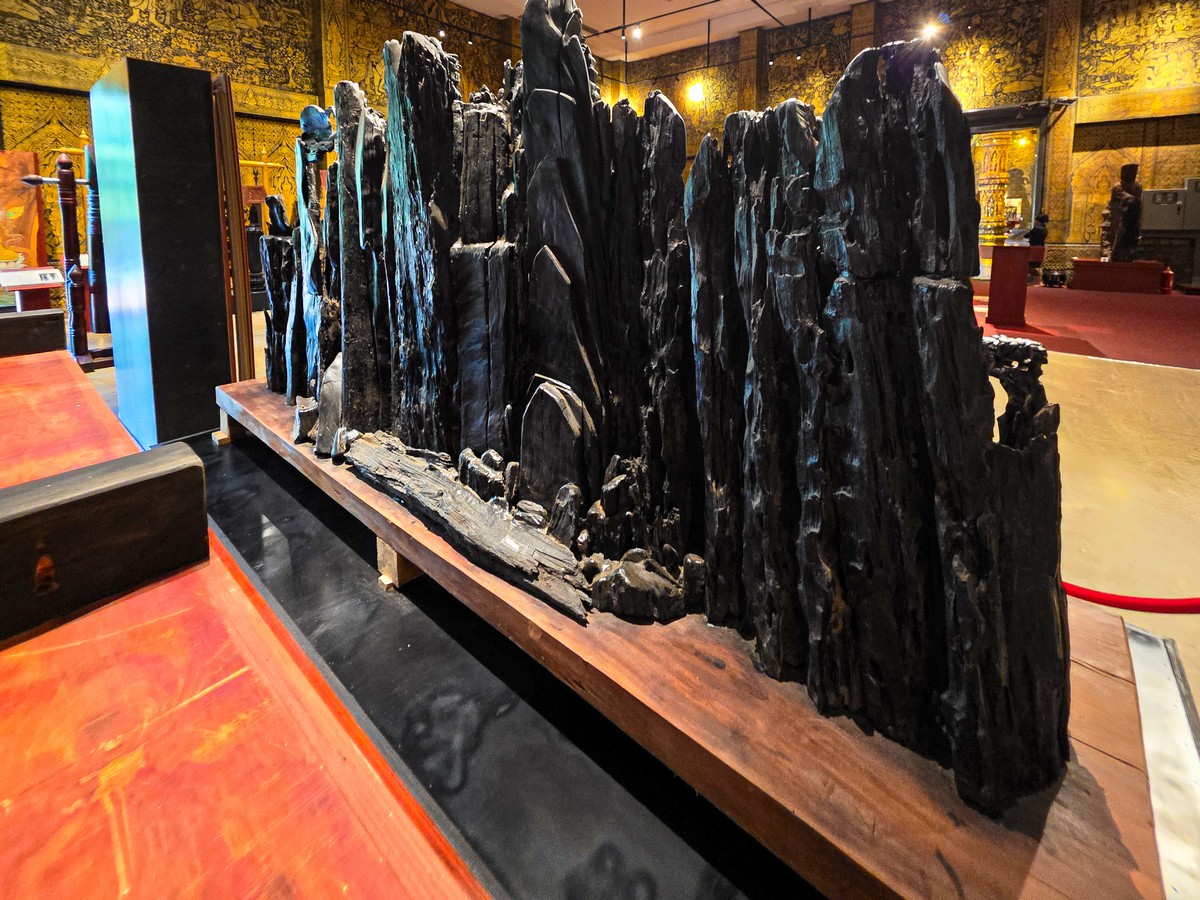
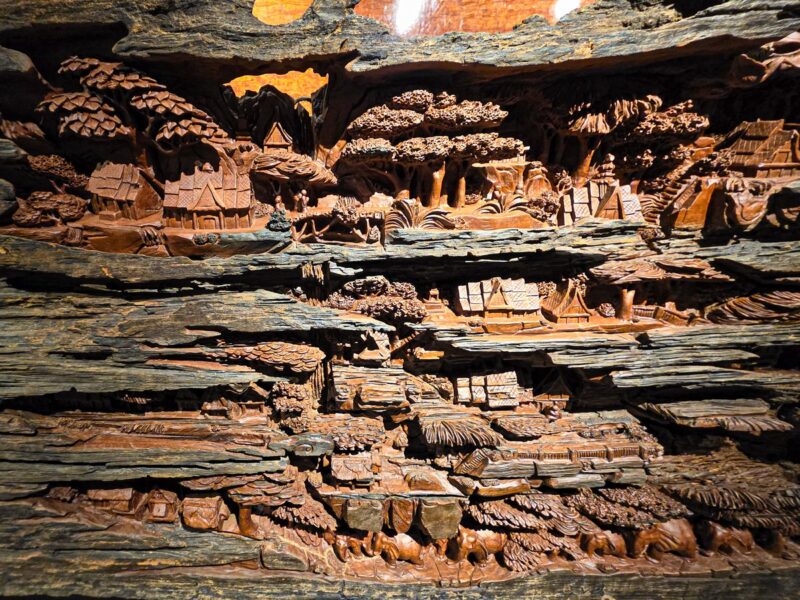
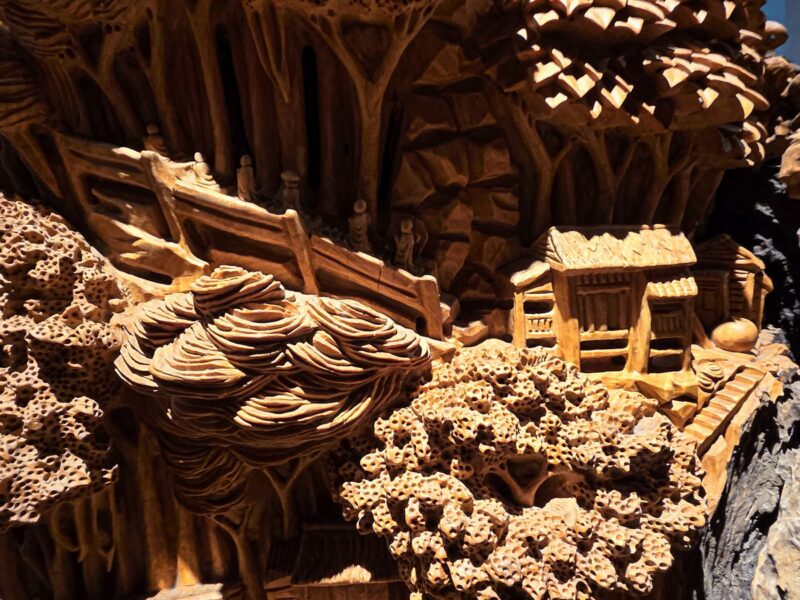
As to what it depicts – I’m afraid I’ve no idea. Probably just life: mountains, forests and jungles, villages, temples, and images of Buddhas gazing down on everyone from on high. The precision and level of detail are simply astonishing…
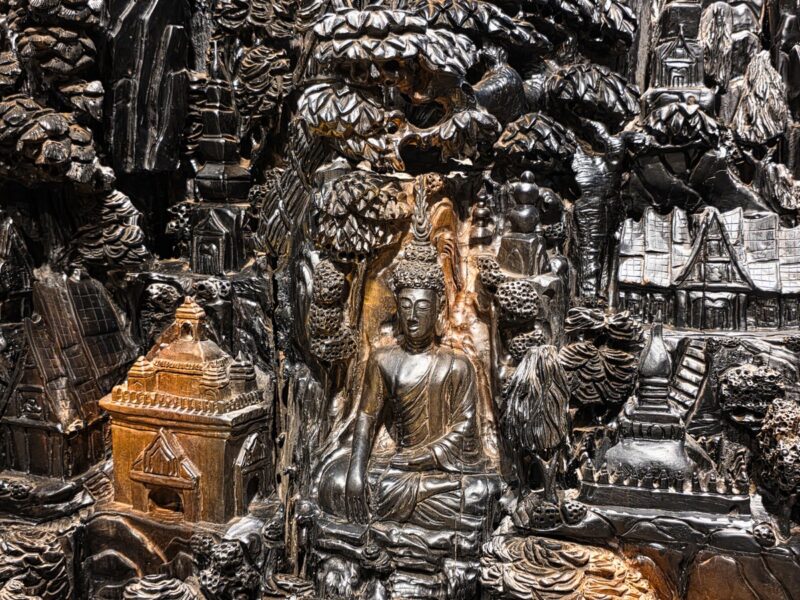
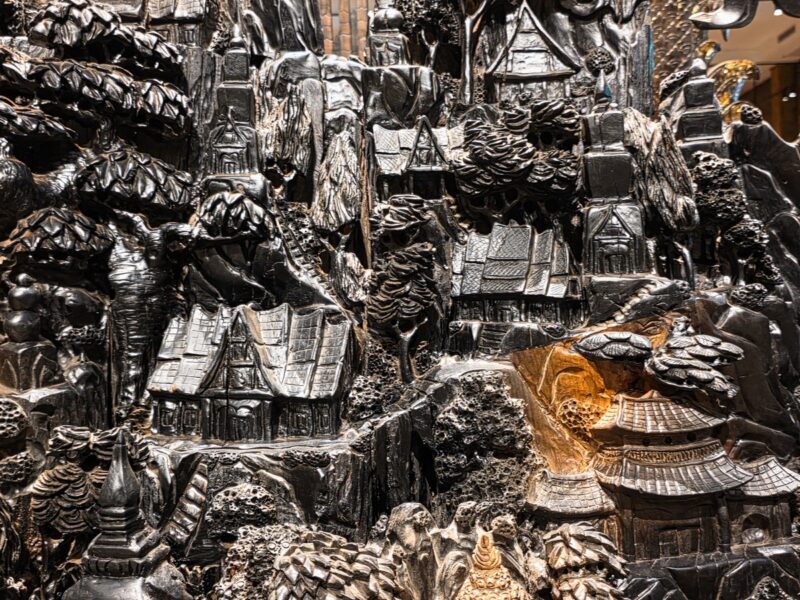
Almost right away it was explained to us that no trees are felled for the wooden sculptures. Instead, they gather the most interesting and expressive pieces of fallen trunks, or fish them out of water, or use trees that died in forest fires. And since the jungles here are vast and there are plenty of suitable trees, the local carvers have more than enough raw material to go round.
Oh, and while I’m at it, I should point out that for the founder of this museum, woodcarving was just a hobby. These days he apparently no longer does the carving himself, but mostly designs new pieces. The actual carving is done by other local craftsmen. And understandably so: with roughly 30,000 (!) exhibits in the museum’s exhibition halls and storerooms, it’d simply be impossible to make them all single-handedly. After all, some of these masterpieces take a year (!!) or even longer to make!
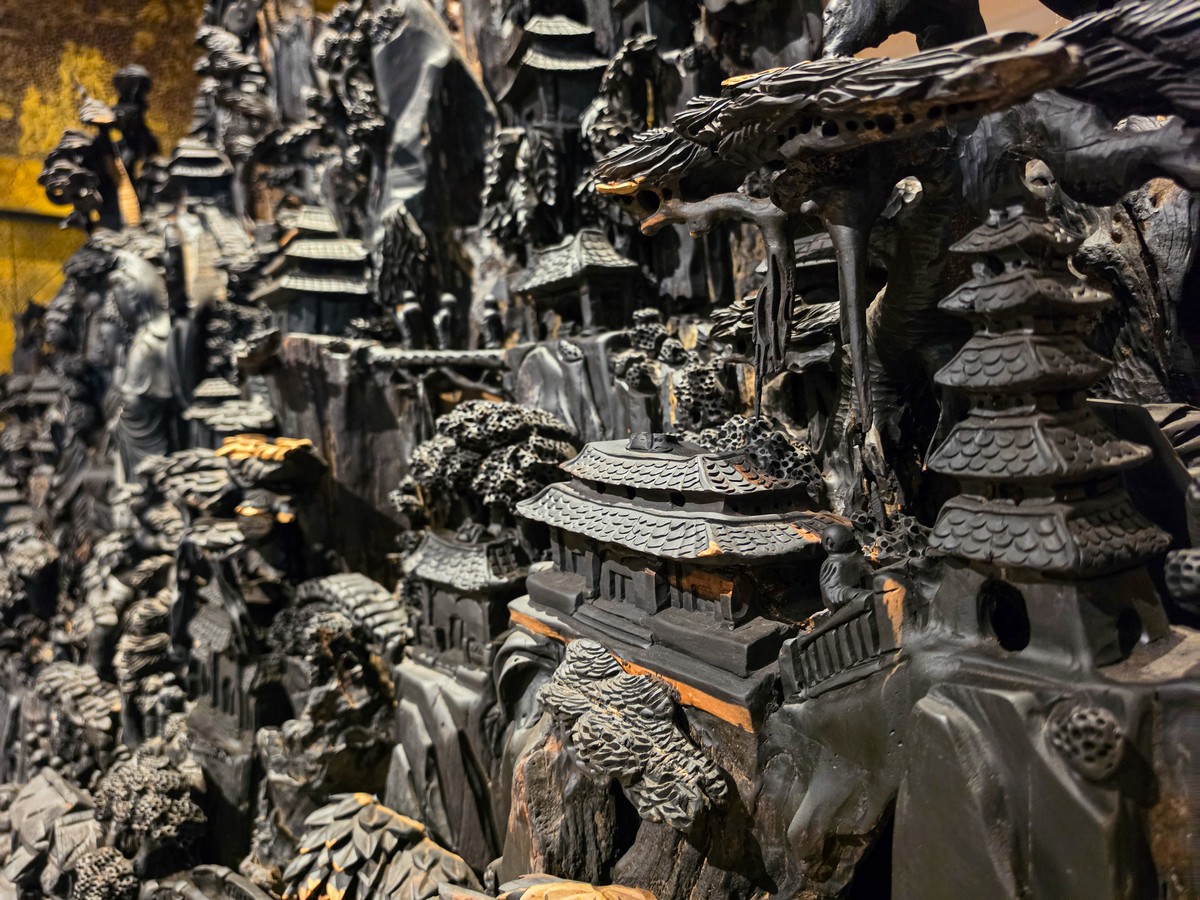
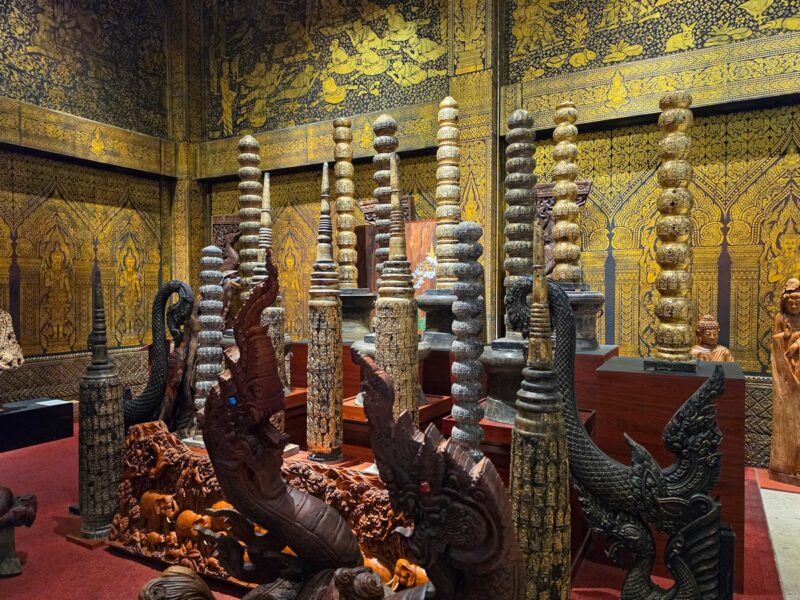
The next sizable exhibit is likewise a huge wooden construction with the tiniest of details. However, this one isn’t a single piece, but rather various wooden parts assembled together:
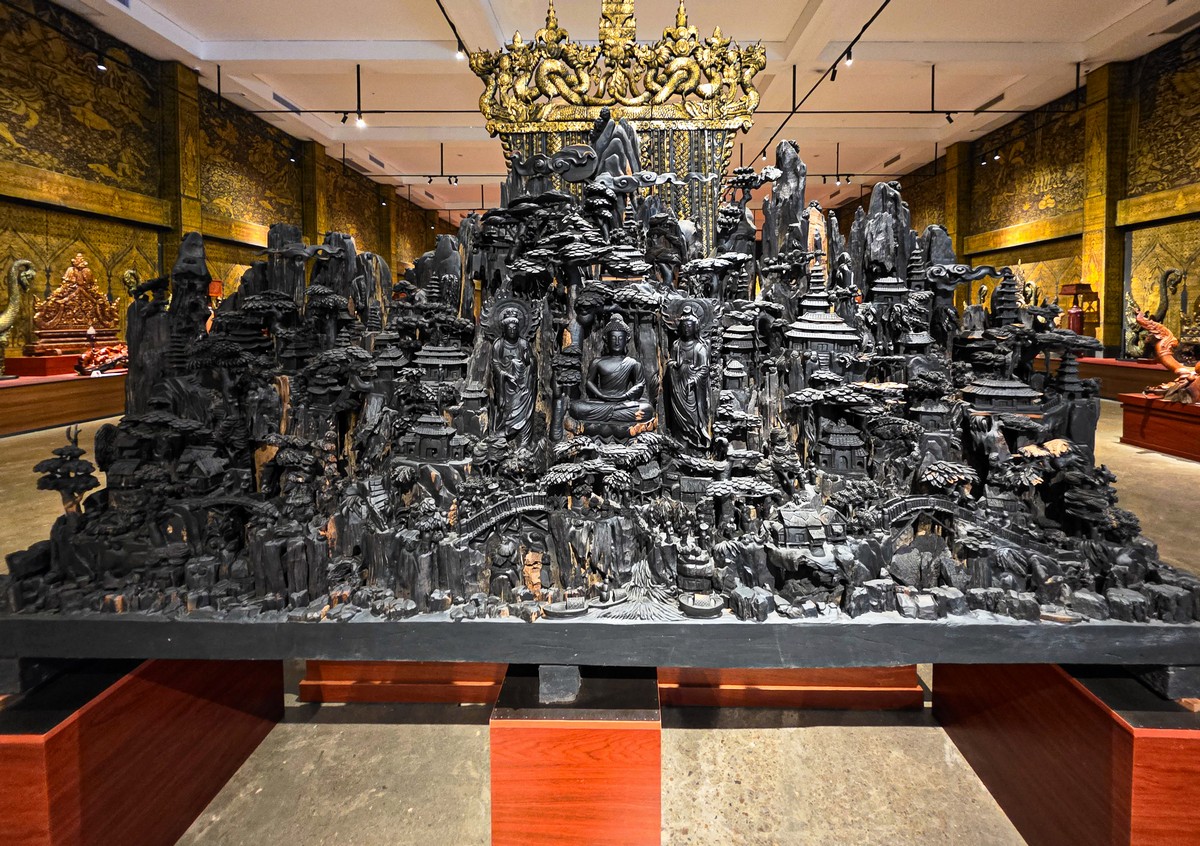
The details here are also very meticulously chiseled:
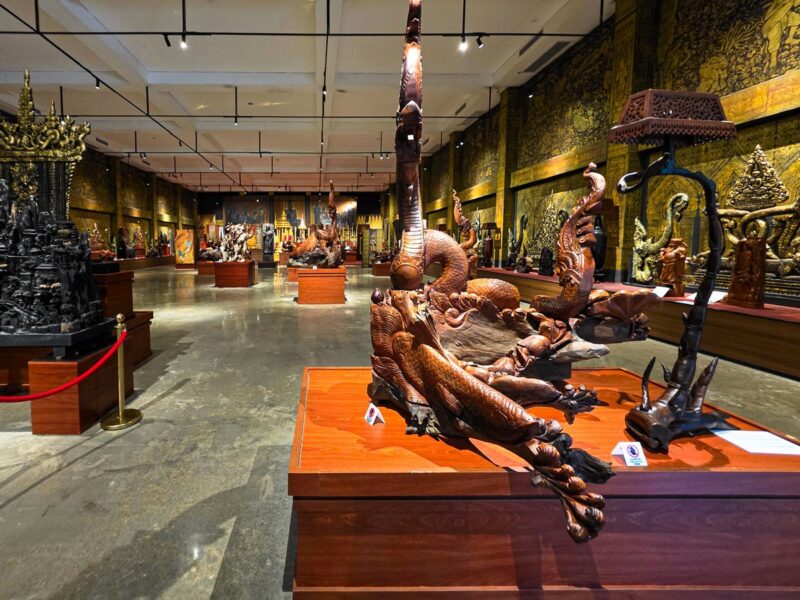
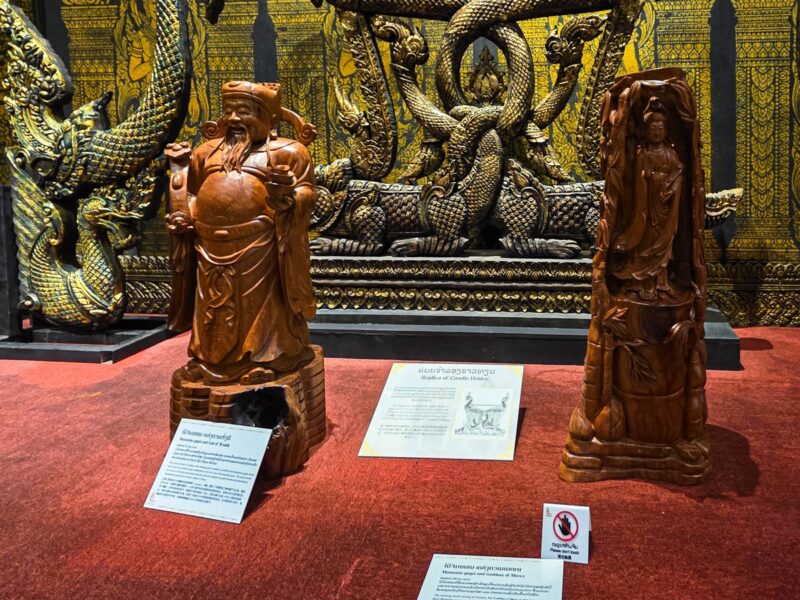
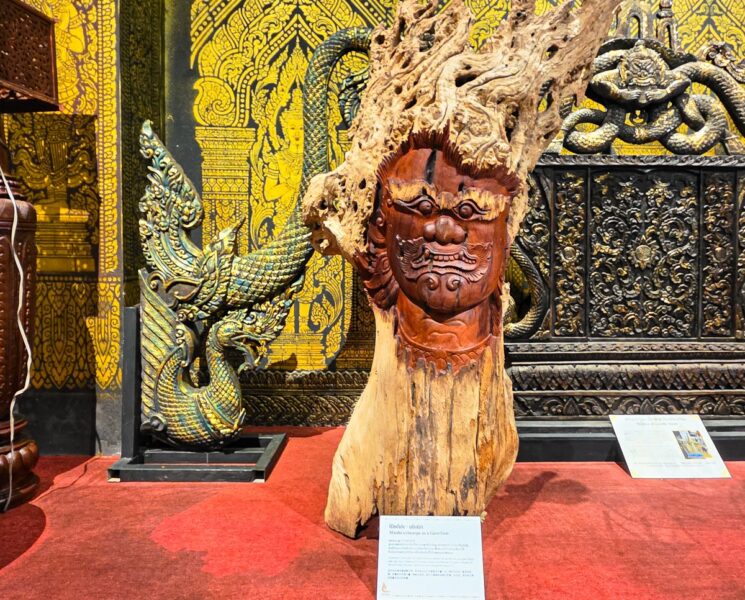
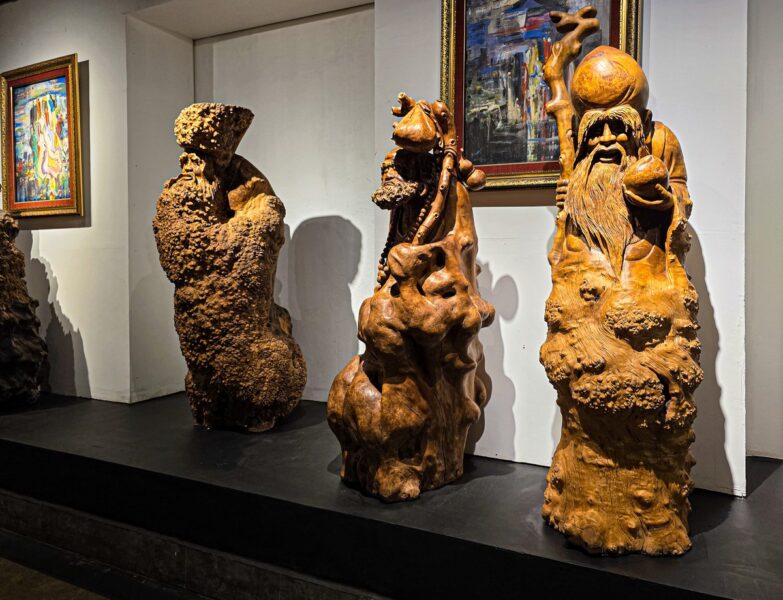
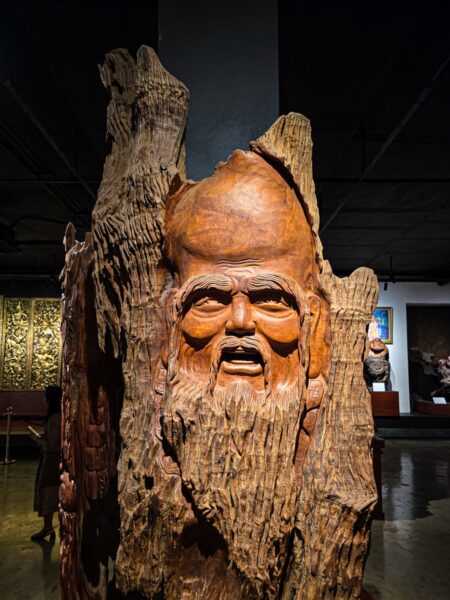
And then come all sorts of other wooden art objects, figures, faces, and so on, and so on, and so on…
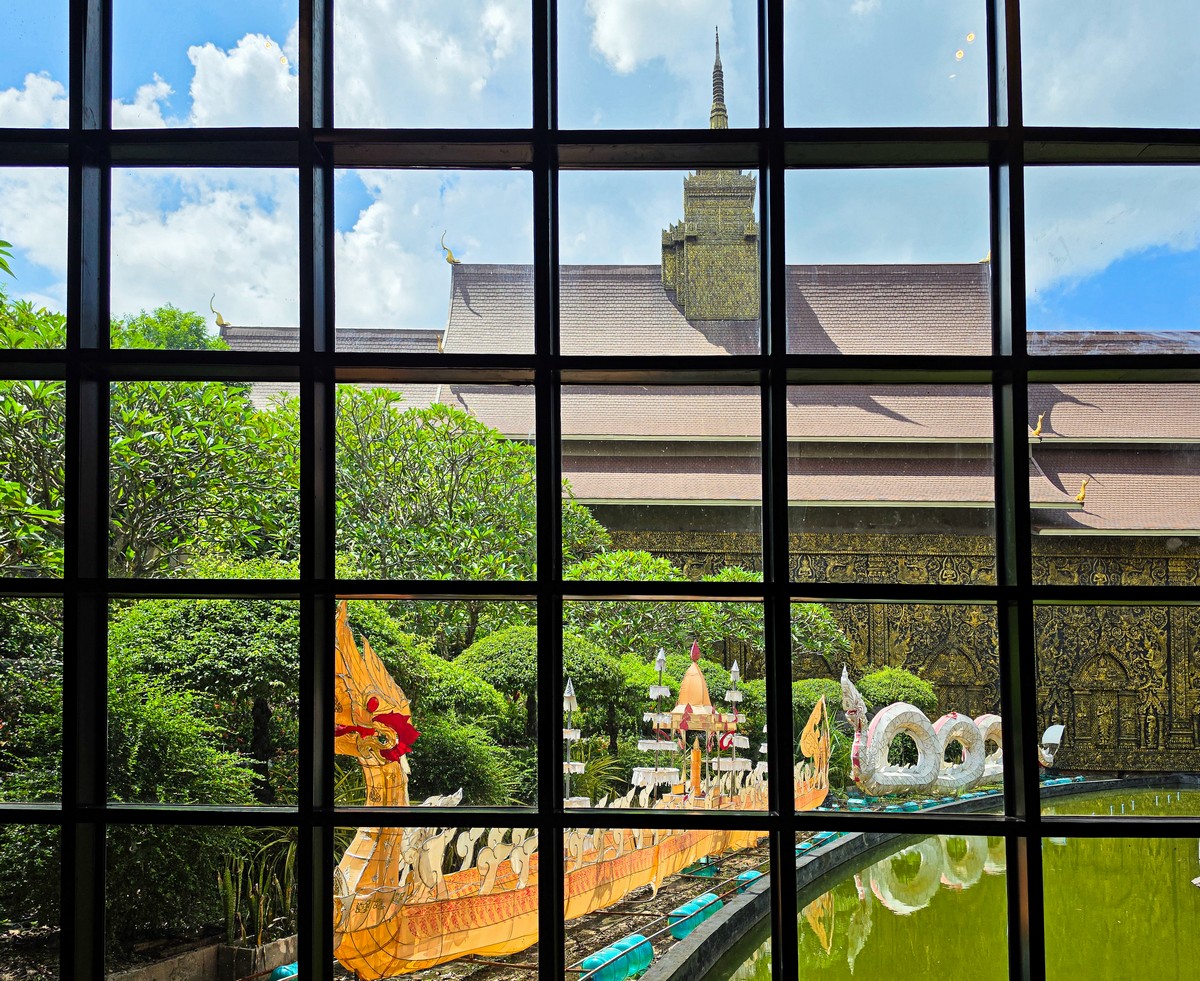
My head was starting to spin a bit… a glance out the window was somewhat refreshing:
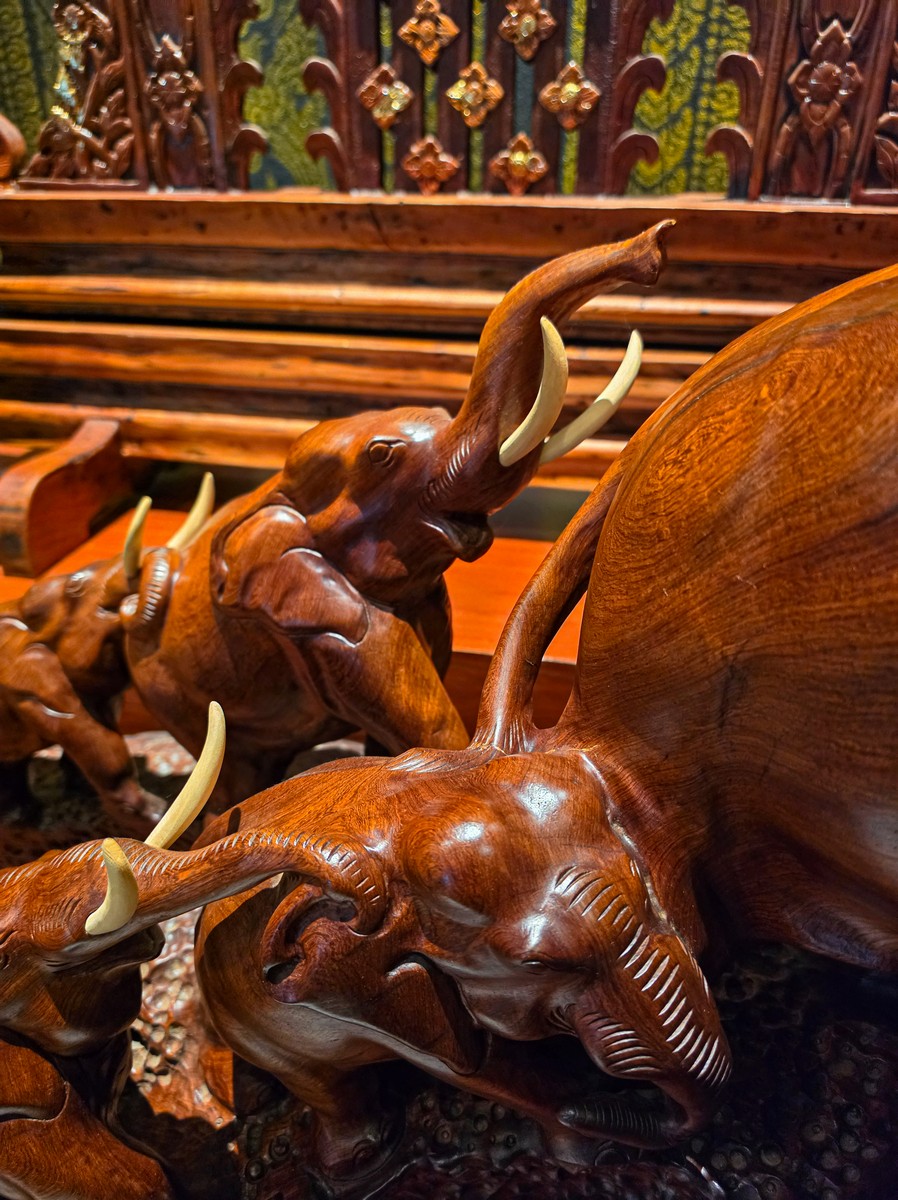
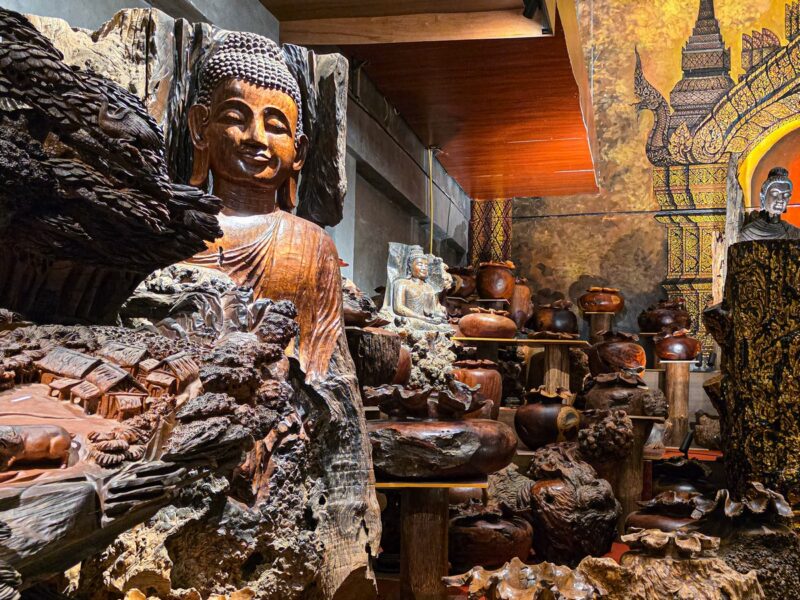
One of the old names for Laos is the Kingdom of a Million Elephants. Naturally, that’s reflected in some of the wooden art masterpieces here:
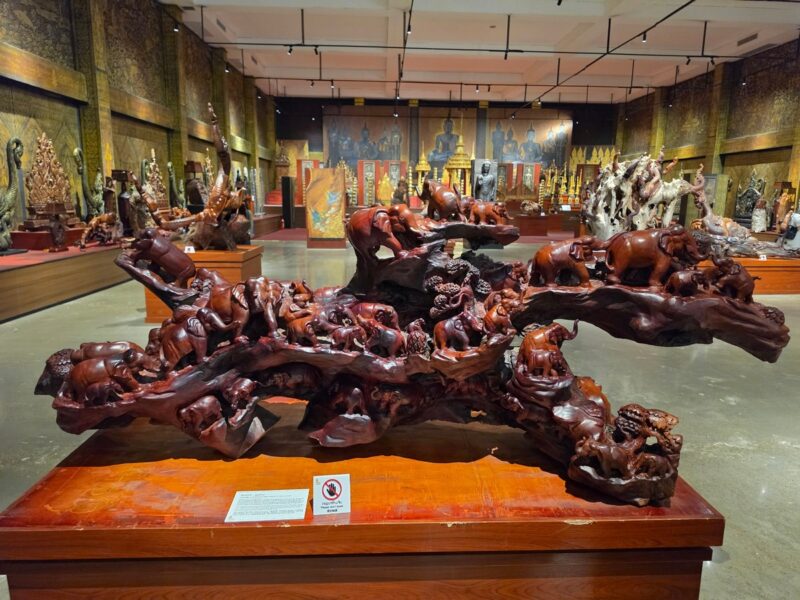
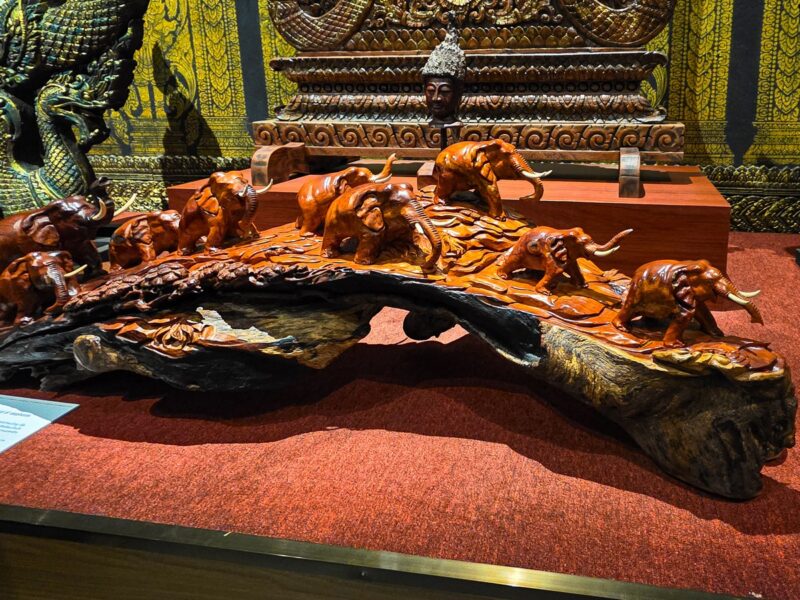
The little elephants are carved very expressively – with real care and true love:
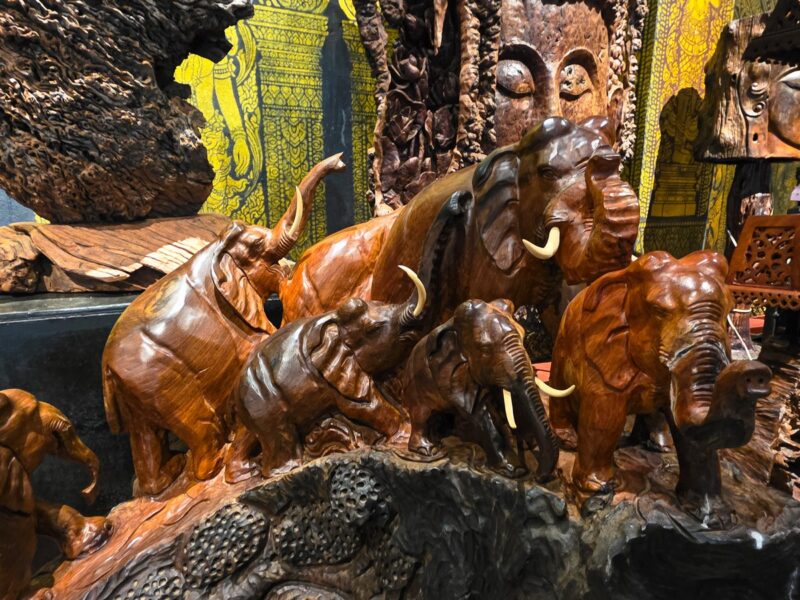
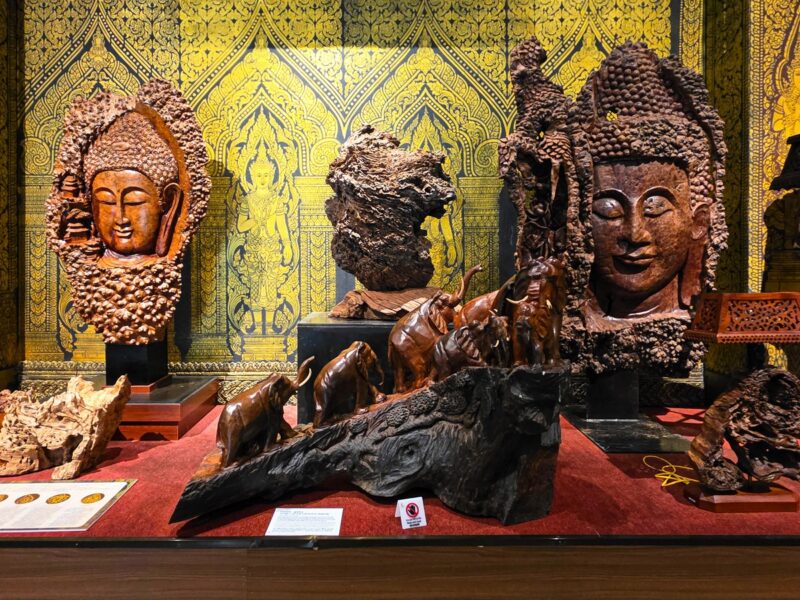
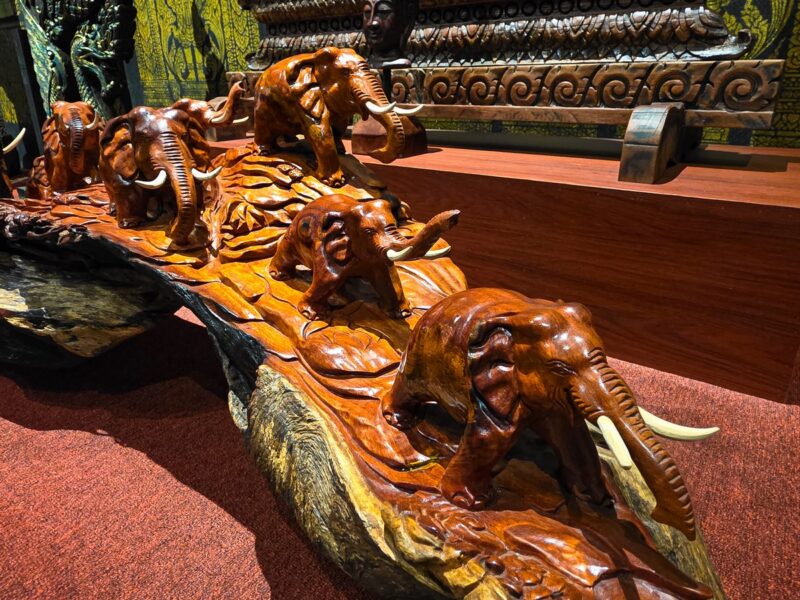
Here it looks like they took something like the gnarly root of a fairly large tree and turned it into this here knurly installation:
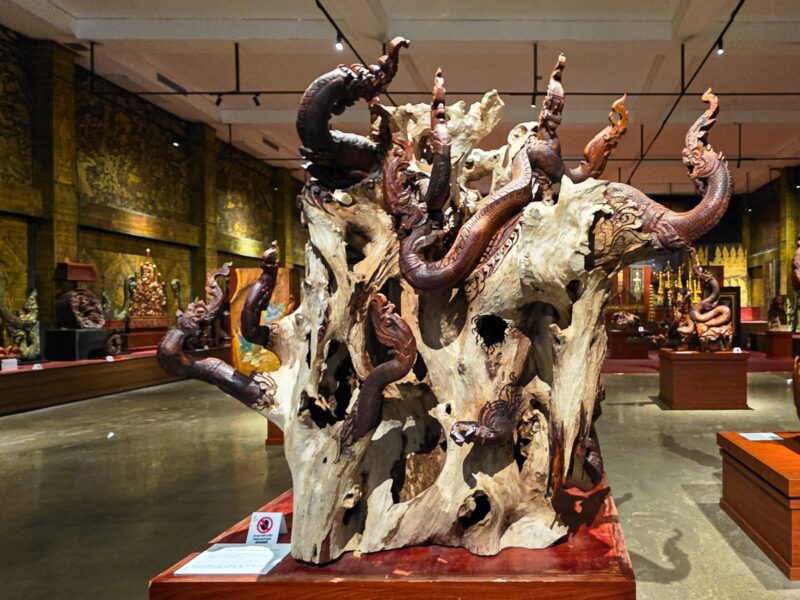
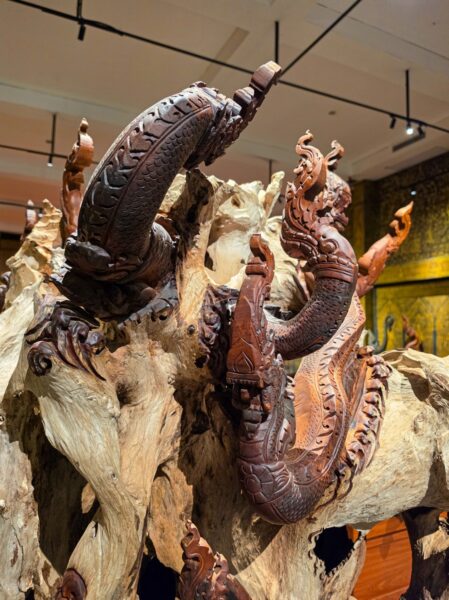
A dragon, fish, a lotus root – surely a reference to some local epic:
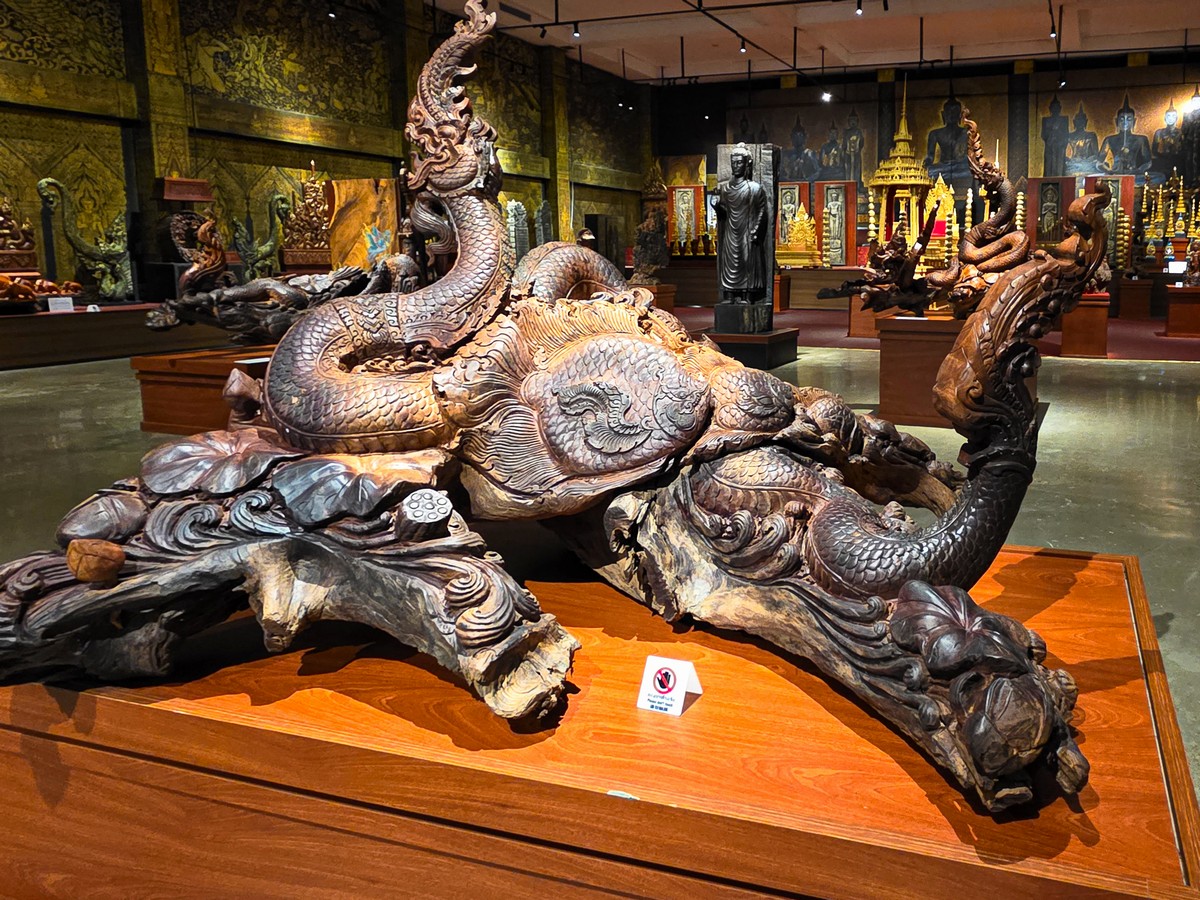
And all sorts of other things – you could wander around here peering at all the detail for hours…
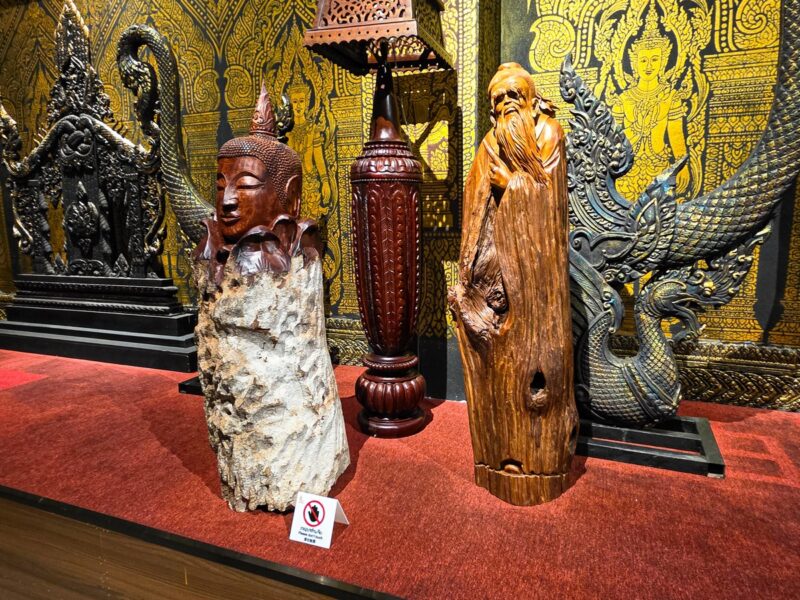
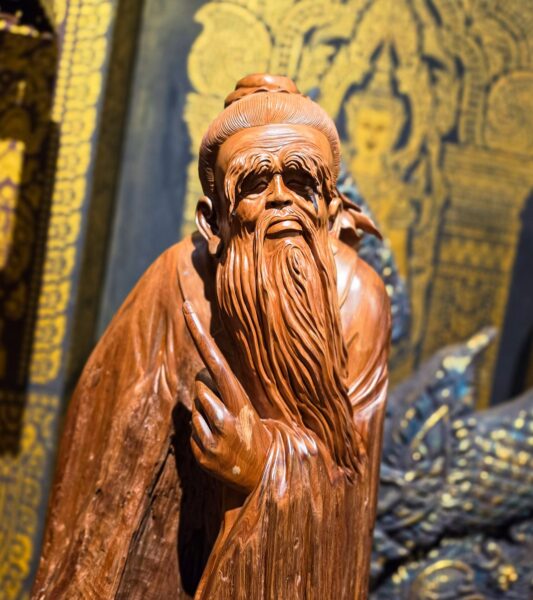
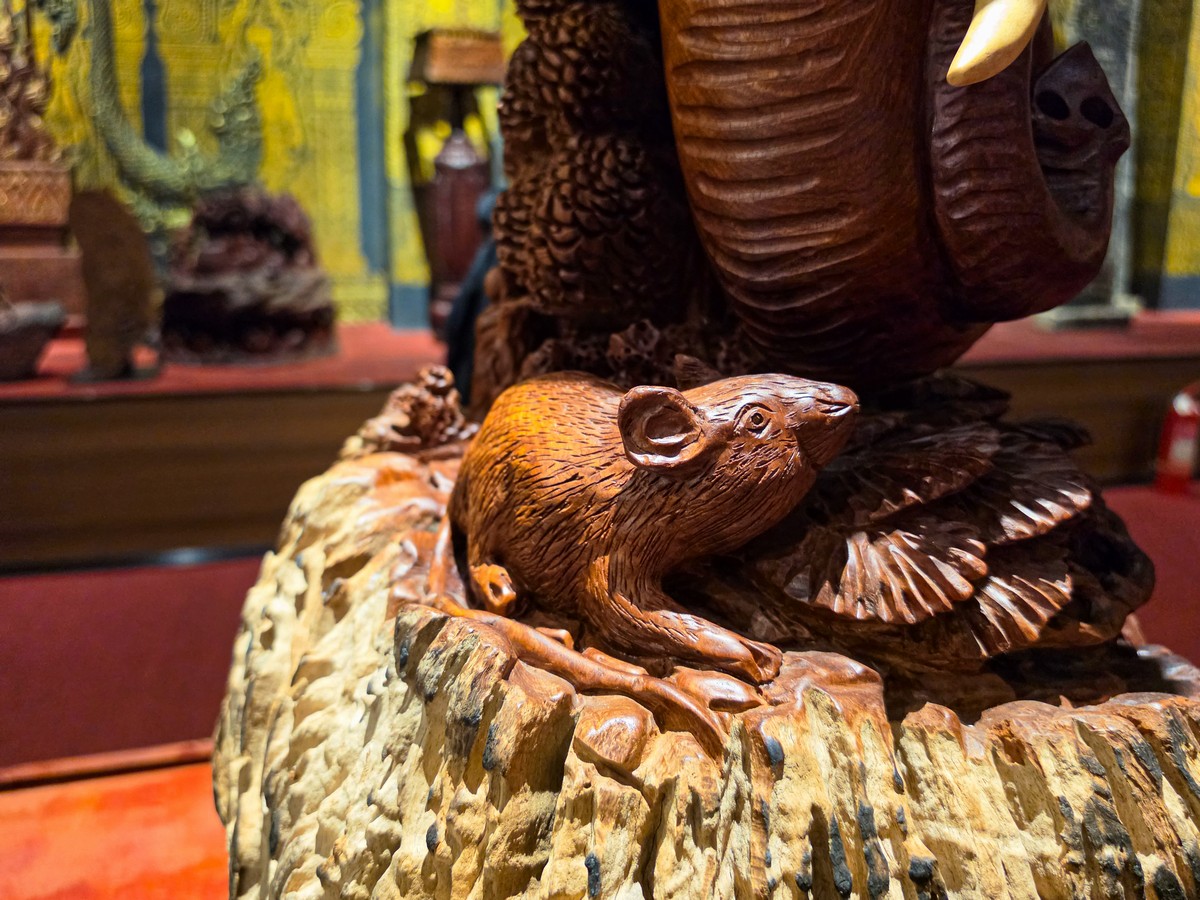
Another elephant – this time with a mouse. Again, No doubt based on some story/parable/legend.
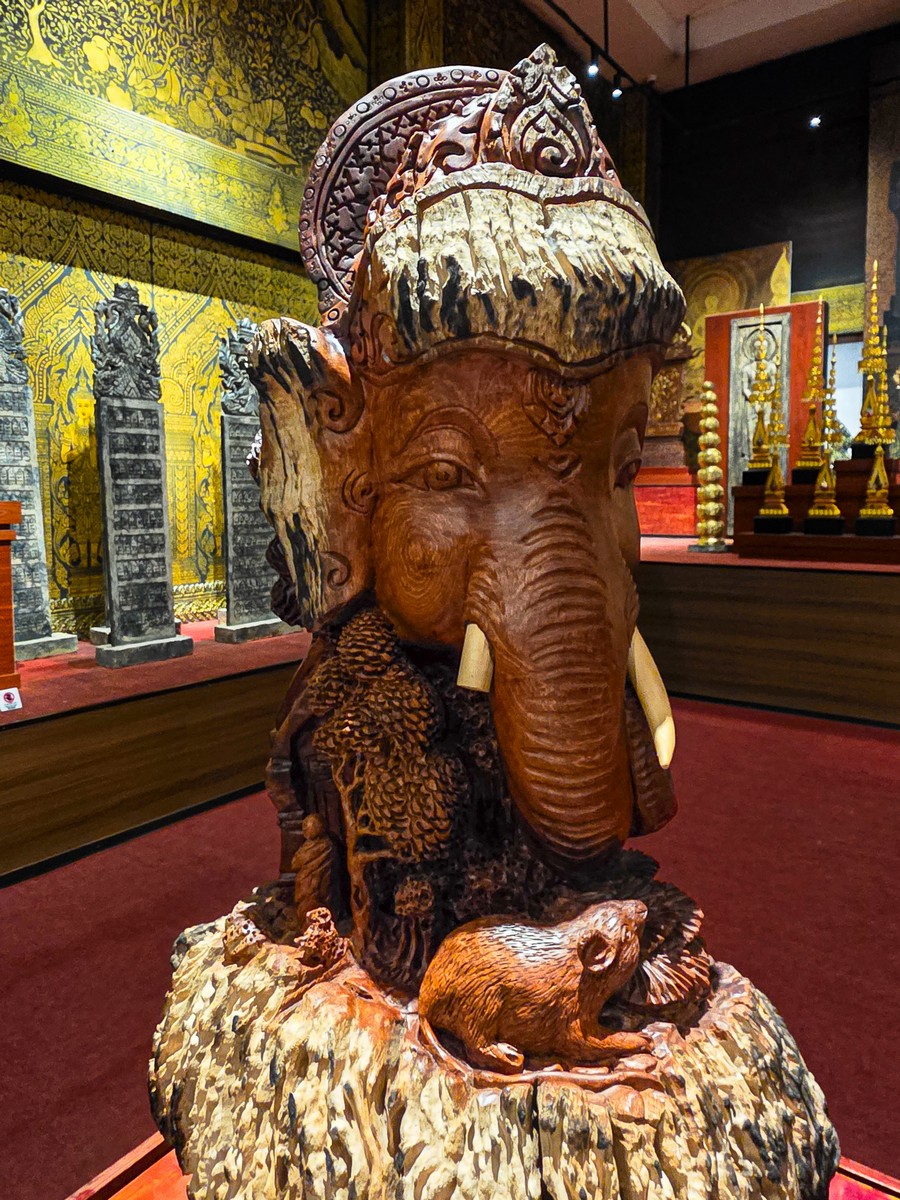
Aha! It’s the Buddhist parable “The Elephant and the Mouse”:
At long last we reach the end of the first exhibition hall (just a reminder: there are seven of them here)…
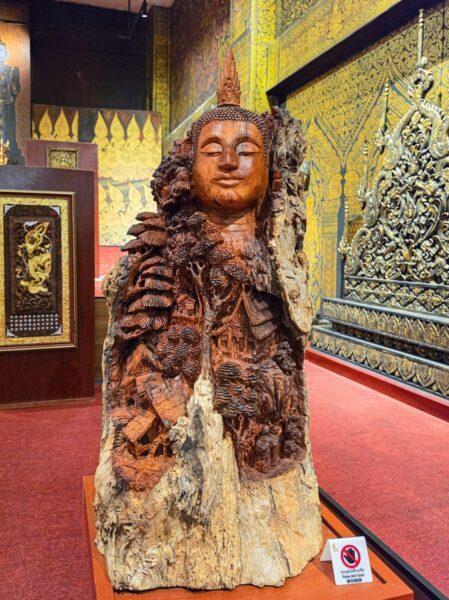
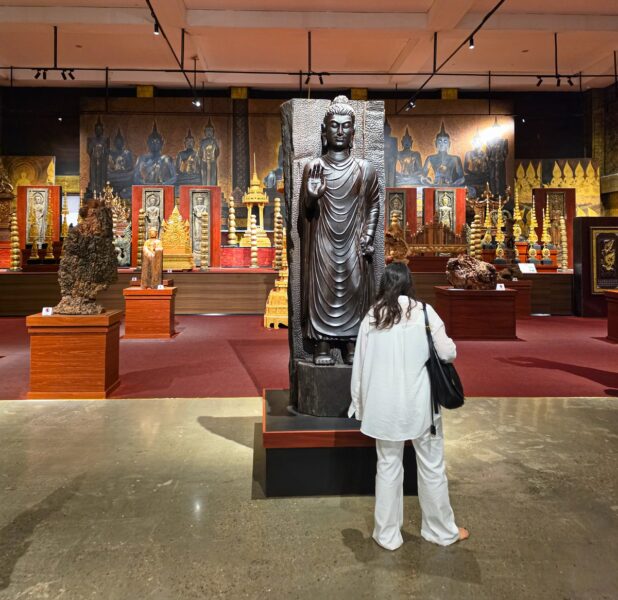
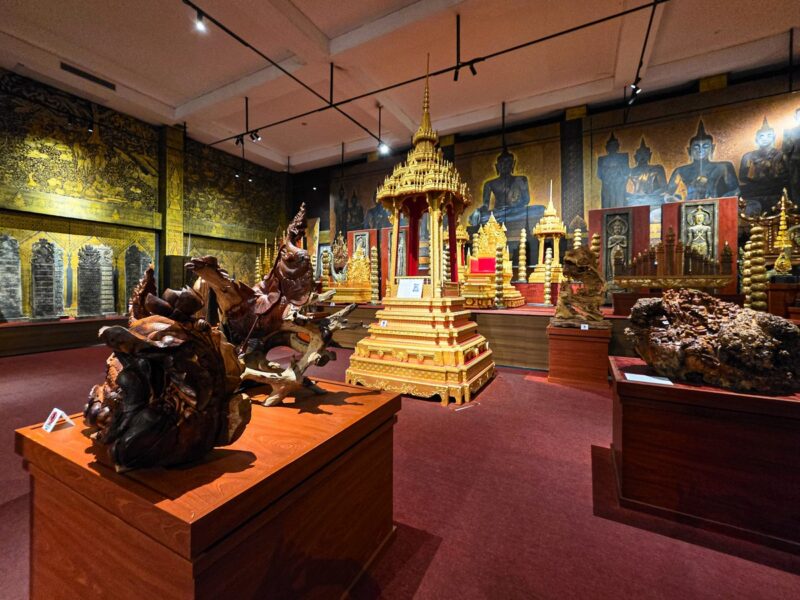
Into the next hall, and we’re met by a sphinx. It’s wooden too. But I’ll tell you all about the sphinxes a little later.
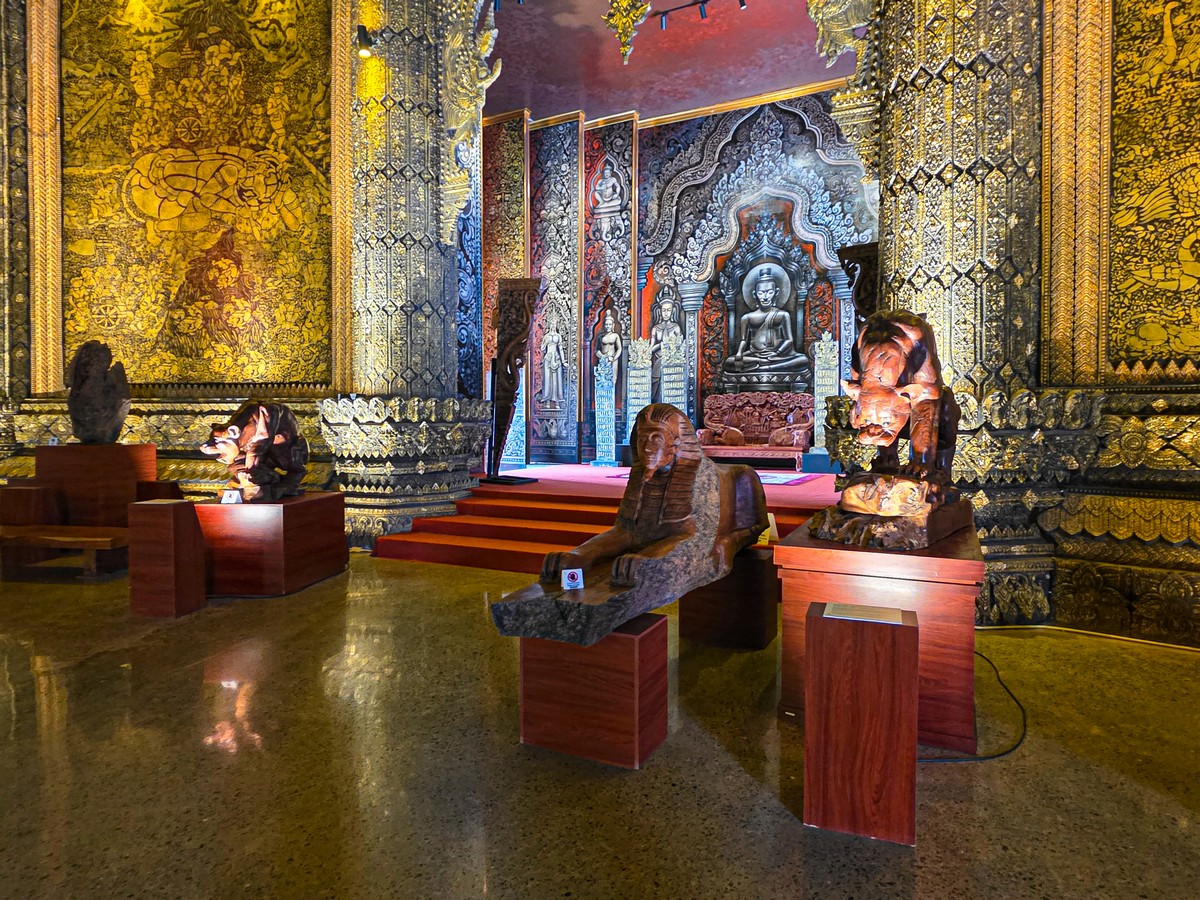
We hop on to the escalator and head down to the -1 floor, where entrances to several more halls lead off in different directions:
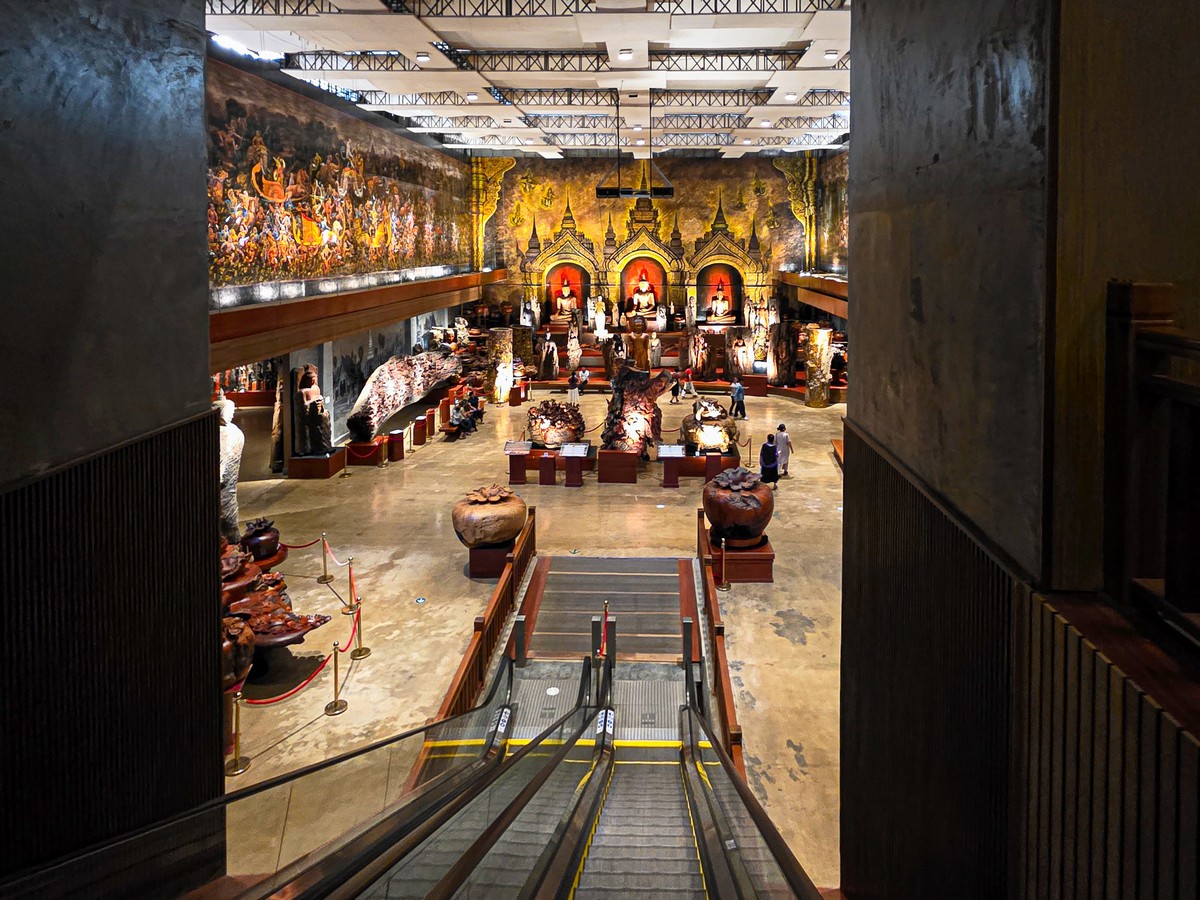
Woah – yet more oh-my-grandiose!…
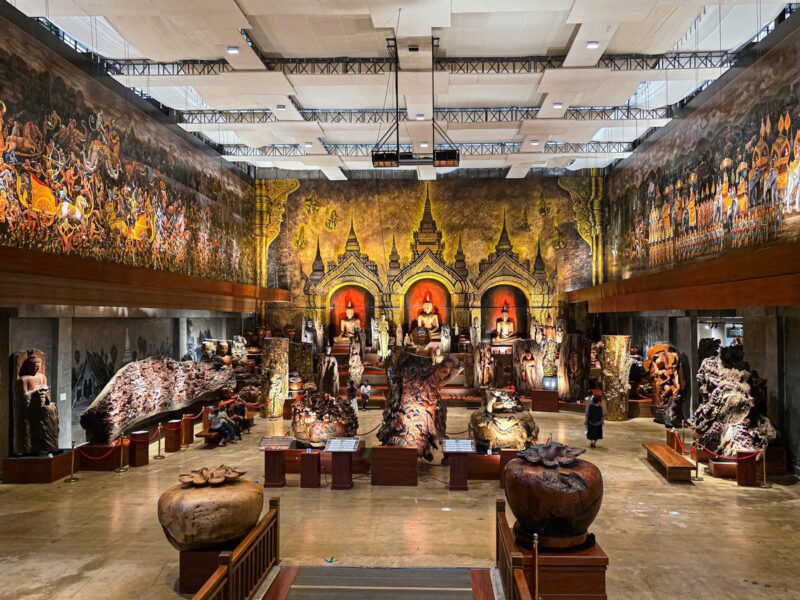
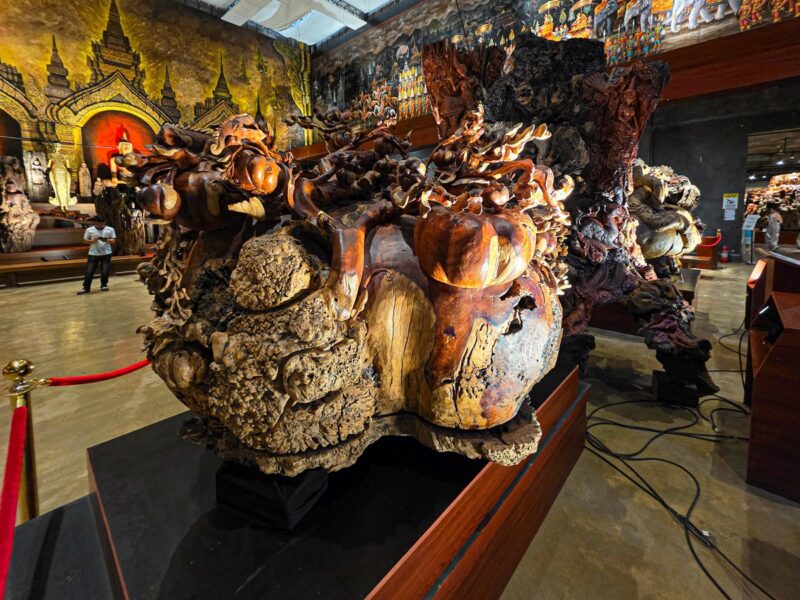
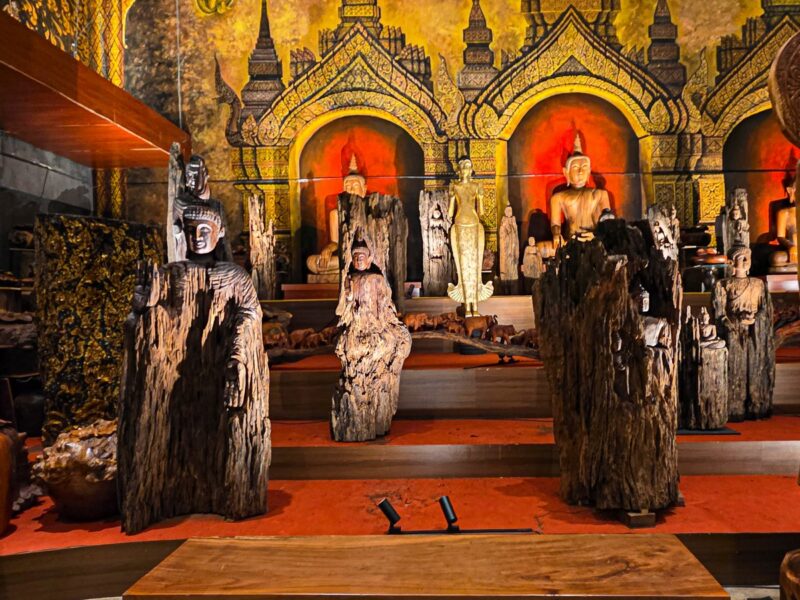
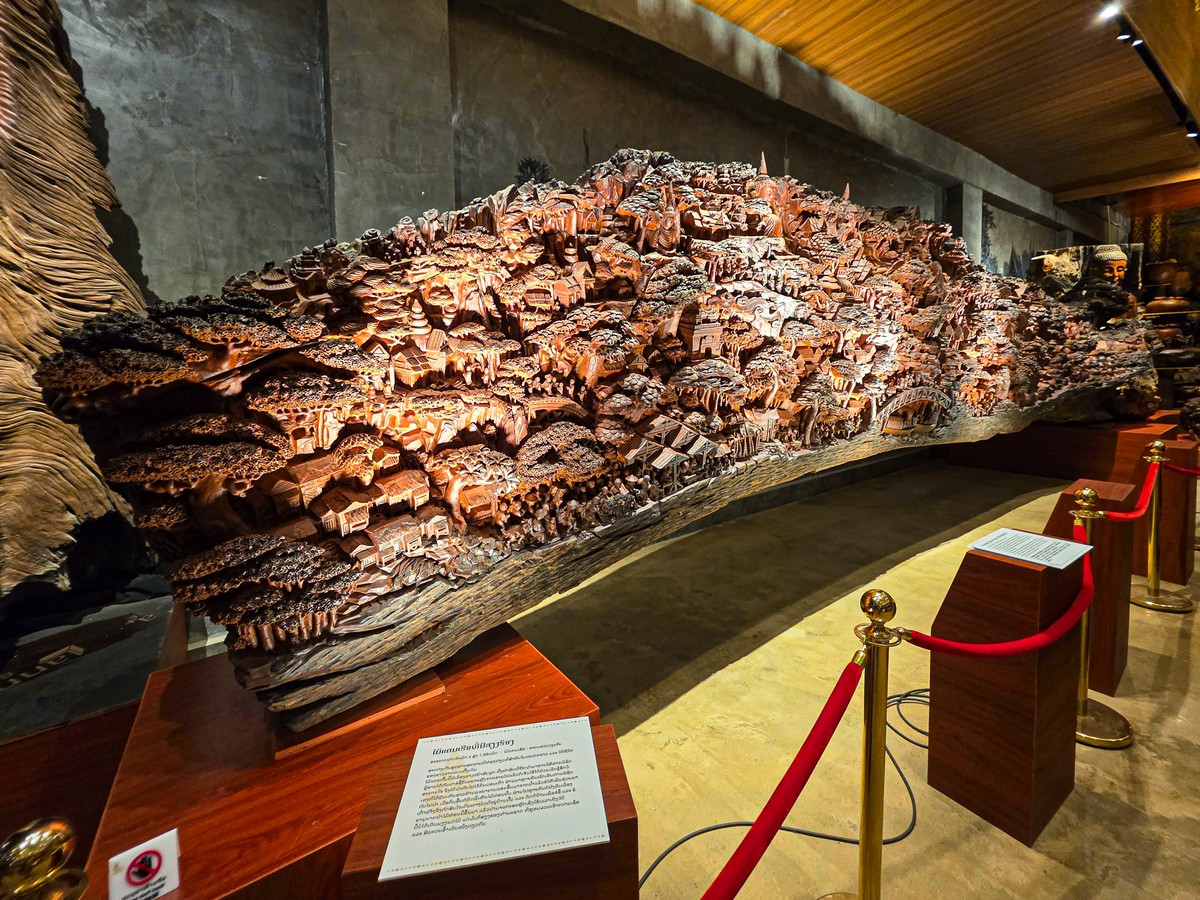
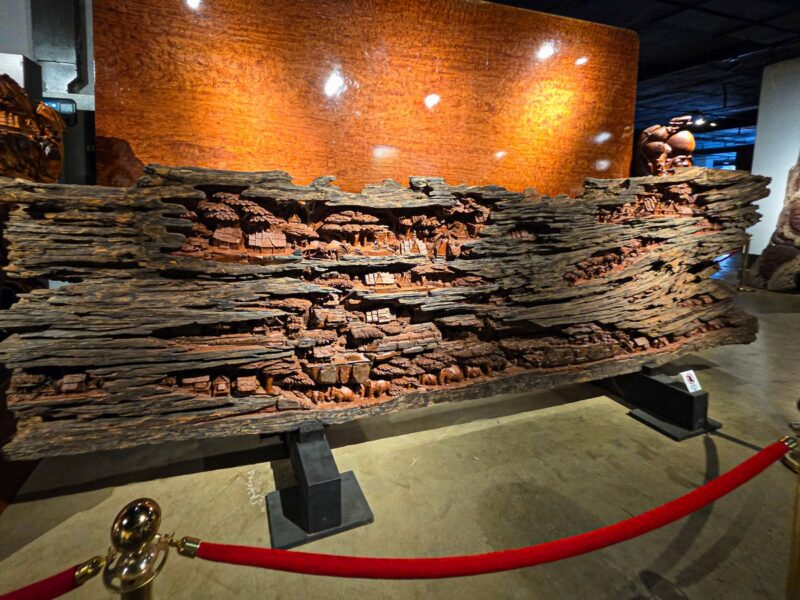
But the highlight is this here nine-meter installation made from a single piece of wood:
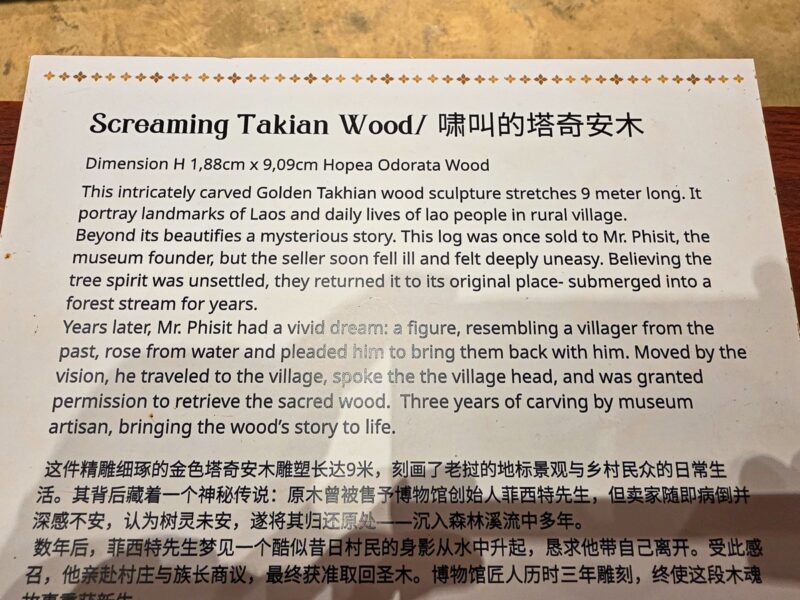
And here’s a short description of the sculpture. I guessed right: these installations are simply about the everyday life of the Laotians.
// And the tree is of the species Hopea odorata. First I’d ever heard of it…
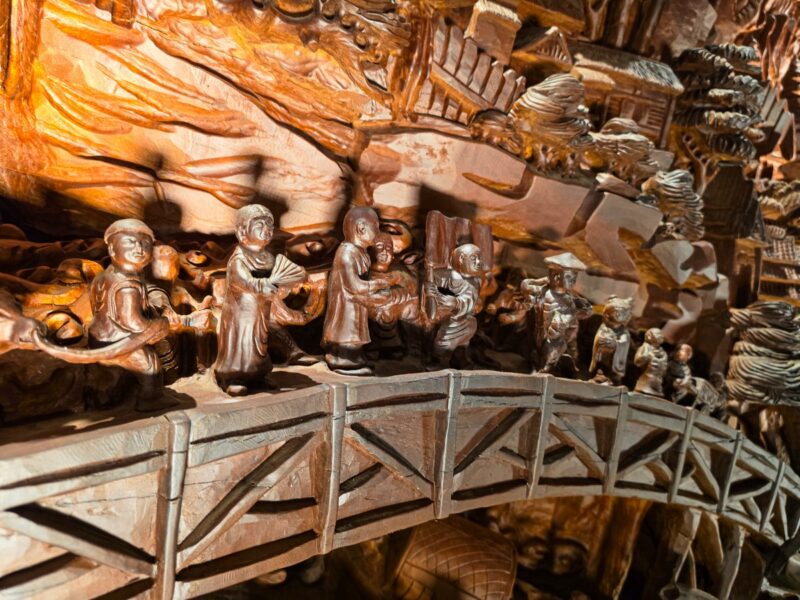
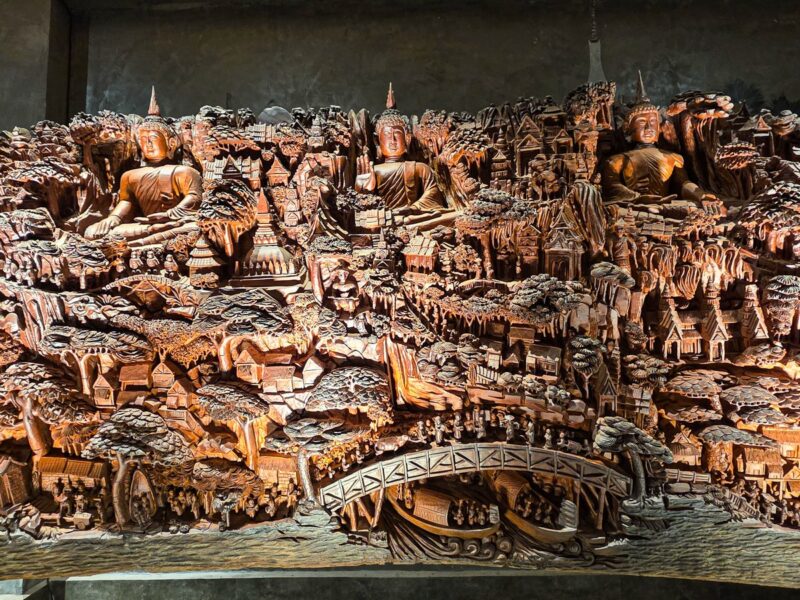
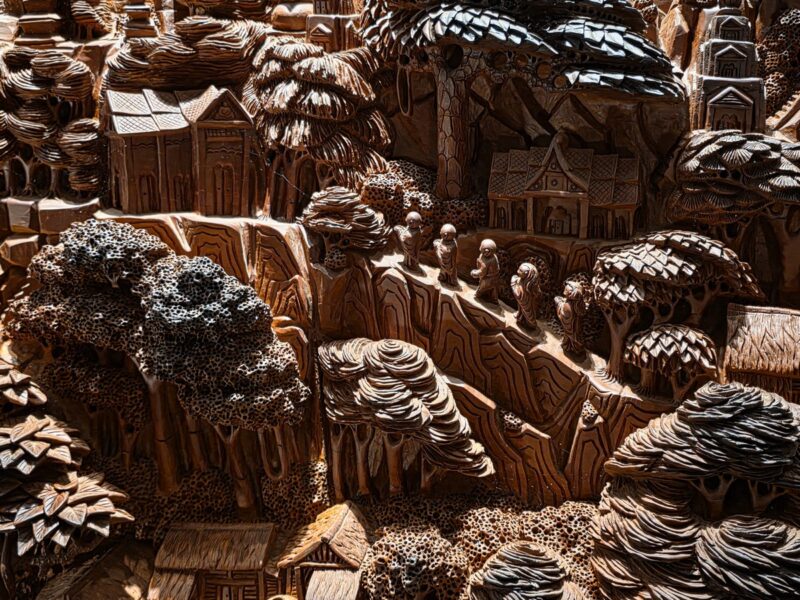
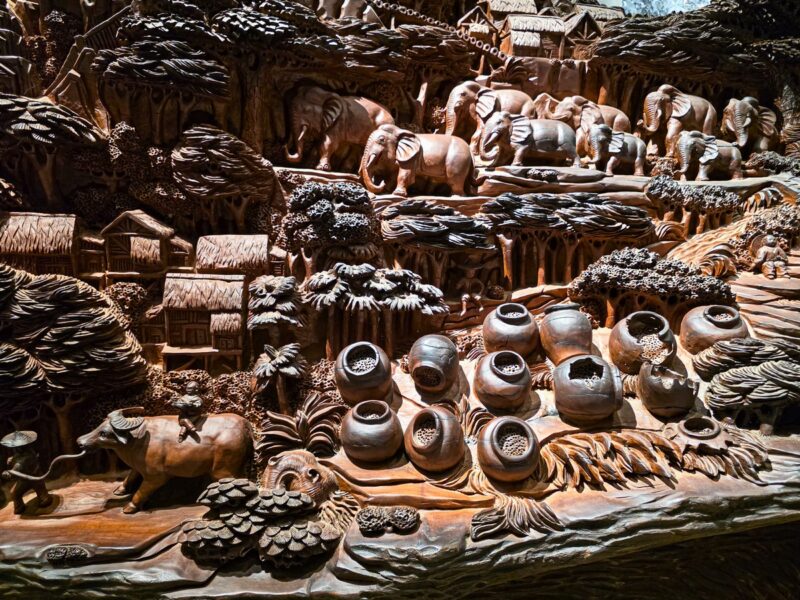
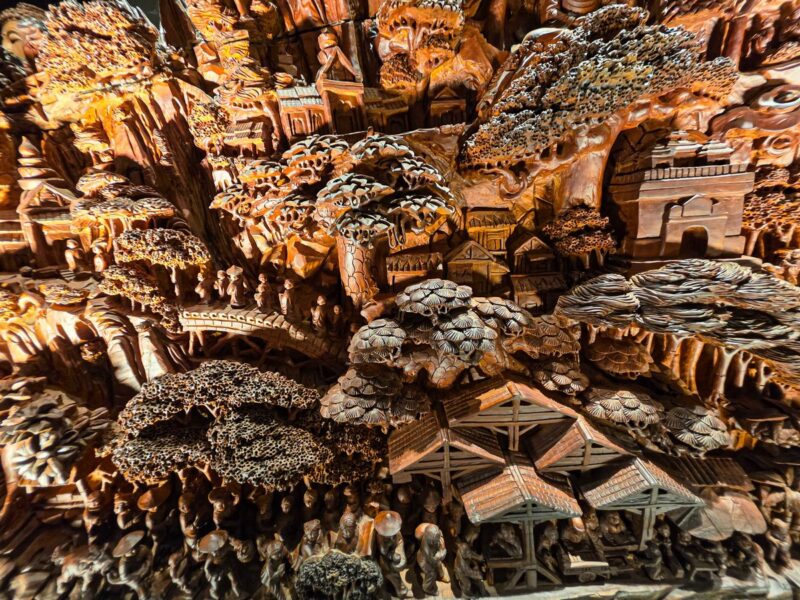
Simply mind-blowing!
The entrance to the next hall looks a little intimidating – the scale of what’s going on in there can be seen even from a distance.
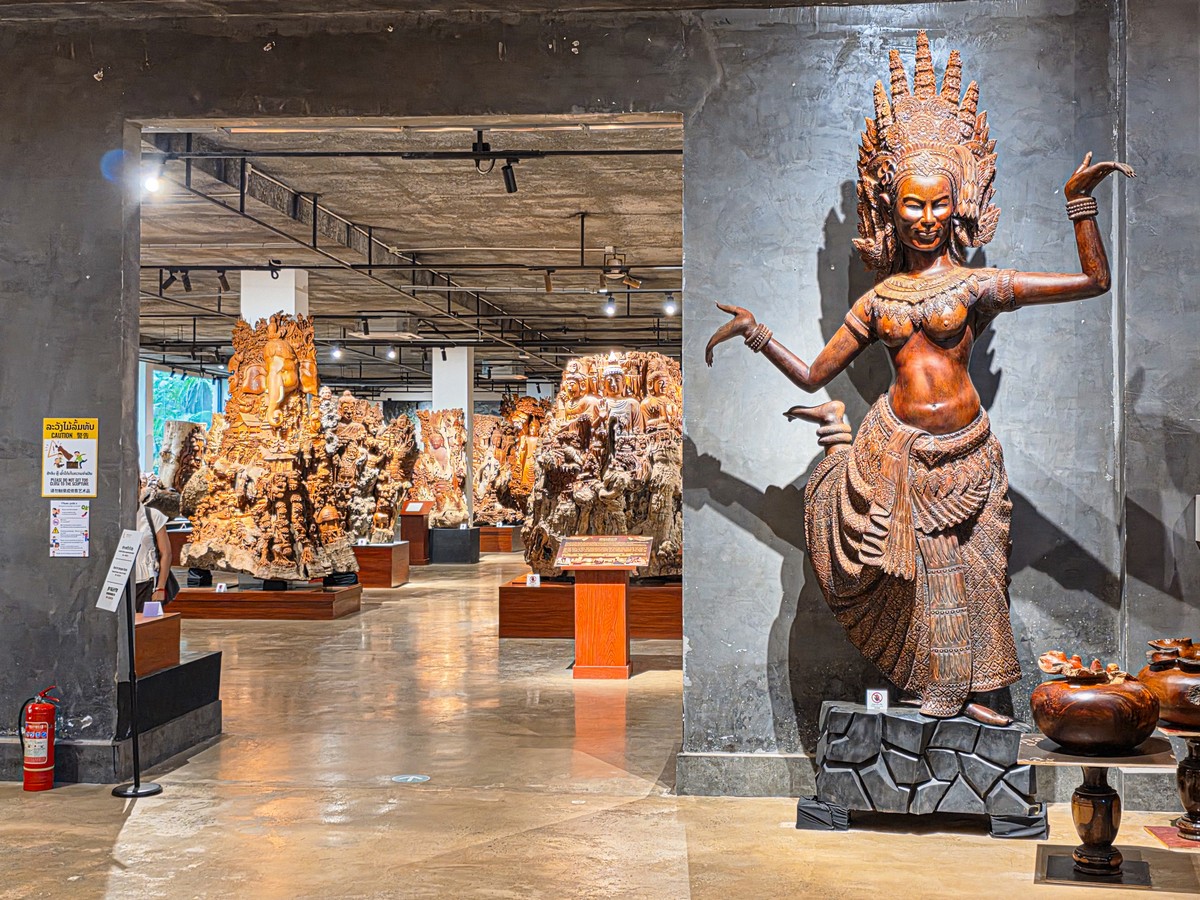
Sure enough – there are dozens of sizable sculptures spread over a large area, with slightly smaller art objects along the walls.
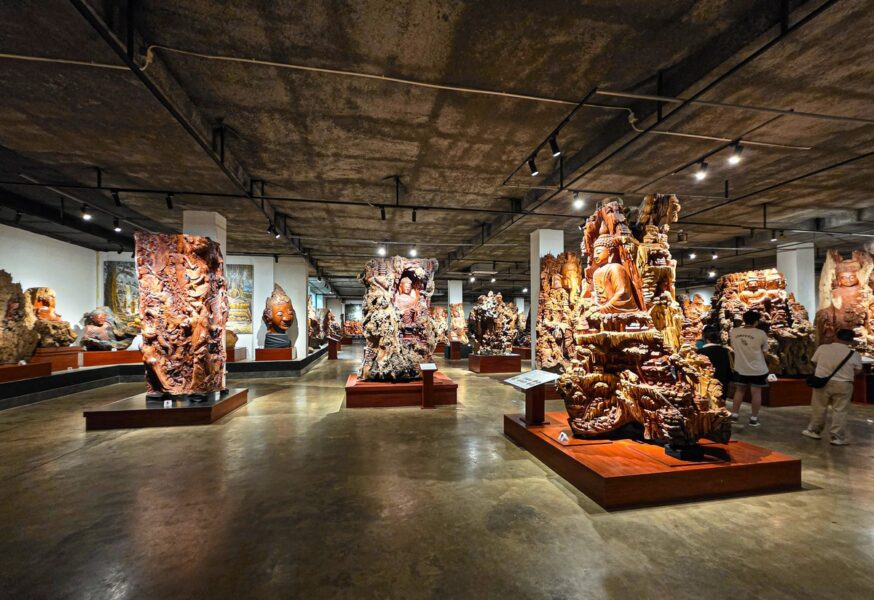
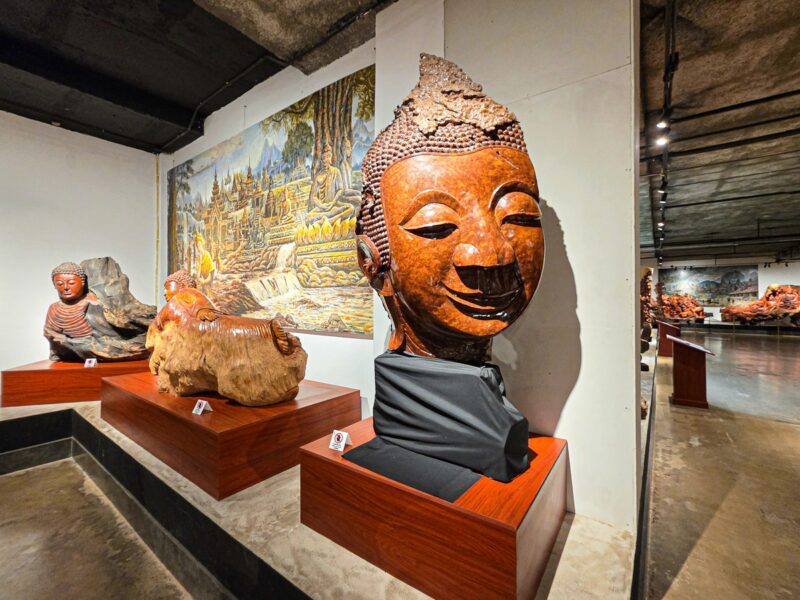
Will you have the energy to walk around it all? That part’s easy. But will you have enough brainpower to take a proper look at everything, contemplate it all to the full, and soak up all the emotions? Now that’s harder. After the first hour of wandering this museum’s labyrinths, your brain starts to boil and smoke…
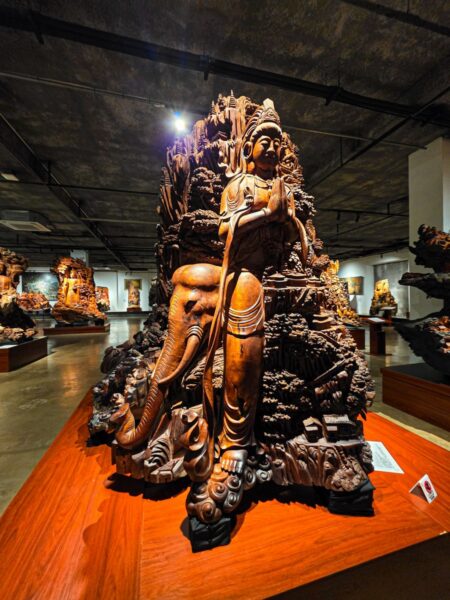
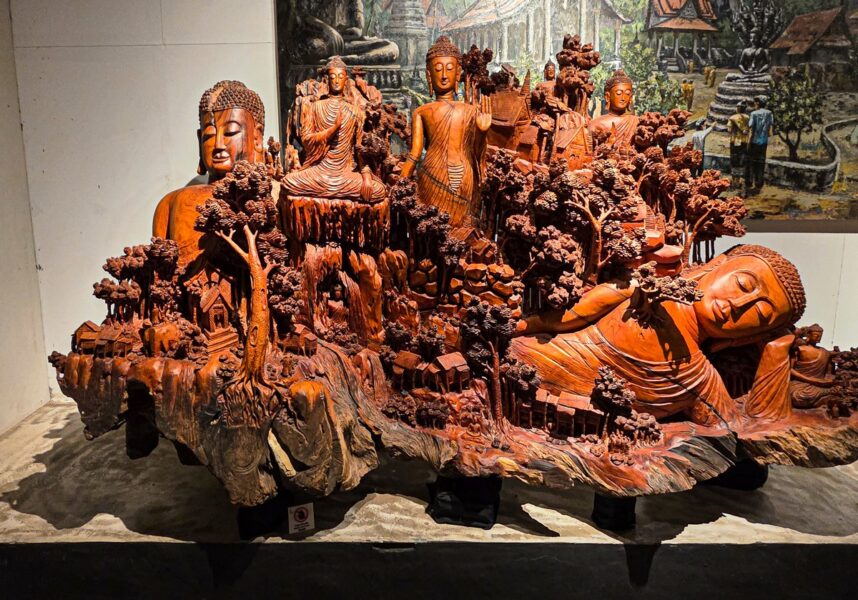
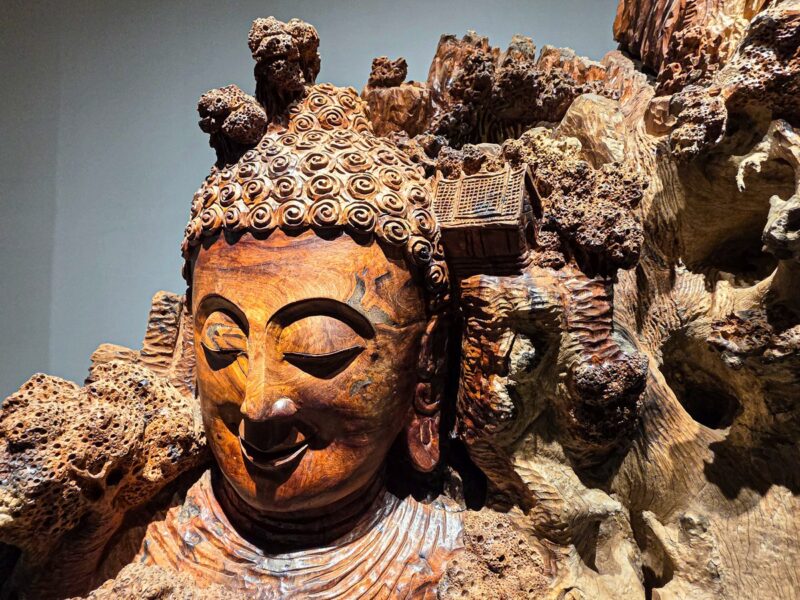
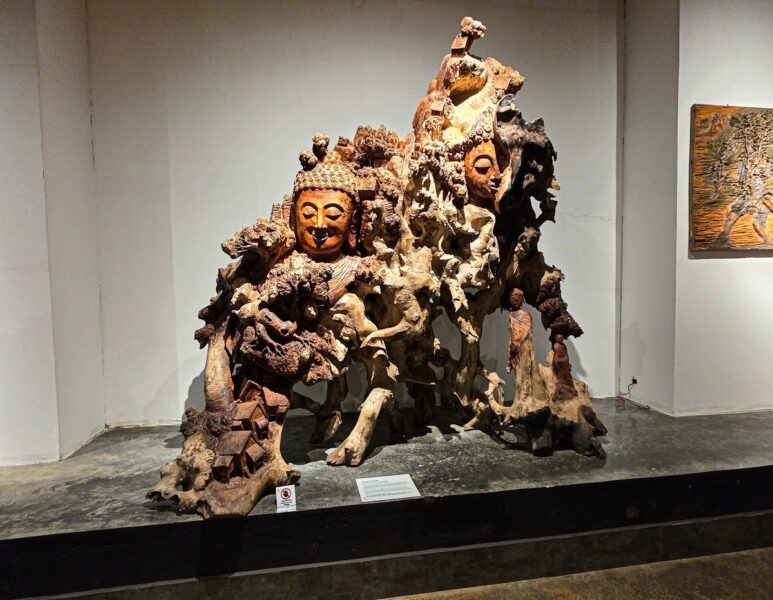
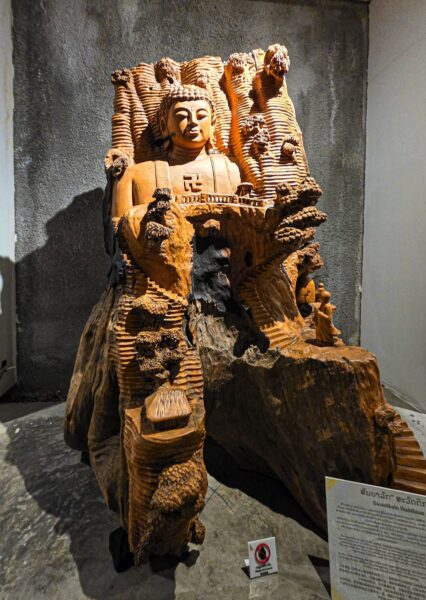
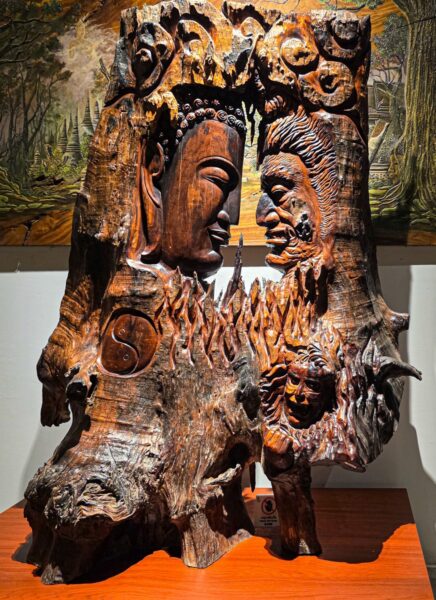
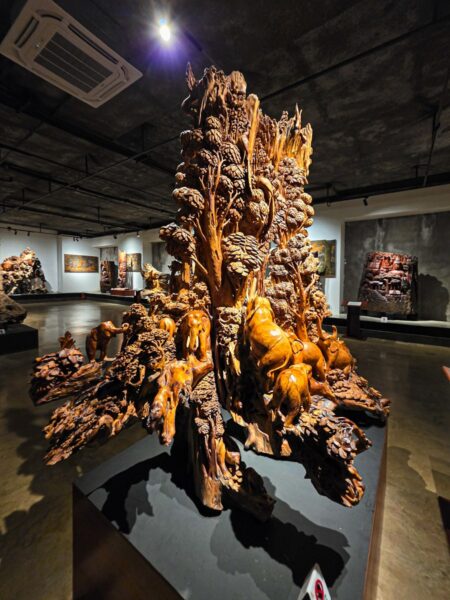
If I somehow happen to be in a pic, that means it was taken by my traveling companion SK :)
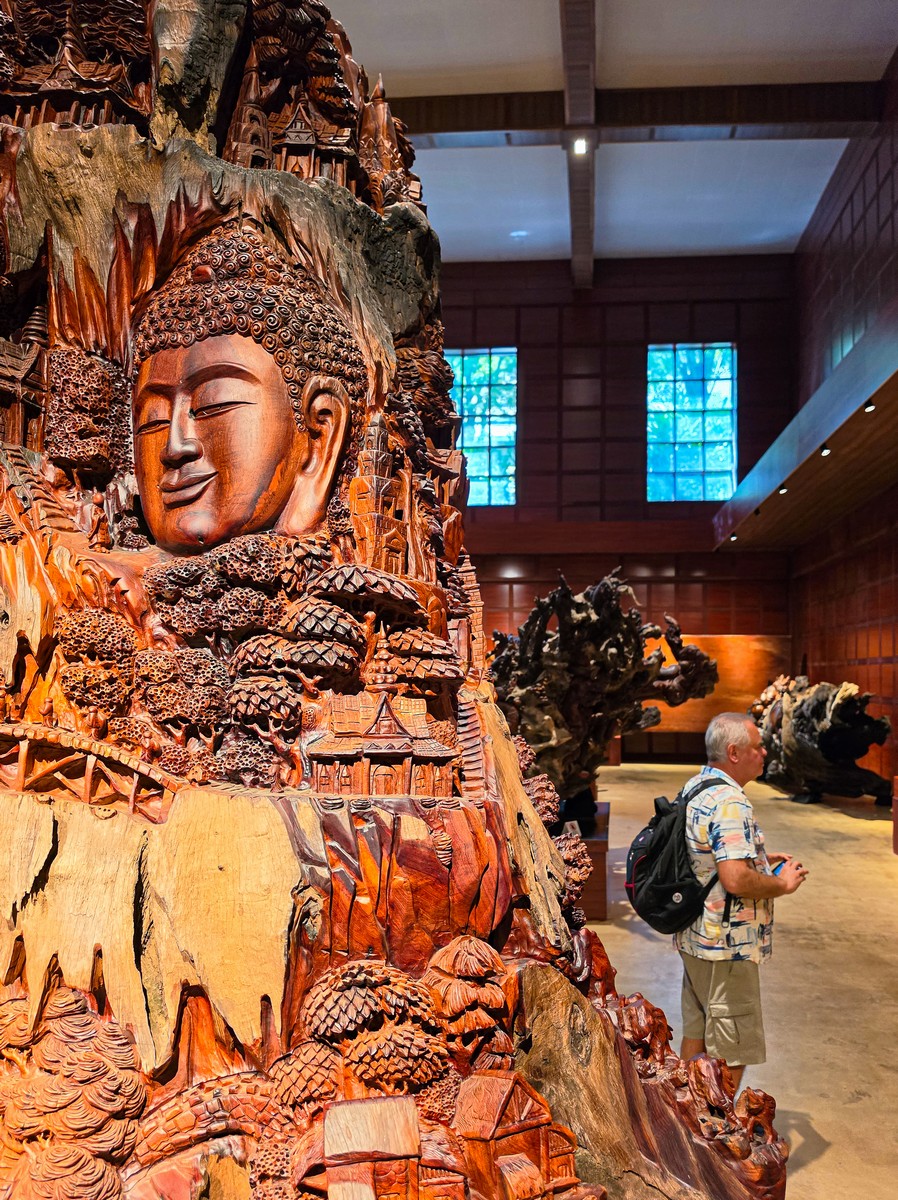
Here’s another “slice of life” piece with perfectly carved details:
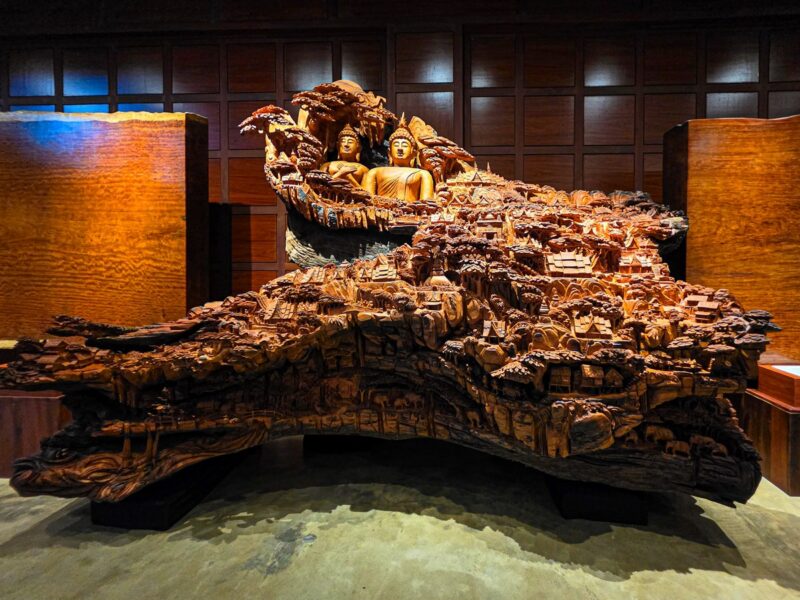
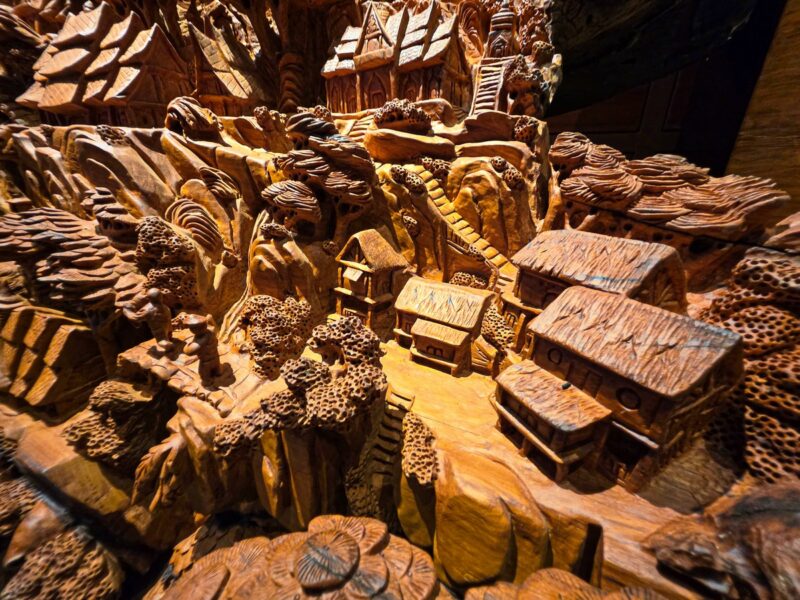
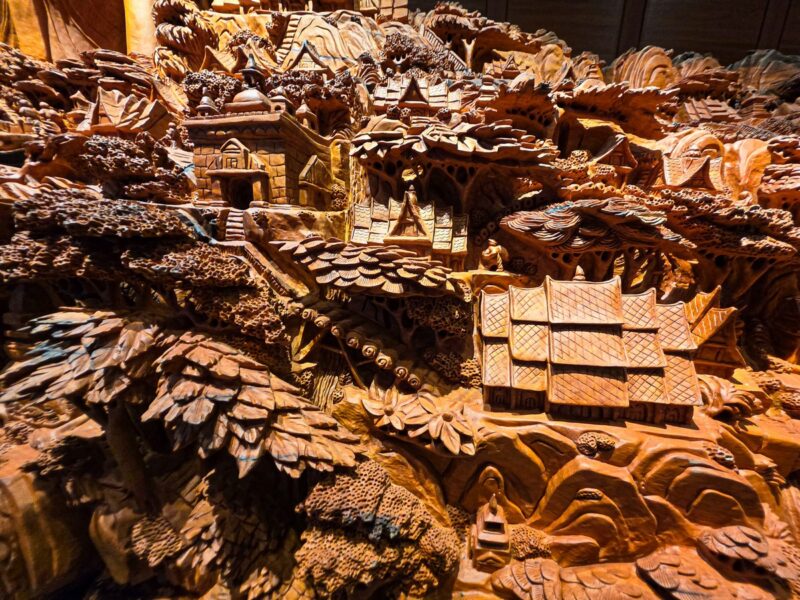
This is just a beautiful cross-section of a tree’s roots:
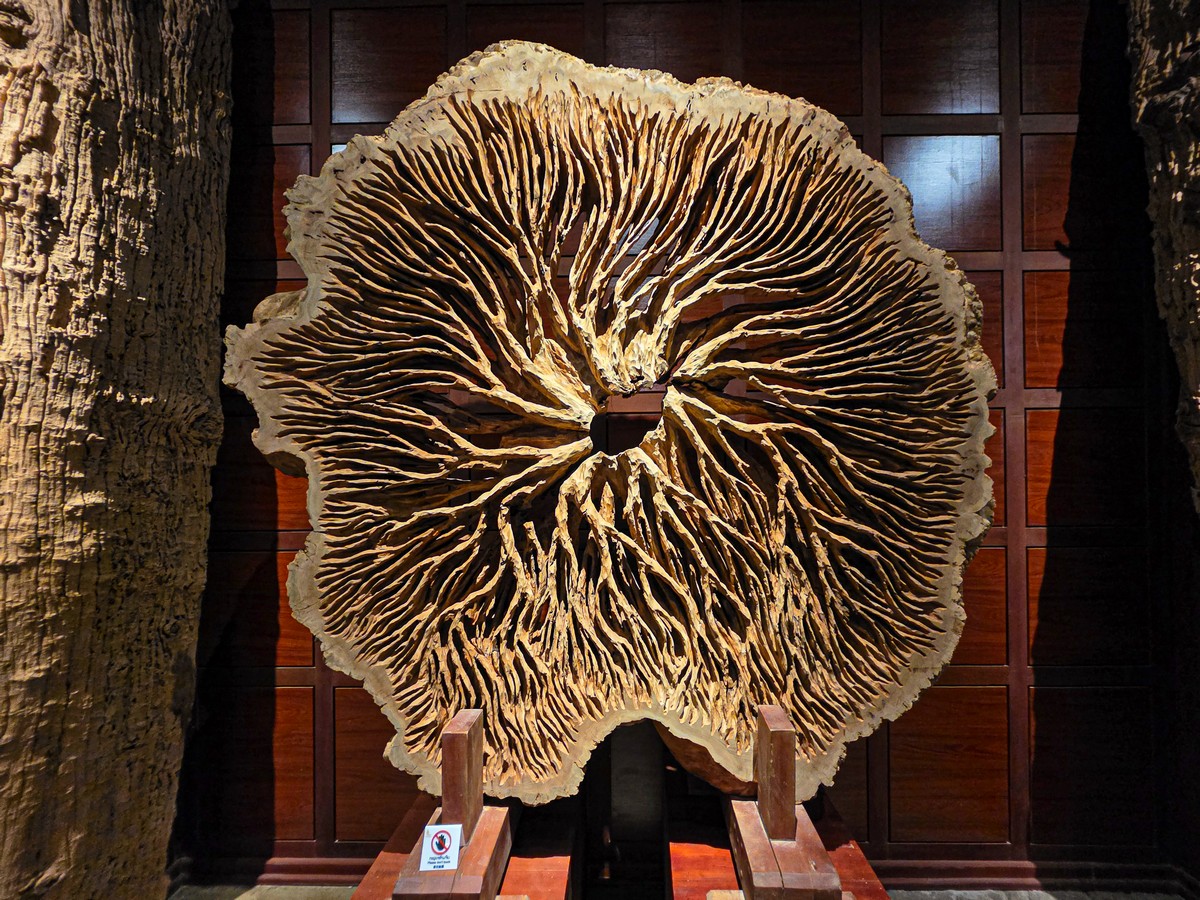
And there are all sorts of other installations, sculptures, statues – aaaaah!
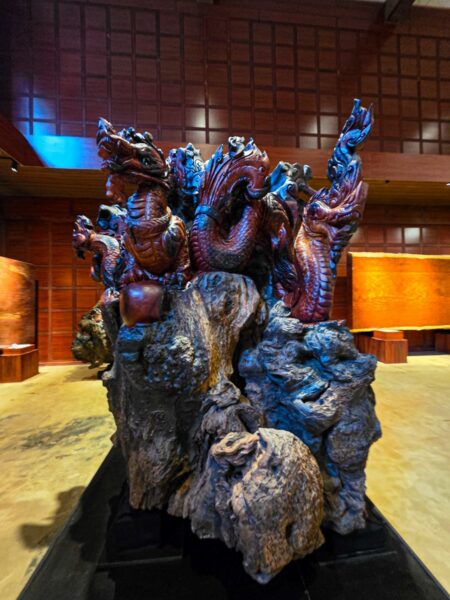
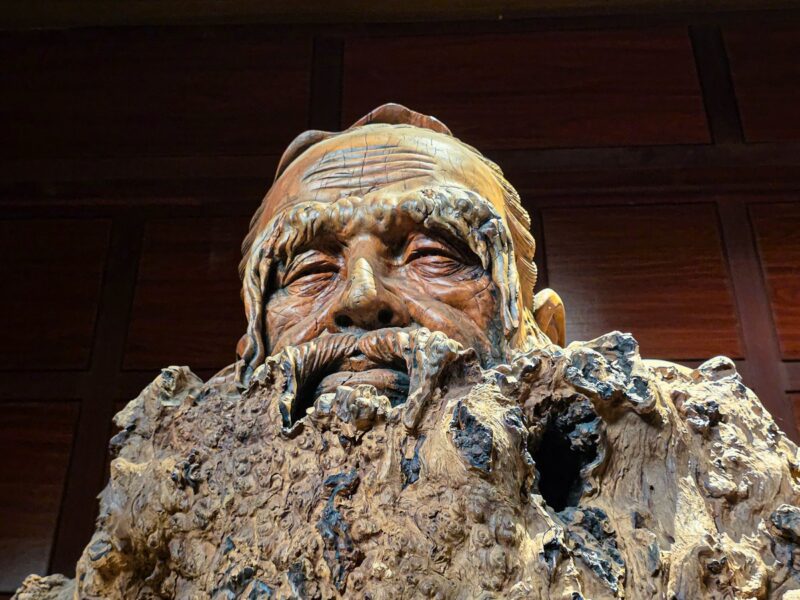
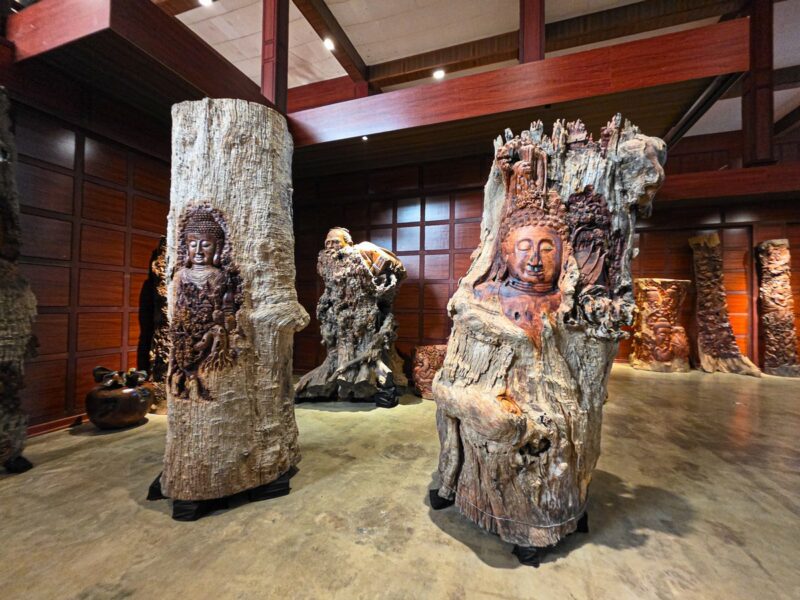
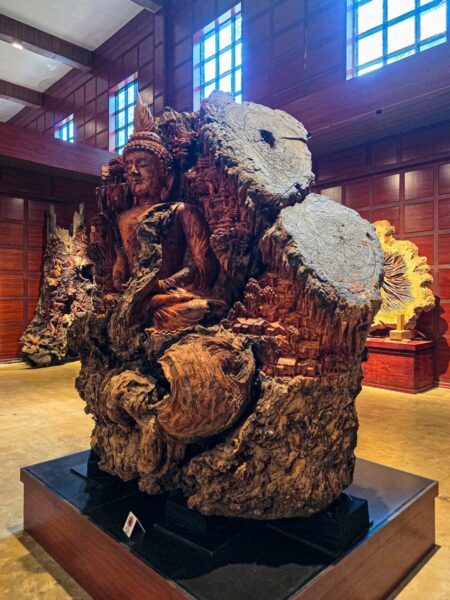
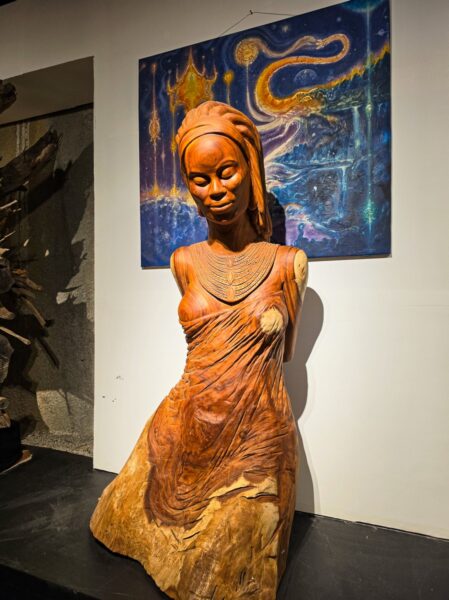
And not just Lao and Buddhist themes; here, for example, is something distinctly African:
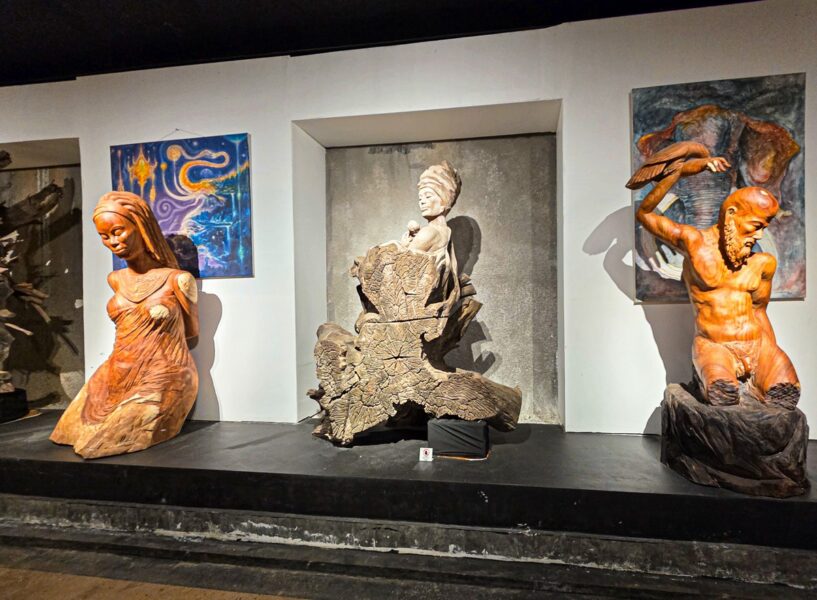
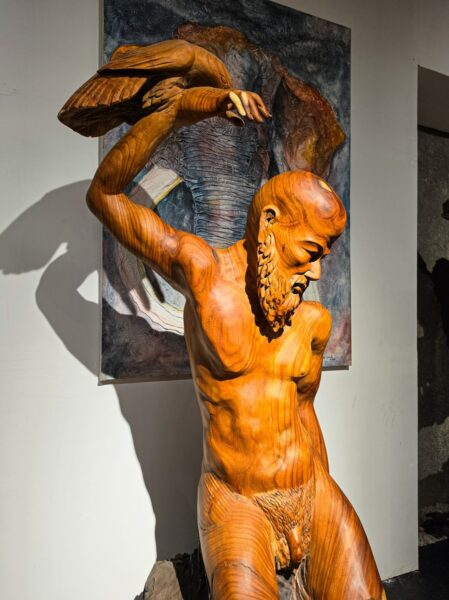
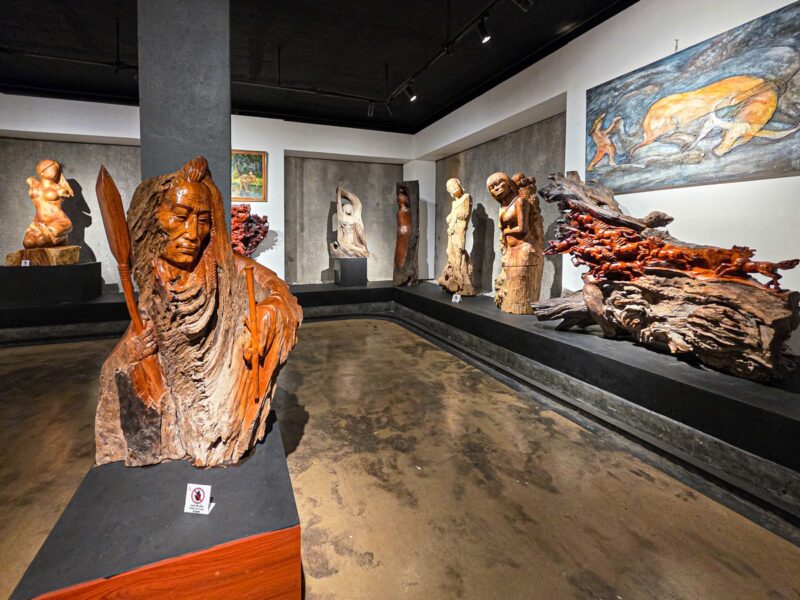
And something Native American:
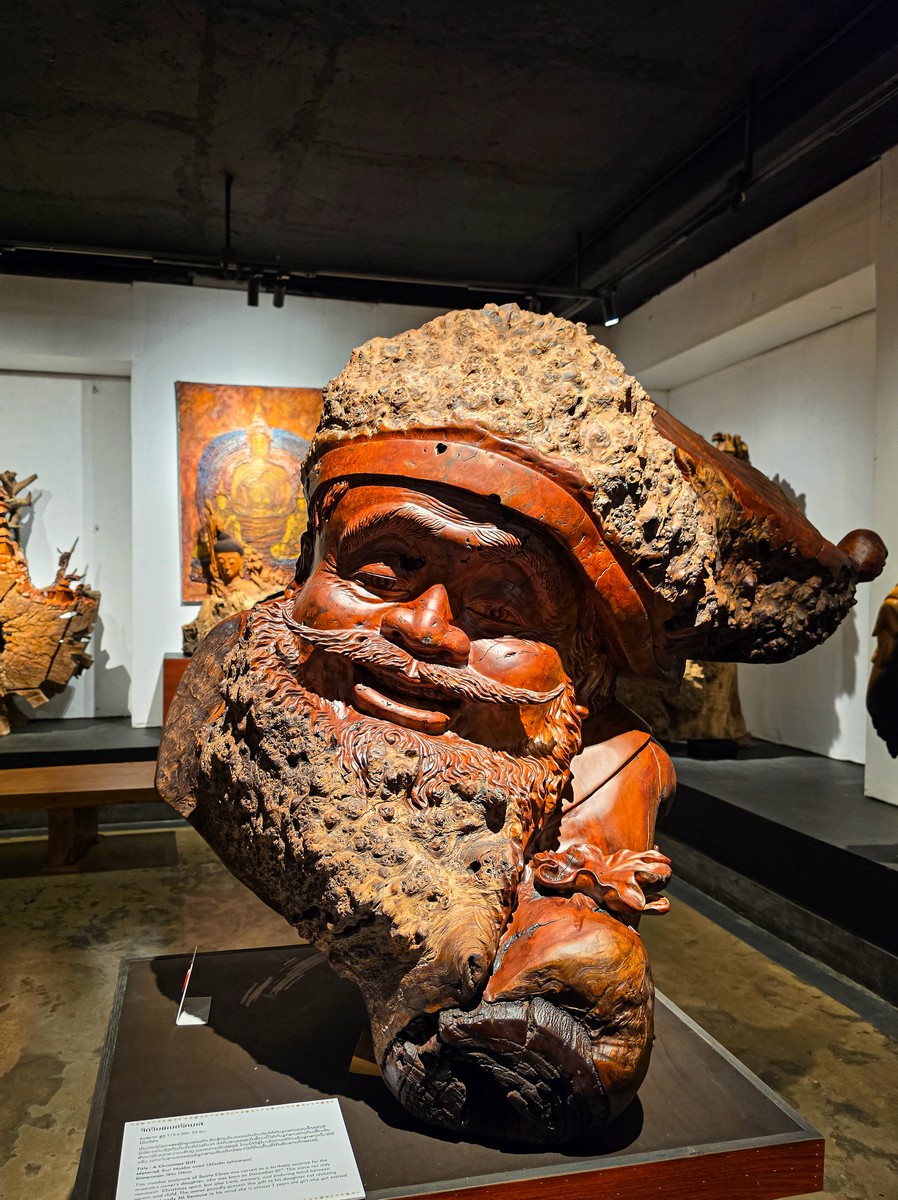
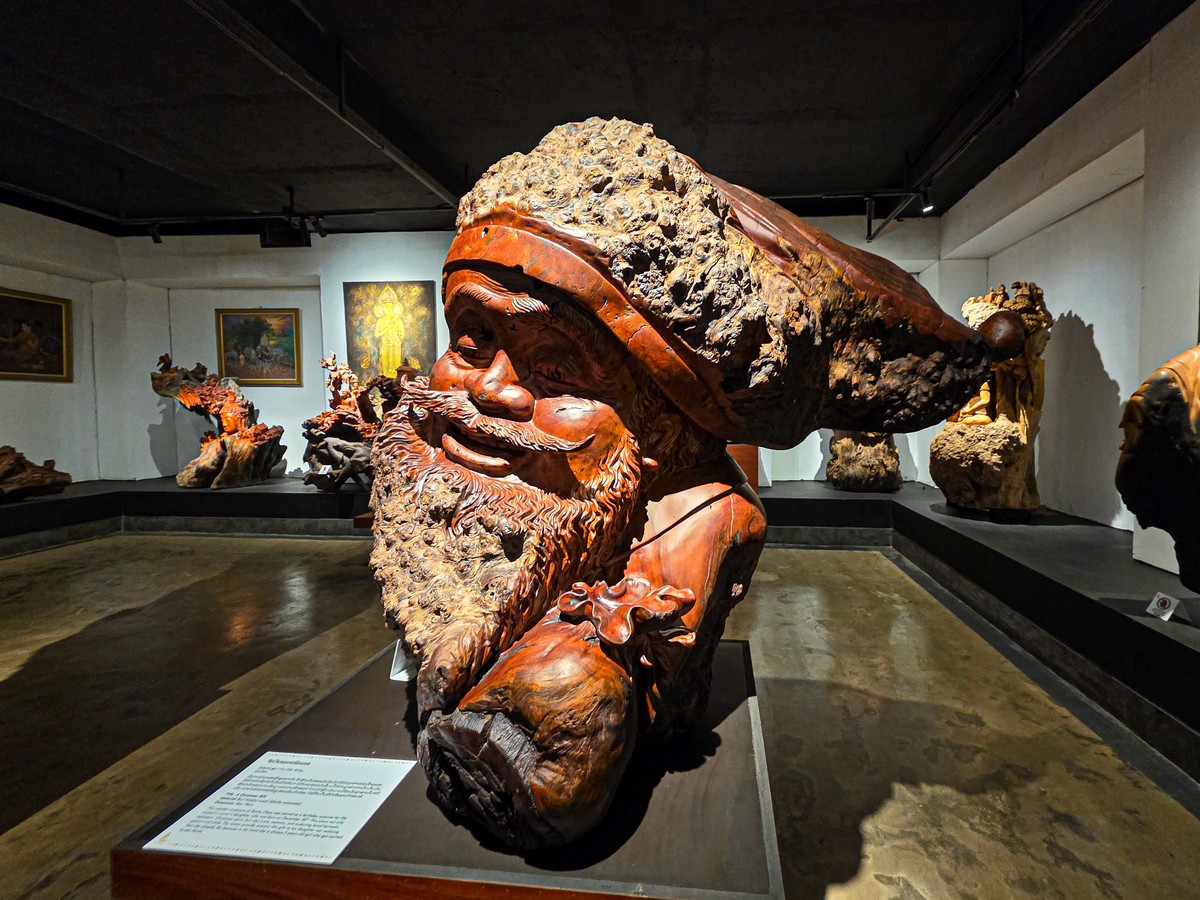
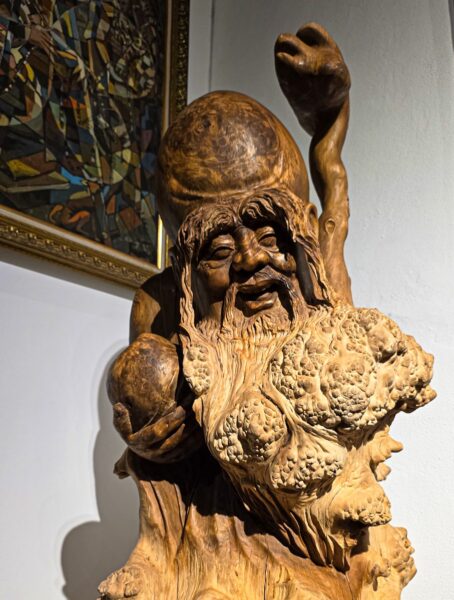
Father Christmas?! Yep, no doubt about it!
And here’s something on Buddhist themes again:
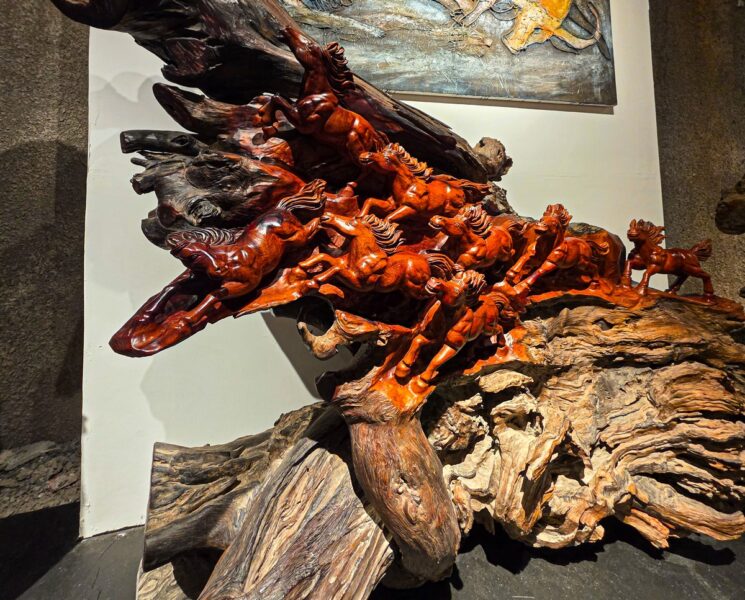
Suddenly – horses!
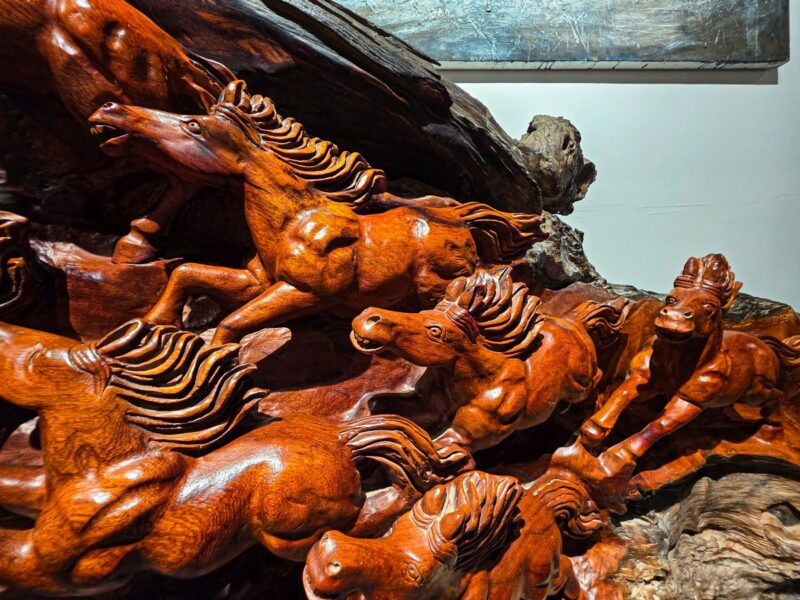
An installation in a vase:
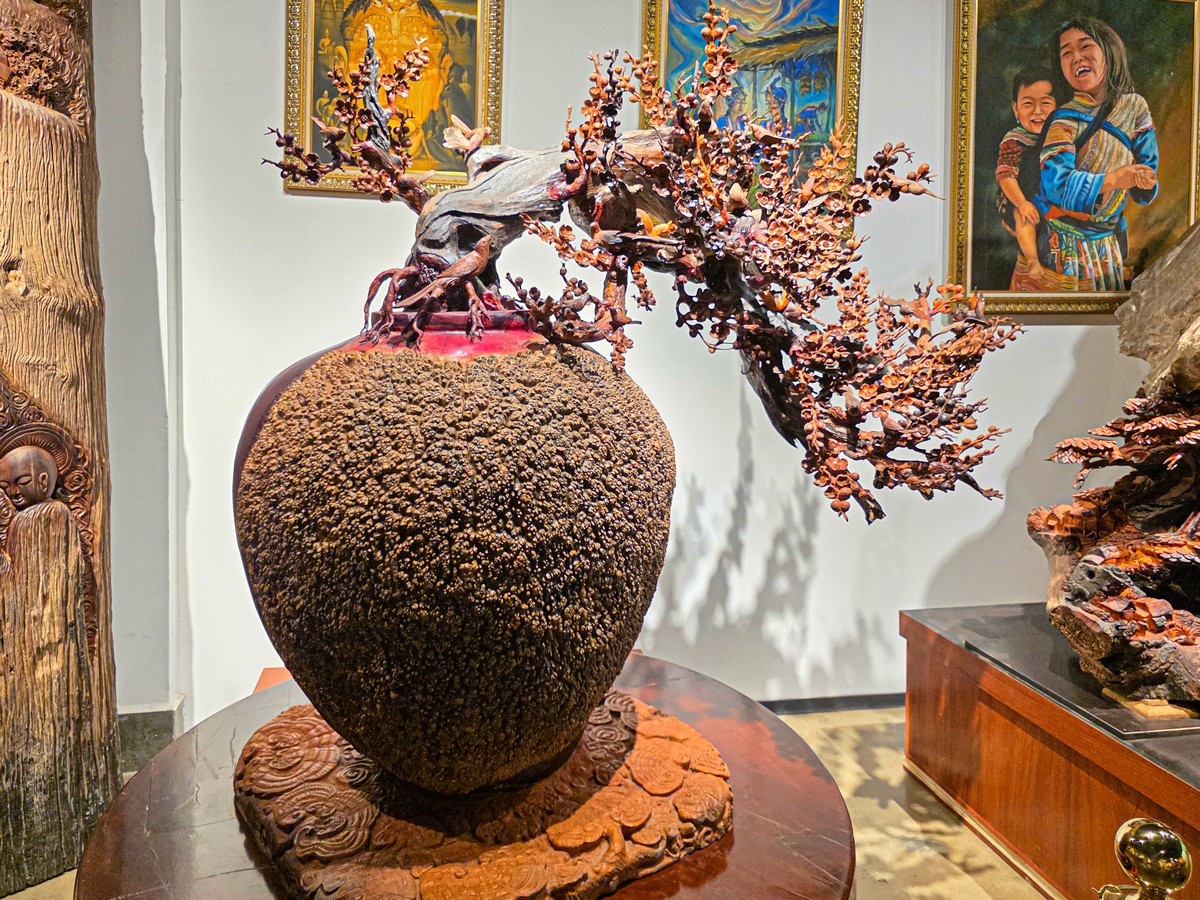
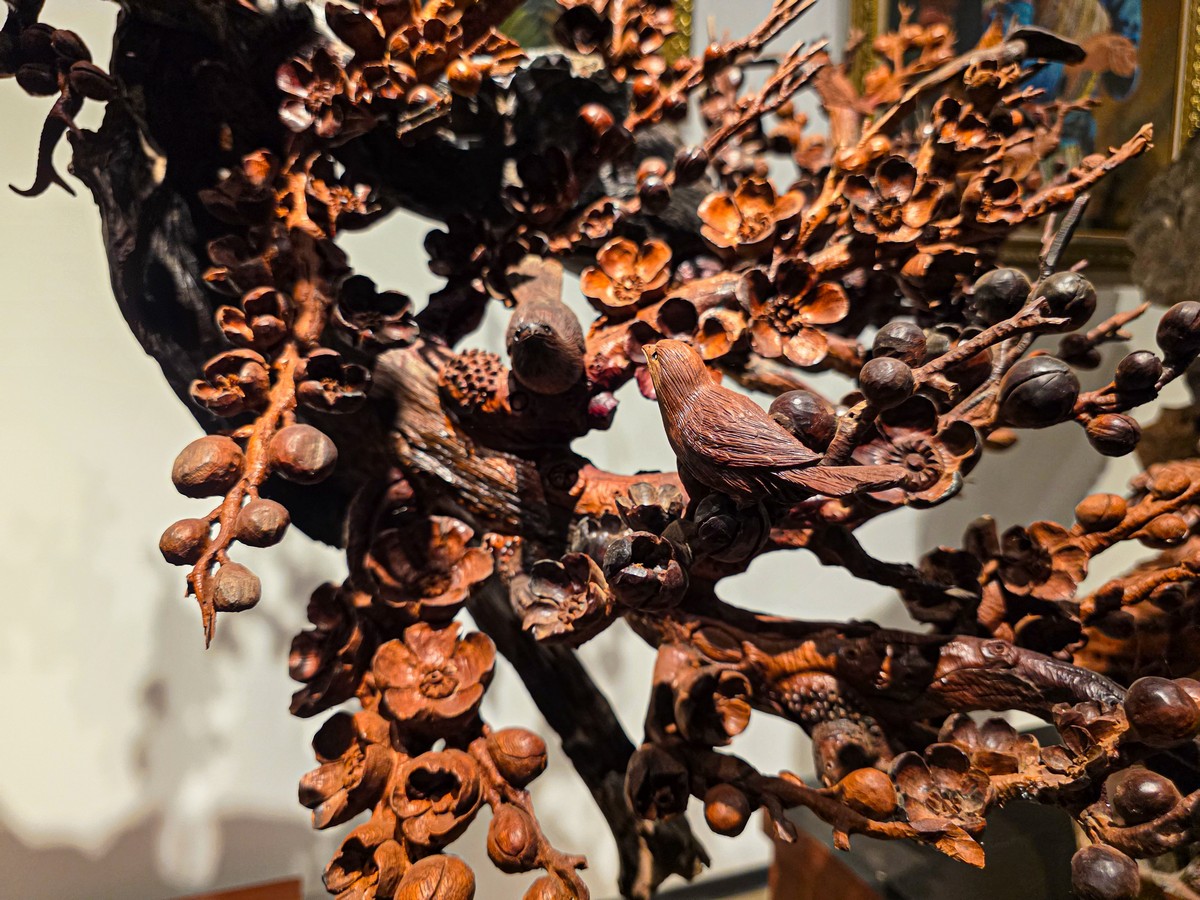
The detail!
An installation with stones:
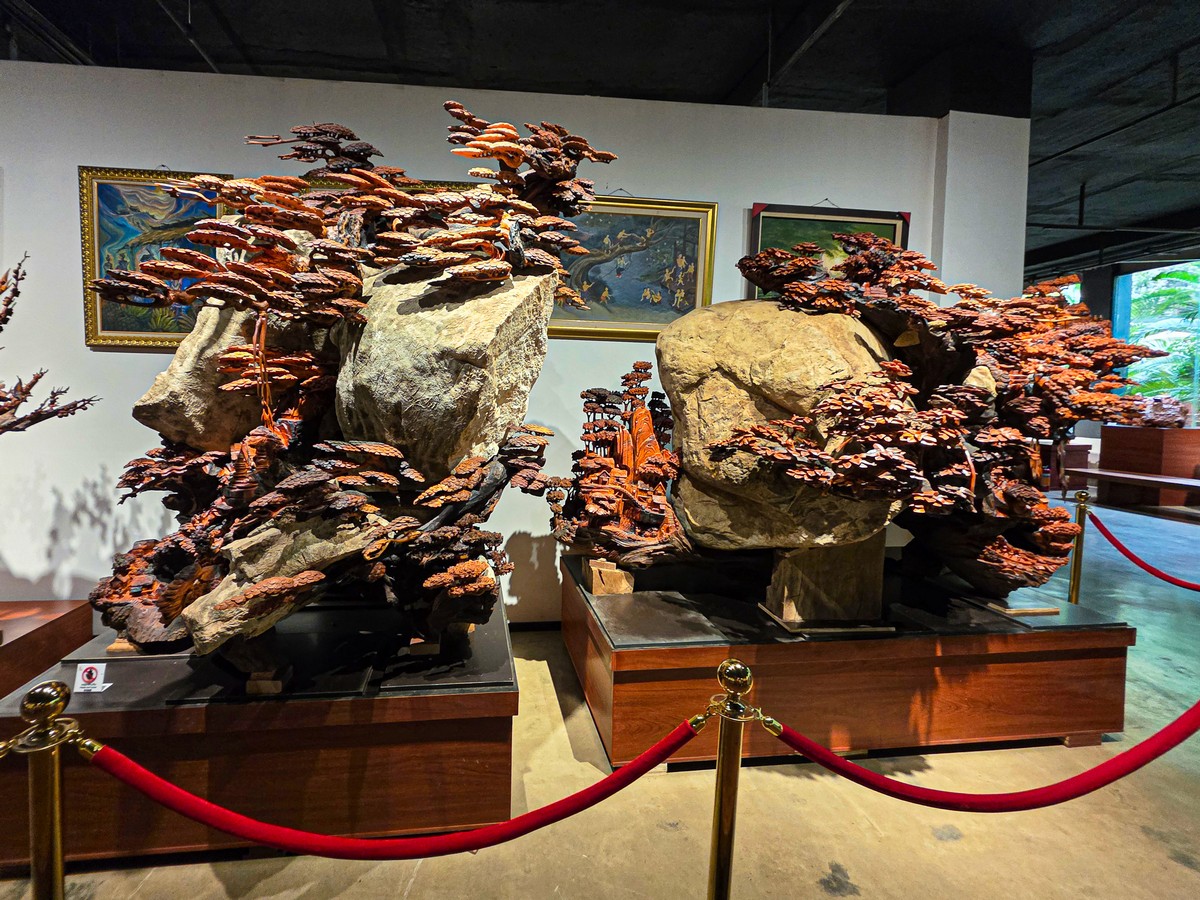
There’s just about everything here!
Along the walls and by the windows there are smaller pieces, but we had neither the energy nor the time for those…
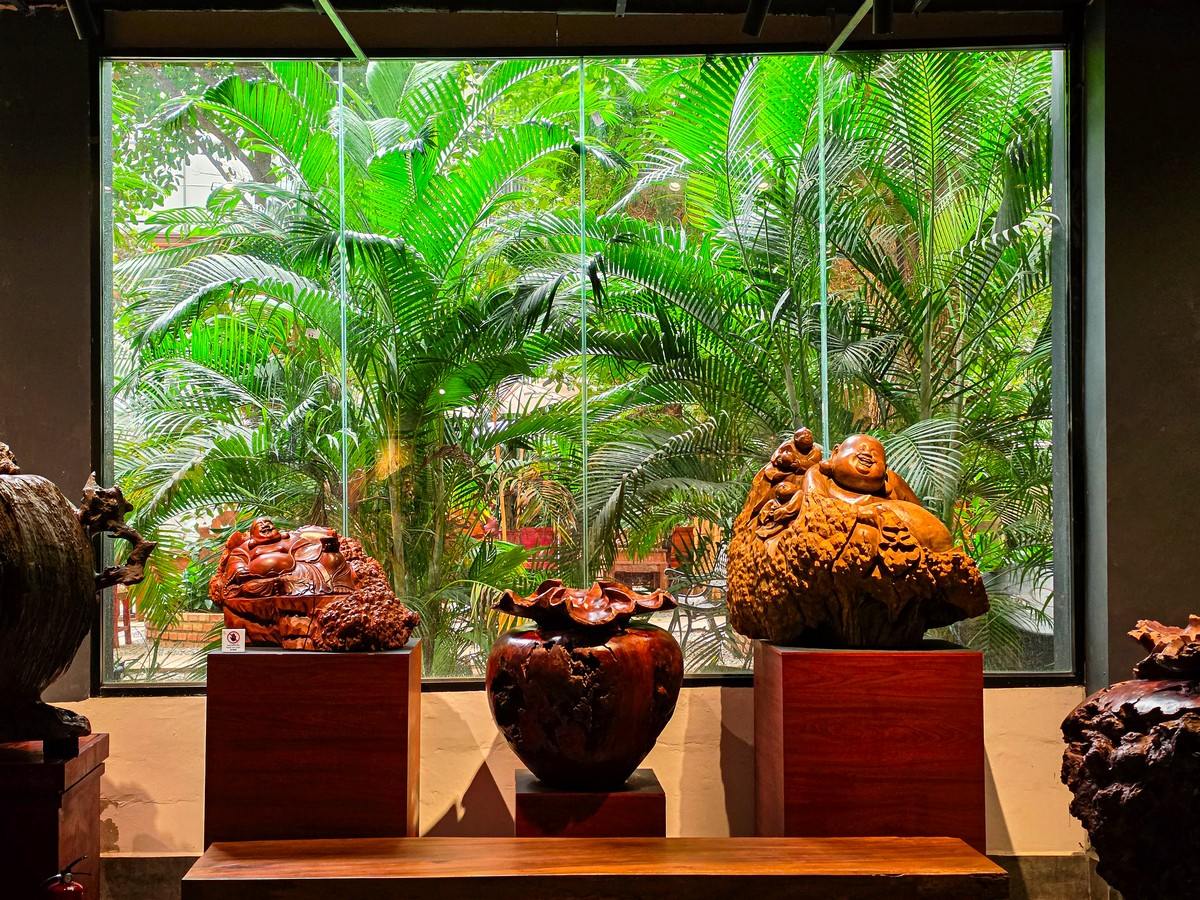
Because yet another turn brings you into a new hall – and there, once again, is an endless sea of wooden constructions!…
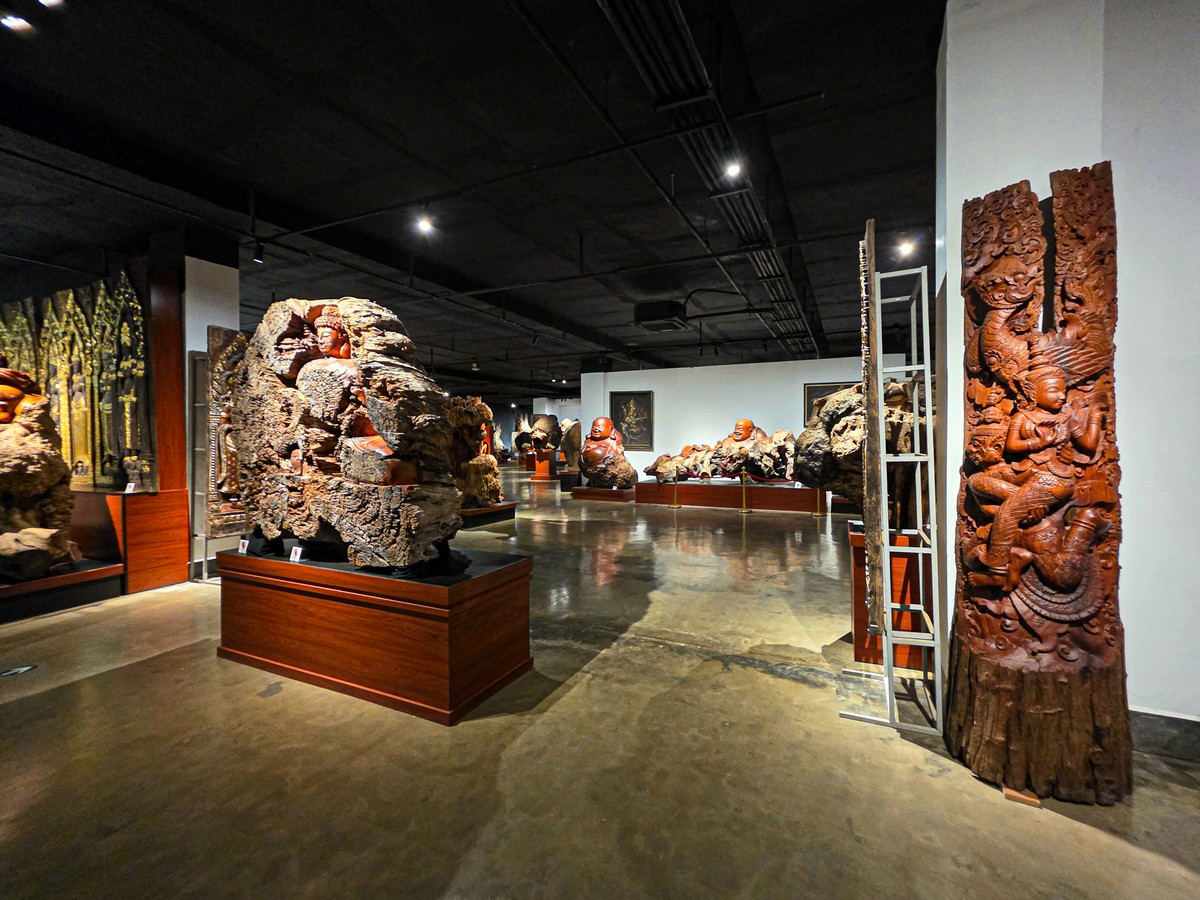
And this is… just a big piece of wood!
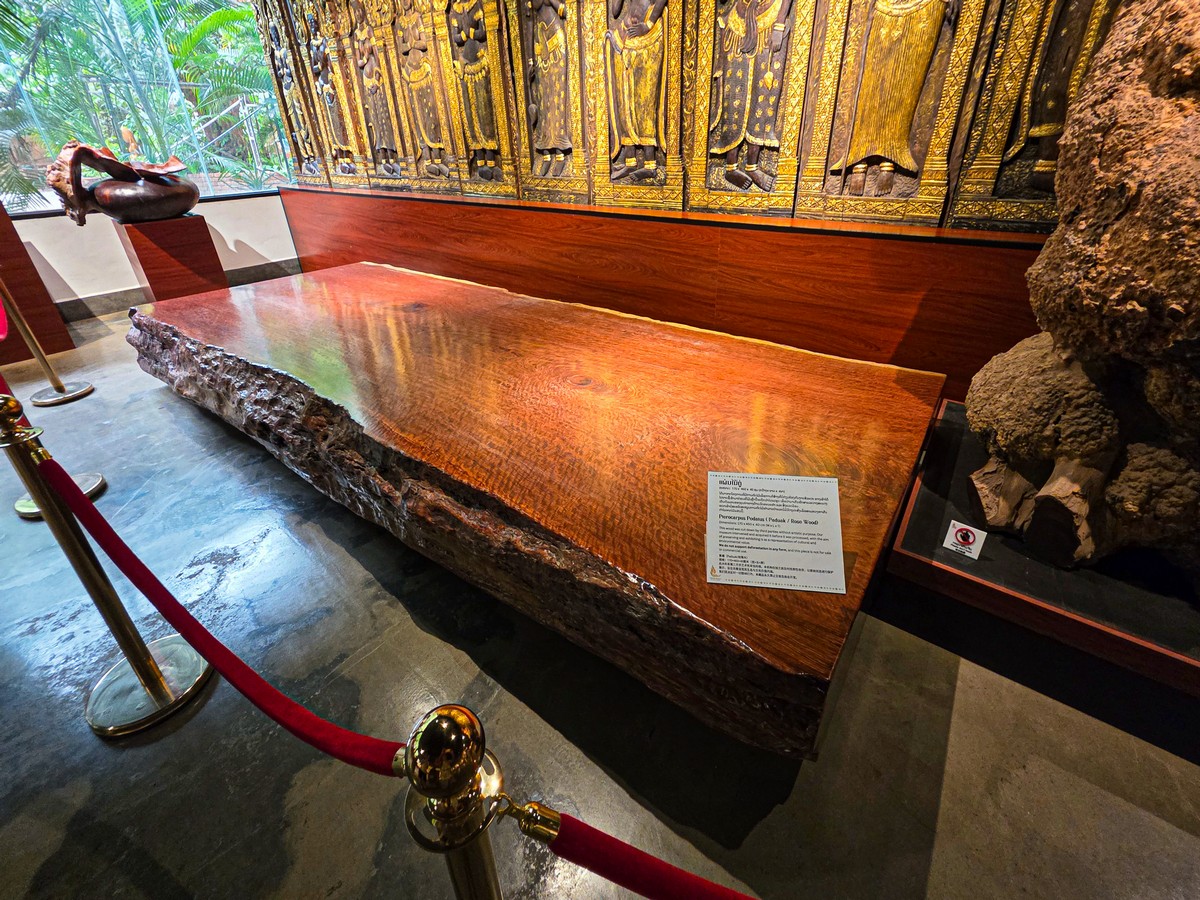
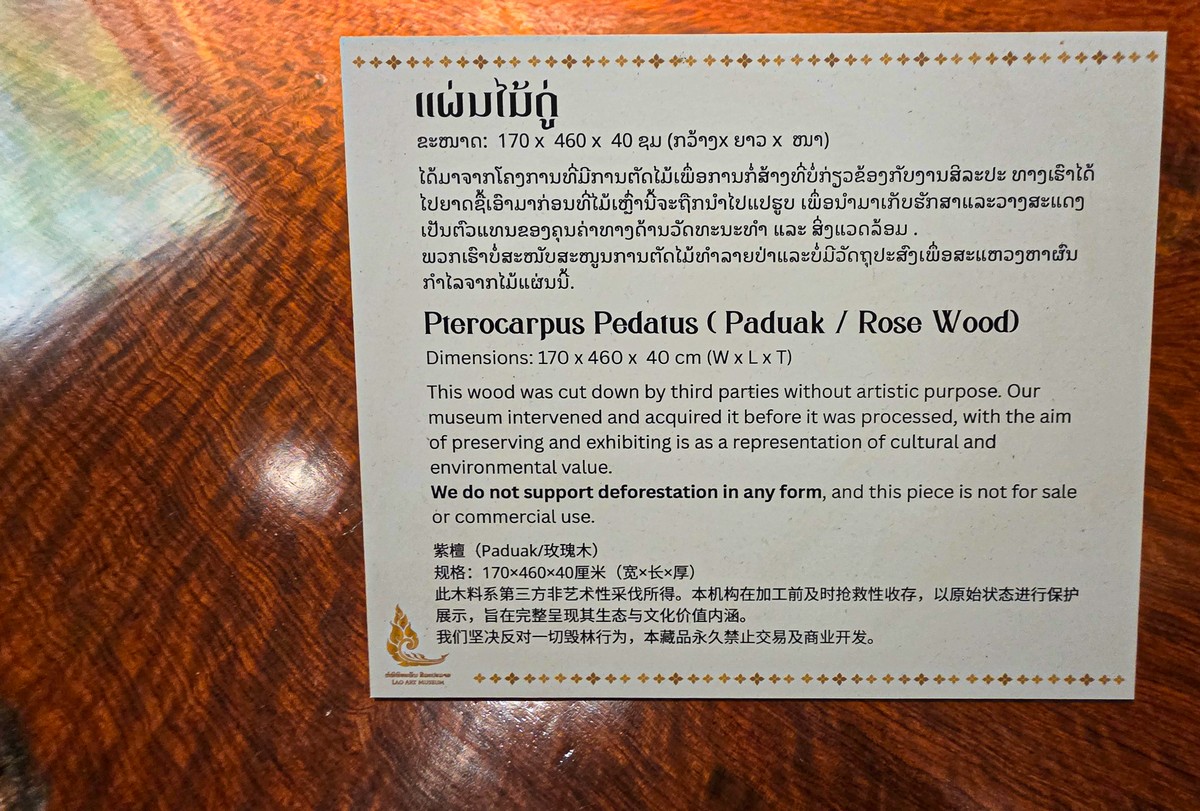
We’d already been told that the museum doesn’t do any logging; they only use trees that have died of one natural cause or another – old age, wind, fires, landslides. This piece of wood though actually was felled by someone else, so the museum bought it to make up, to some extent, for such barbarity:
Moving on…
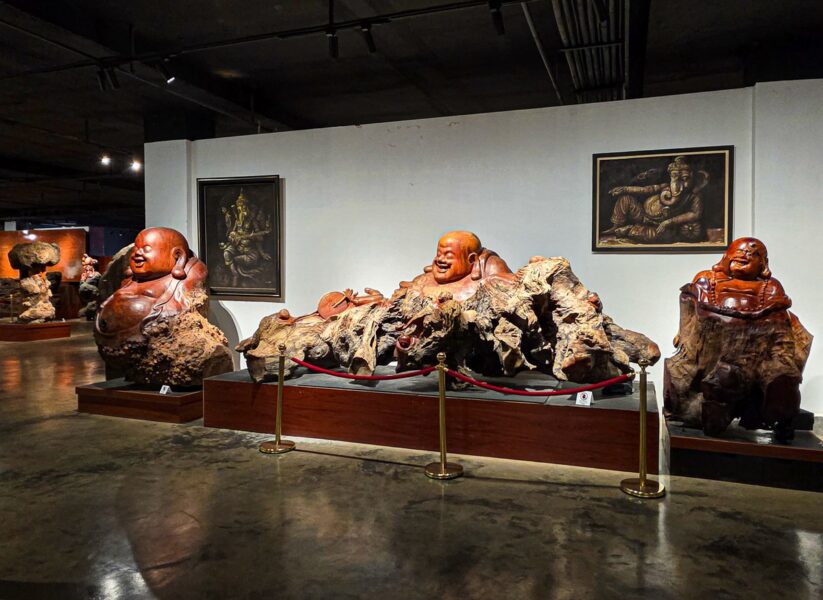
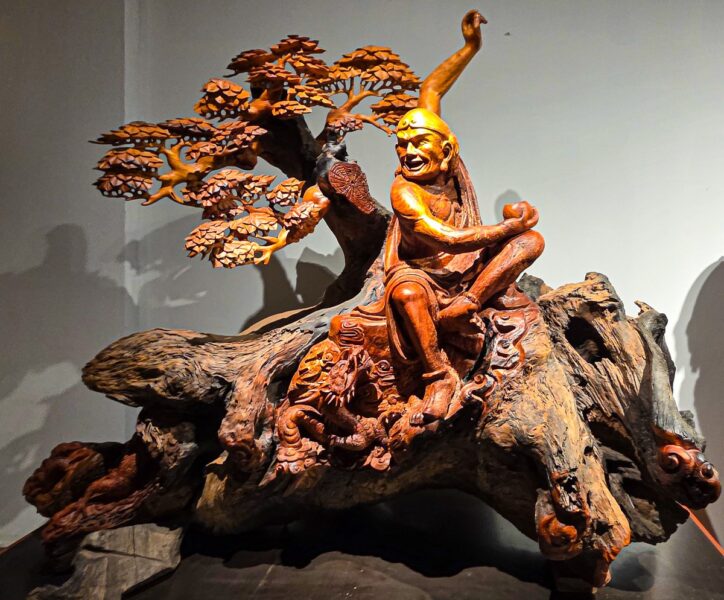
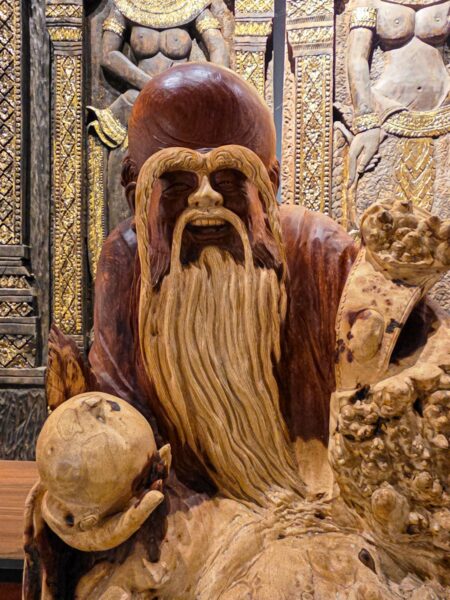
Hmm… that face looks kinda familiar.
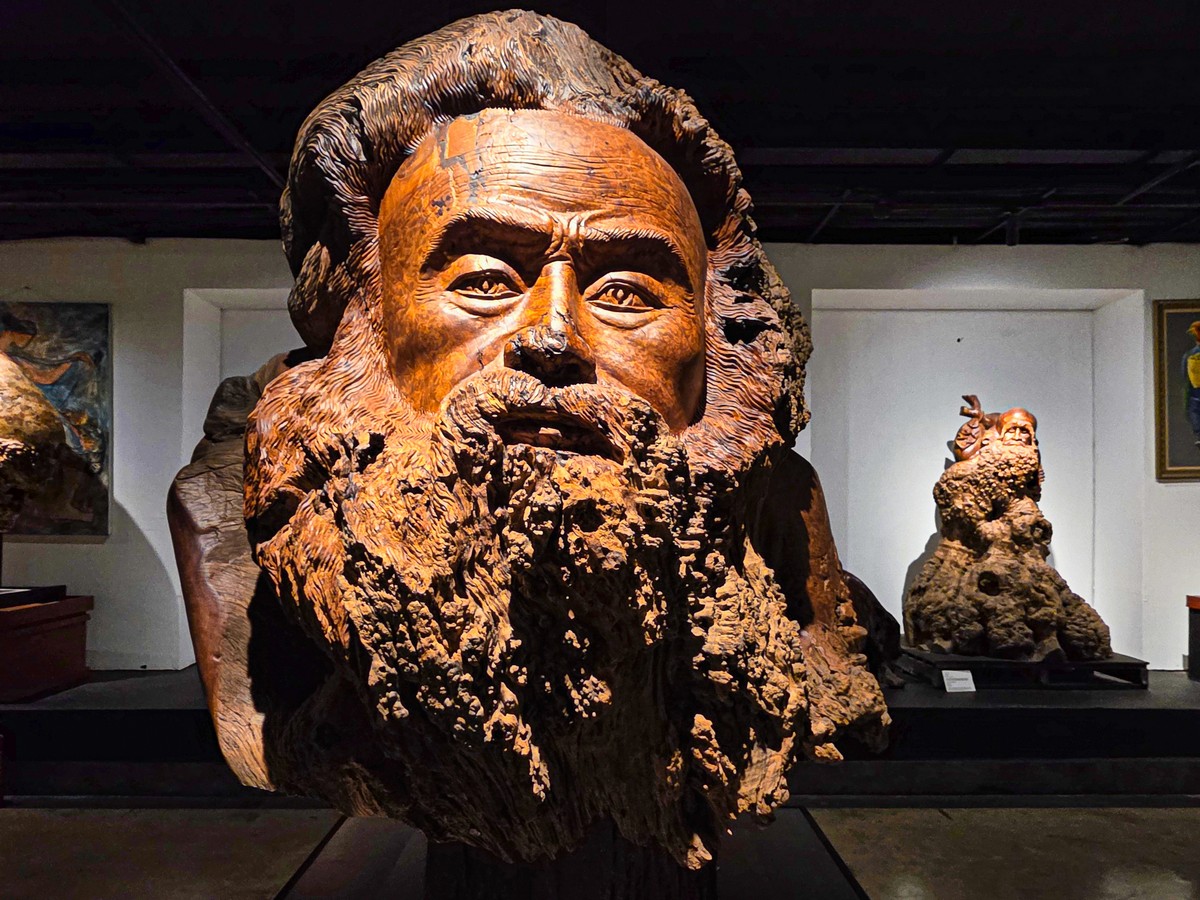
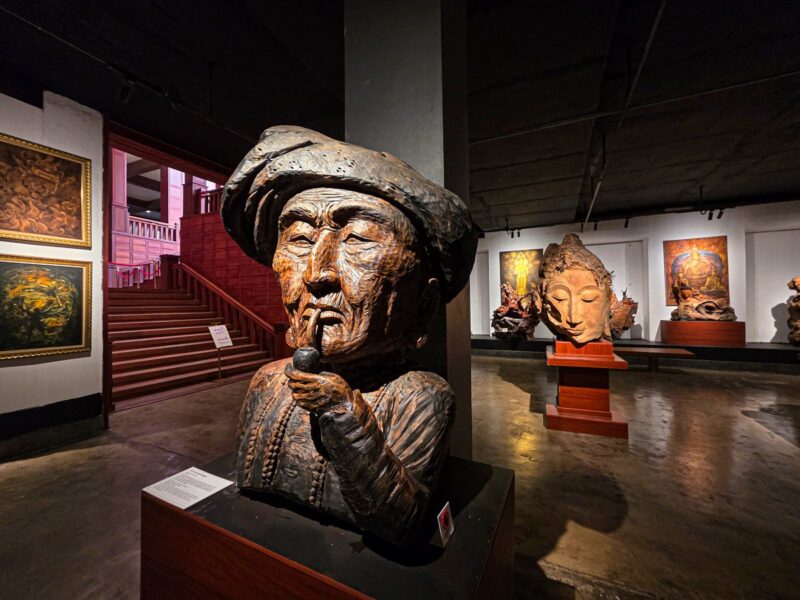
Next comes a row of busts:
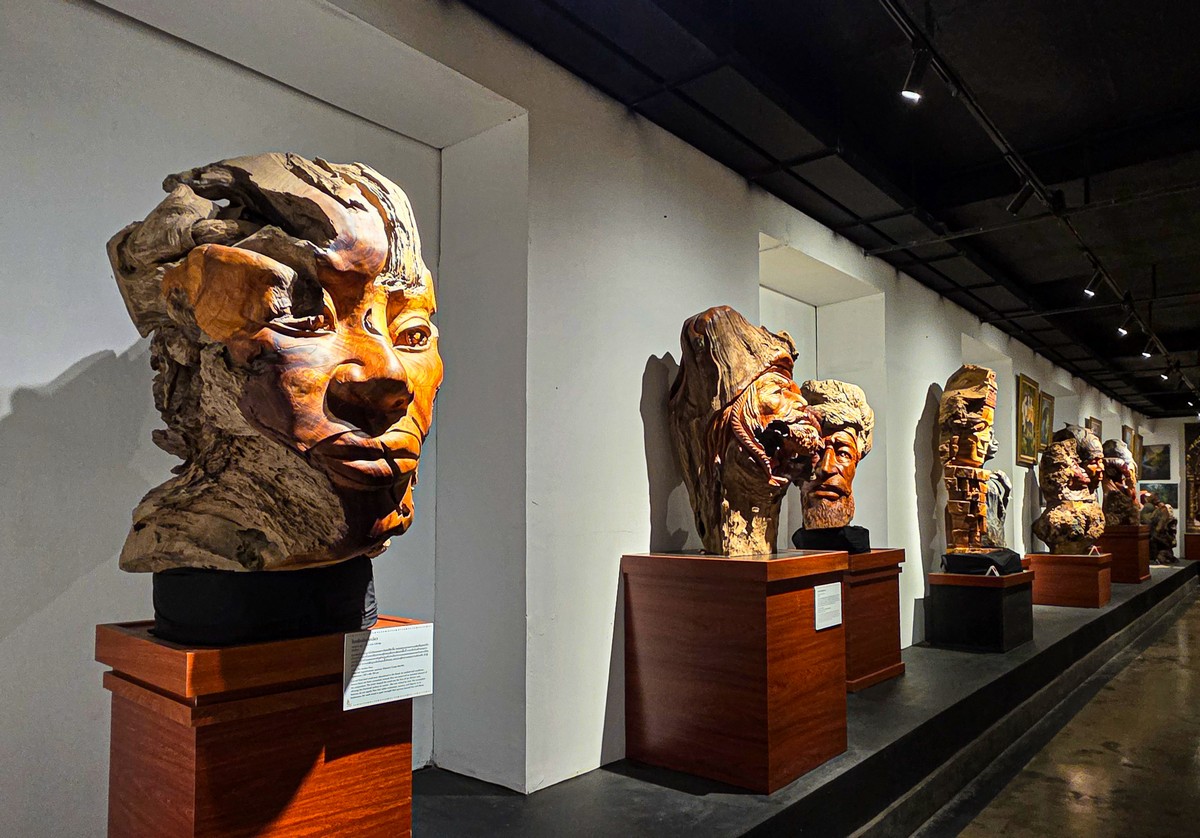
And here are a couple more highly detailed works:
The inevitable – in a Buddhist country – dragons:
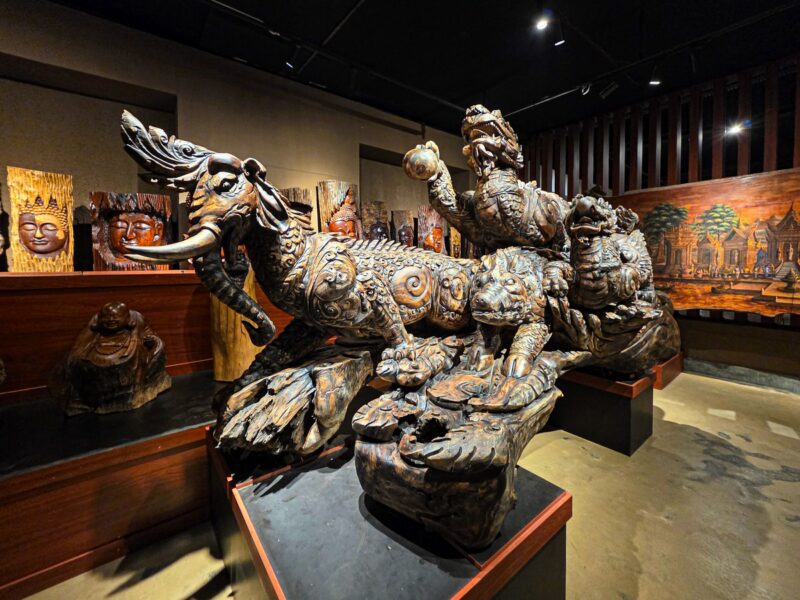
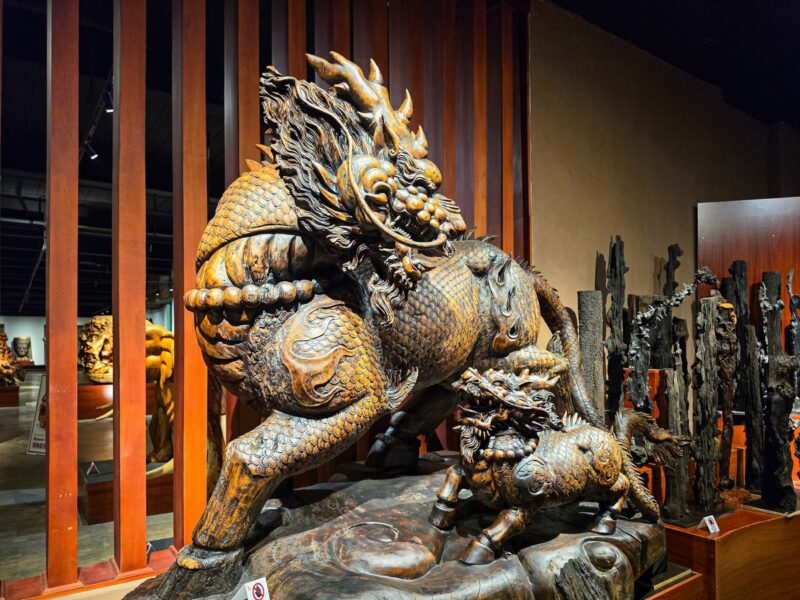
You won’t believe it, but around the next corner there’s yet another hall!
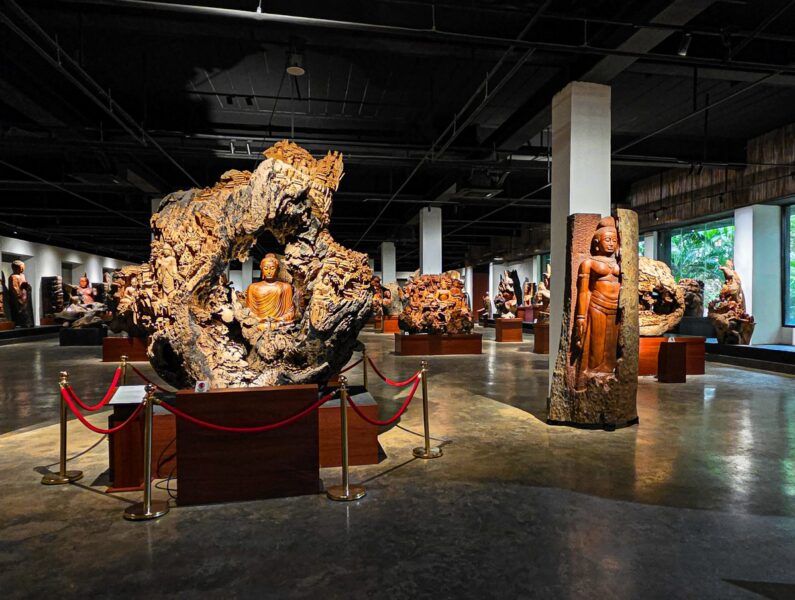
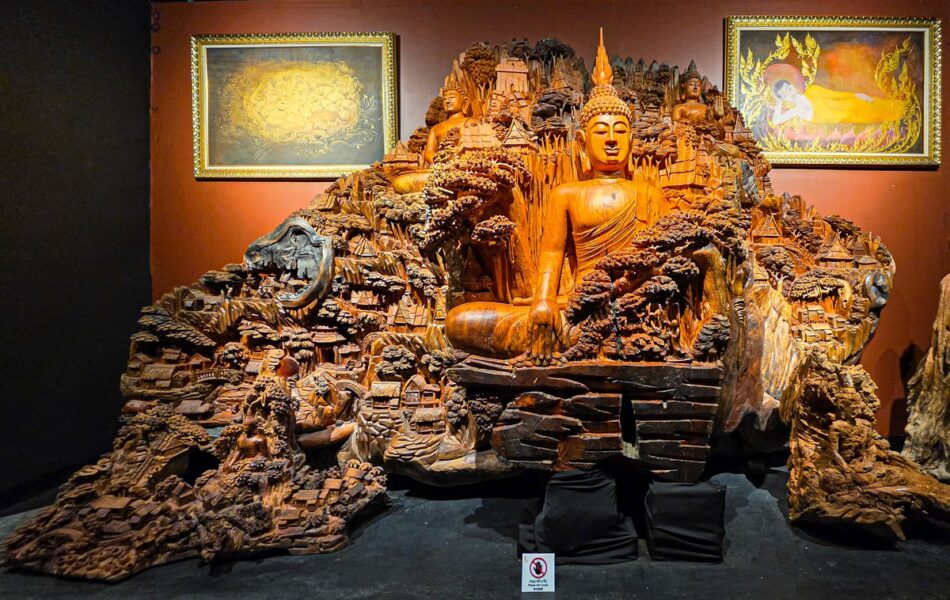
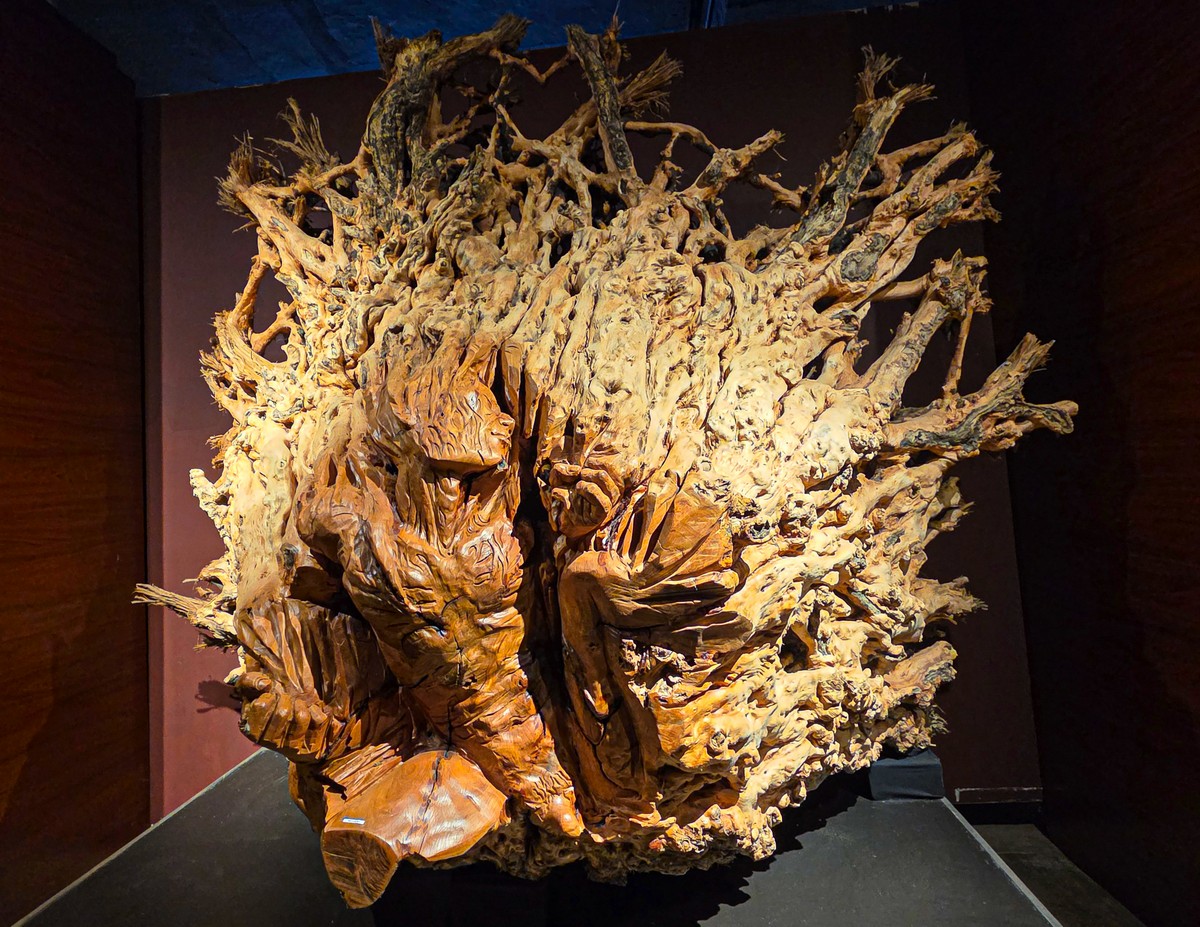
Can you see the poor soul trying to break free of the tree root? ->
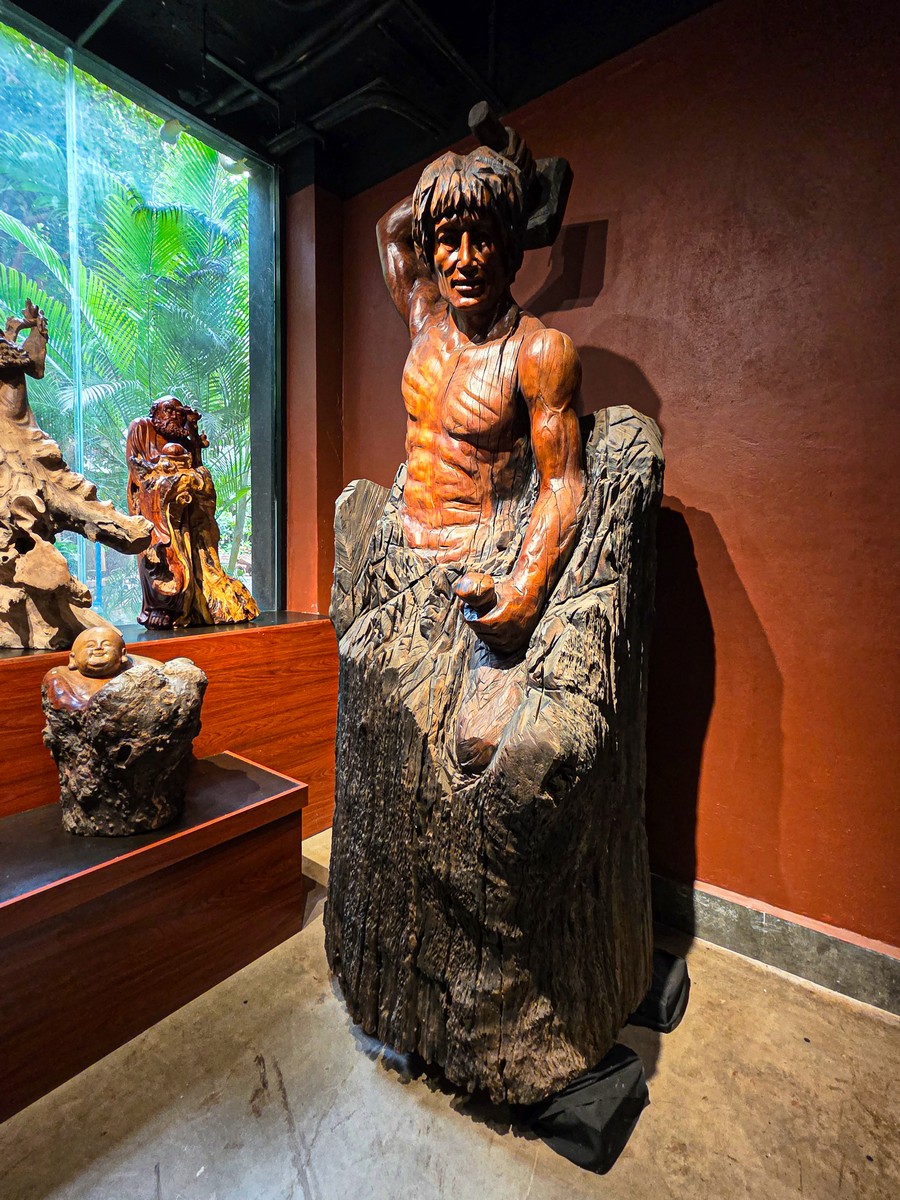
And here’s other, more modern stuff:
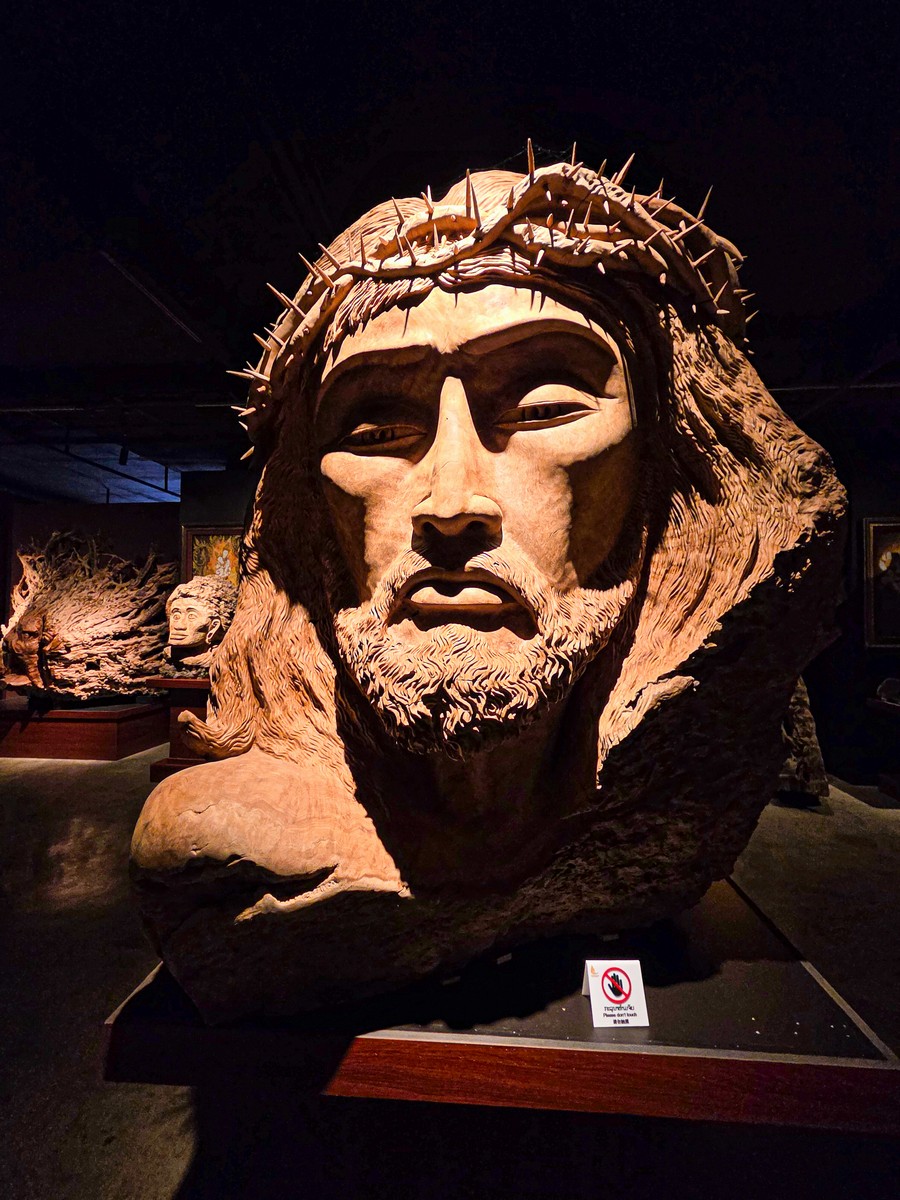
And there are even pieces on other religions:
This one’s cute:
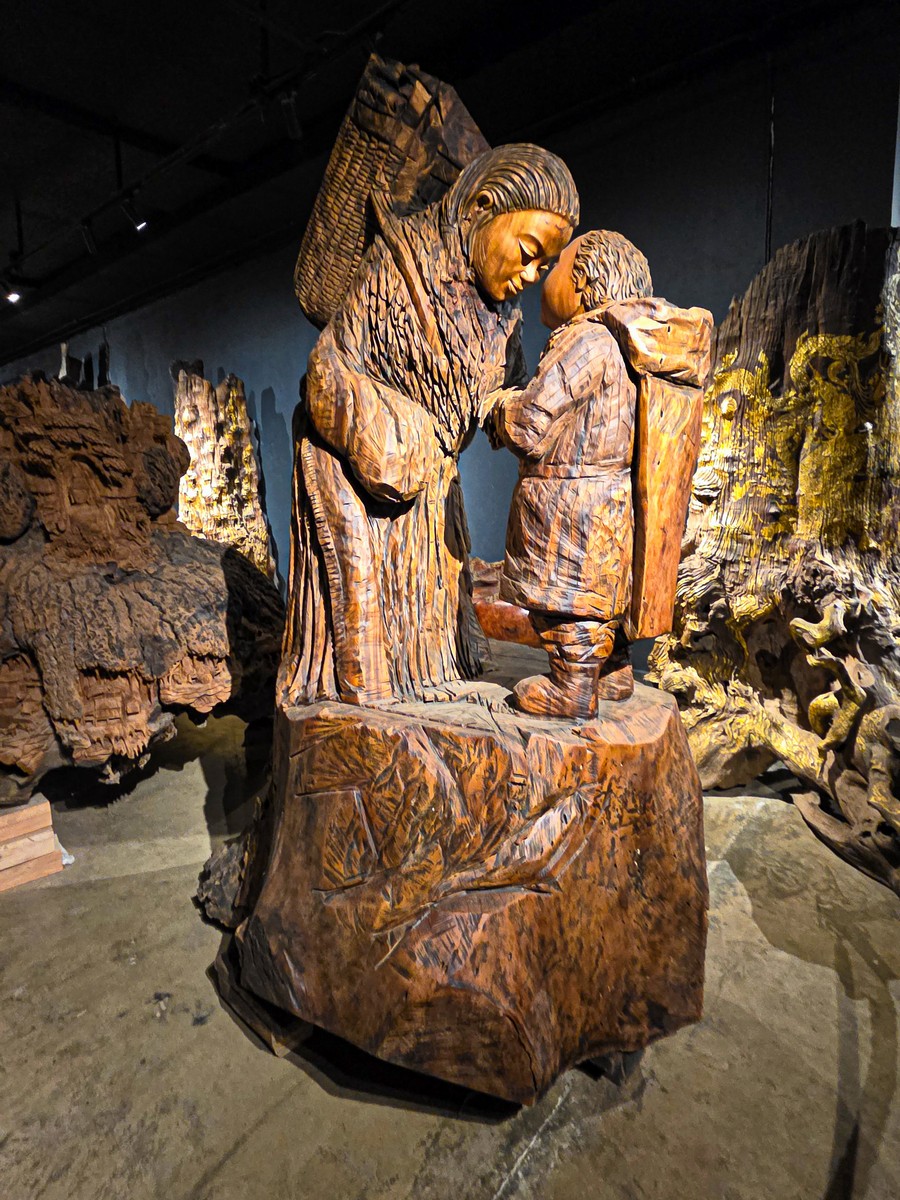
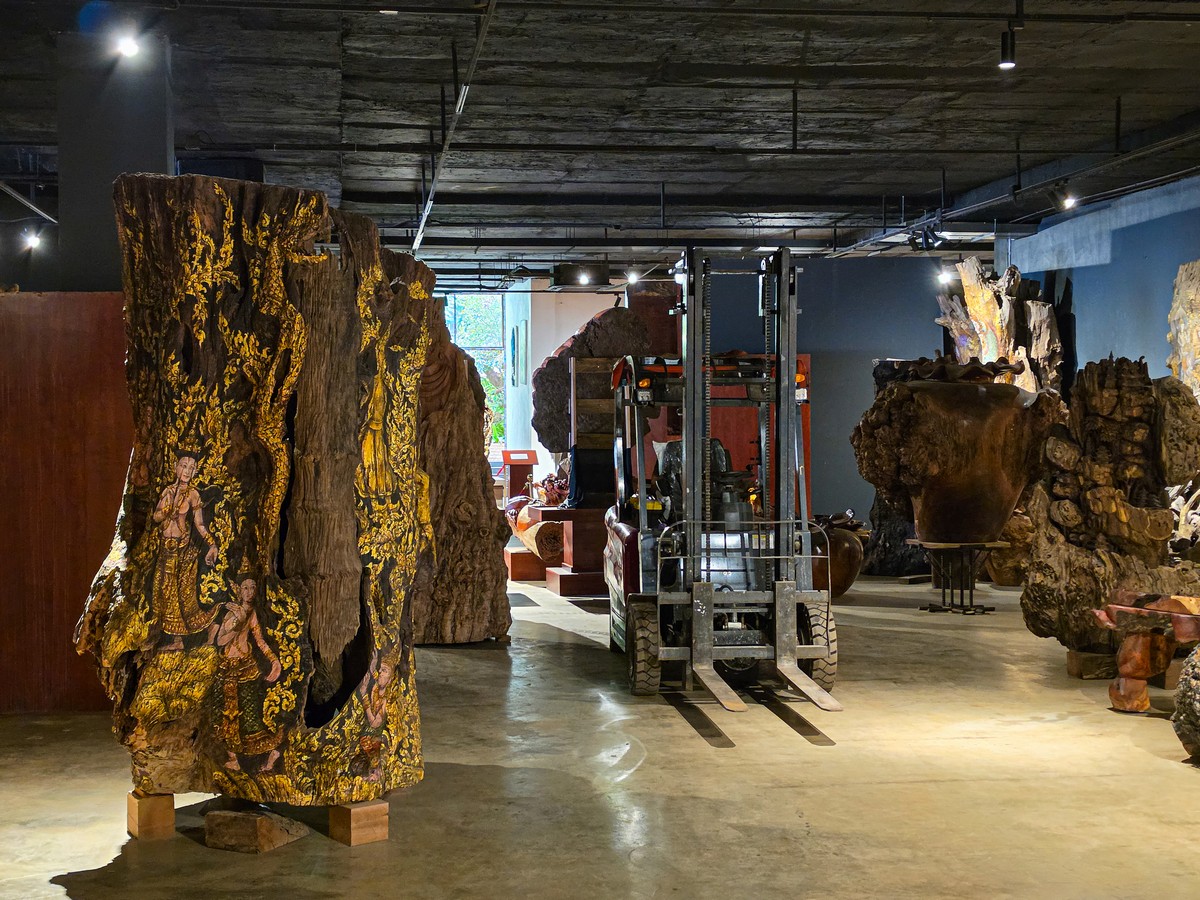
Work on all the museum’s spaces isn’t finished yet; here’s another hall being prepared:
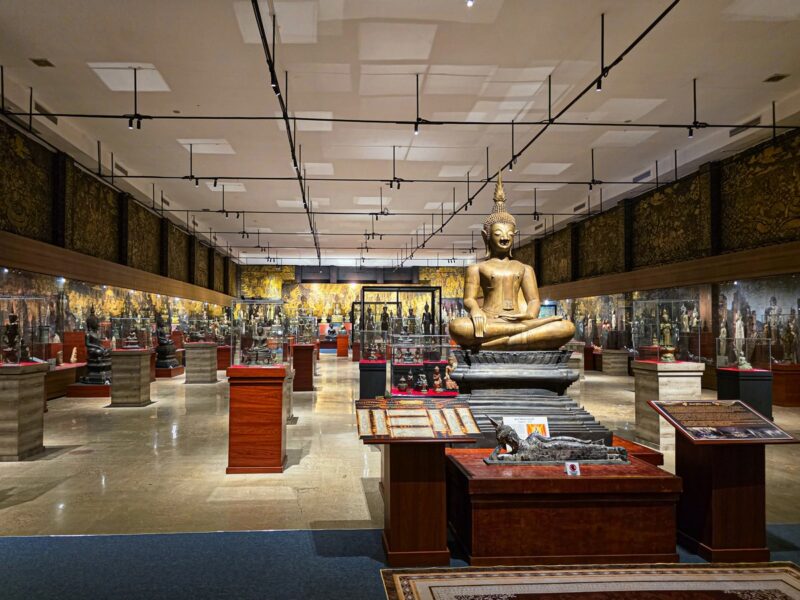
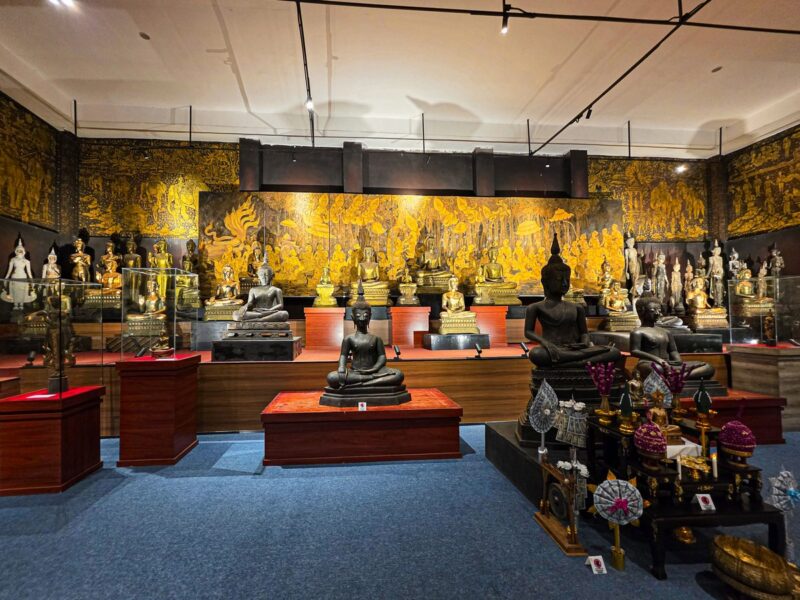
Last of all (as a slow cool-down), there’s a hall of stone and metal objects. But compared to the works in wood, it somehow looks a bit gray…
And for dessert, here’s… just a piece of wood :)
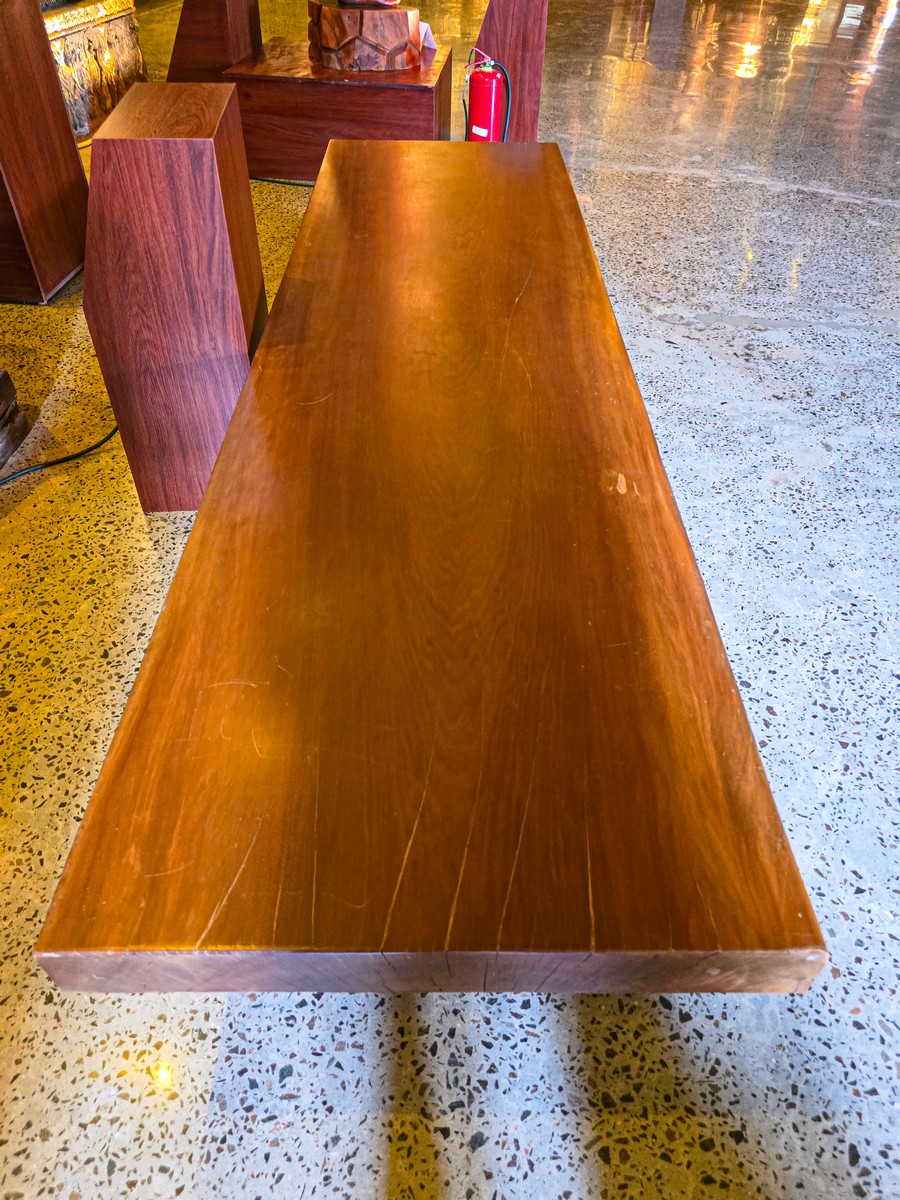
That’s it – time to head for the exit!
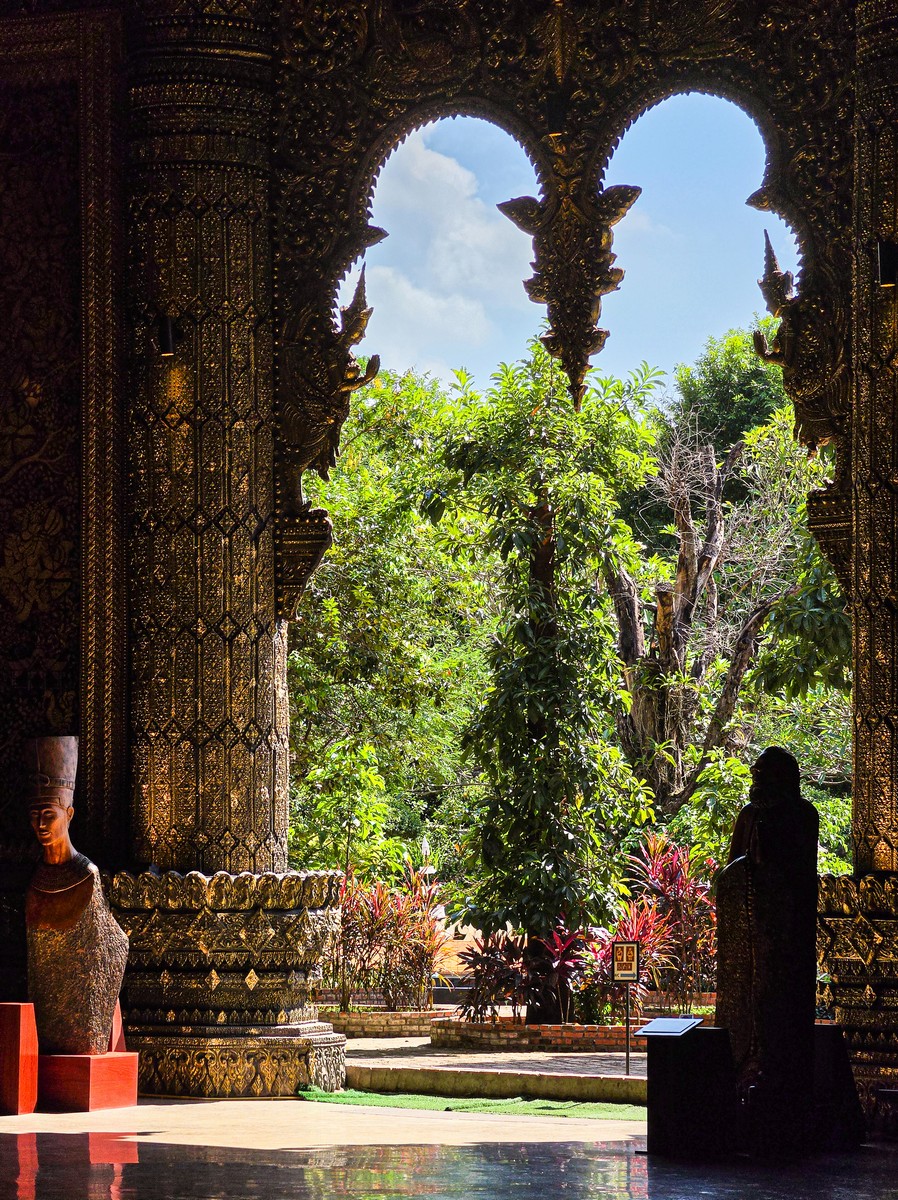
What a magnificent place! If you ever happen to find yourself in Vientiane, be sure to come here – for half a day at least.
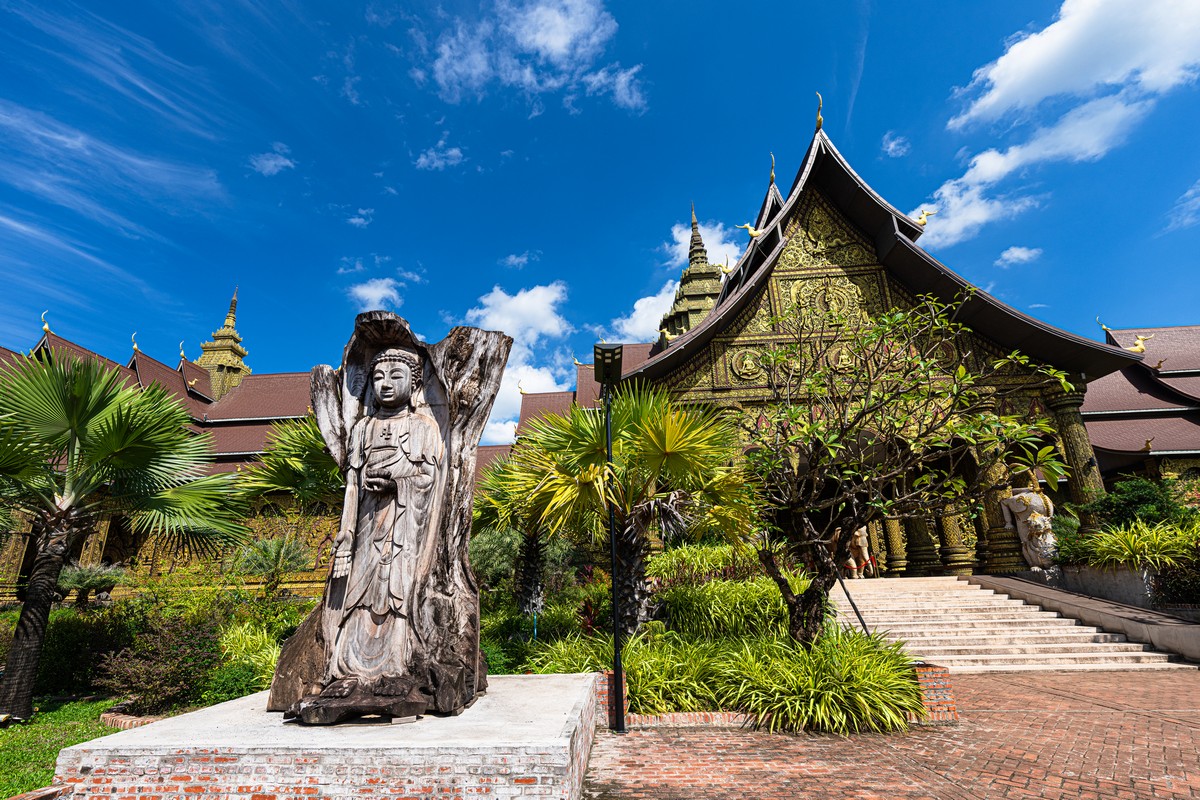
So there you have it, folks: the Lao Art Museum. Like I say, this museum alone is worth flying to Laos for. Take my word for it!

