
June 16, 2026
The world’s most beautiful of its kind: the Great Moma Naled.
Next on our Irkutsk-Yakutsk-Magadan-Yakutsk winter road trip, it was high time we headed off into the deepest backwoods (so – backwoods of backwoods!), where you can go a whole day’s drive without meeting a single other car. Where? The Khonuu-Sasyr winter road (but more on that shortly). Why? Simple: it’s how you get the Moma Natural Park. Why there? Simple: (i) it’s where the most magnificent naleds are – including the G.O.A.T. naled the Great Moma Naled; and (ii) it’s where there are no fewer than two (2!) Yakutian volcanoes! Yep – real volcanoes; I was pretty stunned when I found out. Back in 2024, we’d decided to come back here with drones – to fly around and snap some shots. Fast-forward two years – and here we are…
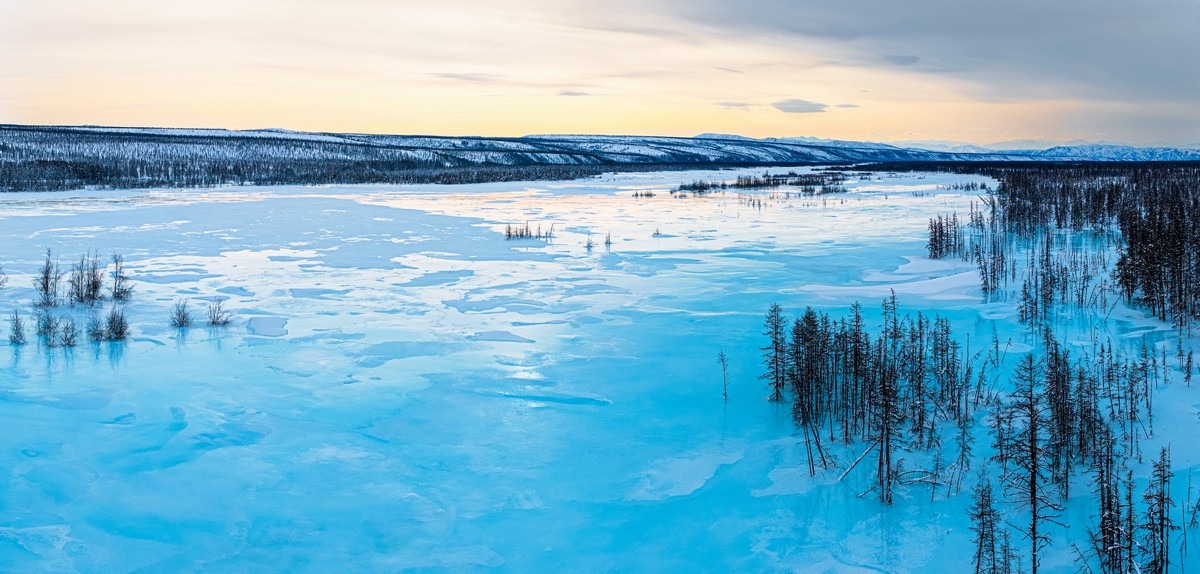
These are the naleds in question. They’re situated on the Moma river, and, apparently, they’re the largest naleds in the world:
And here are the volcanoes – I’ll have more photos of them a bit later:
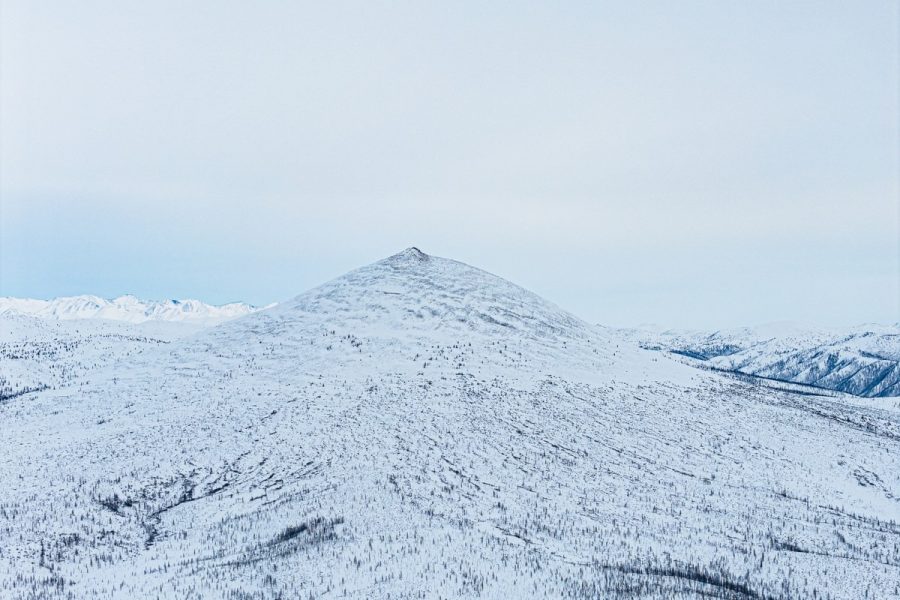
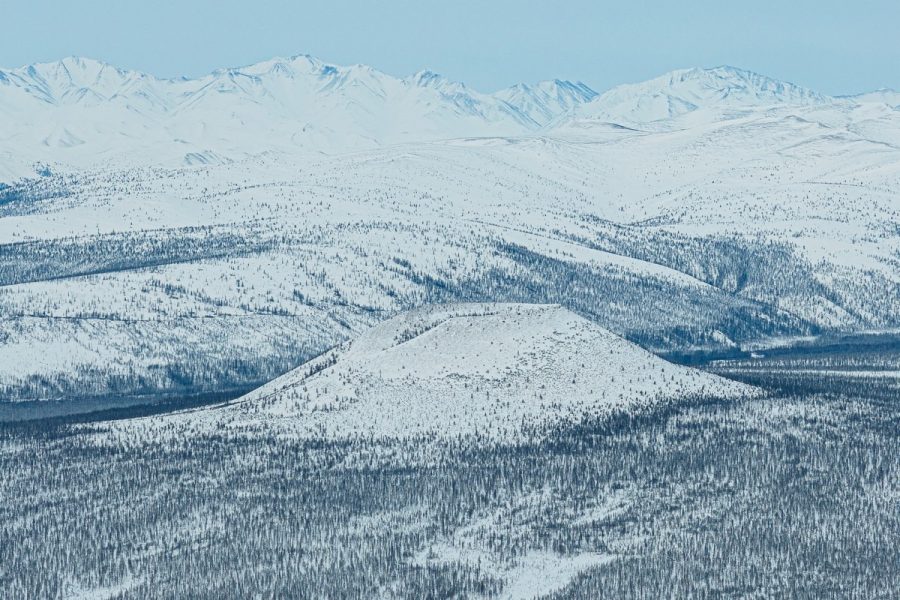
So then – in our by-now-traditional fashion – early in the morning, after first light but before the sun was actually up, our convoy of four vehicles headed out of the remote Yakutian village of Khonuu (which has no roads leading to it – only winter roads):
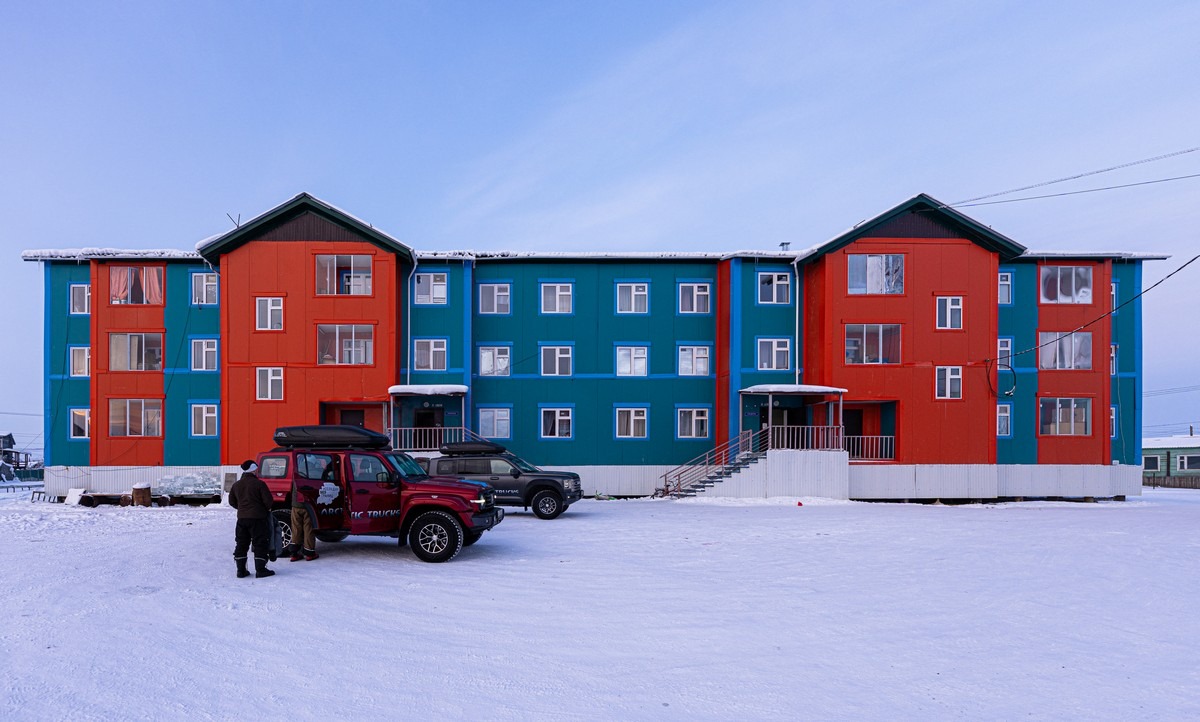
What’s Khonuu like, and where is it? Well, I already gave you the full rundown last time – and nothing at all’s changed here since. It’s a village on the bank of the Indigirka, population around two thousand. What that population mostly does for a living, I never did work out. Hunting and fishing, presumably, plus assorted public-sector outfits. The place sits practically on the Arctic Circle – just 12km from it. But whether that’s to the north or south, different sources tell you exactly opposing accounts :). Some say it’s beyond the Arctic Circle (going by the old maps); the modern-day internet fibs that it’s to the south. Who to believe? Up to you…
Btw: where is Khonuu? Here! ->
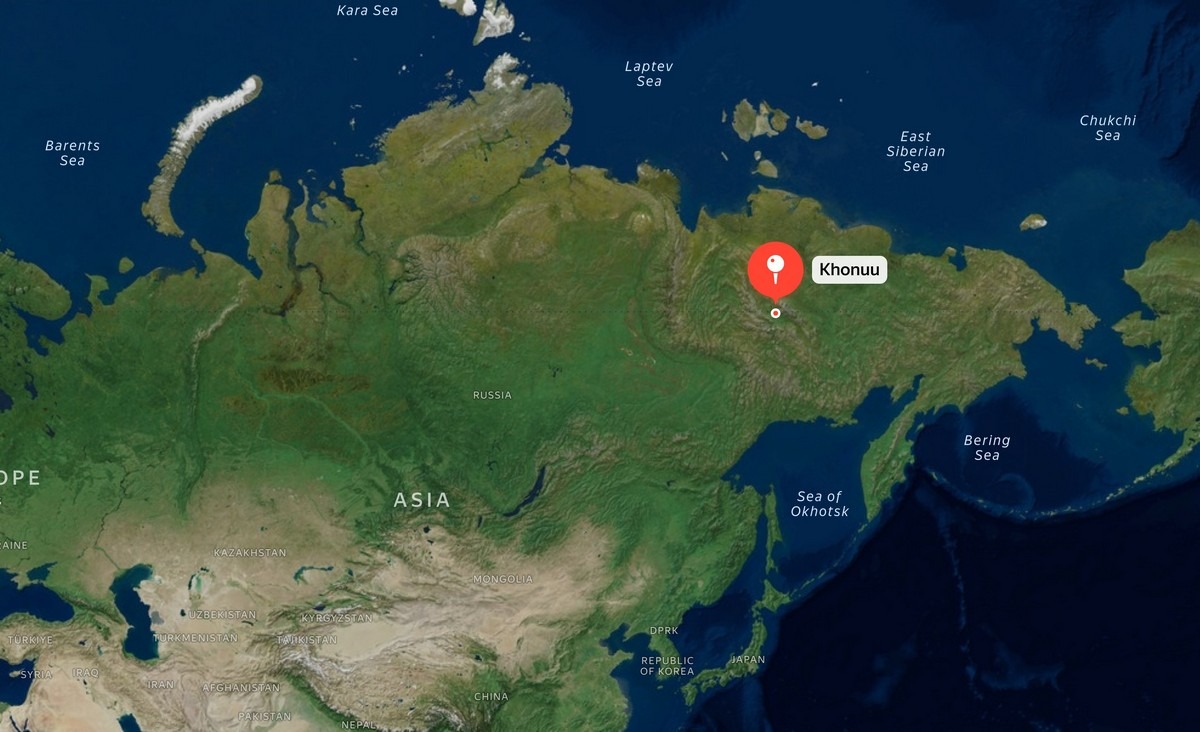
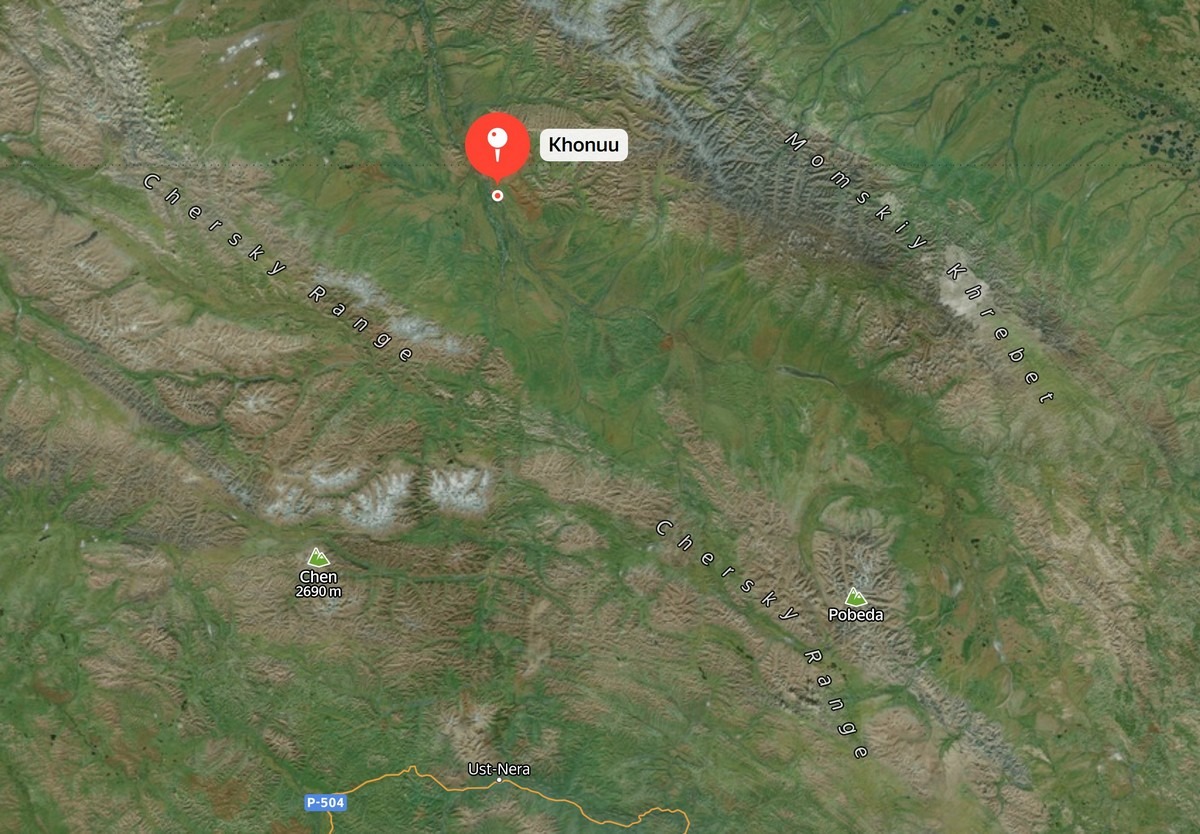
Zooming in a bit: it lies at the mouth of the Moma River, which flows into the Indigirka, in a valley between two mountain ranges – the Moma Range to the north, and the Chersky Range to the south. The climate here is presumably milder, mild enough to let the small local population feed itself and get by. Here’s the village on Yandex Maps:
We woke up, showered, had breakfast, hauled our bags out to the street and into the cars – ready to roll!
Wait; rewind: I say “showered”, but not all of us did. See, the tap water here is not only utterly undrinkable (it’s colored all orangey-browny-rusty), to some it’s also utterly unshowerable! Still, it’s not the end of the world for locals: all the water for cooking and other needs here is made from clean river ice – and here it is, sitting outside the apartment block where we spent the night! ->
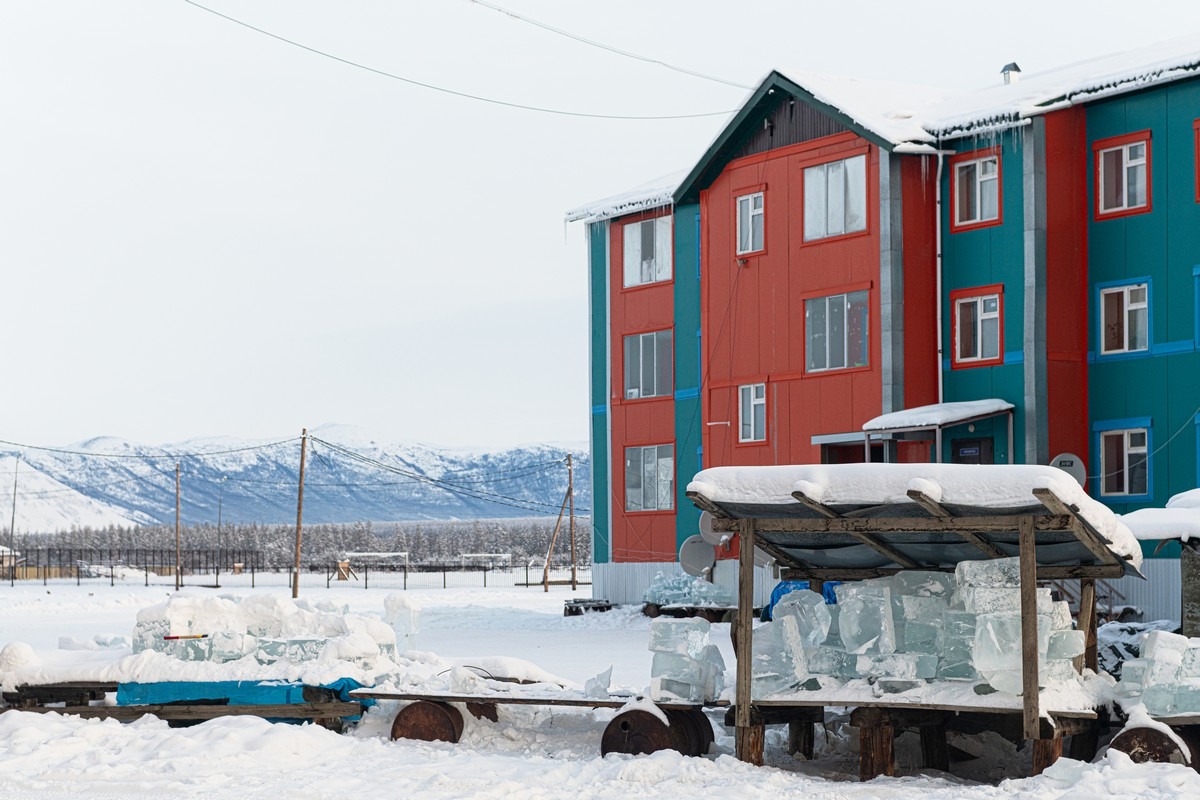
Each family gets in its own supply of river water for the winter season:
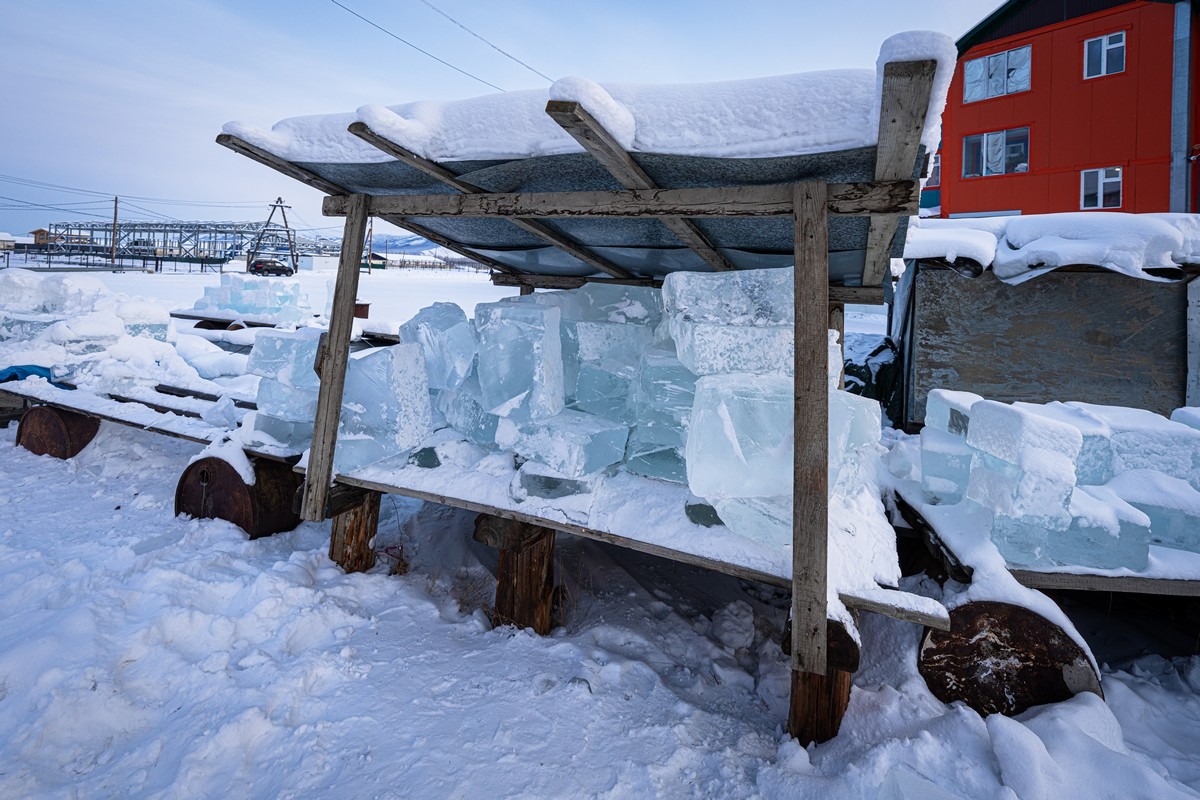
Such is life around here.
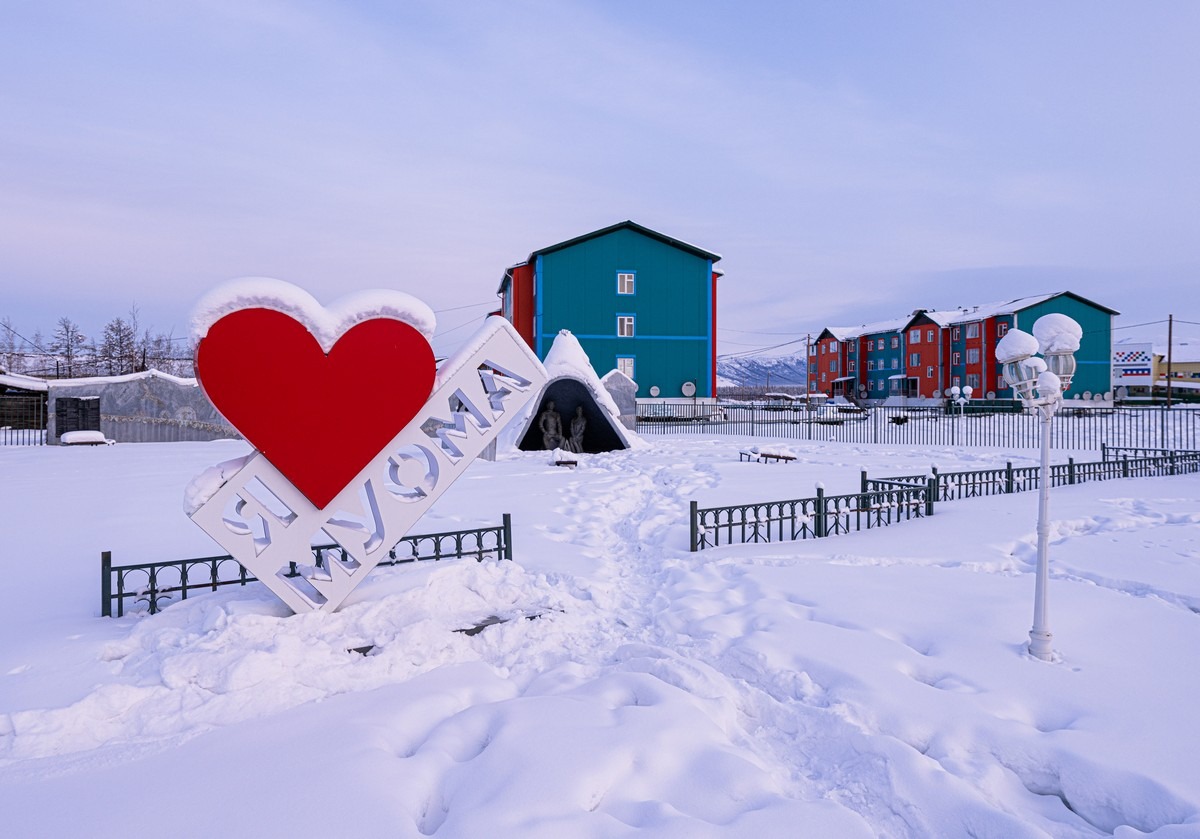
The town “square” – well, the village center – comes all decked out:
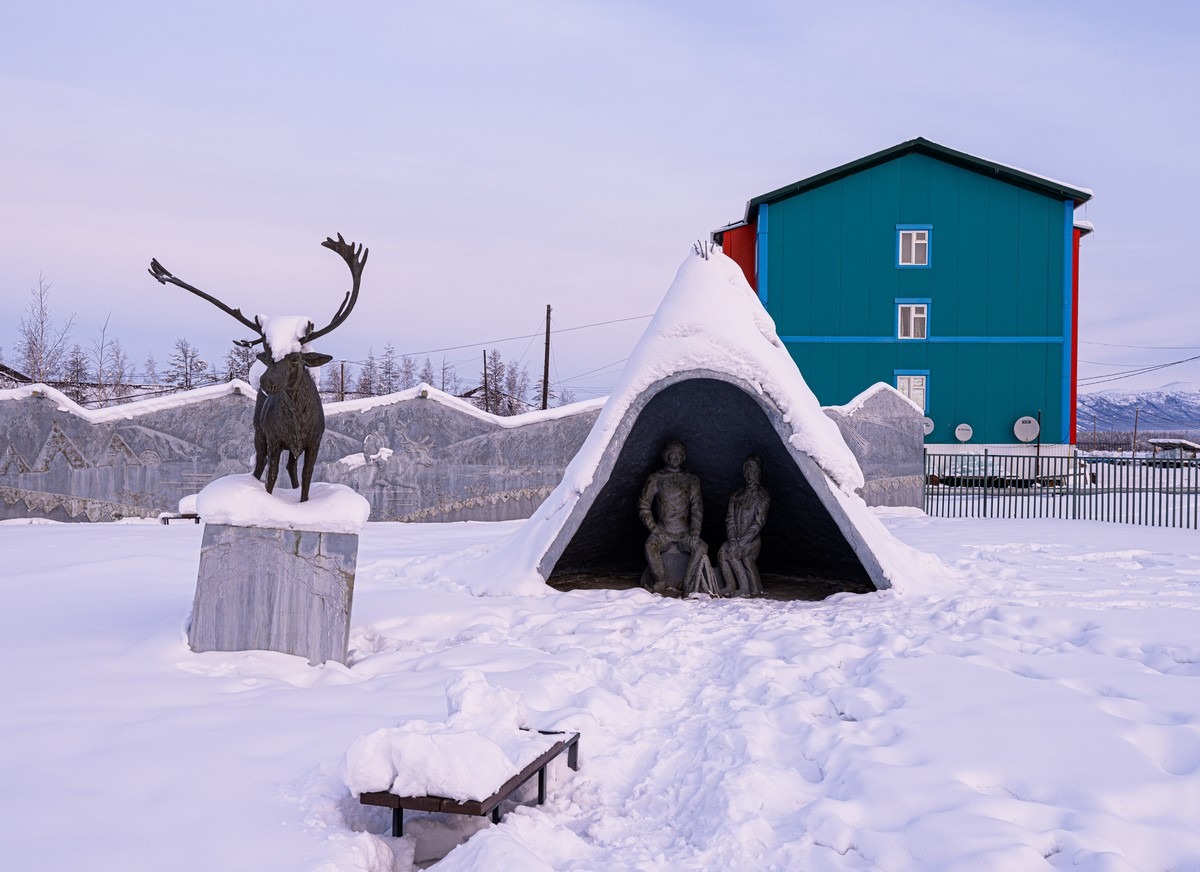
In summer it surely looks quite different, but in winter – like this:
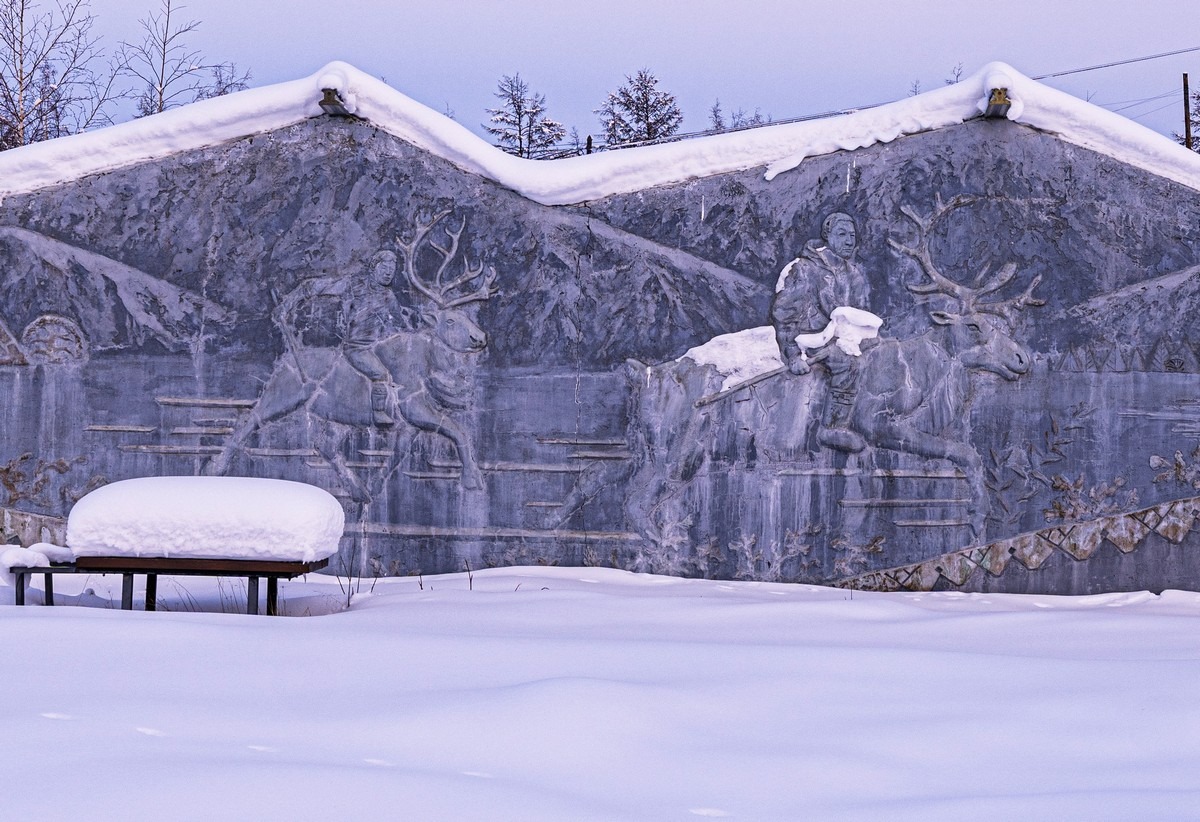
Right then – time to set off…
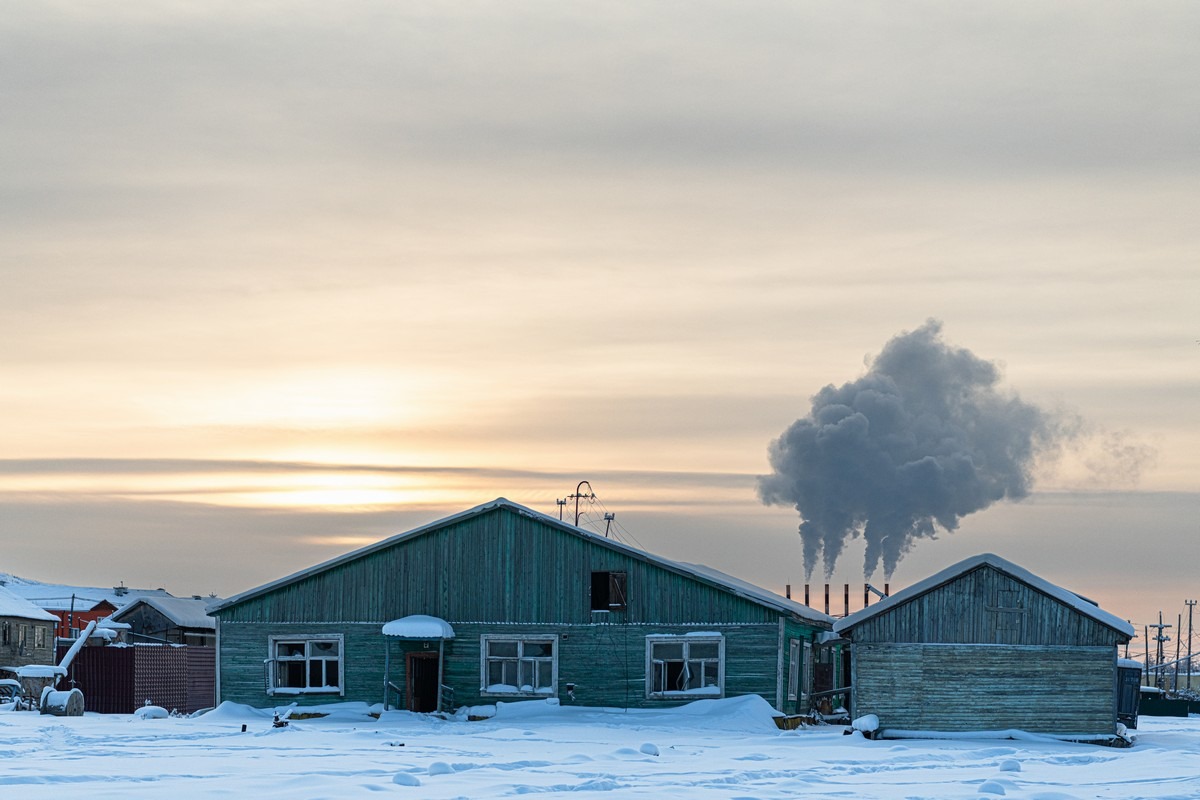
The “Indigir” winter road:
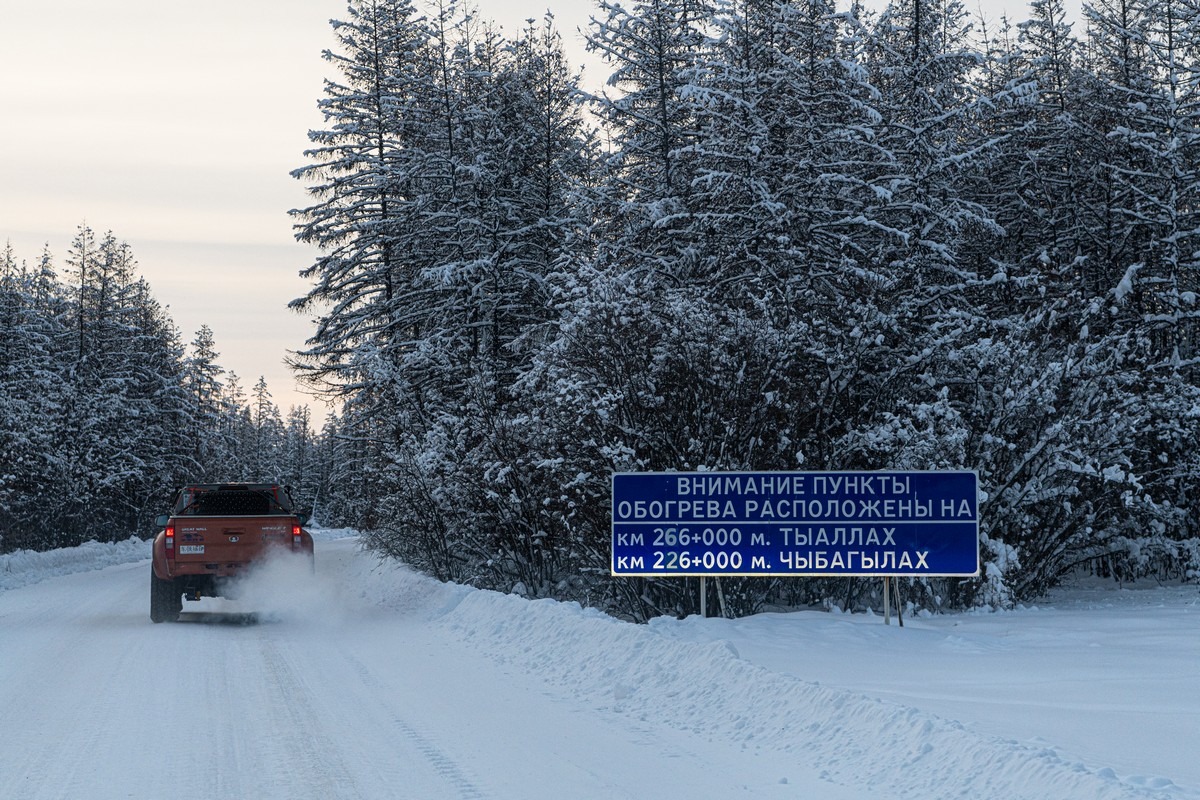
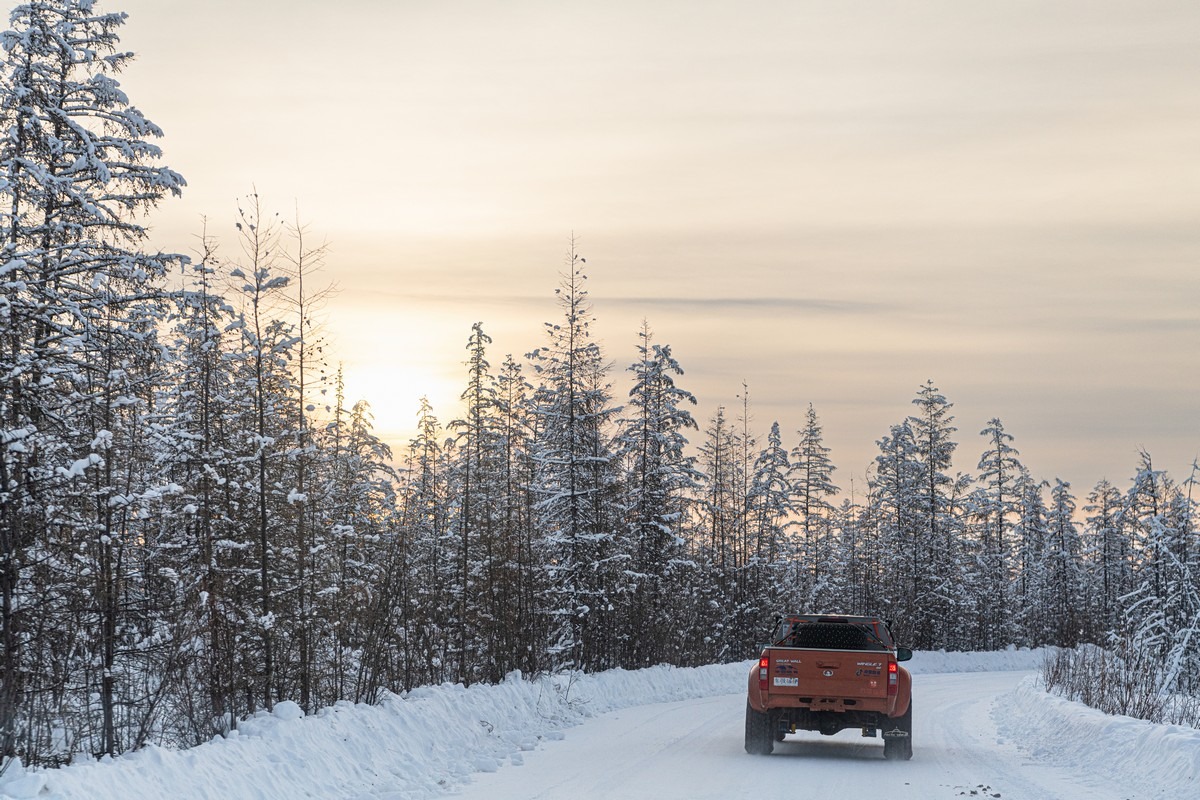
At first the road’s not bad – cleared, and nice and even:
But then – a fork. Right takes you onto the “Indigir” winter road; left – to the village of Sasyr:
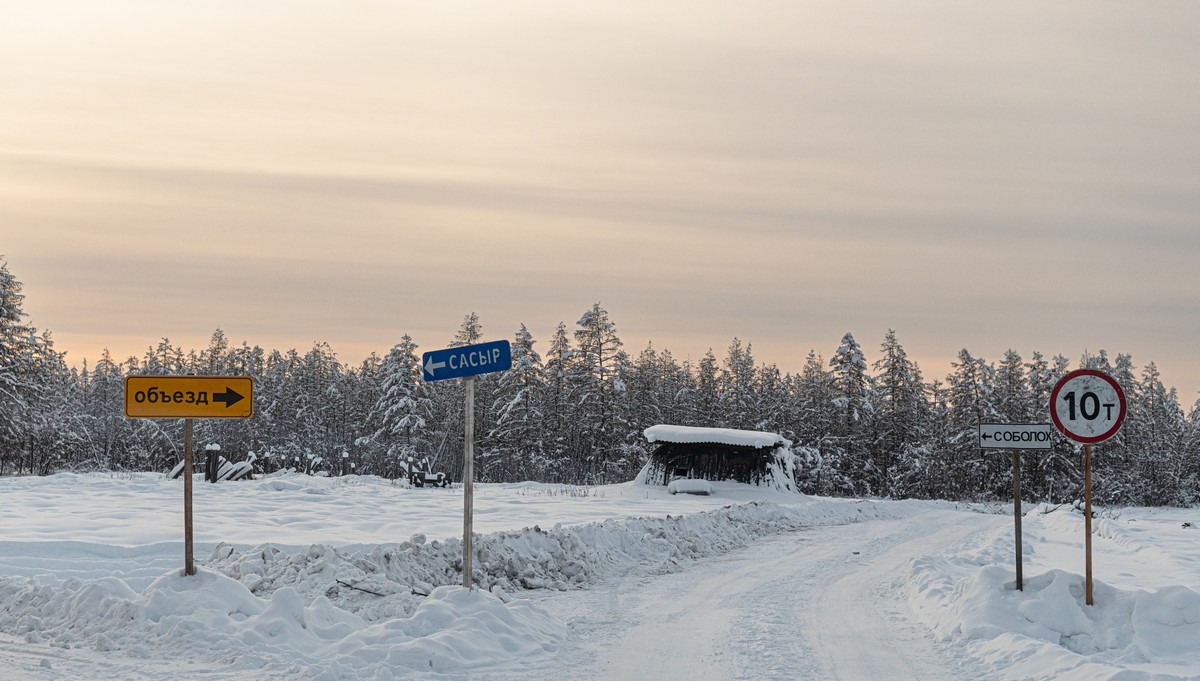
We go left!…
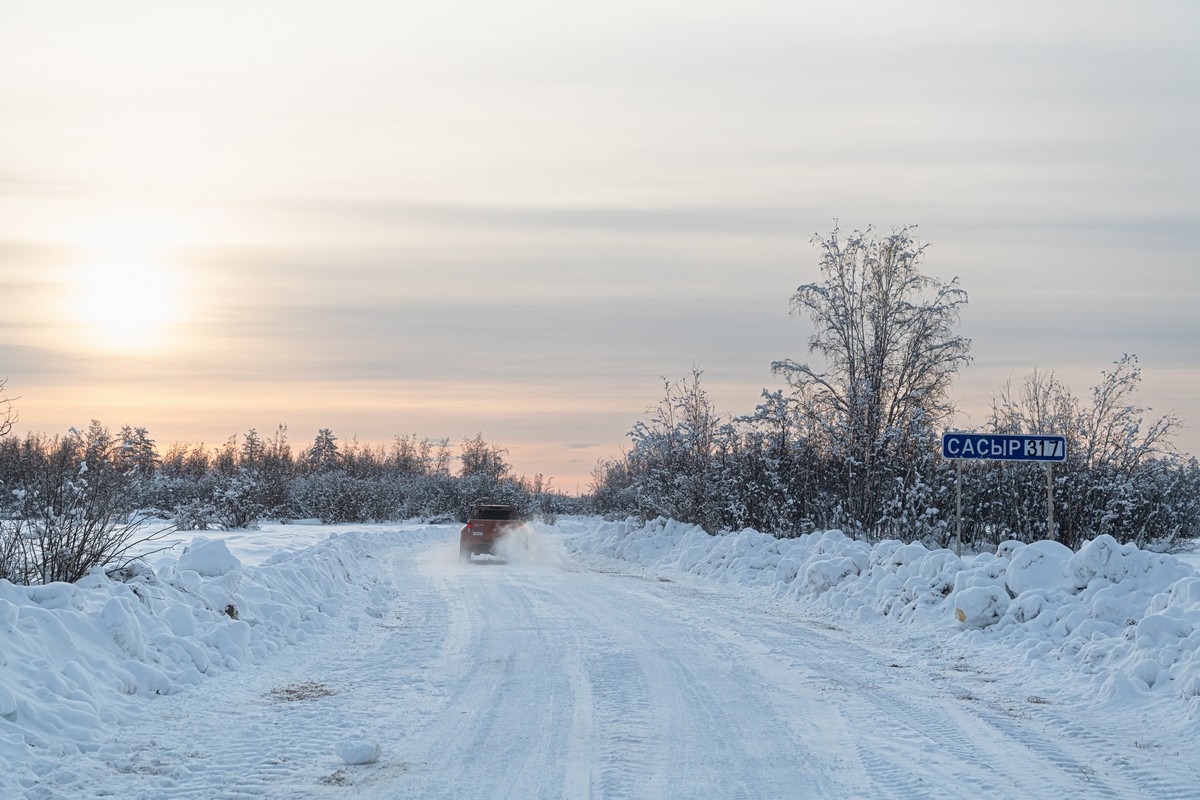
Here’s a curious thing: this winter road gets cleared along different routes from time to time, depending on the current state of the taiga, rivers, naleds, and whatever else. So it has no fixed length! Each year the number on this sign here can be a completely different one! Where else do you see that?! ->
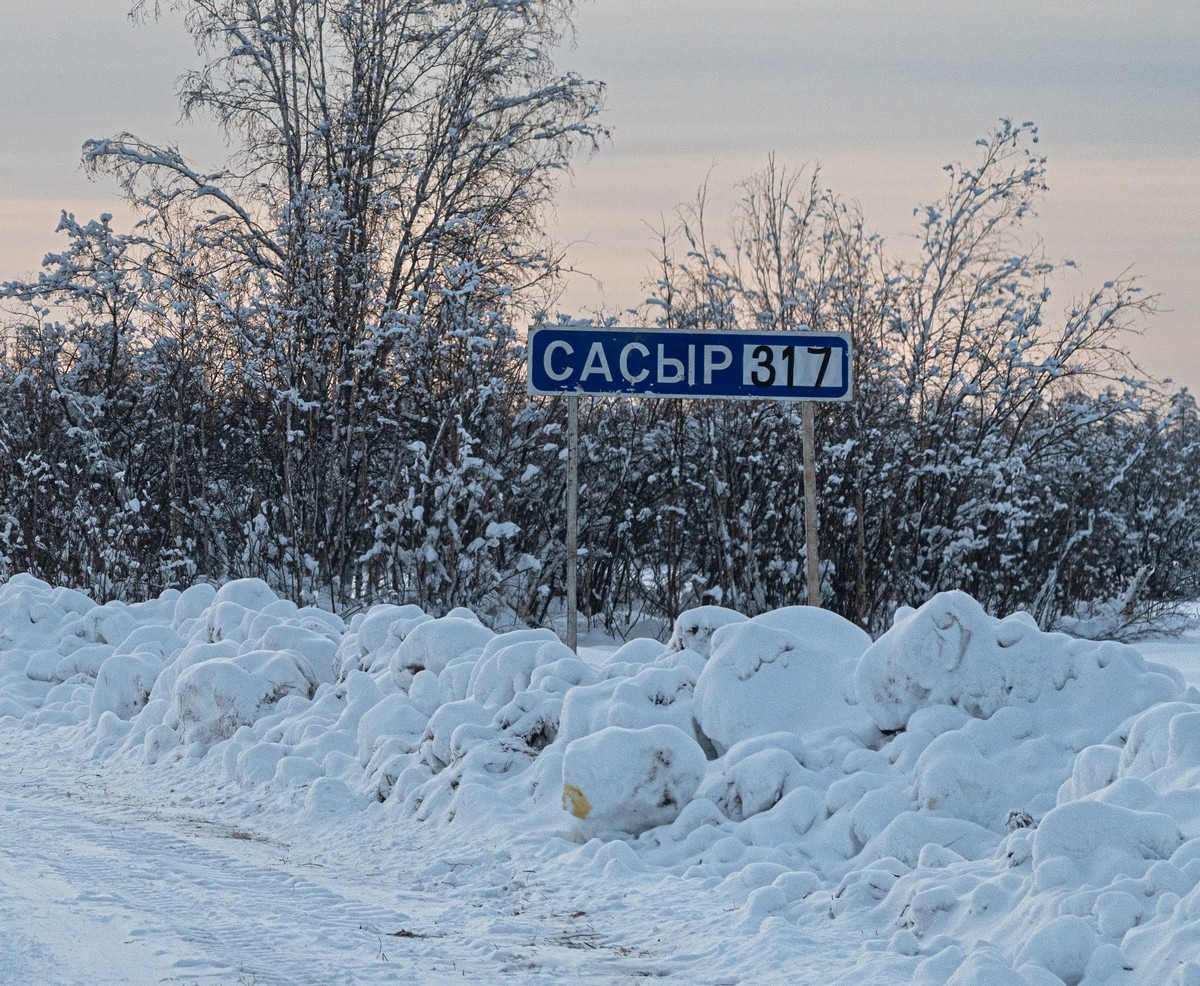
So – a route that changes all the time. Hardly surprising you won’t find it on Yandex Maps, or on plenty of other maps for that matter. So we went ahead and decided to draw up our own map of the winter roads of Yakutia and the rest of the Far East. A unique spot of DIY cartography – here!
And if you dig a little deeper into our map, the route we were about to take went like this:
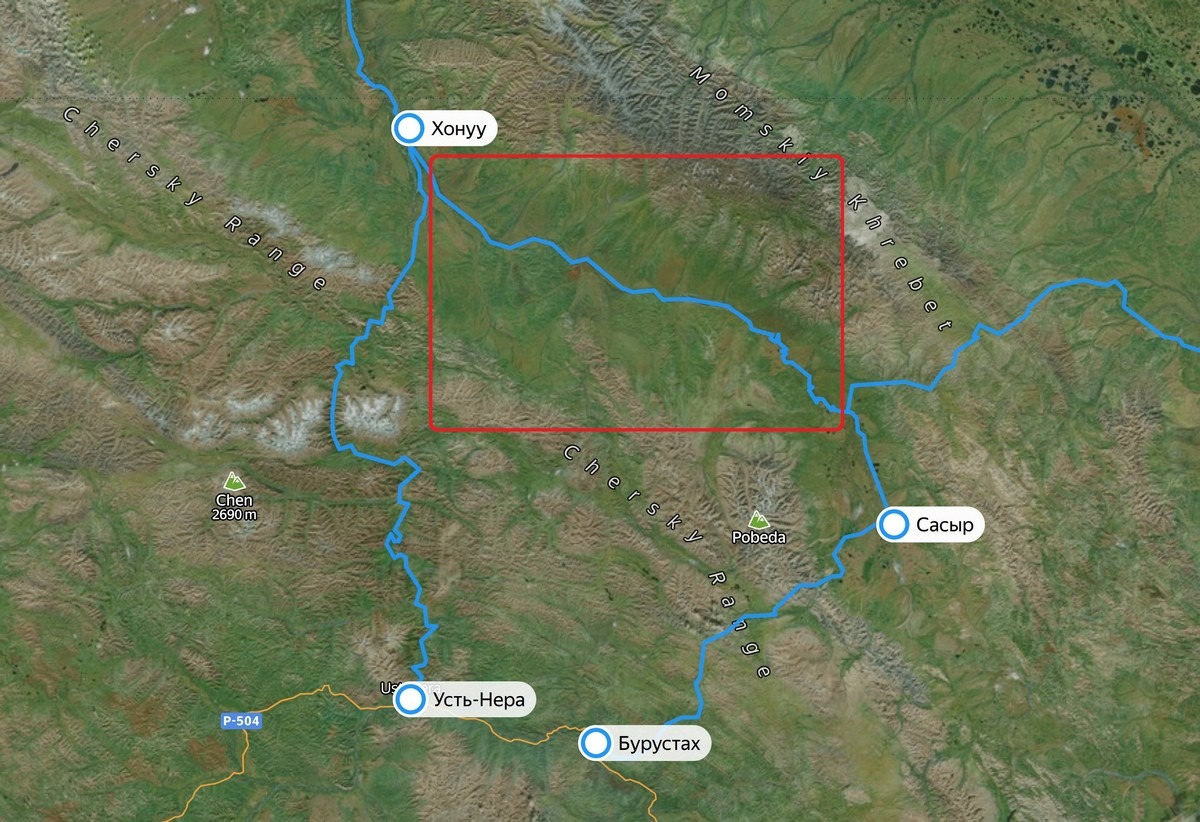
So, why lay down a road like this between two perfectly independent winter roads? Simple: it’s a backup for the Indigir winter road – for when naleds plug up the Tube completely. But only all-wheel-drive long-haulers can make it along this stretch – there are some downright treacherous spots, plus climbs and descents that are impassable for trucks without four-wheel drive…
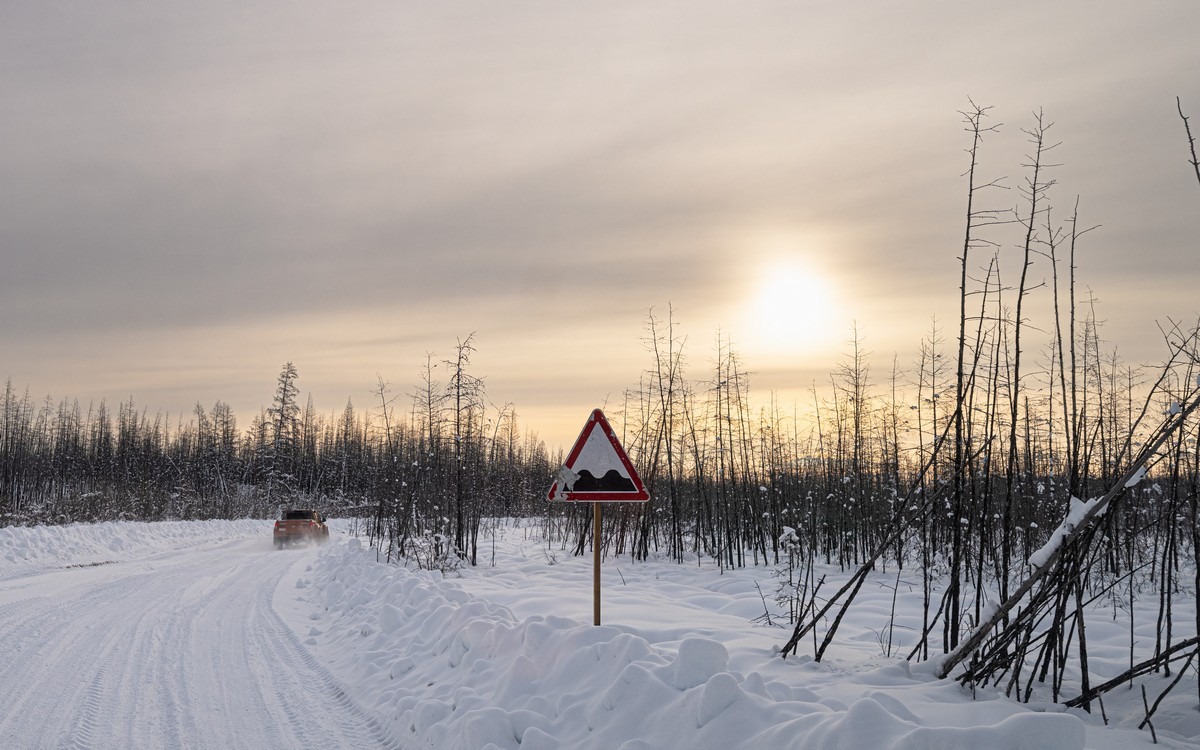
The sky was a touch dull, which was a pity, while the temperature was on the mild side, with no fluffy white hoarfrost to be seen on the scenery around us: also a pity…
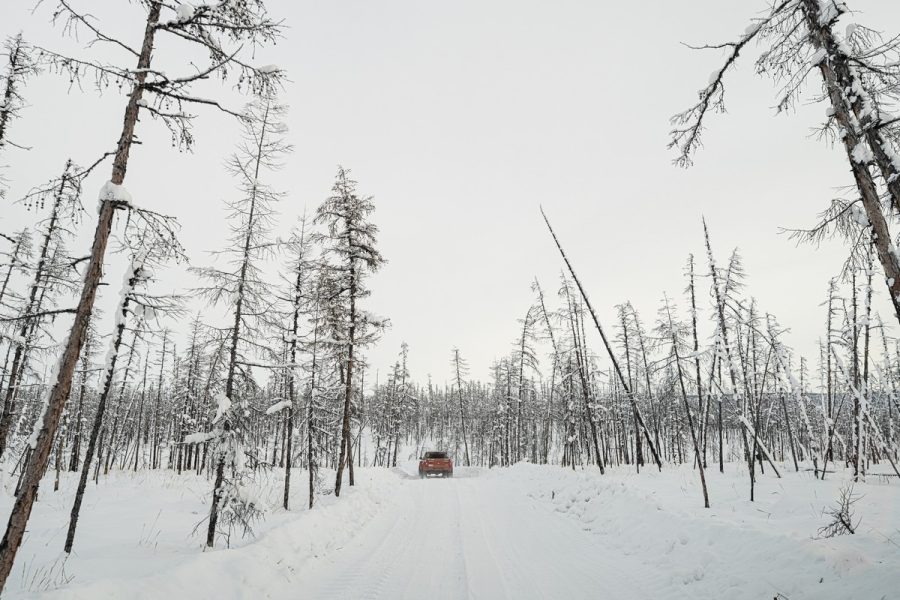
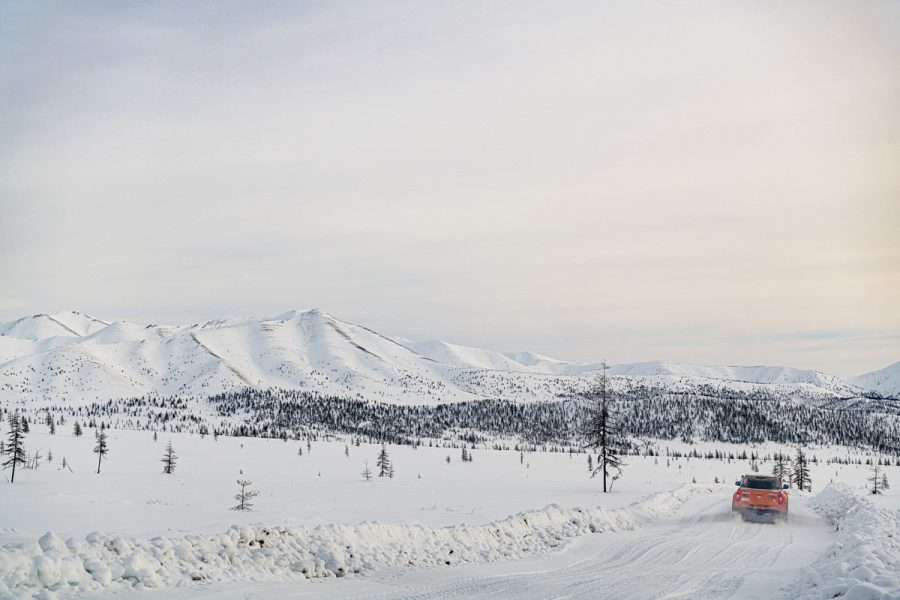
And after some three hours on the road (don’t ask how many kilometers – out here, distances are measured in time) – there it was, the first tourist magnet (minus the tourists; oh, the inhumanity): a naled. And not just any old naled, but the Great Moma Naled! ->
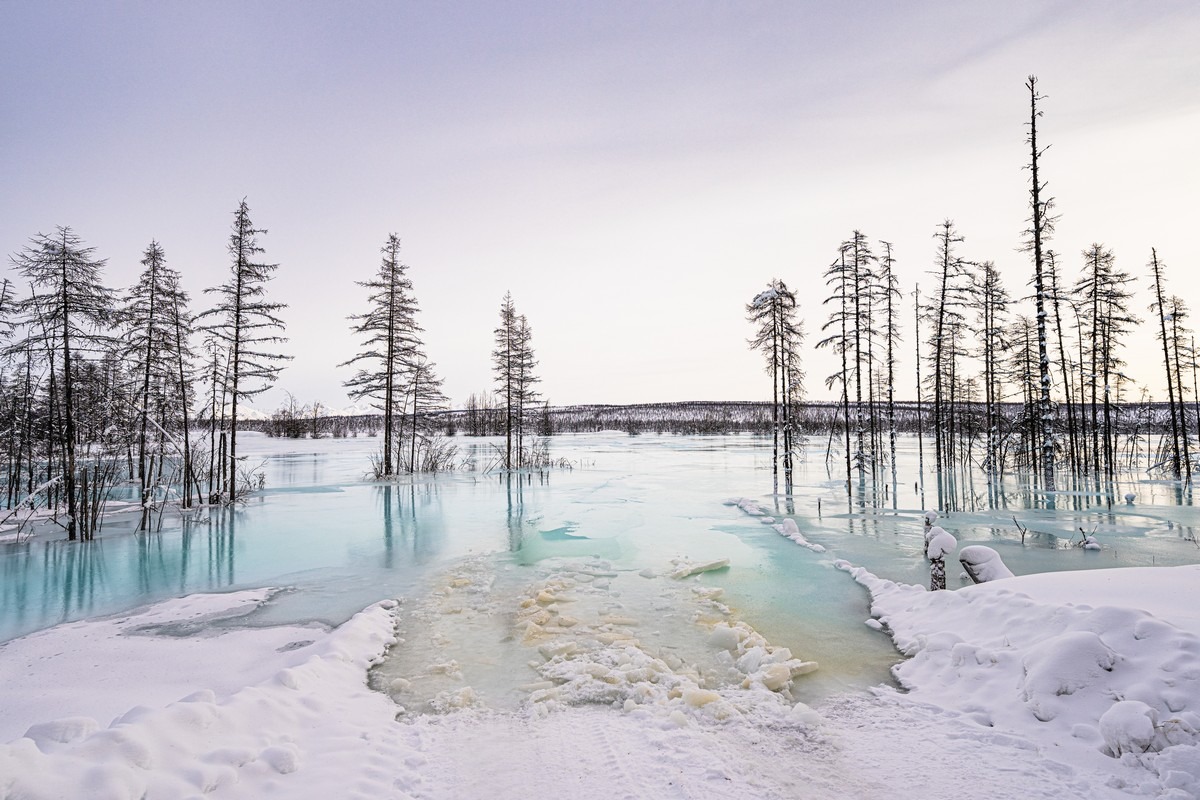
So, what next?…
Take a look at the broken ice and the wheel ruts in the previous photo – that was the handiwork of a long-hauler that tried to get across the naled, then “thought better of it”, reversed back some 300 meters along the winter road, and was quietly hiding out in the bushes, waiting for something… a miracle? (There are no photos of the rig – we were so amazed to see a truck in a spot like this that we simply didn’t believe it… and our photo gear failed to record the encounter.)
How long that rig would sit there waiting for everything to freeze over – or for the road crews to turn up (and what could they even do out here?) – was anybody’s guess. We, meanwhile, had to press on somehow. But only after we flew up the drone:
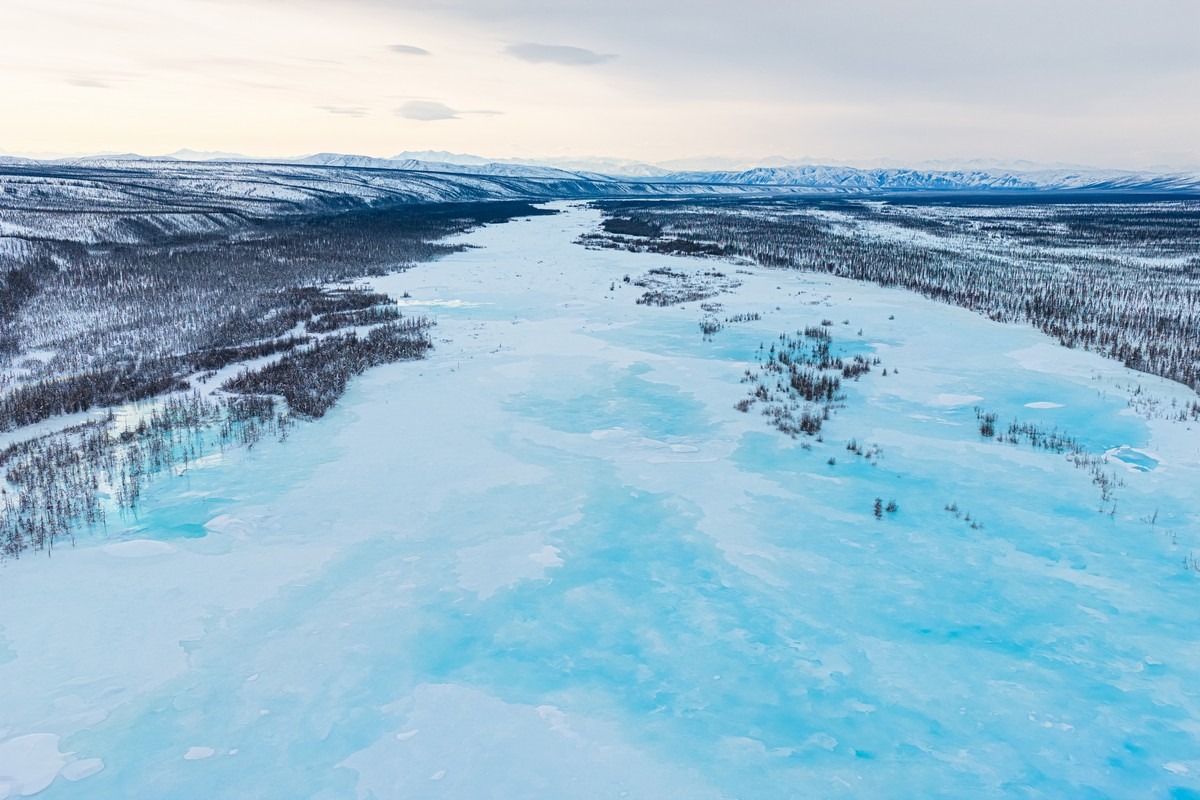
In the other direction – same thing: unique, astonishing beauty, but no good for driving: we were hemmed in:
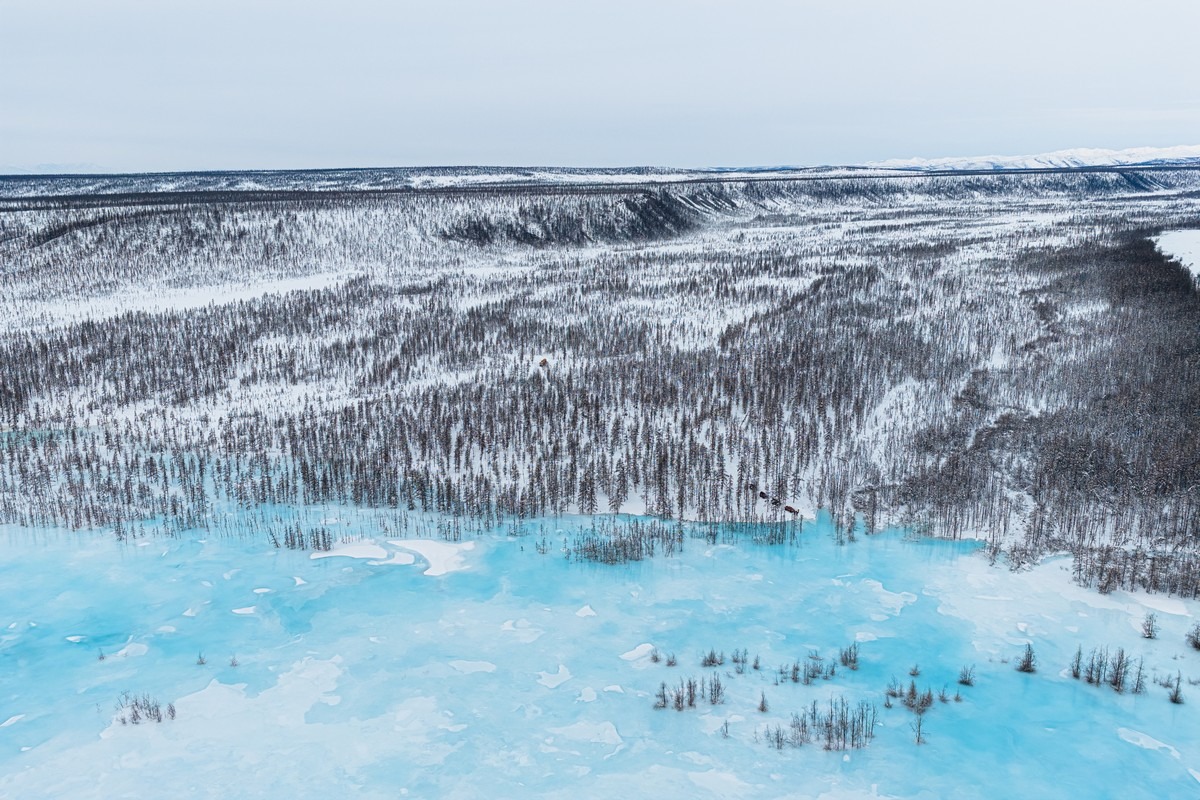
Just what were we to do?…
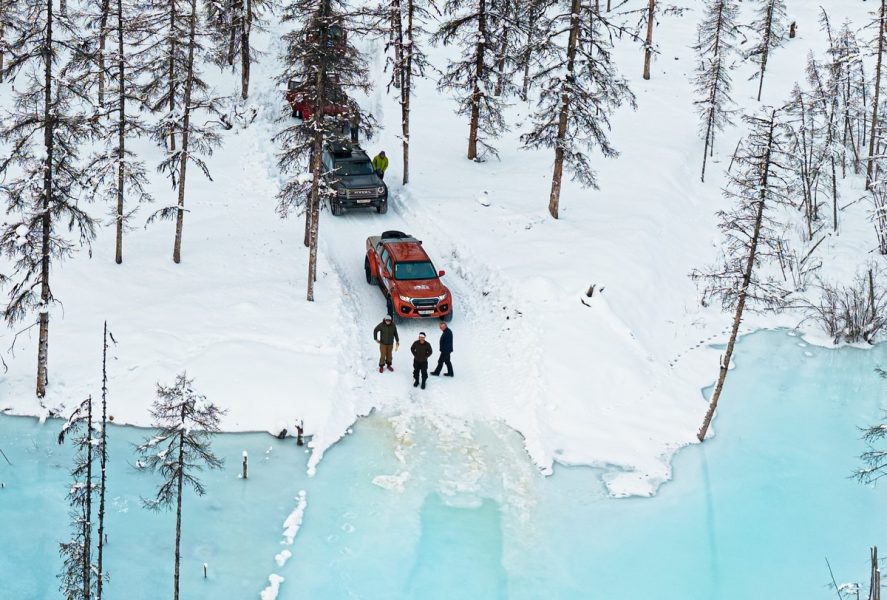
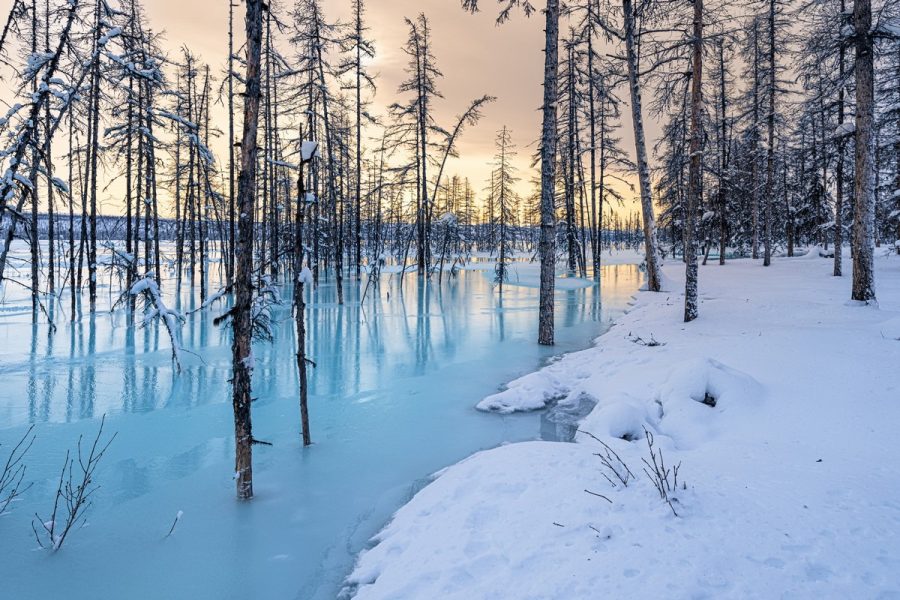
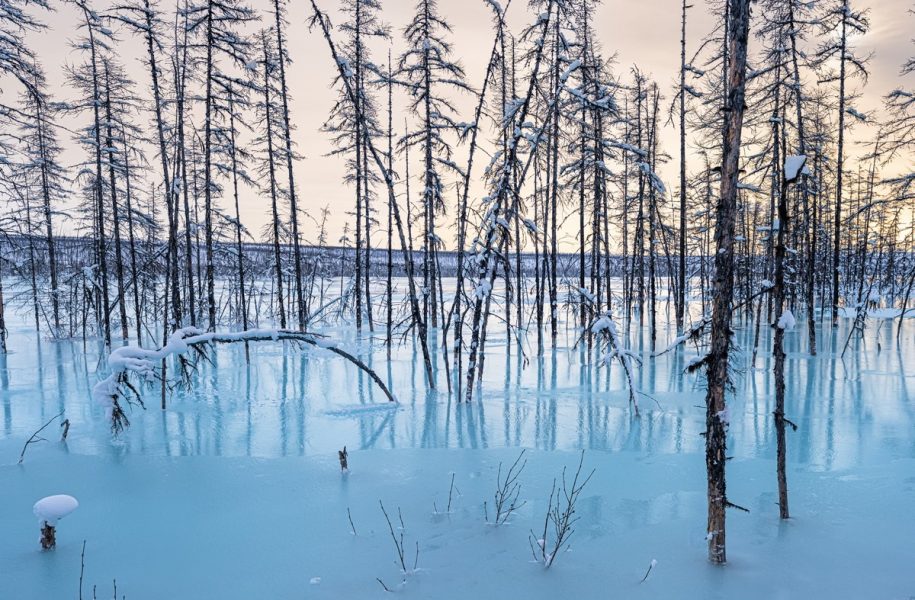
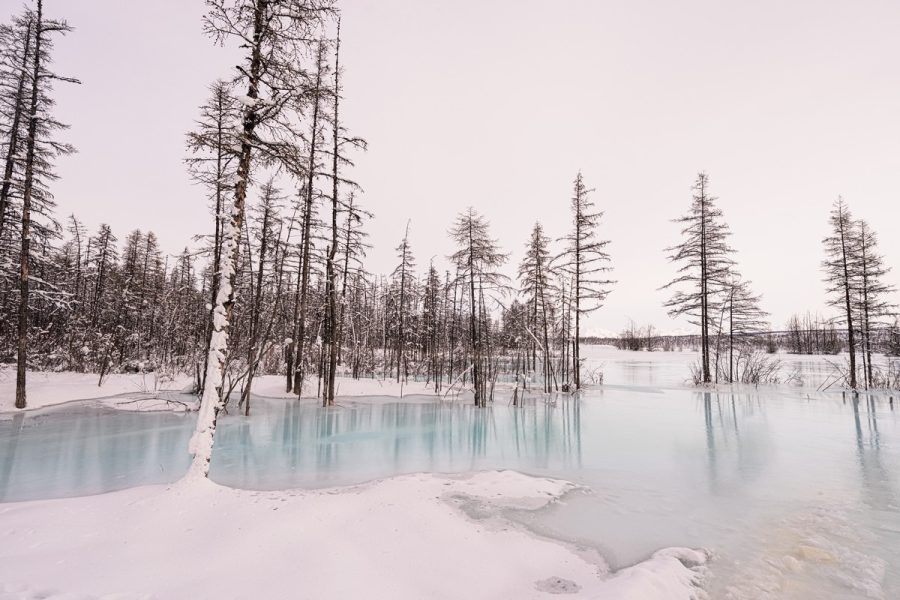
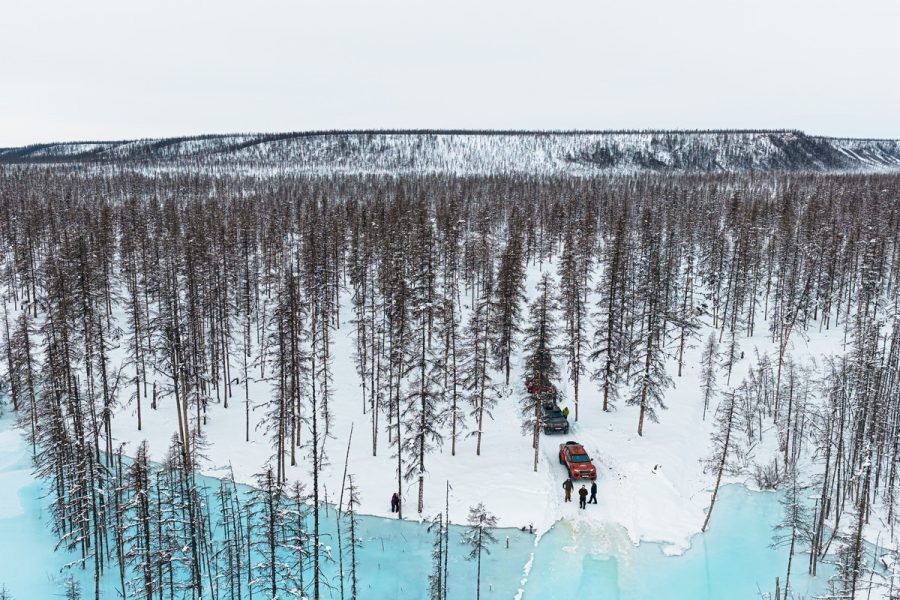
In the end – we shouldn’t have worried. After all, we were being led by Alexander Yelikov – our super-prepared-for-anything Arctic auto-wolf (the man drove his own car all the way to the New Siberian Islands once!). So he grabbed his special scientific instrument ice chisel and started punching holes in the ice all around – as you do:
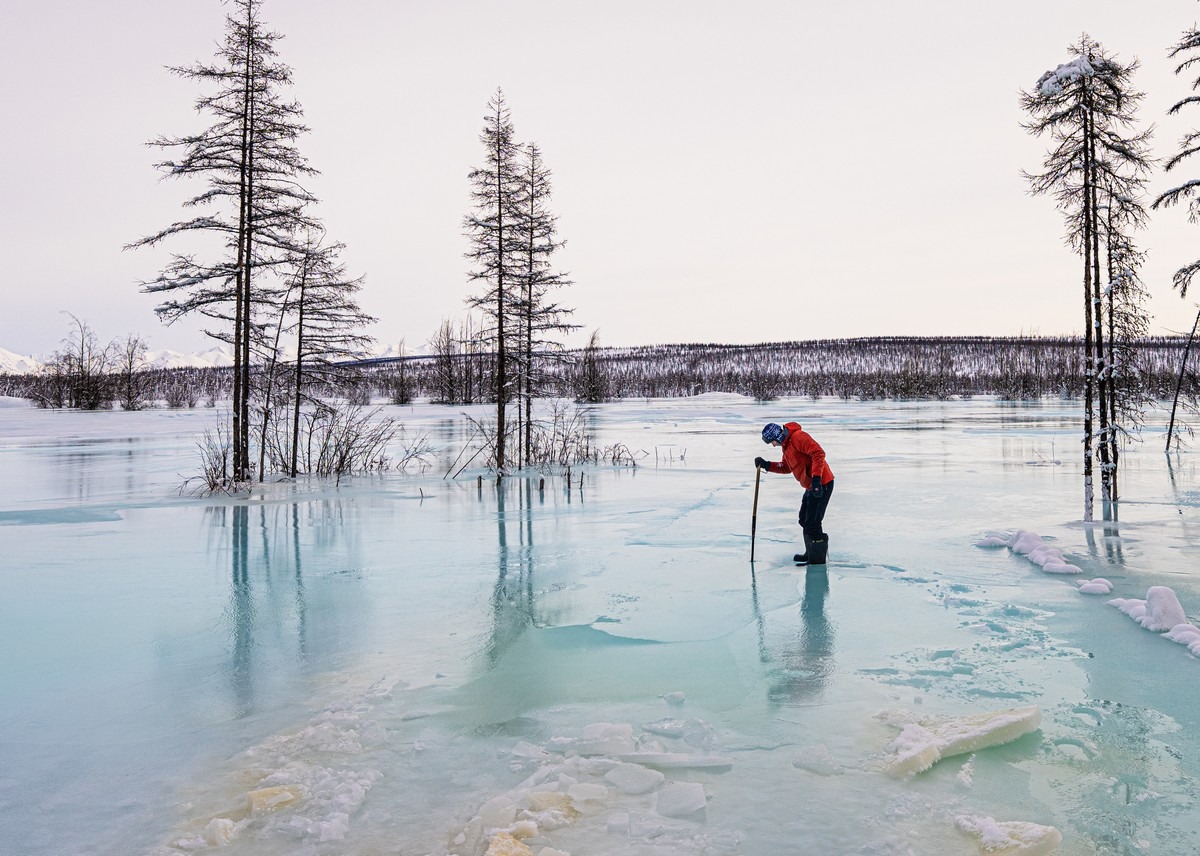
He worked out the safest possible route – and off he drove in his pickup:
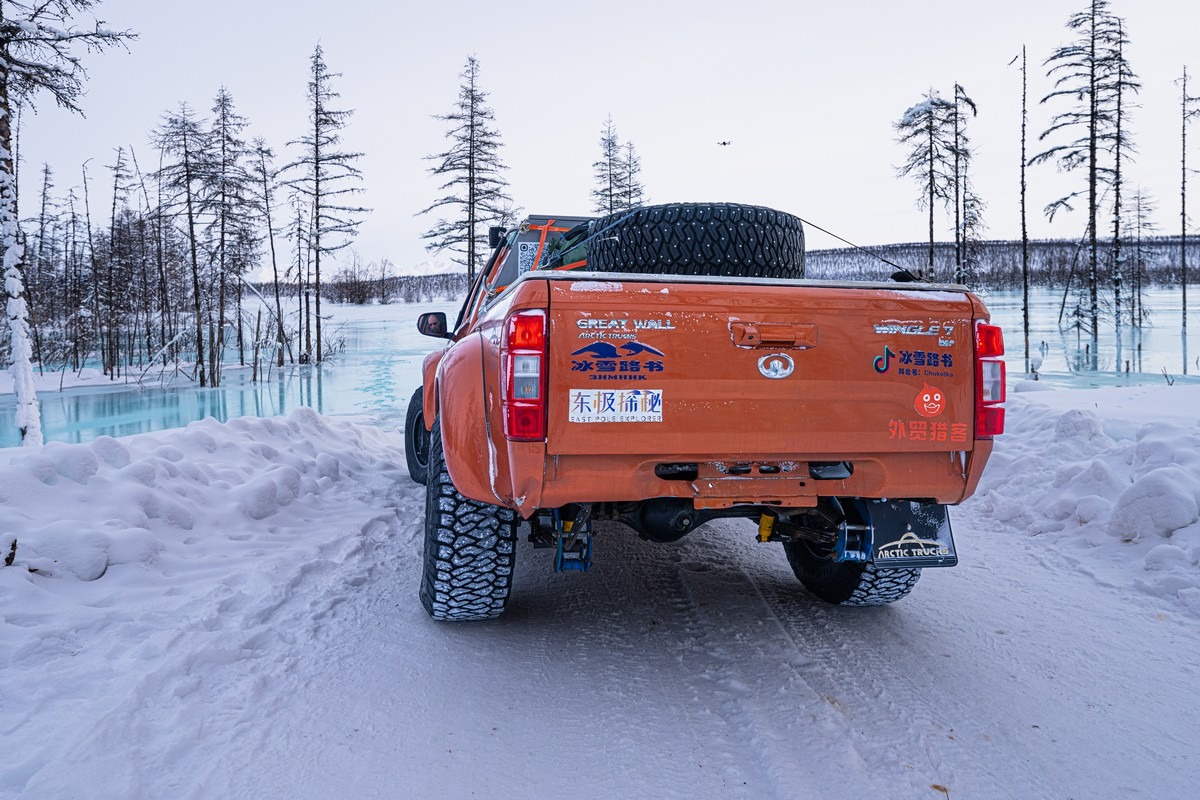
Never mind the missing plate – he’d torn it off back on the Old Kolyma Highway trying to force the unforce-able. Here, though, it all worked out!…
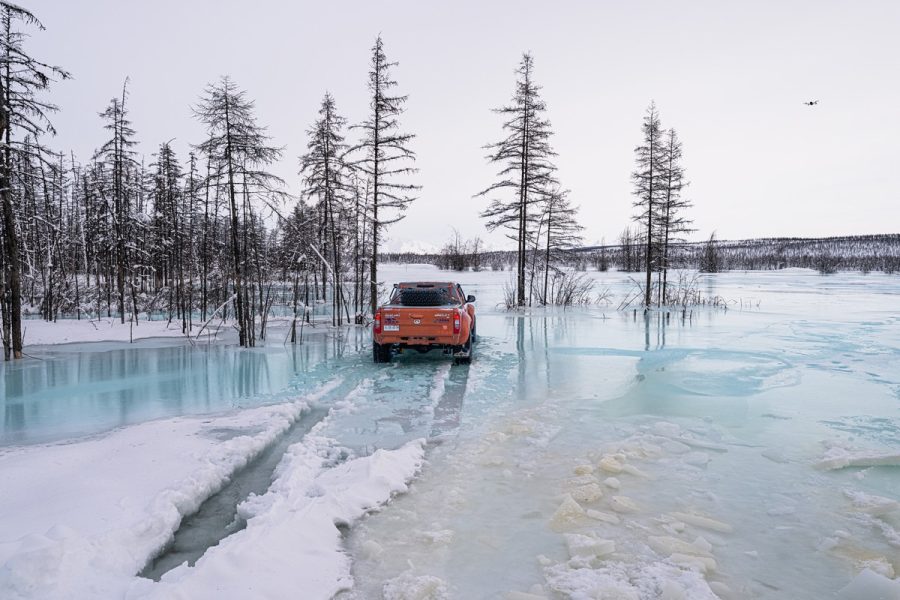
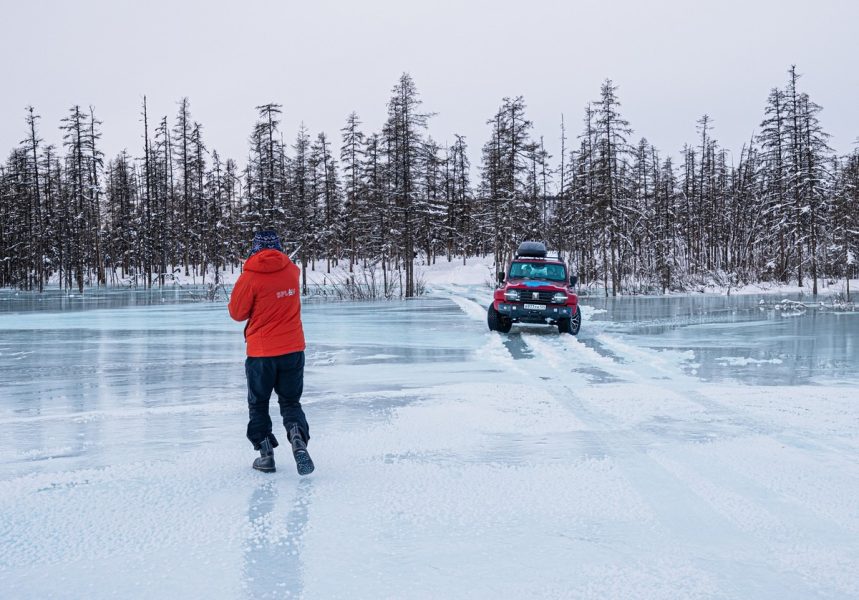
And there we were, smack in the middle of the naled itself:
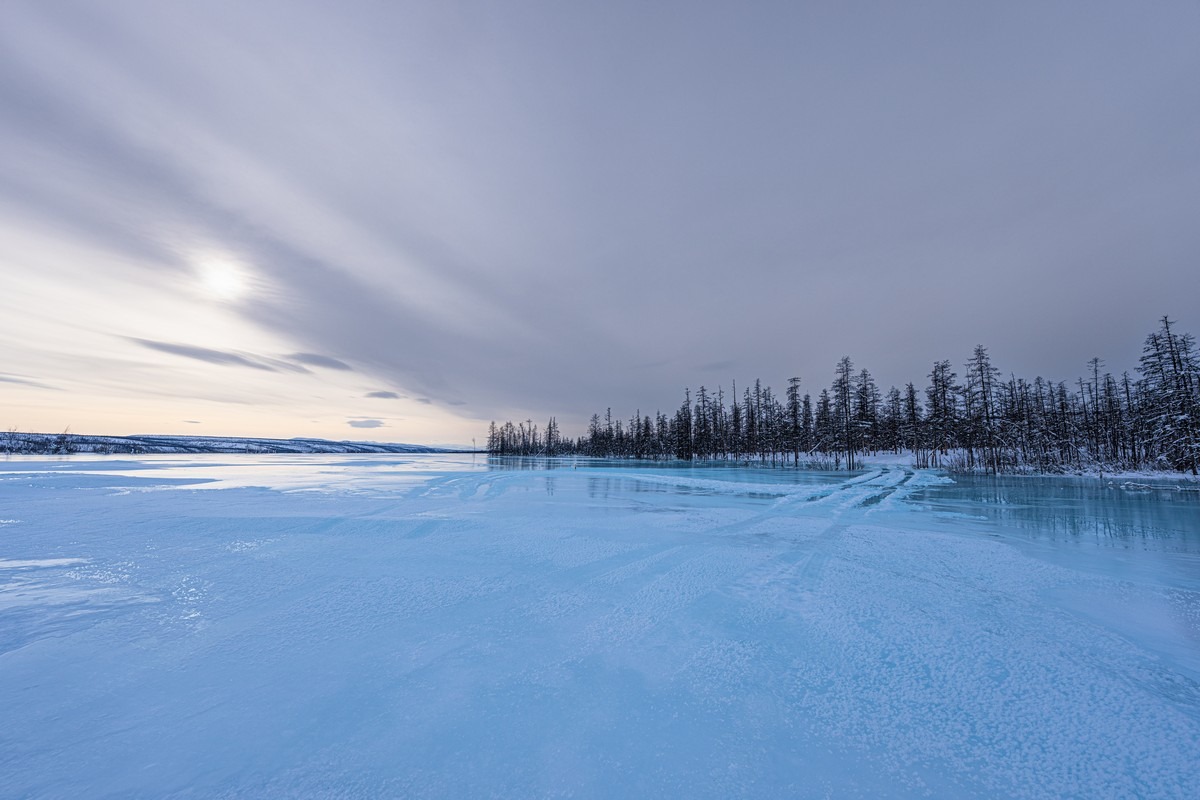
What I really missed, for the full contemplative experience, was a bit of sun and some blue sky!…
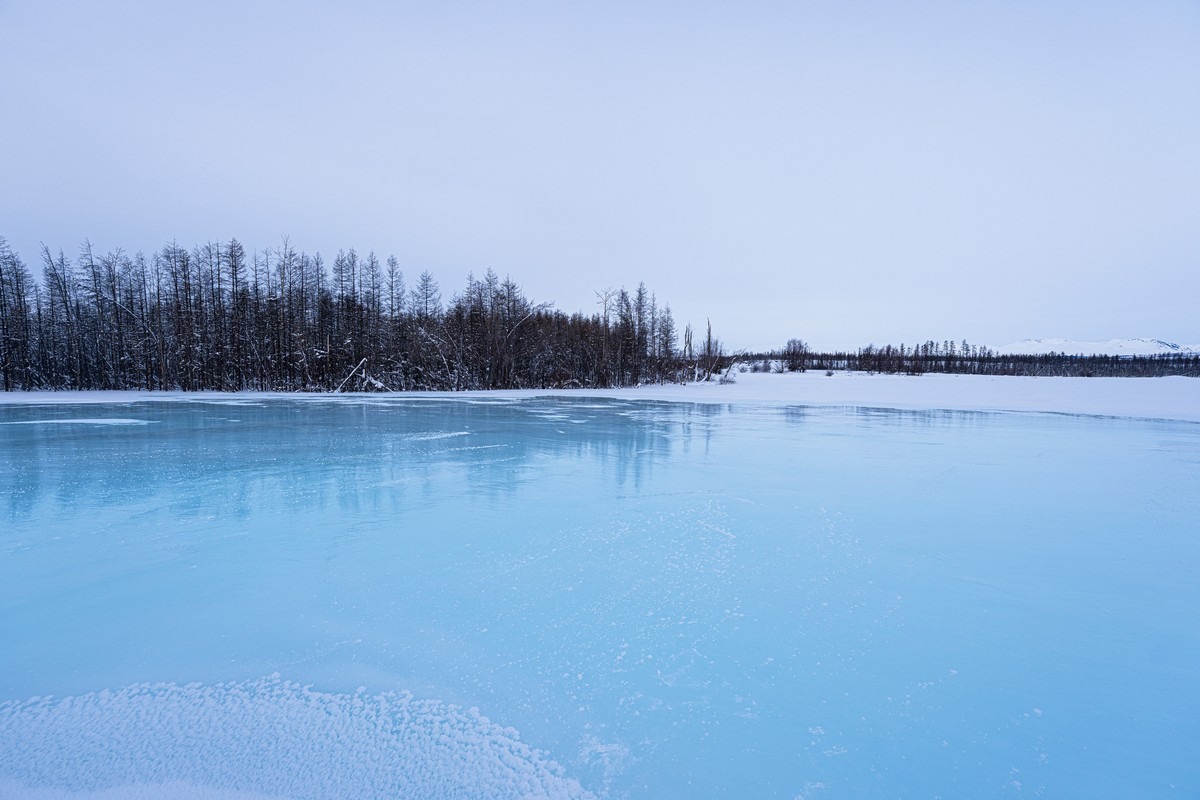
Which is what we had last time, back in 2024, on our Yakutsk – Tiksi via wherever route. We stood in this very spot in sunny weather, and I wrote all about it back then – oh, how good that was!
Alas, the weather wasn’t spoiling us this time – but on the upside, we clambered up onto the top of one of the “blisters” I told you about yesterday from which all this water gushes out, flooding spaces that stretch for kilometers. It’s not too easy to make out, but we were up on a bulge of swollen, cracked ice, a good two to three meters higher than the icy landscape around us:
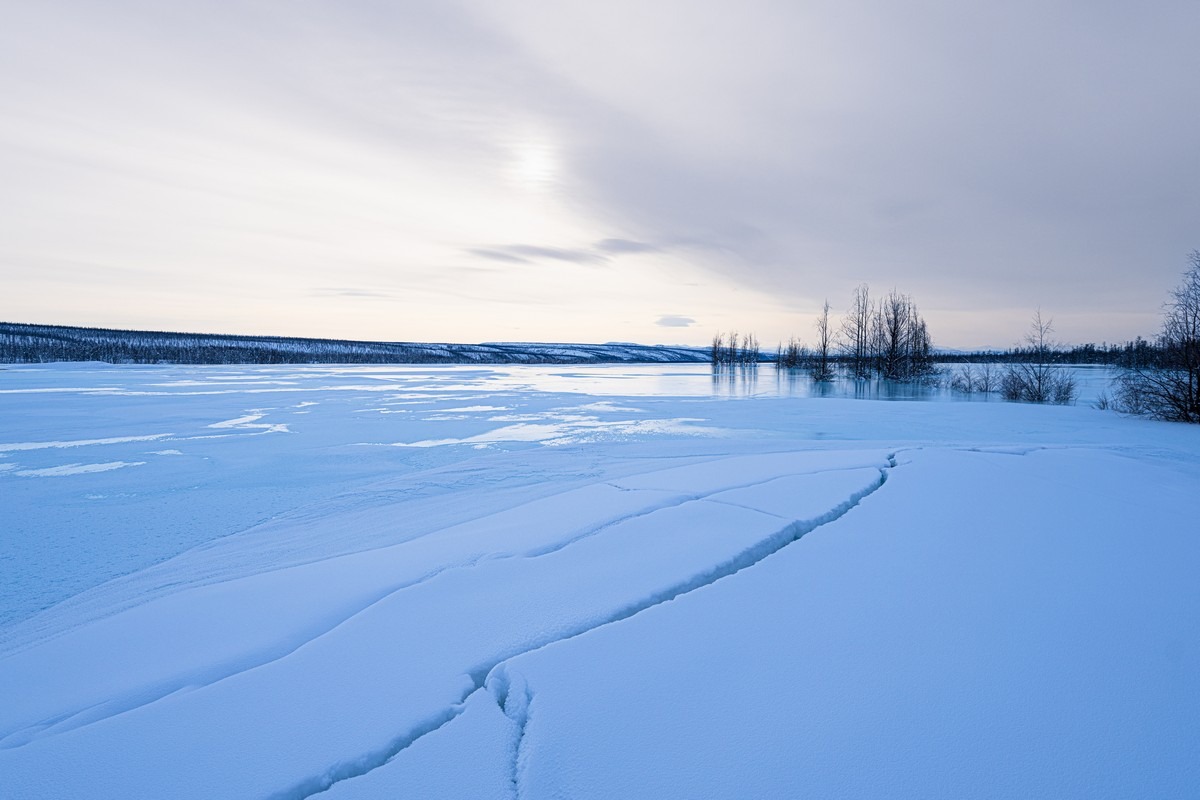
And in absolutely off-the-charts frosts of minus 30, 40, 50 degrees, this water gets squeezed out of the blisters and floods every last thing around!
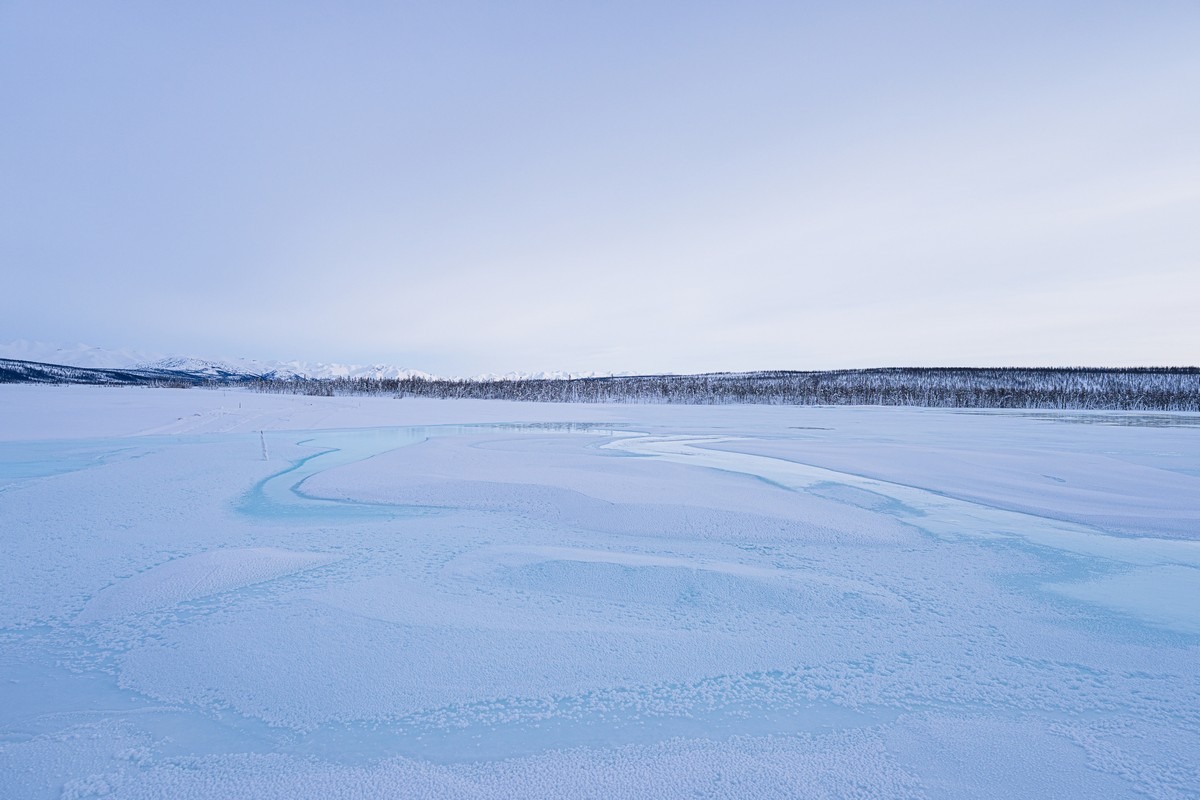
The winter road gets flooded with water, frozen over, buried in snow – over and over, again and again. These are the conditions the Arctic truckers have to work in. And these are the very same conditions in which bold tourists passing through take their leisure :). Over there – across this unremarkable-looking surface – was where we’d be driving next:
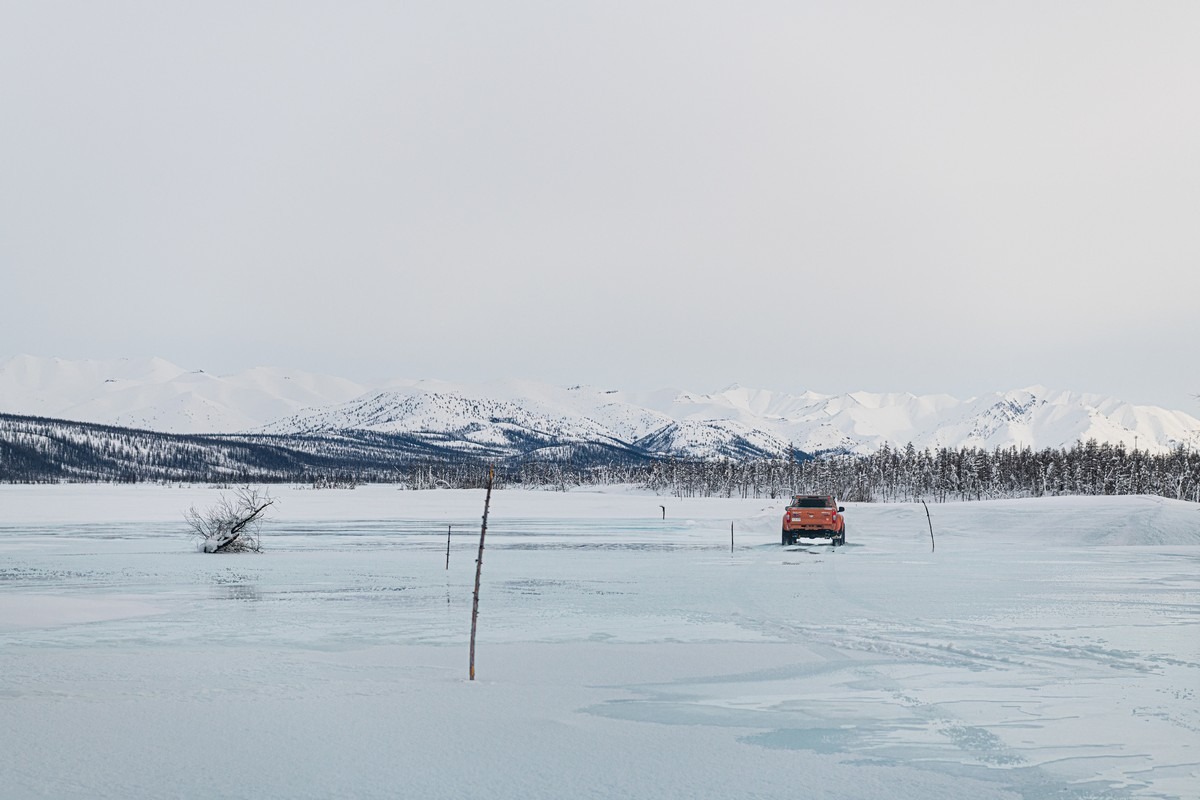
Some of us even did doughnuts on the ice!
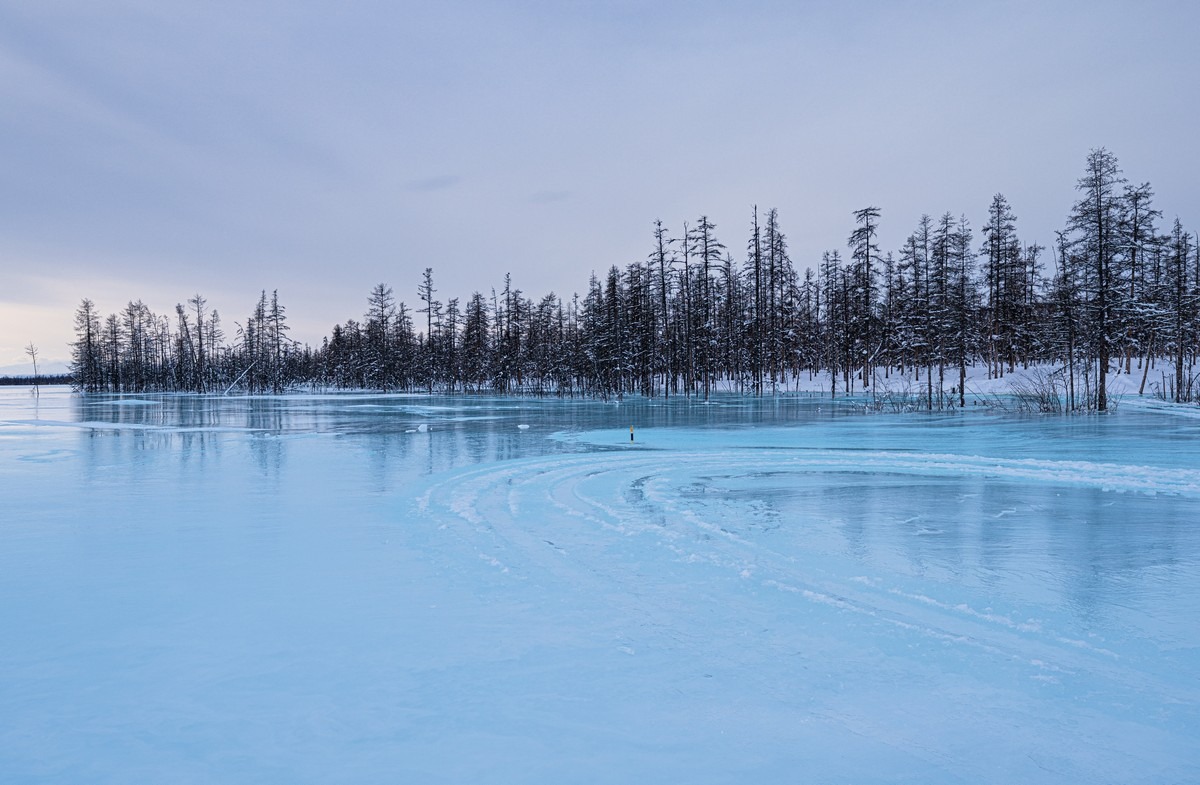
And how much ice… or rather, how many naleds, build up on the already-frozen ice over a single season? Let me show you. This much by March:
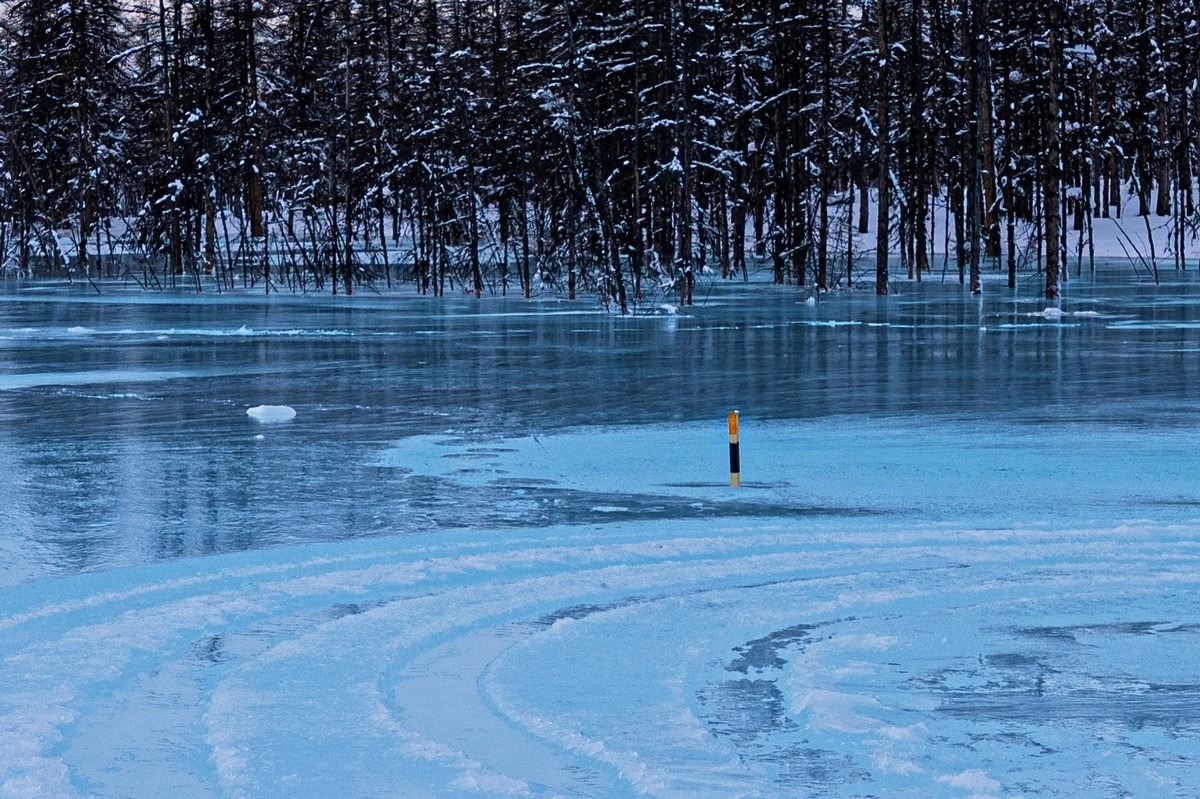
That striped little stick is the very top of a respectably-sized two-to-three-meter road sign that was put up there when the winter road opened back in December of last year. Over the winter it got buried – by a good two meters, at the very least!
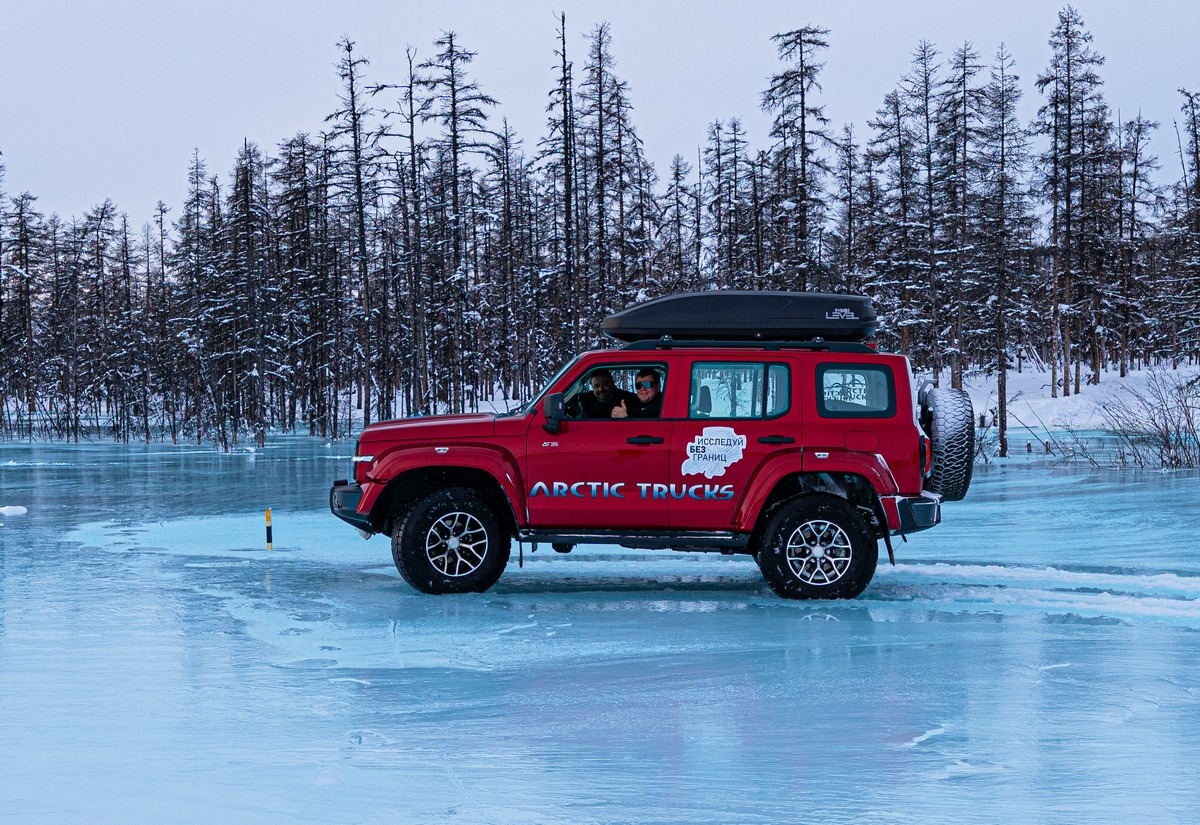
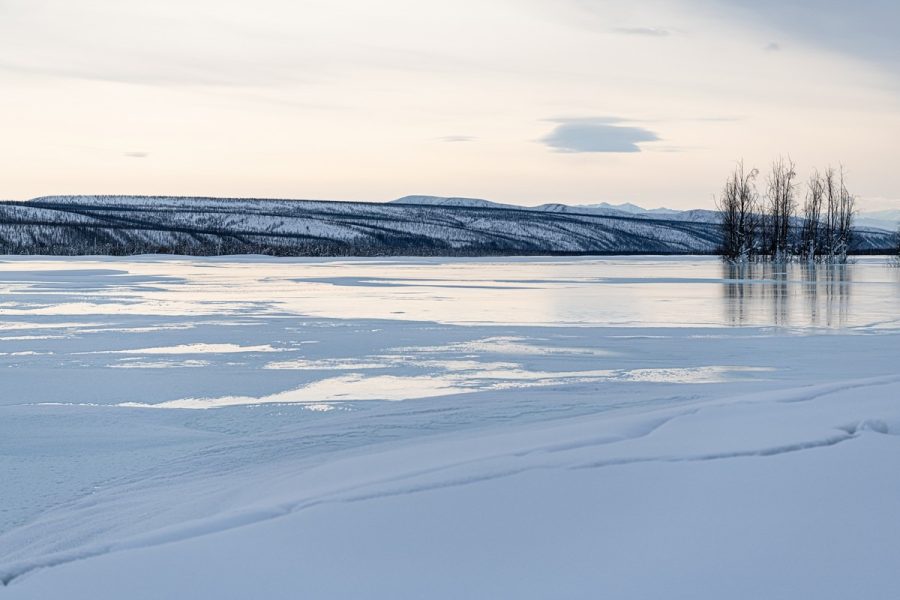
A little more of the atmosphere of those water-and-ice attractions:
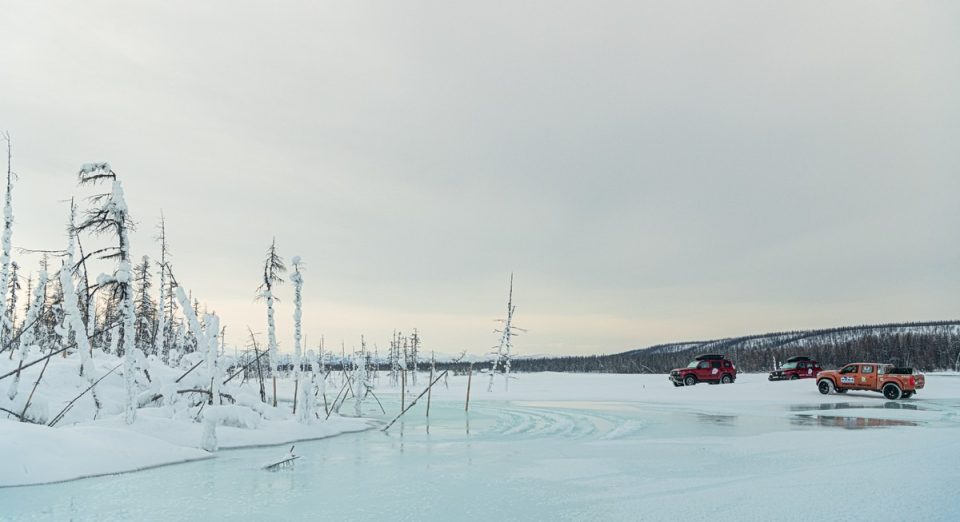
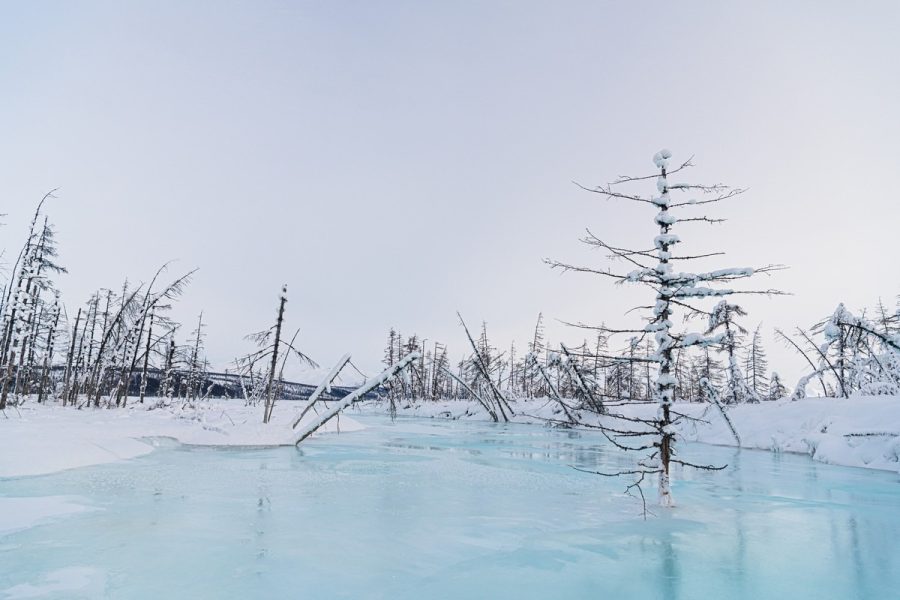
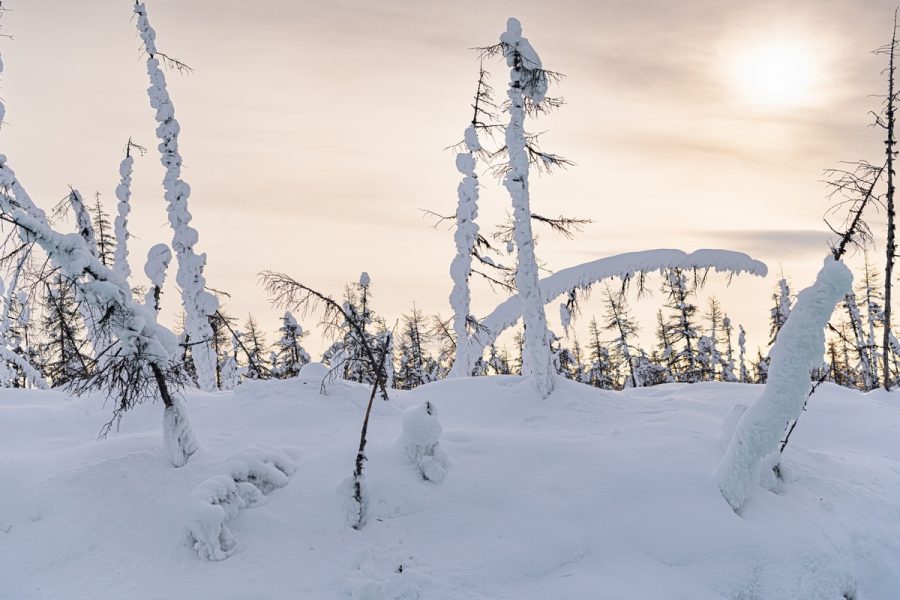
Surely this photo needs to feature in promo materials? ->
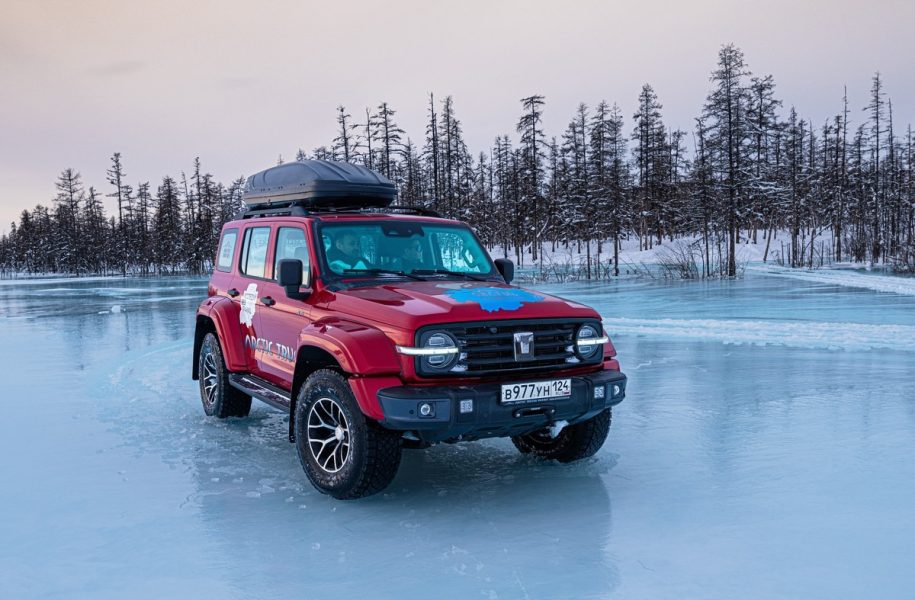
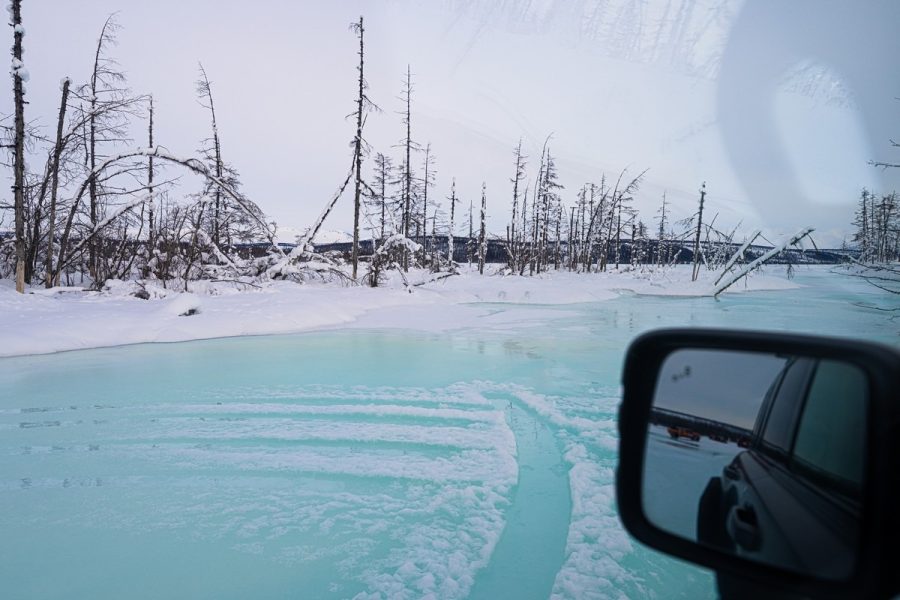
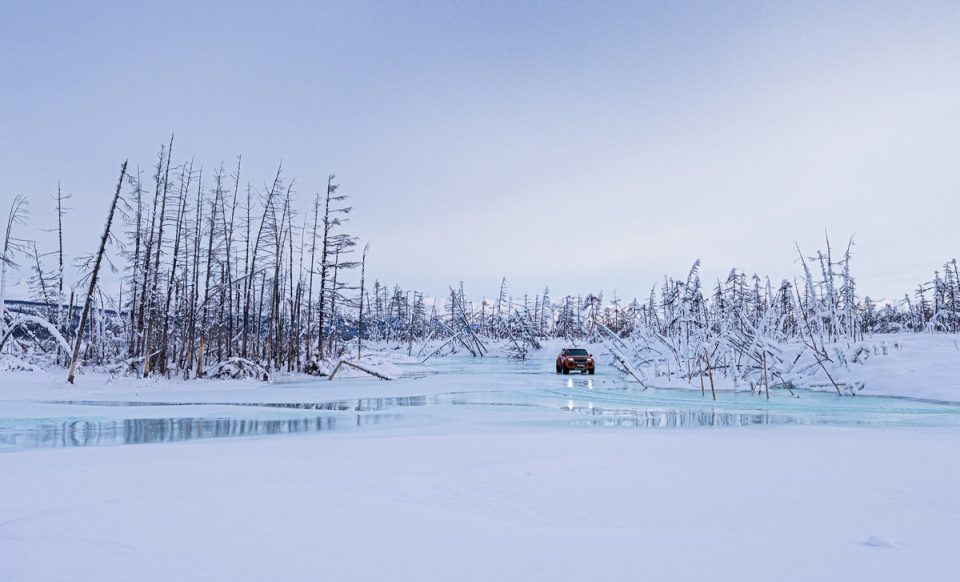
Yes – we had fun this day ) ->
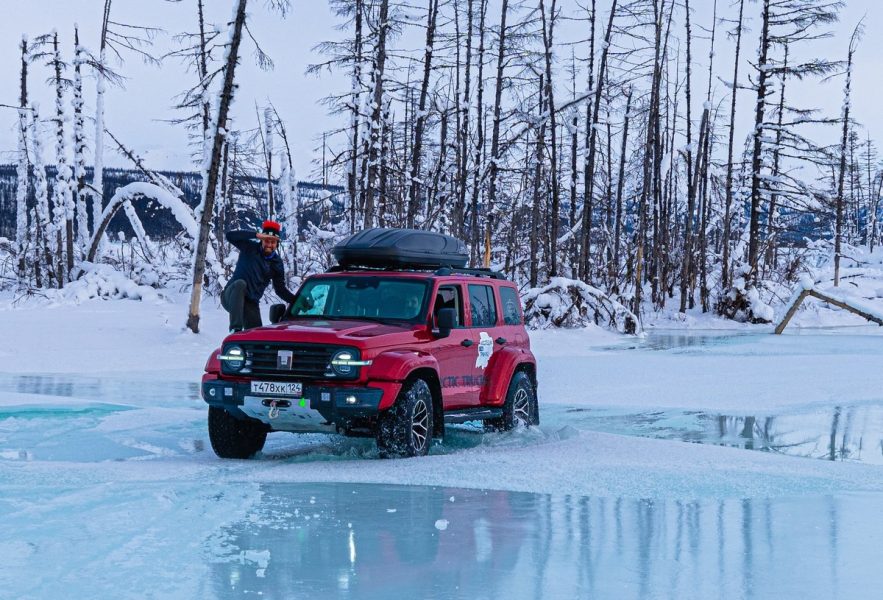
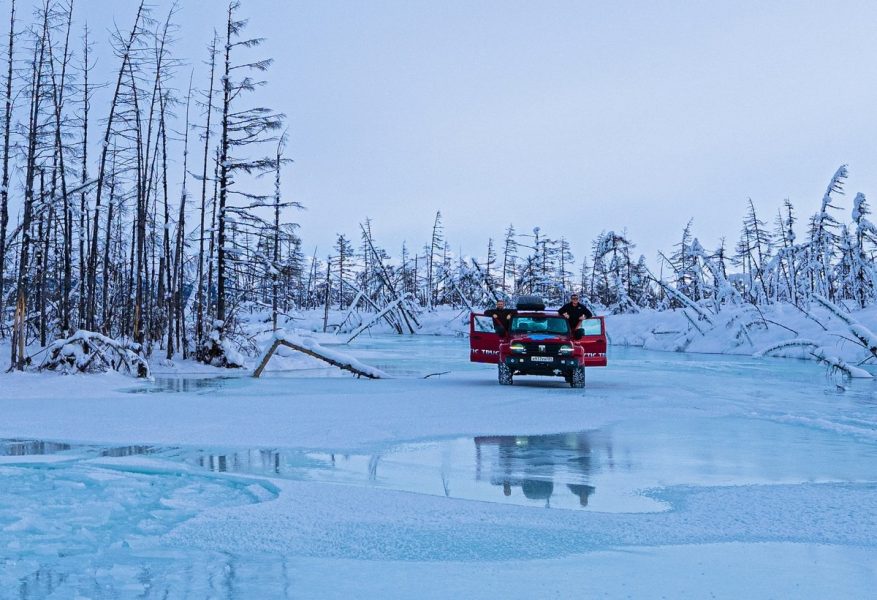
And there was more fun later! To be continued…
The best hi-res photos from our Irkutsk-Yakutsk-Magadan-Yakutsk road-trip are here.

