
June 15, 2026
Indigirka-tubing 2026.
The great Siberian rivers are the Ob, the Yenisei, and the Lena. Not far behind them are the Yana, the Indigirka, and the Kolyma. These aren’t quite as long and wide, but they’re no less beautiful, contemplative, magnificent, and in places downright astonishing. So it’s in their direction we headed…
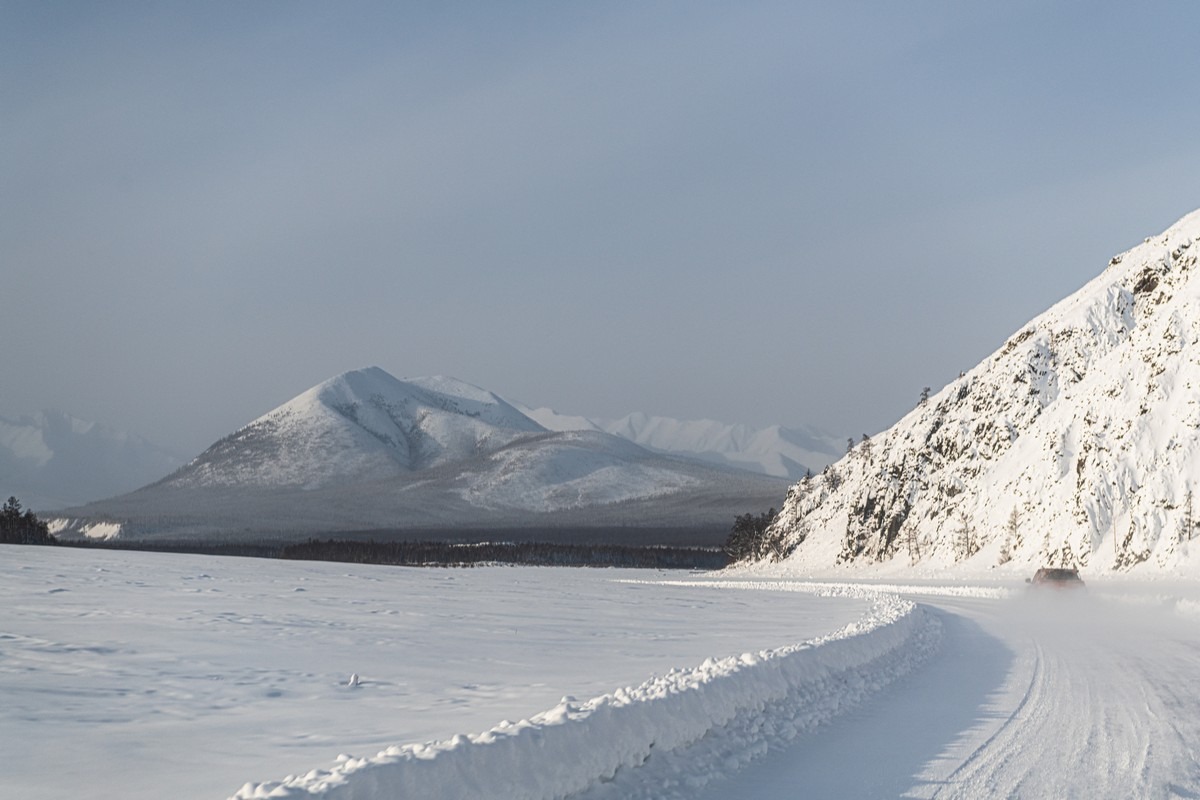
Time for some fun – but not like last time. This time around it was a cut-down version, atop and along the frozen Indigirka only: Ust-Nera > Khonuu > Sasyr, and back.
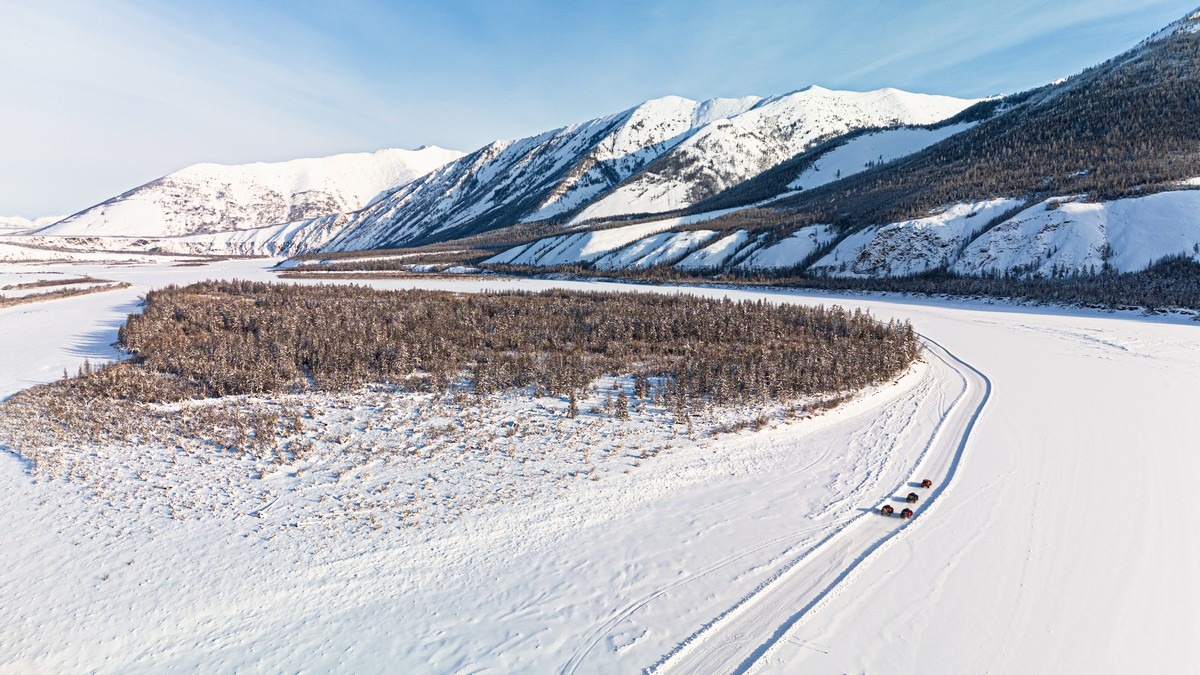
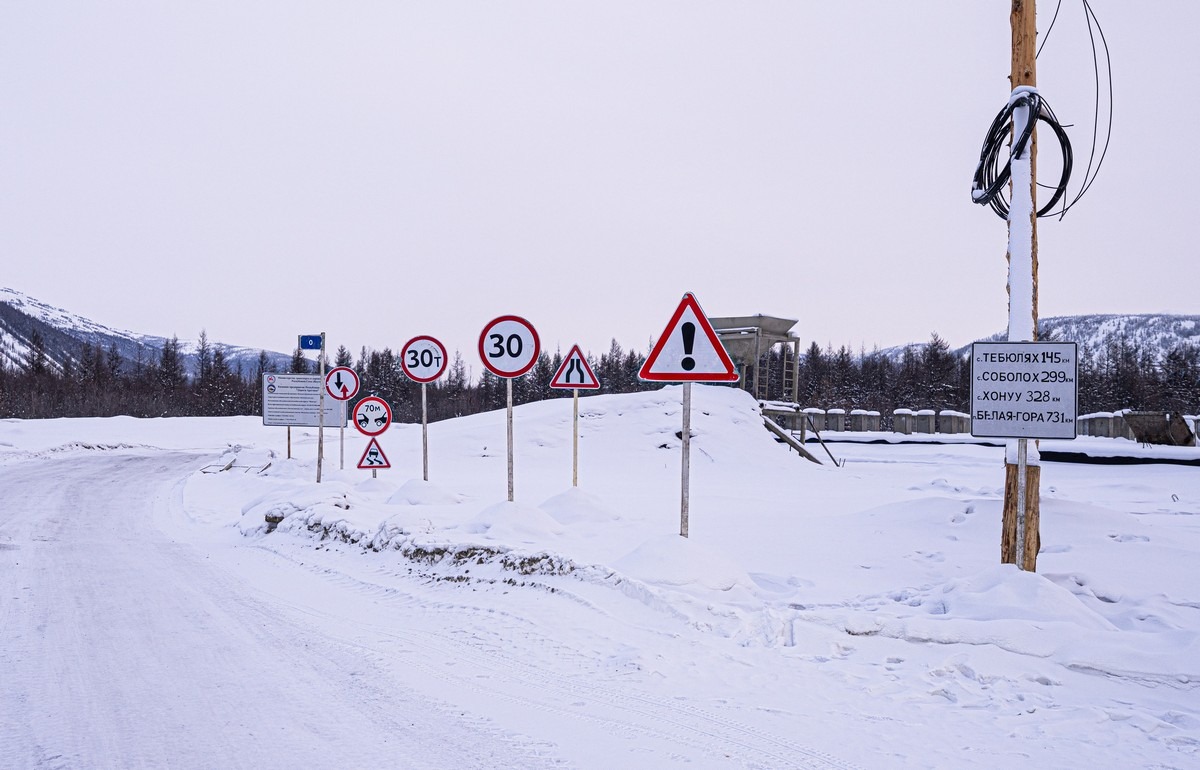
Out onto the ice we go at the start of the winter road, @ “zero kilometers” ->
Getting onto a frozen-solid-river winter road and driving hundreds and thousands of kilometers on ice, across a bleached, deep-frozen world isn’t just interesting – it’s mind-blowing. A mesmerizing spectacle – a kind of hypnosis of the mind, even. This is no regular asphalt-highway drive in all its grayness, dullness, and dustiness; this is a whole different – cooler – kettle of fish. // Not that there are any fish in this frozen river; a thought – where do they all go?!…
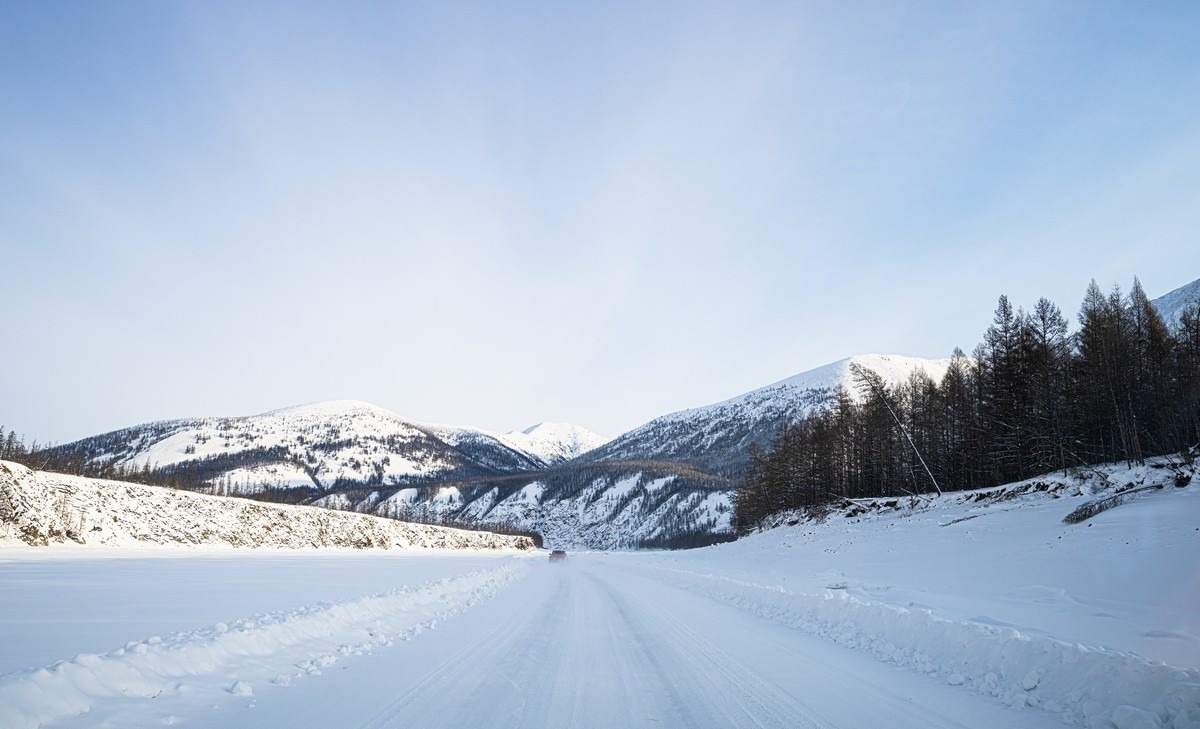
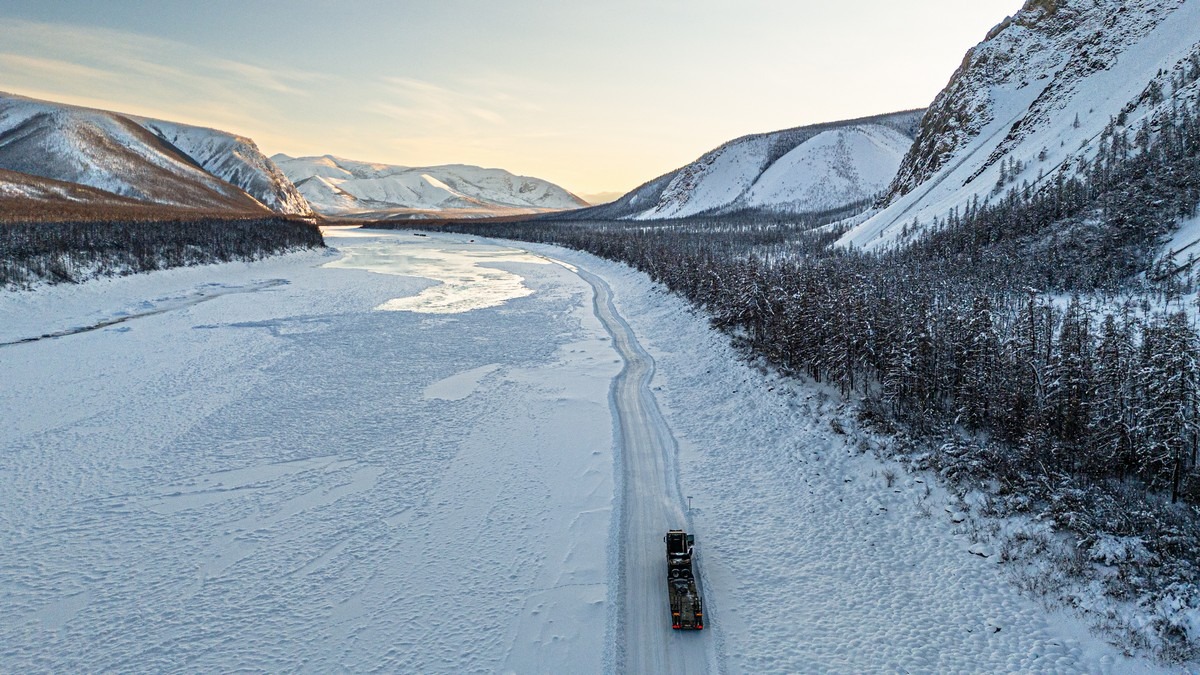
Coolest of all are winter roads as beautiful as, say, the Indigir – especially in the spots where the river cuts through the mountain massif known as the Chersky Range:
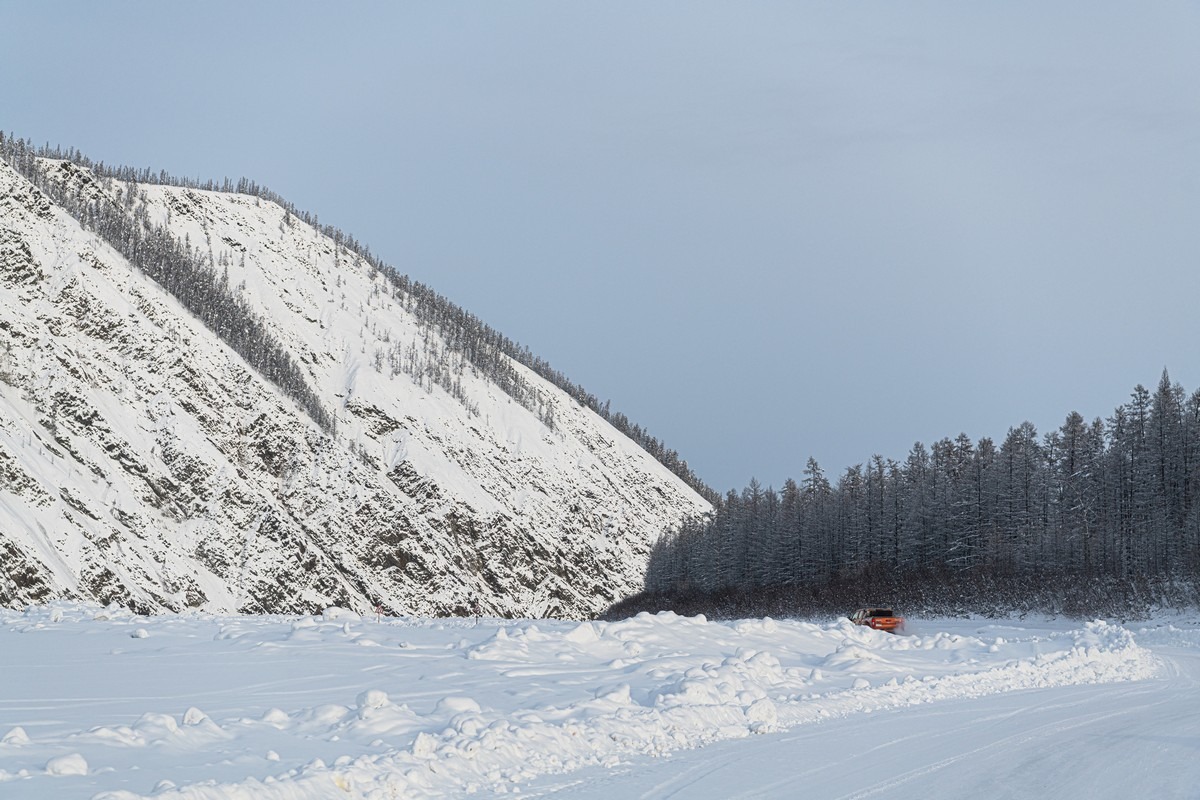
And that’s where our first surprises began…
Among the most unusual natural phenomena in these parts are “ice blisters”.
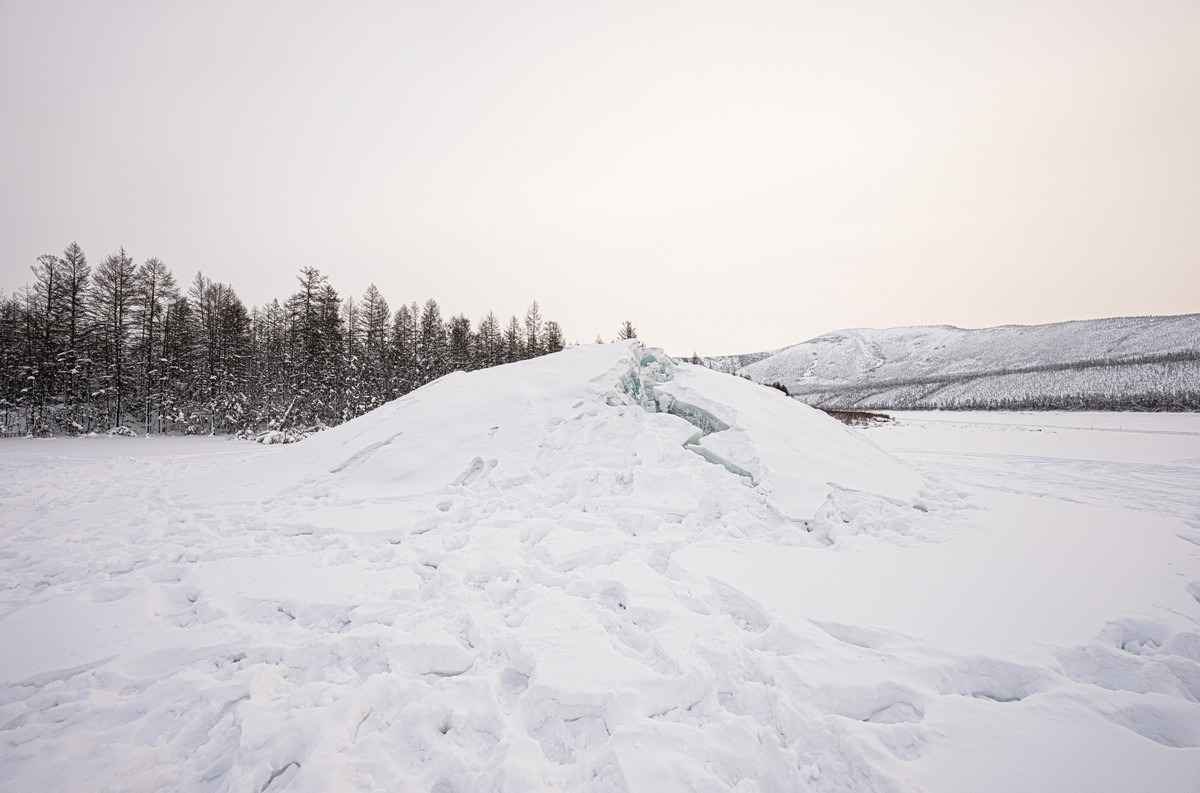
What are they, and how do they form?…
It’s all fairly simple: the frosts here are so severe that in places, as mentioned, the rivers (including the big ones – the Indigirka, for example) freeze right down to the riverbed. That is, to the very bottom – the ice goes all the way down to the bottom of the river. But upstream and in the tributaries everything has frozen over too – just not all the way down to the bottom. The water keeps flowing, pushing, and building up pressure… And in places it squeezes out ice “blisters” like these ->
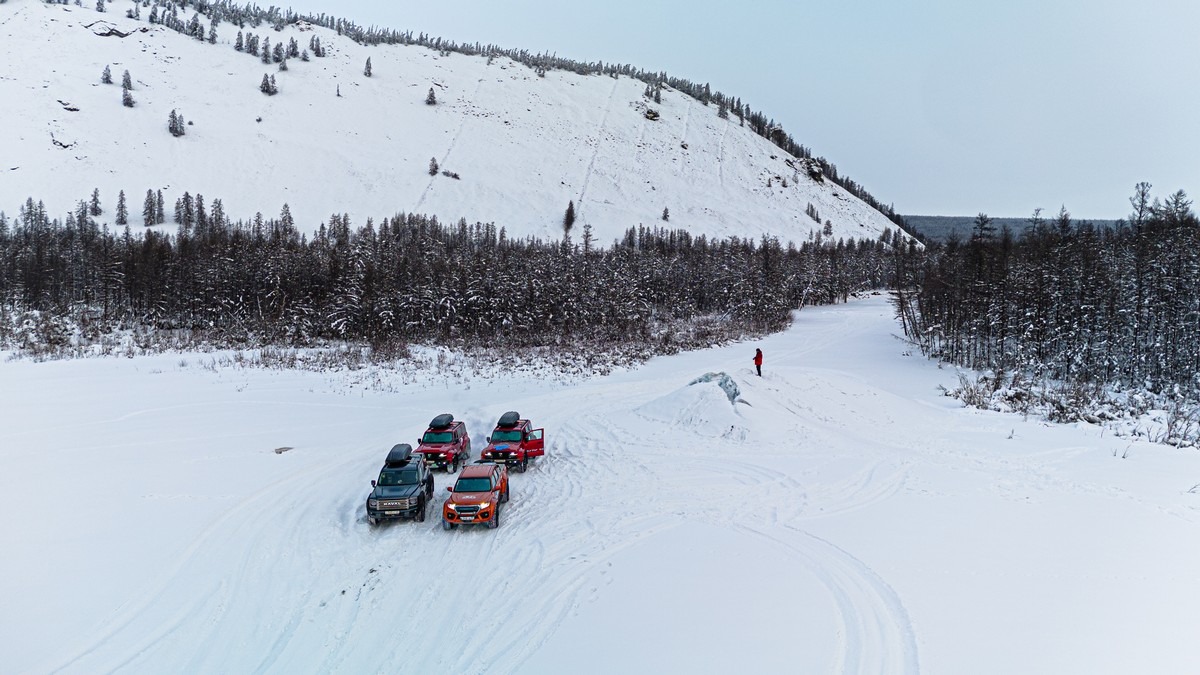
Sometimes they simply crack and let the water out – and that’s how naleds form: flows of water (sometimes around a meter deep) running atop the river’s long-frozen ice. A beautiful sight, but it’s hell for the local long-distance truckers, who sometimes are forced to wait days or even weeks (!) for it all to freeze over again. Imagine that at these crazy low temperatures out here in the middle of nowhere?!
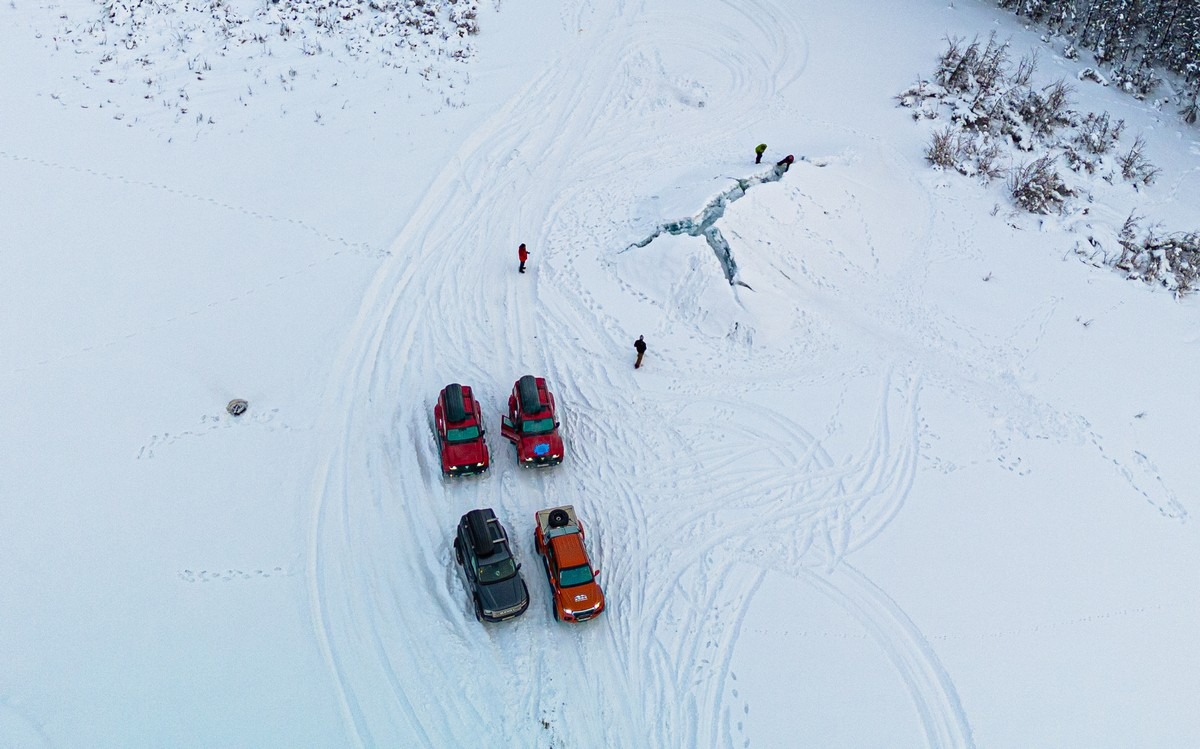
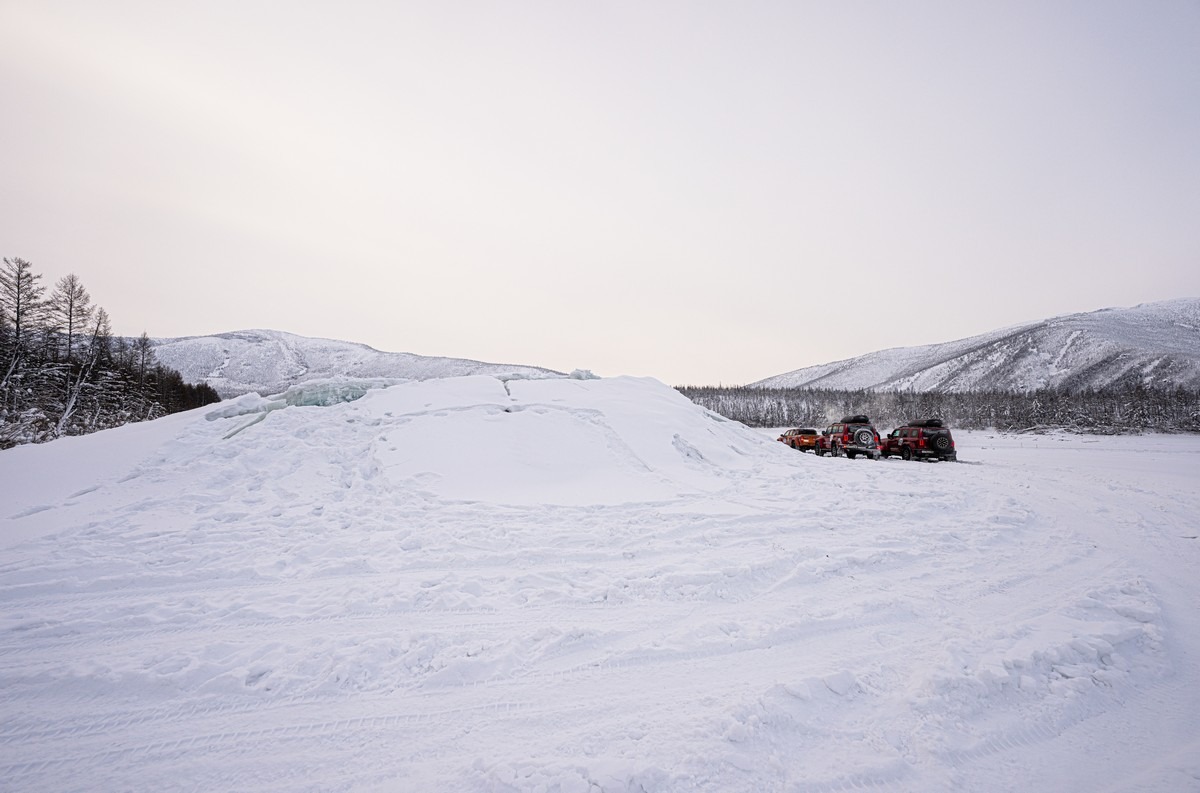
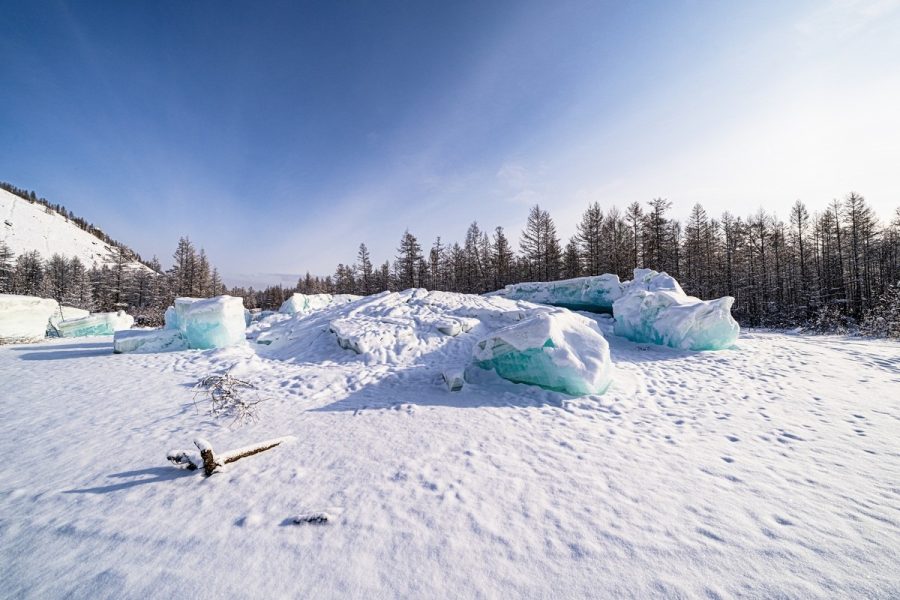
On the Indigir winter road, some 20 kilometers from Ust-Nera, there’s just such a spot, where an ice blister around three meters high traditionally builds up. This season it merely cracked:
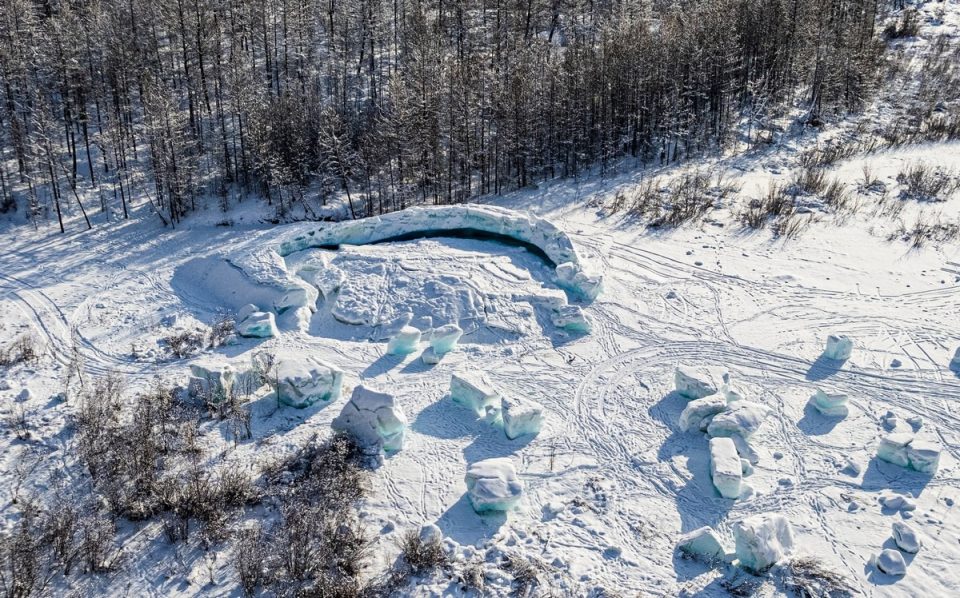
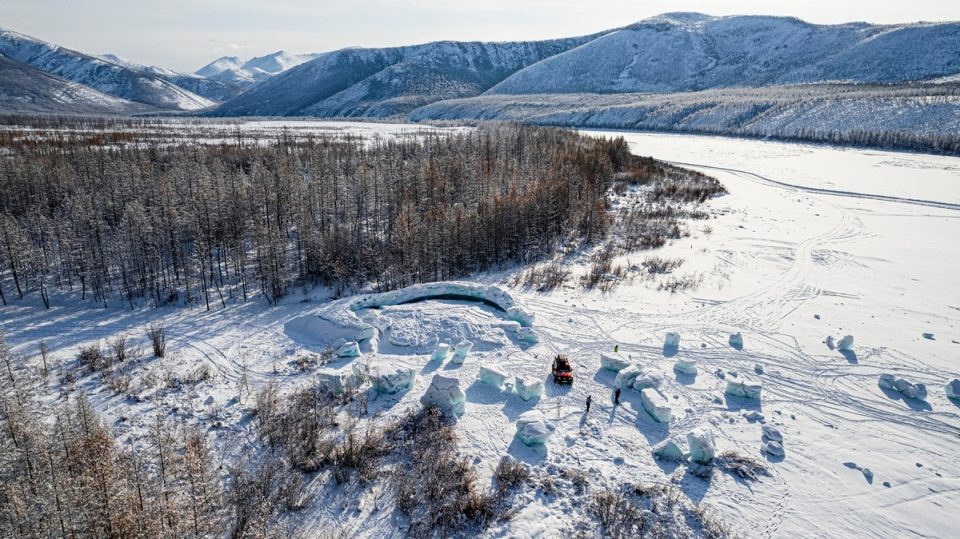
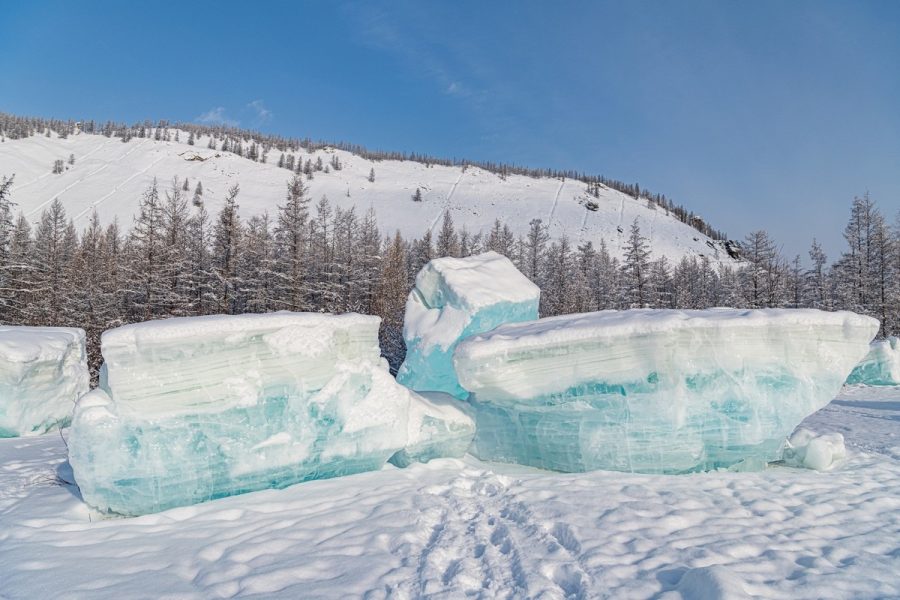
But in 2024 it evidently went off with a full-blown bang! The fragments – like oversized ice cubes – were flung up to a hundred (100!) meters from the epicenter! And the ice cubes came in rather respectable sizes – some as big as our vehicles!
This got me thinking: where else might such natural wonders be found?…
If my guesswork is to be believed, three conditions are required for such ice blisters to form:
1. Brutally hard frosts – so the rivers freeze to the bottom and block the passage of water under the ice.
2. Mountains all around, so there’s a difference in elevation, with tributary rivers and streams that don’t freeze to the bottom creating pressure.
3. An observer is needed too! The third condition is that a winter road – or a permanently operating regular road (altogether unlikely) – runs along such a river or very close to it.
So, where could all this occur? South America doesn’t get frosts like these; Antarctica doesn’t have rivers like these… Aha – there’s Canada and Alaska! They have regions analogous to Yakutia – also with a distinctly continental climate. Yes, such regions exist! And frozen-river winter-roads are found there too. Here’s one such spot in the channel of the Mackenzie River. Both the internet and AI estimate Canada’s winter-road network to run up to some 10,000-12,000 thousand kilometers, while Alaska’s is considerably shorter; however, it appears that these winter roads keep to the lowlands and don’t climb up into the mountains…
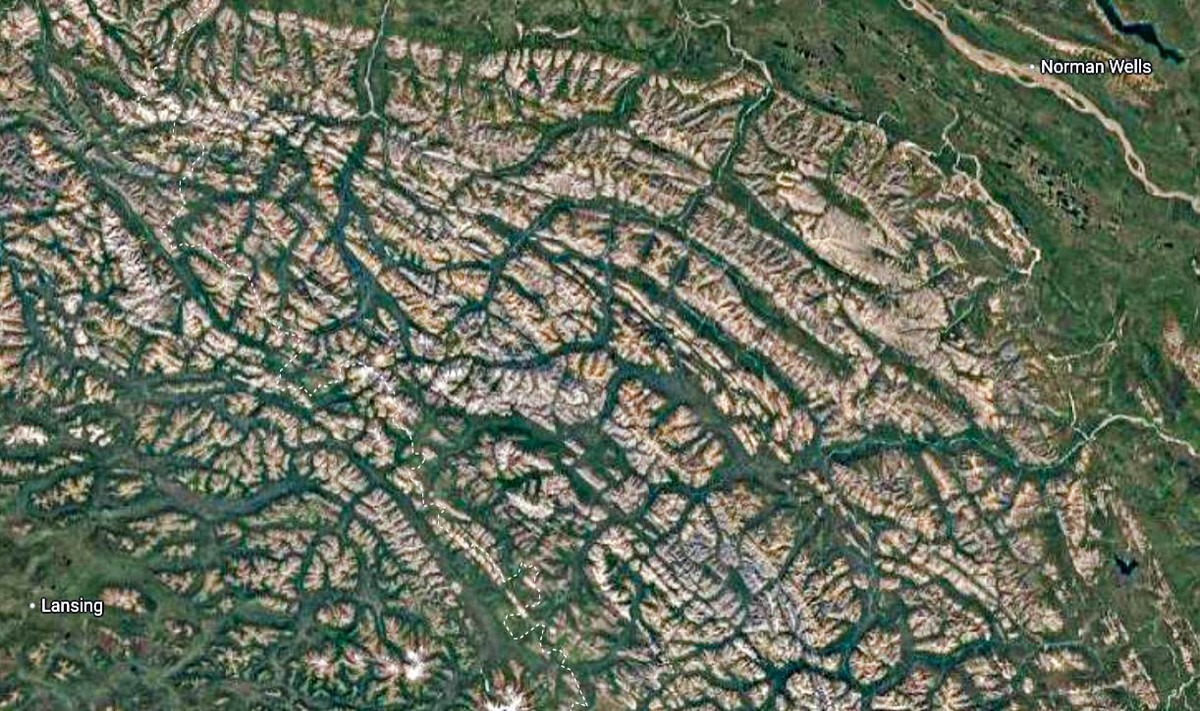
Canada has the mountains, has the rivers, and or course gets the severe cold, but… there are no winter roads up in the mountains; therefore, no observers. There probably are ice blisters – just no opportunity for folks to check them out. // But if it turns out I’m mistaken, I stand ready to be enlightened and enriched with information previously unknown to me.
So, having satisfied our curiosity as to the seasonal condition of this particular resident winter blister of the Indigirka – onward!…
Up ahead: civilization?…
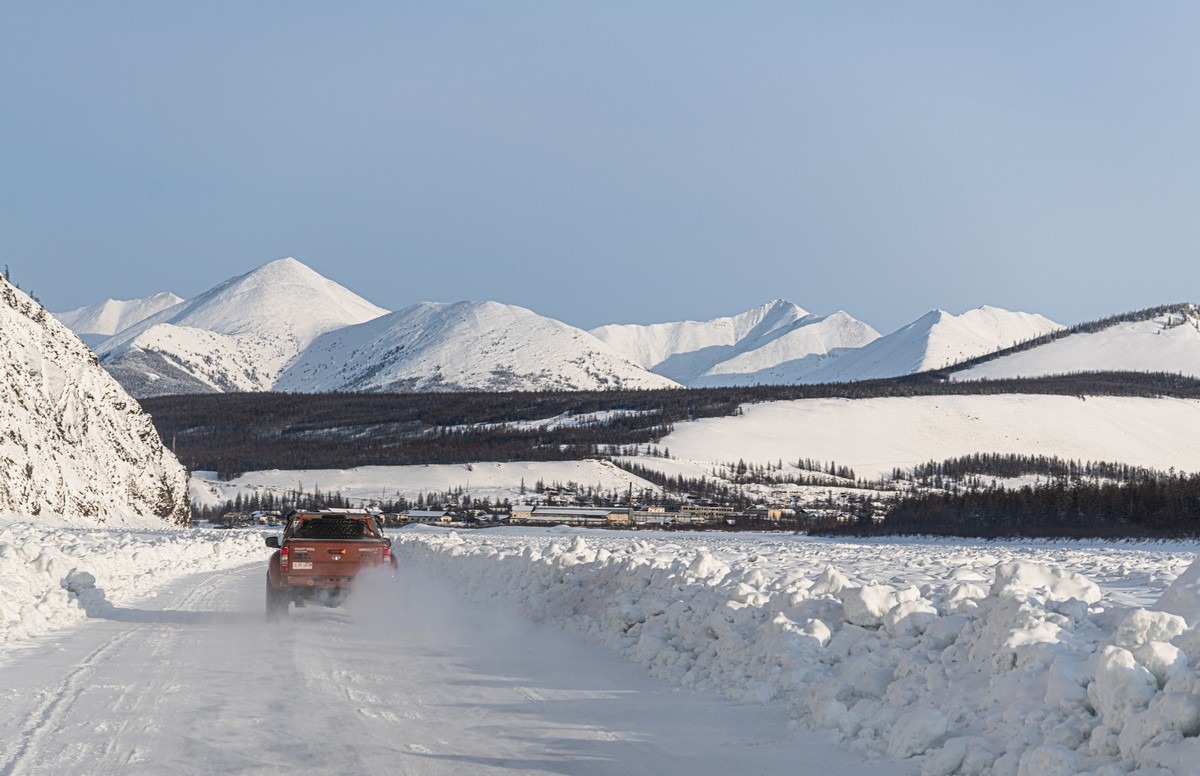
…Actually – no. They’re uninhabited, abandoned villages. They apparently used to pan for gold here; then the metal ran out – and folks just left. Only seasonal fishermen and hunters now occupy these settlements.
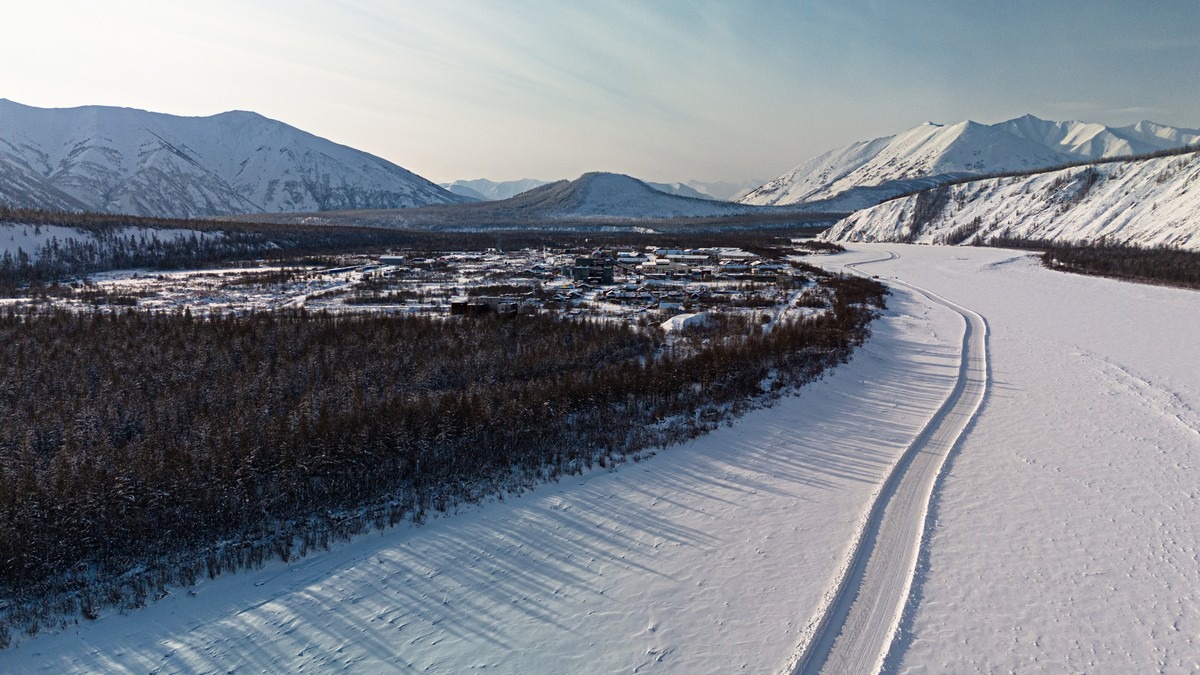
These villages are referred to as “territories”. For example, the “Territory of Predporozhny” or the “Territory of Arga-Moy”:
Duly inspected – we race on northward!…
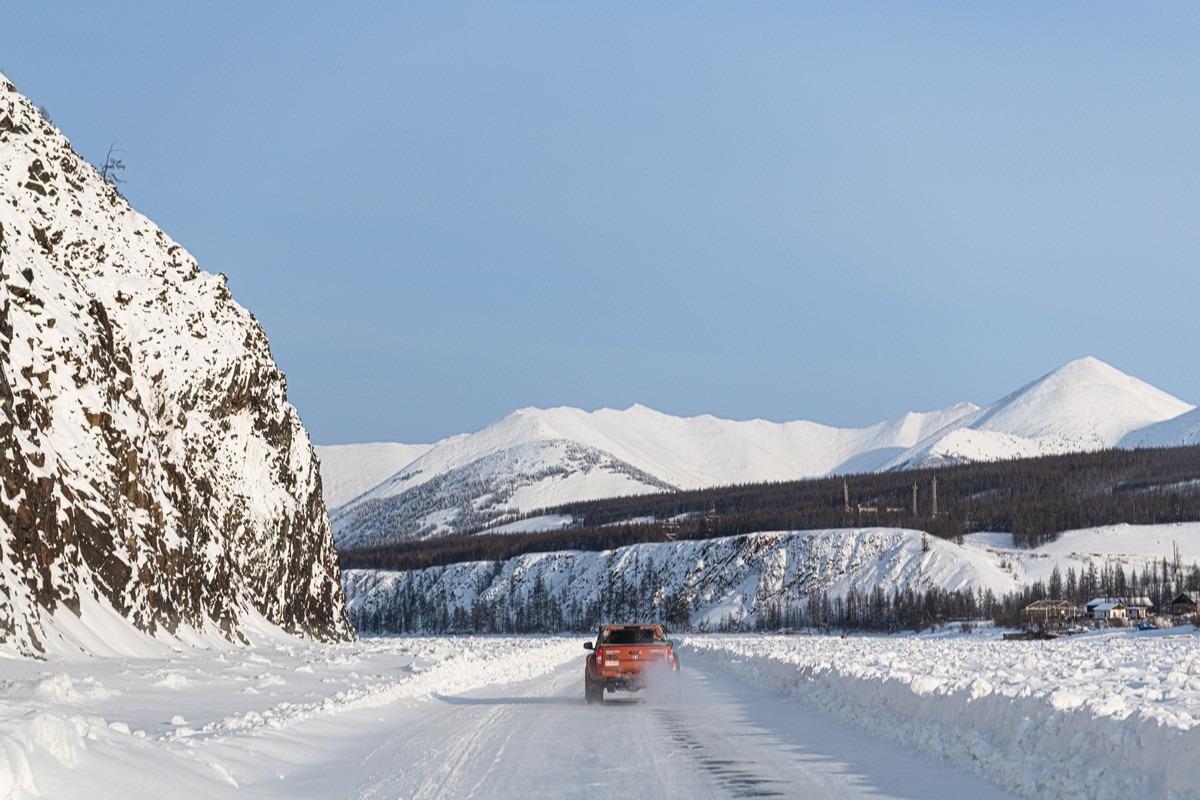
The farther we drove along the Indigirka – the closer we got to the “Tube”, aka the Indigirka Tube, aka the Big Gorge. And the narrower the river valley becomes, the steeper and higher the rocky outcrops get:
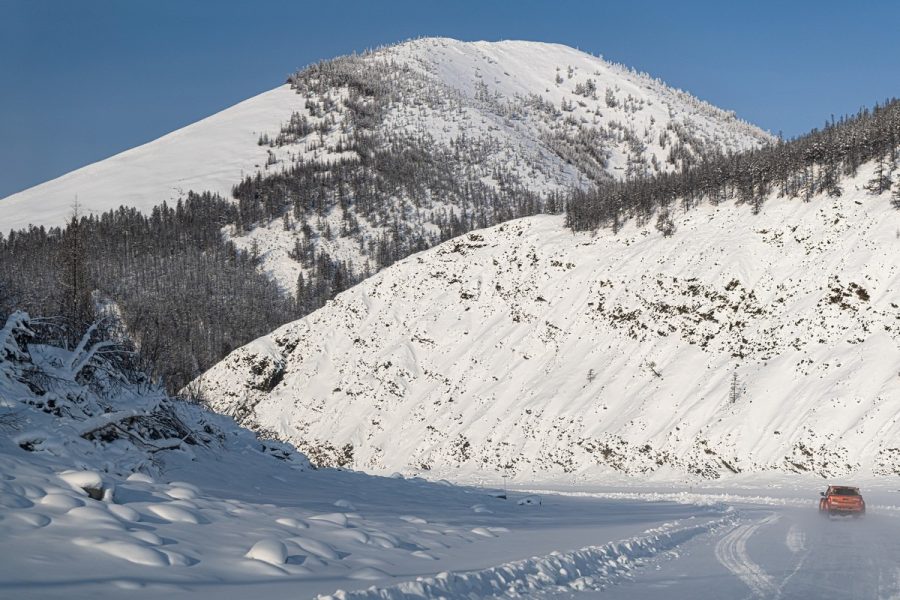
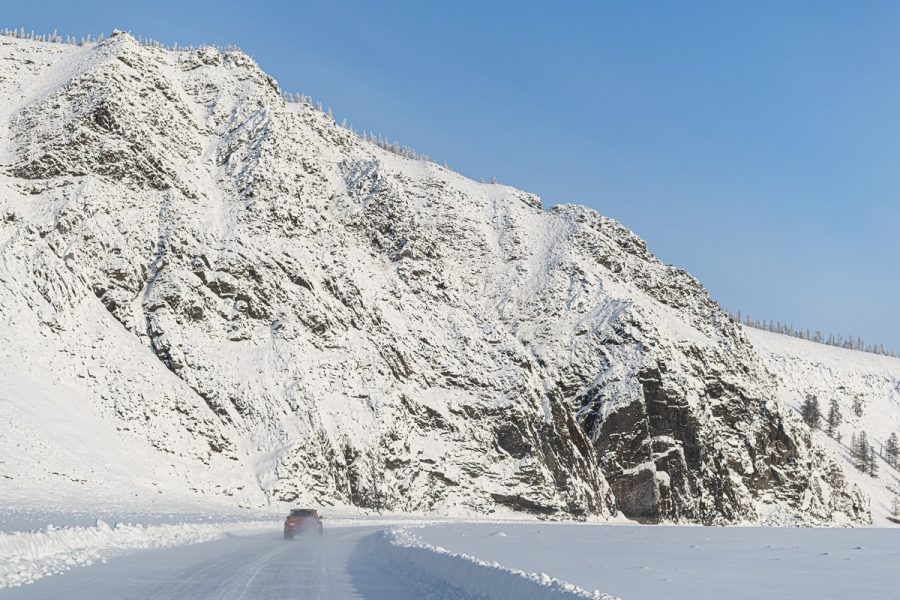
One hundred kilometers covered!
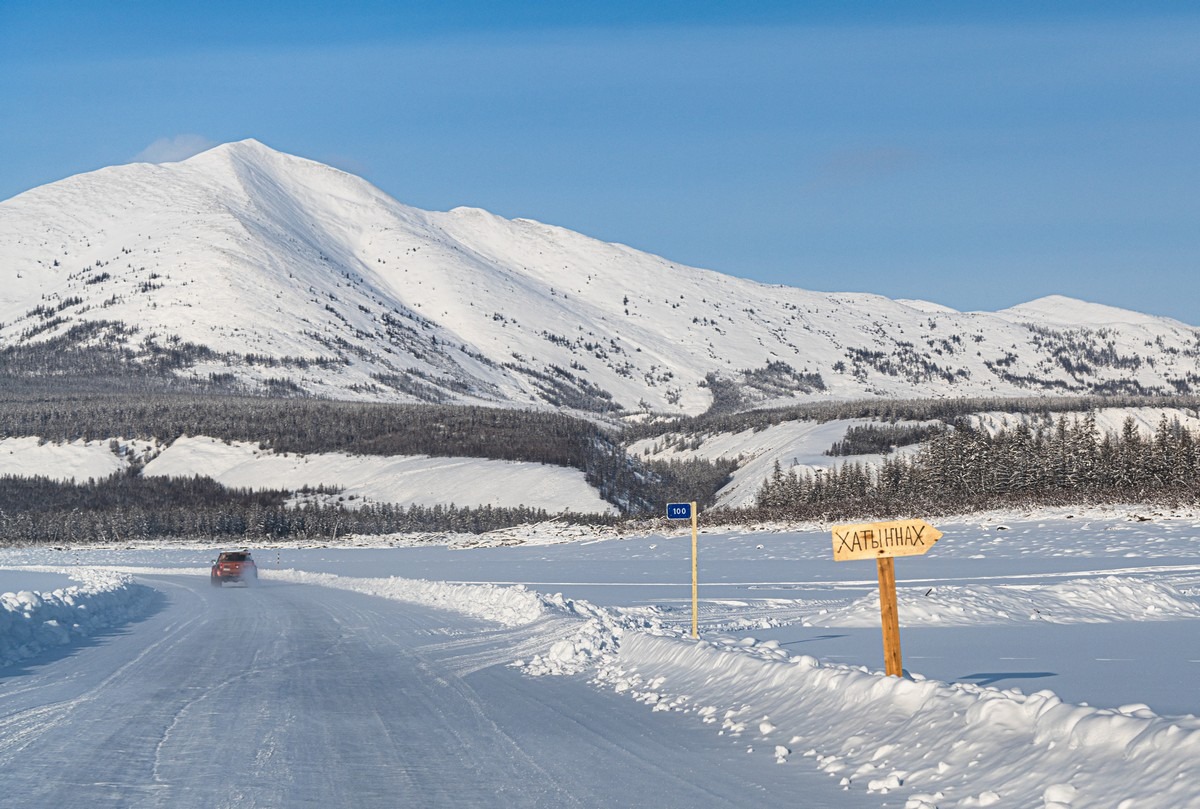
Hold on – what’s this?
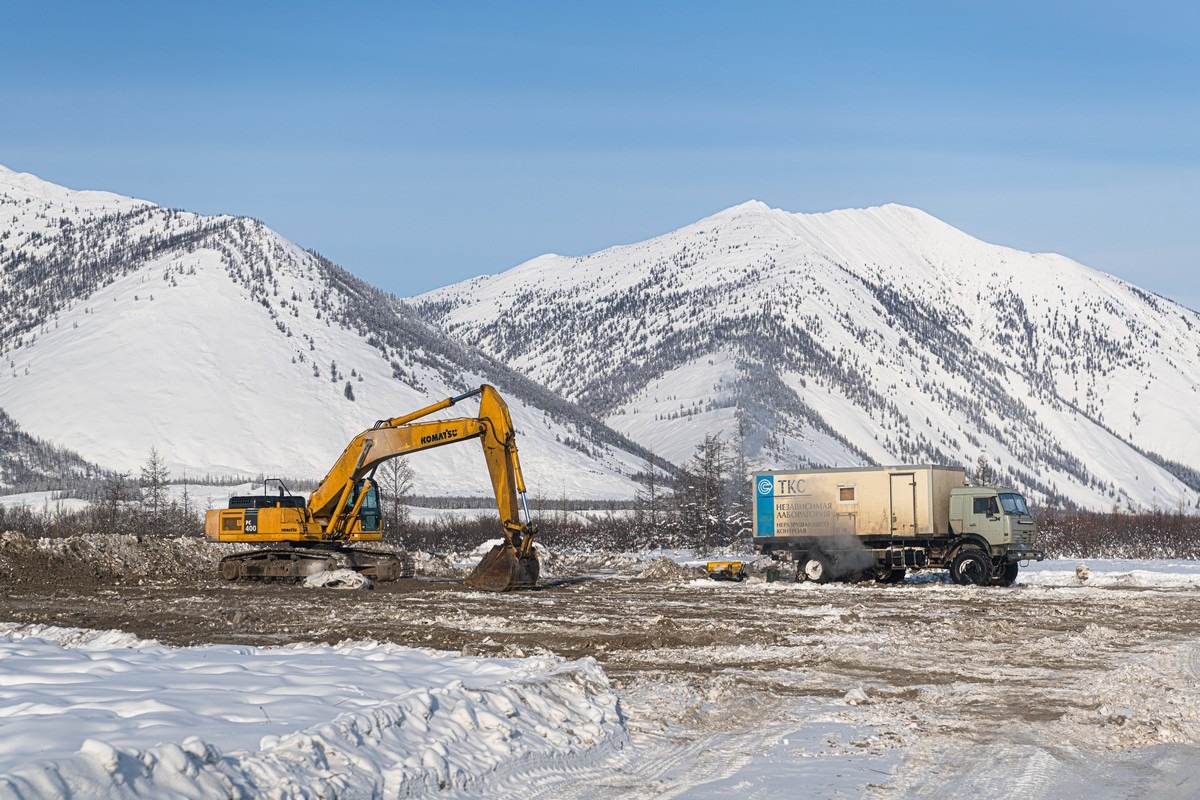
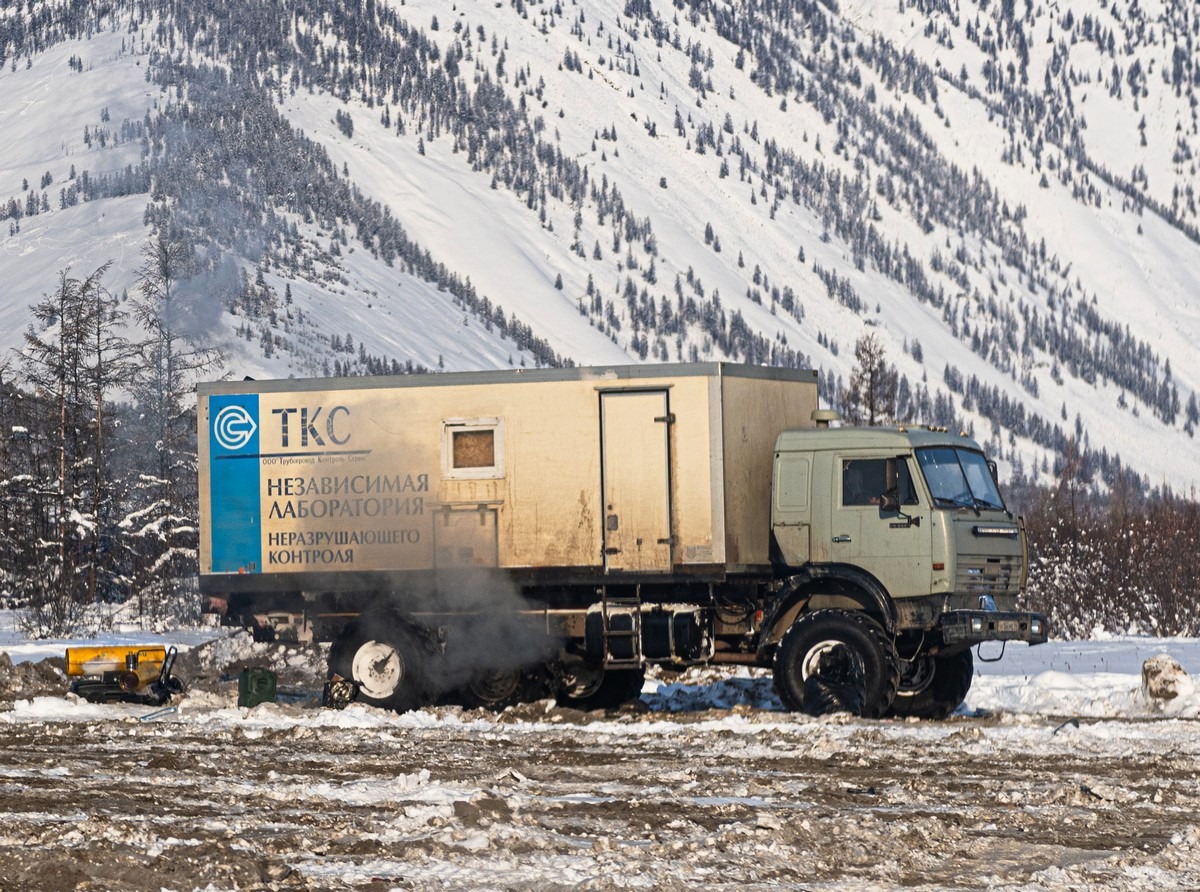
The “Independent Laboratory of Non-Destructive Testing”. Are they looking to build a pipeline here, or a bridge? From where to where? A mystery…
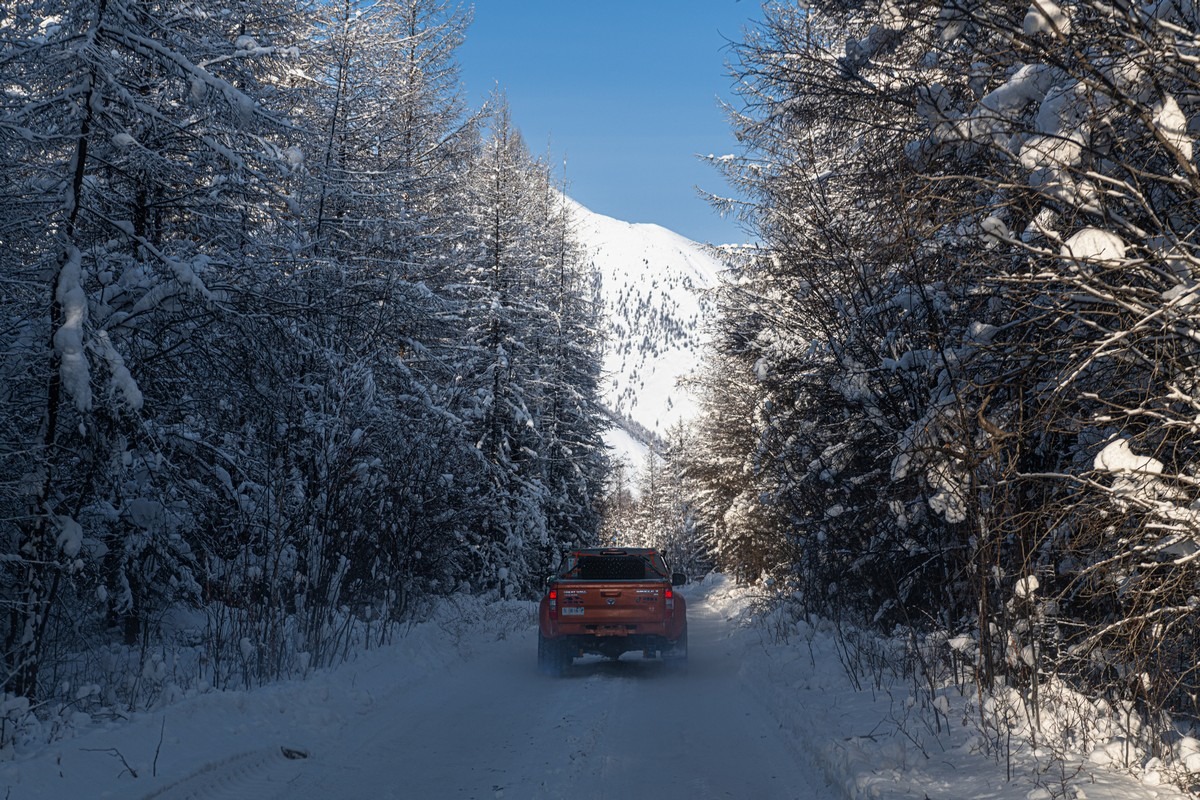
Farther on, the winter road, alas, turns off the river ice and into forest. A shame – the ice made for such smooth driving! But the forest has its pretty moments too:
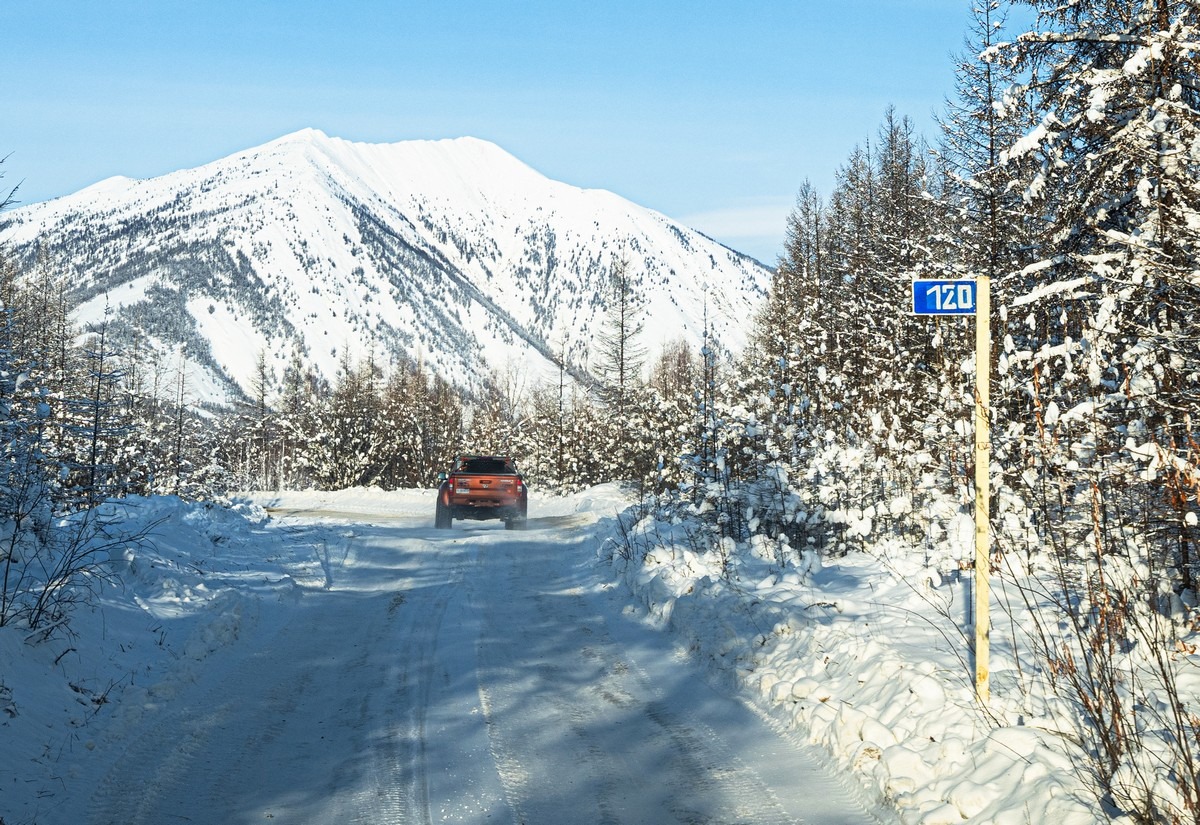
That’s 120km done! From zero kilometers to the 120 sign: three hours and 15 minutes. Not bad going at all for a winter road!
Back on to the river, on and on and on – in full meditation mode:
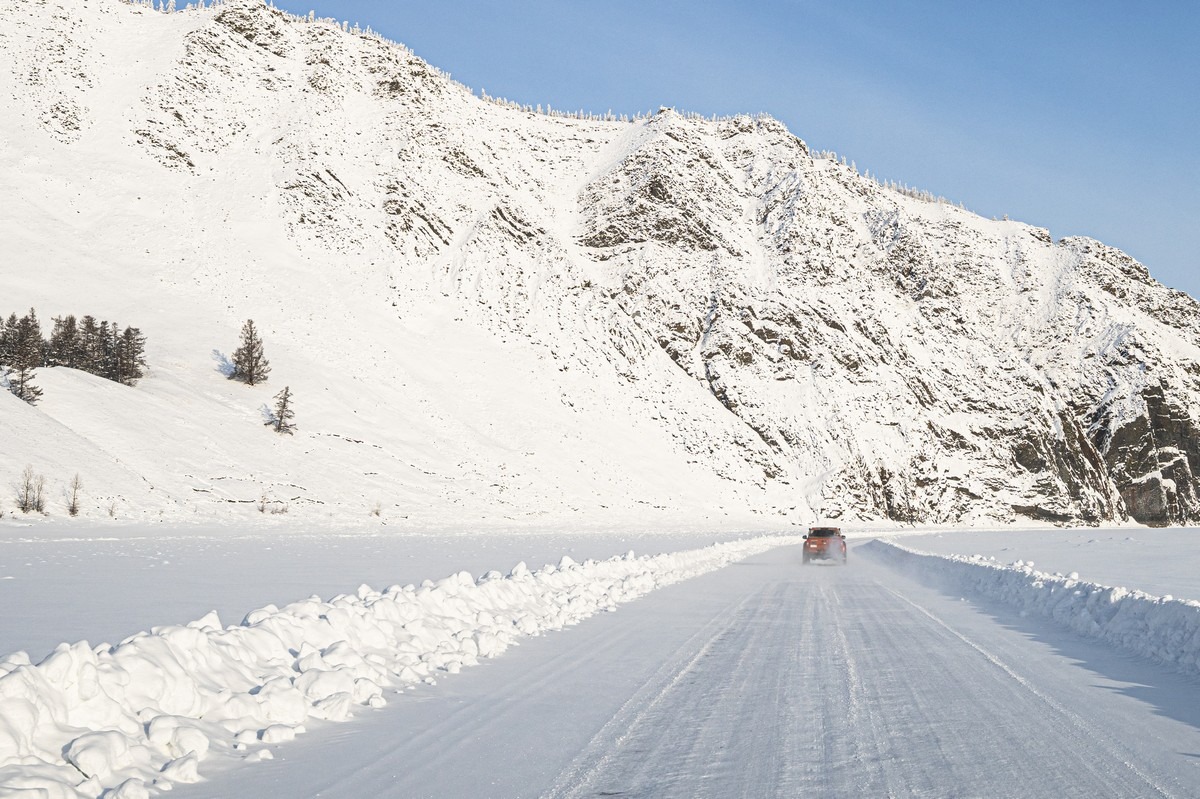
Suddenly – two locals standing on the roadside, some 30 kilometers from the nearest habitation! ->
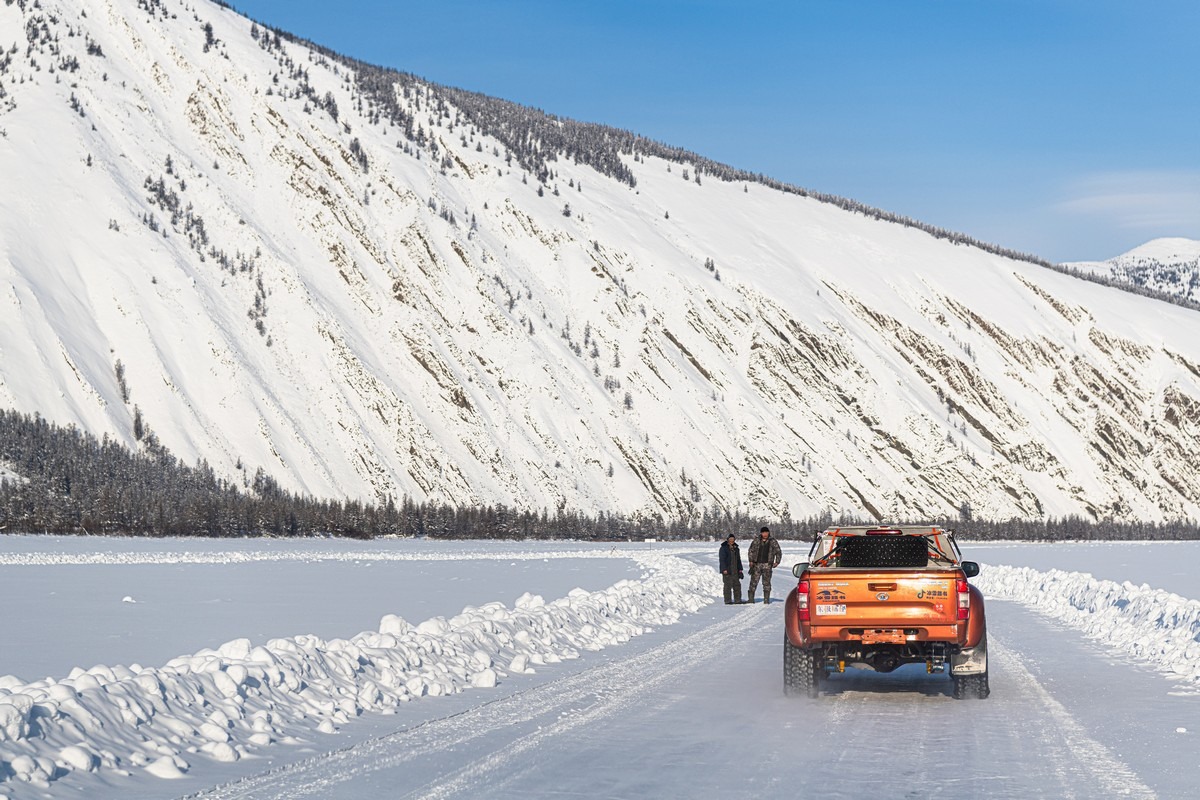
It turned out two Yakut fellows had gone out “for firewood” (I’m sure timber could have been sourced closer to home), their little truck had decided to break down and treat itself to a vacation, and the pair had to trudge back to the road on foot and flag down a ride. And that’s how we came to give them a lift home.
And if we hadn’t happened along? Any other car would have taken them aboard. Things don’t work any other way around here. If you don’t help, then next time no one will help you – and you’ll freeze to death!
But enough of such potential horror stories; onward and back to contemplation-meditation!…
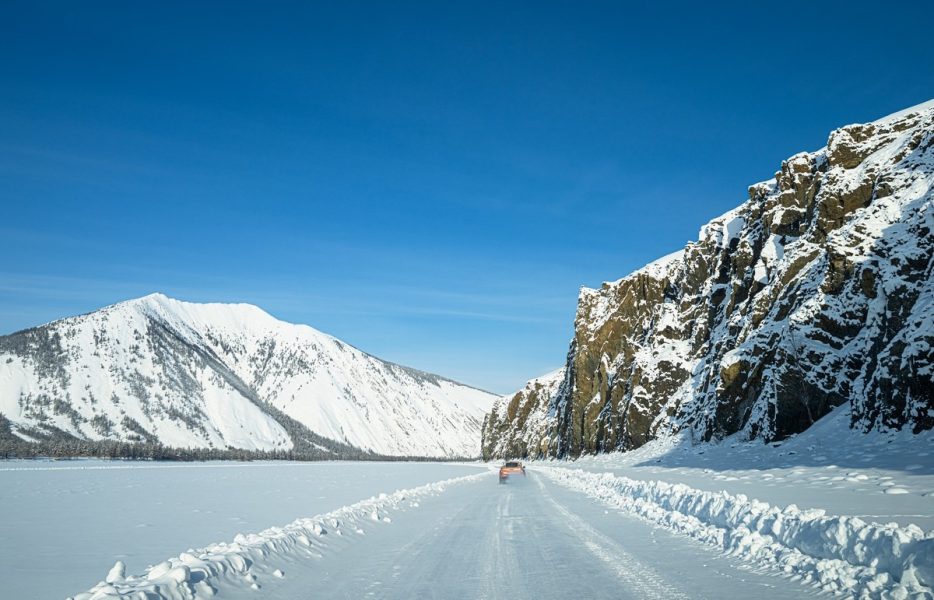
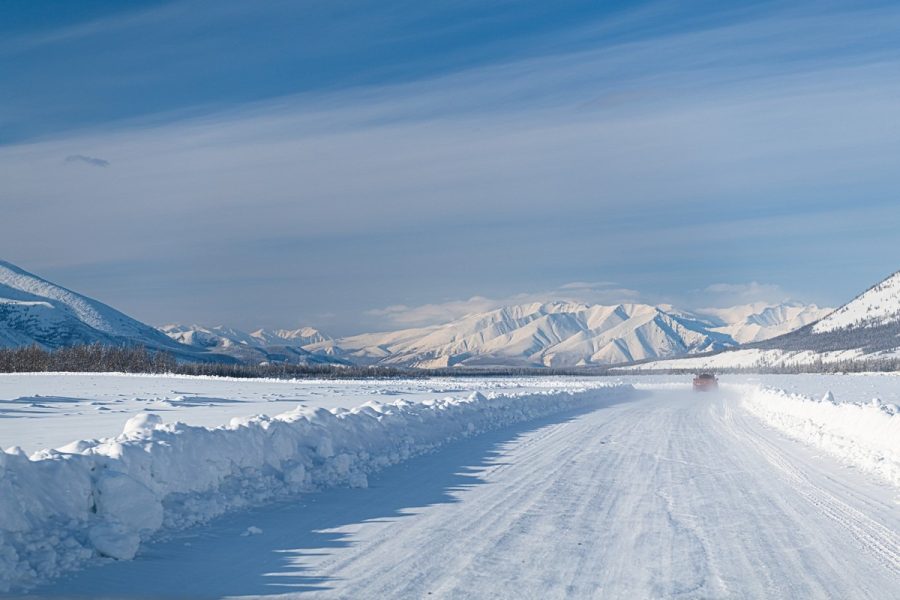
Aha – here’s the village our “lumberjacks” had asked to be dropped off at:
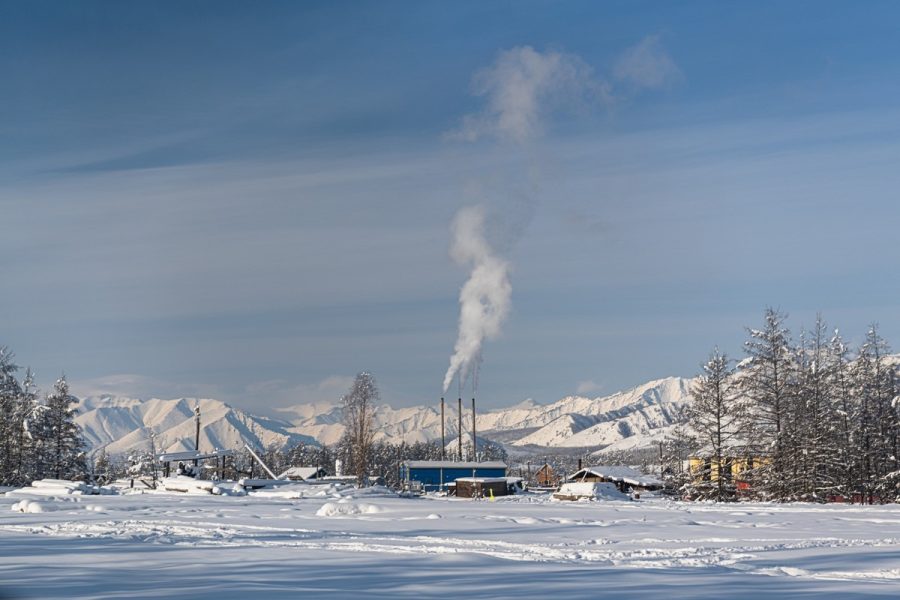
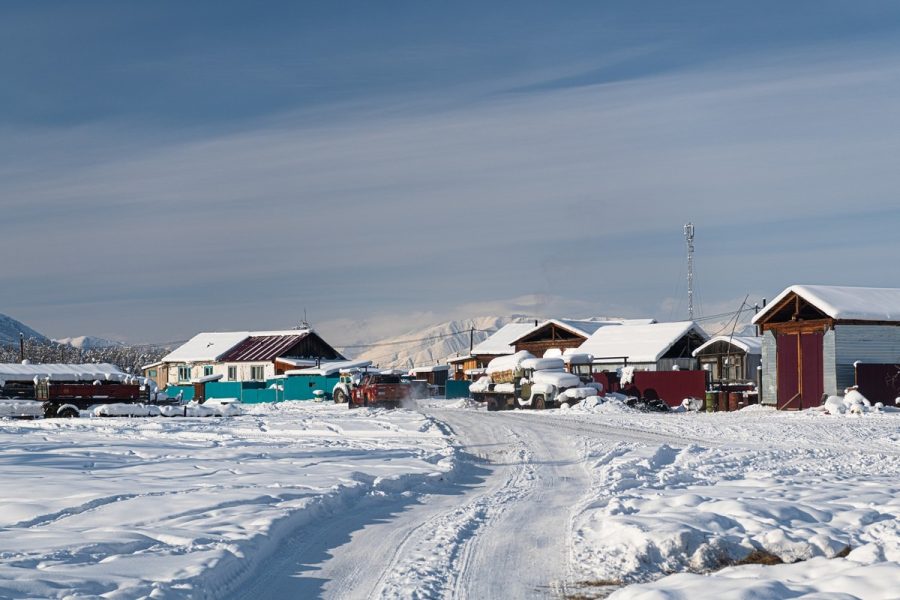
It’s called Chumpu-Kytyl! ->
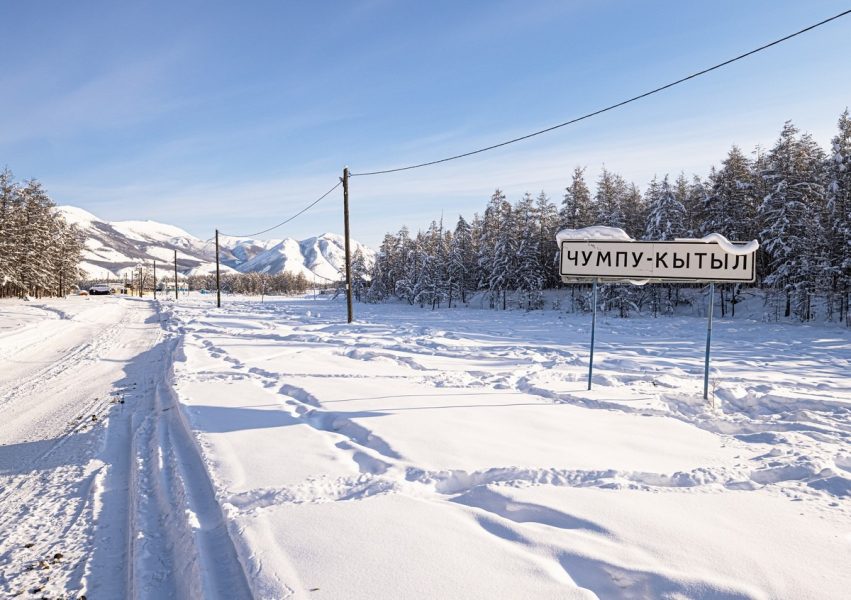
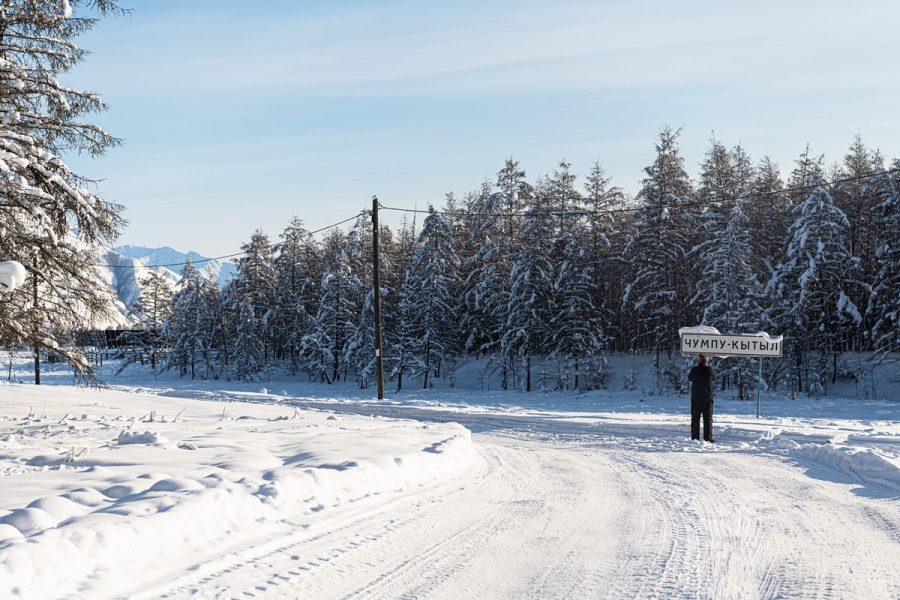
In the village, a sign: careful – river ahead. But that’s exactly what we wanted!…
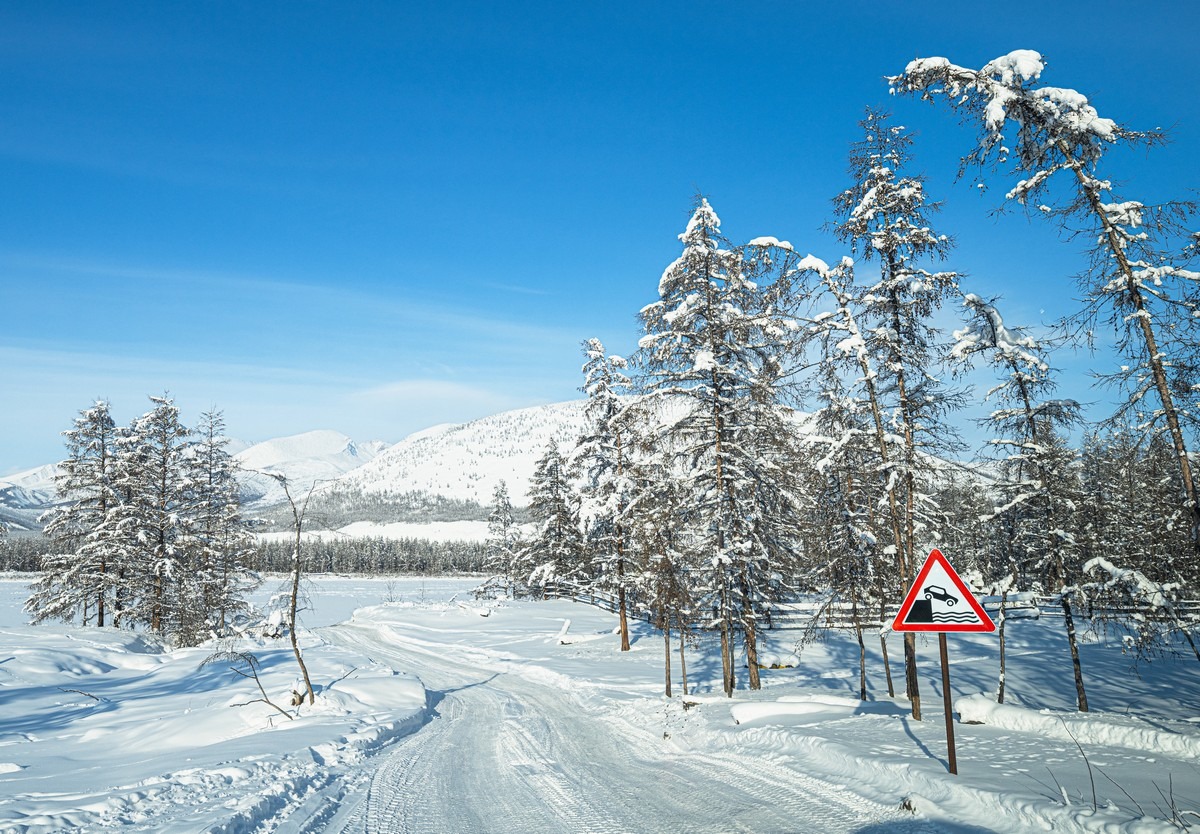
And here we are, practically at the entrance to the Indigirka Tube:
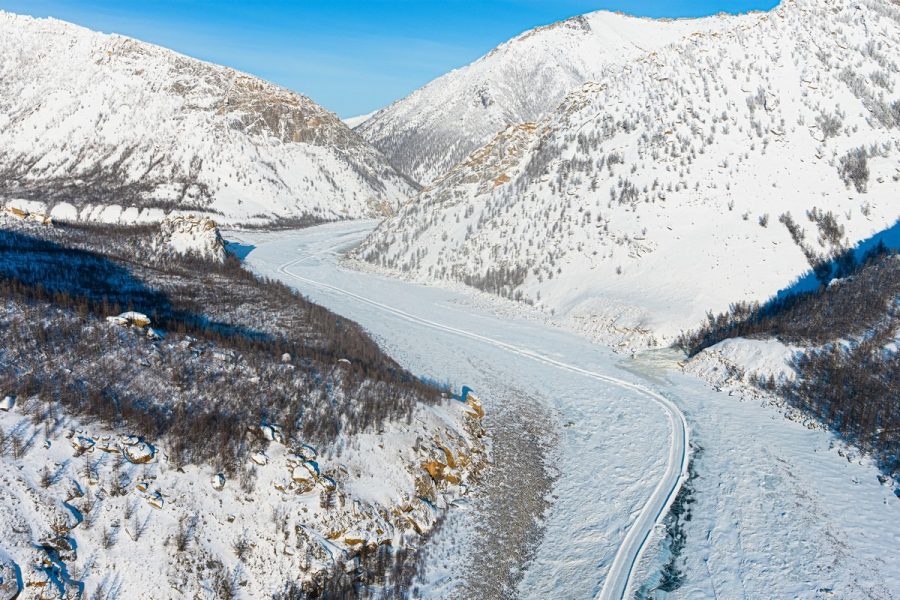
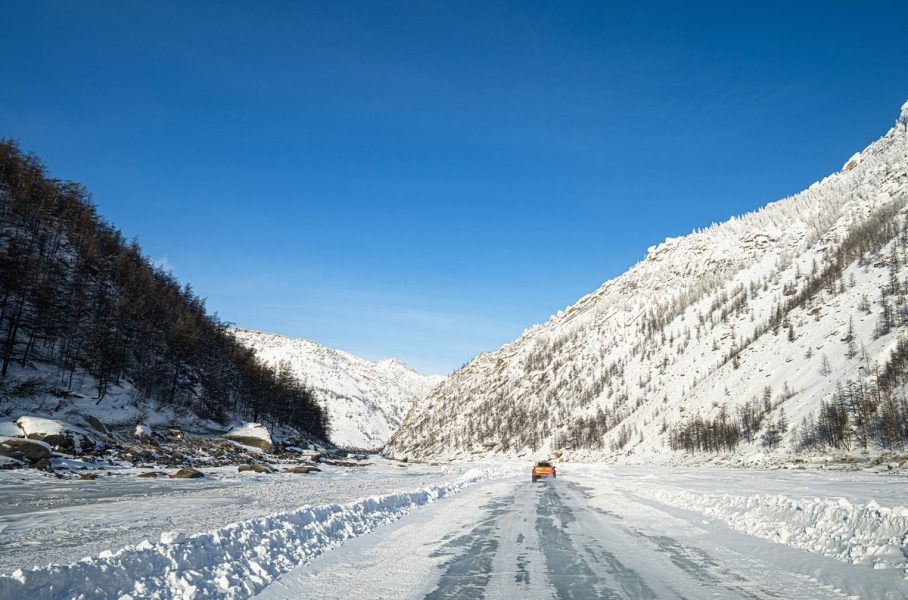
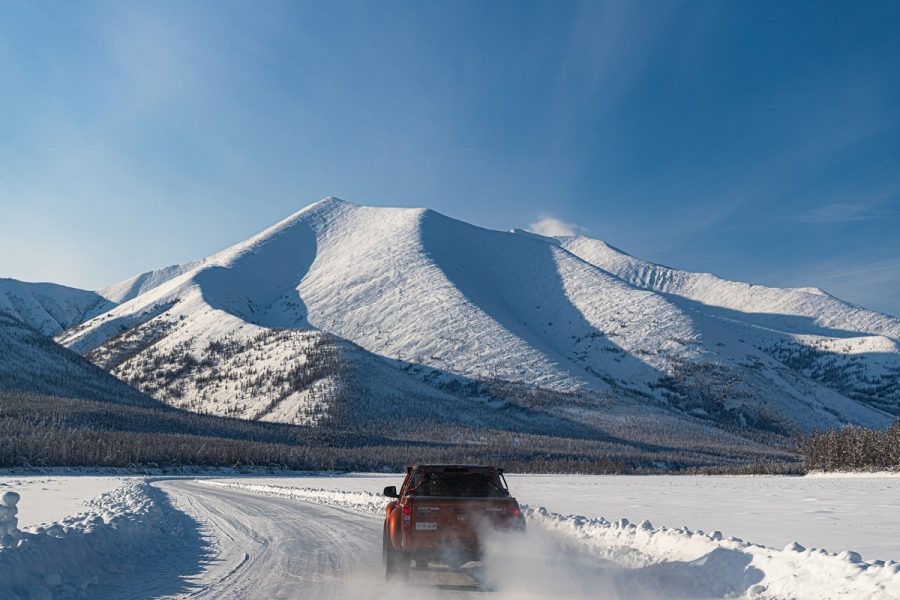
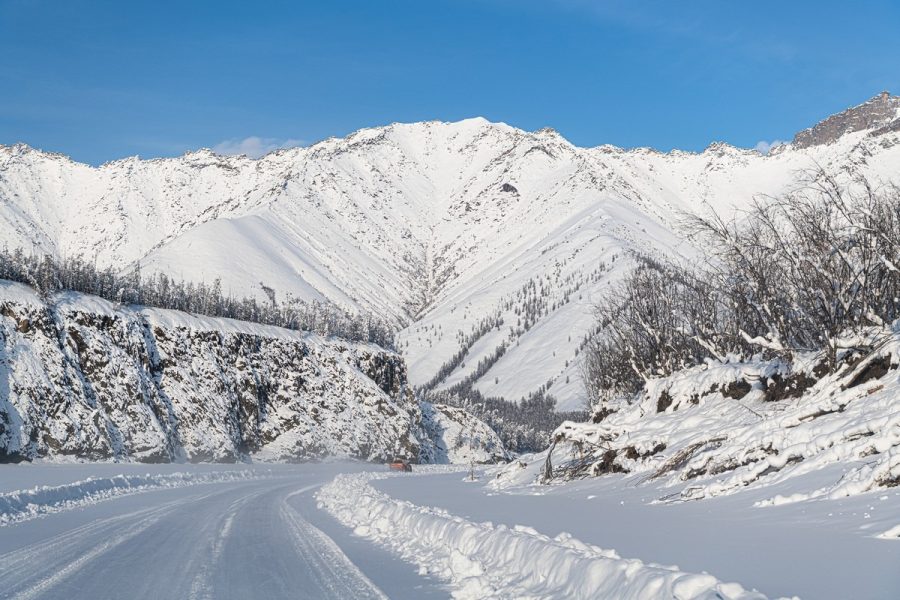
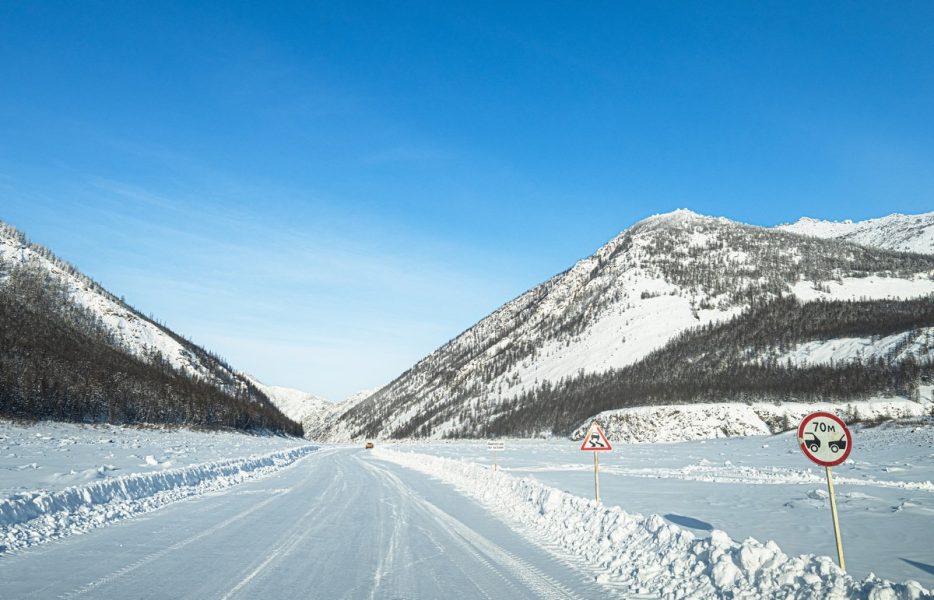
Above and below the Tube, the Indigirka flows among mountains, but still in a fairly broad valley. In the Tube itself, the river is hemmed in by cliffs, flowing through the narrow gorge:
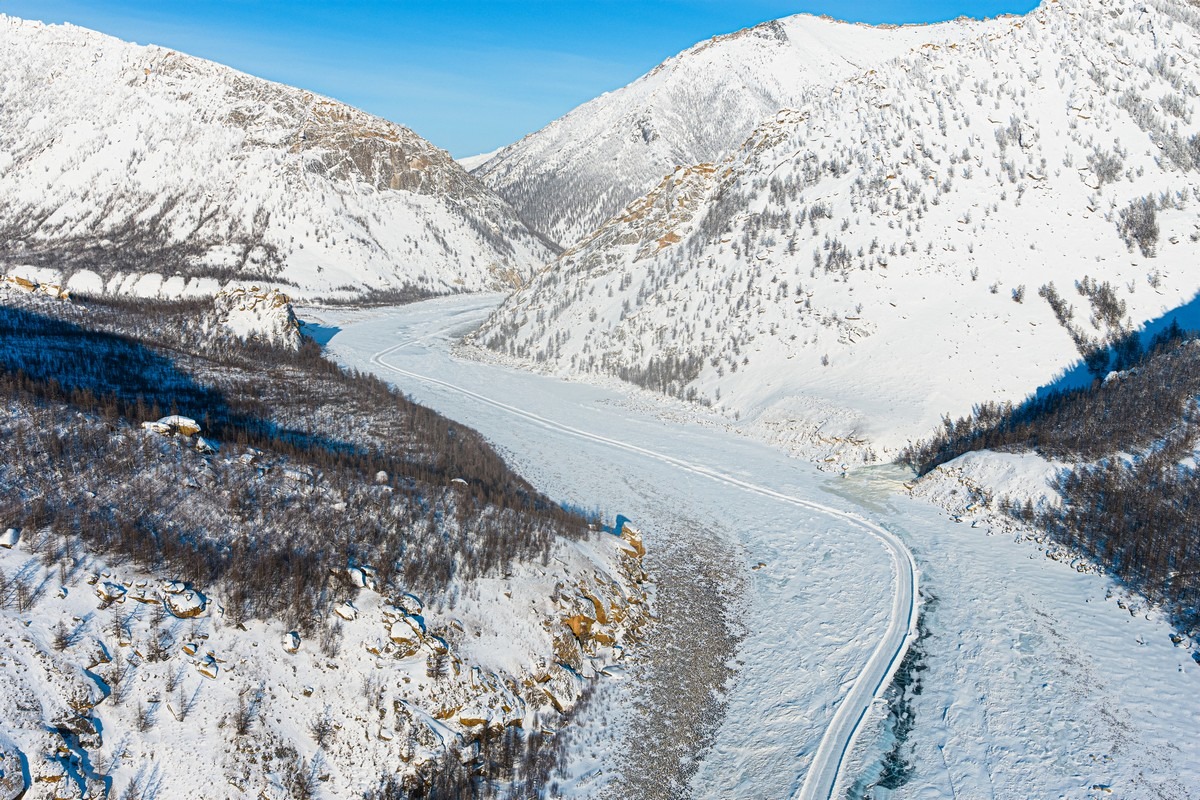
Naturally, the weather here is always windy (hence the “Tube”), and in winter, in the freezing cold – particularly if the thermometer is nudging -40 or -50°C – this place becomes off-the-scale extreme.
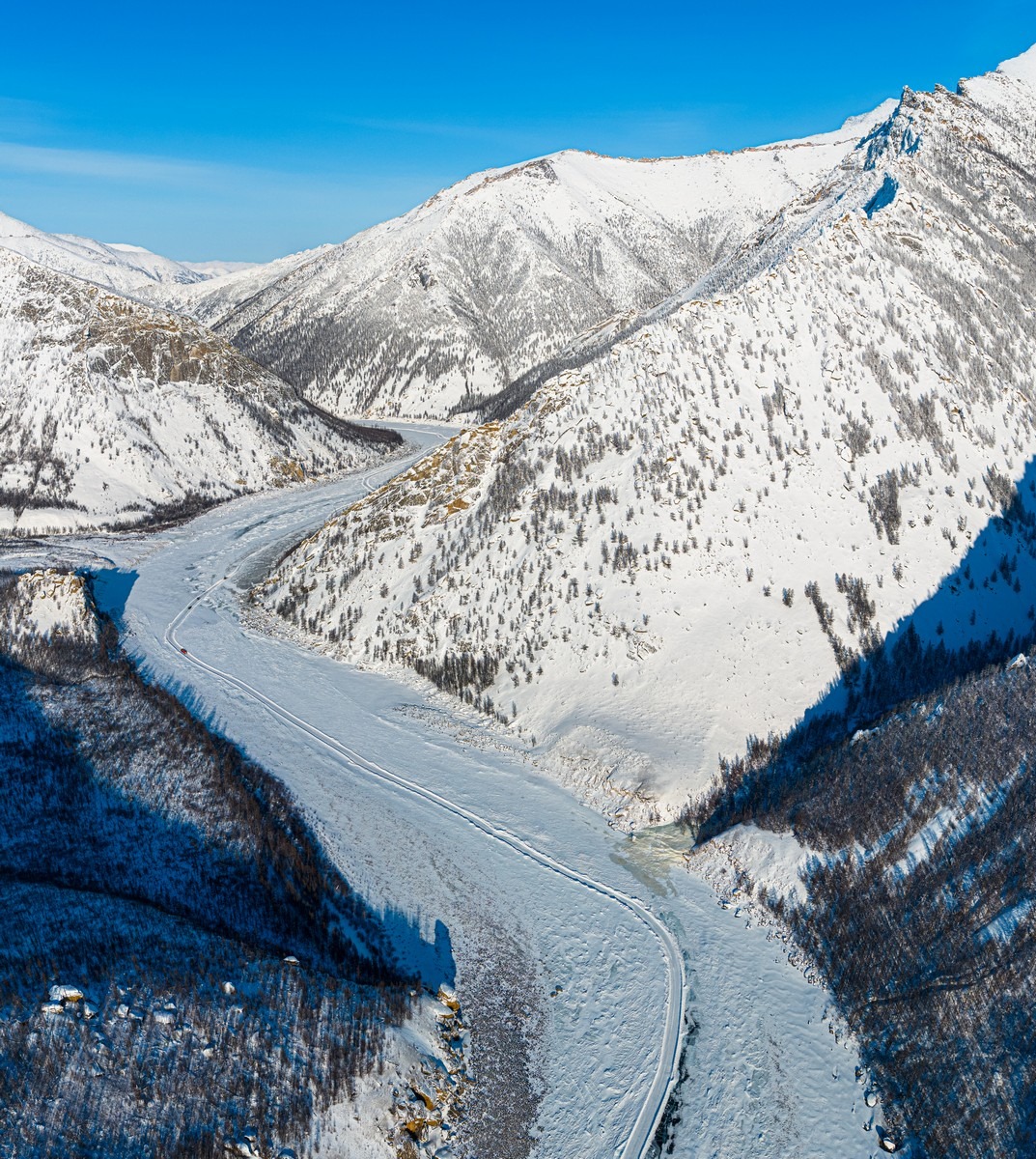
But that’s exactly why it’s so staggeringly interesting here! Onward!…
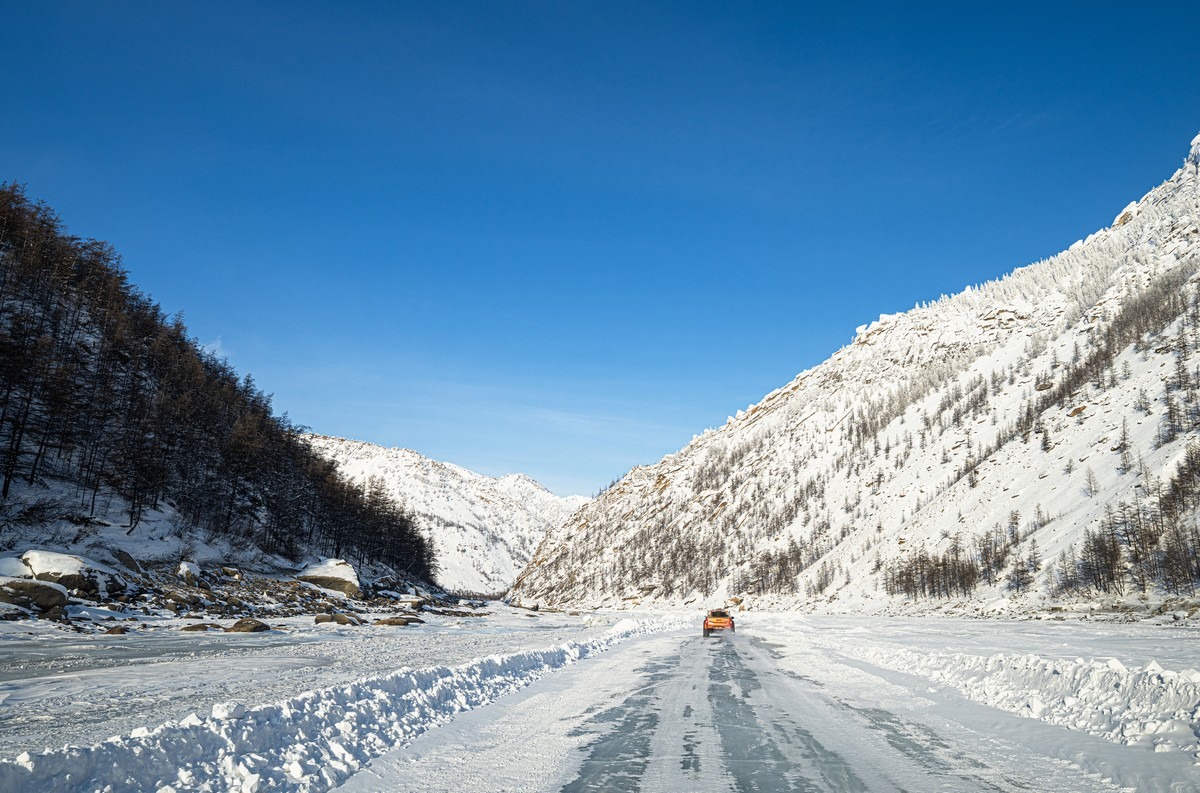
The weather was decent: blue sky, moderate wind (though out on the ice it still all but blows you over), and the frost wasn’t so bad – somewhere around -30°C, if my memory serves…
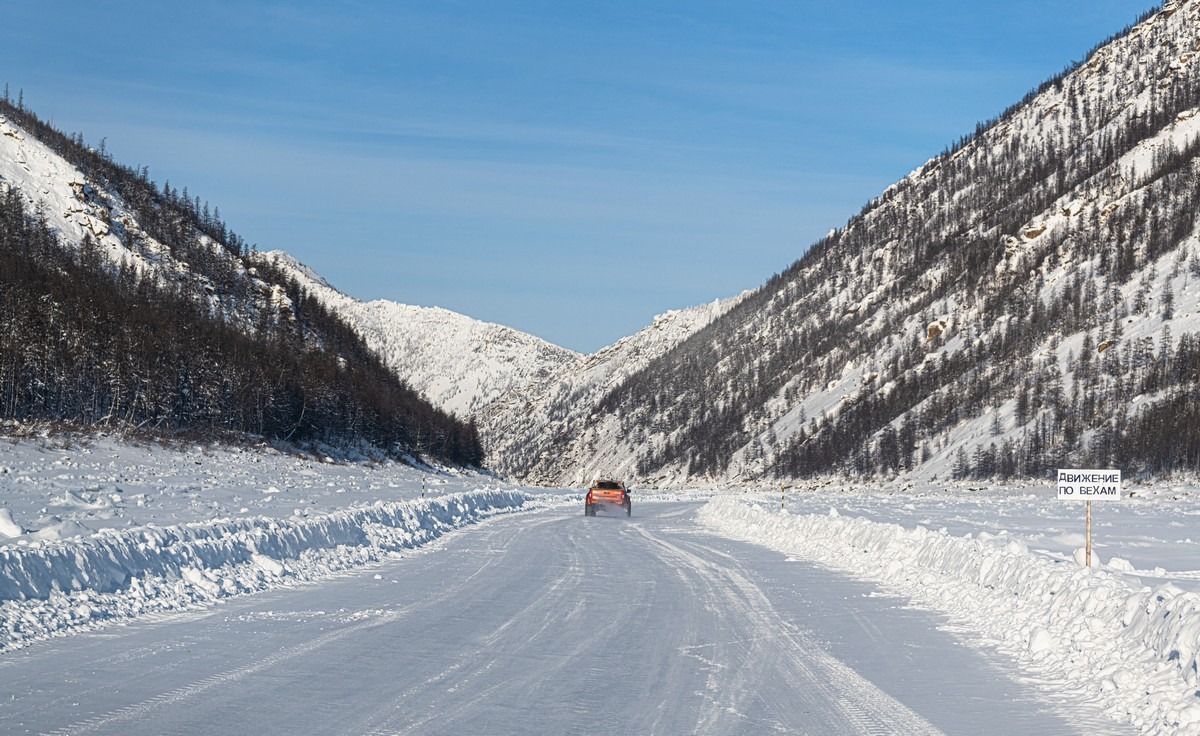
The Tube is something like 15-20 kilometers long (it’s not clear how to measure it). While the “entrance” to the Tube (from the south) is sharply defined – the river turns abruptly north and immediately finds itself in a tight gorge, the “exit” is fairly gradual: the mountains and cliffs unhurriedly part to the sides and grow lower, slowly giving way to a broad valley. But those 15-20 kilometers make for a simply wonderful drive in good, low-wind weather – especially if there are no naleds; otherwise the Tube can become impassable.
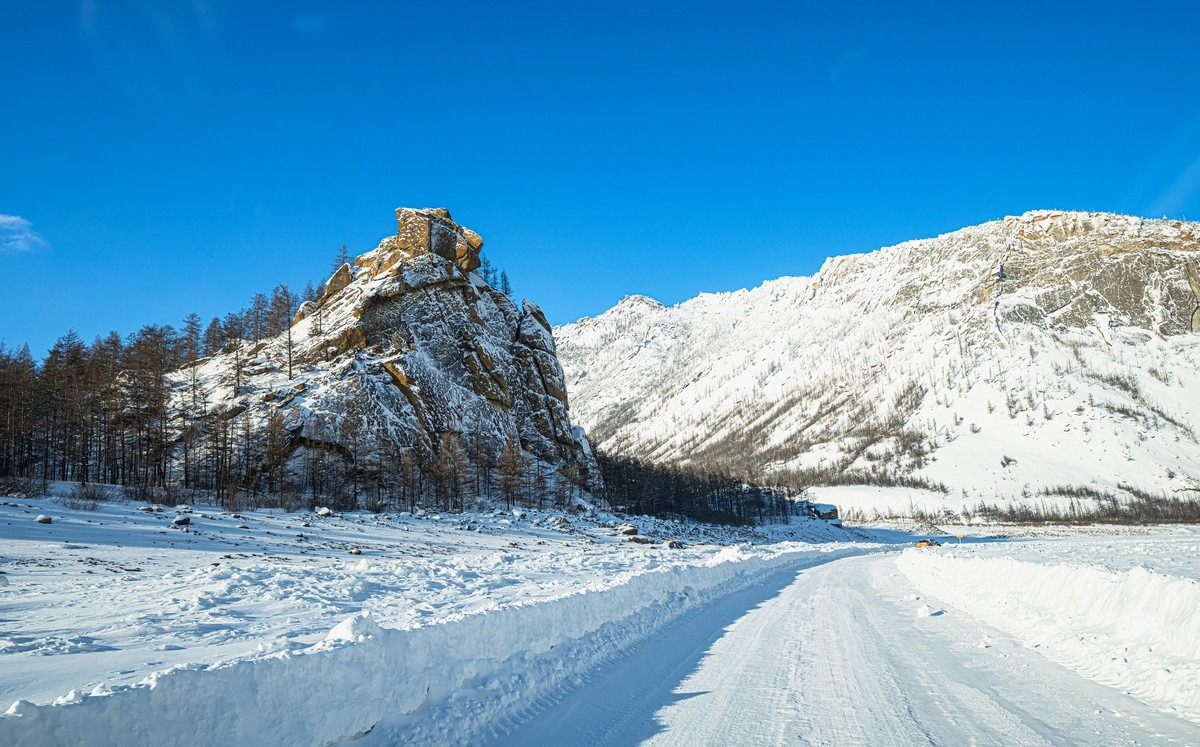
Rocky outcrops like these line the way:
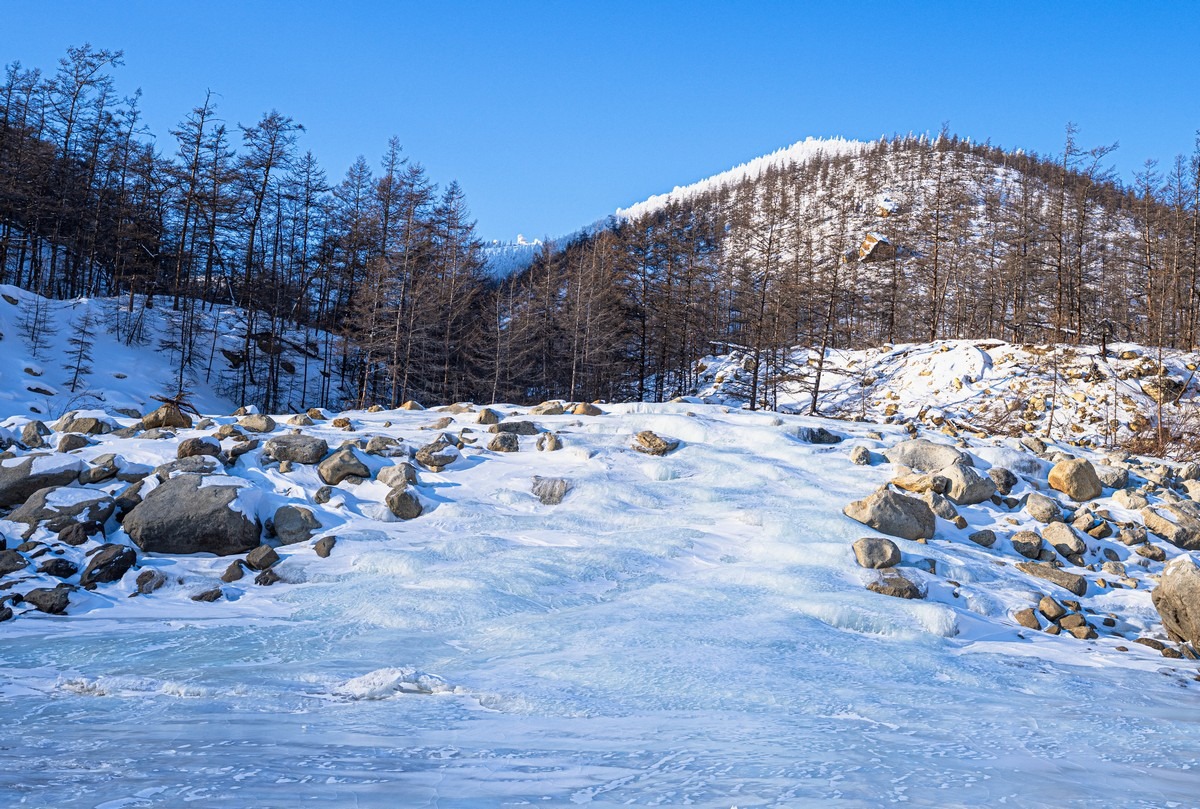
Frozen tributaries:
In places the snow has been blown clean off by the wind:
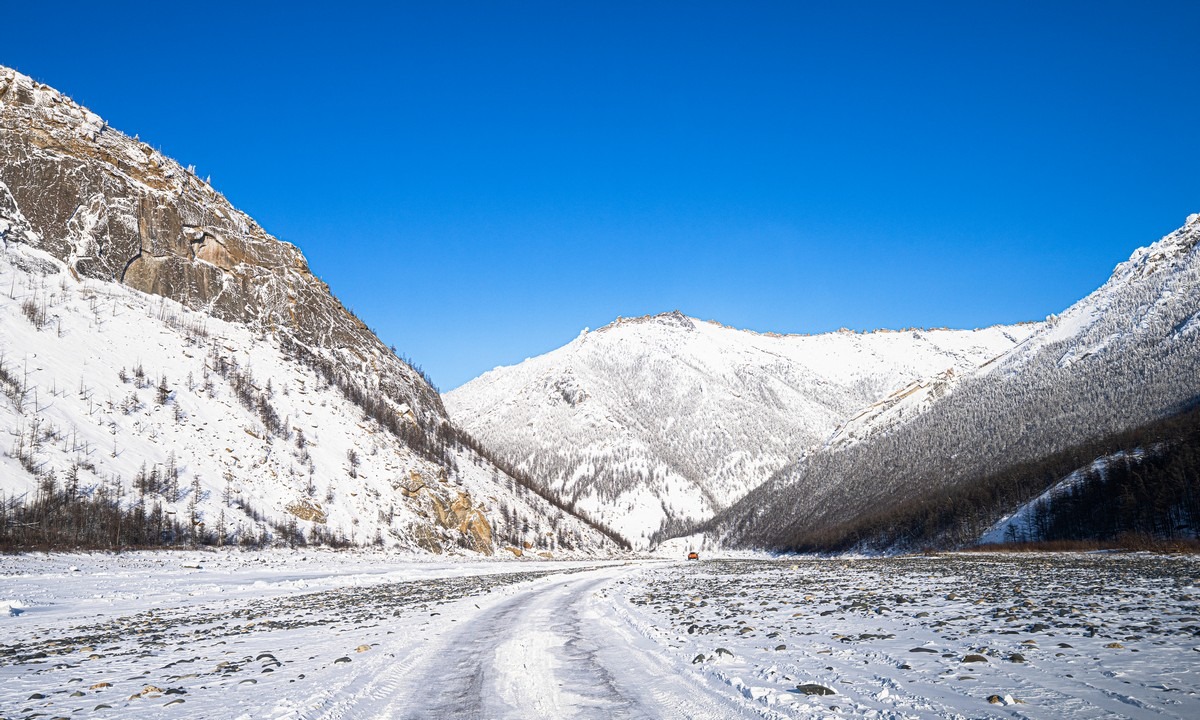
While elsewhere it’s the opposite – meter-deep snowdrifts dumped to the sides. This winter was a particularly snowy one; never before had we seen this much snow here (this was our fourth time in the Tube):
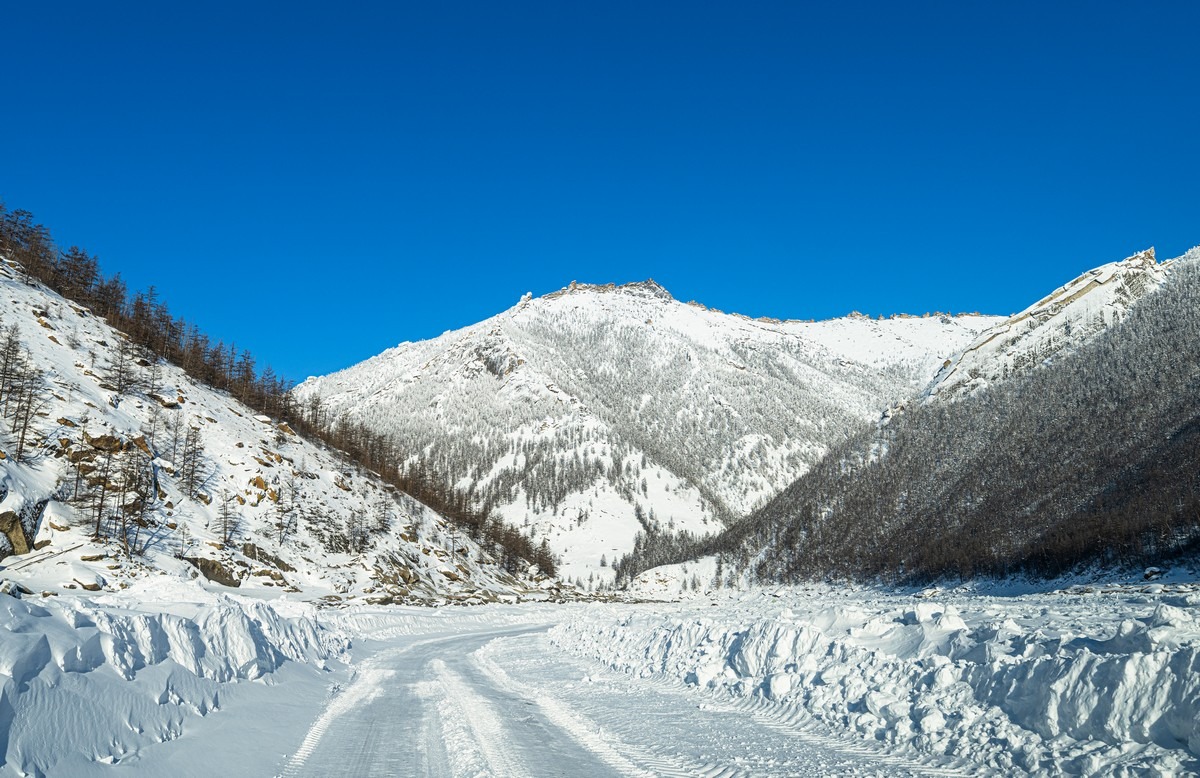
This here ice is considered the wrong kind. It’s opaque, and they call it “white ice”:
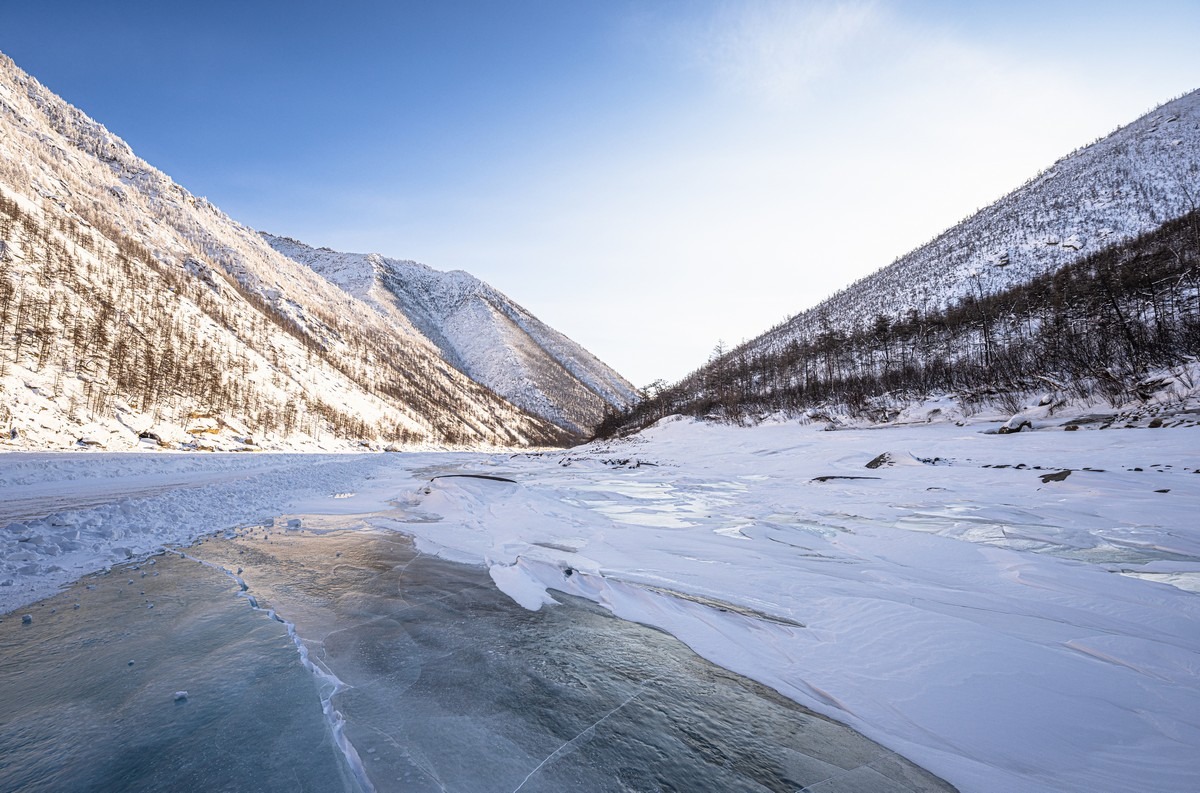
This ice is considered the right kind: “black ice”, and as transparent as glass:
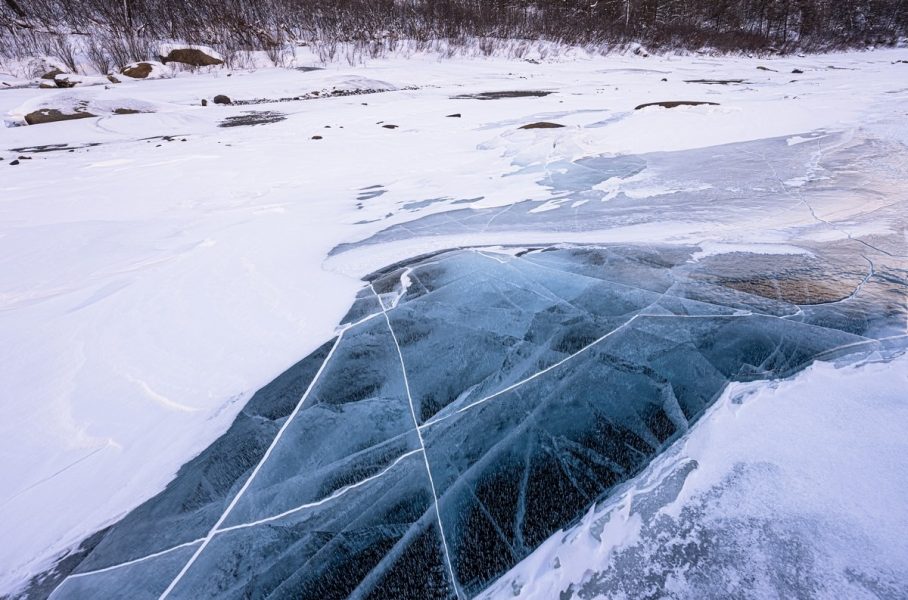
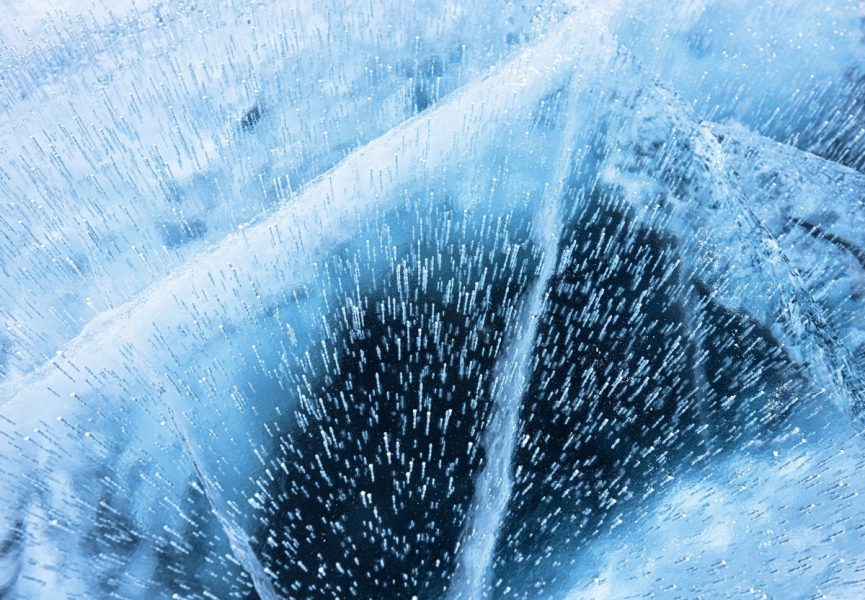
Yes, the wind in the Tube can be such that even in snowy seasons it blows out bare icy patches like these:
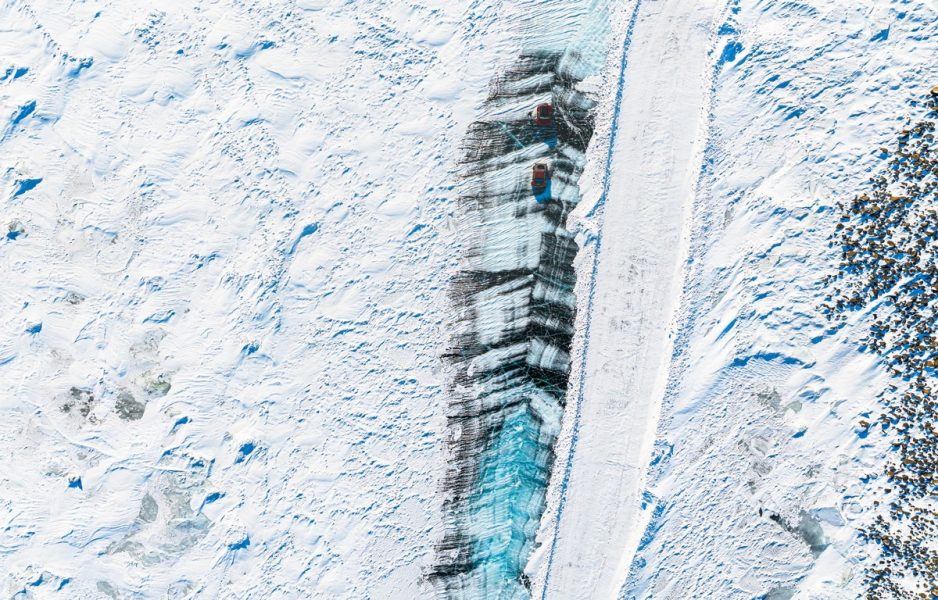
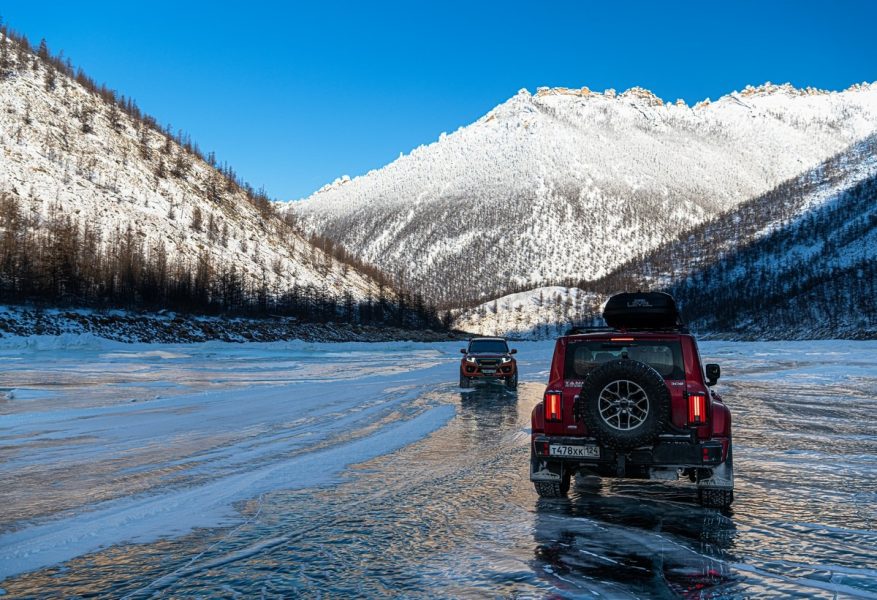
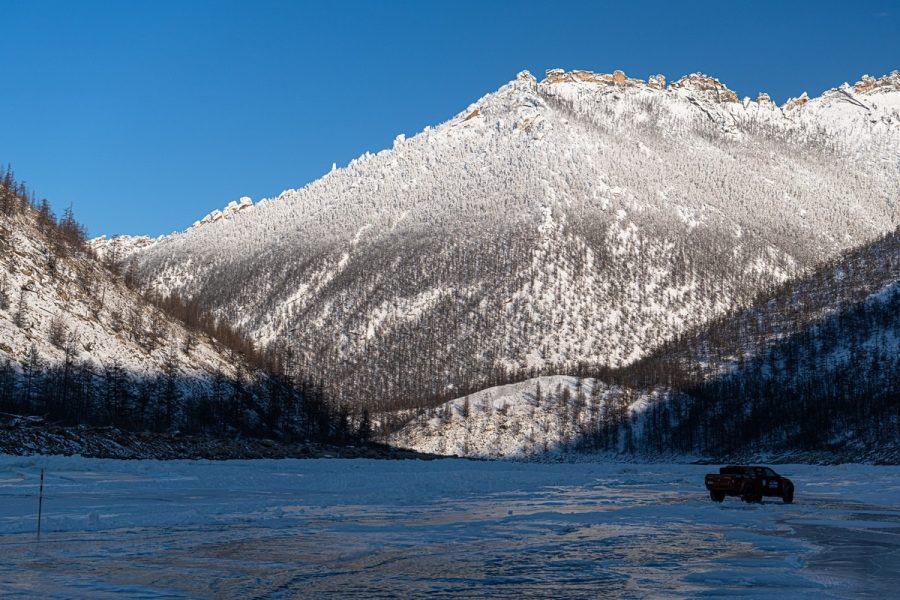
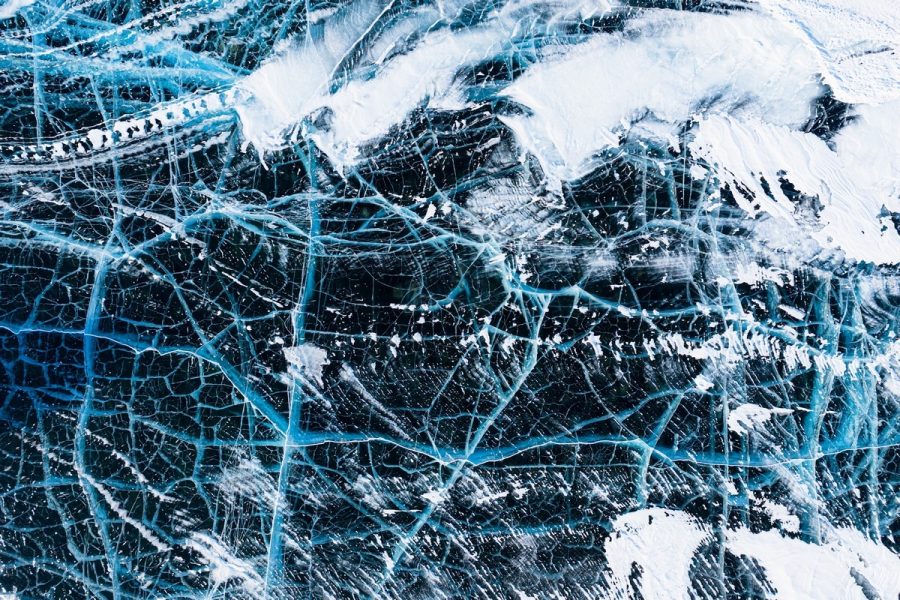
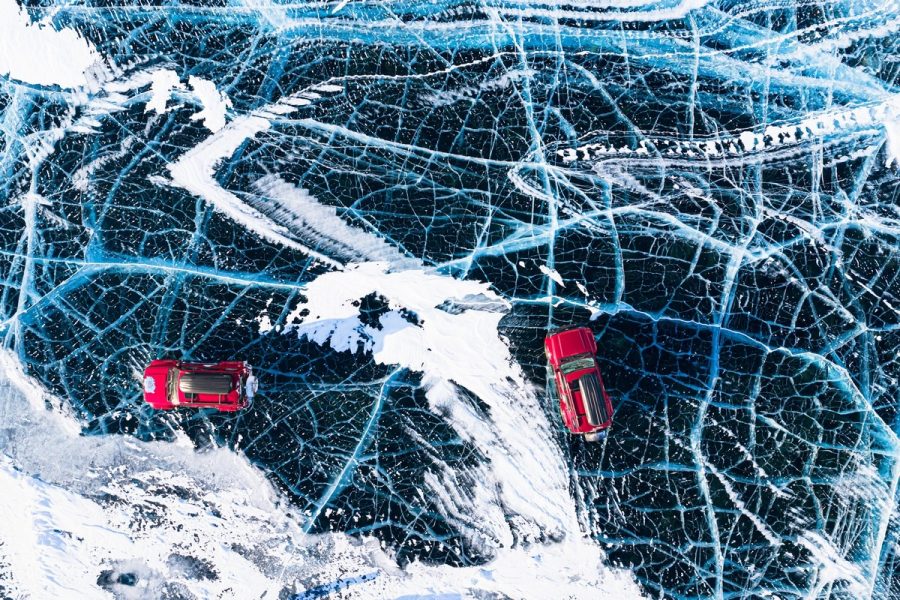
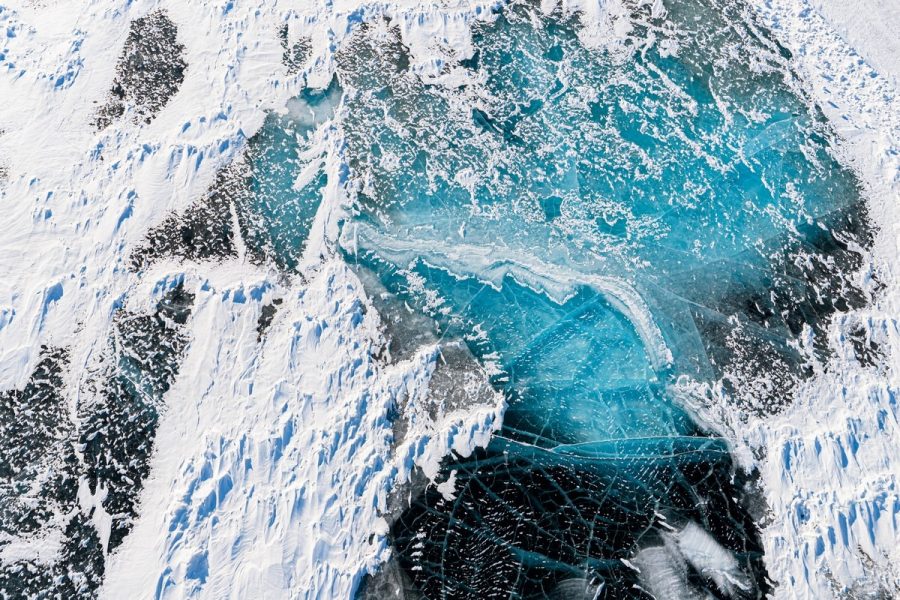
“Black ice” is magnificent. Not Lake Baikal, of course – but a delight all the same!
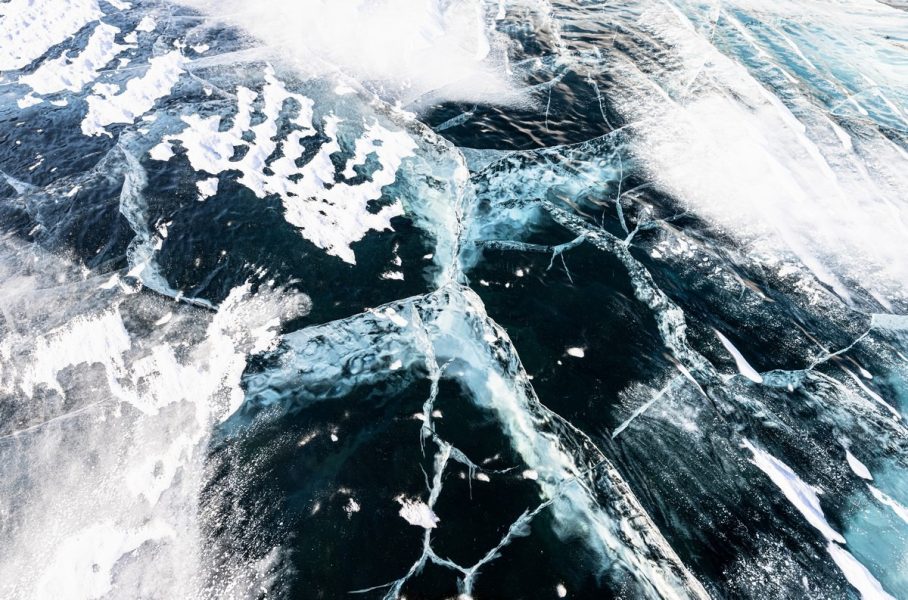
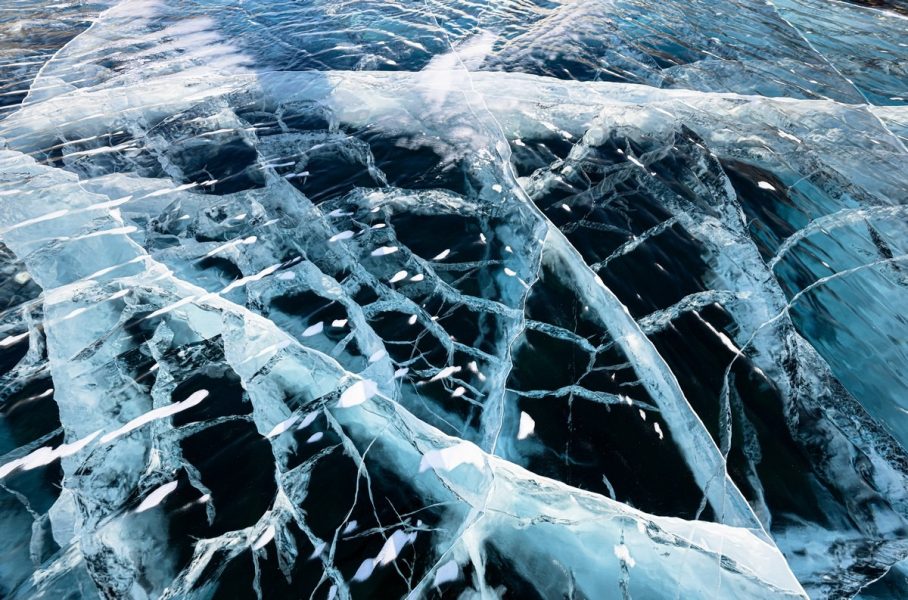
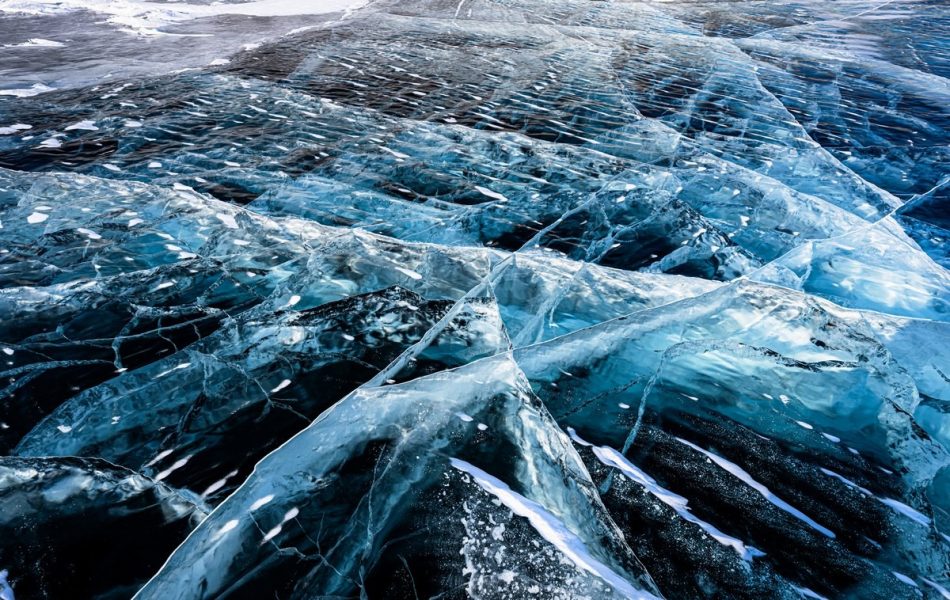
We peer down through the ice to see if there’s anything of interest to be seen in there, but this time: nothing ->
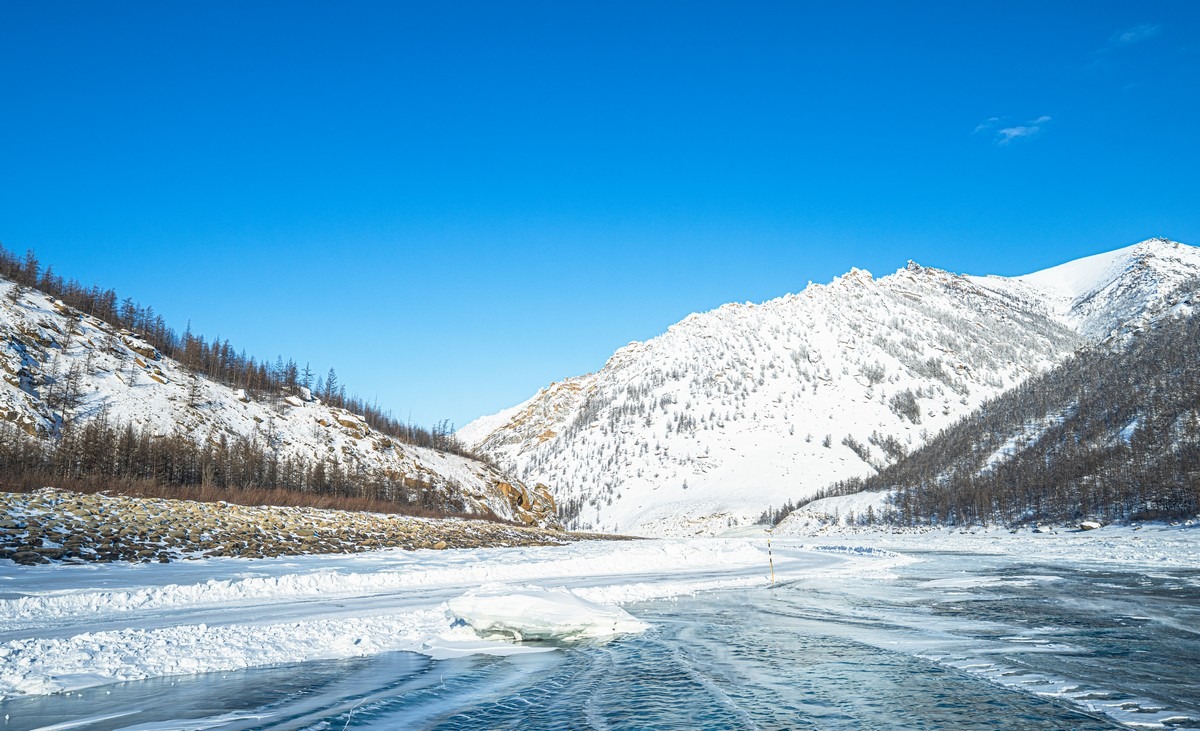
Onward! At times the winter road is smooth and beautiful…
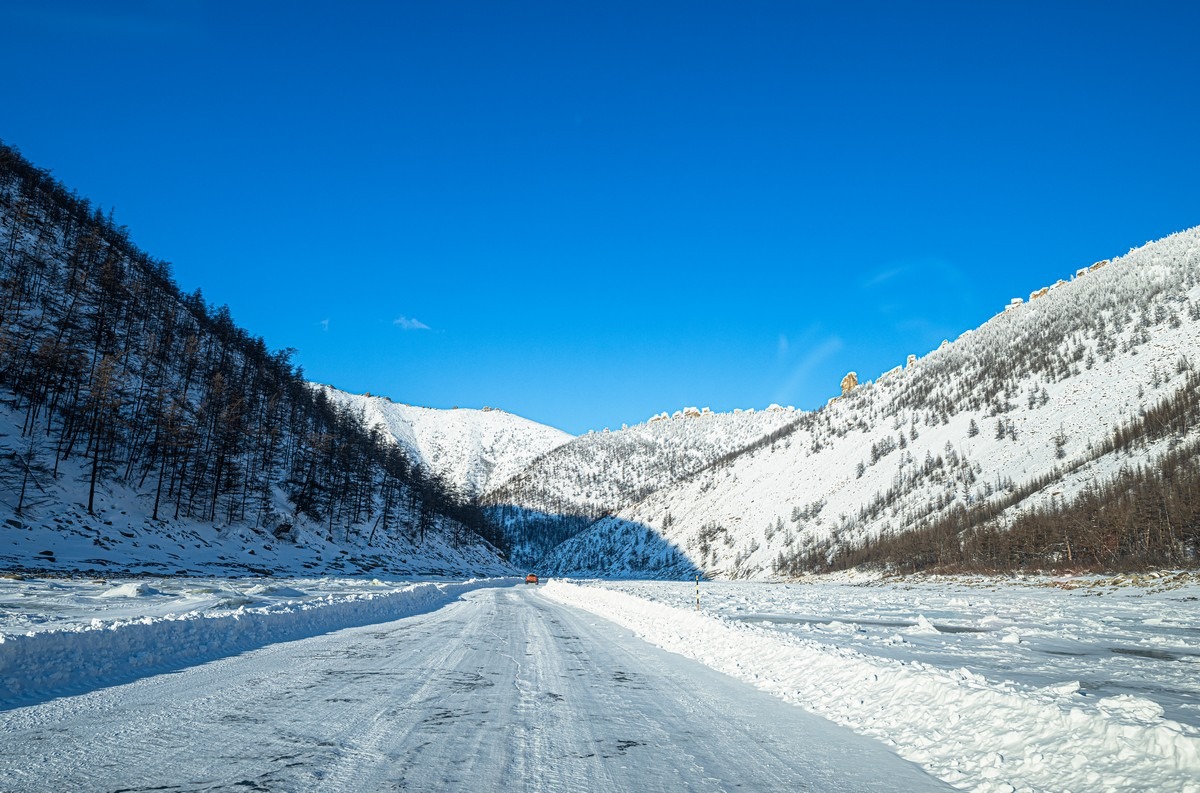
…At other times it’s churned up into ice hummocks, forcing us to drop our speed to 10-15km/h.
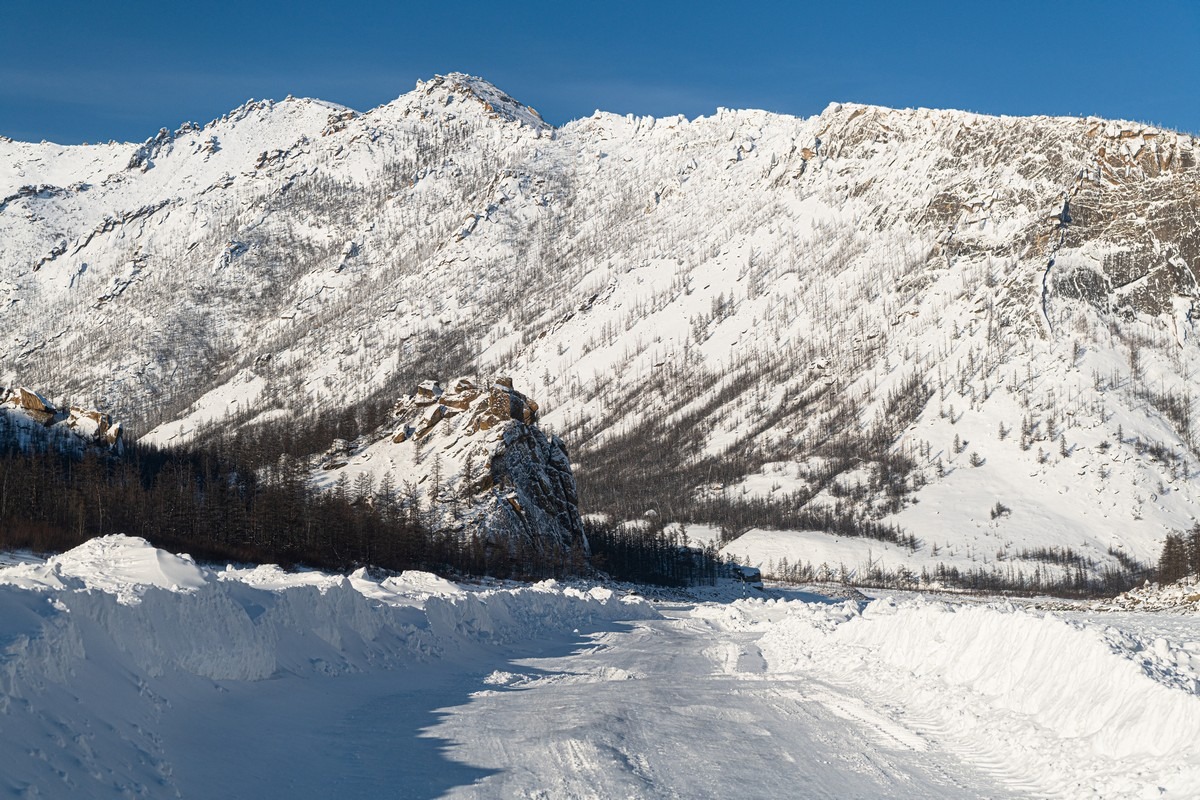
Taking advantage of a stretch of good ice, our daredevil, AI, strapped himself on to the back of the pickup and shot a load of 360-degree video (it’s sure to make it into the inevitable movie):
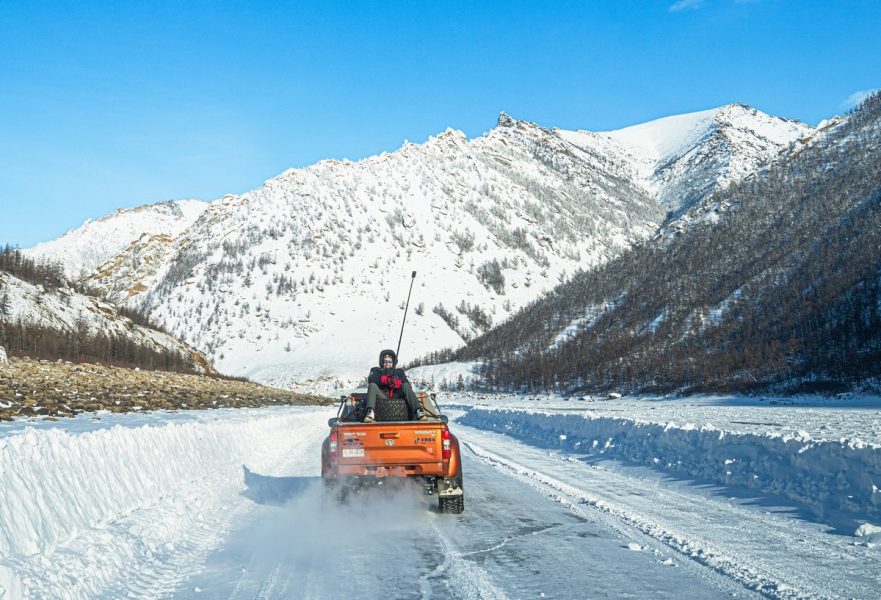
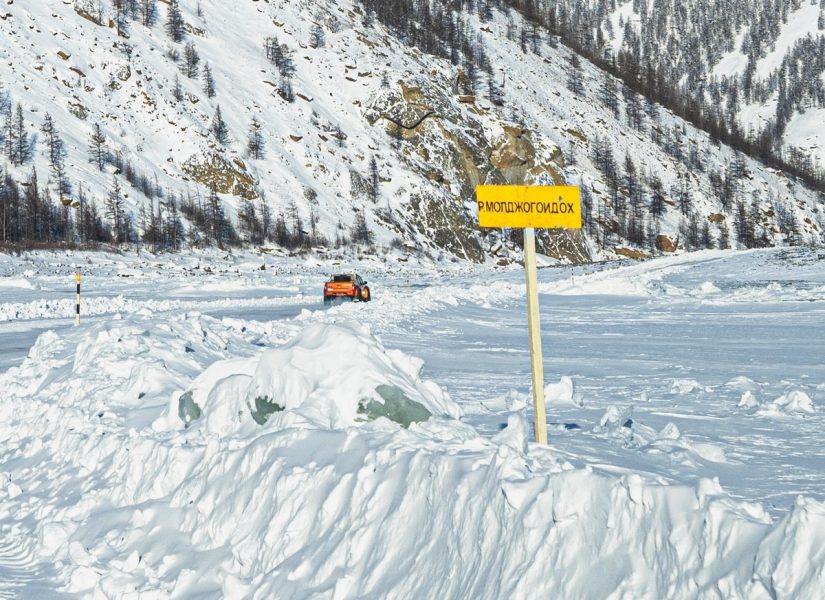
And another stretch of clear ice – and here we got lucky…
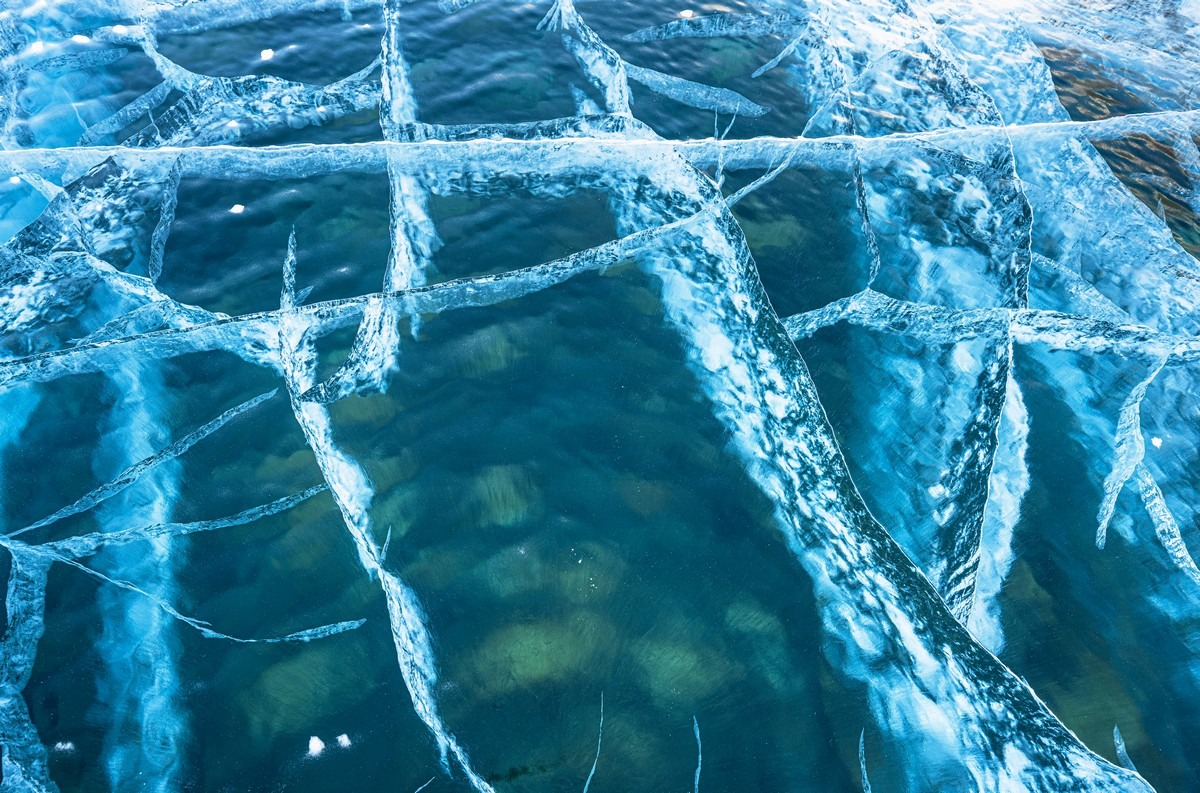
Since it was shallow here we could see the rocks on the riverbed:
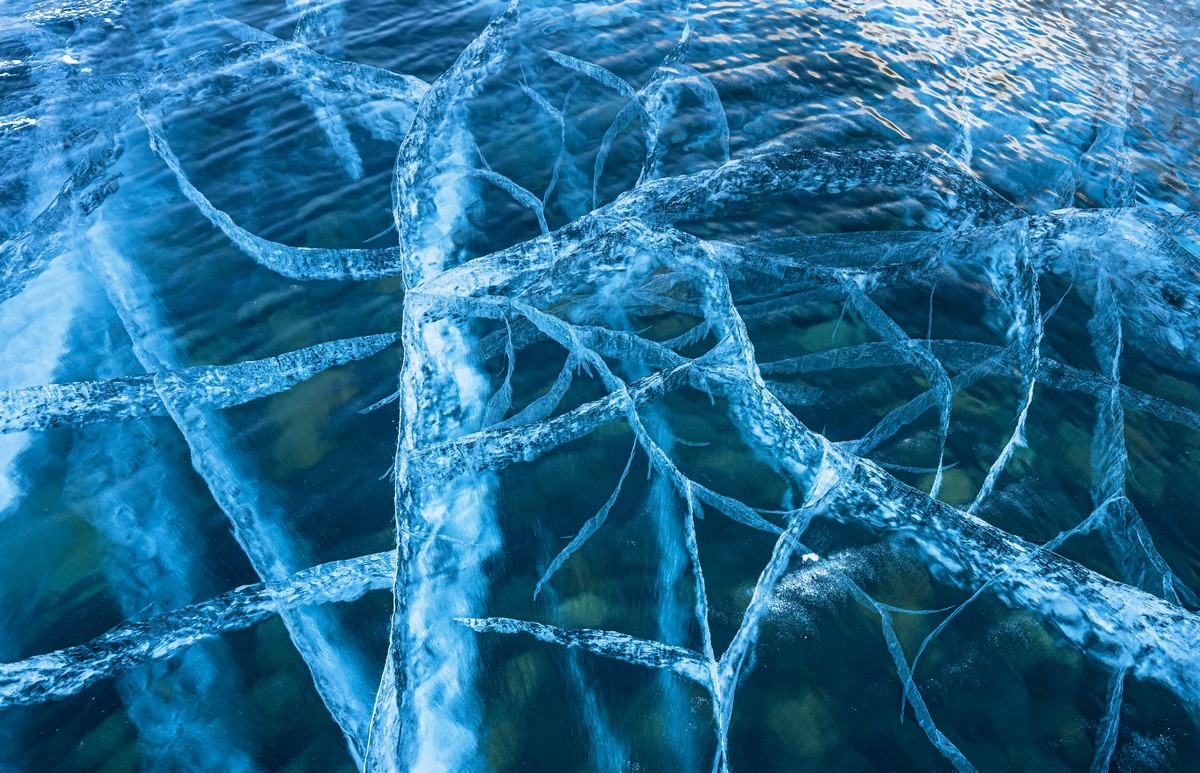
These hefty boulders, meanwhile, are in a deeper spot:
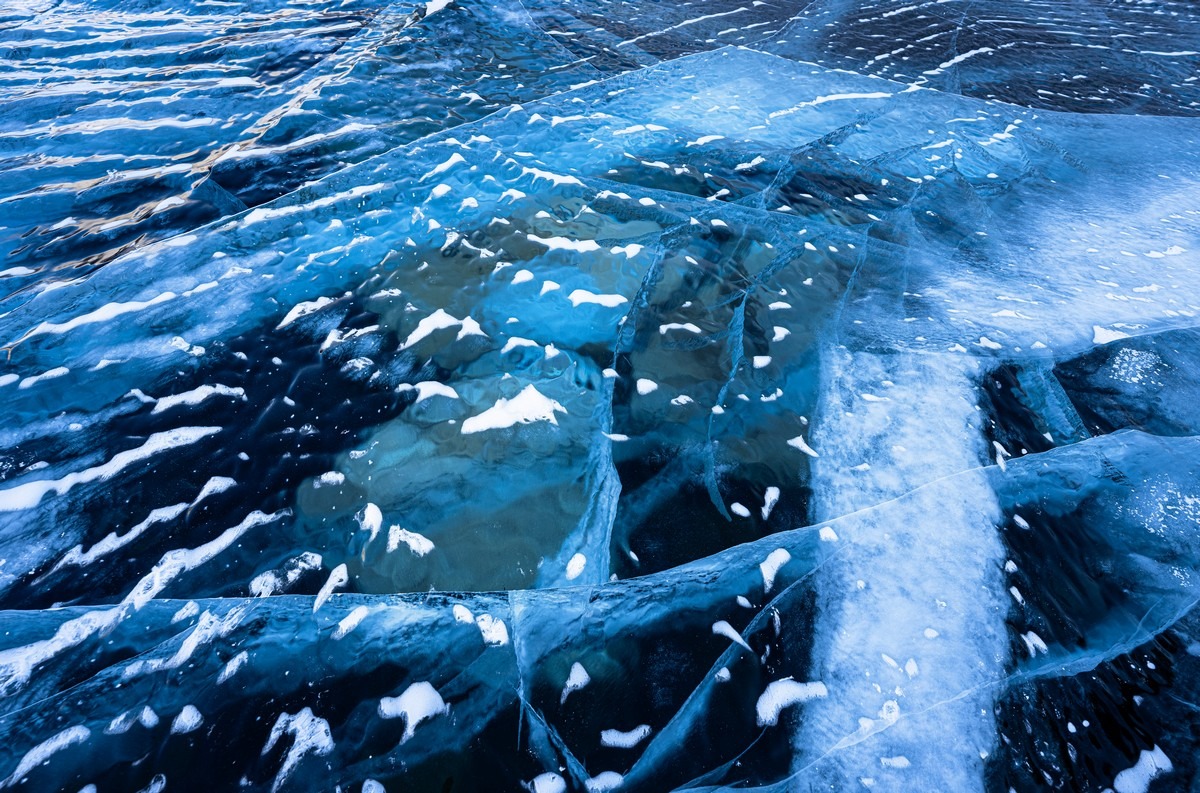
They’re simply hanging there in the ice!
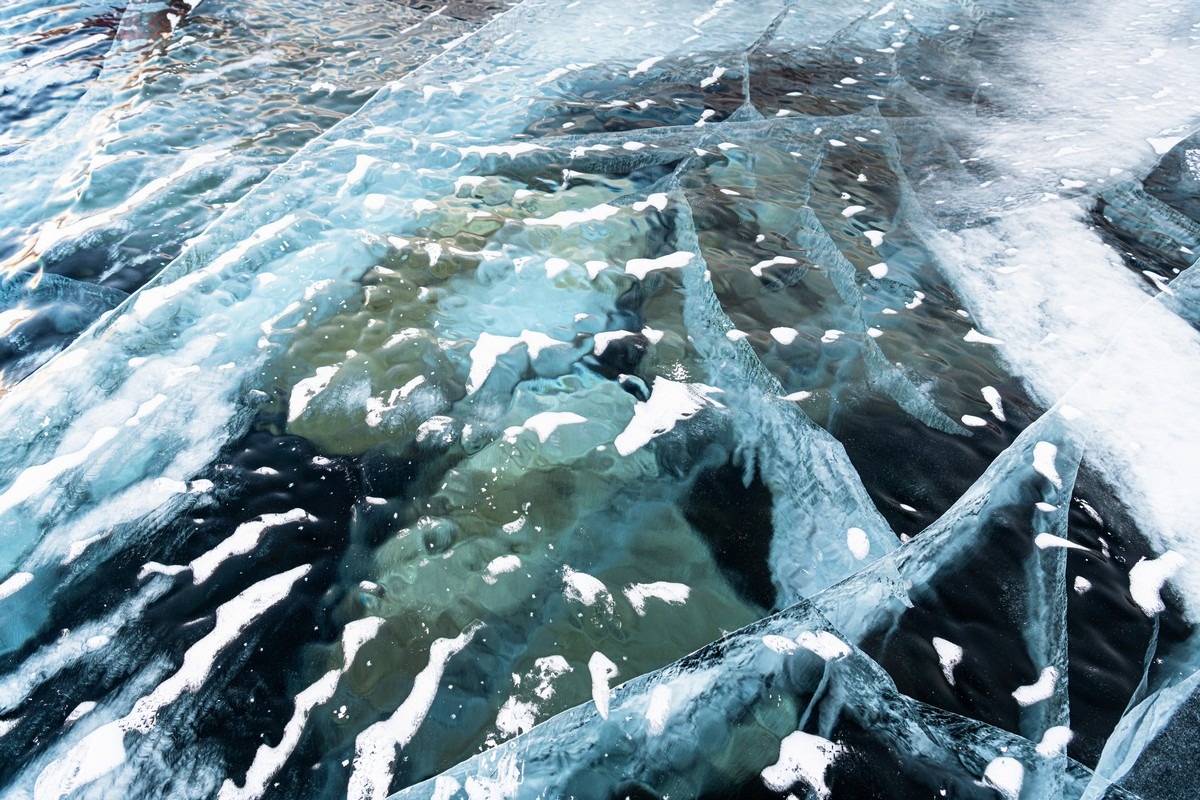
An astonishing natural phenomenon – I already joked about it on April 1, 2024 :). Seriously, though: how can such a thing form? I have just the one hypothesis: the rocks are dragged across the already-frozen ice by both naleds and the water that keeps flowing under the ice farther up the Indigirka. Then the naleds freeze, and the rocks end up above the old ice and beneath the new, left hanging inside the ice layer to astonish any observer who happens upon them.
I’ve told of and showed such things after two of our winter-road-trips already: Magadan-Yakutsk-Baikal-2022 and Yakutsk-Tiksi-Yakutsk-2024.
More wonders of wonders: the stone crests on the summits of the surrounding mountains, topped with rock pillars (known as kigilyakhs), which get colored white:
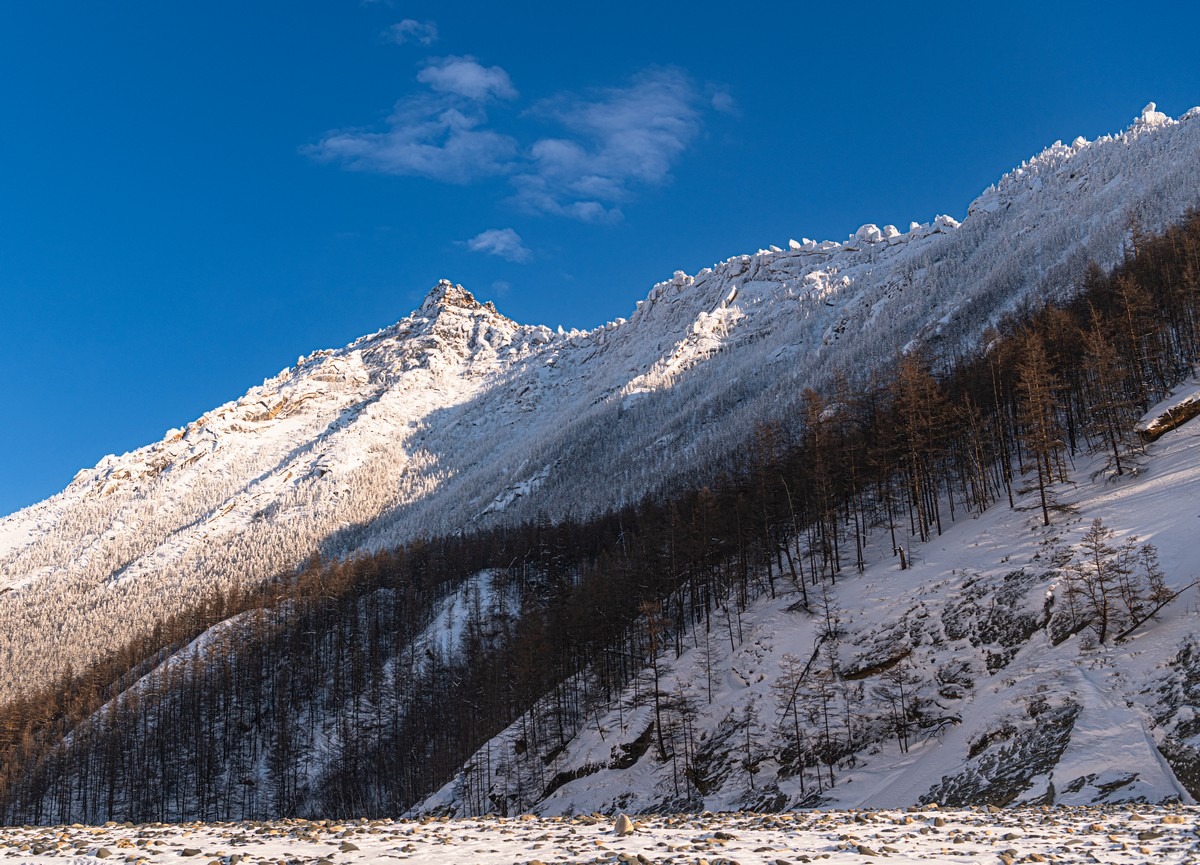
Whether their becoming white is from the wind plastering them with snow, or from the ferocious frosts dressing them in hoarfrost, is a mystery. To answer that question I guess you’d have to climb up there and check. We didn’t :)
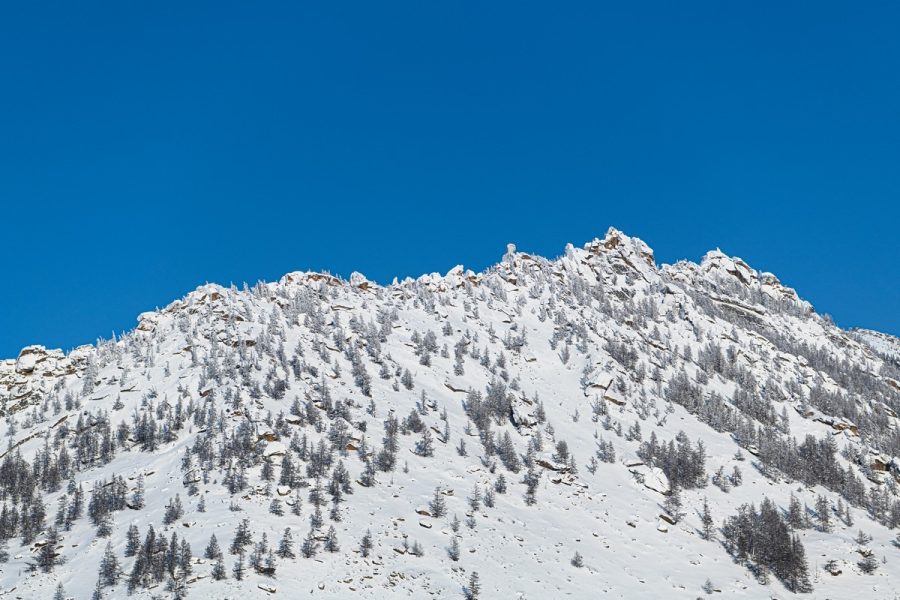
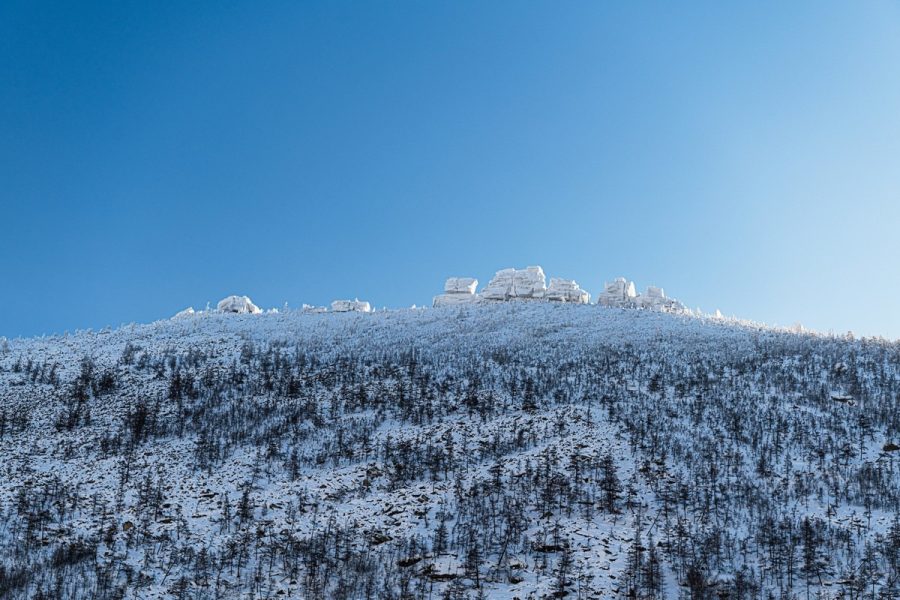
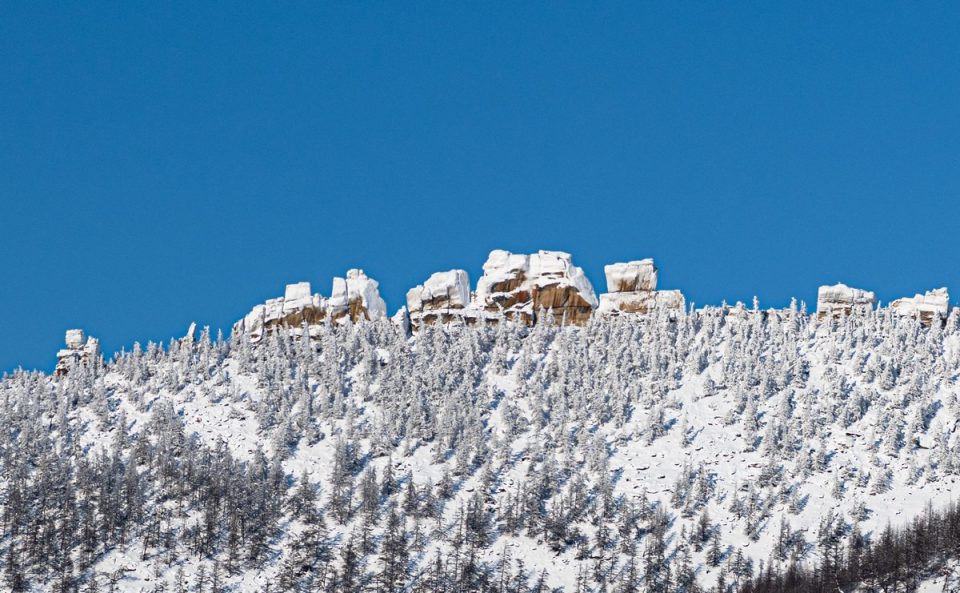
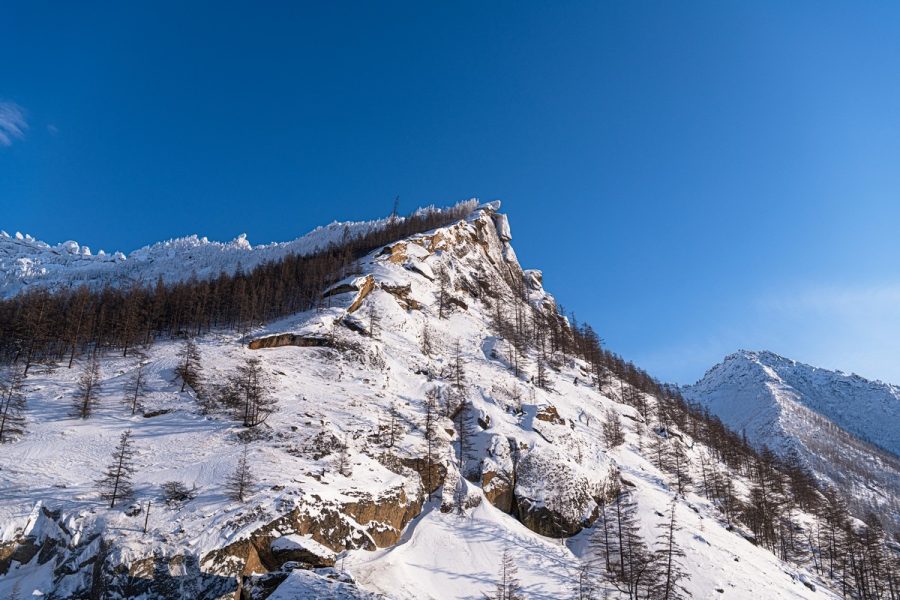
And that was that – we’d made it through the Tube without any mishaps. To this day’s finish line (the village of Khonuu) there remained a mere 130km…
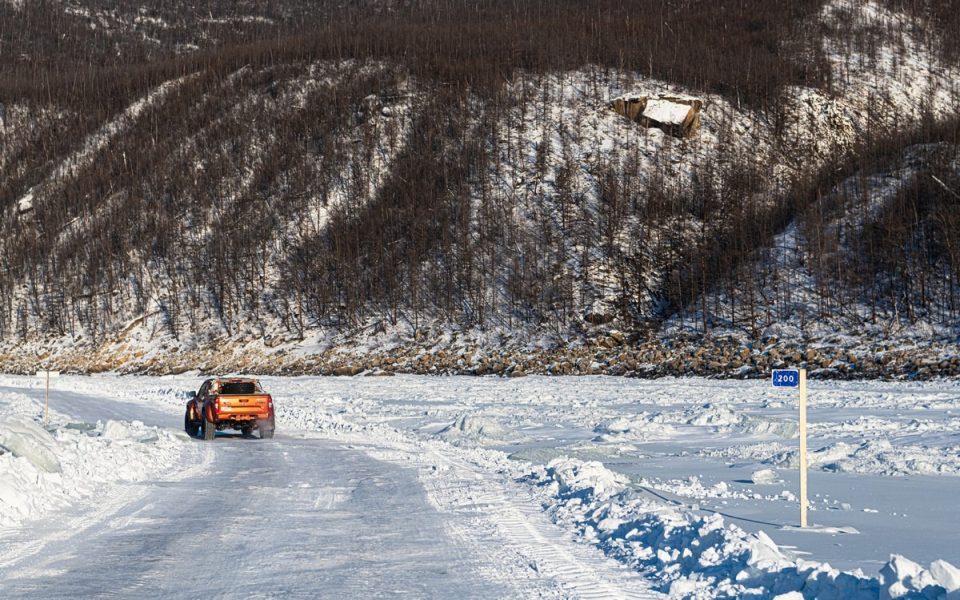
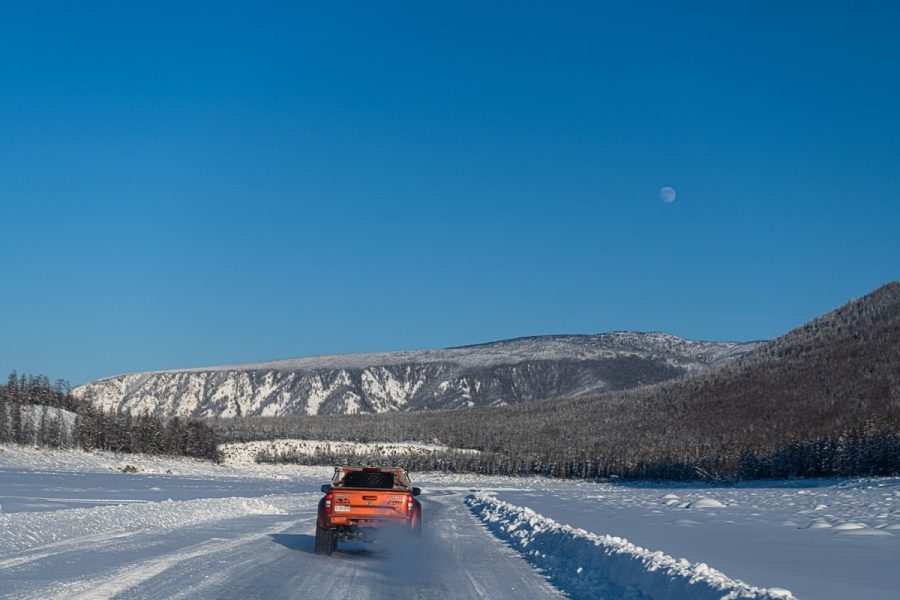
Suddenly the pickup up ahead darted sharply to one side; but I had no time to react – and plowed at full tilt into a puddle. A fountain of spray – which in the Yakutian frost and wind freezes instantly – onto the windshield, the hood, and everything else it managed to reach. Quite the novel experience…
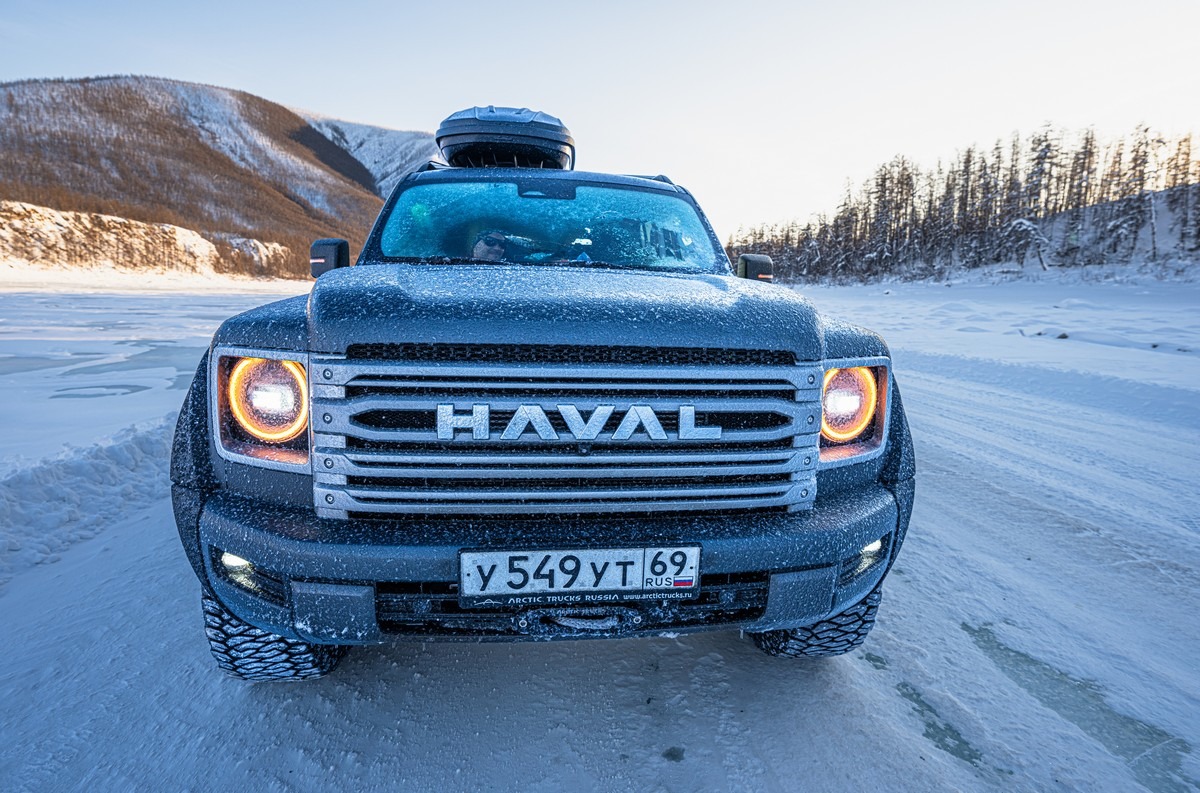
So what was it? “Naleds, sir,” said one of our crew. A naled is where water pressure breaks the ice at certain points – and an enormous volume of unfrozen water from the river’s tributaries comes out onto the surface (if you recall, a little upstream, in the Tube, the Indigirka freezes to the bottom). And instead of a well-cleared winter road over smooth ice, you get a waterpark ride of sizable proportions:
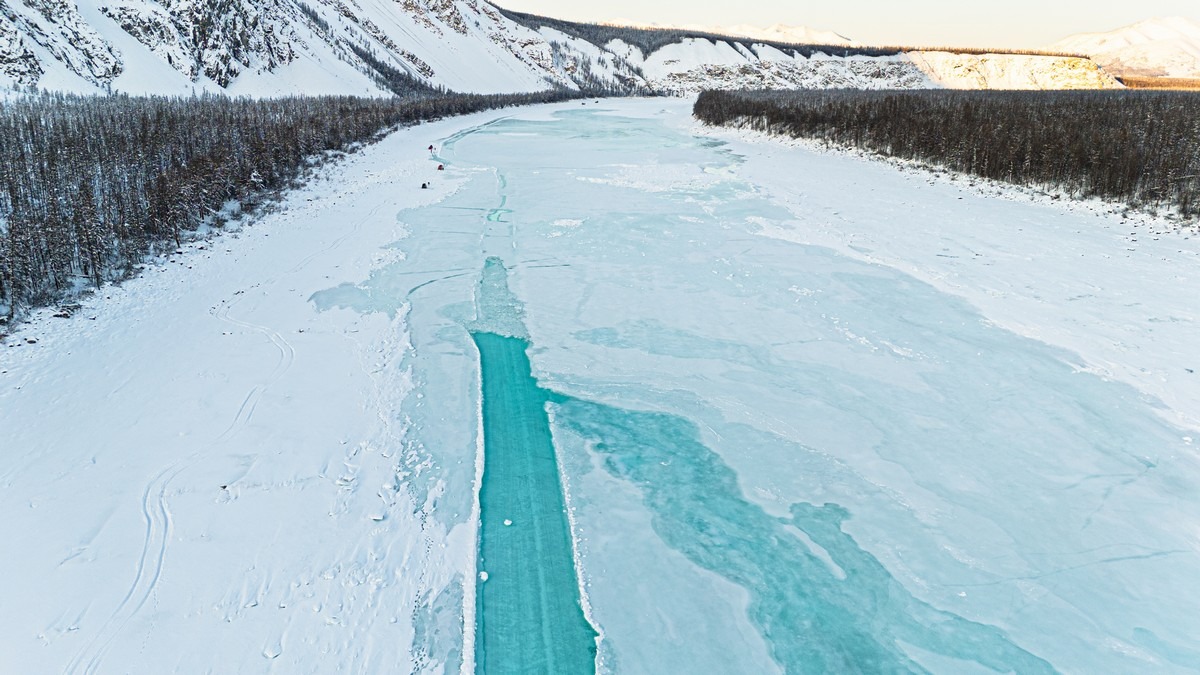
Here’s the scale of events from the other side of the winter road – everyone over there has stopped too, taking in the scene:
And there’s plenty to take in!
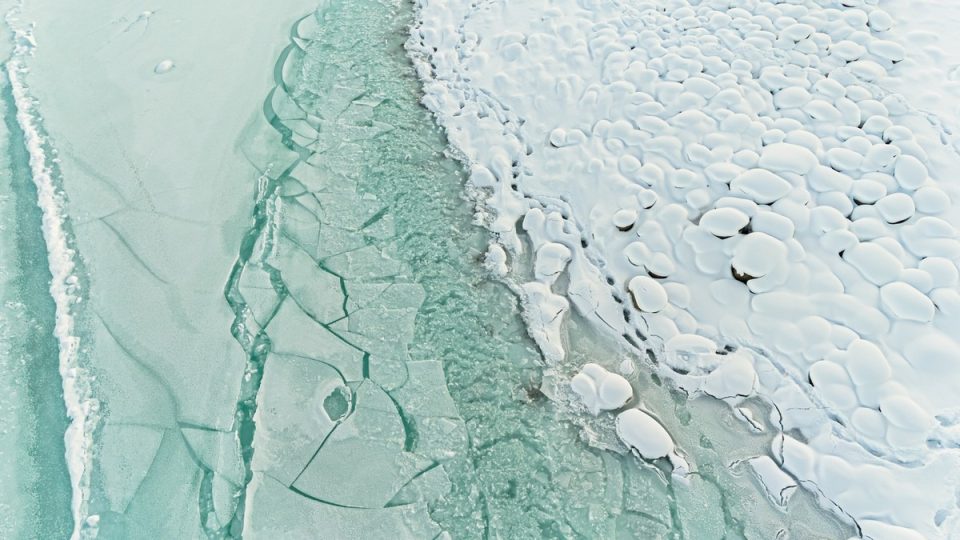
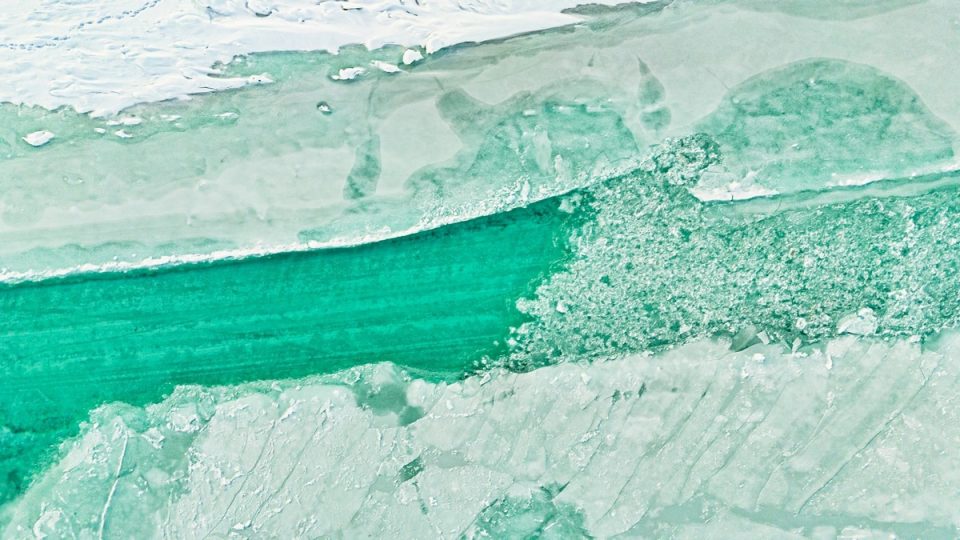
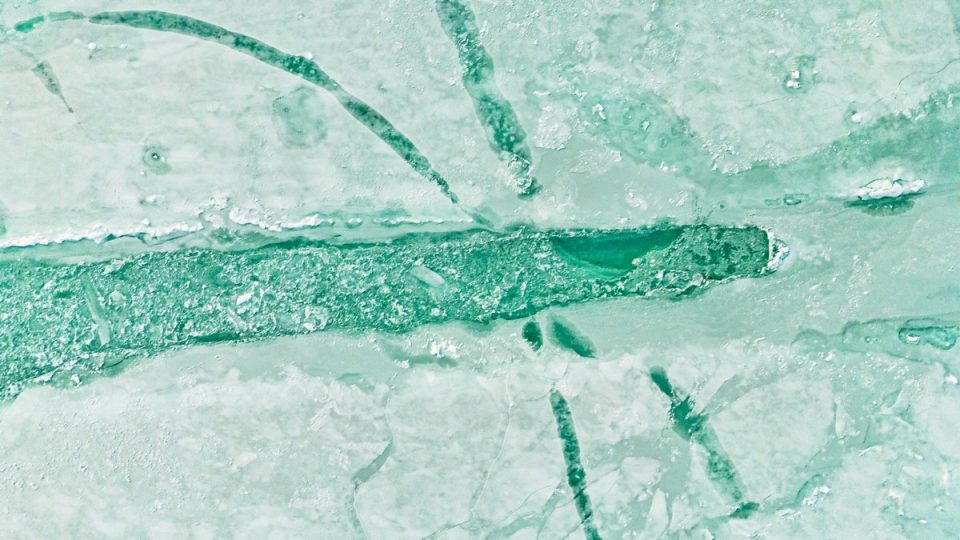
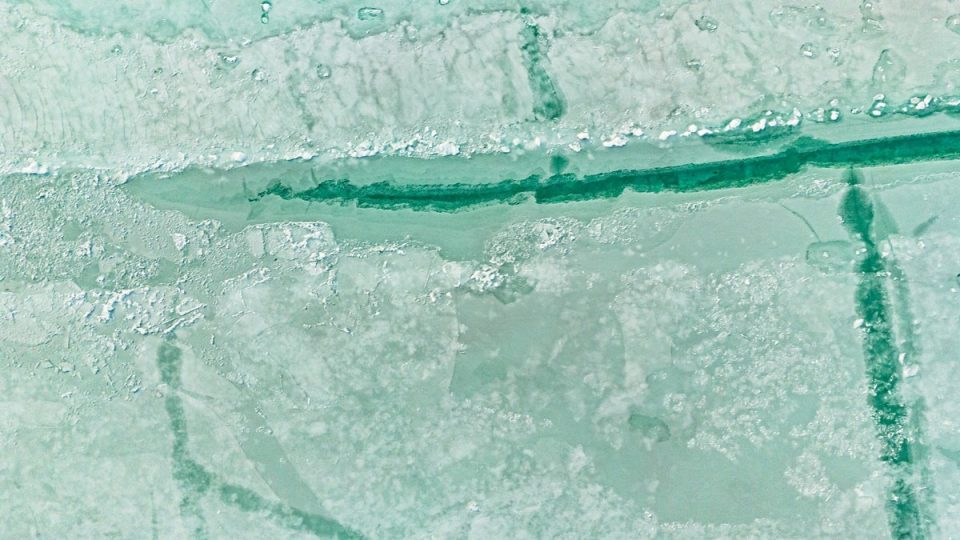
However, venturing into this water is decidedly risky – after all, no one knows how deep it gets farther on. You could get stuck in the middle of the water, the engine stalls – then what? Wade back waist-deep through ice water to the other cars and their more cautious drivers? Then wait a week or two for the naled to freeze over (who knows how much longer it’d keep flowing), and then cut your car out of the ice layer? Not the best of pastimes… Which is why everyone had stopped dead, waiting.
Waiting for what? For the road services – who’ll come and dig out an alternative: a detour around this natural cataclysm. But hold on! We’d overtaken them along the way! Meaning the road crews were already en route:
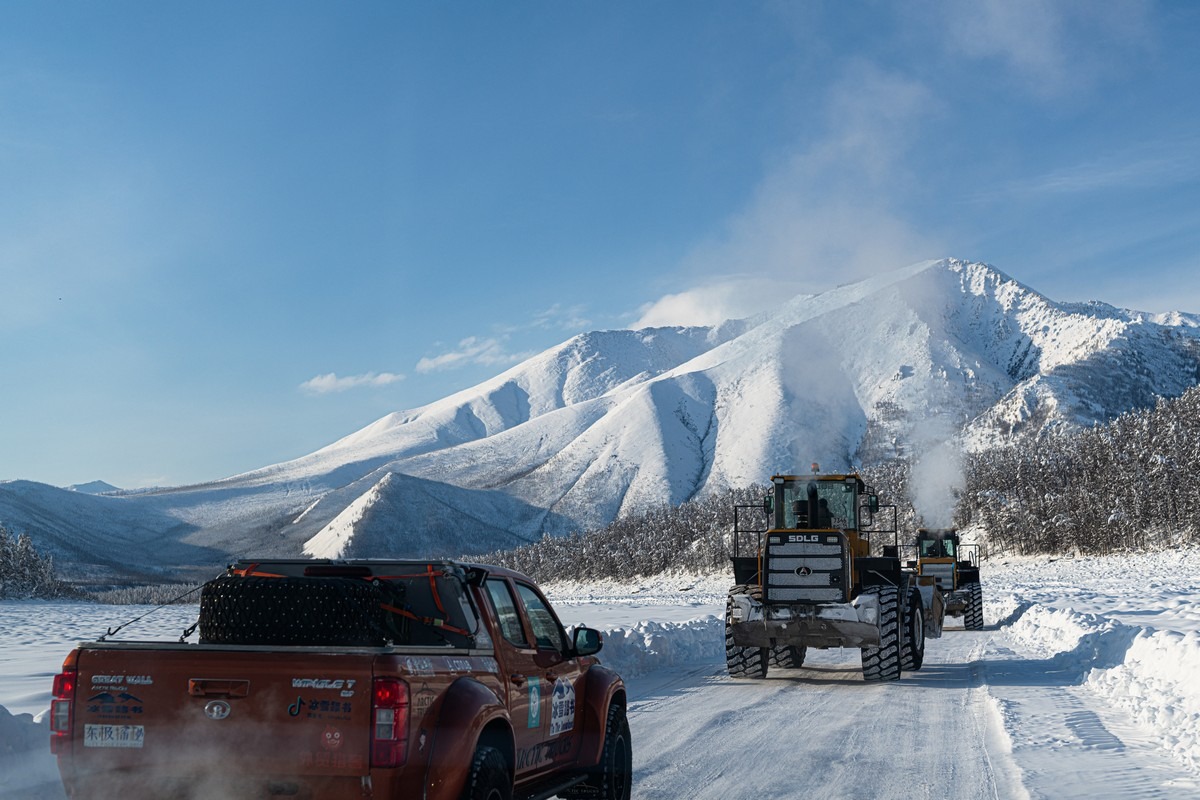
Still, by the time they’d arrive, and by the time they’d dig a detour (no guarantee of that), with the water rising and rising all the while – we had to look for a way around ourselves. And while long-haul semis and light SUVs have no business in there, there were plenty of us, and we were well prepared – so it was worth a try…
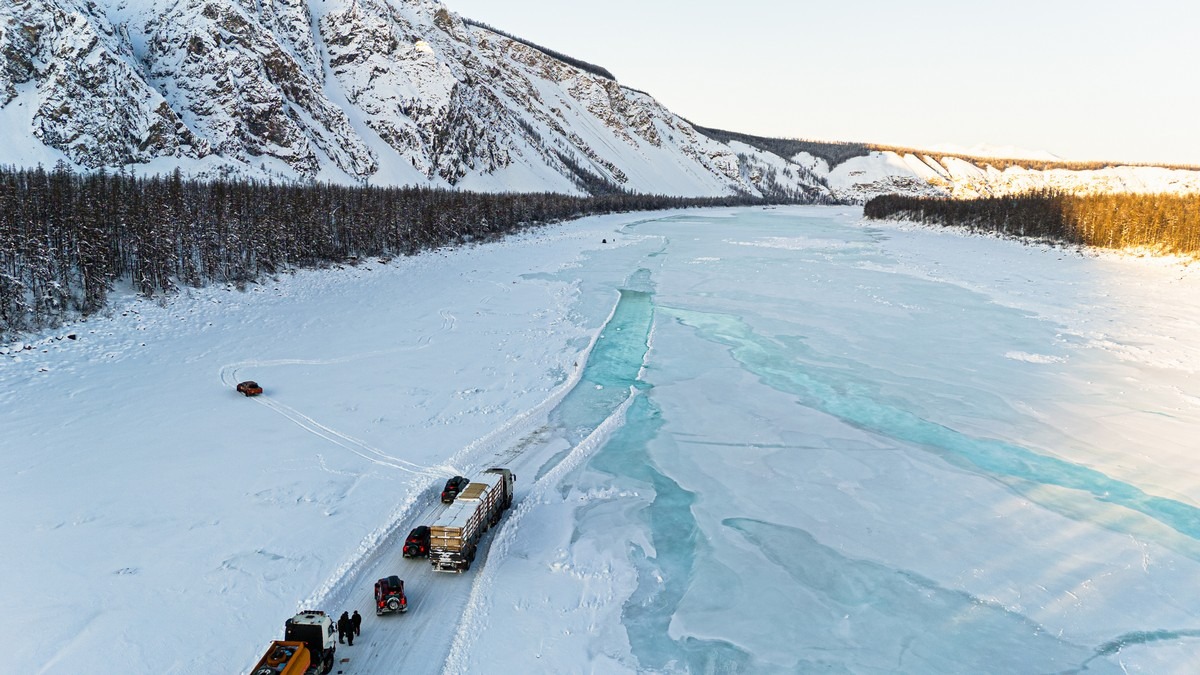
Keeping closer to the slightly higher bank, along the edge of the flooded ice…
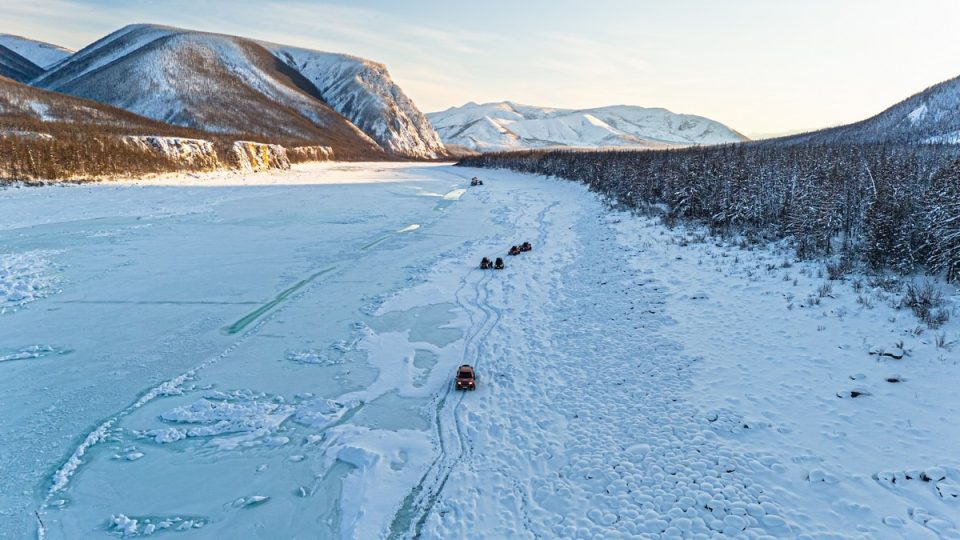
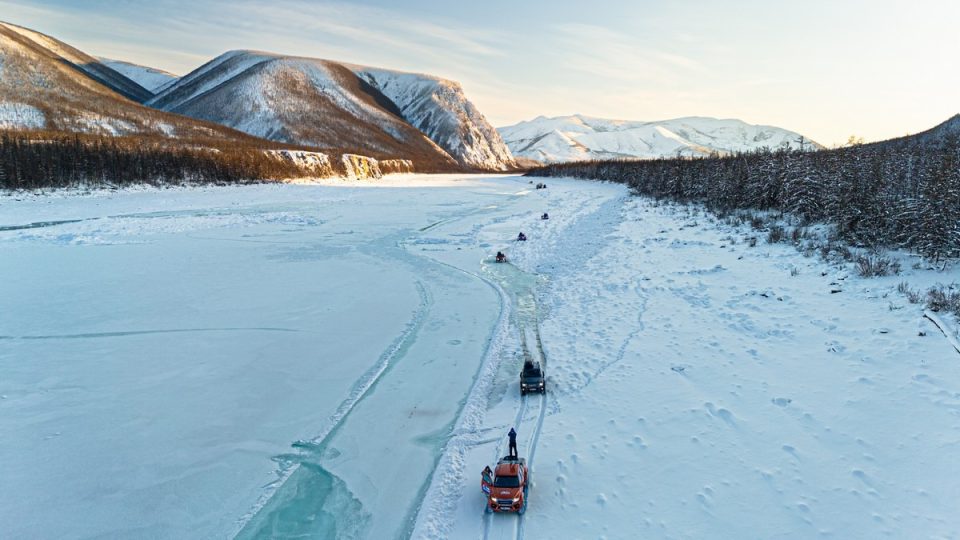
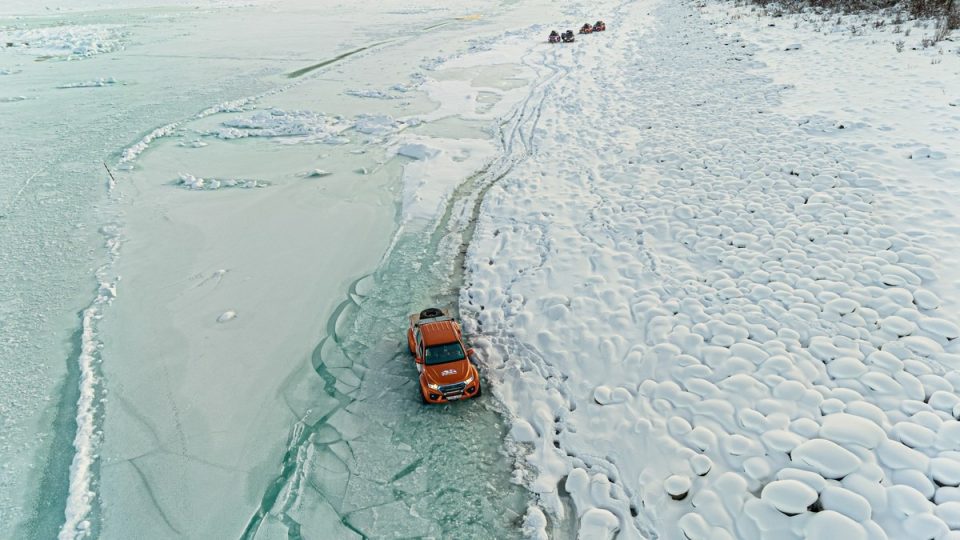
A tad nerve-wracking – nobody wants to get stuck for hours, soak their feet in the freezing cold, and trudge back on foot…
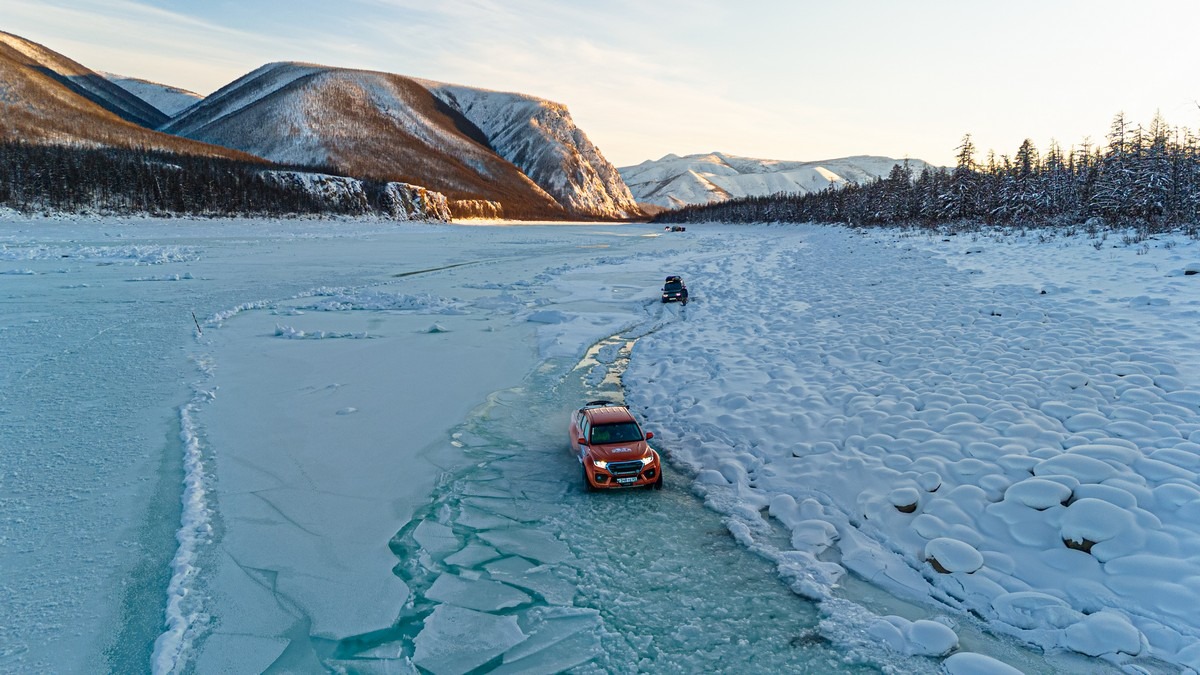
By the way, after adventures like these your brakes are gone – the entire braking system is coated in ice! So if you ever find yourself in a situation like this, stay alert! After puddles in a minus-30-degree frost, you’ve no brakes! They need warming up for a while afterward…
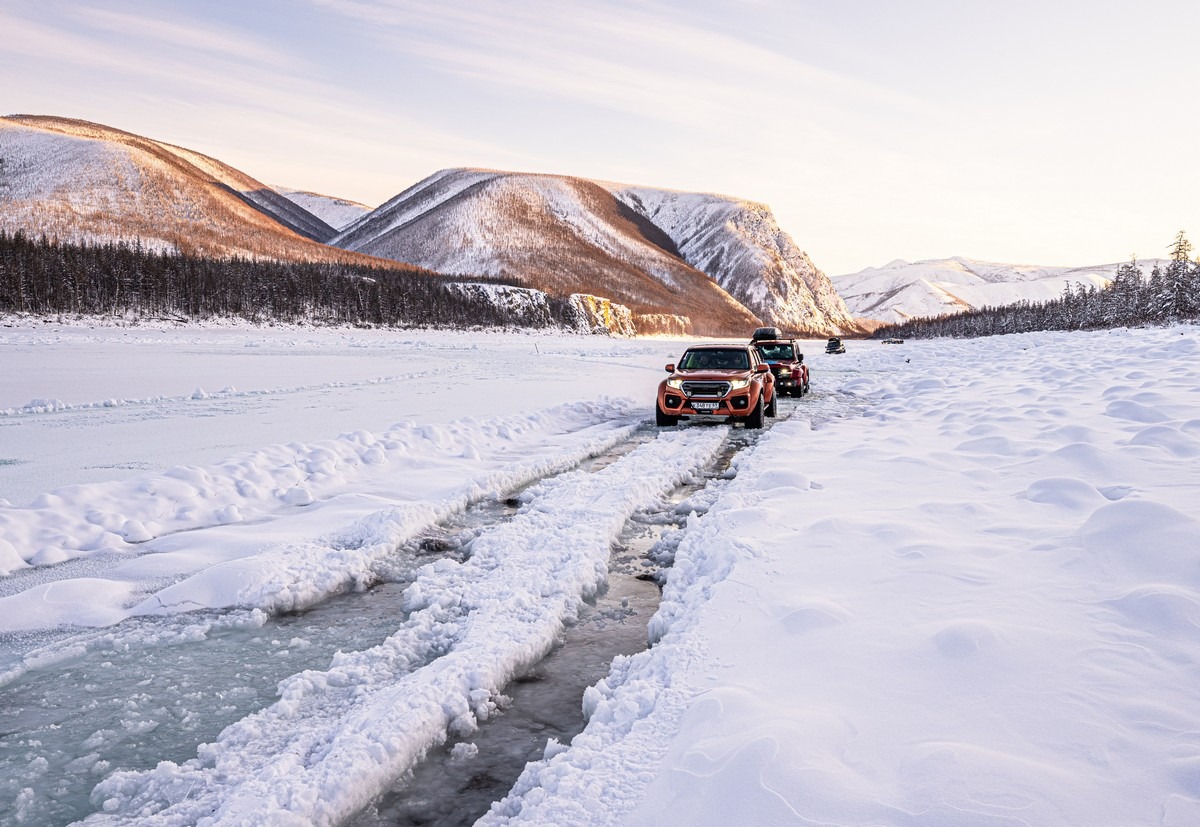
But we managed it! We made it through! And we even pulled out a UAZ Patriot that had gotten stuck in there:
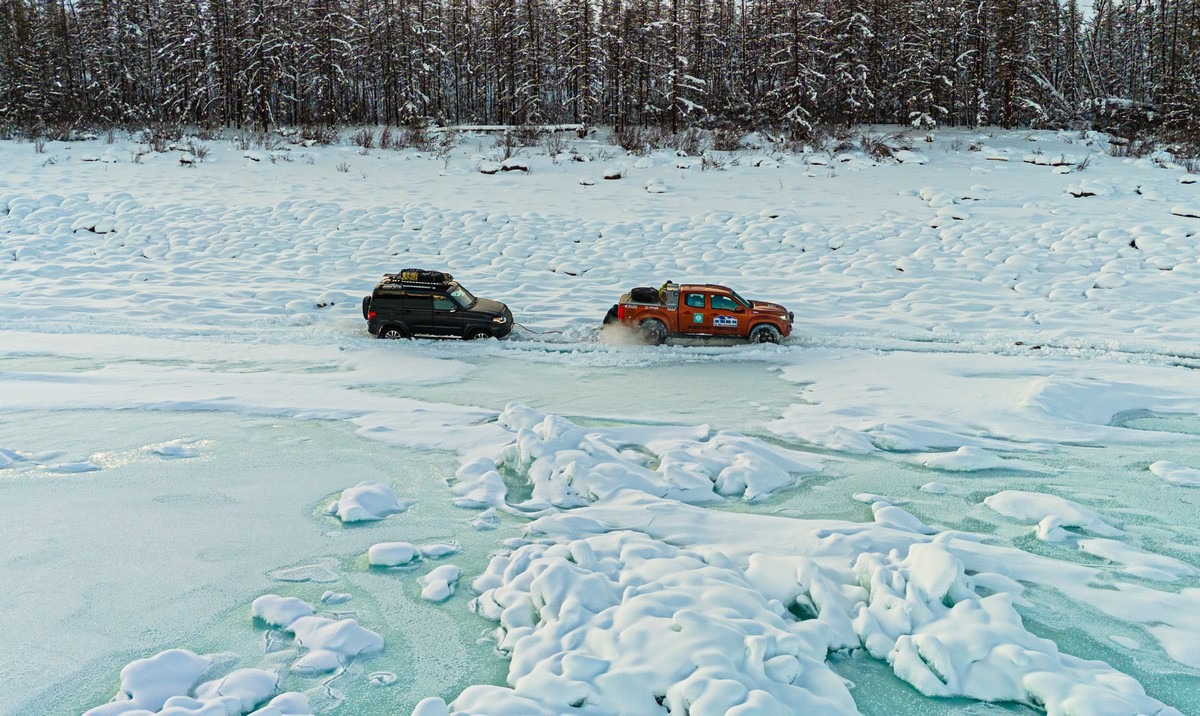
And then there are the pustoti – “voids”, which occur regularly:
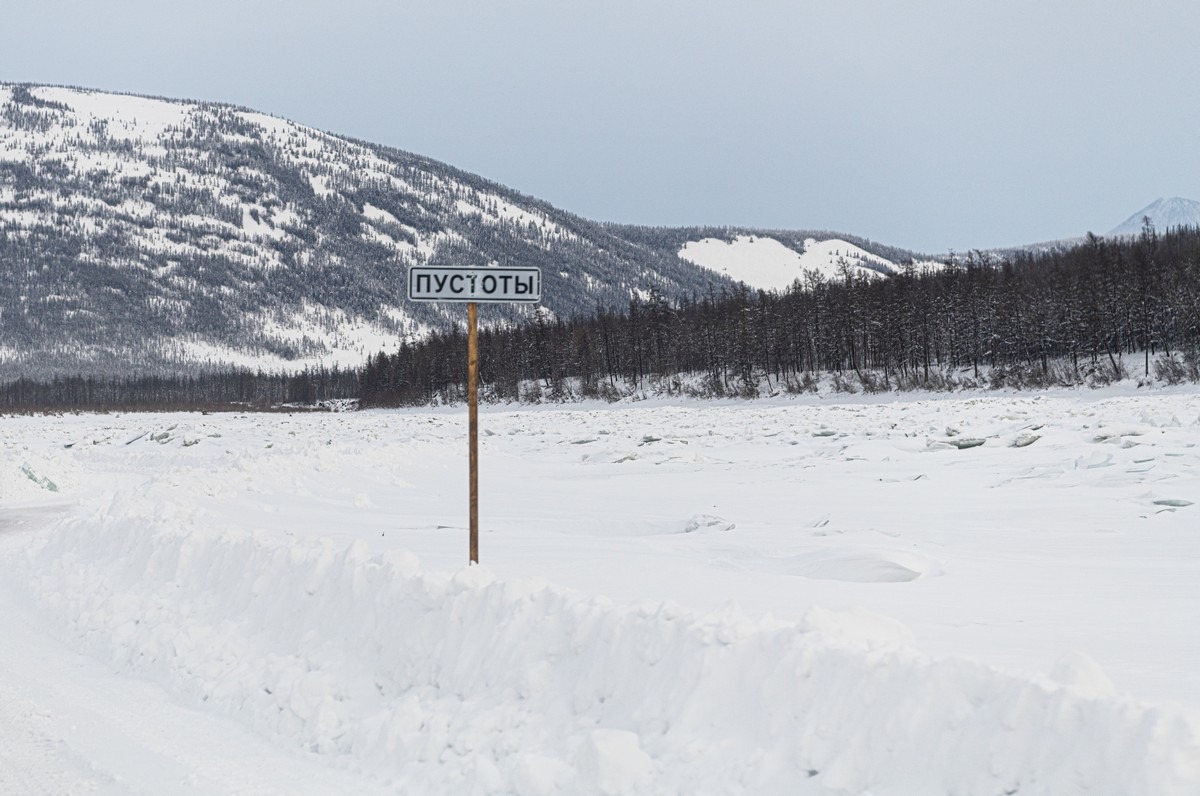
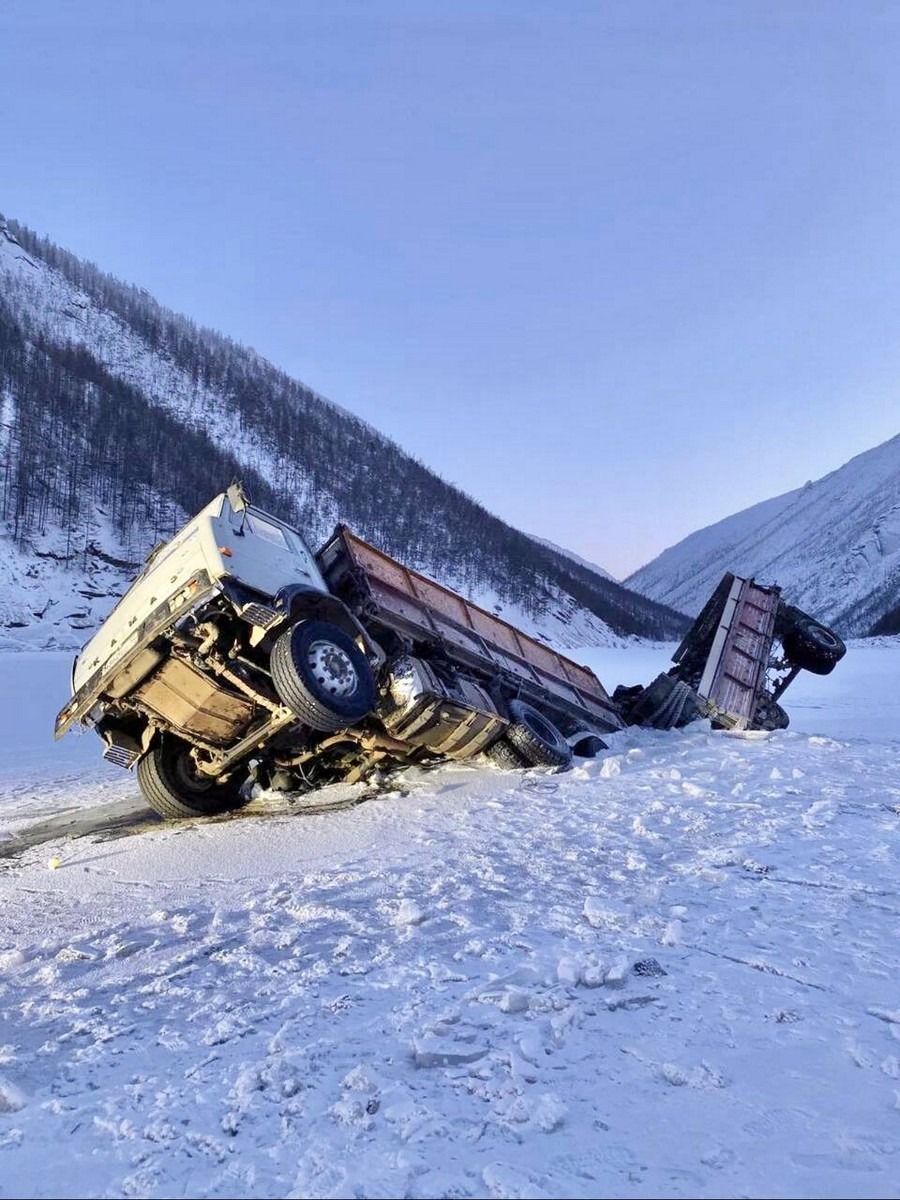
These are “naleds in reverse”. That is, if a naled is water escaping onto the ice under the high pressure of blocked-up tributaries, then voids are what you get when the ice has frozen, the water beneath has drained away (with no new water coming in, owing to blockage), and under the ice there form… well, these very voids. To us little ones they pose no threat, but for heavily laden transport they can prove fatal…
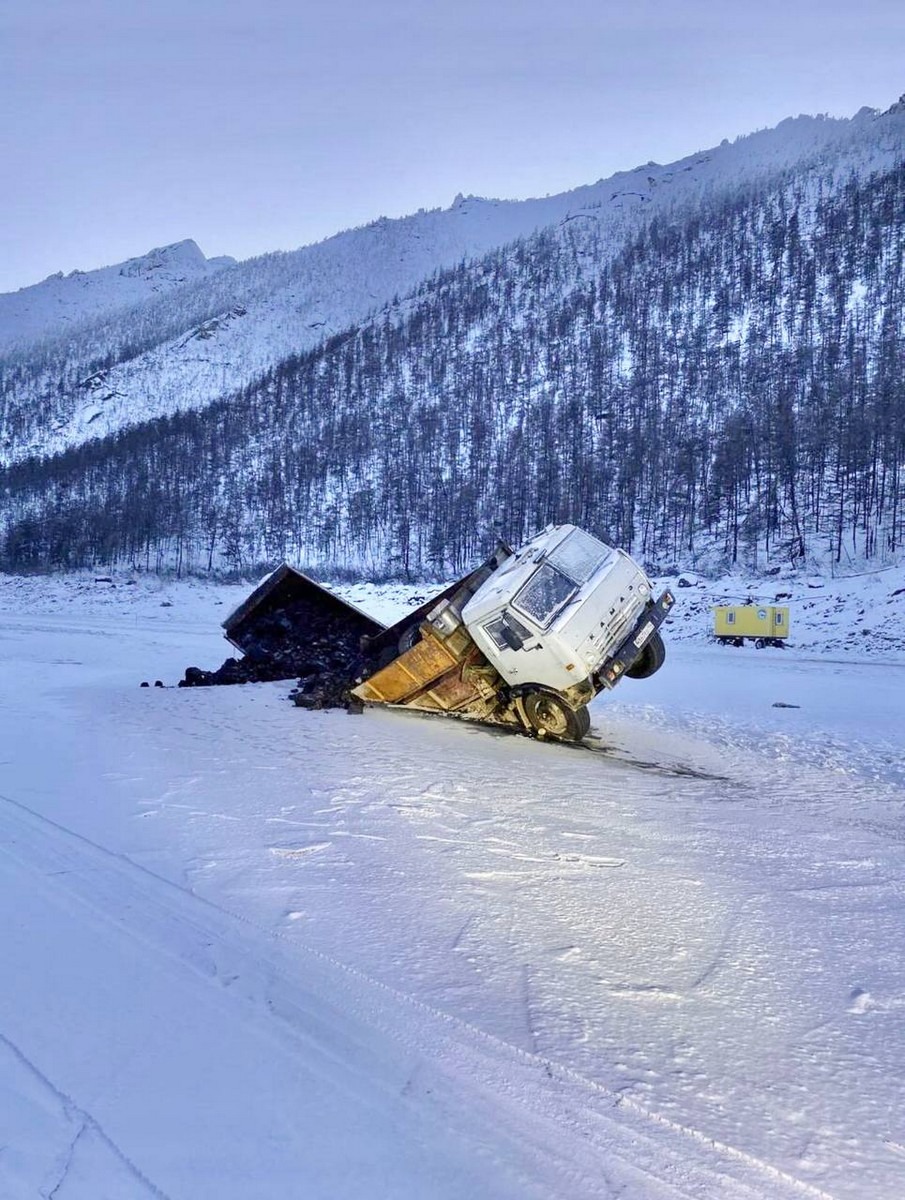
These two pics aren’t mine – and I can’t even credit a source since they reached me through personal contacts.
But that was it for incidents: the naleds were overcome – and off we drove toward our beds for the night!
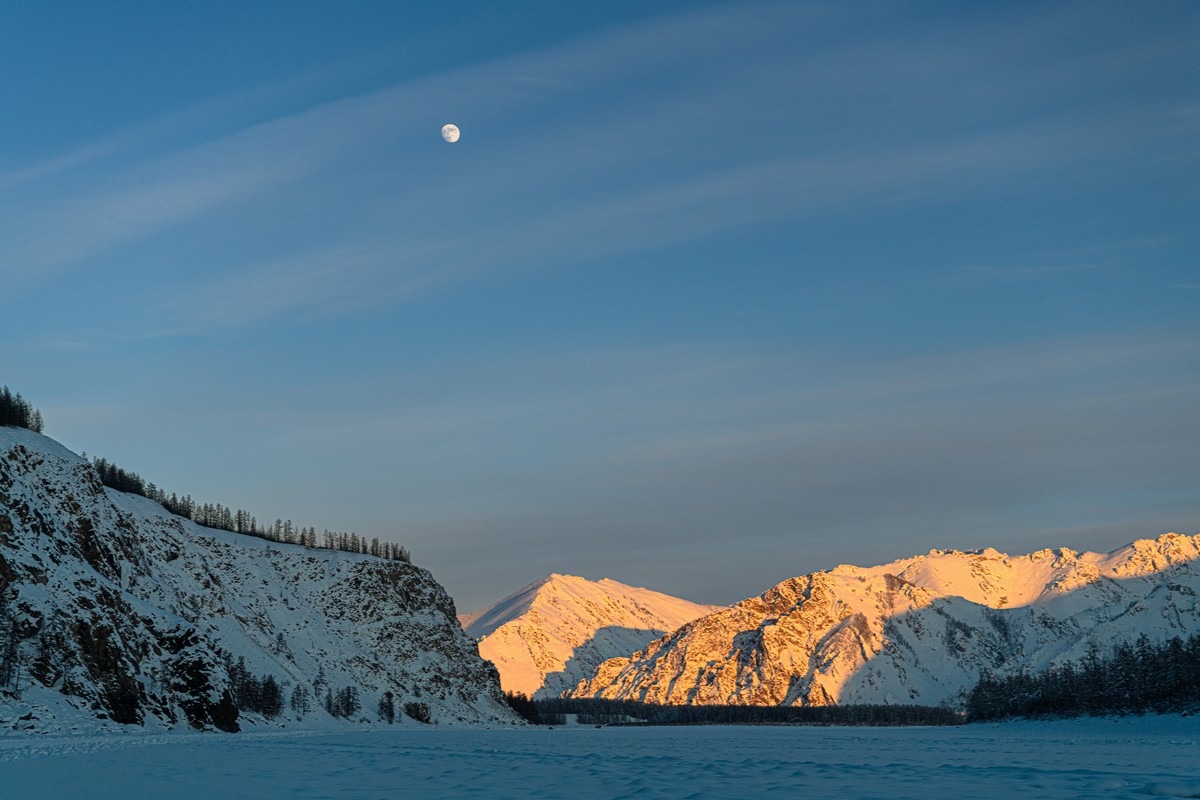
Arrived! Albeit well after nightfall…
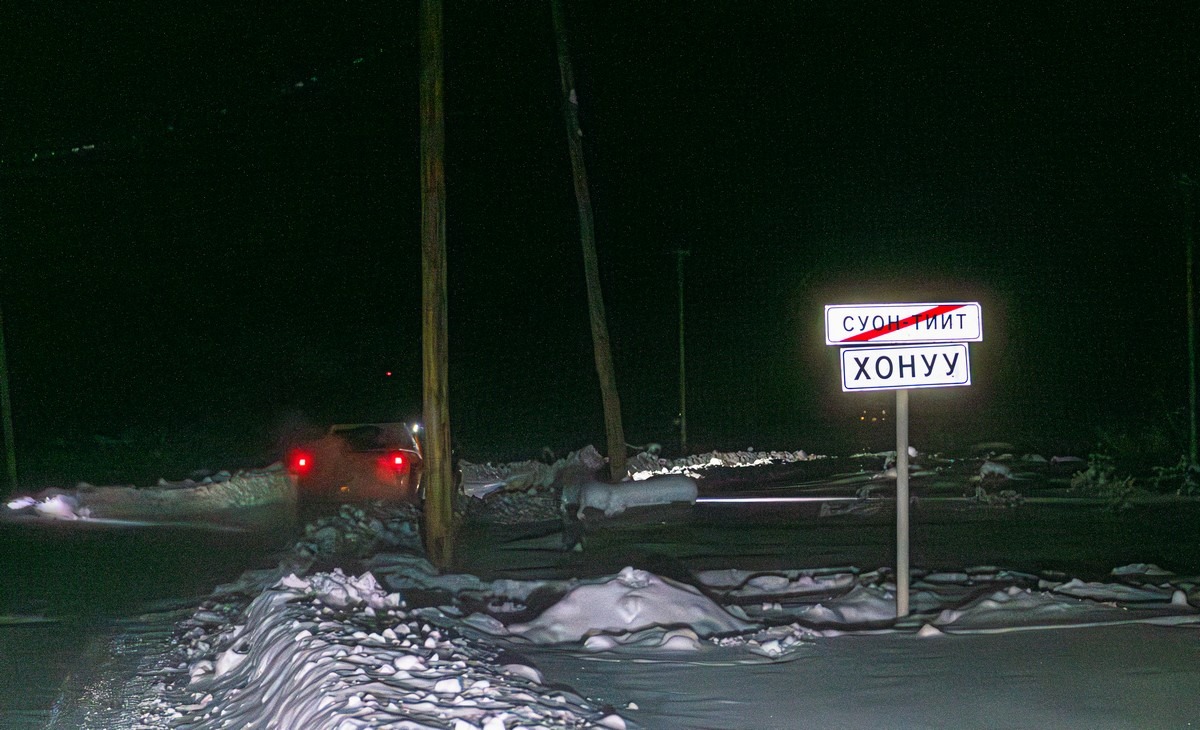
To be continued!…
The best hi-res photos from our Irkutsk-Yakutsk-Magadan-Yakutsk road-trip are here.

