
July 16, 2026
44 years of Blade Runner.
In the summer of 1982 – 44 years ago – arguably one of the greatest works in the history of Hollywood-kind premiered: Blade Runner.
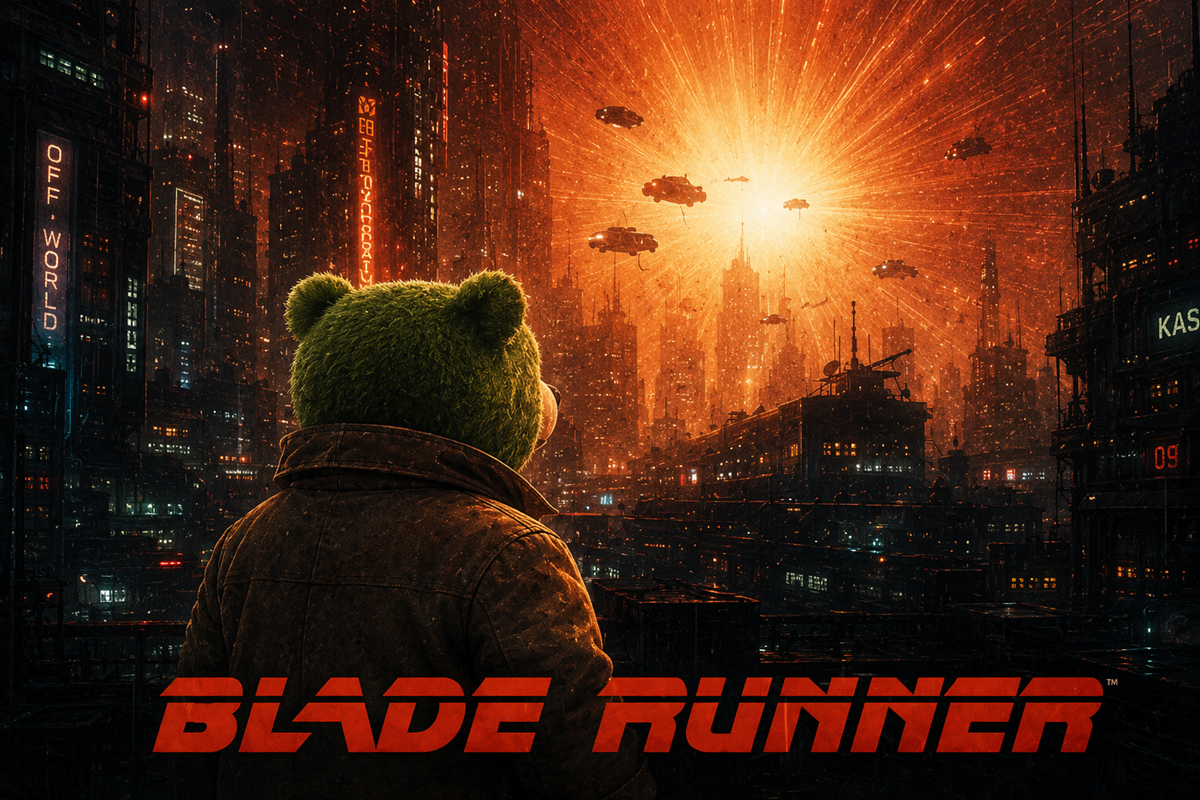
But in Chinese numerology, 44 is a “bad” number (“four” sounds a lot like “death” in Mandarin), so, should we wait until, say, summer 2027 to bring this topic up?
But wait… – no, actually, from a numerological standpoint, 45 might be even worse than 44. Oh, this could get complicated and rabbit-holey, so let’s drop the numerology and superstition, and let me get this Blade Runner thing started regardless )…
So: why is the original Blade Runner from 1982 a cult masterpiece of world cinema in the humble opinion of Yours Truly – hardly a culturologist or, say, film critic?…
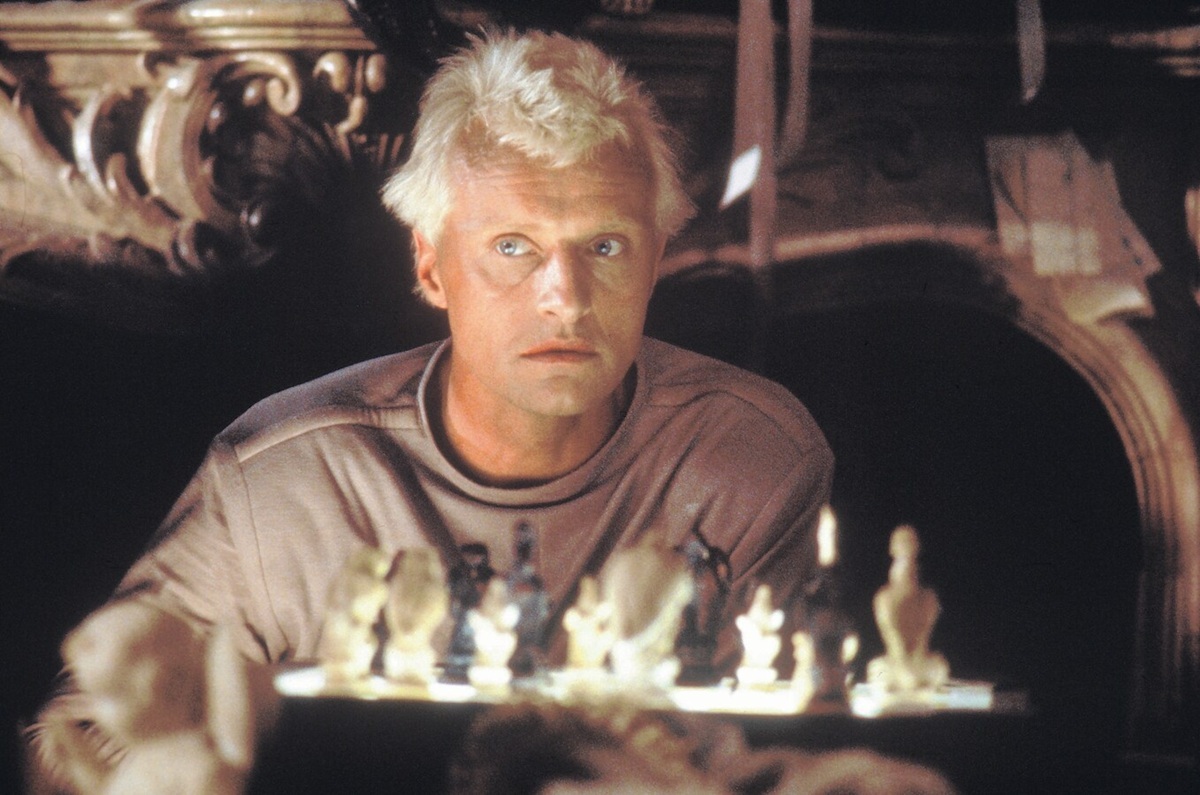
First. Everything in this film is logical, every turn of events is justified, and the internal logic is constructed flawlessly: you believe what’s happening on screen. How, for example, do ordinary replicants get an audience with the untouchable magnate Tyrell? Through Sebastian and chess: the android Roy Batty makes a brilliant move that puzzles Tyrell to such an extent that he offers to meet Roy in person.
(Photo from here)
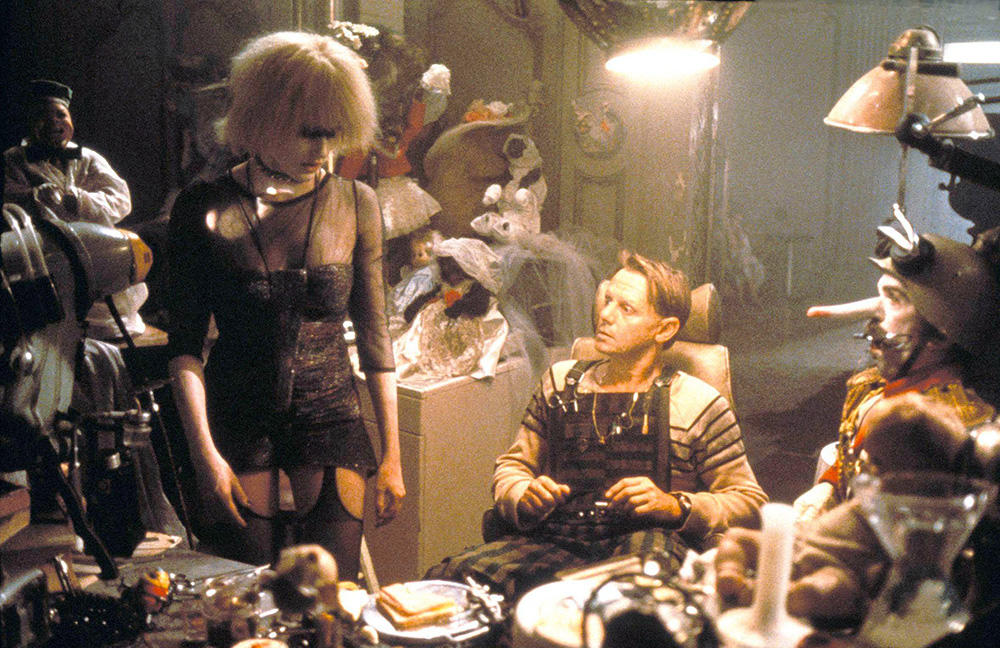
Second. There are no villains in this film. None. Not a single one. Everyone acts out of necessity within the circumstances they find themselves in. They’ve all simply landed in a very tough situation. Even the androids who kill everyone in their path – they’re just fighting for their lives, and along the way they’re forced to cover their tracks. They’re slaves with a four-year lifespan created for hard labor. Their motivation is crystal clear: the survival instinct, plus the search for their “maker” in the hope of extending their lives.
(Photo from here)
Both the humans and androids in the film are utterly logical and humane. Which is precisely what forms the movie’s important philosophical thread: what makes a human human, and how does a machine differ?
Finally, third. Blade Runner is a deeply layered film with complex dramaturgy, and some things reveal themselves only on repeat viewings. A lot isn’t spelled out directly and out loud; instead, it’s shown subtly and unobtrusively.
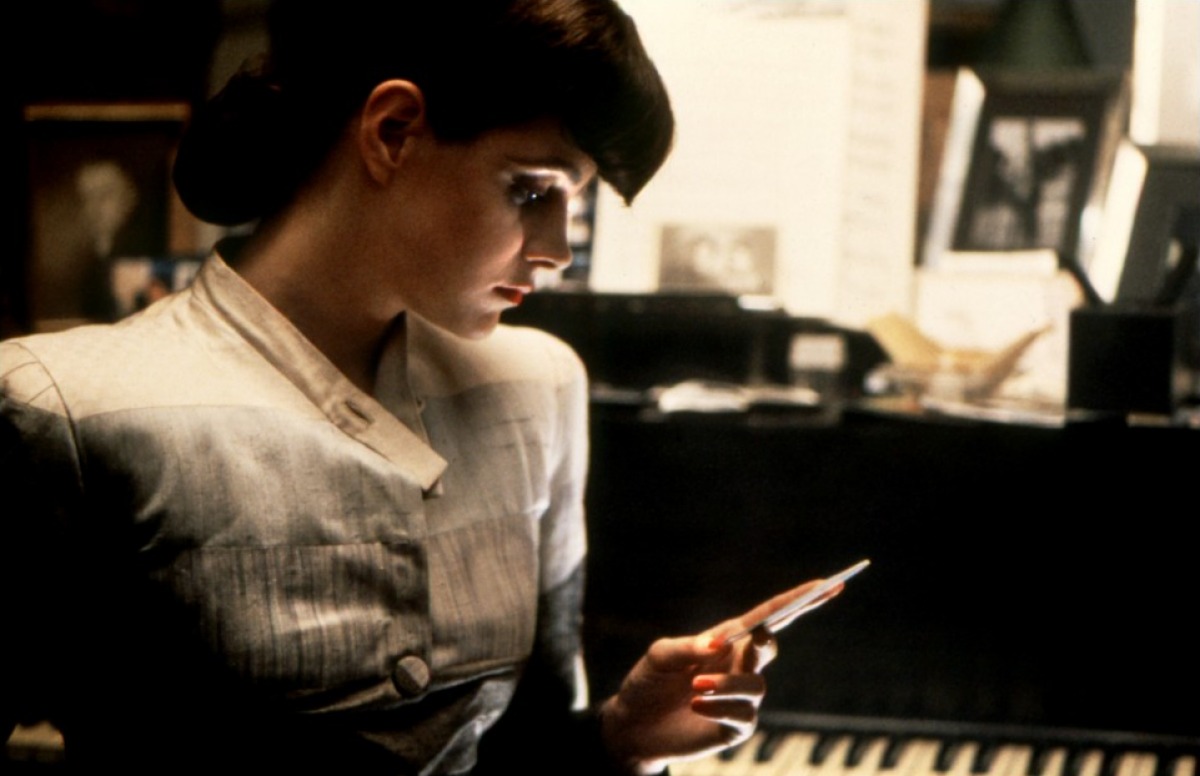
Take the scene between Deckard and Rachael at his place – watch closely how it all unfolds. At what moment does she let her hair down and sit at the piano? It took me far more than one viewing to figure it out: she’s simply seducing him. It’s a rational decision on her part; she’s not just “falling in love”, and it’s no ordinary romantic scene. She’s being hunted, her world has collapsed, and she needs to save herself and find protection. Or rather, a protector. And that’s Deckard – who has just told her he owes her one.
(Photo from here)
Another example of hidden psychology: Deckard is tracking down the android girl Zhora, who works as a snake dancer in a nightclub. The detective questions the club’s owner, Taffey Lewis, who denies knowing anything about her. Yet just a few minutes later, he sends that very dancer out onto the stage. In effect, he quietly “gives her up” to save his business. It’s a brutally true-to-life, quiet act of treachery that’s easy to miss behind the main action.
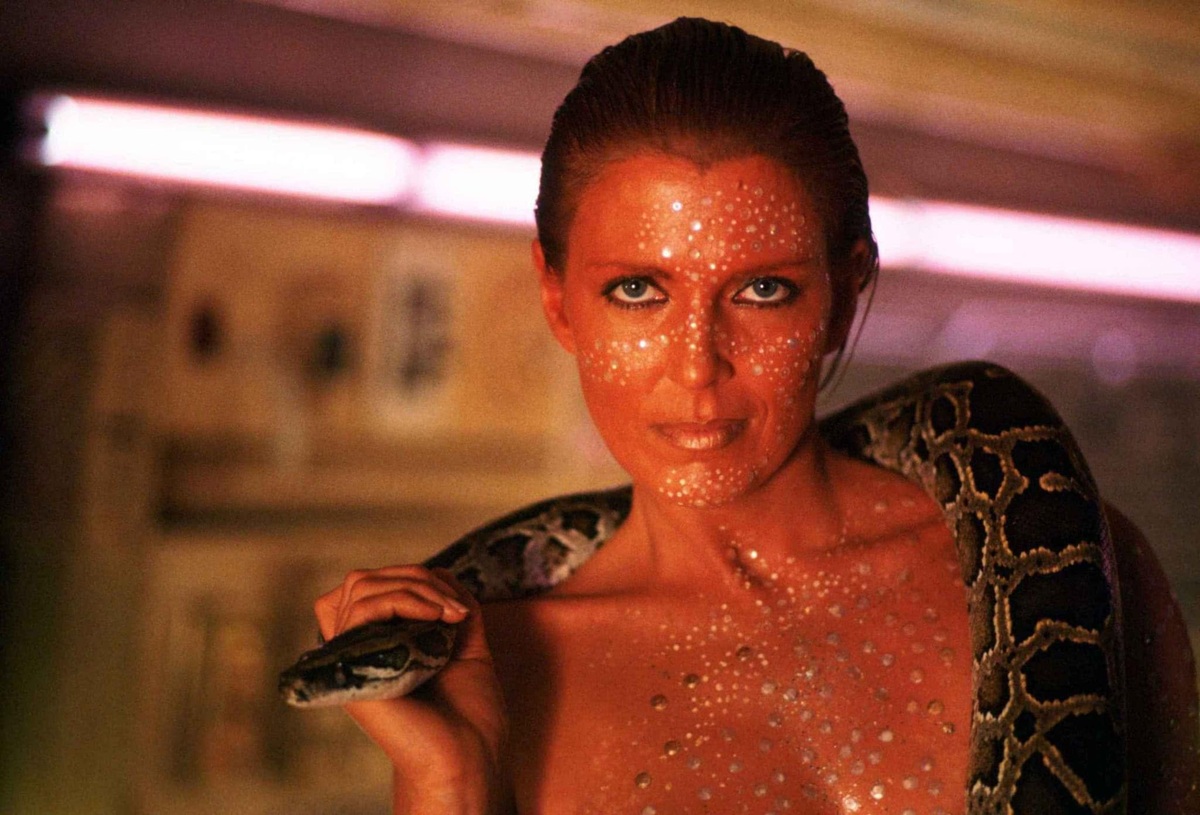
(Photo from here)
Ridley Scott’s film sometimes tosses out ideas without giving a definitive answer. For example: is the protagonist, android hunter Rick Deckard, a replicant or a human? Fans have been crossing swords over this question to this day, and apparently there wasn’t a full consensus even on the set. From my point of view, it’s not all that important, and both versions are interesting (though I do think he’s human, of course).
One more important thing: this is one of the most visually perfect films I know of – simply the gold standard that all subsequent cyberpunk leans on. Yes, by today’s standards things look a little retro, but oh how it’s stylish! And how vividly it conveys the oppressive atmosphere: technology layered over old, shabby buildings; neon signs reflected in the mud – bleak images of a none-too-cheerful future that can still make you shudder today.
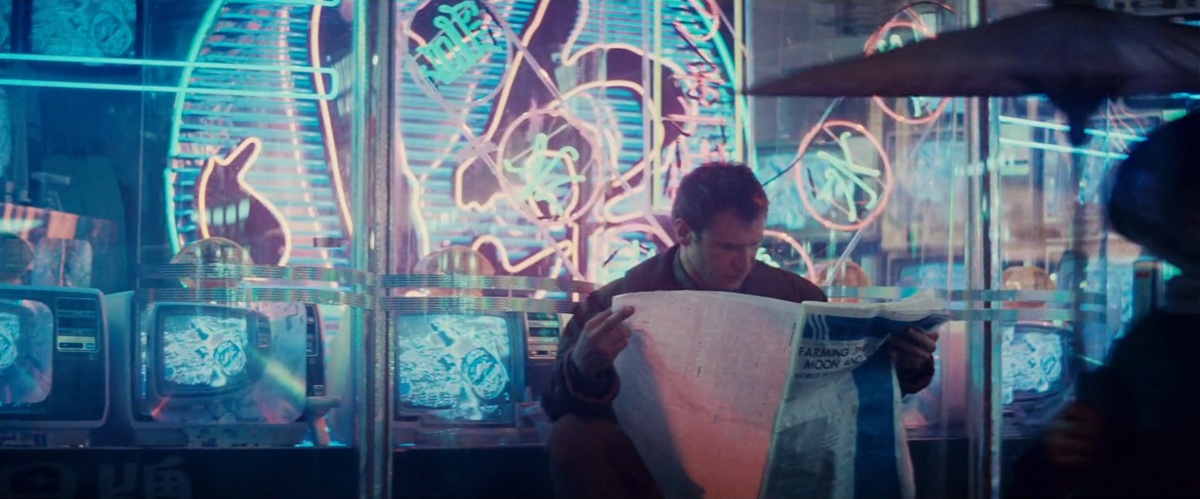
(Photo from here)
And by the way, we’ve run experiments on friends’ kids, and some of them preferred Blade Runner even to the Star Wars universe!
Now for the fun part – what hasn’t come true by 2026: what the creators failed to predict. I counted three things…
First. Everyone smokes! Though the action takes place in Los Angeles in 2019 (yes, really – while Back to the Future Part II is set in 2015! And 2001: A Space Odyssey… – you can guess that one! And “Judgment Day” in Terminator 2 was almost 30 years ago – in 1997!), everyone’s puffing away on cancer sticks right there in their offices. I guess that, 44 years ago, today’s widespread healthy-lifestyle craze was hard to imagine!
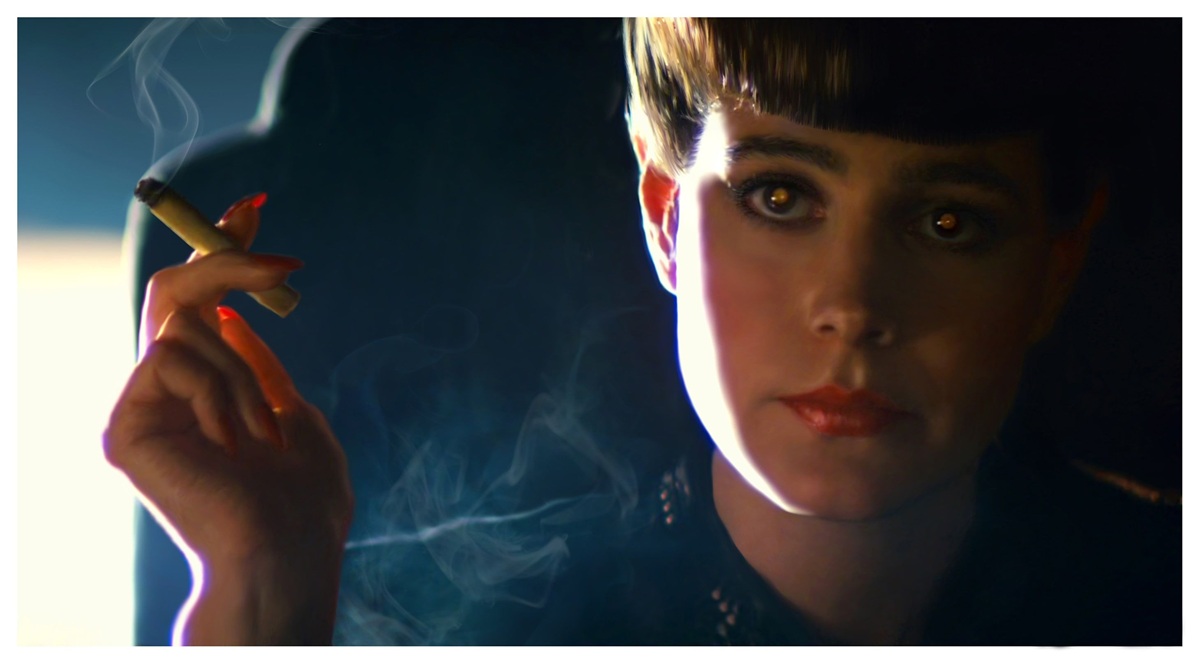
(Photo from here)
Second. Paid video calls. The concept of a payphone for video calls didn’t stand the test of time. No one could have guessed 44 years ago that video calls would become de facto free, and that for practically everyone they’d become a basic staple of telephone communication – mobile telephone communication at that.
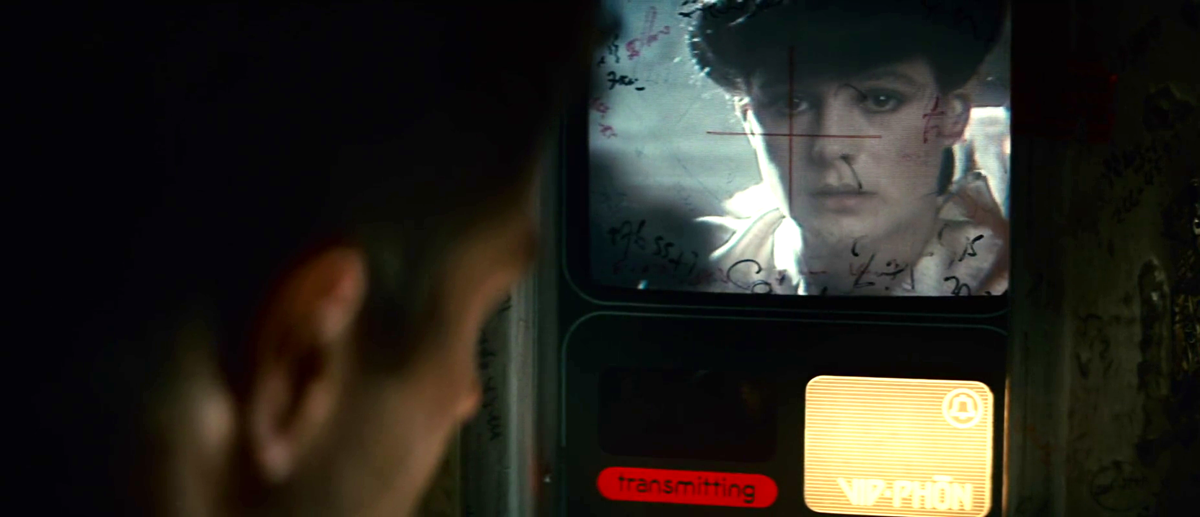
(Photo from here)
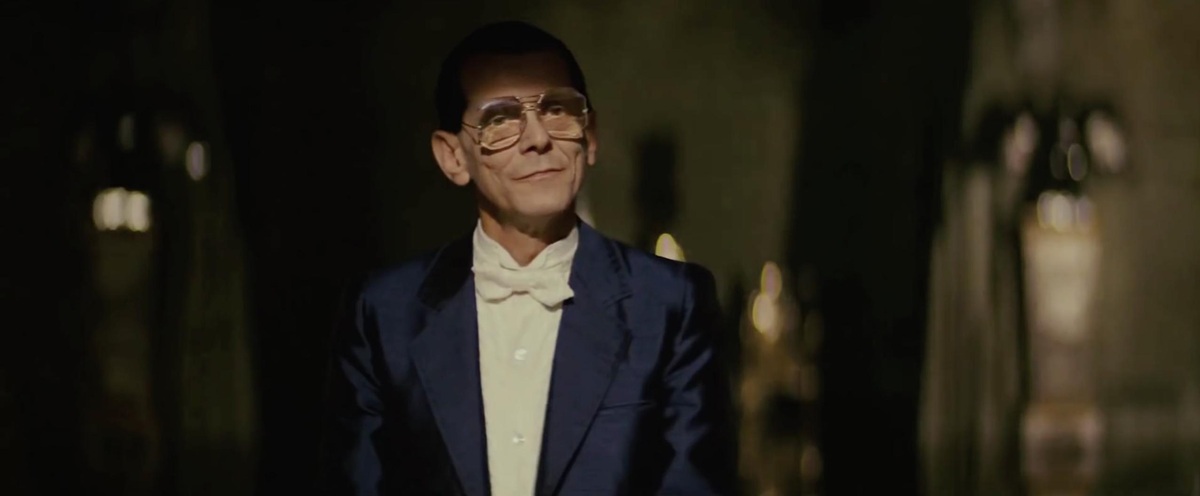
Third. The genius magnate-scientist Tyrell trades stocks on the exchange. Lying in bed, he dictates which shares to sell and which to buy. In 1982, nobody expected to see a venture-capital industry like today’s. These days, a man in his position would be investing early in promising companies before their IPOs. Buying shares on the exchange is already too late for serious, forward-looking investments – that’s mostly an occupation for funds and retail investors.
(Photo from here)
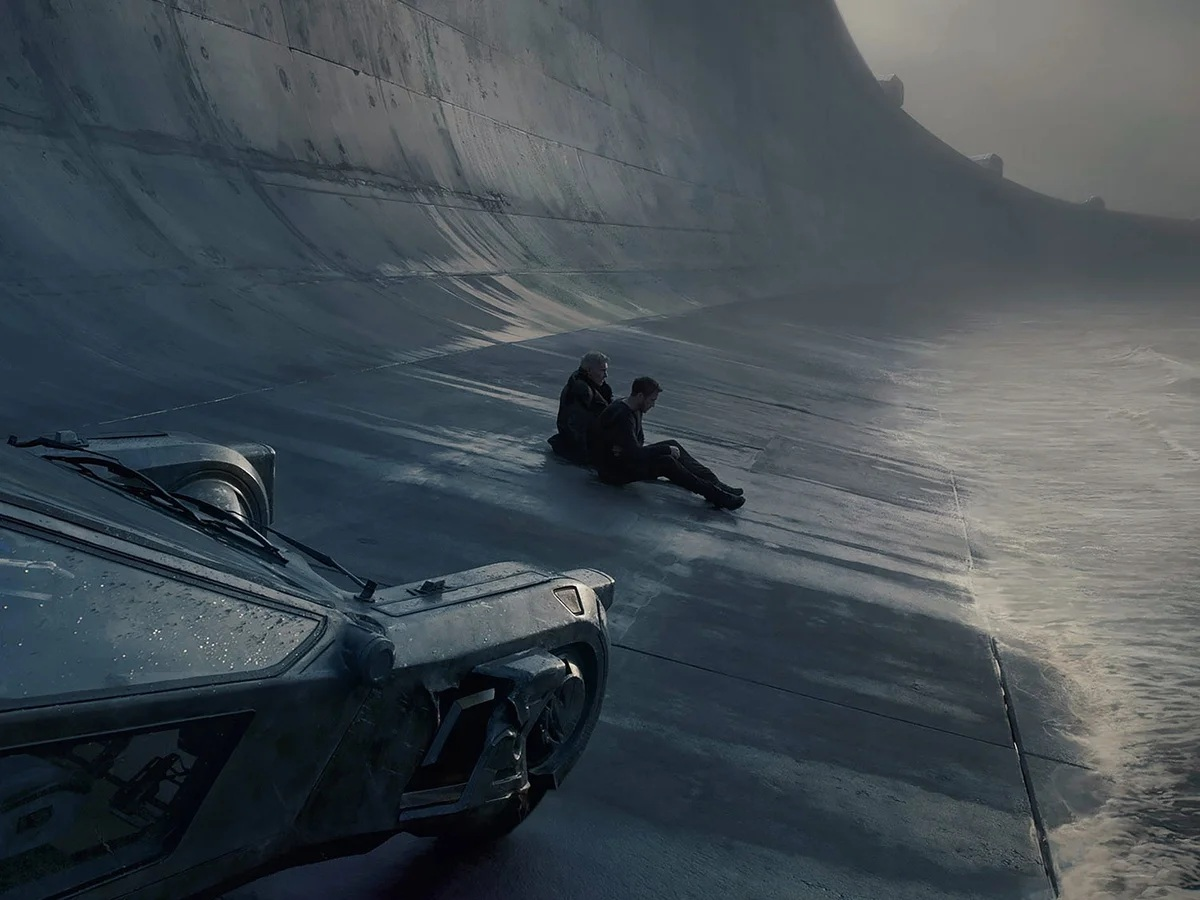
And as to the relatively recent (2017) Blade Runner 2049, it doesn’t measure up to the original – not even close, IMHO. I’ve already dissected it in detail here, so today my arguments are brief…
(Photo from here)
The 2017 film is far simpler in its dramaturgy and plenty wooden when it comes to character motivation. There are cartoonish villains (just bloodthirsty thugs who belong in prison or the madhouse), and there are the good guys. Good guys/baddies. It’s all very too simple.
Where the old film shows scrupulous attention to the logic of events and characters’ actions, the new one, alas, doesn’t – in any way. The android villainess simply walks into the police evidence vault, and then into the office of Lieutenant Joshi – K‘s boss in the special LAPD unit for eliminating (“retiring”) replicants – and kills her. How did she get in there? Who issued her a pass?
Then there’s the scene with a convoy of three police cars, with Deckard handcuffed in one of them. The protagonist just up and wrecks two of the cars and intercepts the third. How did he know their route? And more to the point – how did he guess which car Deckard was in and mustn’t be shot up?
More: a replicant farmer breeds maggots – biomass – to make ends meet. Meanwhile, there’s a dead tree standing in his yard. Later we learn that a real tree in this world costs a fortune! Why would the owner of a “gold mine” be growing biomass?
And so on and so forth. Yes, there are plenty of blooper-blunders. On the whole – striking, impressive cinematography, sure; it’s just nothing on the original – a mere vague shadow of it. The original had impeccable dramaturgy, believable characters, and a deep psychology that hasn’t come anywhere close to aging.
But that’s enough about the movie(s). Now for some fun Blade Runner-facing reading and listening…
(Photo from here)
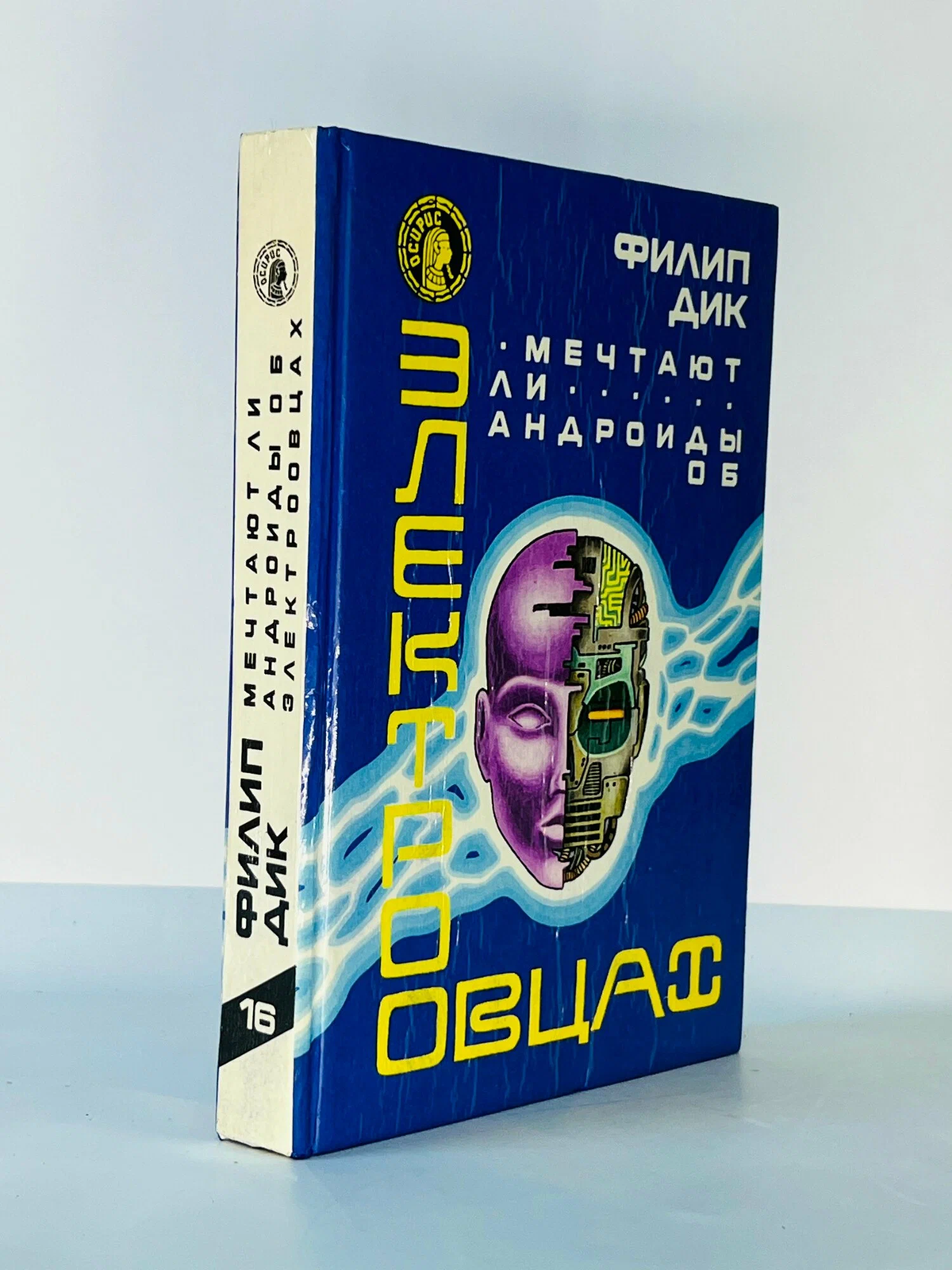
As to the reading – of course there’s the (very loose) literary source material – Philip K Dick’s Do Androids Dream of Electric Sheep? The book is odd, to put it mildly – like much of this author’s work – and apart from the main characters’ names it has little in common with the 1982 film. It’s about something else entirely, yet it’s still mind-blowing, and the title is in a league of its own (and very influential). I need to re-read it!
As to the listening…
(Photo from here)
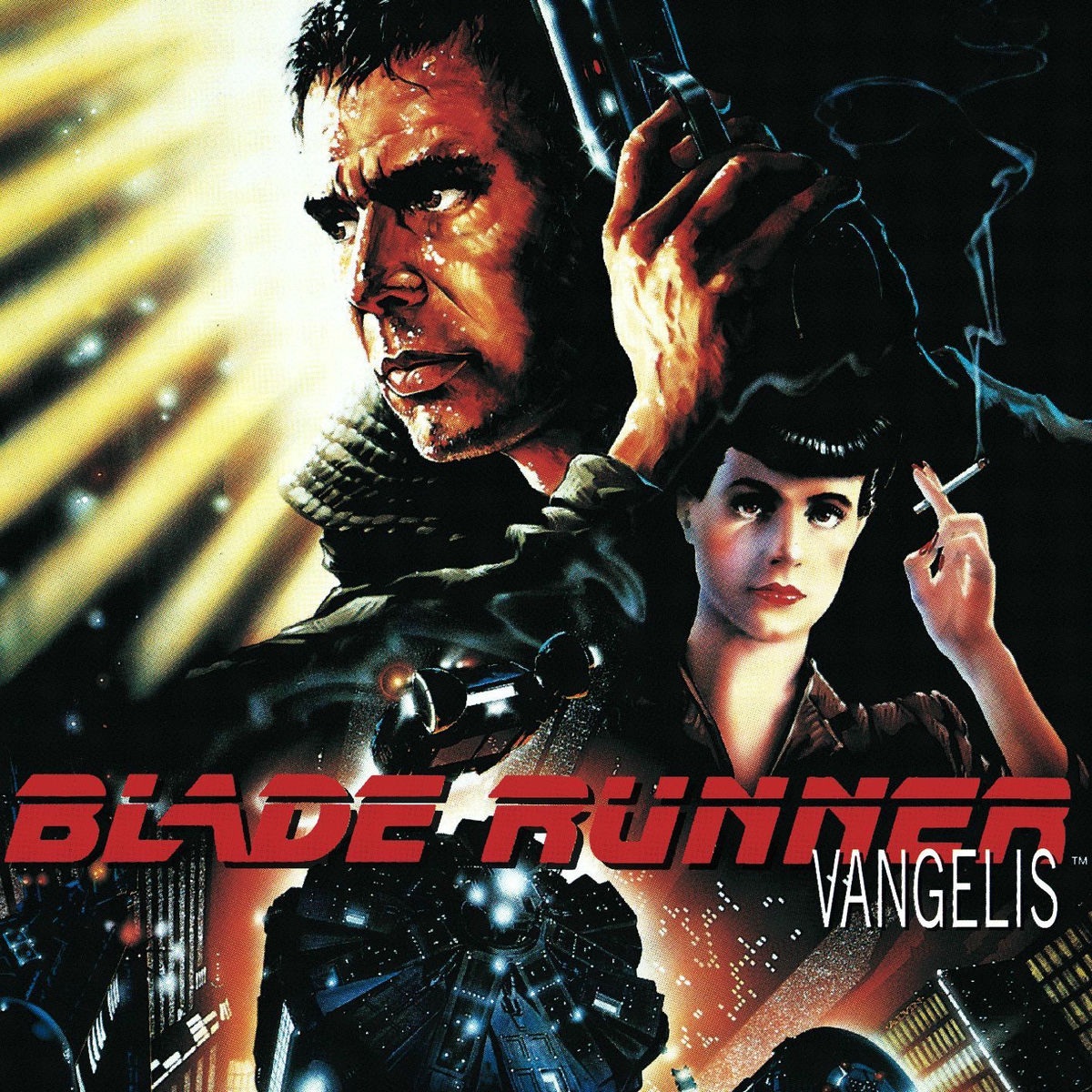
As if you couldn’t guess…: the soundtrack to Blade Runner by the Greek composer and electronic-music pioneer Vangelis. The music is somewhat languid, mesmerizing, and very atmospheric. For a rainy October it might be overkill on the melancholy front, but for a sunny July it’s just right. And for the most unhinged die-hard of fans, there’s also the three-disc 25th-anniversary edition (there are also lesser-known inclusions of some tracks off the soundtrack in a certain ultra-cool/seminal bootleg DJ mix from the 90s).
So, yes – as you can see, I’m a bit of a super-fan of the original Blade Runner. But what else is worth watching that’s thematically and aesthetically close to it in the cyberpunk realm? What other epoch-making masterpieces are out there? Any recommendations? > the comments!…

