
May 26, 2026
Underground guerrilla warfare, Vietnamese style.
After a packed business program, our short, culturally-contemplative race around Vietnam (taking in the Cao Dai Holy See Temple and also Mount Ba Den) continued…
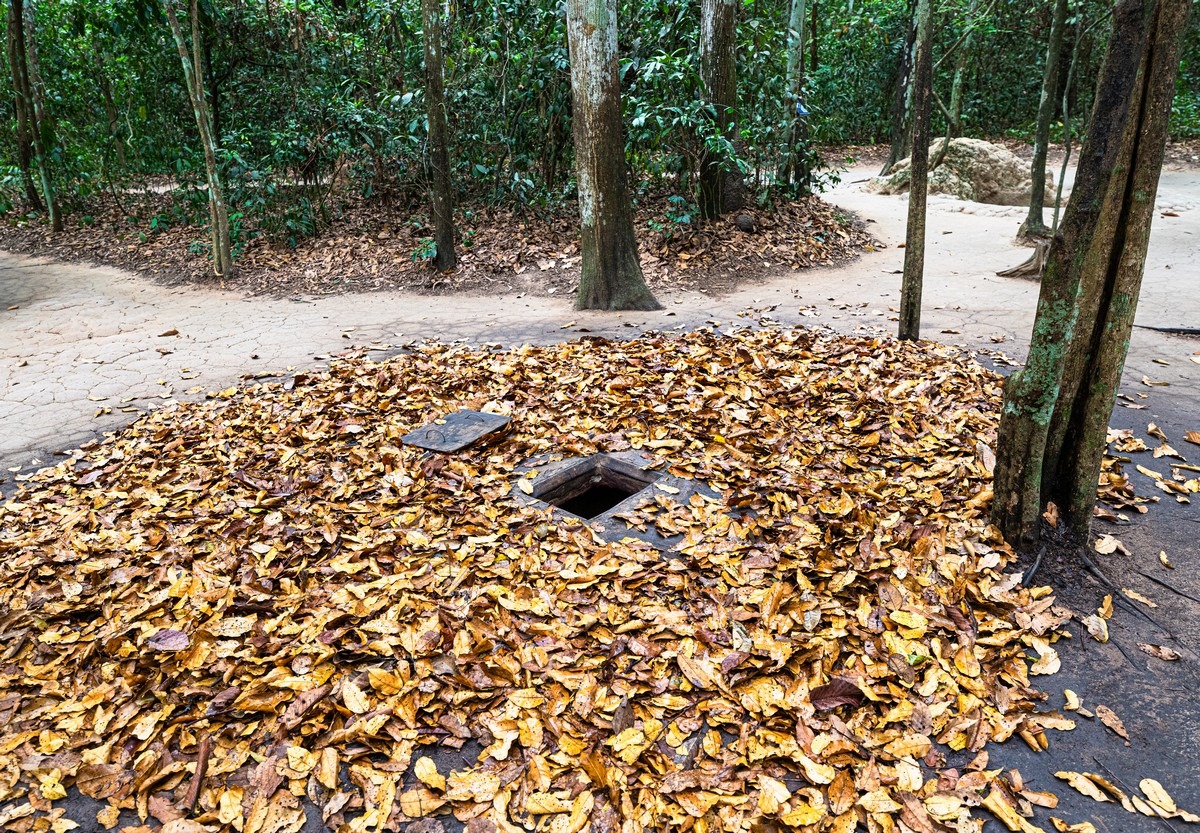
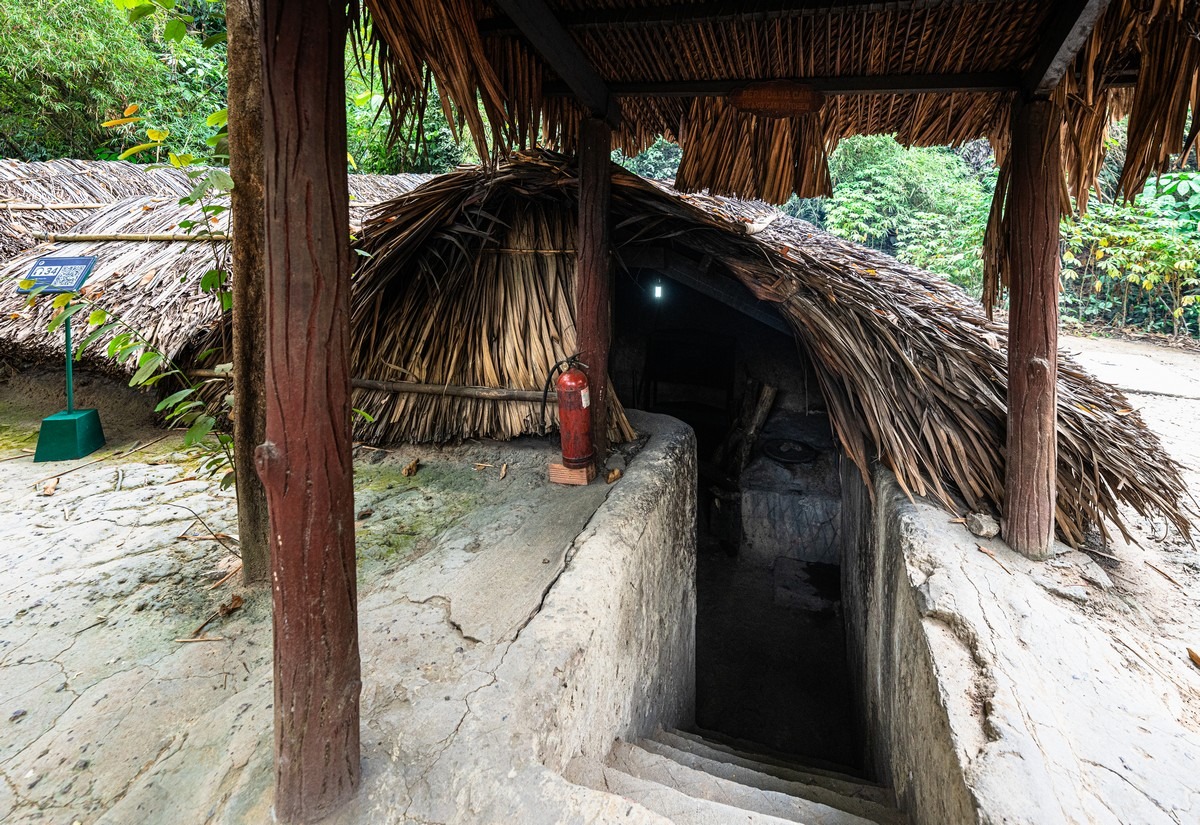
And the time came to dive into a long-held dream of mine: to see the Cu Chi tunnels where the Vietnamese resistance fought all-out against the U.S. Army (and not only). Here’s one of the modest entrances to these underground labyrinths:
But first, let’s refresh our knowledge a bit about that extremely bloody and drawn-out war. Or rather, the several phases of the war they call the Vietnam War.
So, why and how did it happen? It was a real free-for-all after the capitulation of Japan, which had taken full control of Vietnam during World War II – Vietnam having been a French colonial territory before that. And when the dust began to settle after the war ended in 1945, all sorts of forces popped up – some wanting independence, others wanting to bring back colonial rule. But read up on the history in books and on the internet; I’m no historian.
The war dragged on for almost a full 30 years – from 1946 to 1975 (woah! I had no idea it was such a drawn-out conflict) – but over that stretch both the warring sides and their objectives kept changing. First it was the French (the former colonizers, wanting “the way things were” back) against the Chinese (who’d moved into North Vietnam), then the Americans “signed on” (at first just as advisors; gradually), then there was a temporary truce and the splitting of Vietnam into a northern and southern part, then the all-out buildup of armies and the pumping of both sides full of weapons… – yep, nothing in this world ever changes :(.
And then in 1965 it all kicked off big-time. Scorched-earth tactics, carpet bombing, massive use of Agent Orange to wipe out the tropical forests (which also messed with human genetics – photos of the disabled children harmed by this chemical are best avoided if you’re at all squeamish). By the way, as Wikipedia puts it, “Vietnamese victims were denied compensation payments for the damage done to their lives and health by exposure to the chemical.” The internet also states that today around a million people in Vietnam (1% of the population! – one in every hundred!) are disabled because of this very Agent Orange.
A few more dry facts (if they’re to be believed) about the most active period of the Vietnam War. In the north, the main force was the League for the Independence of Vietnam – the Viet Minh – backed by the USSR, China, and North Korea. And in the south, the fighting was done by the Republic of Vietnam (South Vietnam) but for the most part by the U.S. Army – though backed by the armies (and armed formations) of South Korea, Australia, New Zealand, and Thailand (now why did the Thais sign on for that one? – beats me…) // The UK, meanwhile, declined to join the conflict.
Total casualties on each side ran roughly like this:
USA = 58,000 killed and 150,000+ seriously wounded and disabled (with a population of 200 million, that works out at about 7+ people per thousand, including women, children, and the elderly). South Korea = 4,000 to 5,000; Australia = ~500 dead, and so on.
South Vietnam lost ~250,000, and North Vietnam’s losses were much higher. The internet puts the figures at ~800,000 servicemen killed and two to four million casualties among the civilian population. Alas, no typos there folks.
Still – the North won.
And how they won – that’s what this little photo-story’s about.
So: the Vietnamese are resisting, living in the jungle, with U.S. bombers and other aircraft flying overhead, and they’ve got zero air defenses. What to do? Burrow underground! And that’s exactly what happened in the Vietnamese forests around 40 kilometers from Saigon. Yes, this was Republic of Vietnam (South Vietnam) territory, but the resistance and guerrilla movement there were very active. Bottom line: the Vietnamese were driven off the land – so they dug their way down into it. They lived down there, slept and ate, foraged for water and food, made weapons out of whatever was at hand, occasionally popped up suddenly in unexpected spots – and just as suddenly vanished. It’s an absolutely fantastic story – life and war underground.
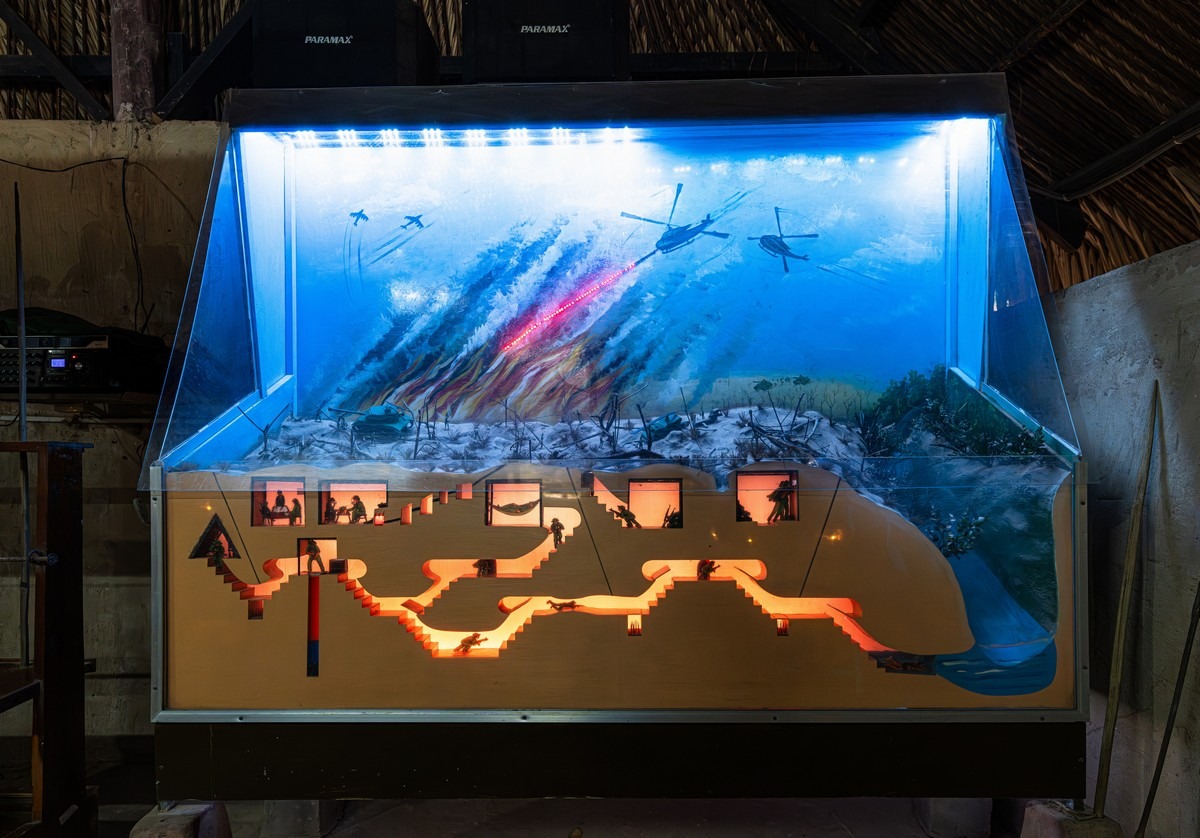
Welcome, folks, to the Củ Chi tunnels…
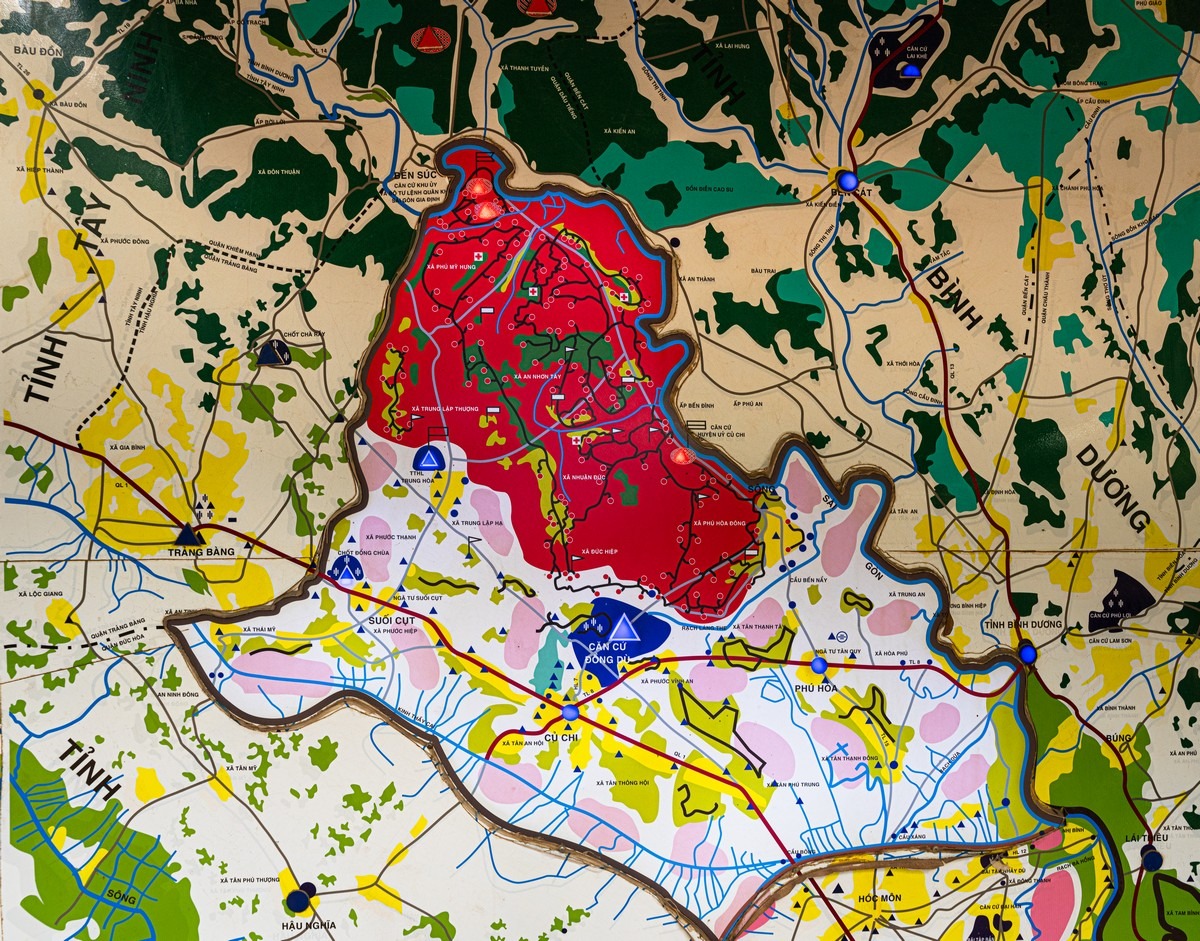
On a not-very-large patch of around 20×10 kilometers, they built a genuine underground guerrilla city; here it is – the territory marked in red:
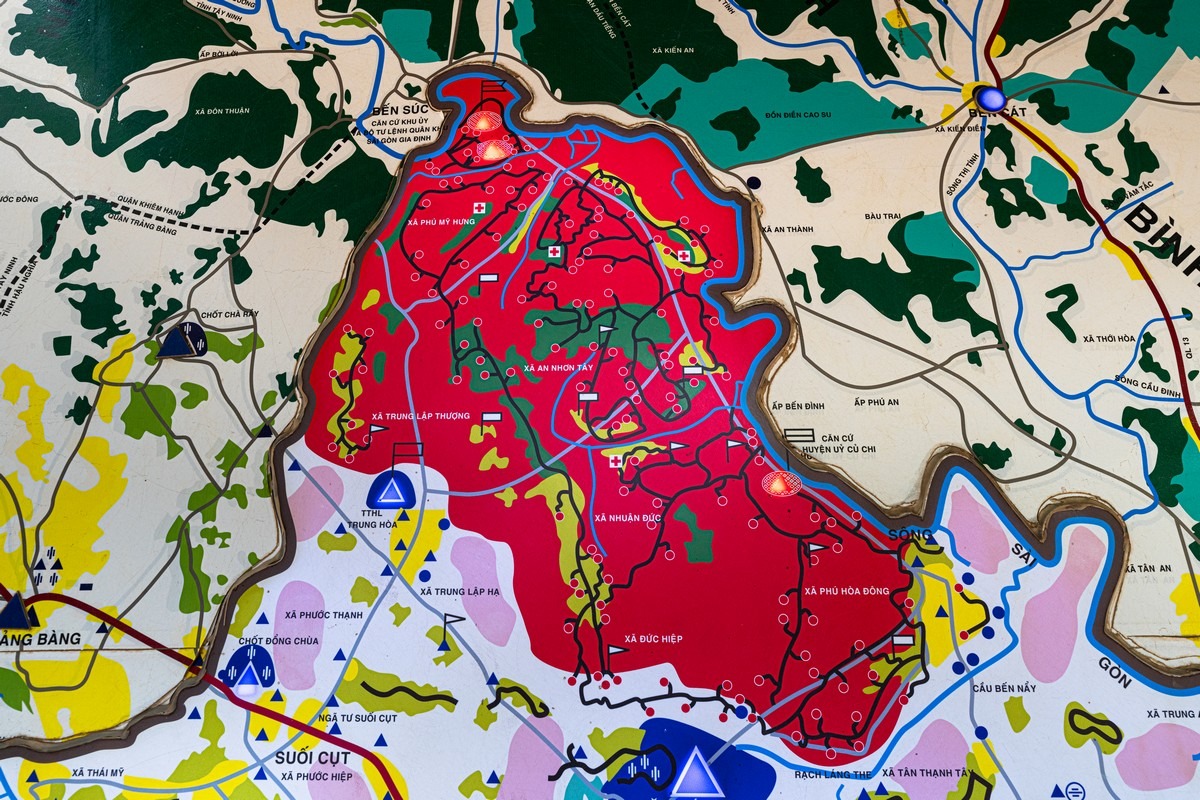
Dug out here (how, and with what – more on that later) were around 250km (as per our excursion guide; the internet says 150km) of underground tunnels through which the Vietnamese guerrillas moved around – and where, of course, they actually lived for the entire duration of the war with the U.S. Army.
Here, for example, is a clearing… trampled flat by tourists; but back in the day it was a completely invisible firing position in the jungle, where a Vietnamese fighter would suddenly appear – then just as quickly and inexplicably disappear.
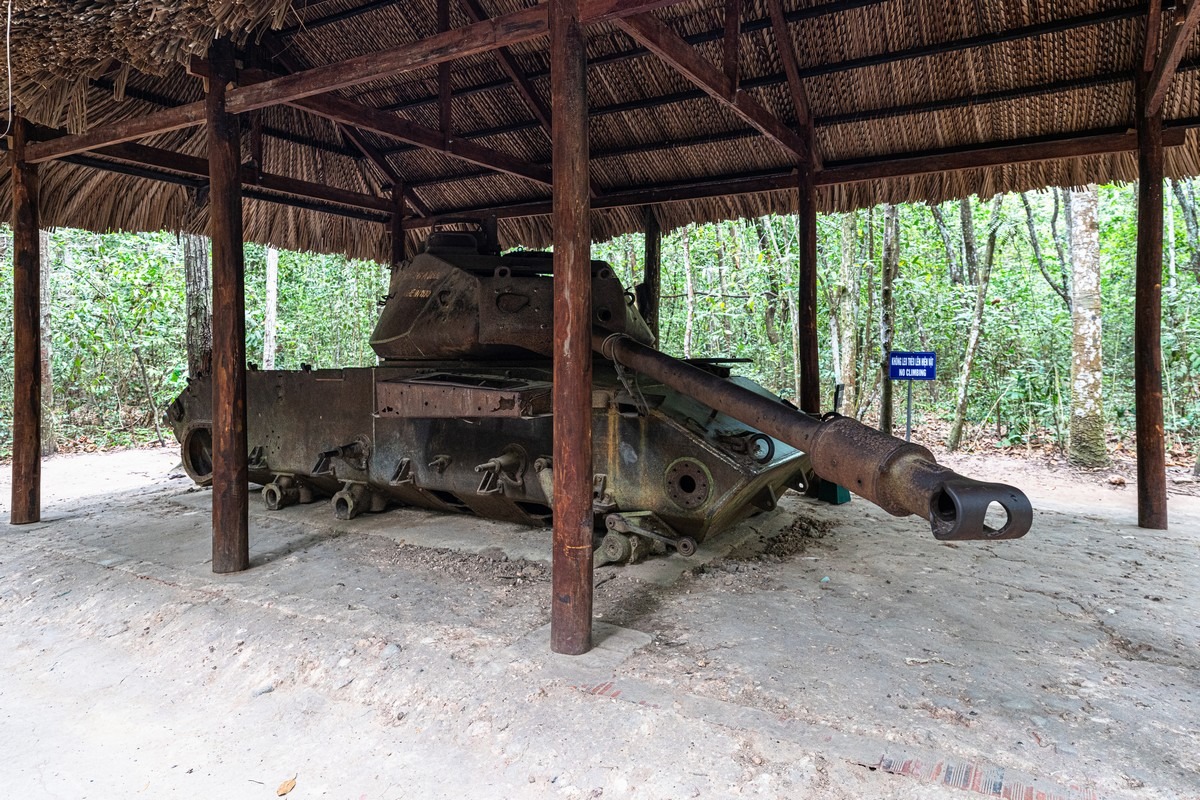
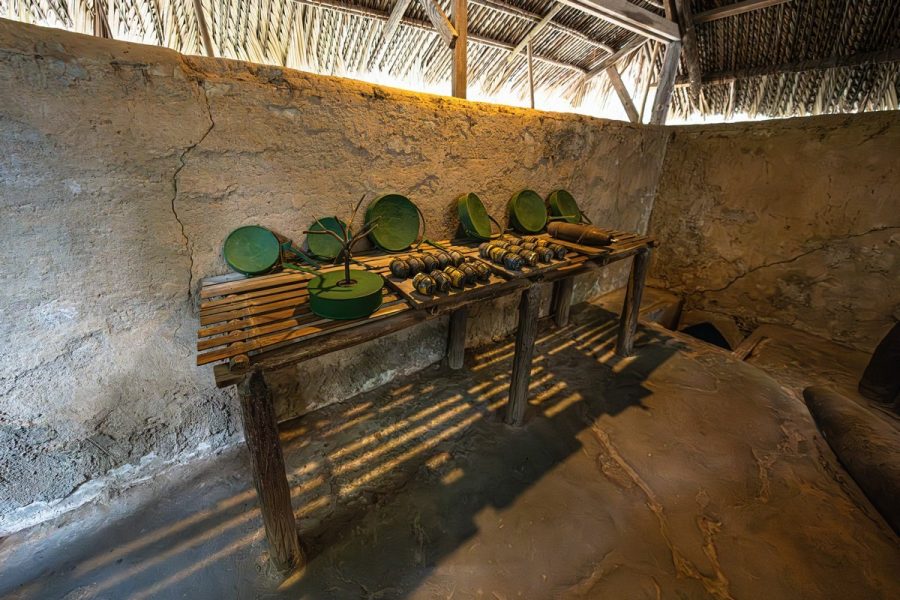
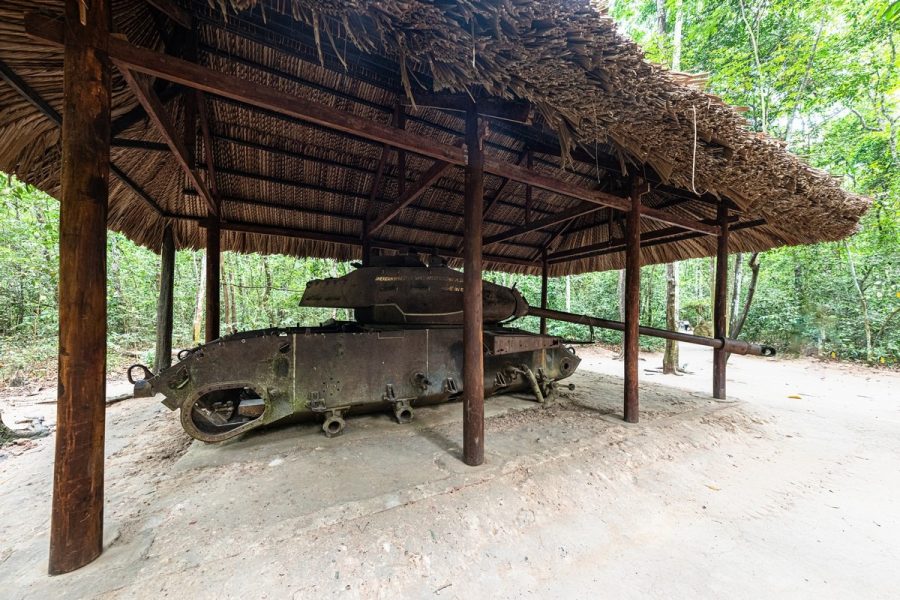
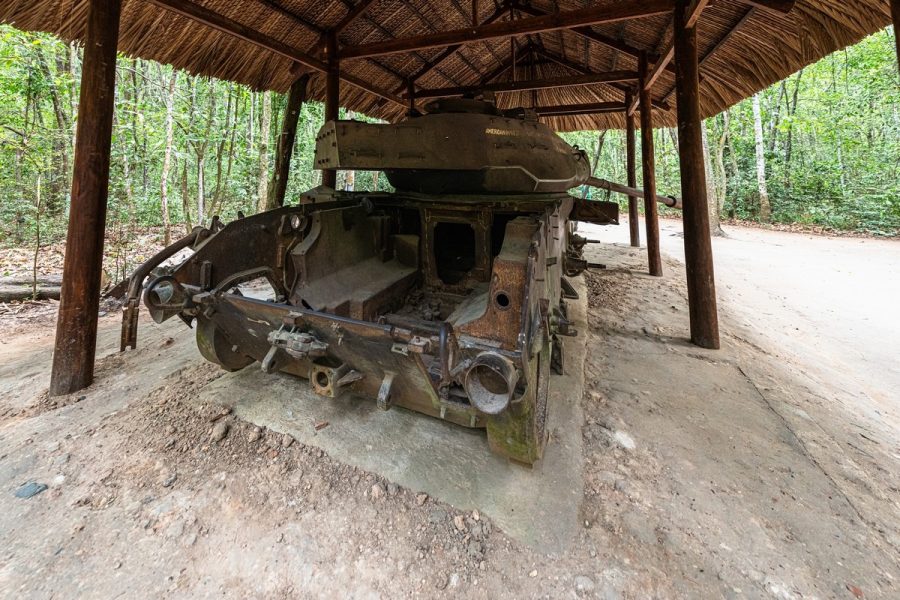
And they even managed to blow up American tanks with their homemade mines! Here’s one of them – as an exhibit:
So, let’s take a walk (above ground) across the area where, beneath our feet, on a patch of around 10×20 = 200km², lie roughly 150–250km of underground tunnels, underground bunkers, living quarters, weapons workshops – and so on. Mind-boggling before we’d taken a look!…
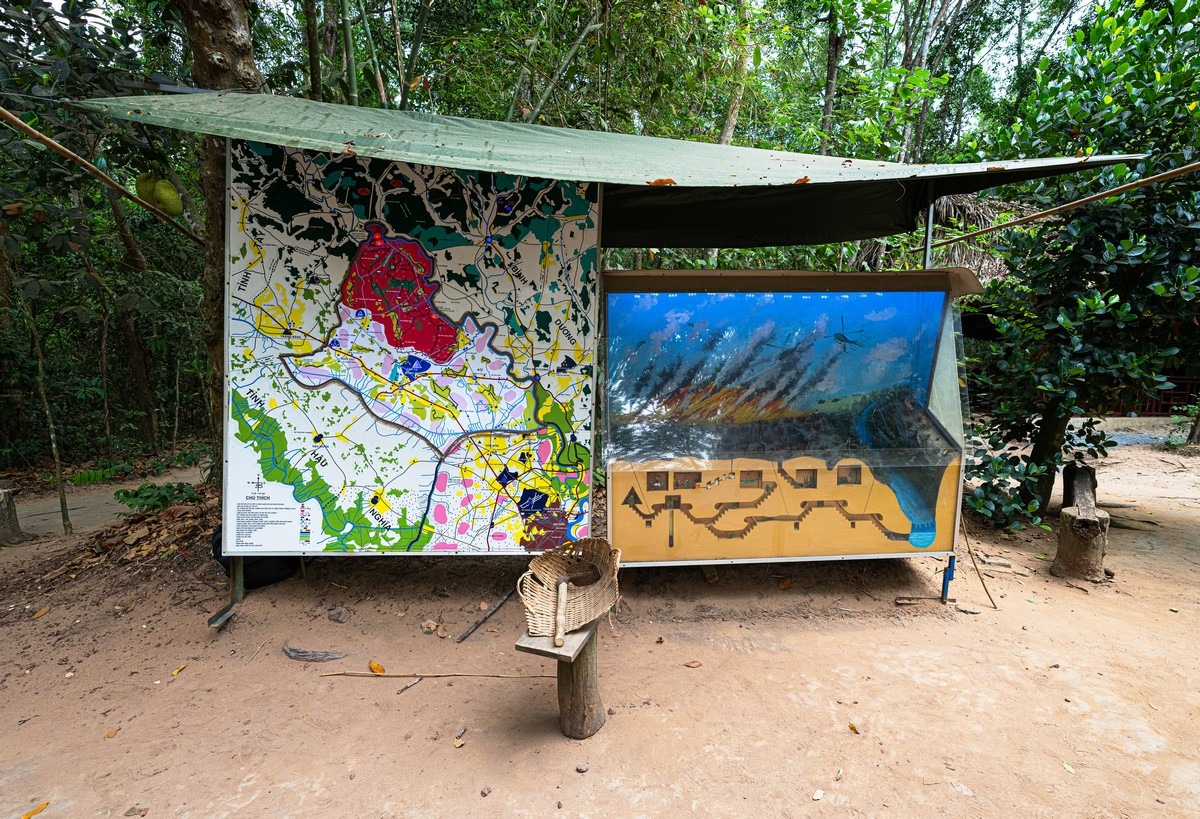
First off, why was this area so important, and why was it such a pain in the backside for the Americans? Well, one of the most important American military bases sat right here (on the map – in the white area). And secondly, it was a mere 35–40km from the capital of South Vietnam – Saigon. So something had to be done about it. And so they did – and you can see it clearly in the right-hand part of the above photo. And here’s how the territories controlled by the U.S. army and by the Vietnamese underground guerrillas broke down:
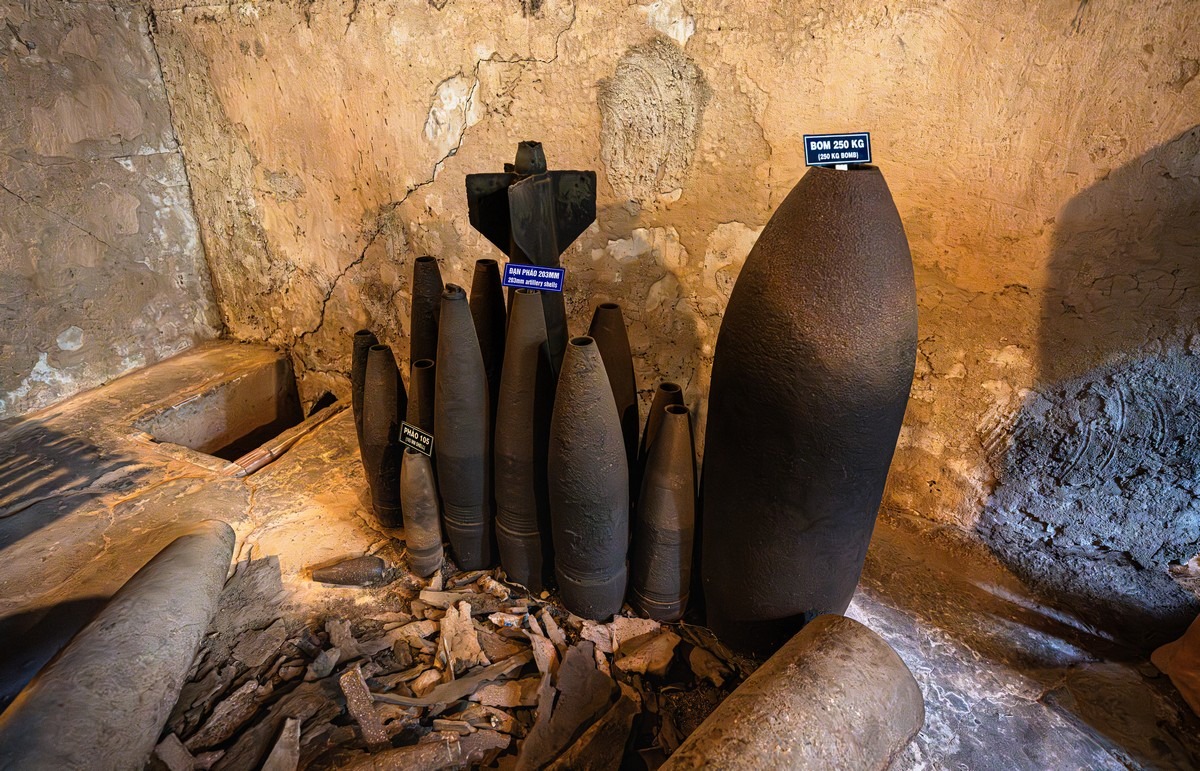
So how were these hundreds of kilometers of tunnels dug? Pretty much by hand; rather – with basic hand tools. And, ironically, some of those hand tools were made from the remains of American bombs!
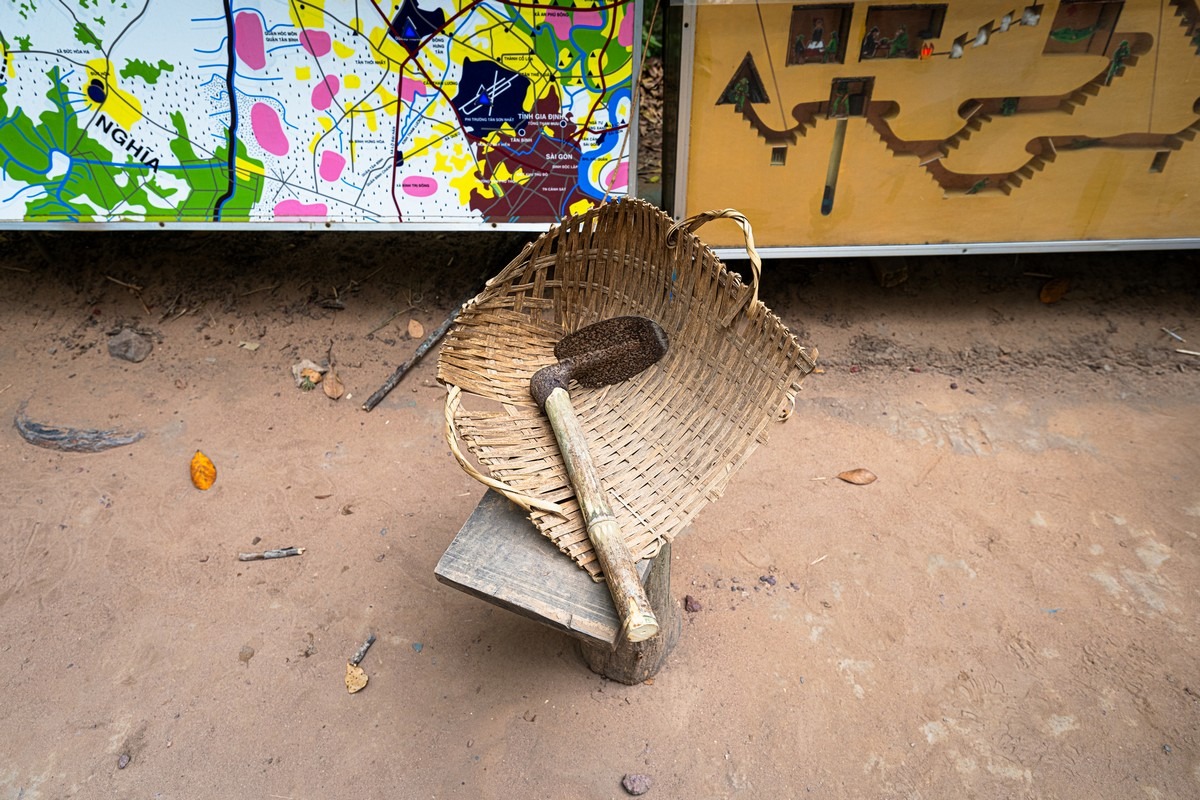
A scraper like this one – put together from the iron of an American bomb and some bamboo growing nearby – made a primitive digging tool, while the container for hauling away the soil was woven from reeds. But where did all the dug-out soil go so it wouldn’t be noticed? The dug-out material was either dumped into rivers (including the Saigon River, which flowed nearby), or used to fill in fresh craters from those same American bombs. And that’s how they survived…
And was it easy to dig down there? Not one bit! Which was both a plus and a minus at the same time. The clay around here is famous for some kind of special hardness, and when dry it’s like stone. So the digging was no easy task – but then neither was bombing it out: it was roughly on a par with multi-tiered concrete bunkers.
Where were the entrances to this underground network of labyrinths, tunnels, living quarters, and so on? Let’s just say they were small – and well camouflaged; like this:
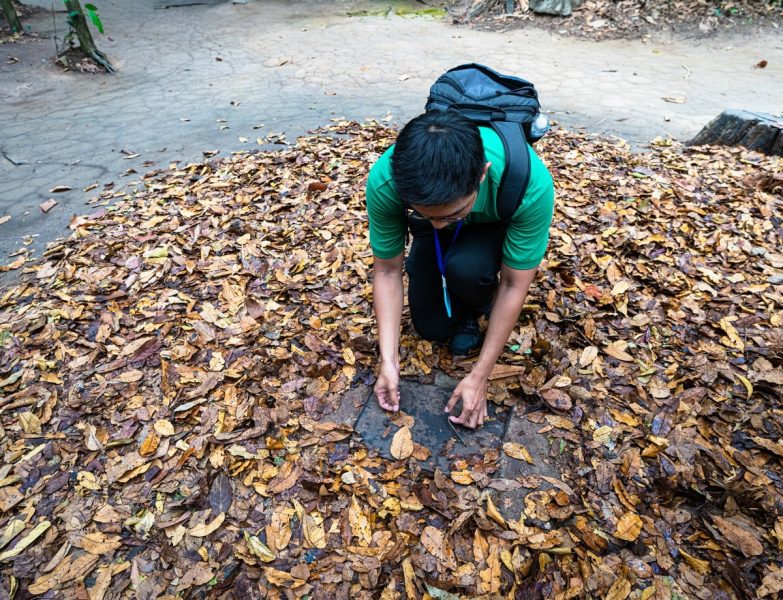
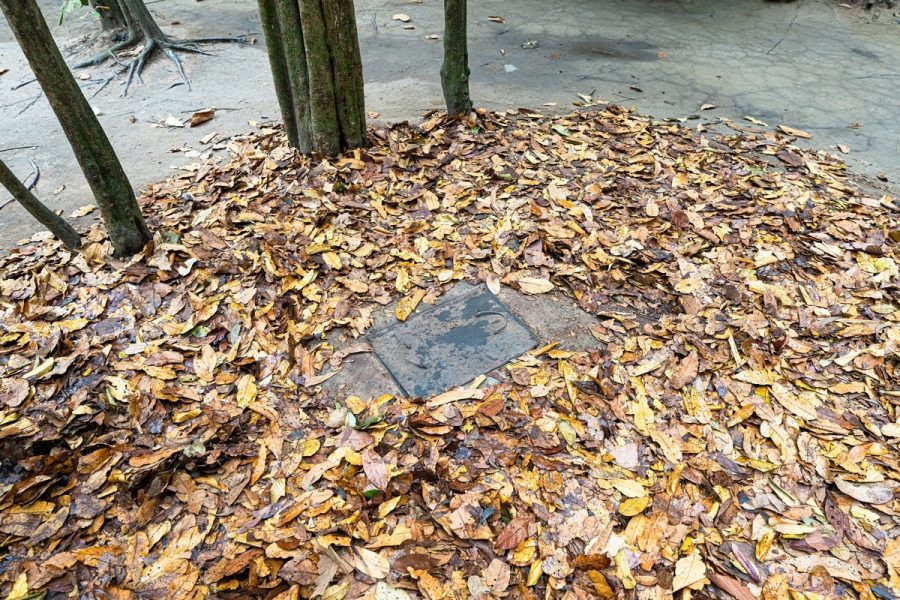
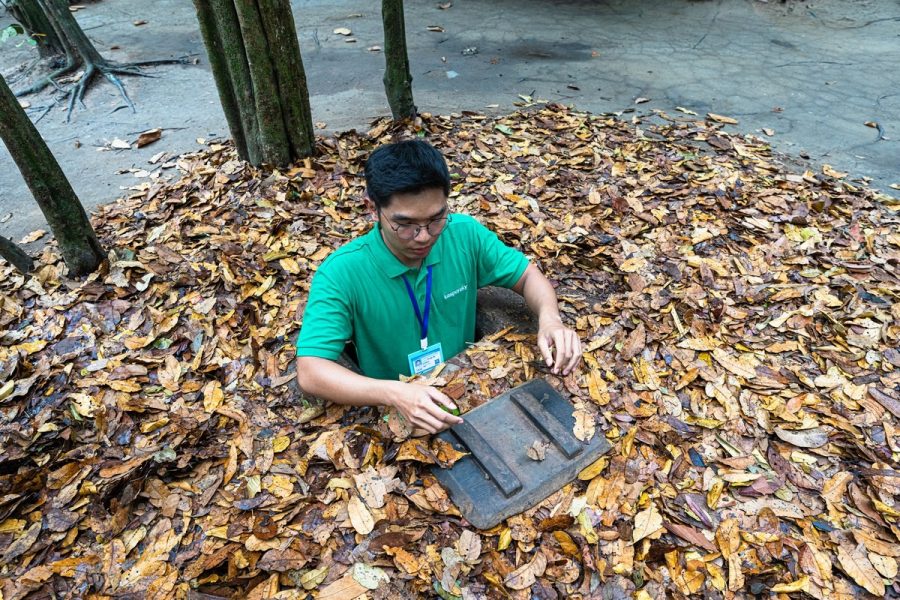
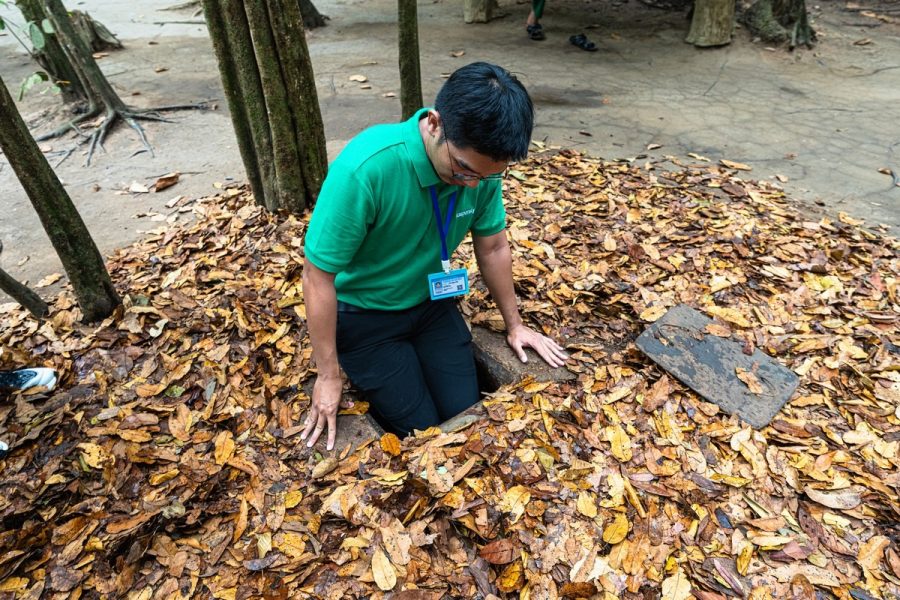
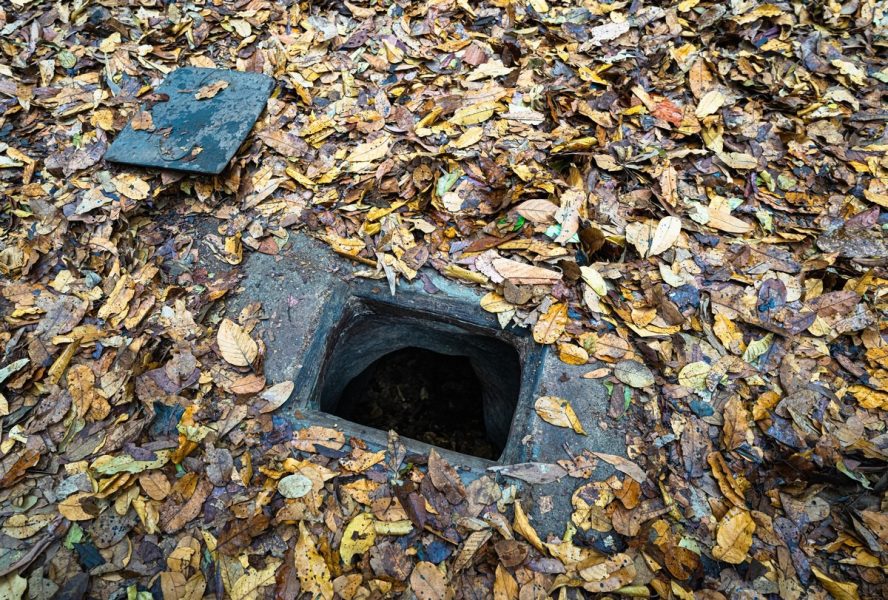
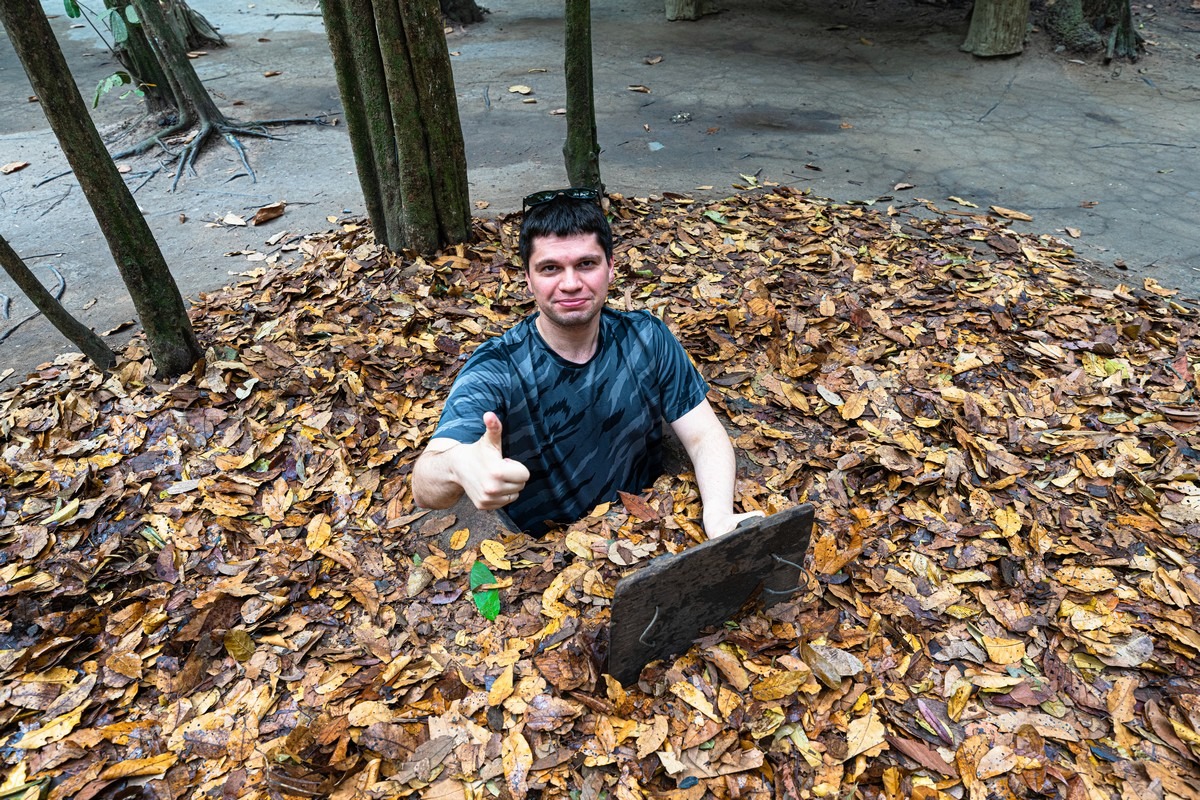
Can a non-Vietnamese person fit through such a narrow gap? Well, our CTO, A.I., gave it a go and… success!
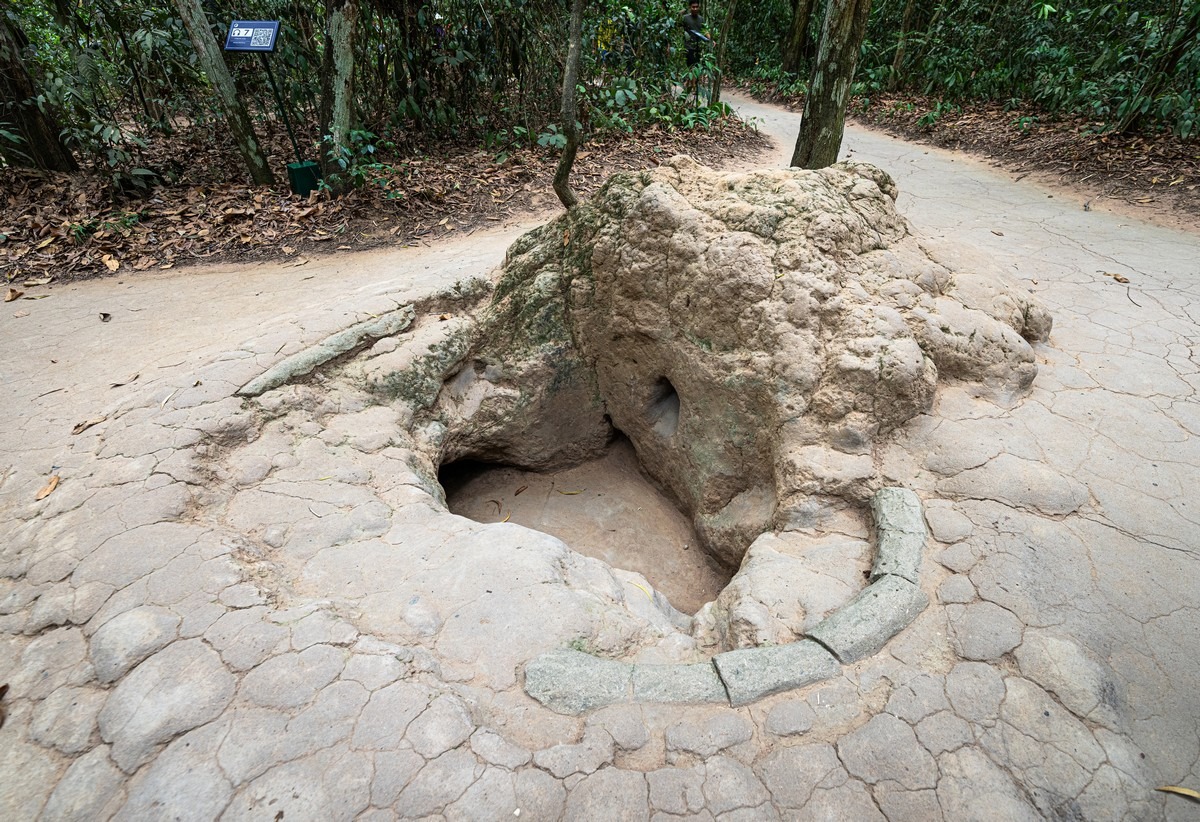
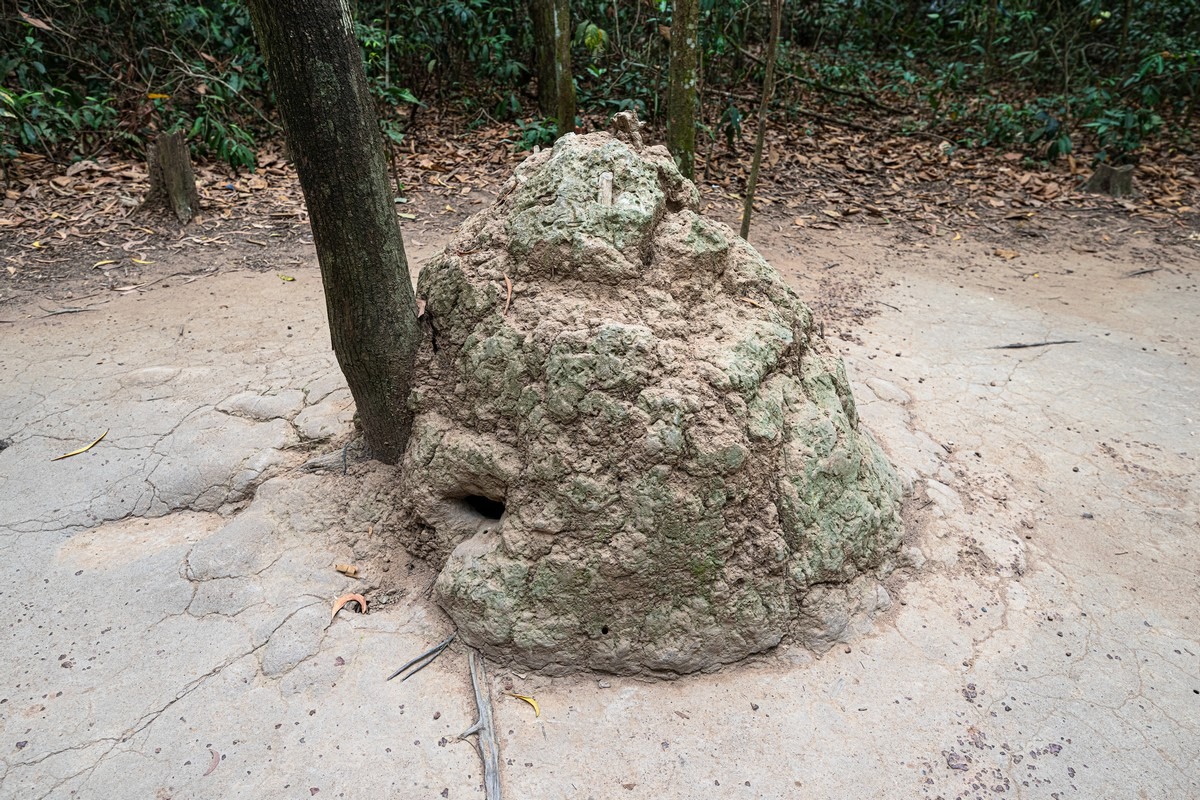
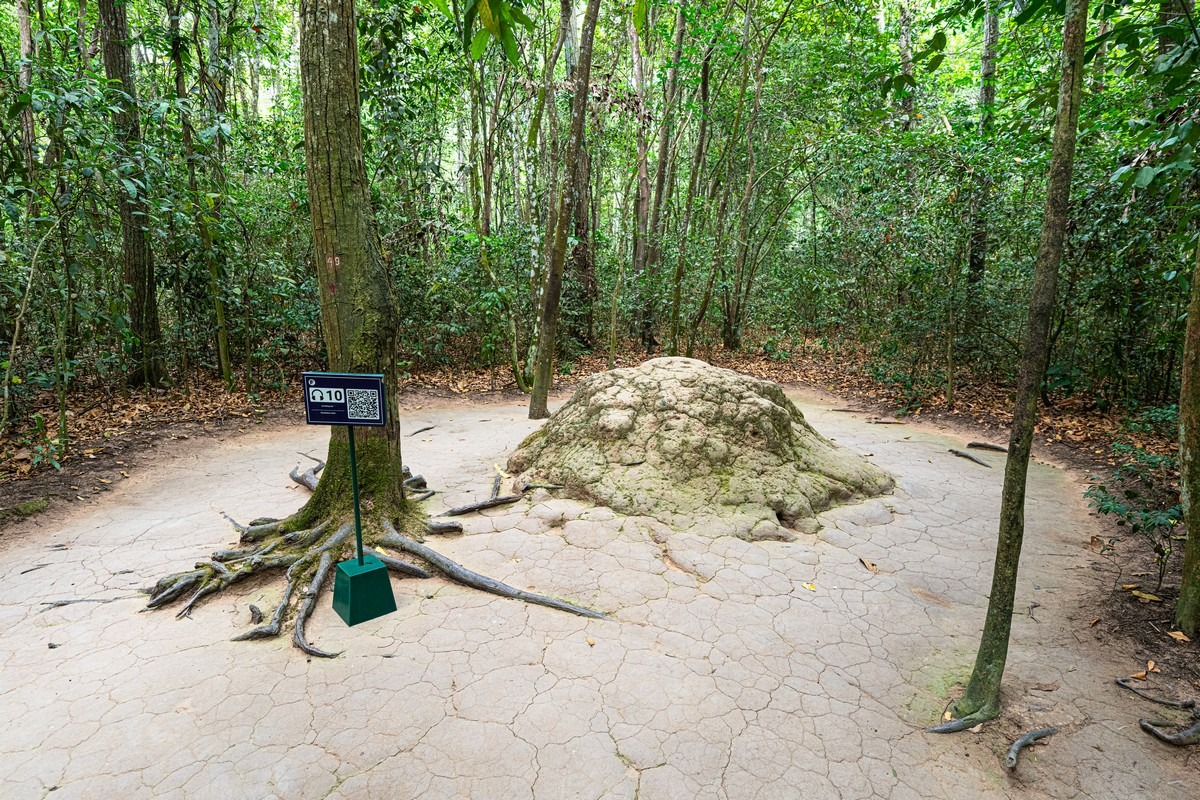
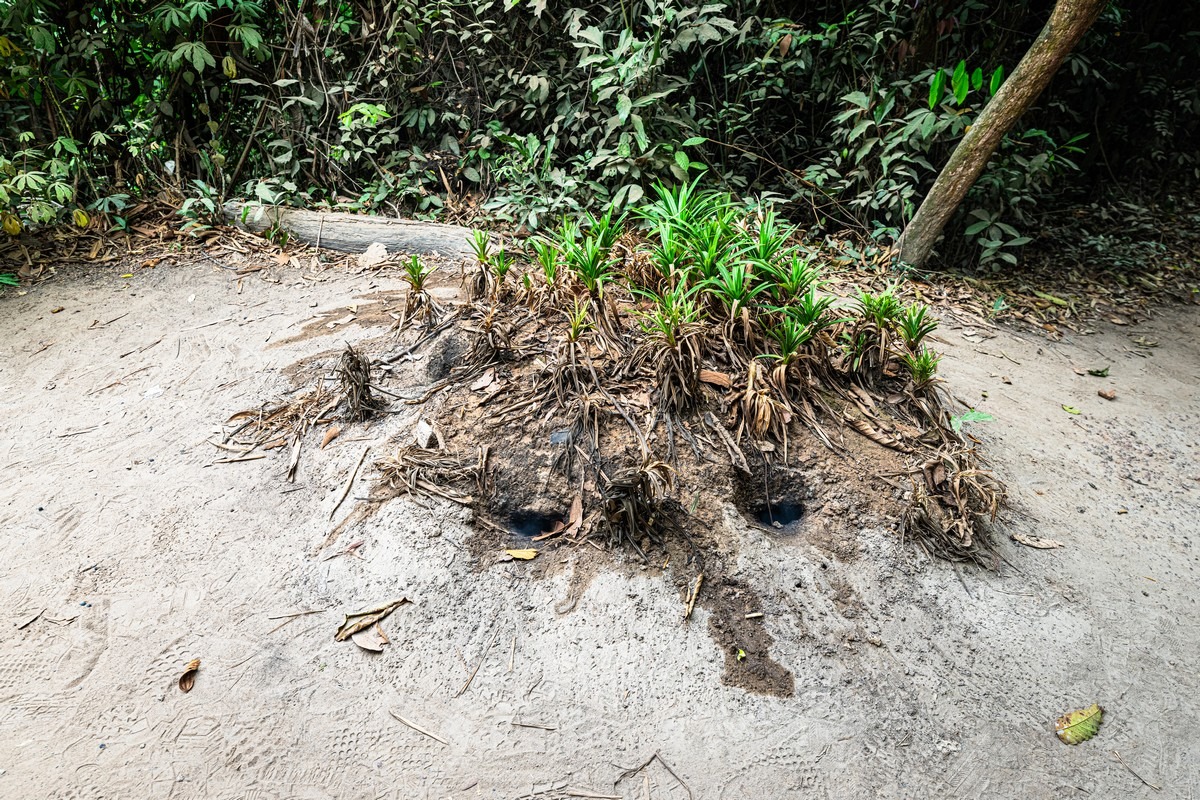
And what’s the air quality down there like? Actually, there was a whole ventilation system devised and installed! Little mounds of clay like this one with small holes in – that’s its air conditioning system! ->
These days it’s just a patch of ground trampled flat by tourists, but back in the day there was simply no way of spotting such a thing.
How did they cook food – without any smoke? Here are the underground kitchens:
To pull it off, the smoke from the cooking fire was channeled out through a network of underground flues, spread out to various points around the jungle – and it was completely invisible from the American helicopters and planes passing overhead! Here’s one of those flues. See any smoke? Oh, it’s there alright! The system still works today – for the entertainment of curious tourists strolling by.
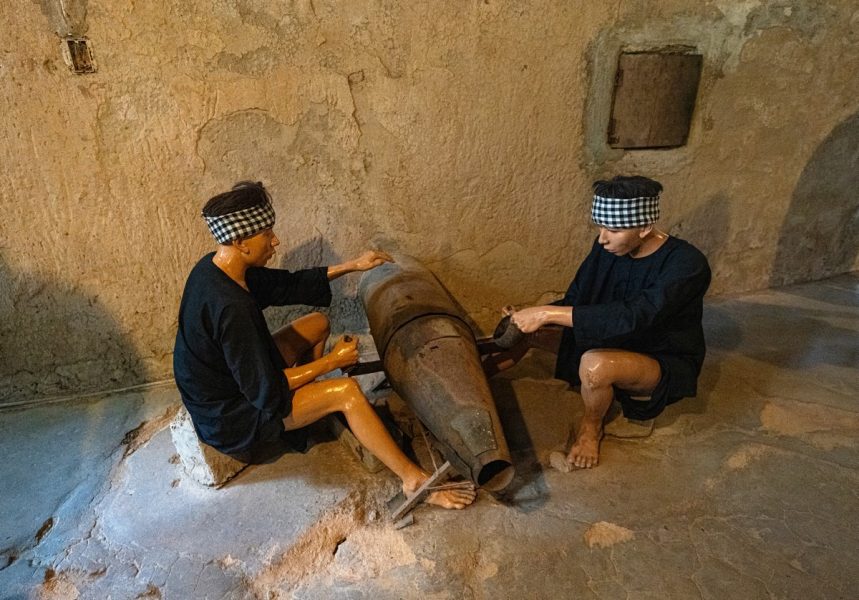
As far as I understood, there was help from the North, but it was very limited – and how could it have been otherwise? South Vietnam was almost entirely under U.S. control. So as raw material they used anything that fell from the sky (unexploded bombs) and whatever they could capture in battle.
Here’s roughly how it worked back in the day:
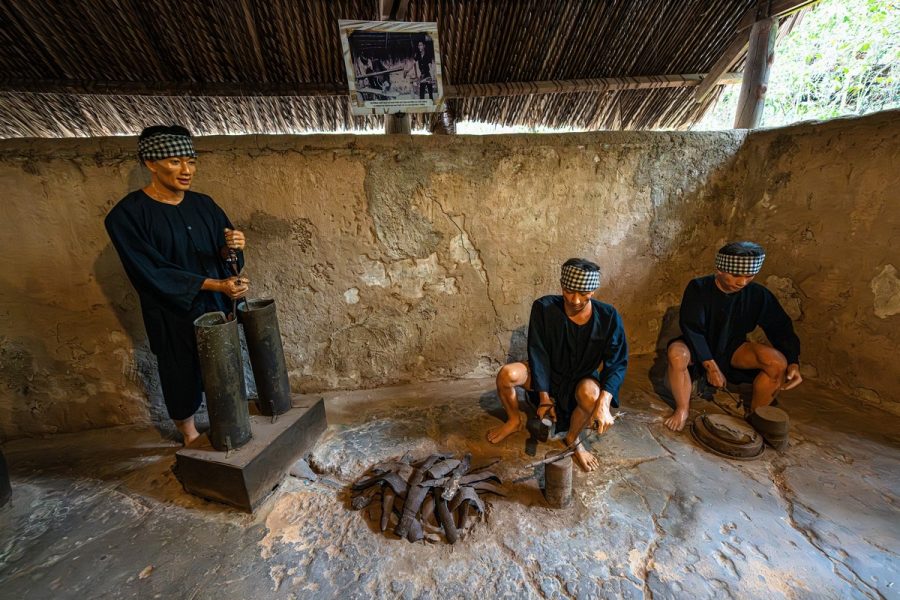
They made sandals out of jeep tires! And they made both “proper” sandals and ones that left a reverse footprint. Take a close look – on the regular sandals the toe end is wider than the heel end. On the reverse-footprint sandals it’s the other way around :). That’s how they fooled the Americans about which direction their fighters were heading.
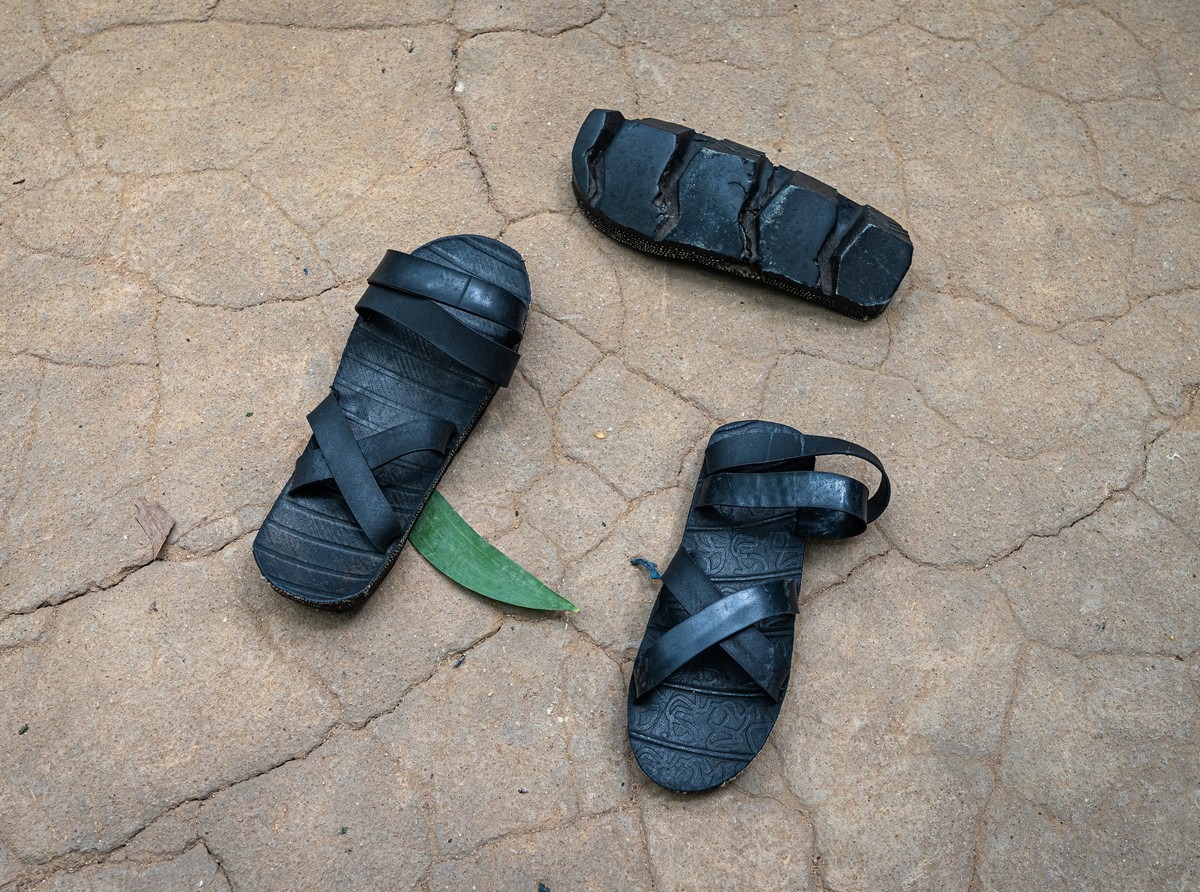
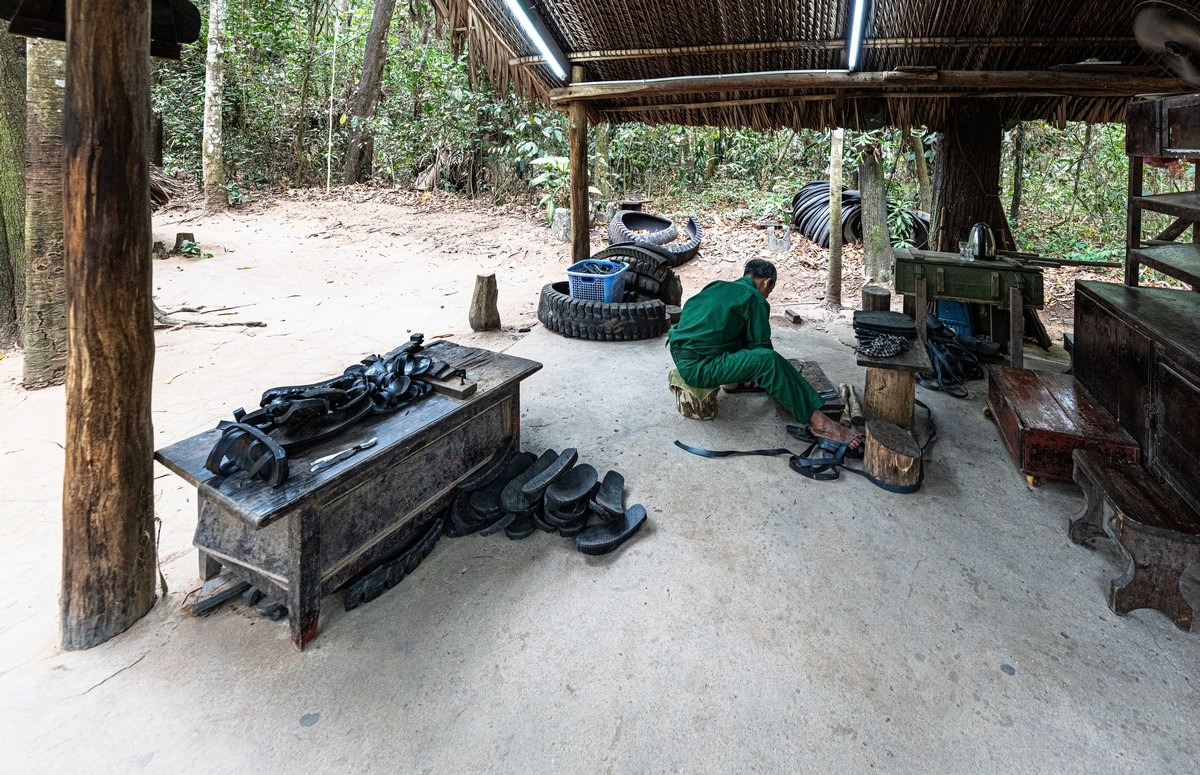
These sandals, by the way, are still being made to this day:
Over several years they improved and fine-tuned their various habitat-supporting systems rather thoroughly – including, for example, surface drainage trenches that channeled water away from the tunnels during rainy season. Here they are – can you see them? Well, they’re there :) ->
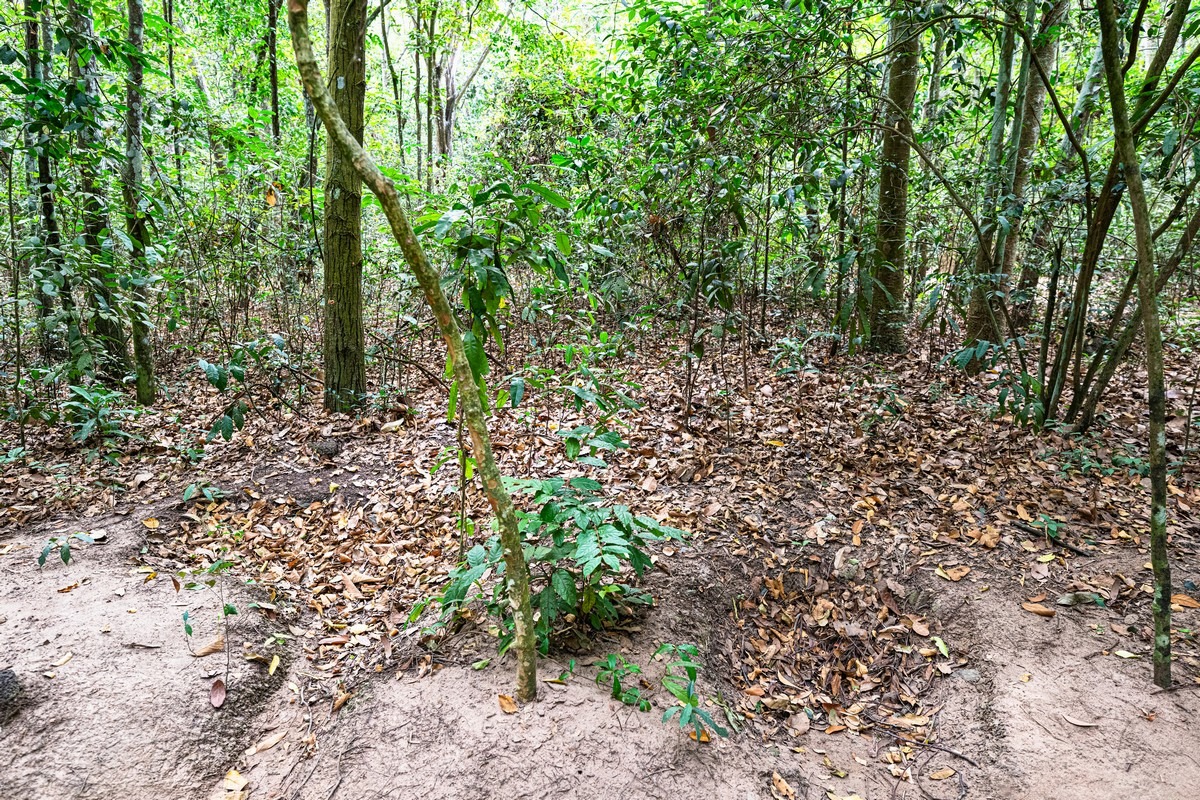
To come back to the ventilation system again, imagine tourists hadn’t trampled anything here. Would you notice a thing like this while walking through the jungle?
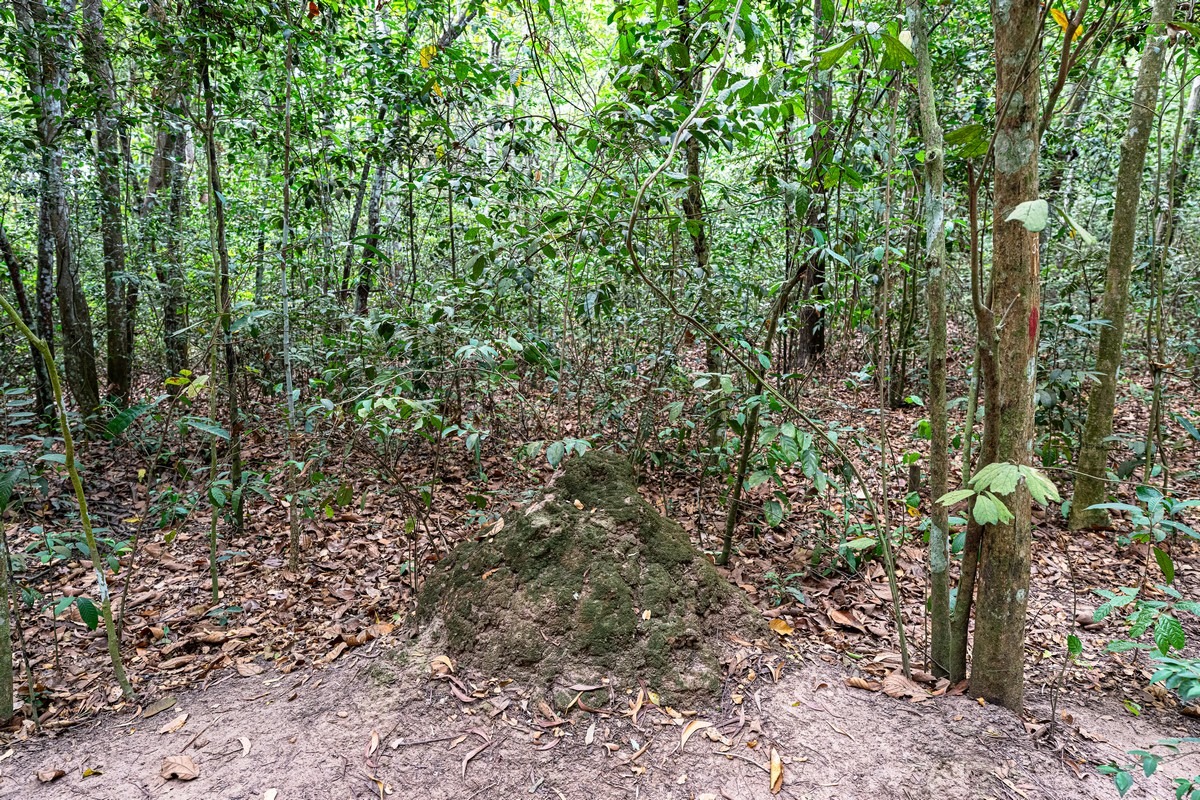
And it was from underground labyrinths like these that they’d leap out, claim their victims, and vanish again:
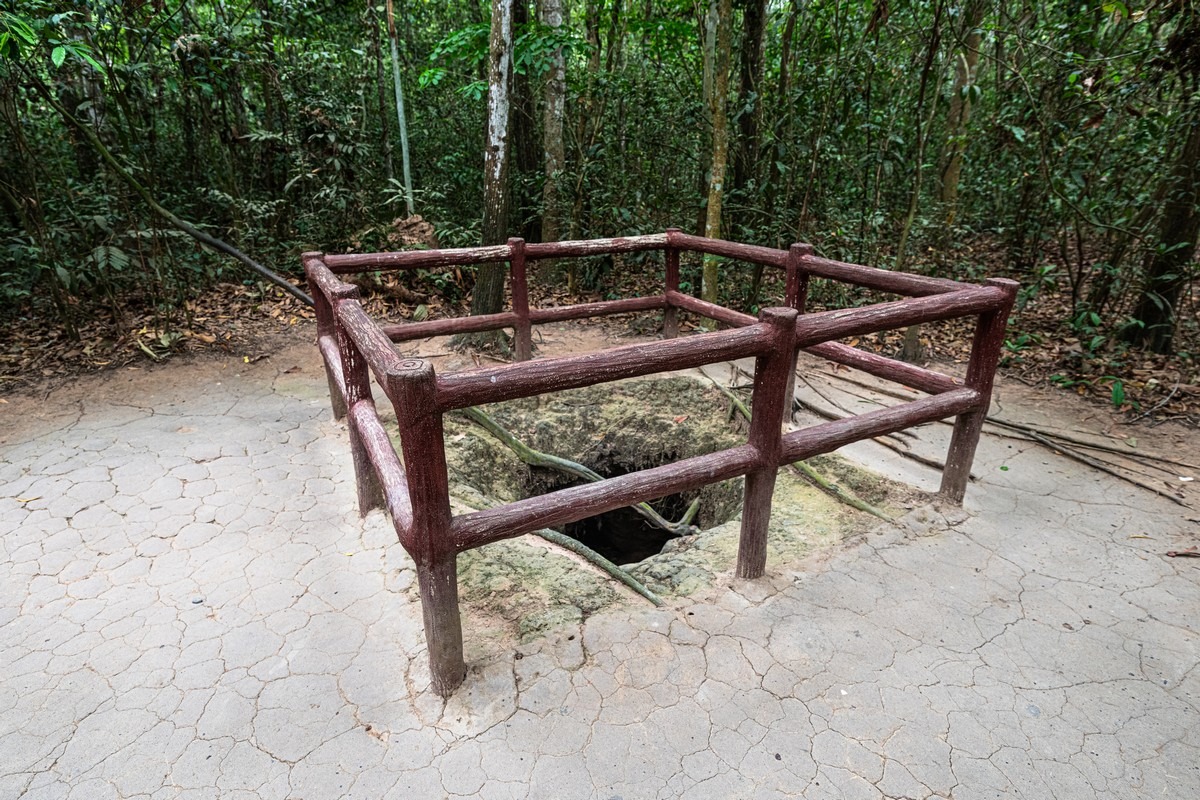
Judging by the size of the tunnels, the only way to get around down there was by crawling:
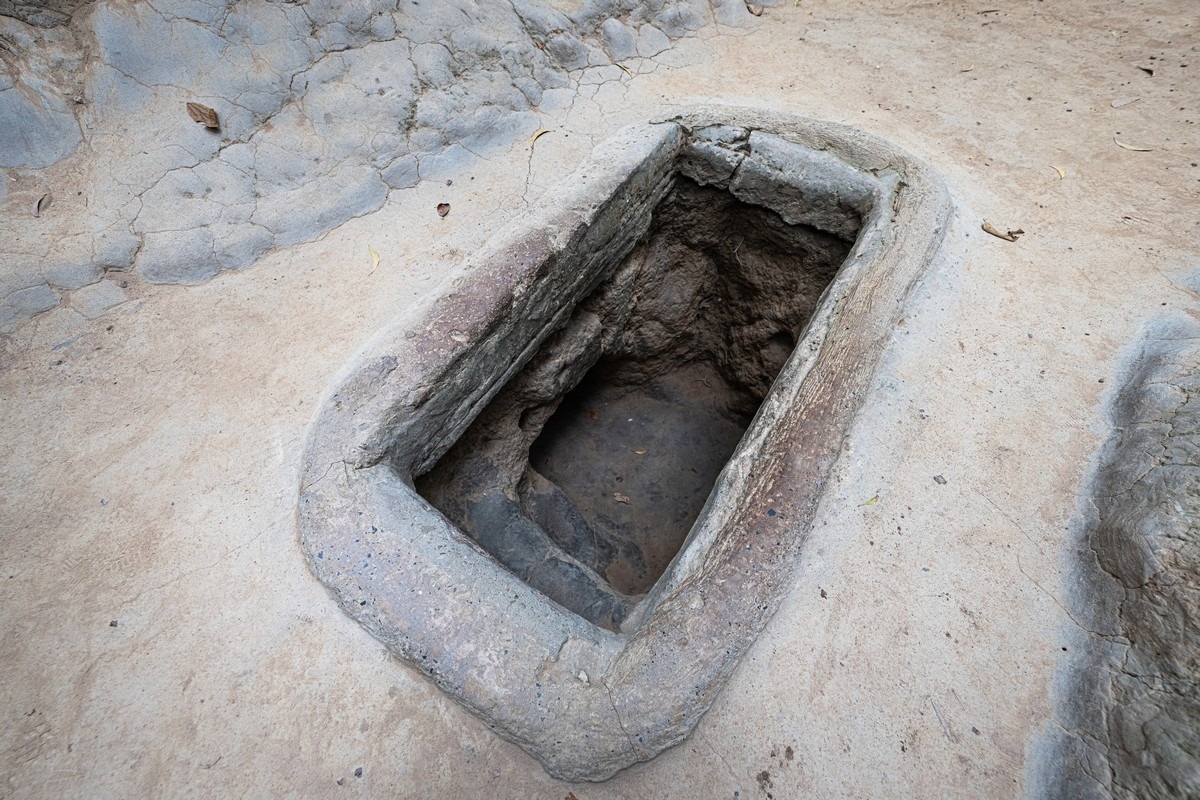
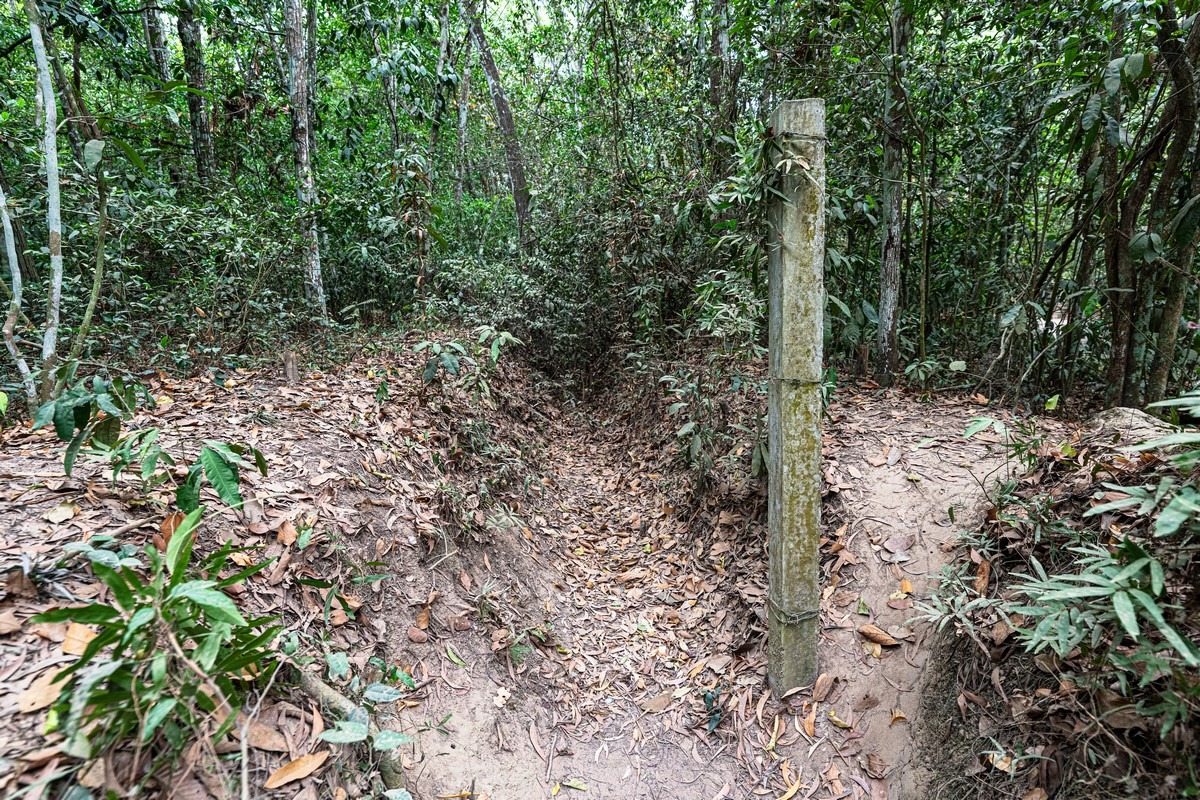
And up above, a network of trenches had been dug, along which they moved about quickly – but this time on the surface. 50+ years have gone by – but here are those trenches still today:
That’s guerrilla warfare for you! And pretty successful guerrilla warfare at that. They even managed to blow up heavy equipment! Where they got their anti-tank mines I never did figure out, but the results speak for themselves:
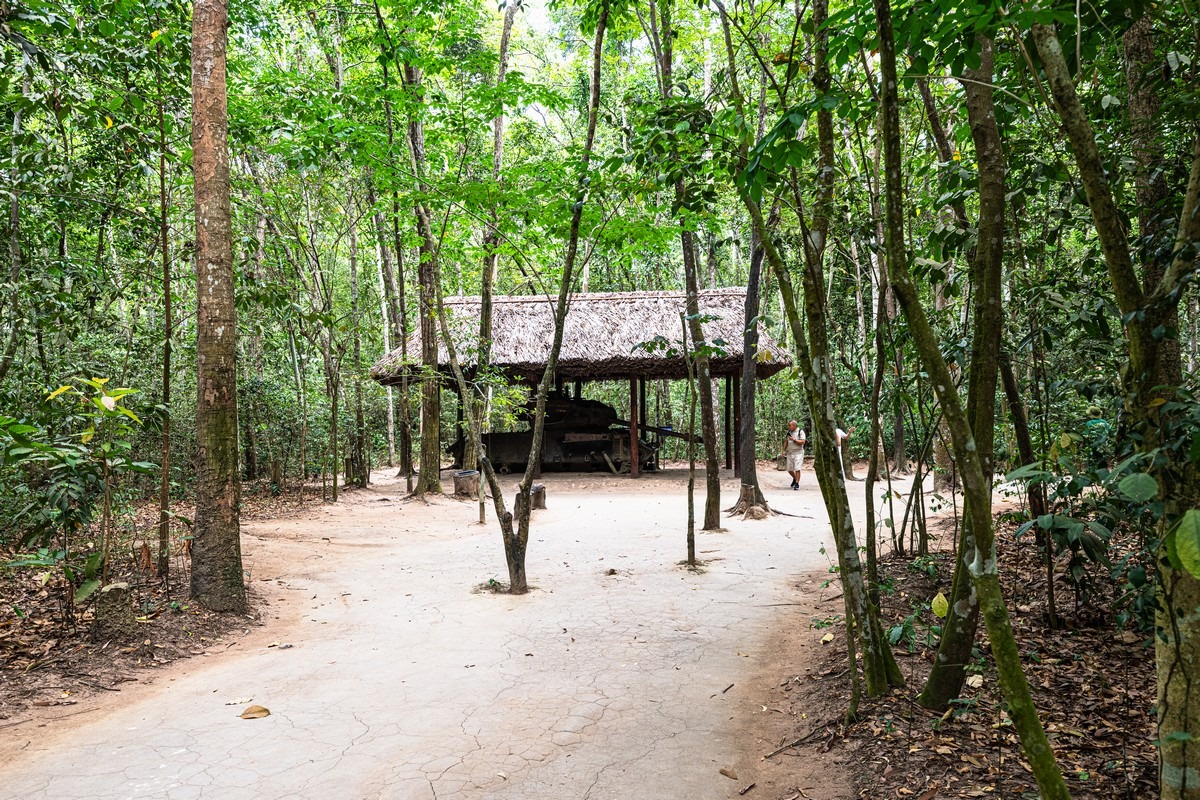
Most of the knocked-out equipment was scrapped, of course, but this little number was left to show curious tourists:
…As were traps like these hidden in the ground:
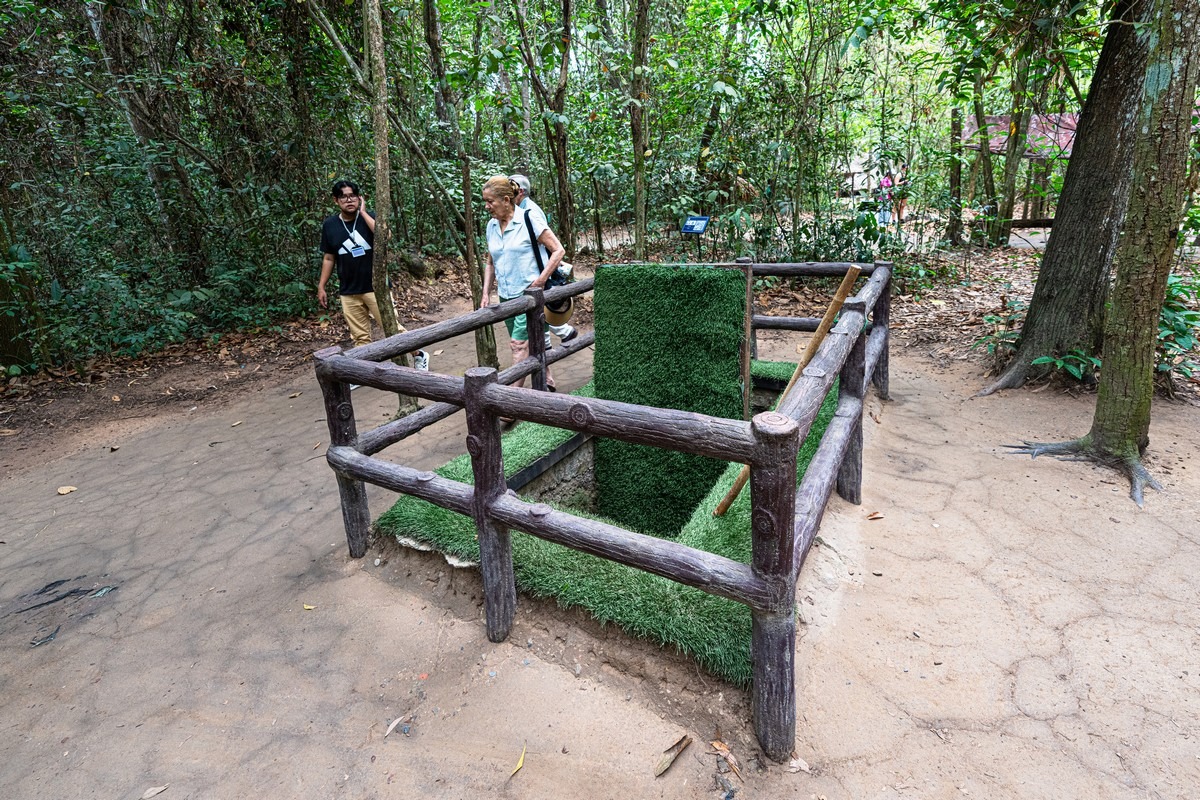
Ouch! ->
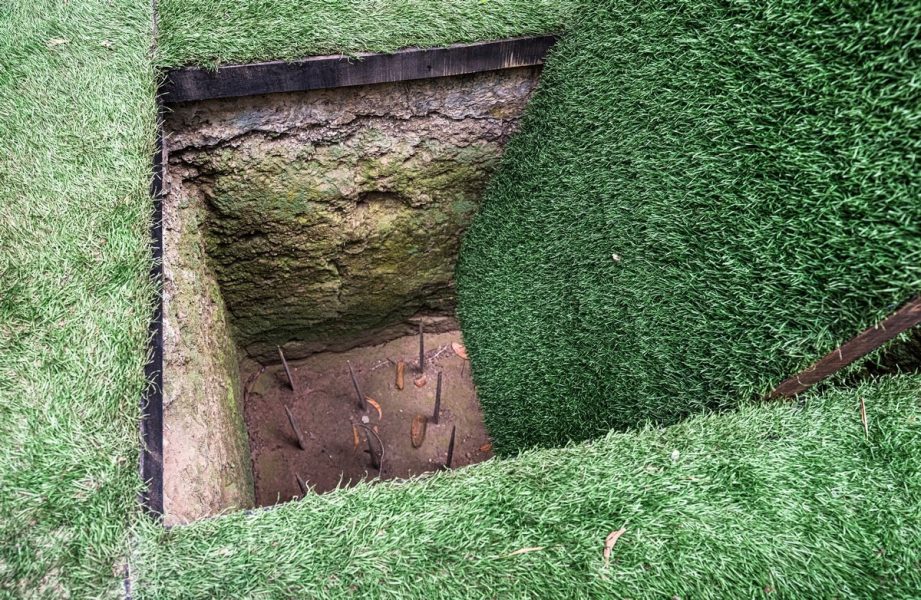
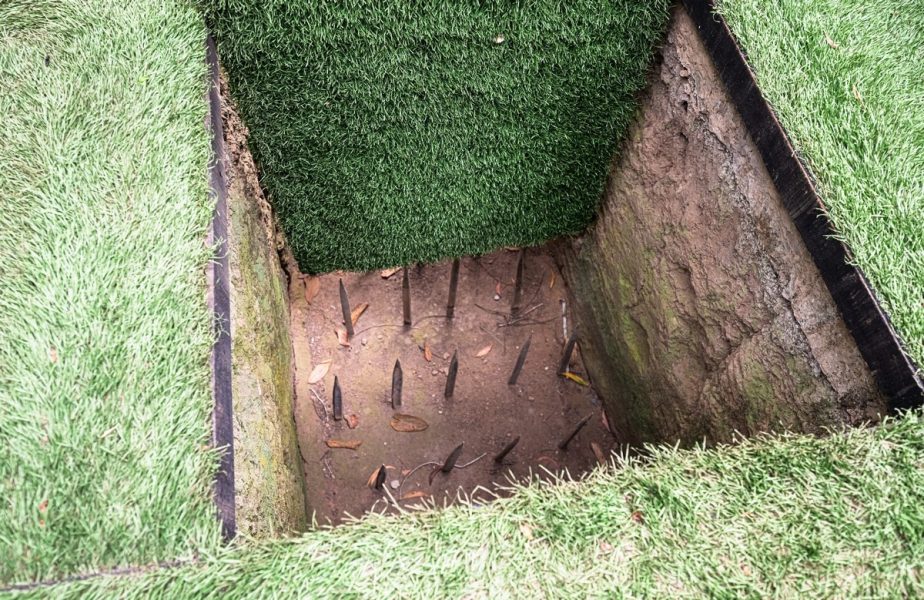
Assorted other improvised means of dealing with uninvited “guests” from across the ocean:
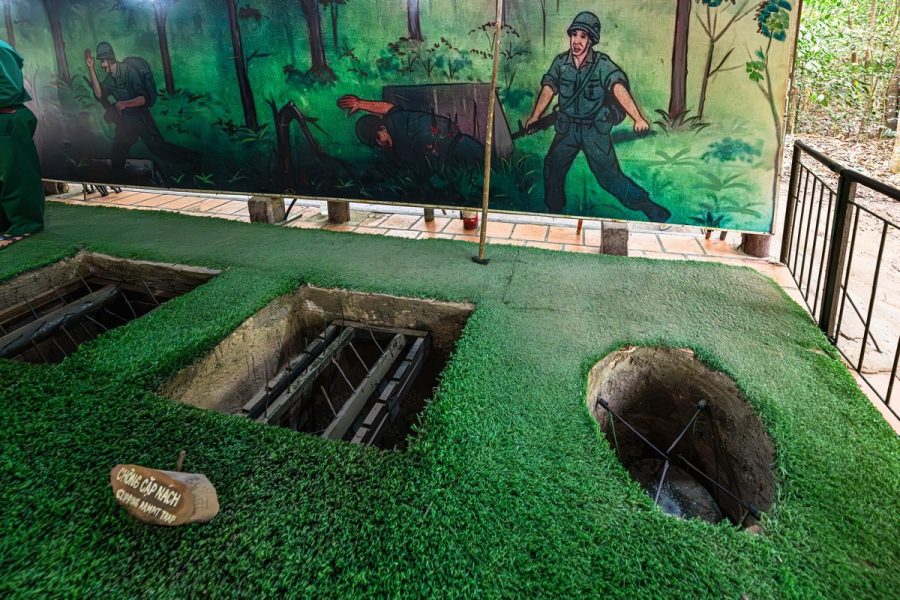
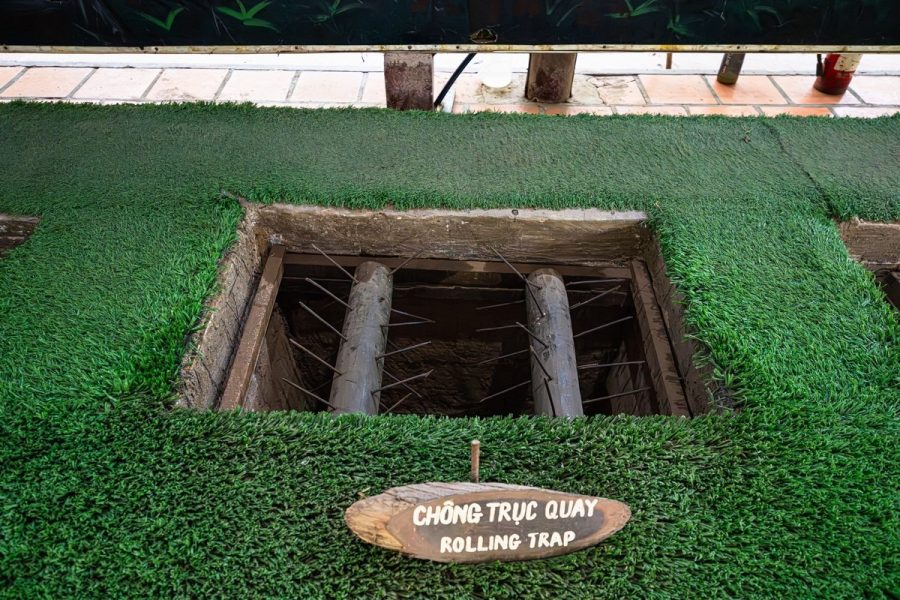
There’s a whole encyclopedia here of how to fight in the jungle:
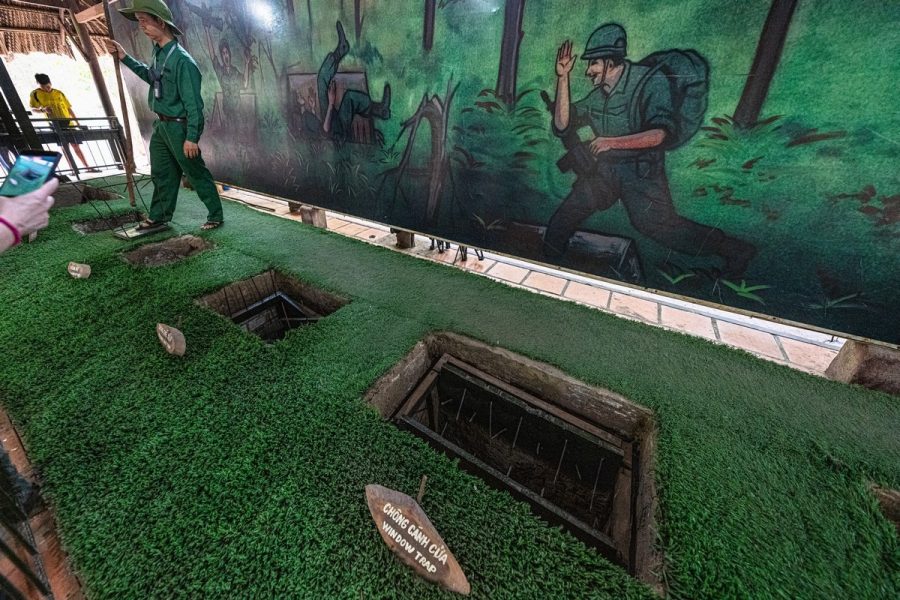
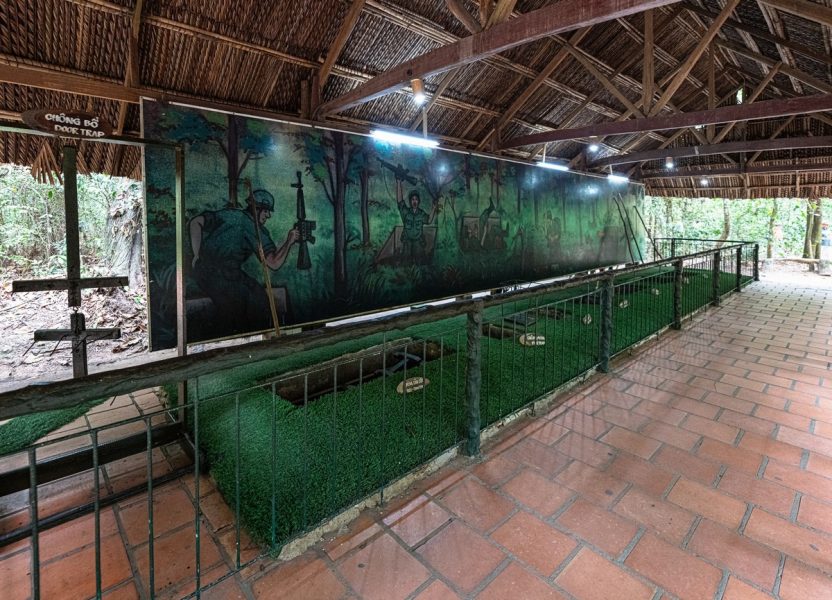
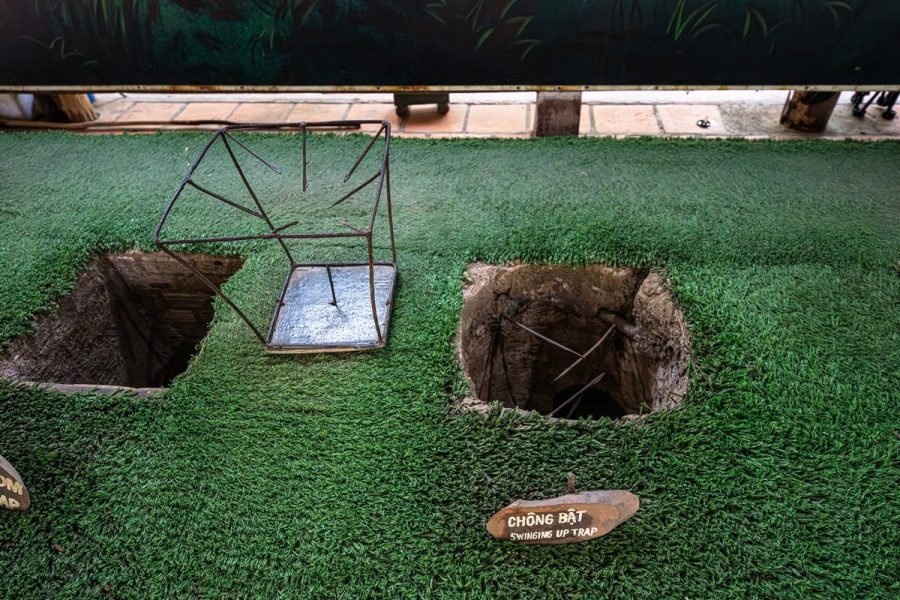
Could the American military put up with all this? Of course not! So it poisoned the Vietnamese with Agent Orange, put together special “tunnel rat” teams, burned the jungle down, and bombed them – but the Vietnamese still came out the stronger. And speaking of bombs – these are the holes left in the ground after them… ->
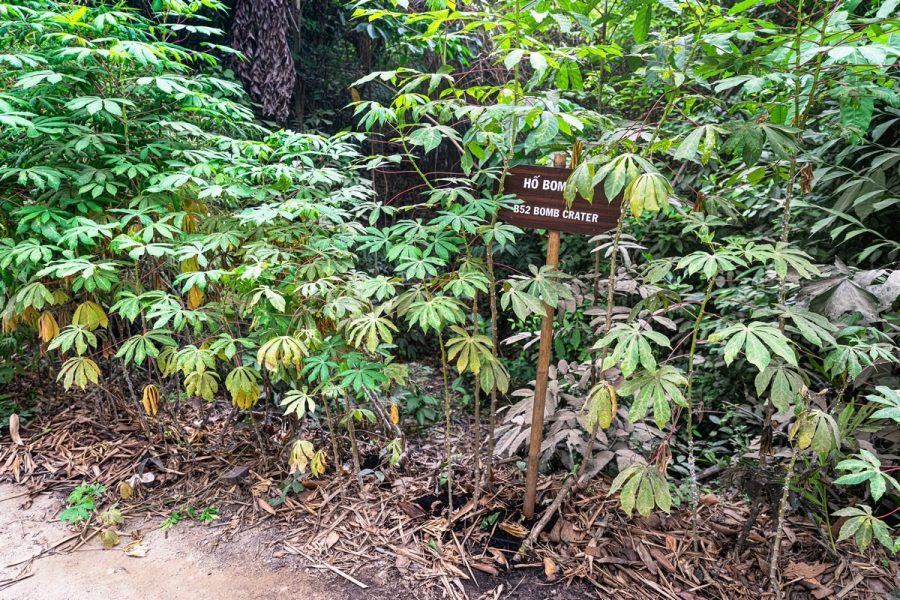
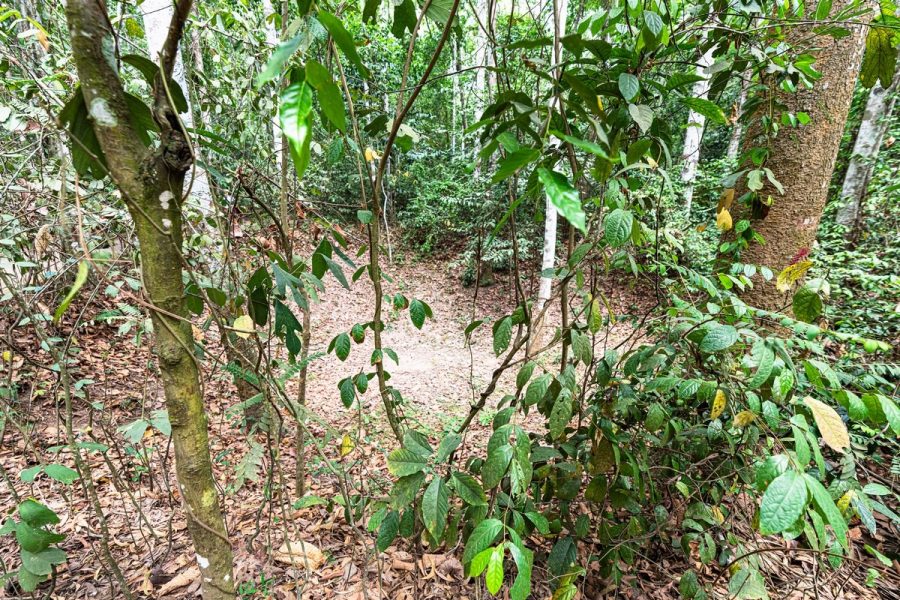
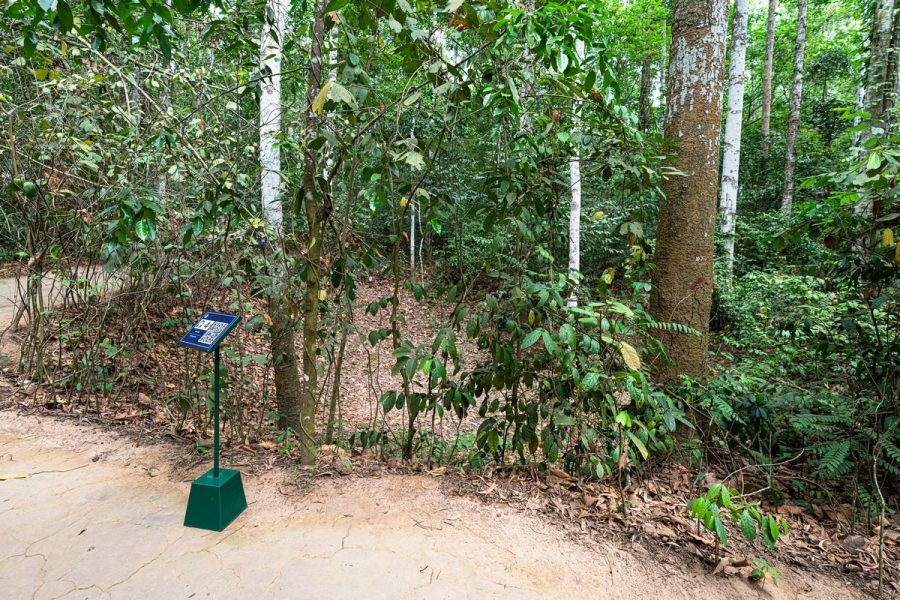
More tunnels:
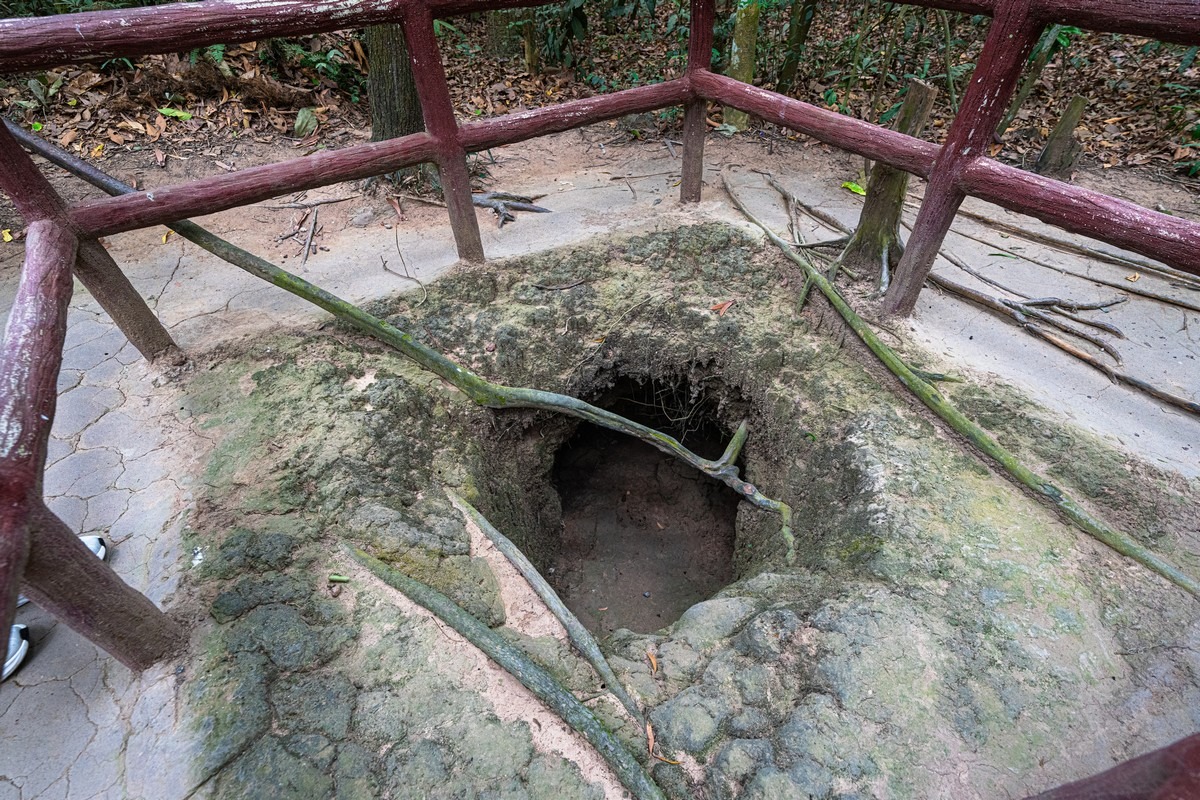
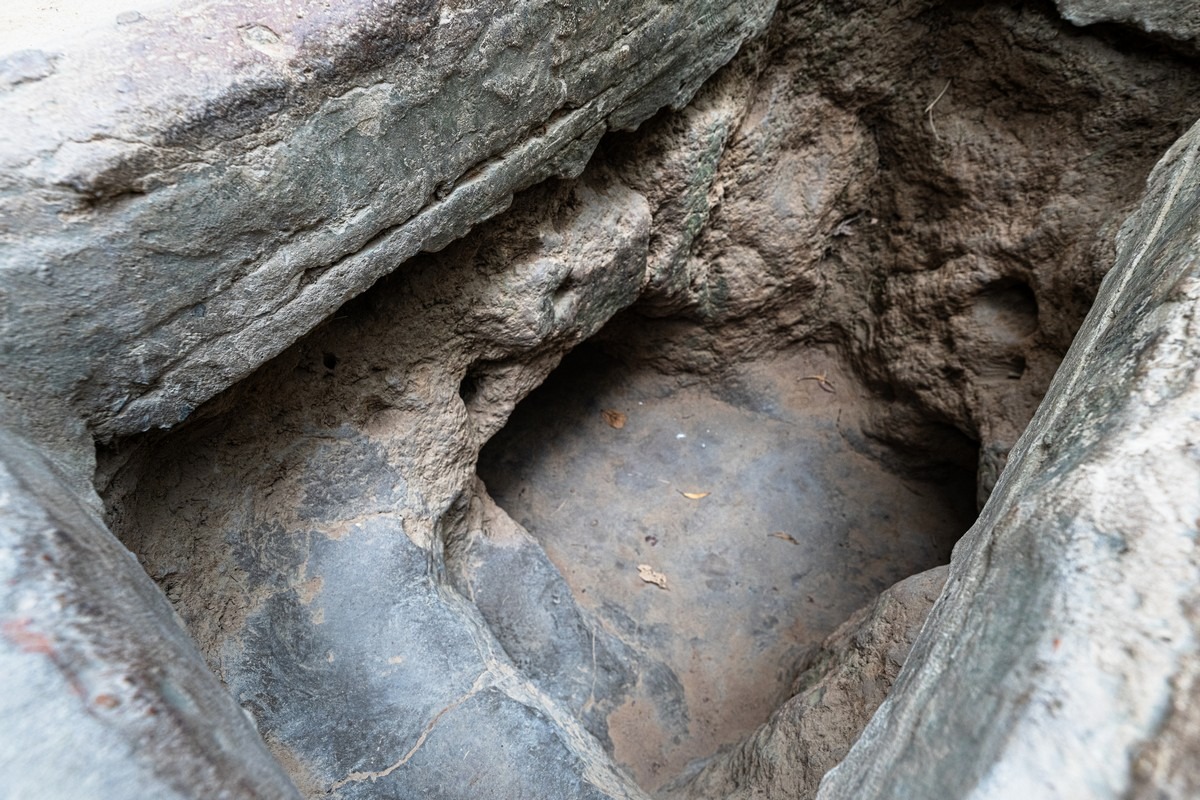
In many tunnels the only way through is by crawling:
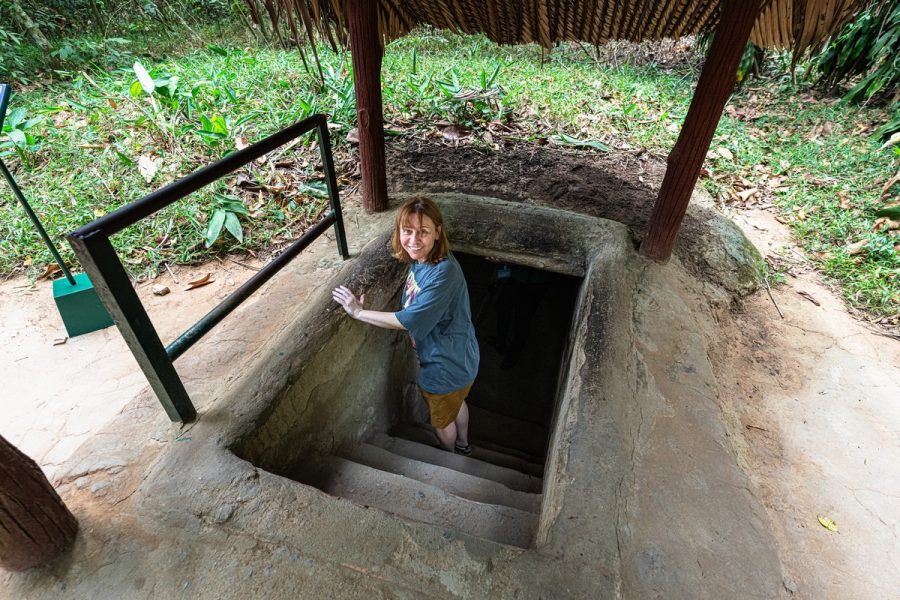
But for the tourists they widened a small section so that even folks of non-Vietnamese dimensions could squeeze through:
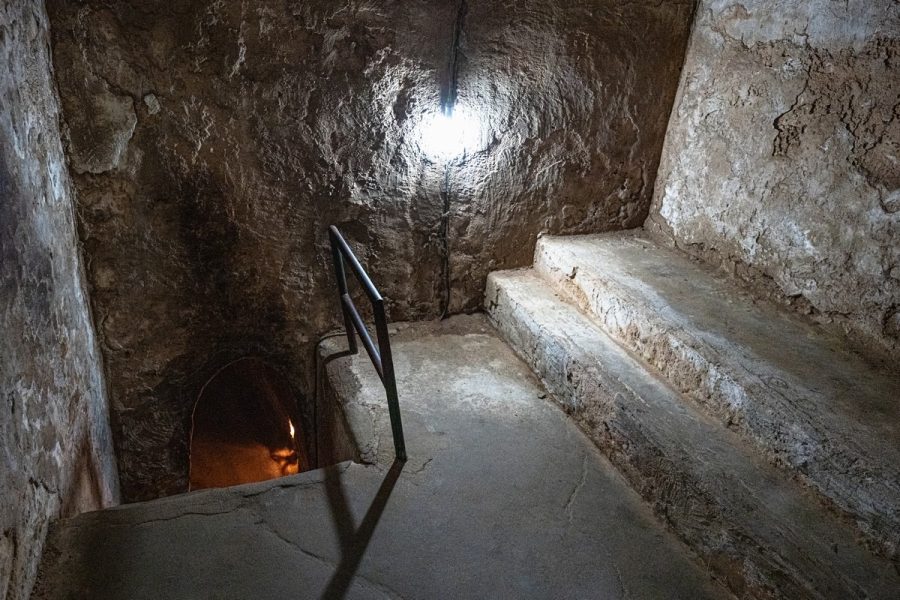
Alas, I crawled in a little way, but then decided to give up on the idea since I had my backpack full of camera gear on me, and I’m a touch on the chubby side myself. Now I regret it – I should’ve left all the photo stuff outside and crawled in.
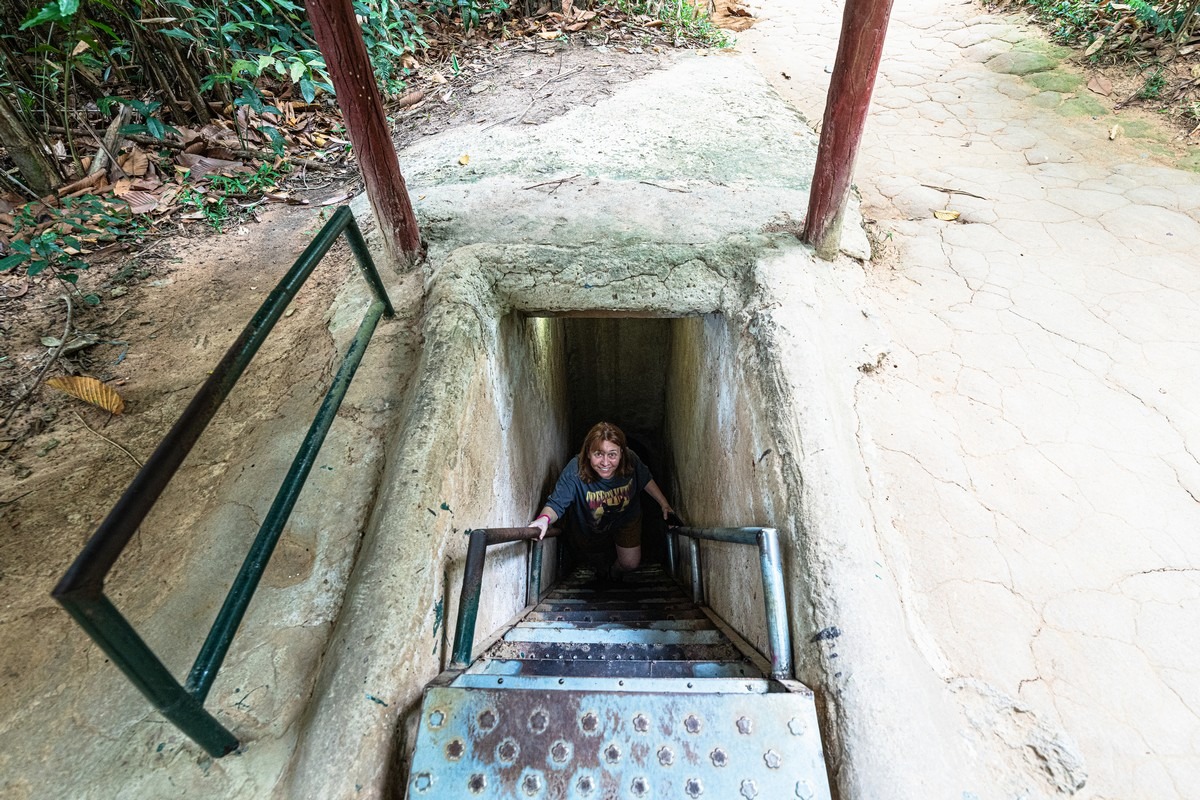
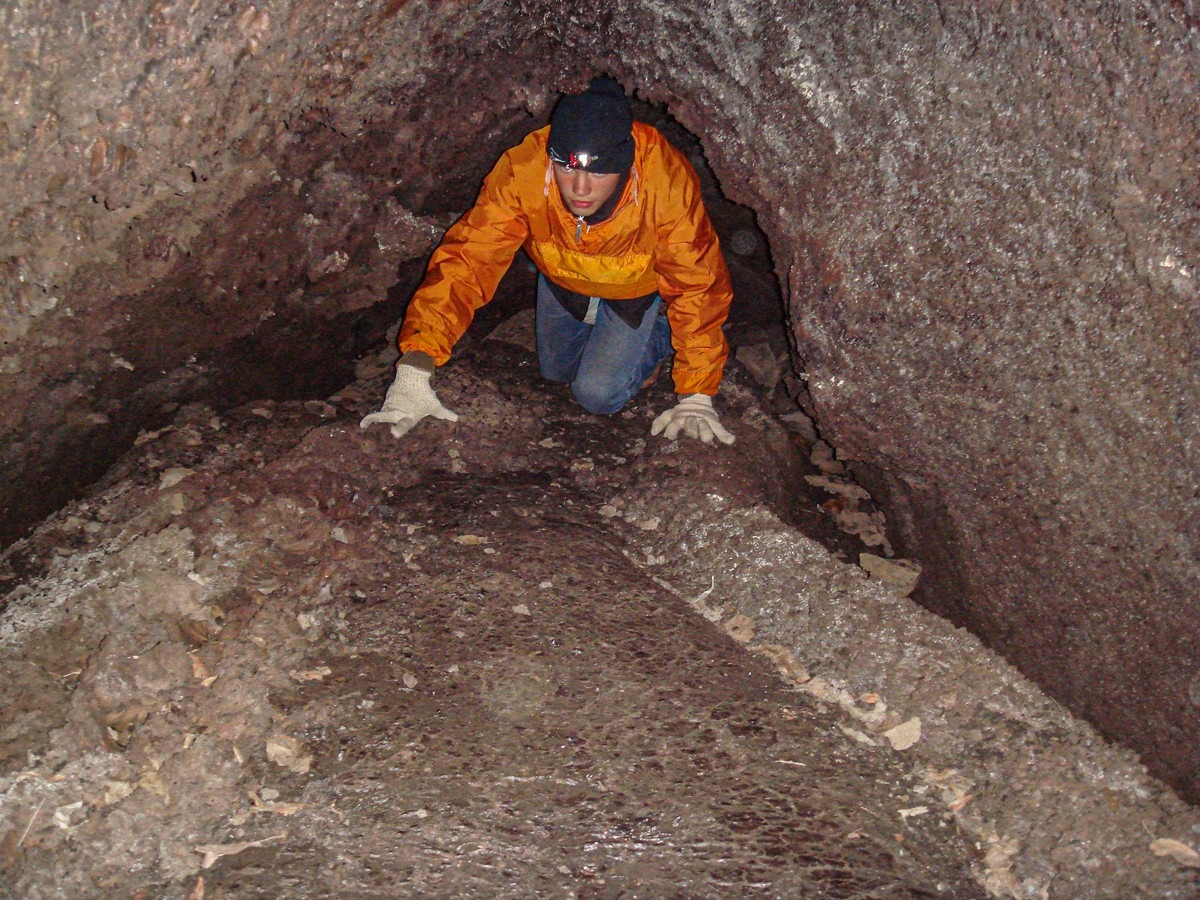
I really do regret not going in. After all, I’ve had to crawl in far less comfortable conditions before – through the volcanic tunnels on Kamchatka, for instance. Like this:
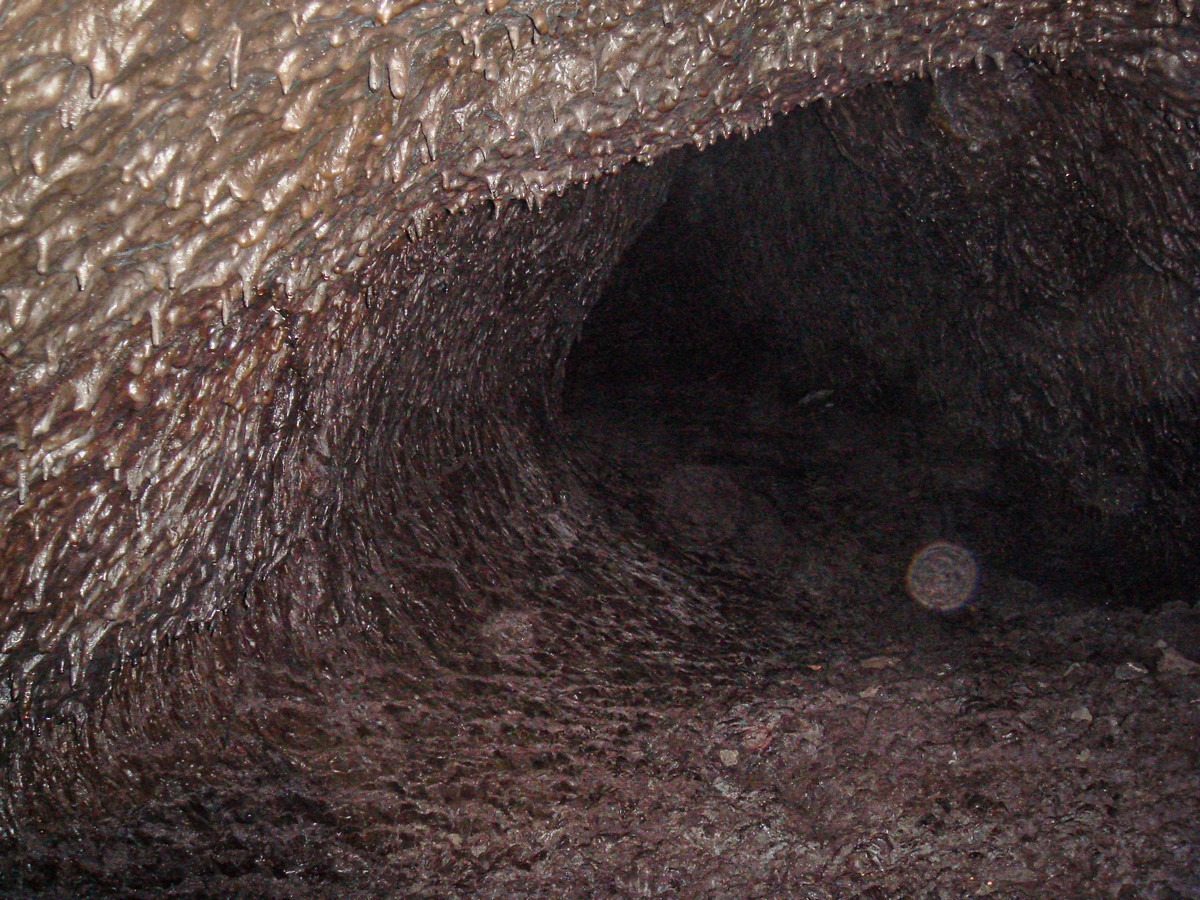
And it’s sharp up top too from solidified droplets of lava. So you’ve got to crawl through there in clothes you don’t mind scratching up:
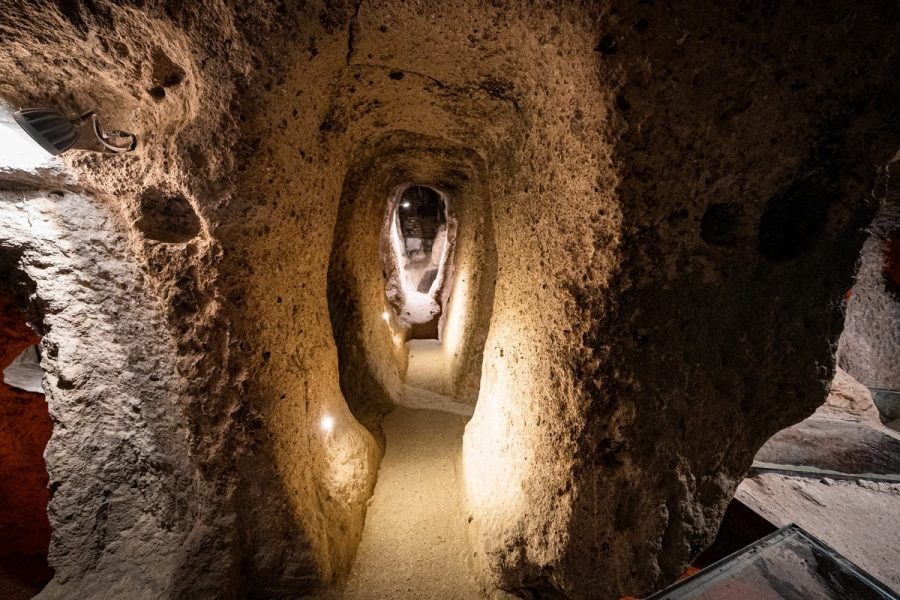
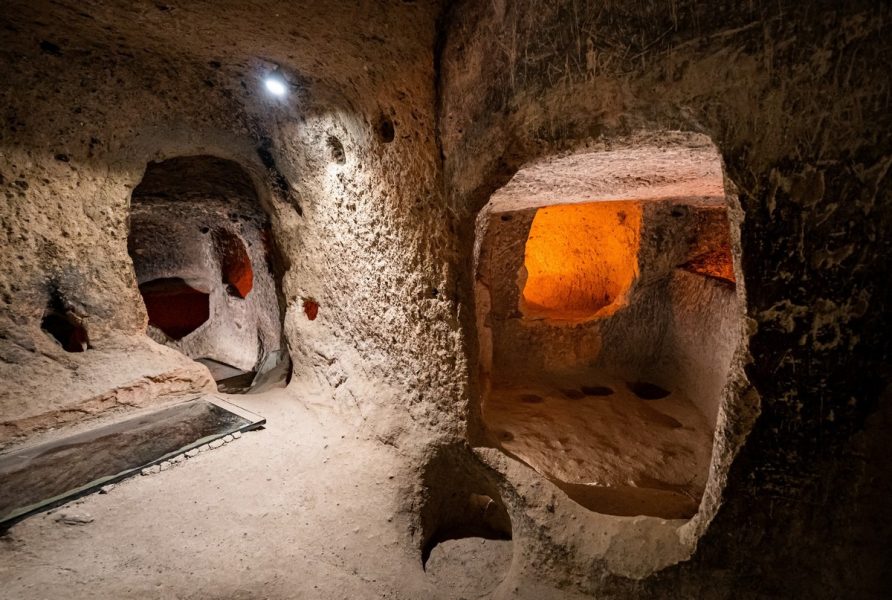
And while we’re on the subject – here’s the underground city of Kaymaklı in Turkish Cappadocia:
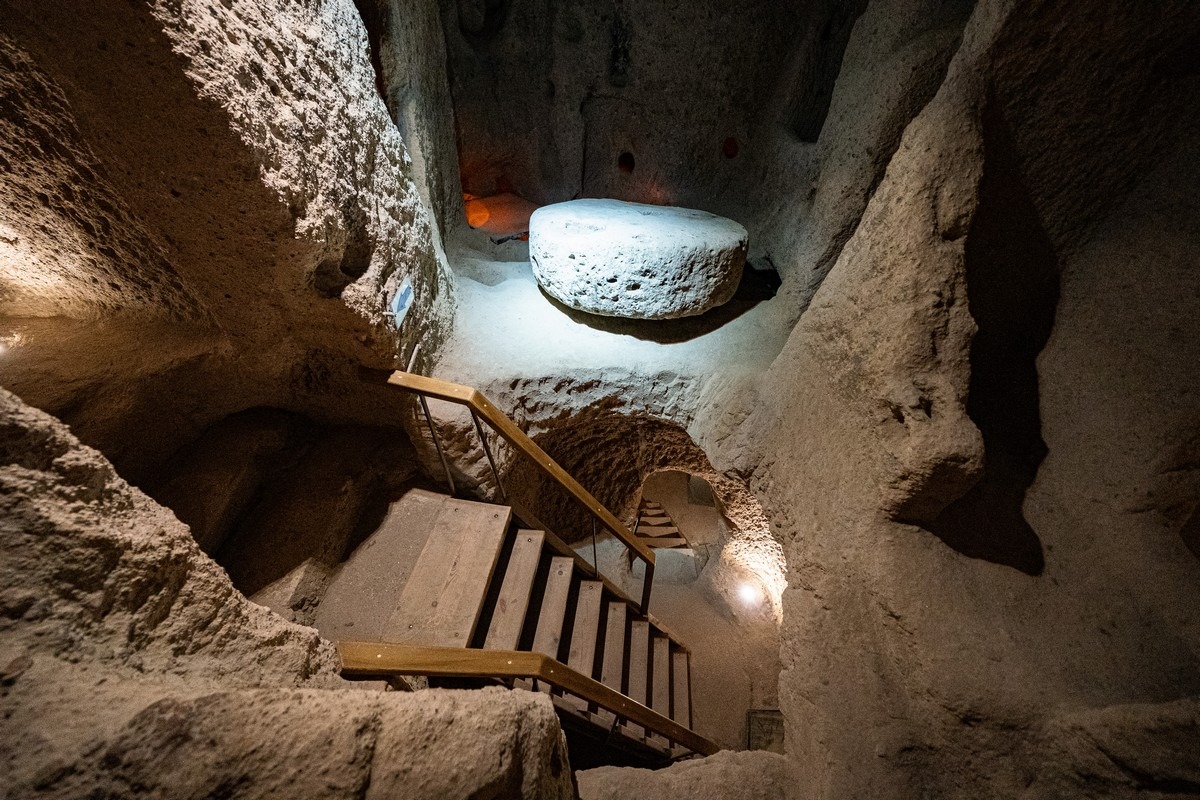
A mind-blowing eight+ story underground structure. And yes, it was built for the same reason – hiding from and cleverly fighting back at an enemy. These days though it’s just a tourist attraction – a highly recommended one at that.
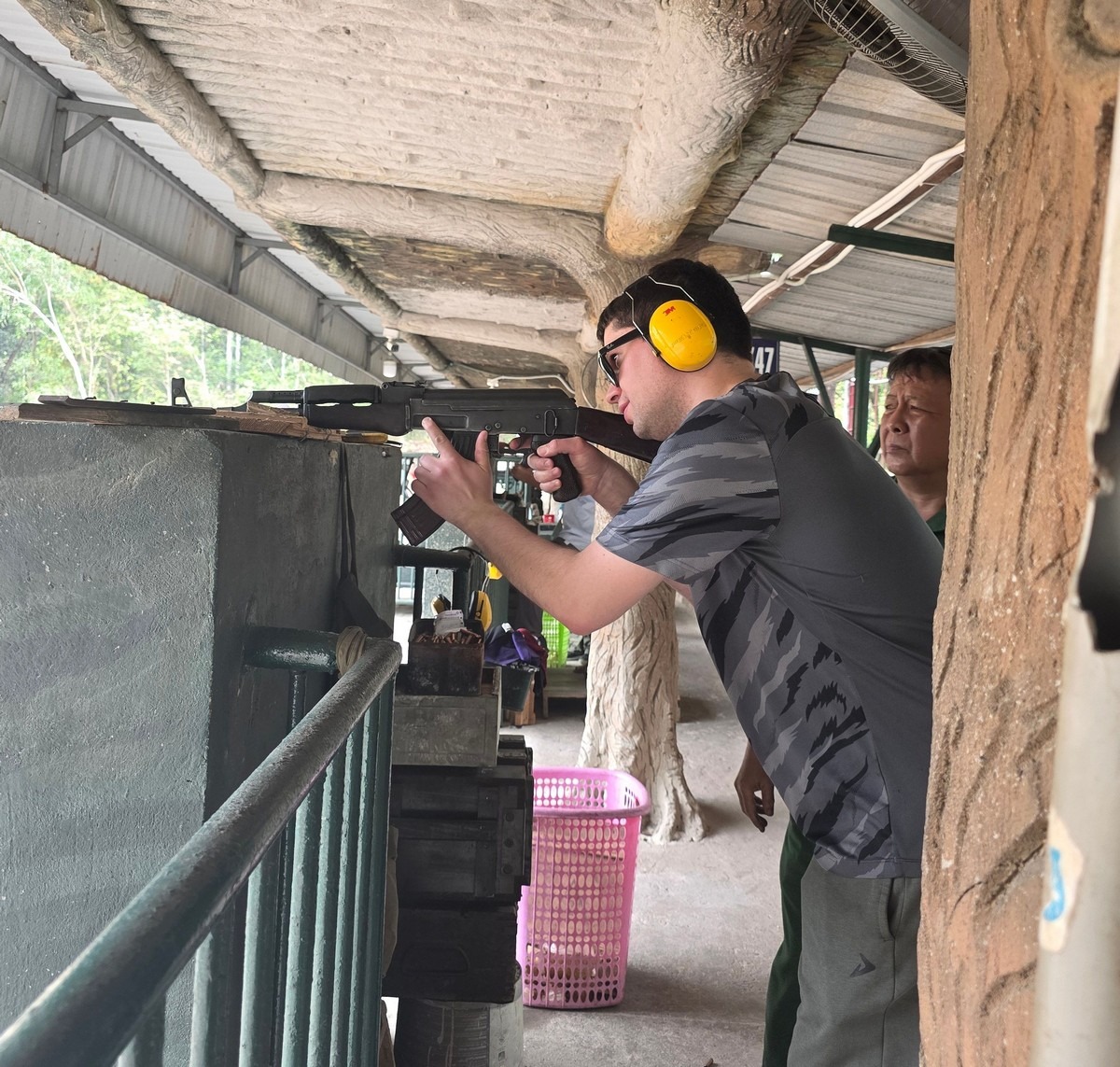
PS: While strolling around the Cu Chi tunnels area, for a small fee they let you fire off some live rounds from an AK-47! ->
The best hi-res photos from Vietnam are here.

