
May 7, 2026
An icebreaker museum with an unusual history.
We didn’t have much free time in St. Petersburg after the conference on the future of cybersecurity, so we only had room for one bit of sightseeing – a visit to the Krassin icebreaker museum…
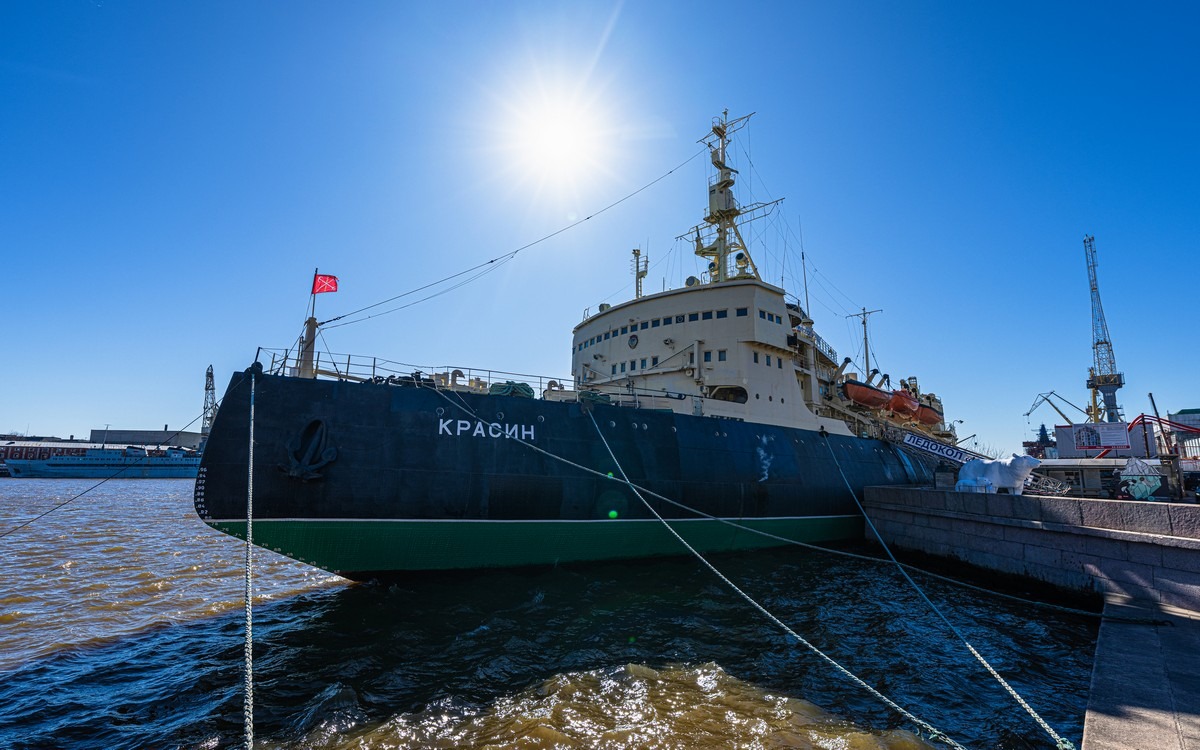
The Krassin is a storied ship whose history is truly fascinating – but I’ll get to that in a bit. The first Arctic-class icebreaker in history was the Yermak, built at the end of the 19th century based on the ideas of Vice Admiral Makarov – a remarkable man who did a great deal for Arctic exploration and development, and plenty besides. His dream was to reach the North Pole on an icebreaker. But calculations showed that doing so would require more power than the technology of the time could deliver…
Then came the idea of building two icebreakers so they could sail together. But that turned out to be absurdly expensive, so in the end they built just one – the Yermak itself, which, sadly, hasn’t survived to this day. The Krassin belonged to the next generation of icebreakers – designed with the help of lessons learned from the construction and use of the Yermak. And despite all the turmoil of the 1980s and 1990s, the Krassin was lucky enough to make it through to present day.
The icebreaker has an incredibly eventful history. During the Civil War and the intervention by foreign powers, it was sunk to block a river channel and help defend Arkhangelsk. The city fell anyway, and the ship was later raised and taken over by the British. Then, in 1921–22, an agreement was finally reached with Britain: the remaining construction debt on the Krassin was paid off (the ship had been built in Newcastle-upon-Tyne on credit, and the tsarist authorities never managed to settle the bill in full). Luckily, the new government somehow came up with the needed pretty sum, and the icebreaker finally returned to Russia.
The next heroic chapter in the Krassin’s story came in 1928 when the airship Italia crashed during an expedition to the North Pole. The survivors ended up stranded on an ice floe, and it was the Krassin that managed to force its way through the Arctic ice and reach them (depicted in the movie The Red Tent starring Sean Connery). A separate section of the exhibit is devoted to this episode:
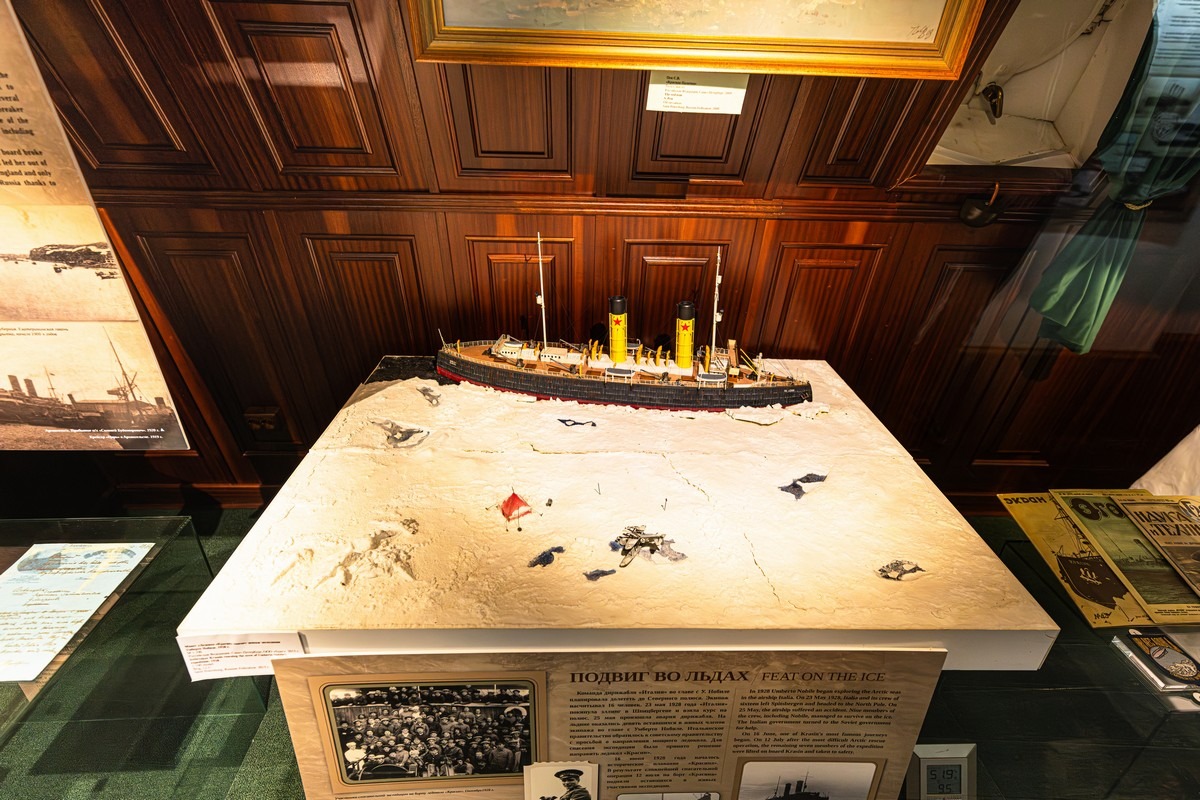
A few more details about the Italia disaster…
First, by sheer luck, a radio set was thrown clear when the airship crashed into the ice. The remains of the airship, along with several polar explorers, were carried off by the wind and never found. The survivors managed to get the radio working again and started broadcasting their SOS and coordinates. At first nobody heard them because the airwaves were clogged with journalists sending reports that everybody was dead and all was lost. Then, completely by chance, the signal was picked up by a Soviet ham radio operator, who passed it on to a radio club. That’s how word of the survivors finally reached the powers that be.
Second, once news got out that the crew was in trouble, everyone started scrambling to assemble rescue expeditions. The Krassin got ready faster than everyone else – taking just four days. As it sailed past the coast of England on the way to the crash site, the British press apparently wrote that only “madmen or Bolsheviks” could get ready that fast. They even came up with a pun on the ship’s name, spelling it with a C (Crassin), referring to “Crazy”!
Third: at the start of World War II, the ship was in the Far East. The Americans tried to charter it for an amphibious landing in Greenland where the Nazis had set up weather stations, but for whatever reason that plan never came together. Even so, the icebreaker crossed the Pacific, went through the Panama Canal, was refitted and armed, and took part in escorting one of the Arctic convoys. So yes, it ended up making a round-the-world voyage, which took more than two years, all told.
And these are just a few of the tales – there are plenty more.
Now it’s a ship-museum – welcome aboard!…
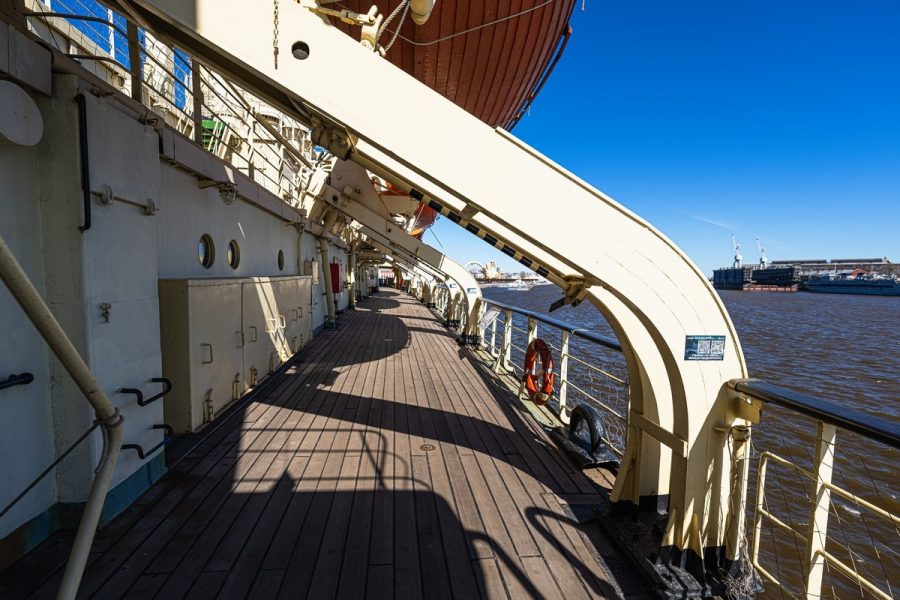
We head inside – the tour begins. First up: an officer’s cabin:
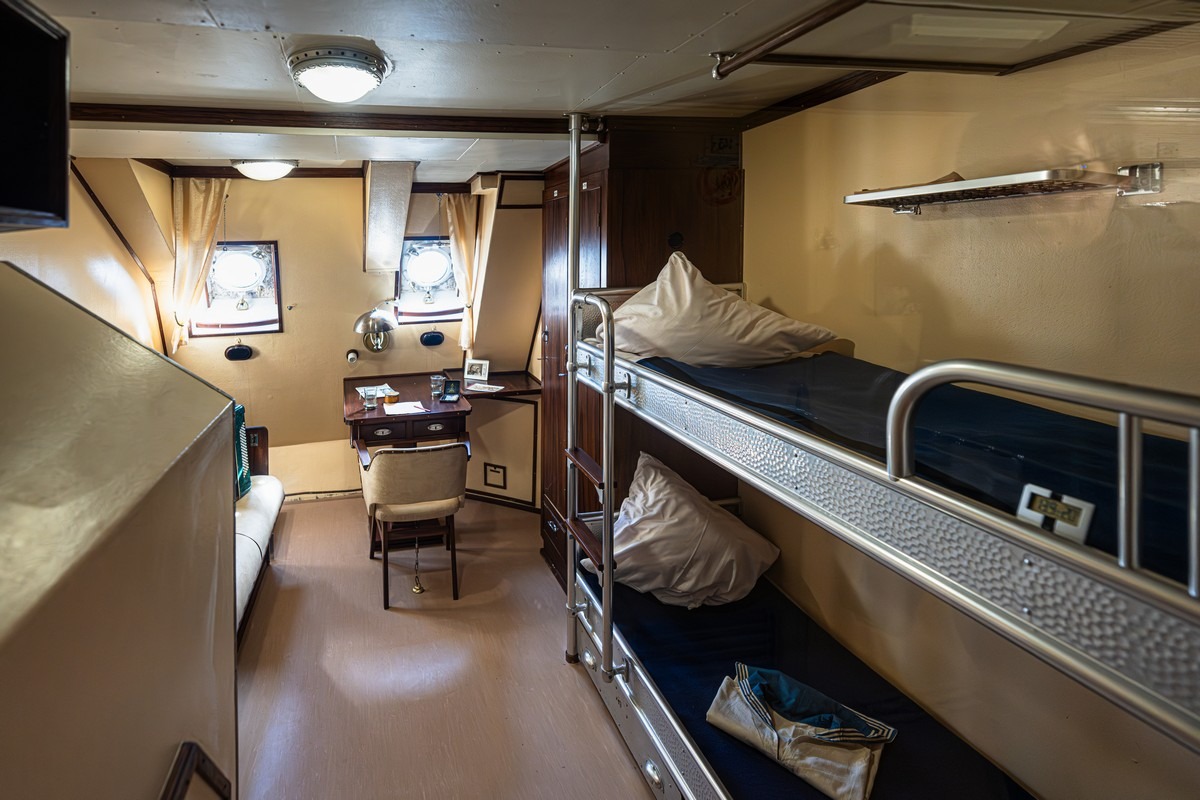
The sailors’ quarters are more basic, with room for four instead of two. Apparently, back when the ship ran on coal-fired boilers, the crew also included about 50 stokers. Since the icebreaker burned as much as 100 tons (!) of coal a day (and used up to 150 tons of ice too!), the stokers had to shovel all 100 tons of it by hand at sea. That’s two tons per stoker per day!…
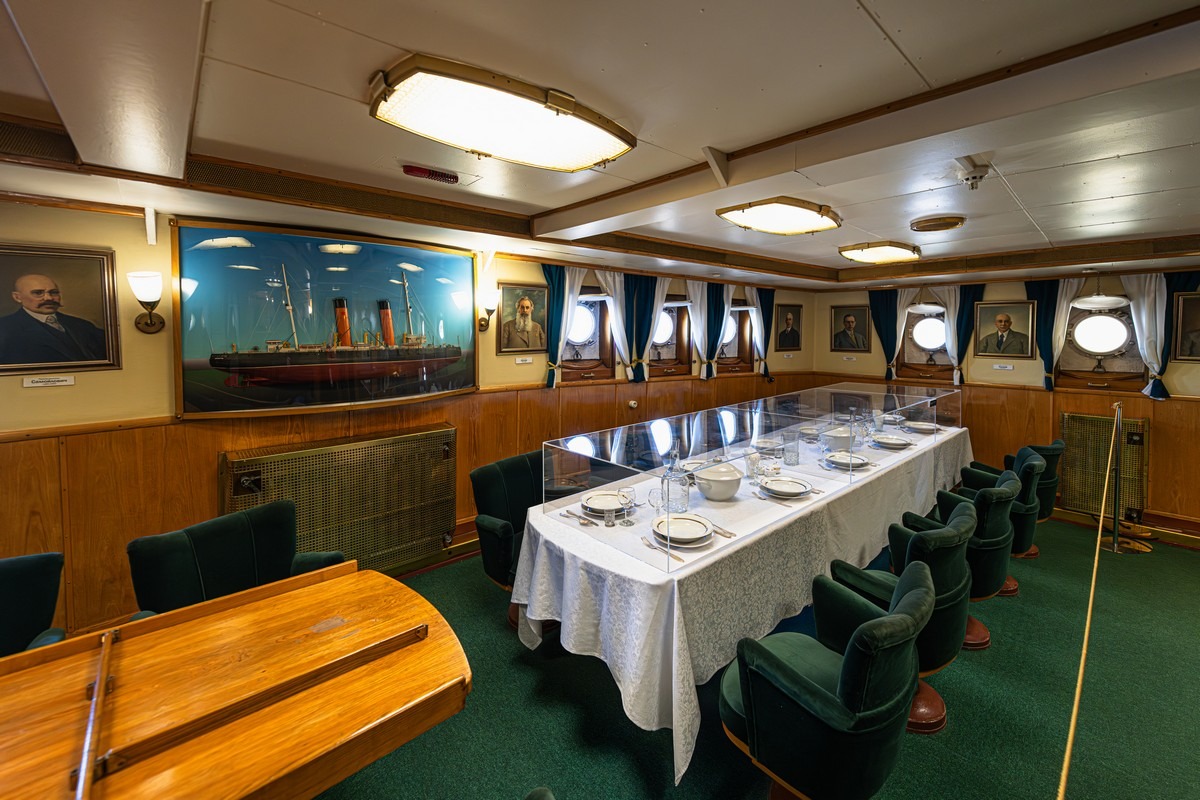
The officers’ mess. The captain sat at the head of the table. The table itself is a little unusual – wider at the captain’s end and narrower farther down (so he could see everyone; not a bad idea!) ->
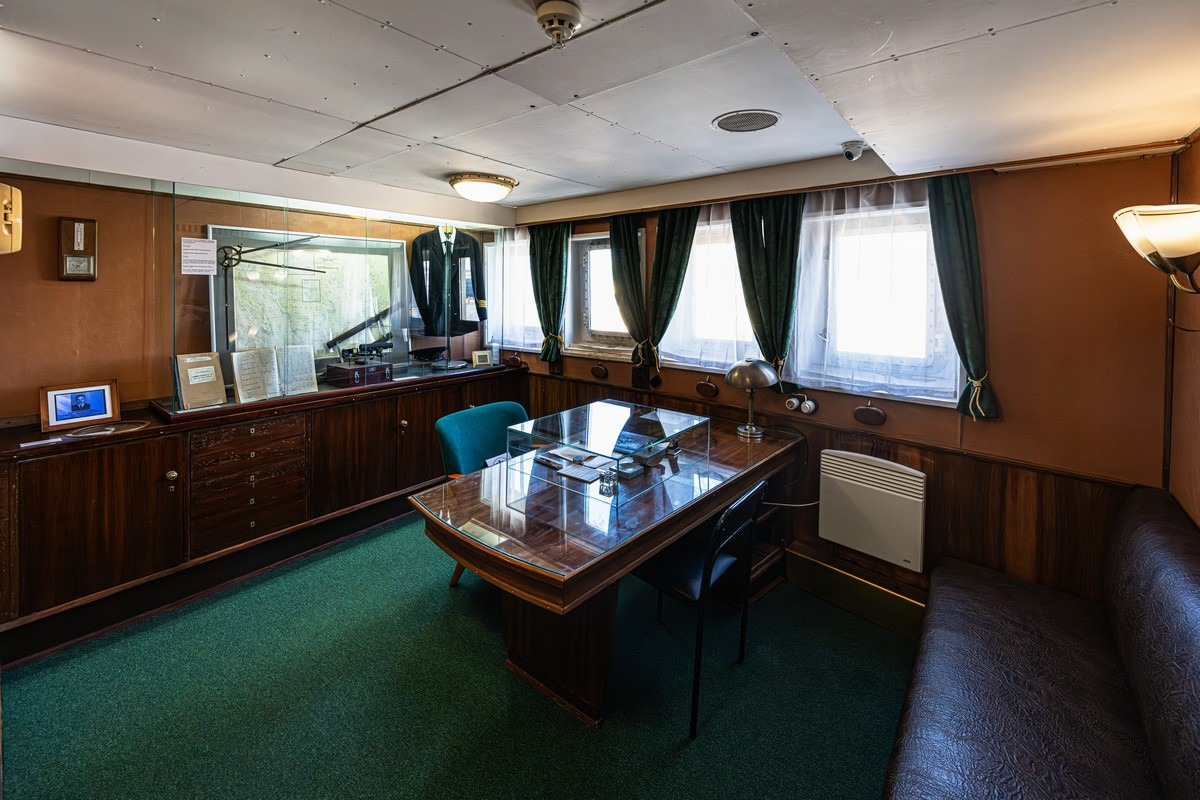
The captain’s cabin – the only one with its own bathroom and bathtub:
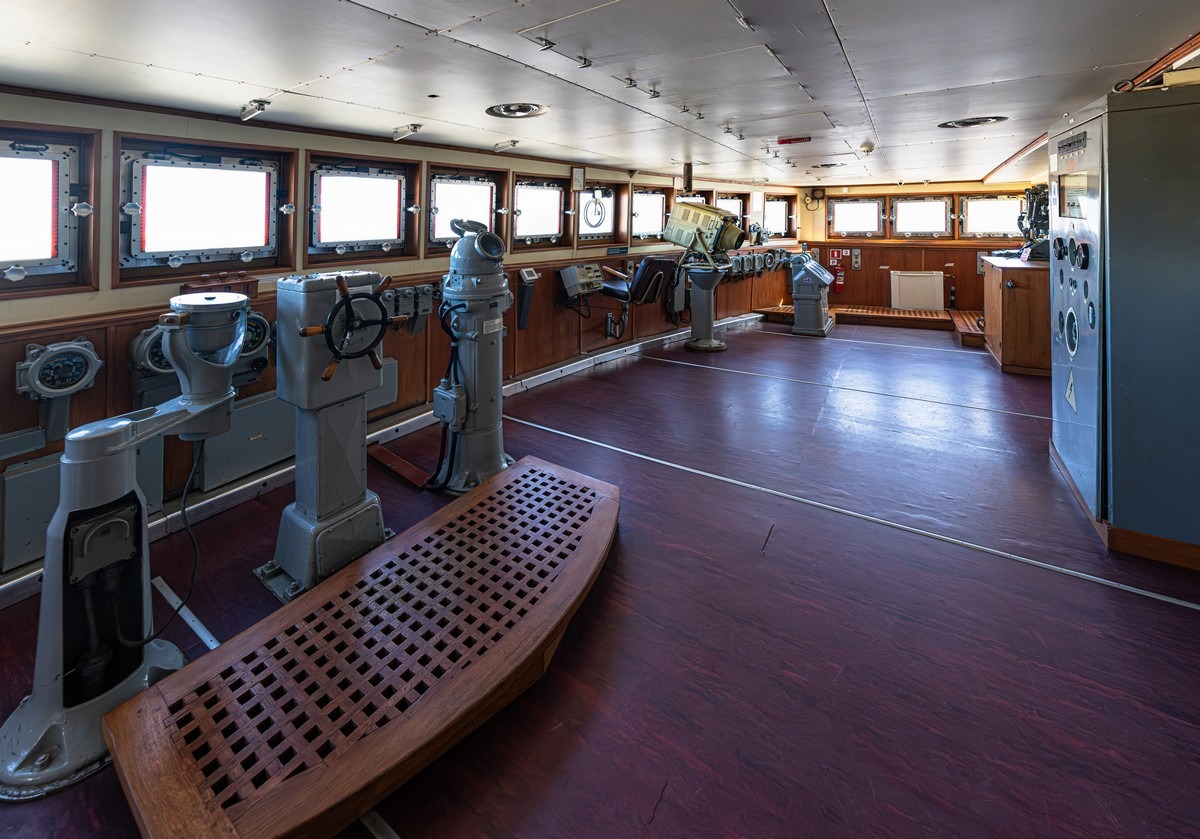
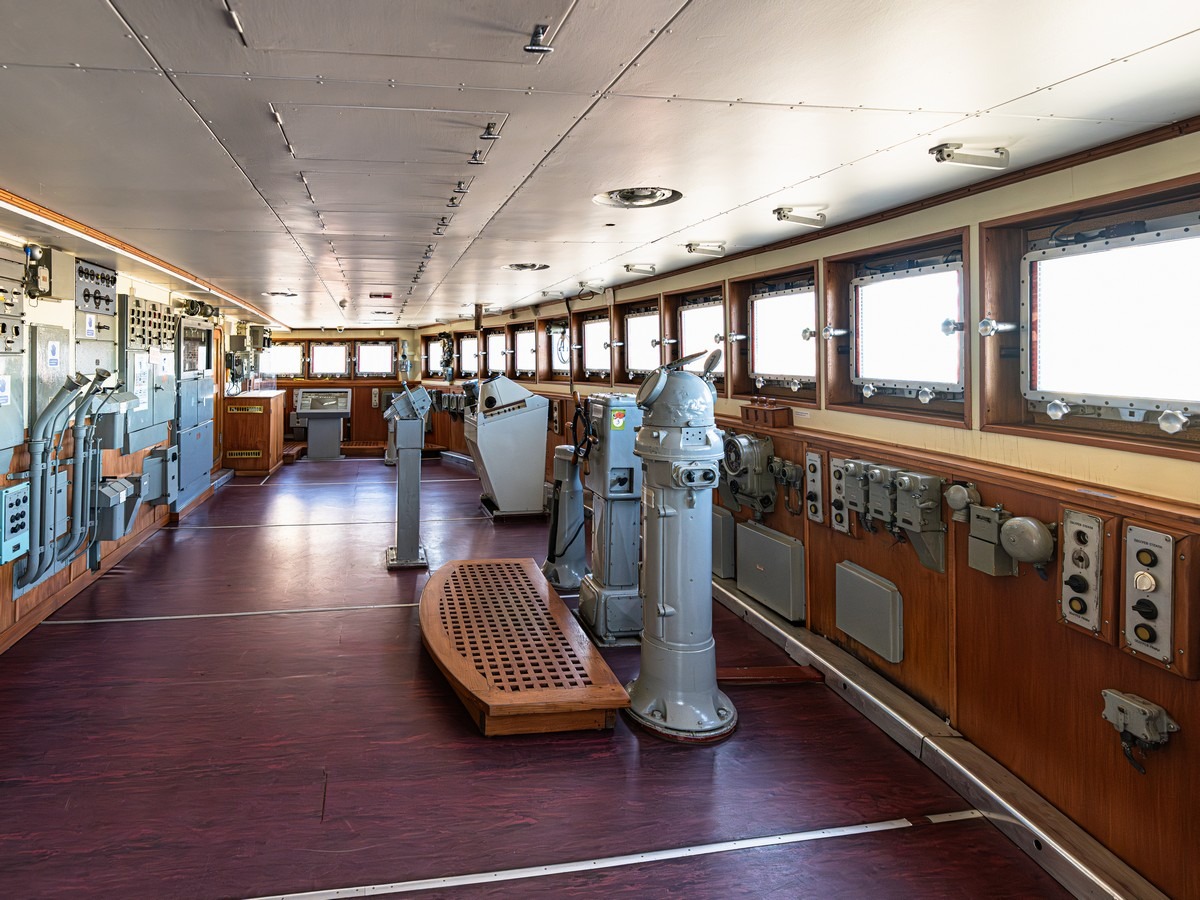
The bridge:
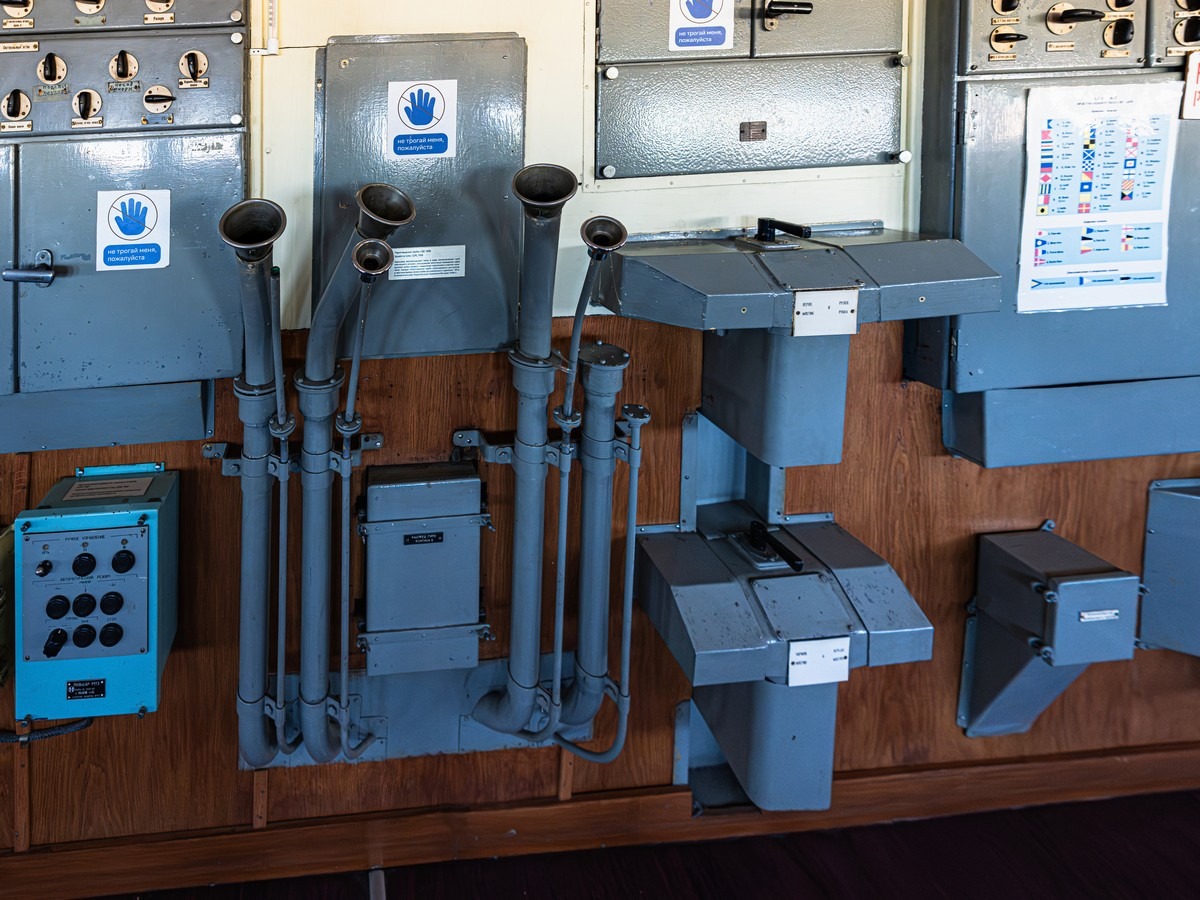
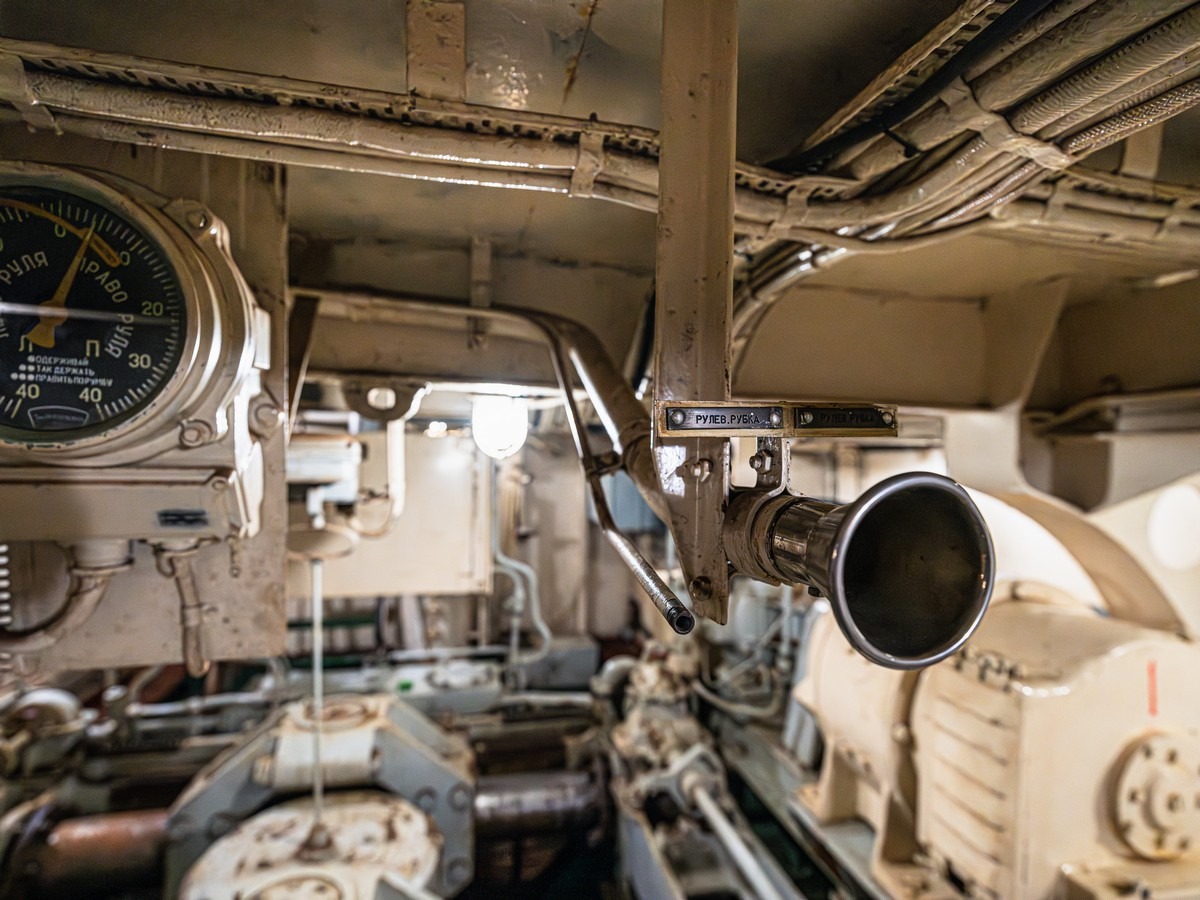
It’s fascinating checking out all these mechanisms – some of which are more than half a century old. The ship was significantly rebuilt in East Germany in the late 1950s. Take these voice pipes, for example. First you blow into the smaller one; at the other end it gives off a whistle – like a bell. Then you shout into the larger tube. And shout you must, because the longest pipe is 90 meters long:
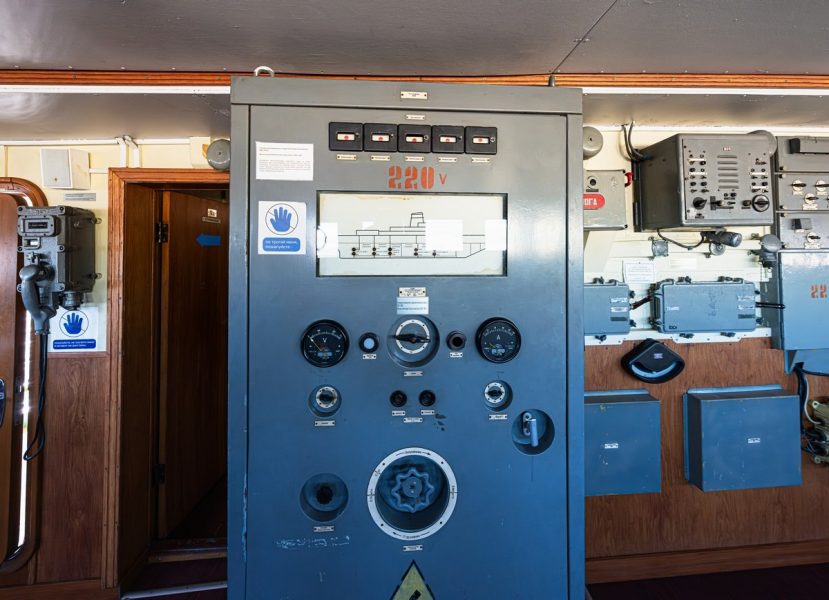
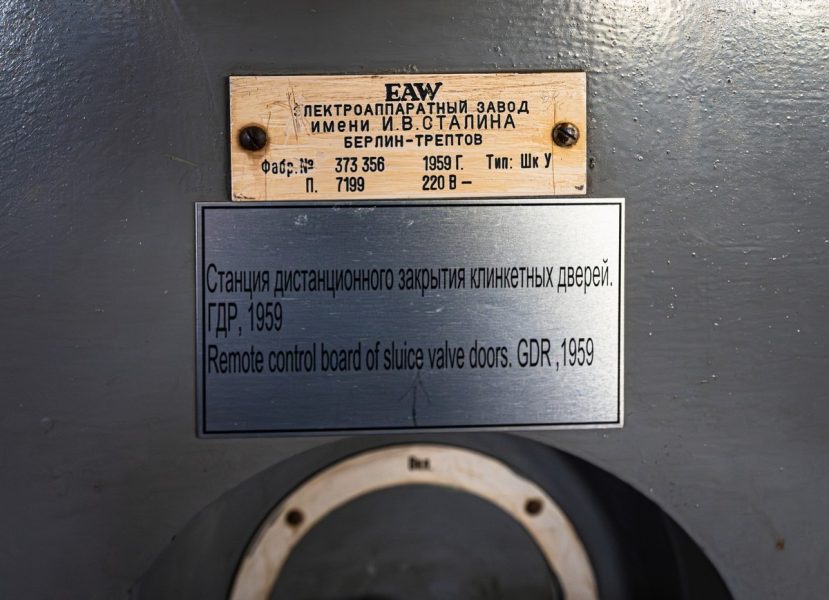
The automatic system for closing the watertight doors between compartments – something that could save the ship if the hull were breached. And in ice, that wasn’t exactly a far-fetched scenario.
Then there are the course-control systems from the days before modern navigational systems and GPS. There was also a device that spins the center section of certain portholes to knock ice off, plus lots of other gadgets I just don’t have the time or photos for. Bridge – done.
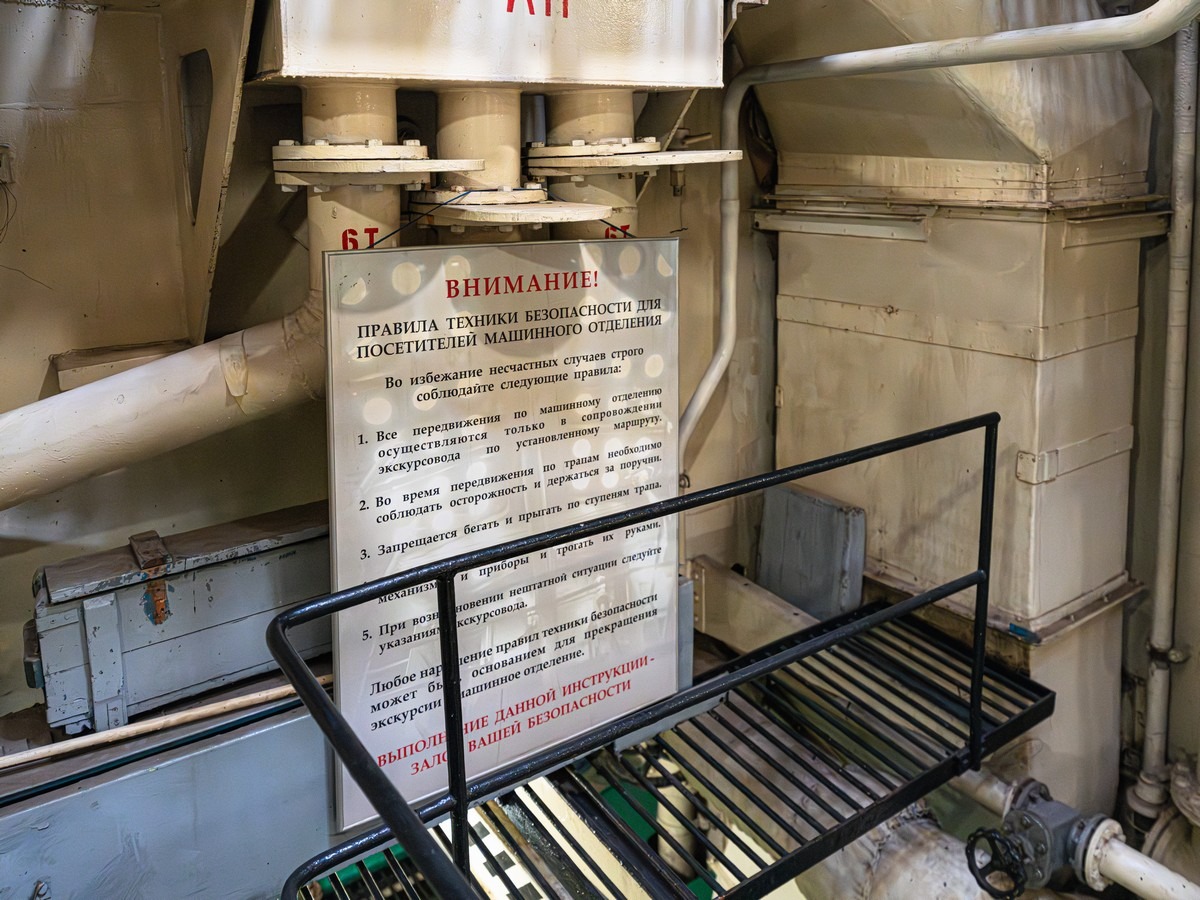
Time to head down to the engine room:
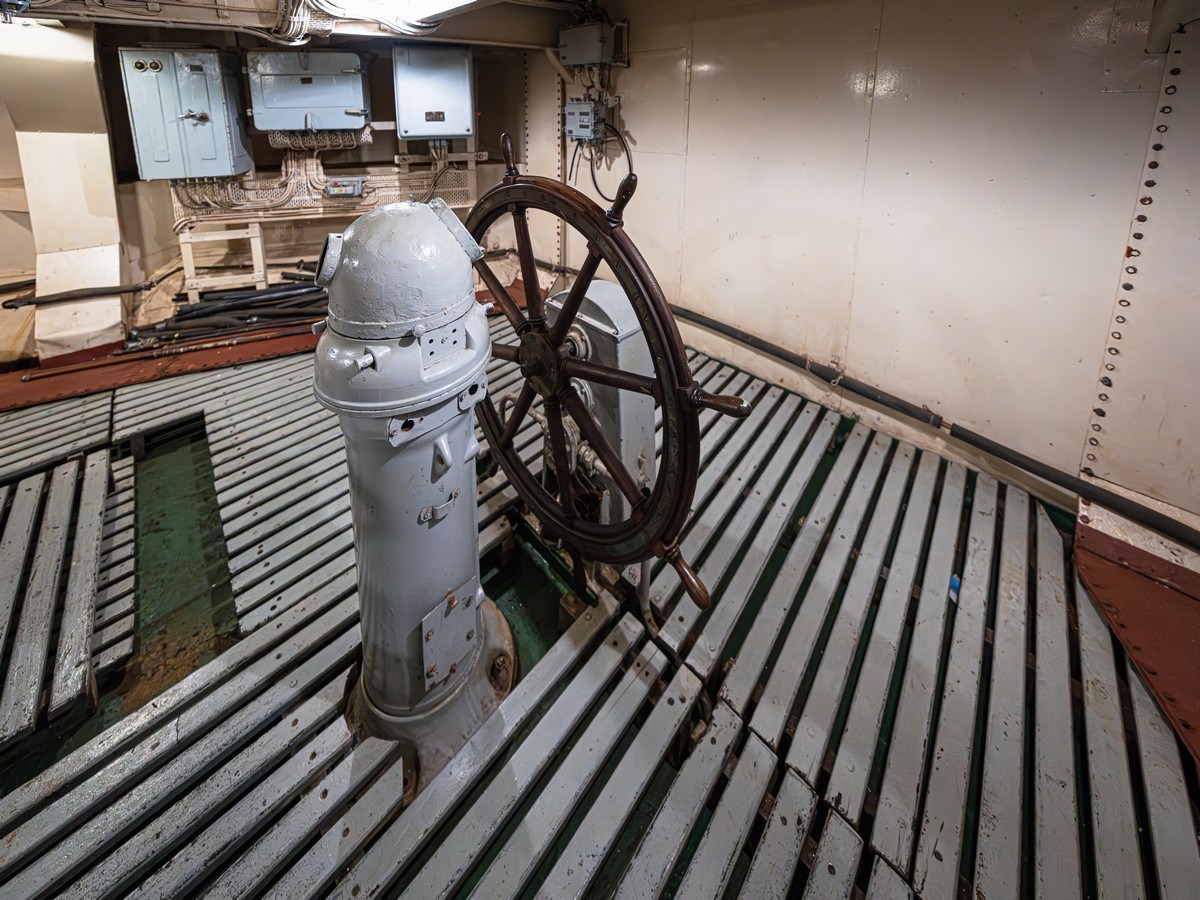
At the very stern – the emergency steering wheel – connected directly to the rudder:
And here it is again – that same 90m voice pipe running all the way up to the bridge:
And various other mechanisms whose exact purpose I no longer remember all that well:
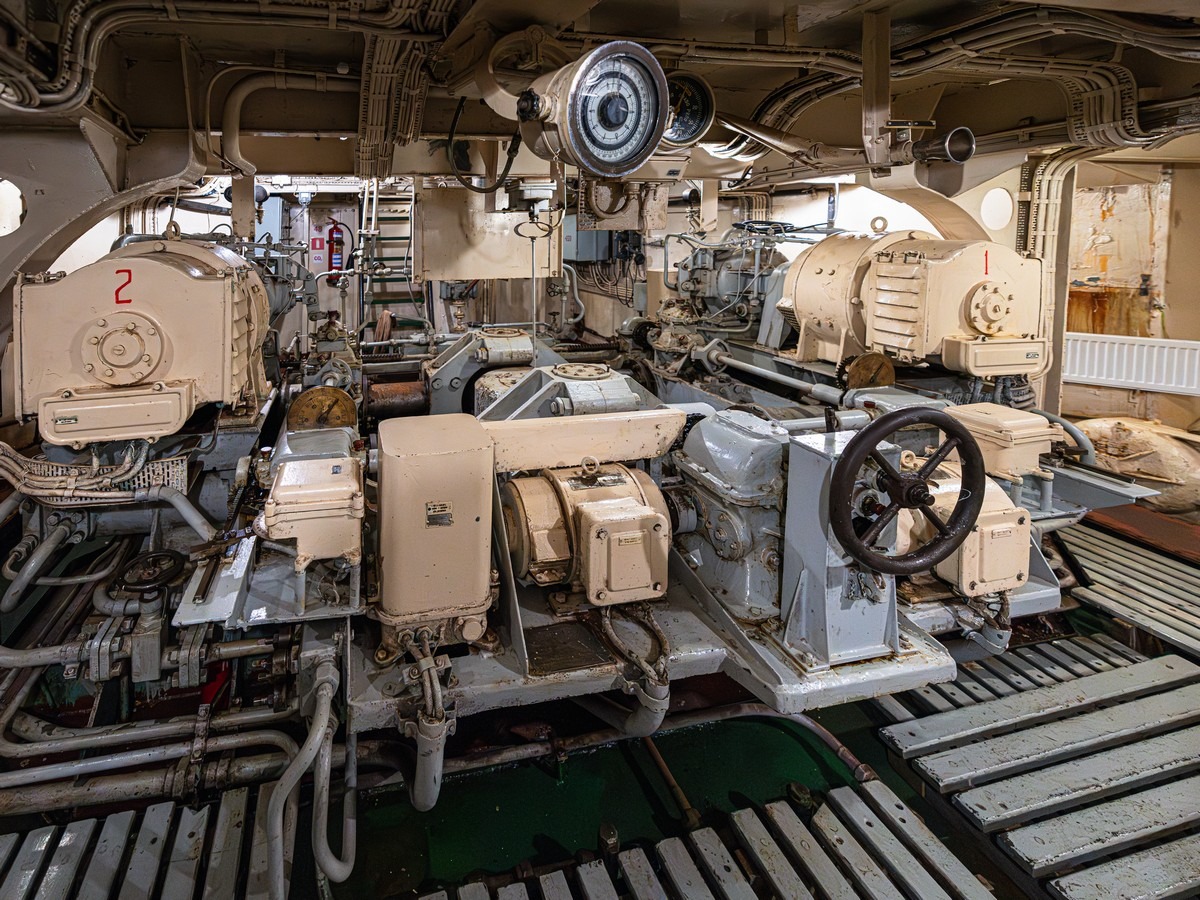
There are quite a few of mechanism-contraptions down here, because the icebreaker was substantially modified at least twice. First it had coal-fired boilers, then they were replaced with diesel-fired steam, and later with diesel-electric equipment, if I’m not mixing anything up…
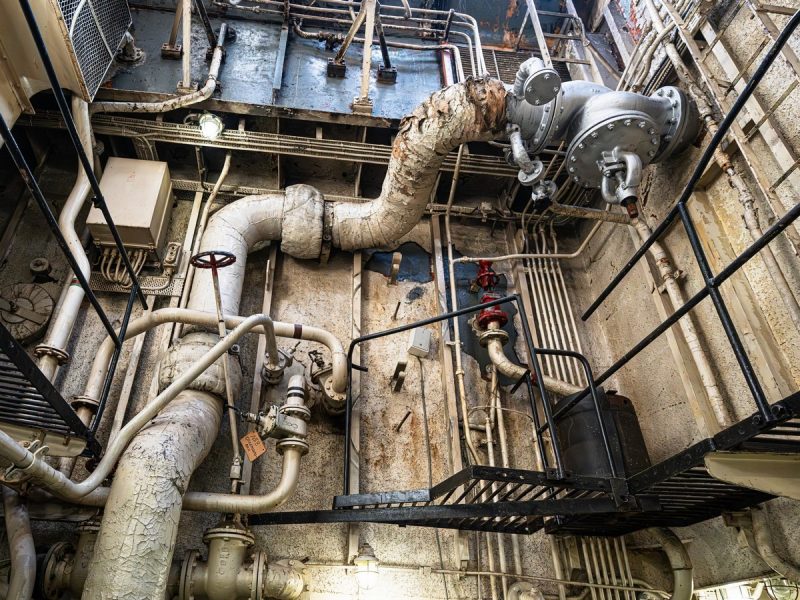
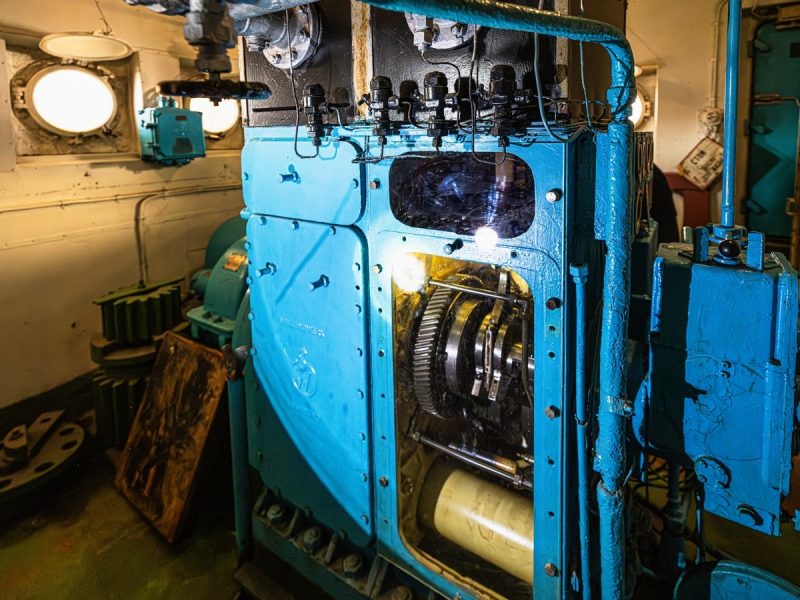
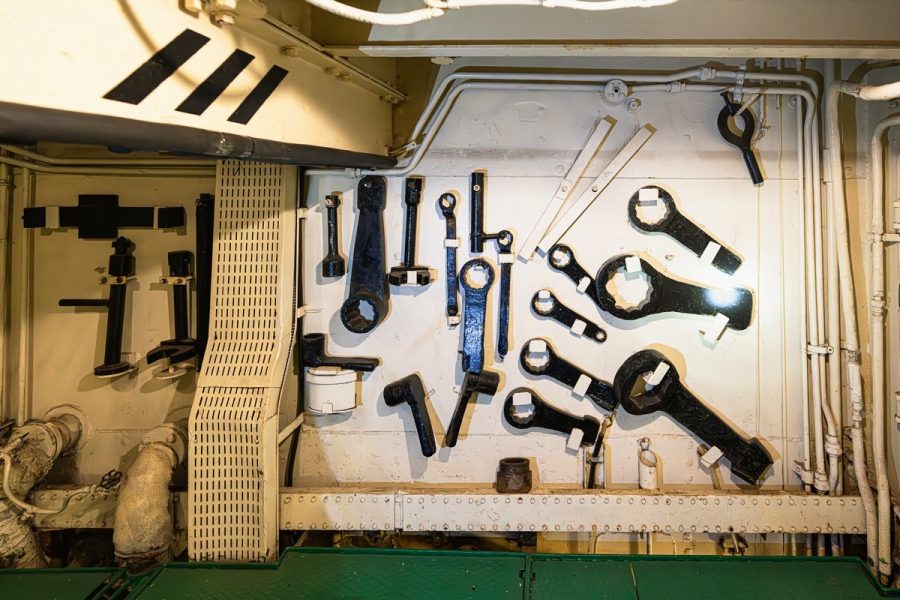
Moving on. Massive wrenches for massive nuts and bolts! ->
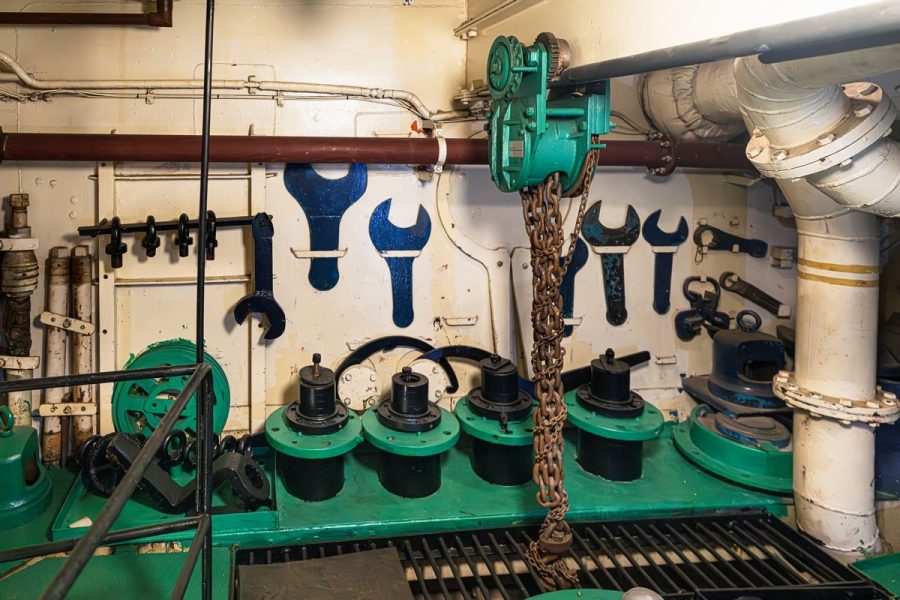
And here’s that same watertight door that closes if the hull is breached:
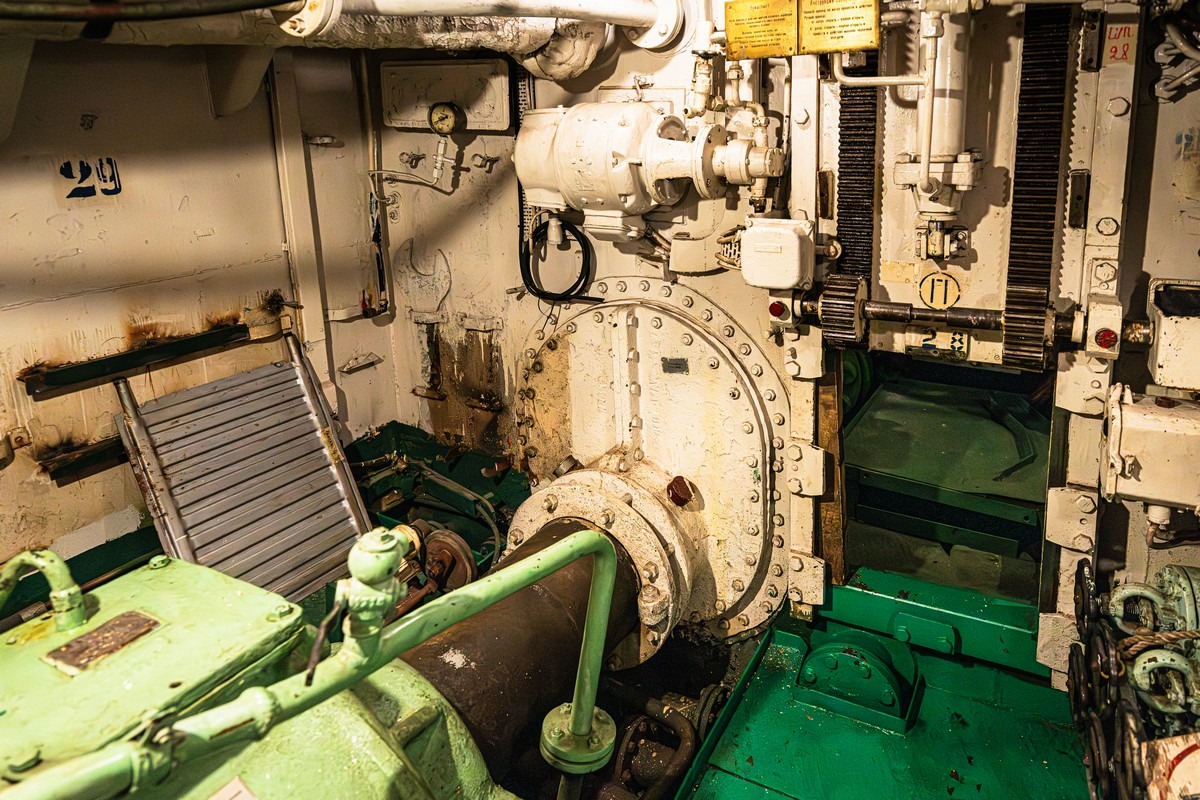
The main engine – or at least the part of it you can actually see:
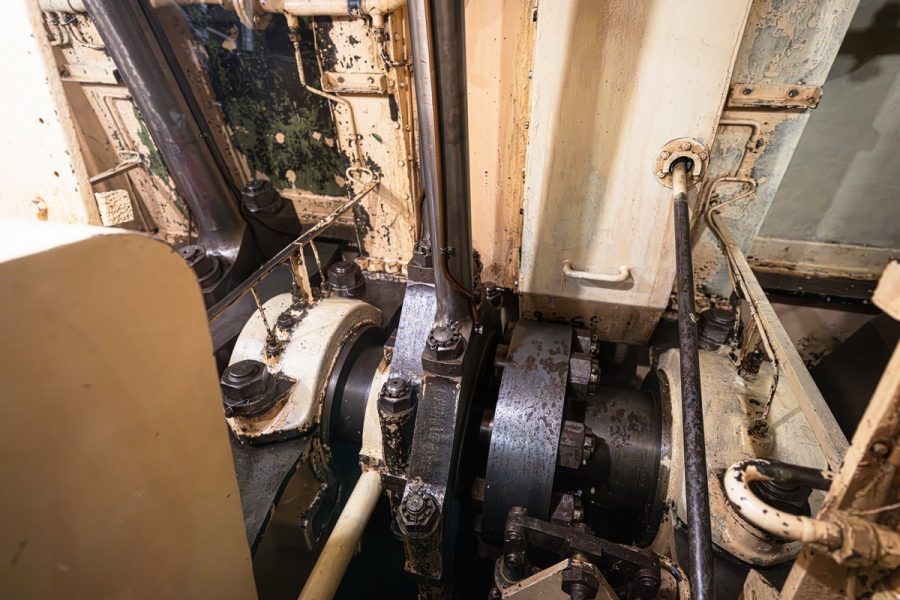
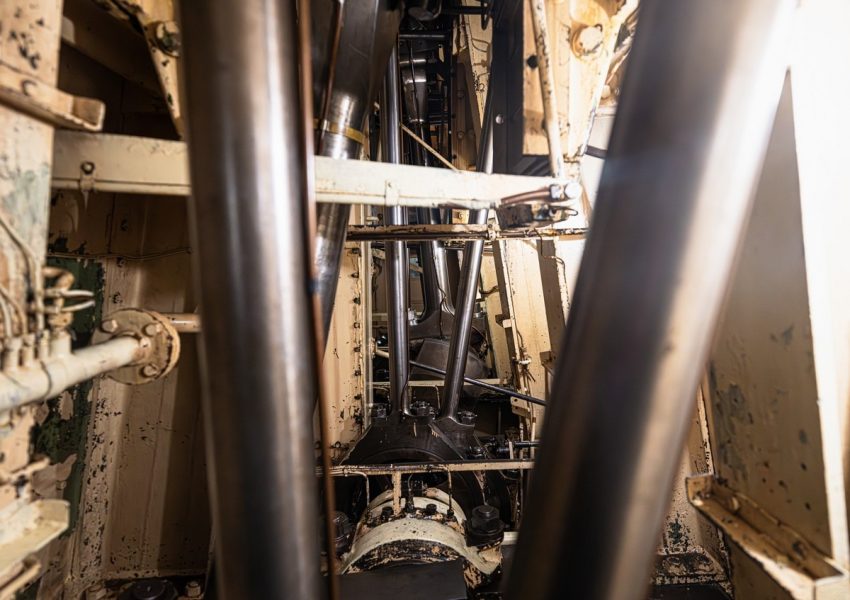
And more assorted bits and pieces. I honestly didn’t expect an icebreaker to be this complicated inside.
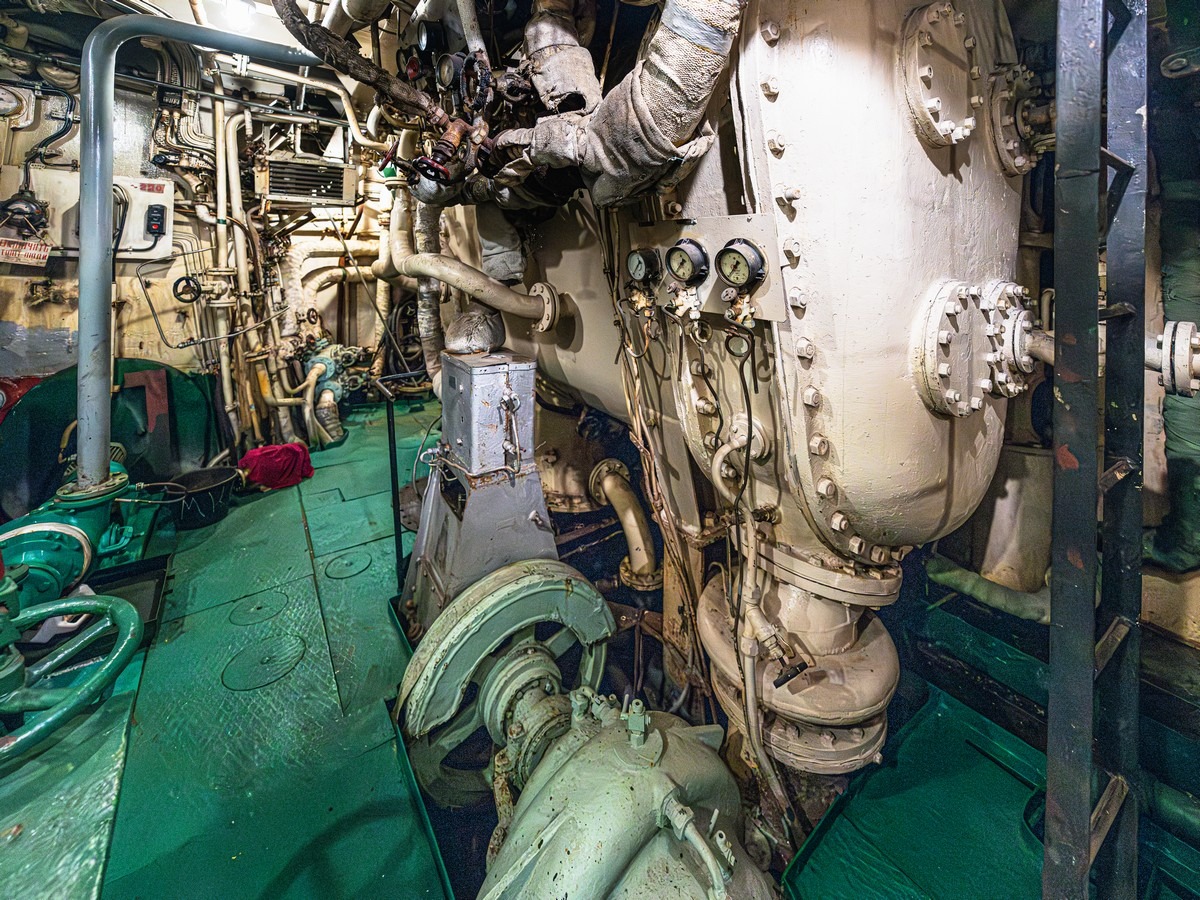
A desalinator made of copper! British-made too – and still here from the ship’s original construction:
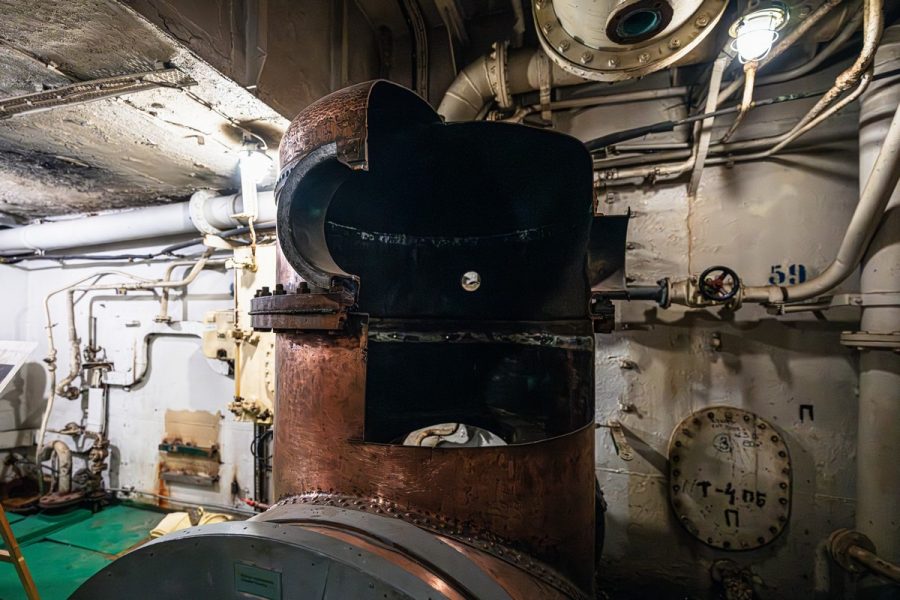
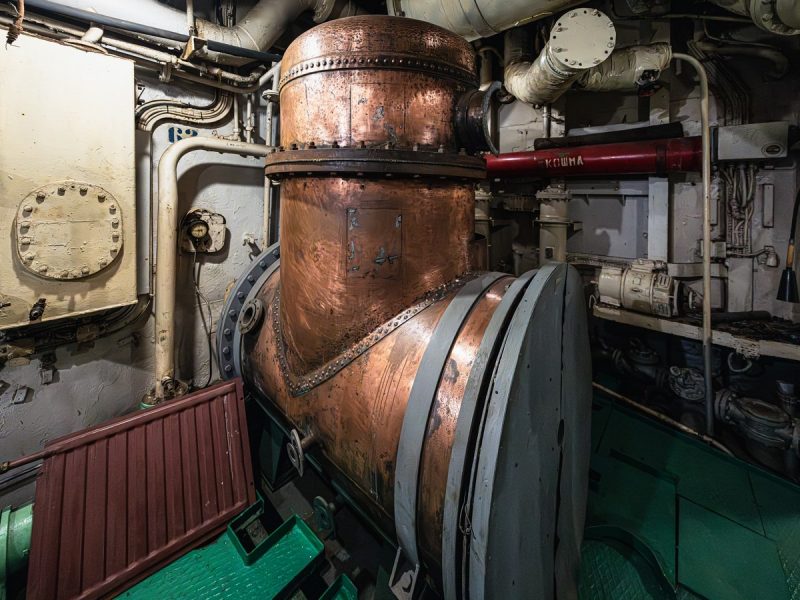
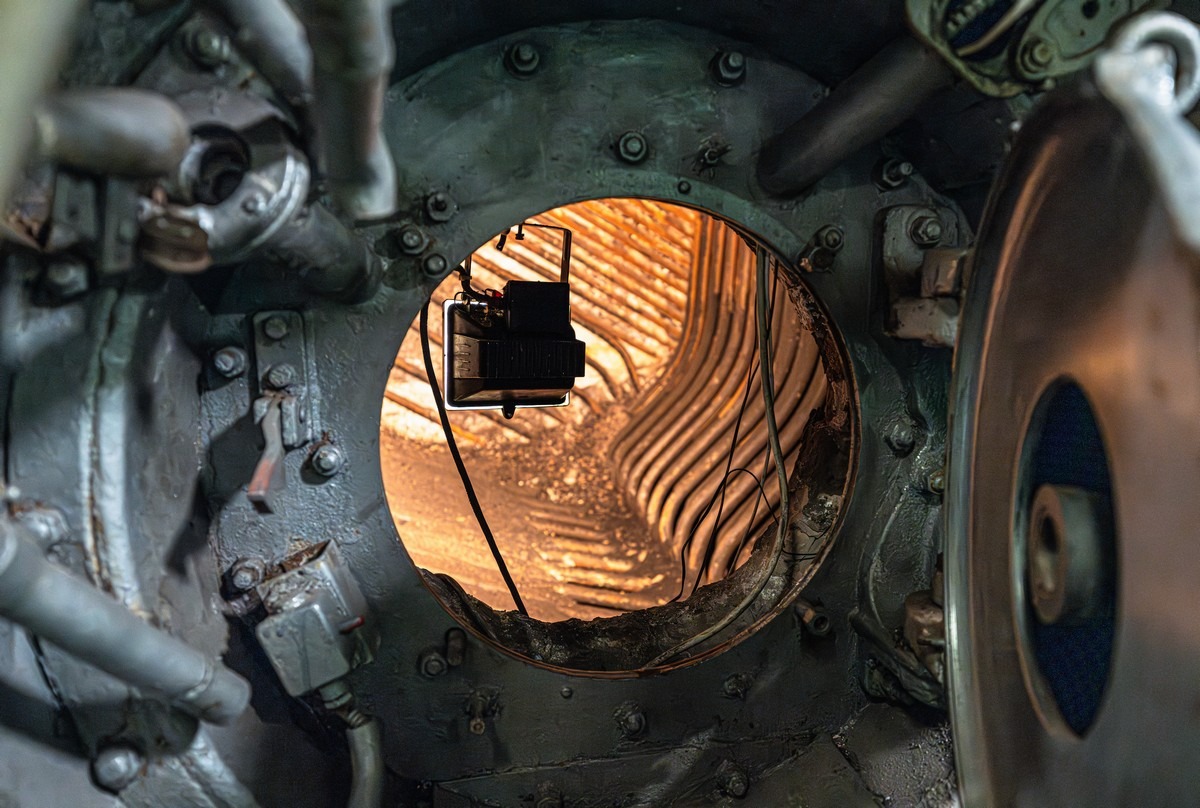
The boiler room – this is where the 300°C steam comes from:
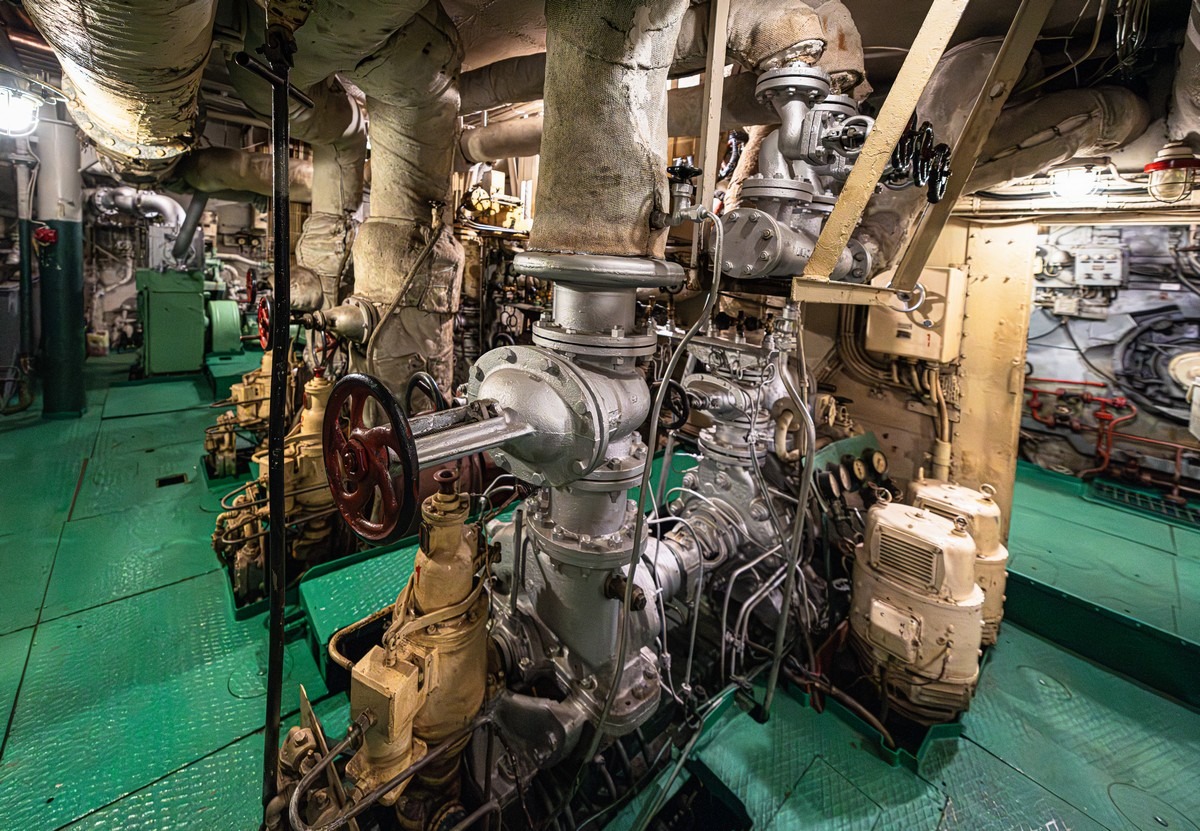
Steam boiler:
Electric generators:
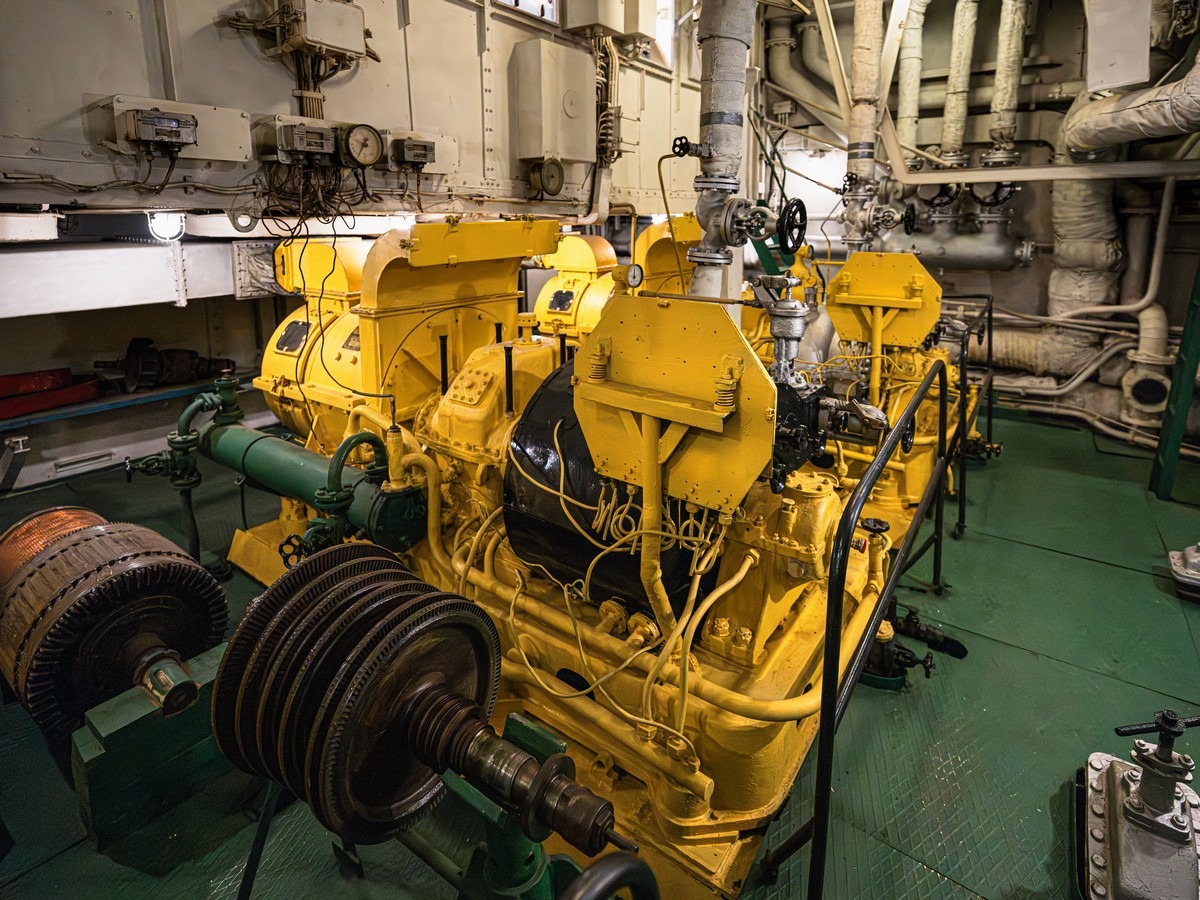
You could spend ages wandering around these compartments. But before I wear everyone out, it’s time to wrap things up and head back out into the fresh air.
An incredibly interesting icebreaker museum with a truly unusual history.
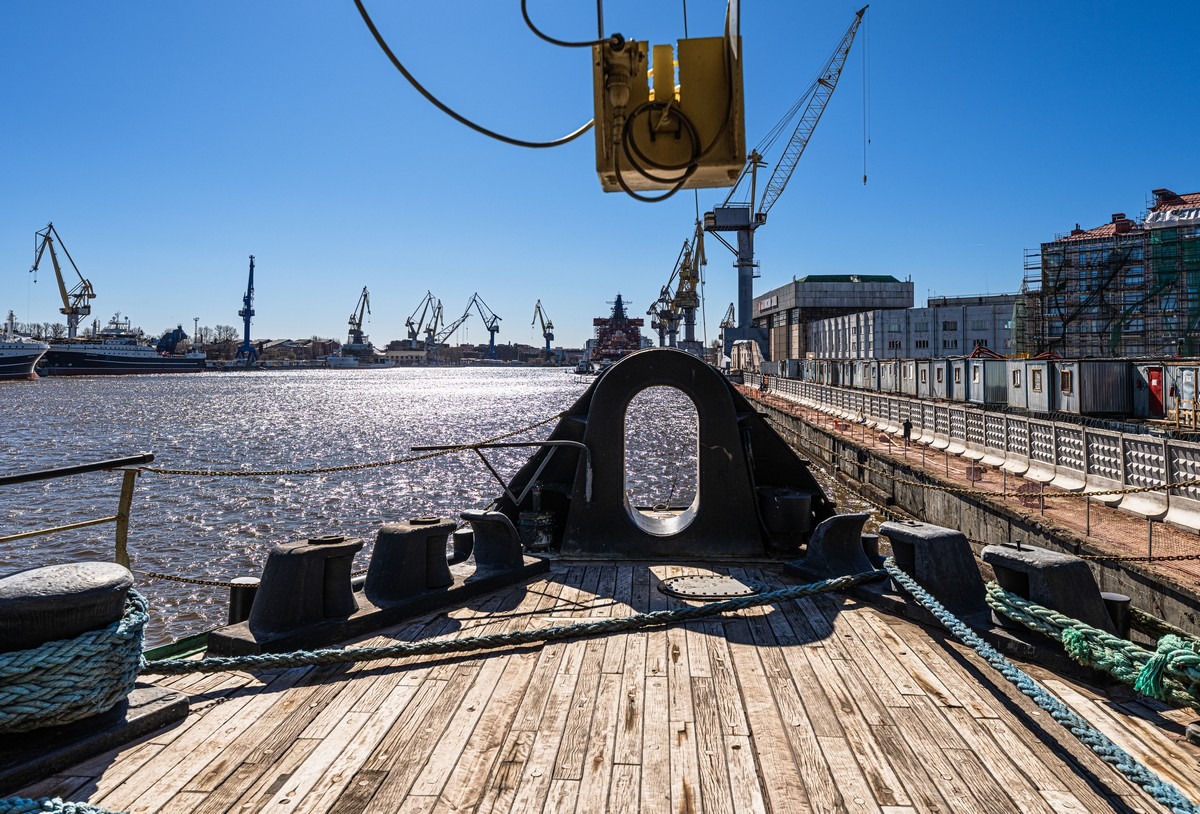
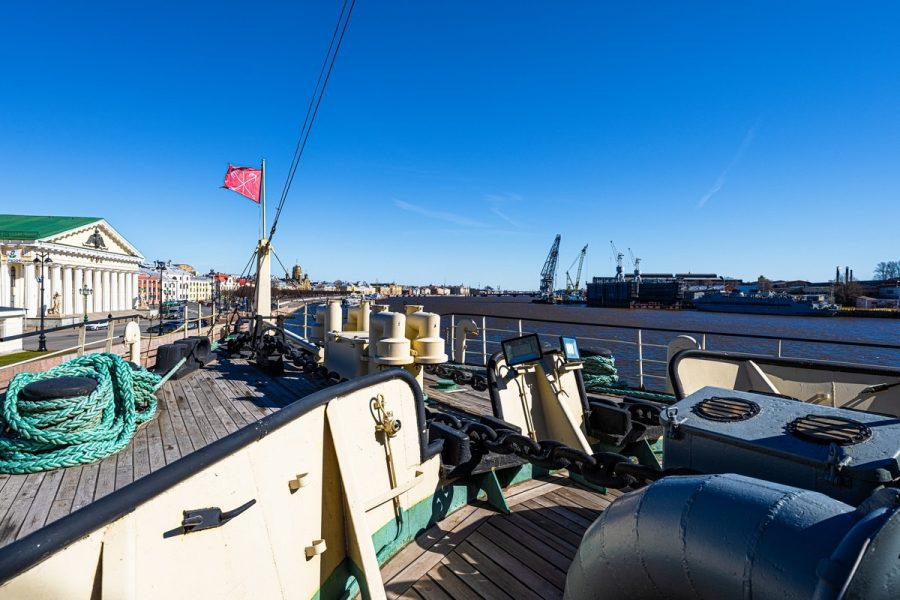
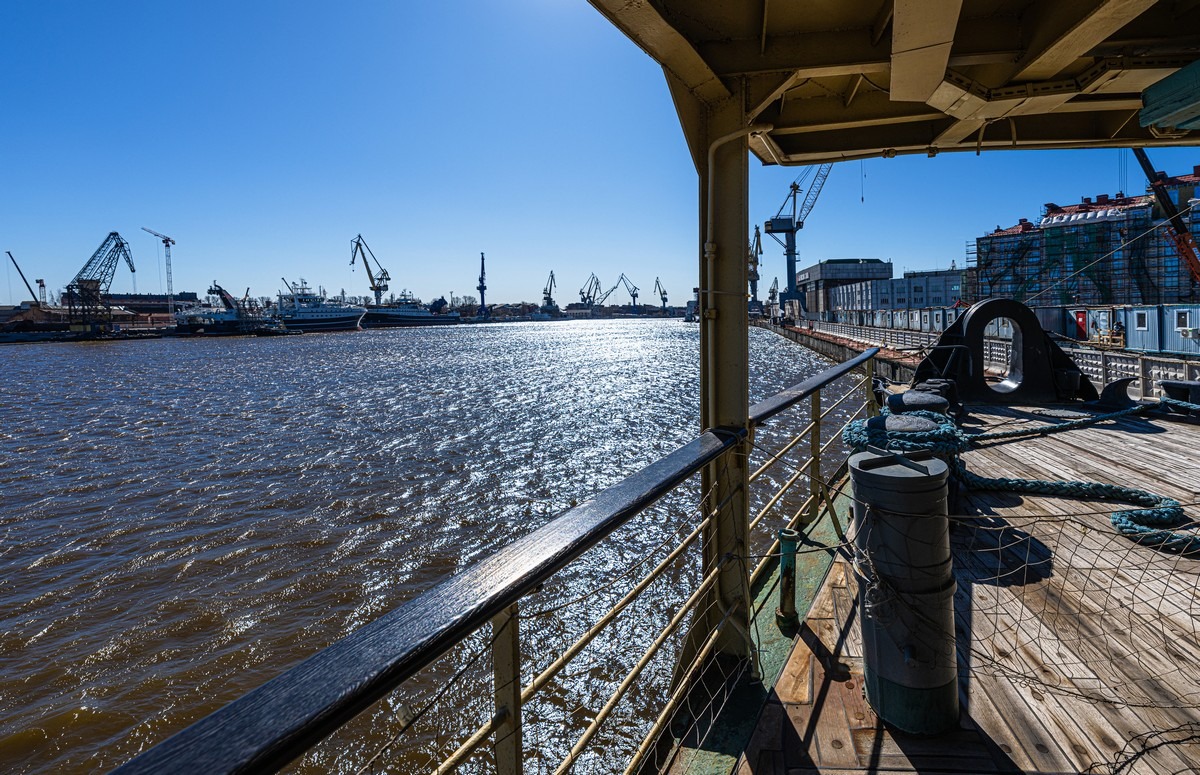
And the views over the Neva aren’t half bad either:
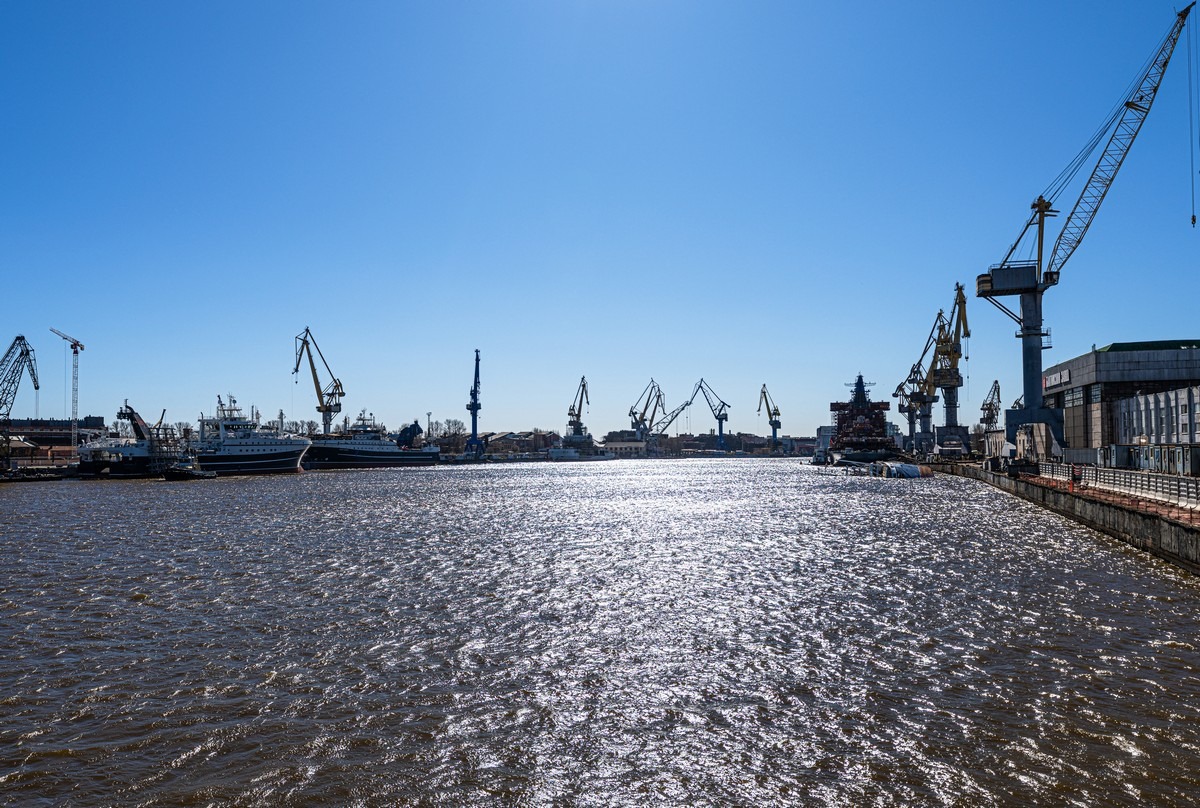
That’s it – time to head home.
To finish – a short video:
The best hi-res photos from the Krassin icebreaker museum are here.

