
May 13, 2026
A Rio Negro cruise: monkeys, piranhas, sloths, dolphins, and snakes.
Our tour of South America next took us to Brazil; specifically – to the city of Manaus (after a few adventures in São Paulo). But Manaus was just our base. The attraction was something a lot bigger and a lot more famous (just noticed – its Wikipedia page comes in a full 200 languages; rarely see that!). Have you guessed it yet? Yes, it’s the Amazon – the world’s largest (by both water volume and drainage basin) and arguably the longest river in the world!
Actually, we were more generally exploring Amazonia, aka the Amazon Basin, aka the Amazonian Plain, aka the Amazon Lowlands. And specifically – one of the Amazon’s main tributaries: the Rio Negro. Why? Because in these parts the Amazon is very silty and murky, and so there’s not much to see or do there. The Rio Negro on the other hand has much cleaner water and contains fish and dolphins and more, the surrounding ecosystem is richer, and indigenous people live along it in the jungle.
I say cleaner; here’s proof: the meeting of the muddy Amazon and the cleaner Rio Negro:
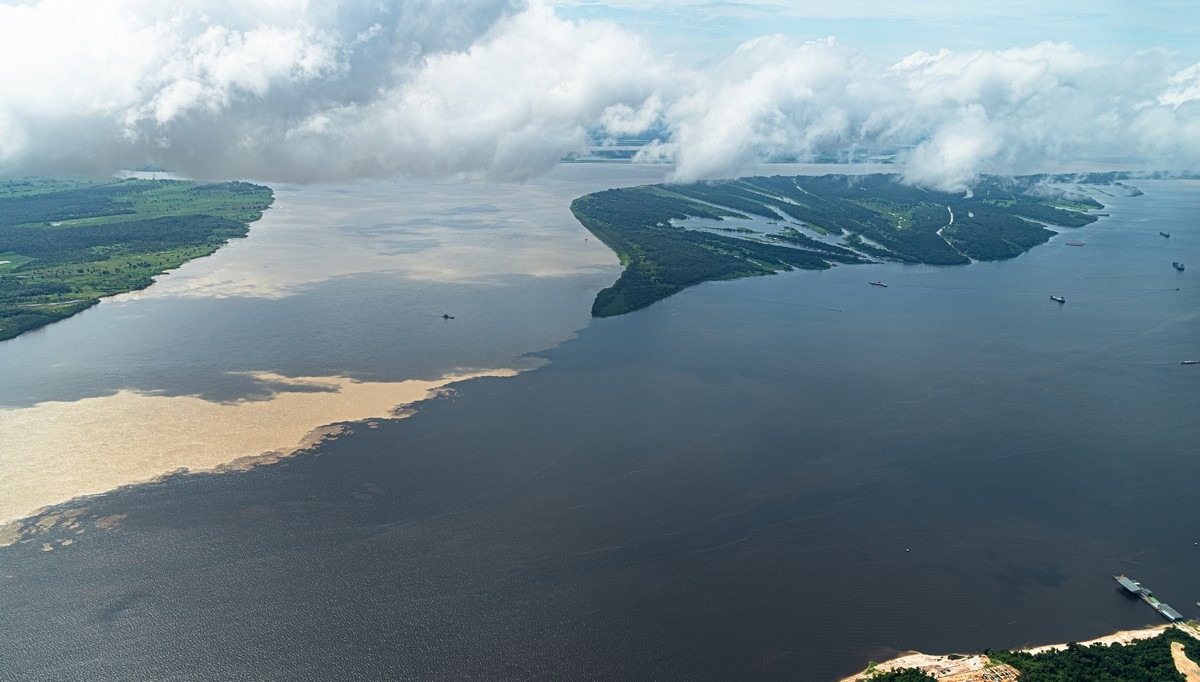
If you zoom in you can see it better:
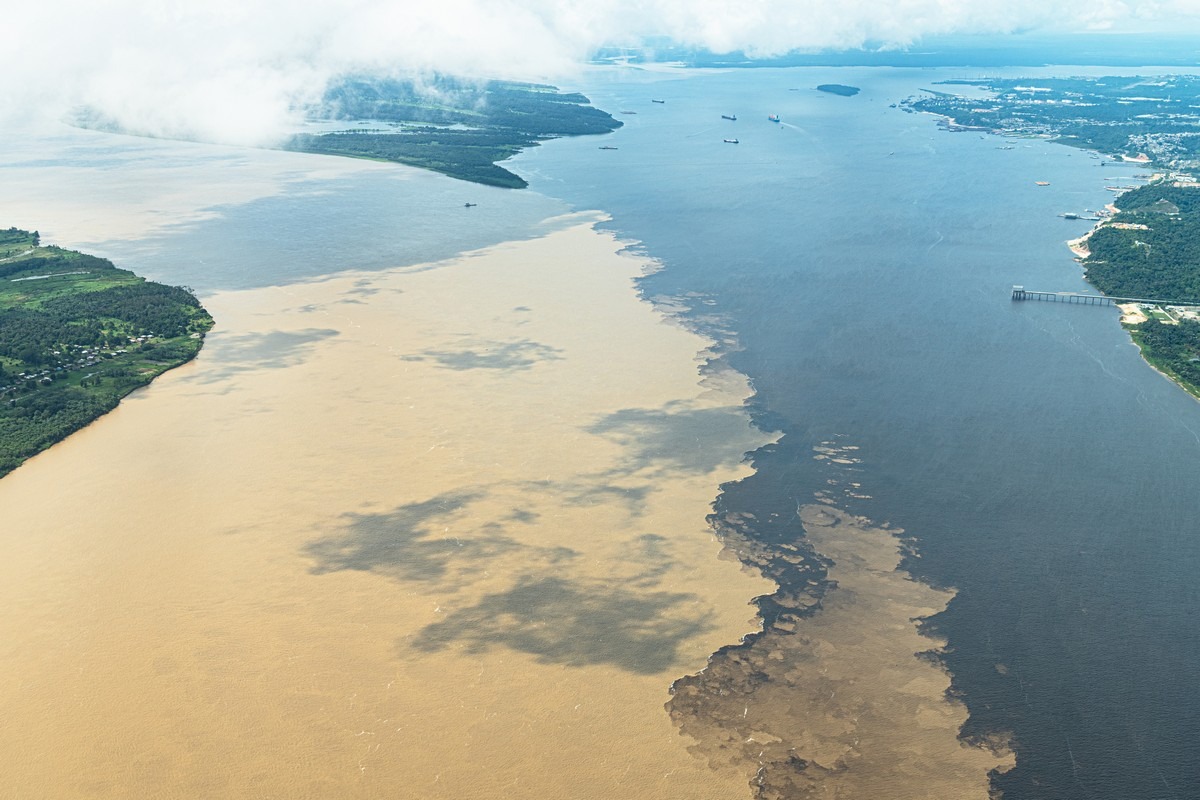
And this mixing of clean and muddy water goes on for dozens of kilometers downstream from where the rivers meet. Here’s the confluence on Google Maps.
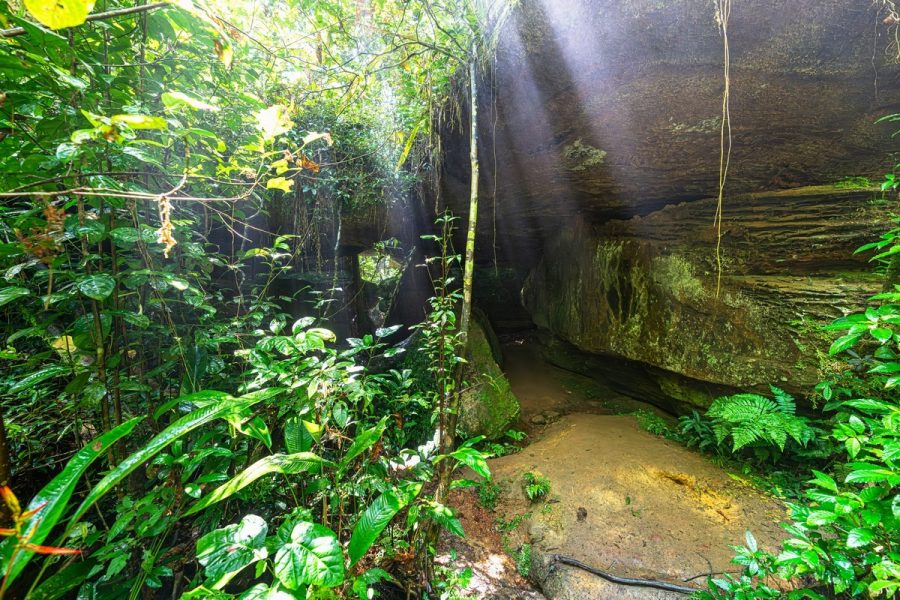
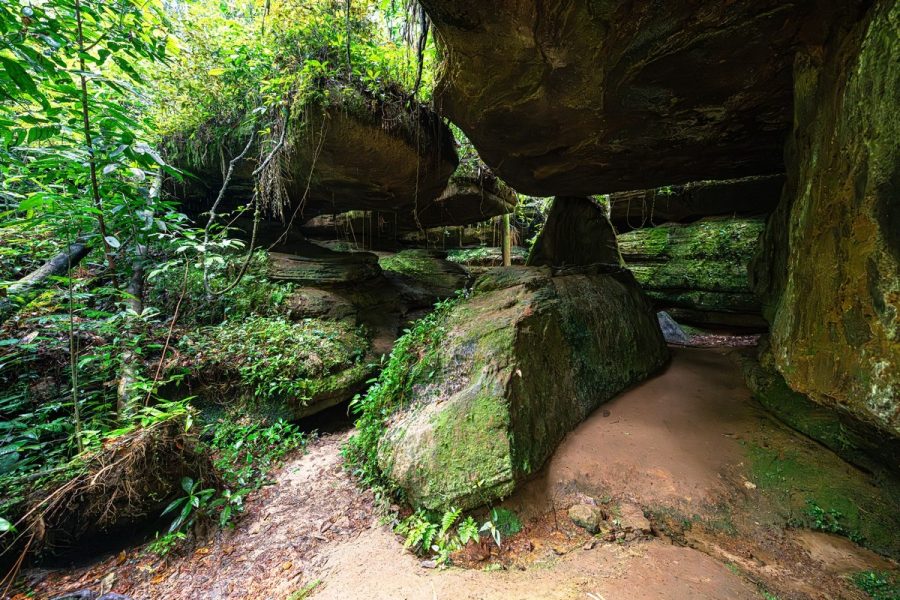
So where to begin? With the jungle, the indigenous people, and the rest of the locals? Local customs? Grottoes in the rain lit with shafts of sunlight?…
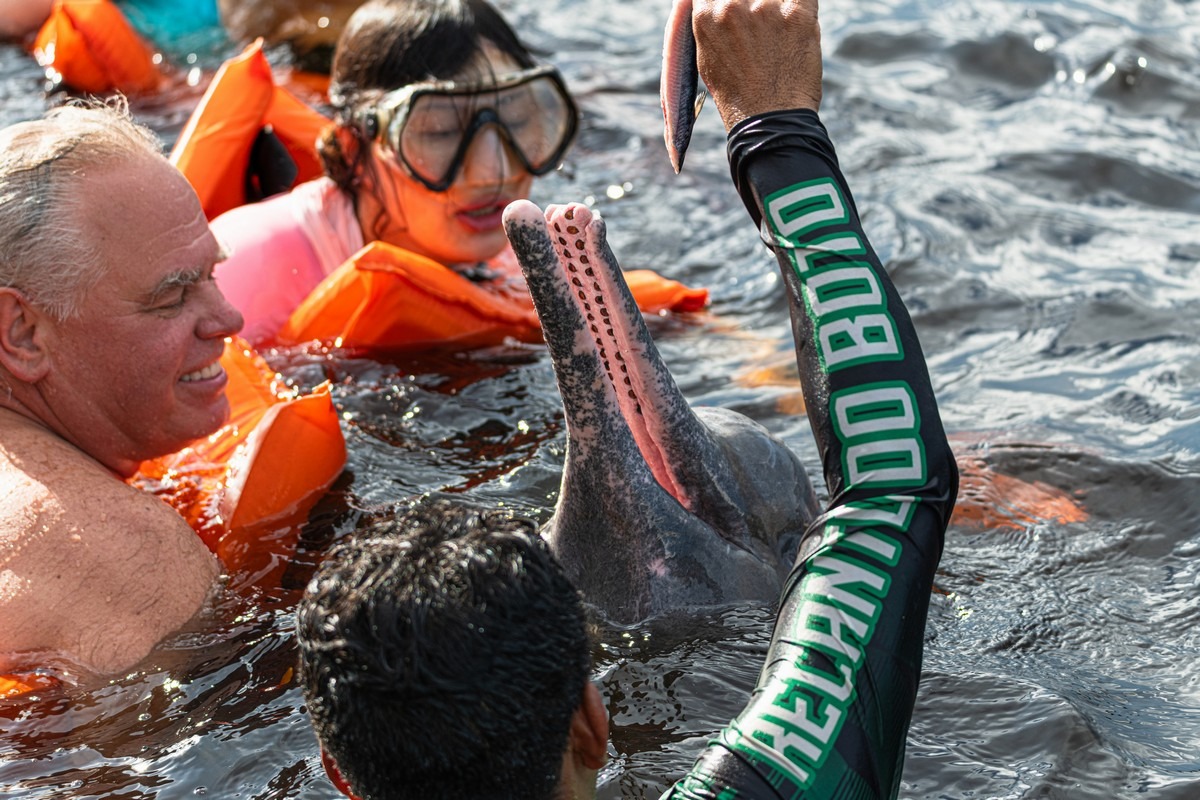
The endemic Amazon river dolphins?
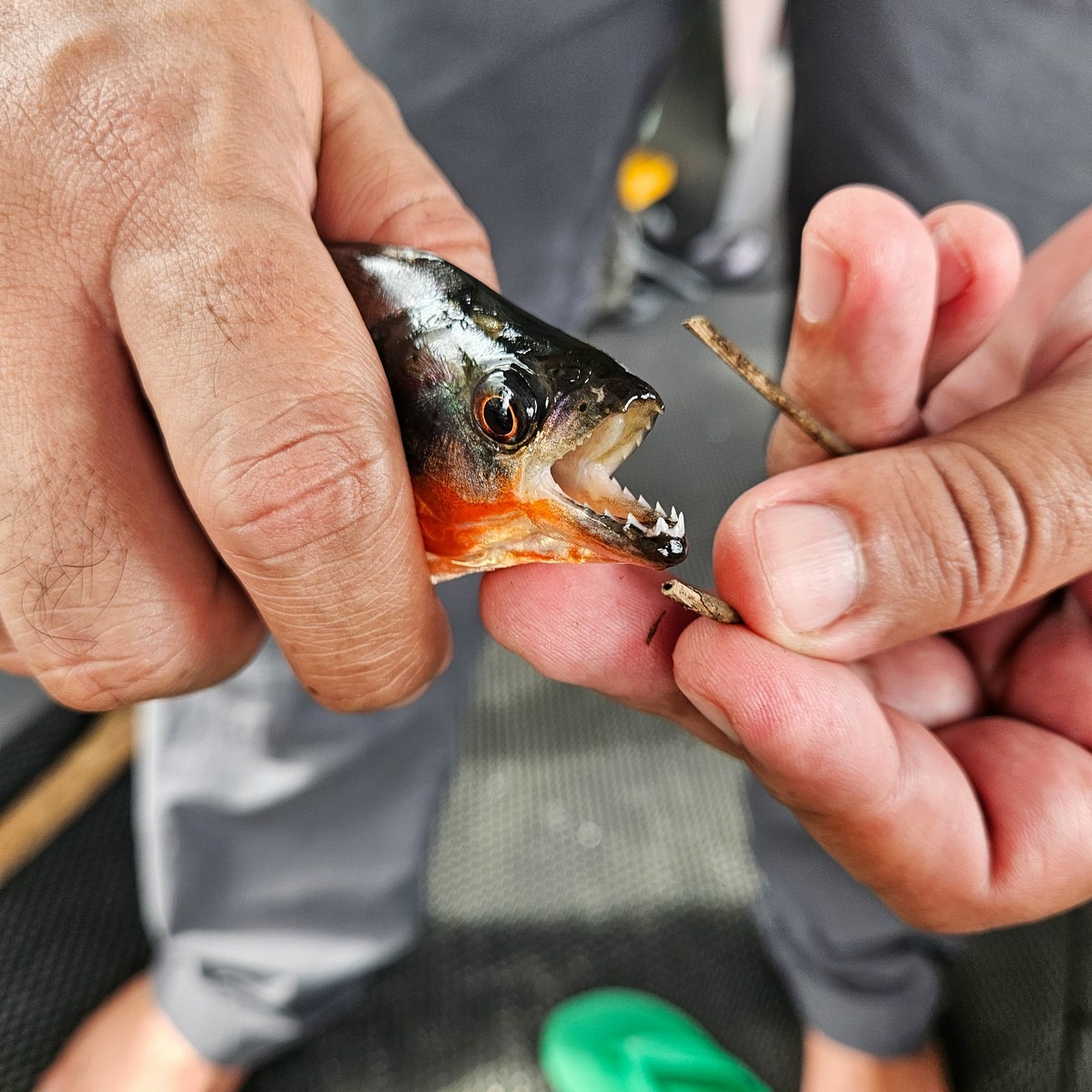
Piranhas?
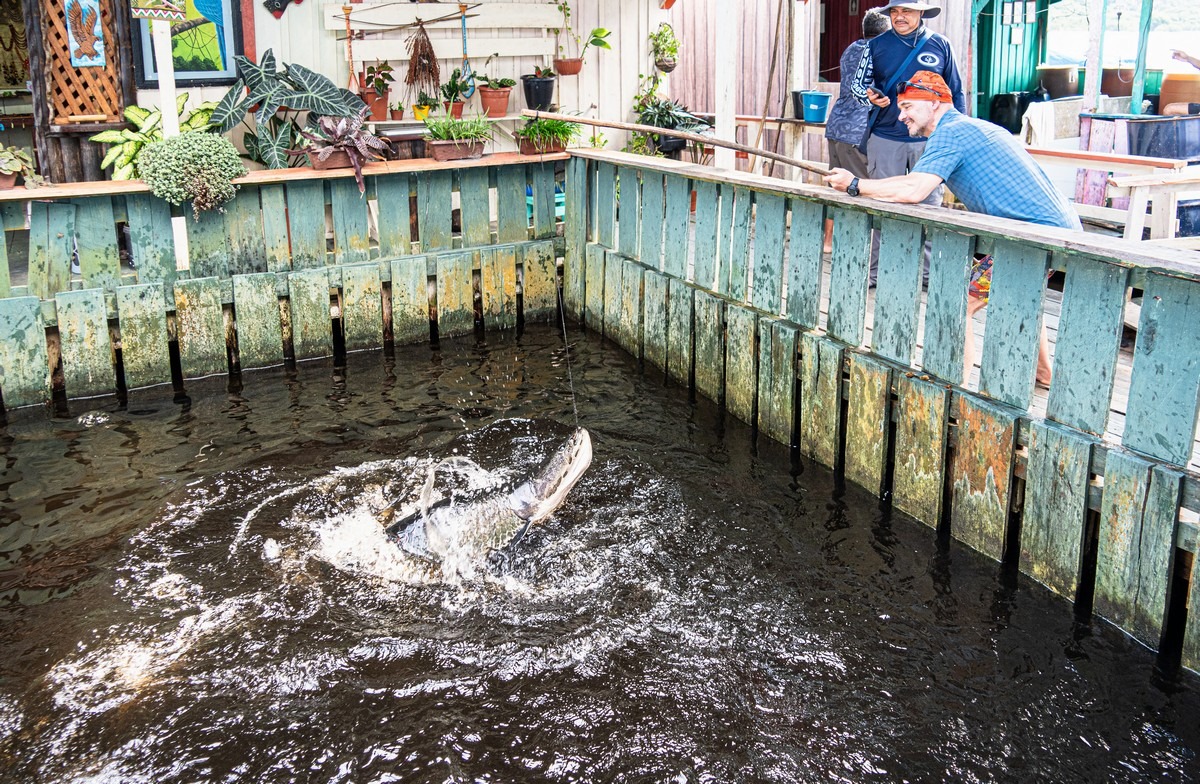
Feeding giant pirarucu?
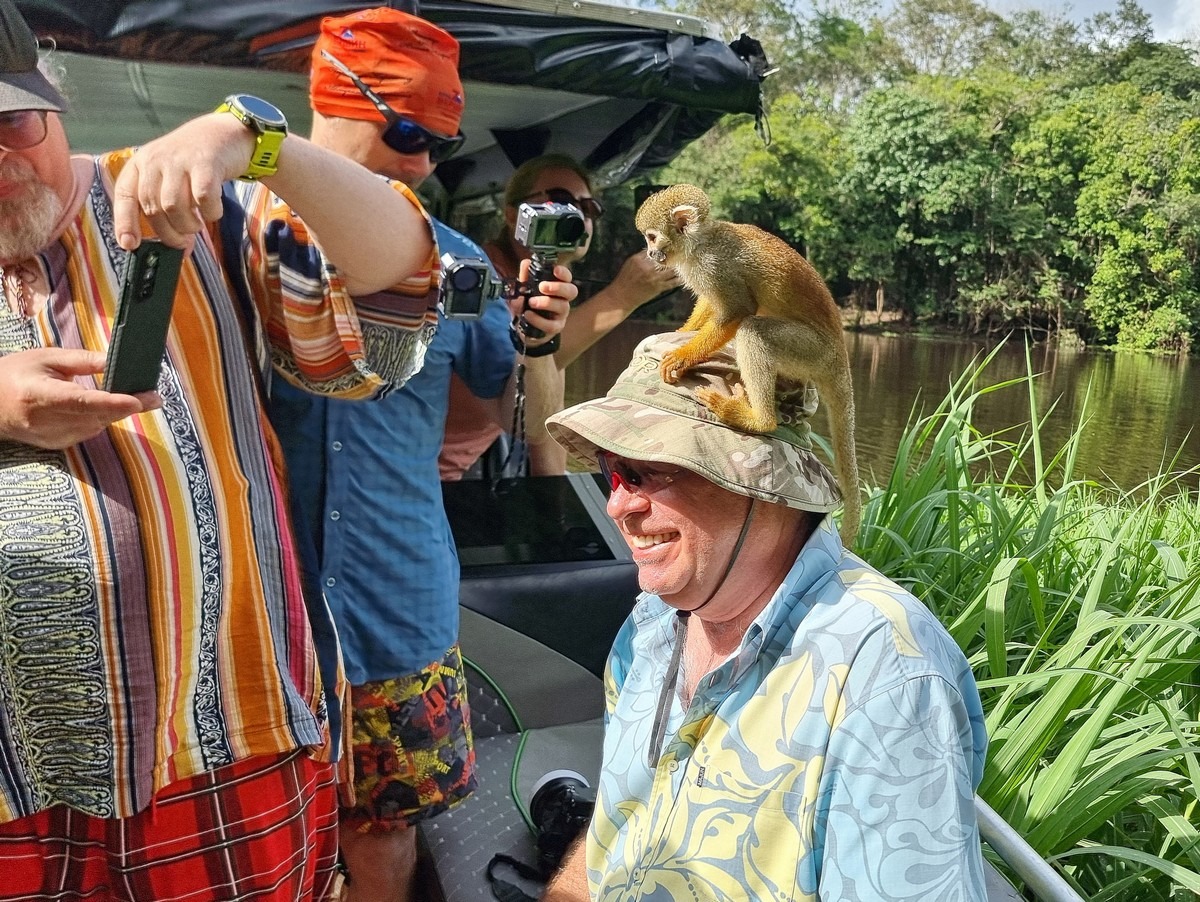
An invasion of Guianan squirrel monkeys?
Actually, I’ll start with… water, for this place is really all about water. See – there’s a lot of it here, and some…
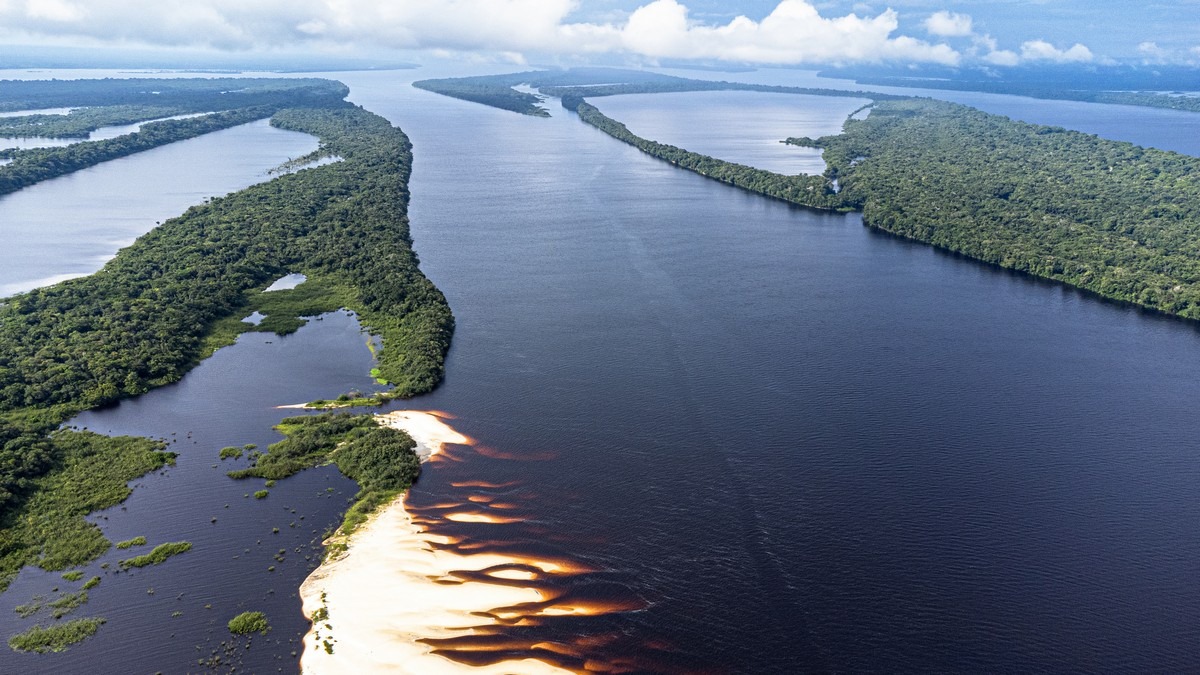
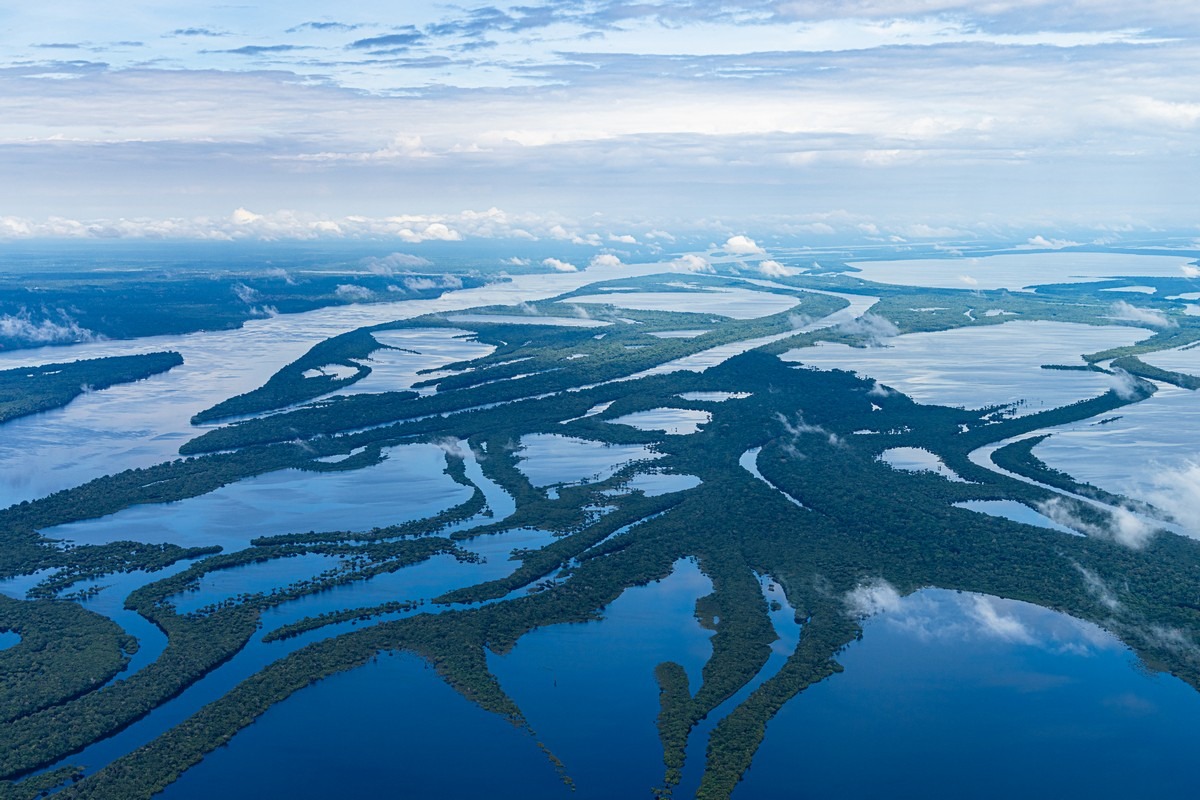
One of the world’s largest river archipelagos is here:
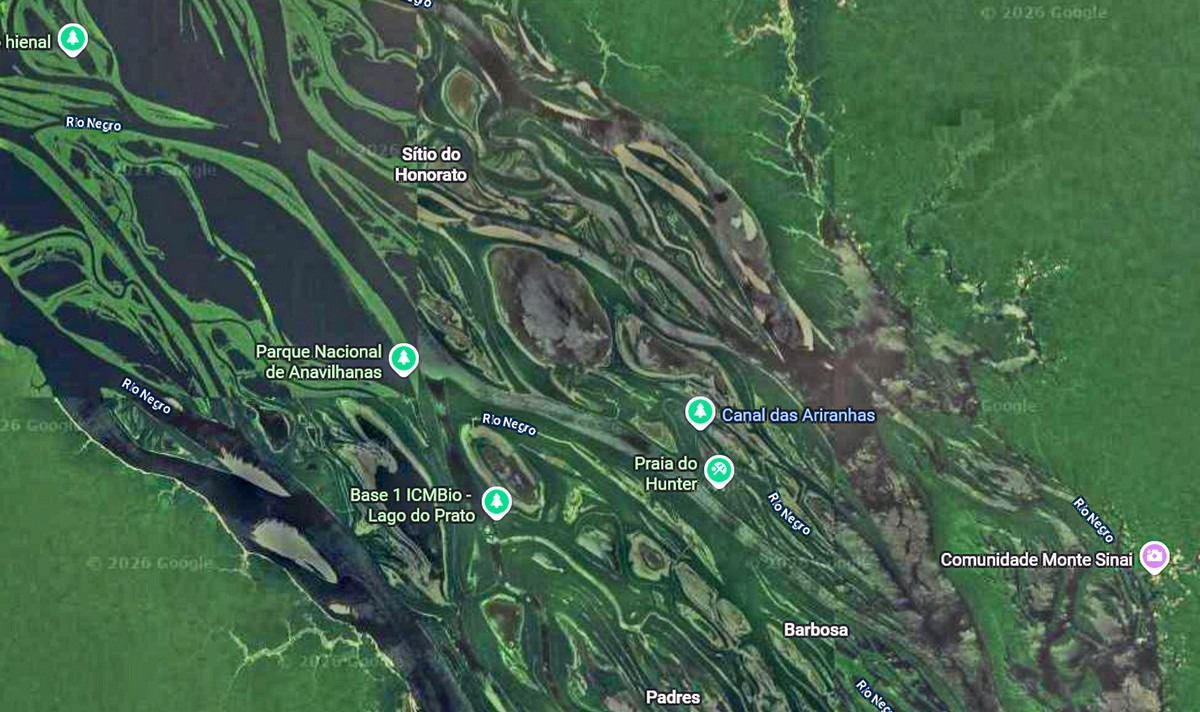
And here it is on Google Maps:
Anabranches and lakes – sometimes it all turns into a seemingly endless labyrinth!…
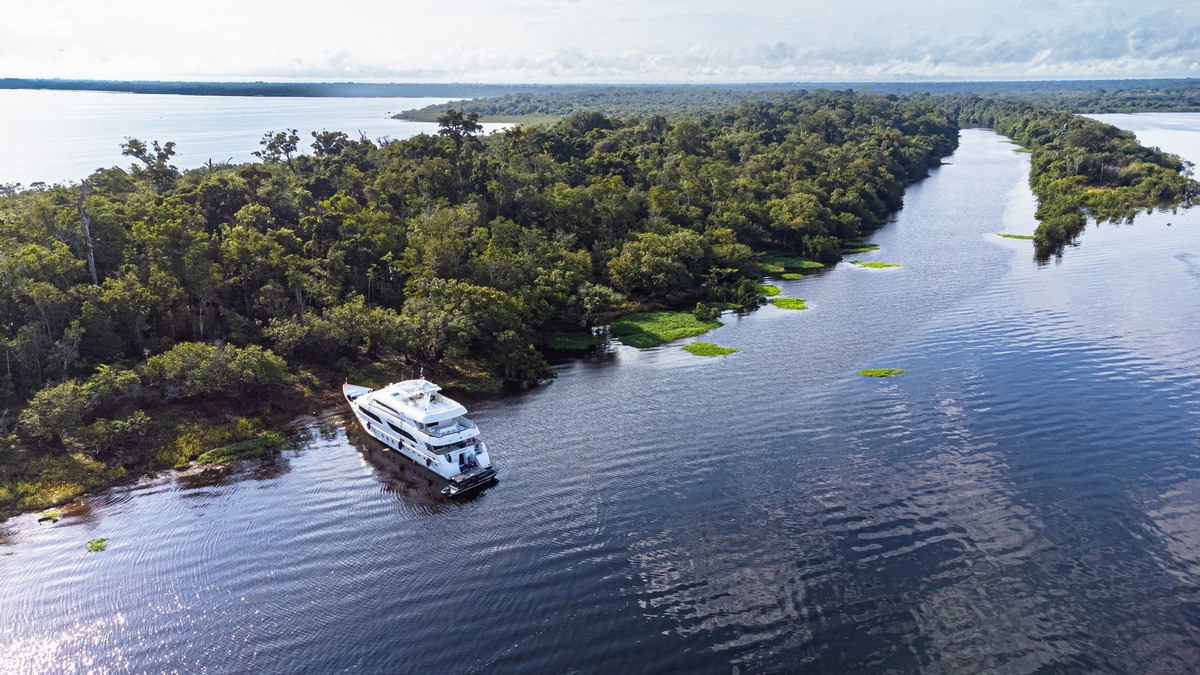
All righty. Water first. And first up on the water topic: the just-mentioned anabranches!…
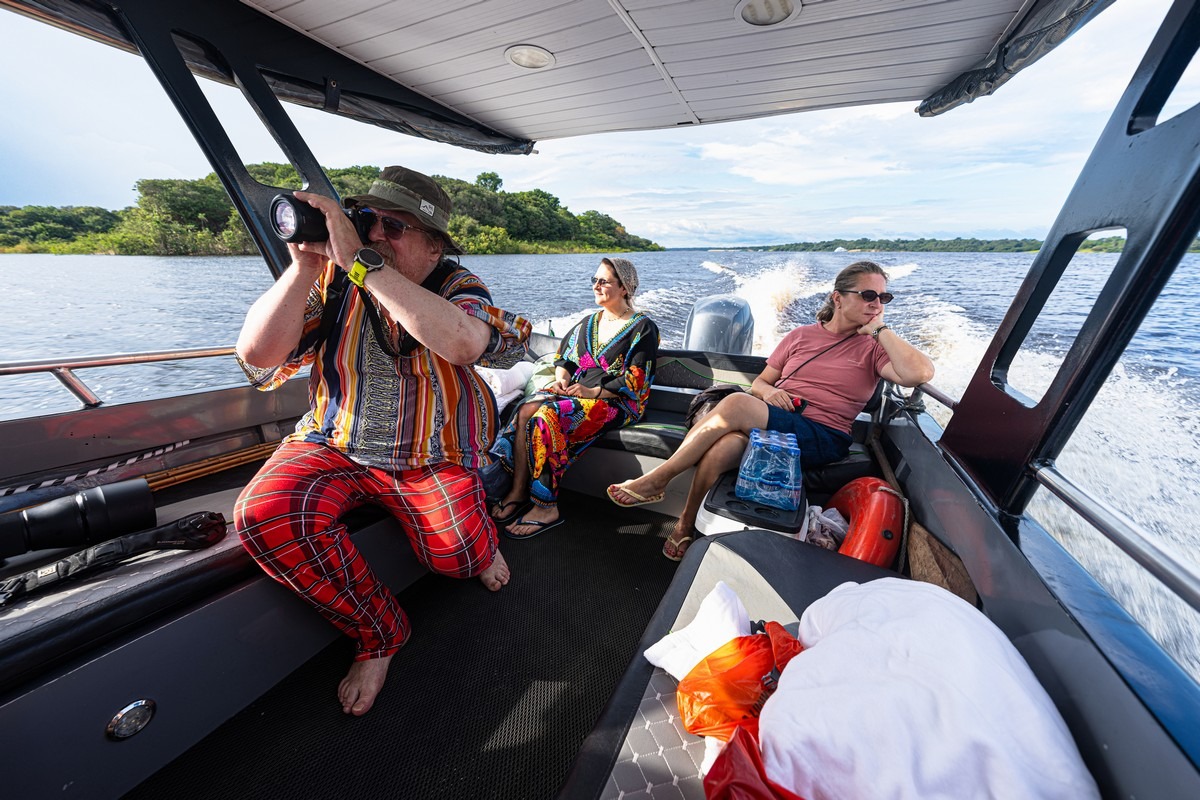
We were heading somewhere waaay over there; oof, where some slightly suspicious clouds were gathering ->
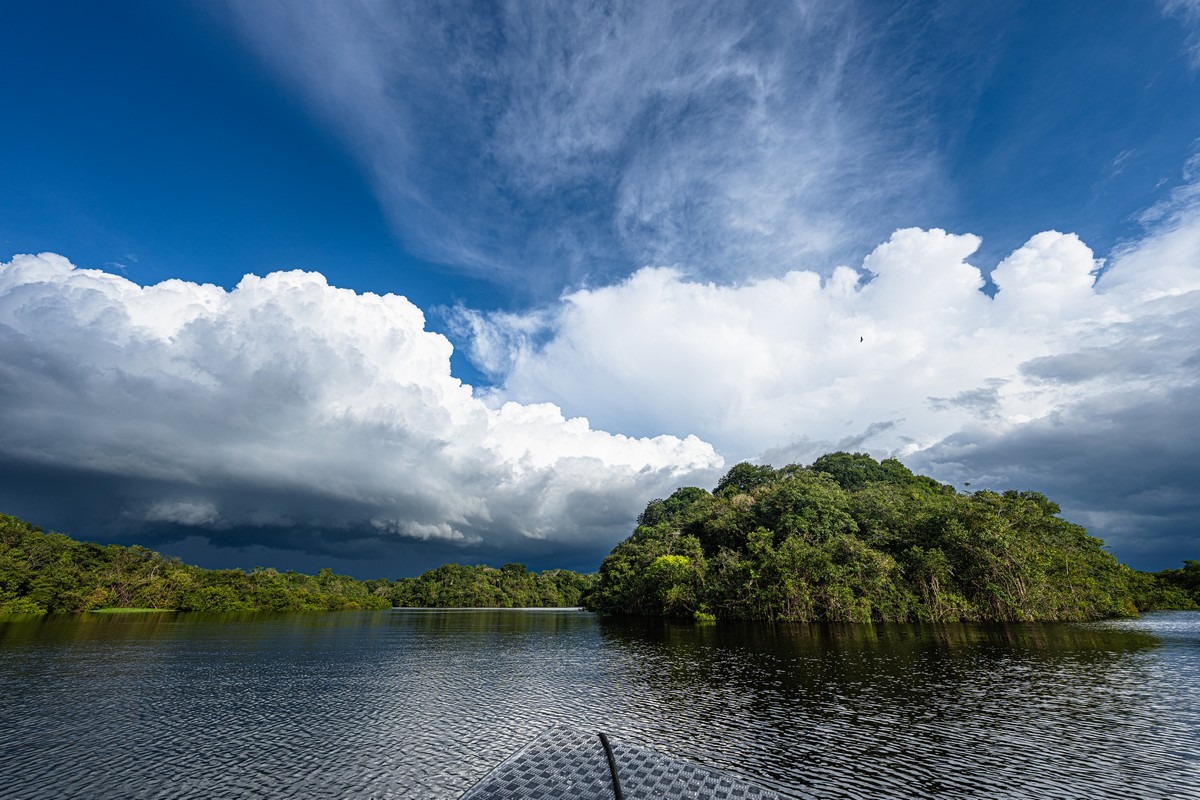
But even in less-than-glorious weather, the labyrinth of waterways here is absolutely stunning!
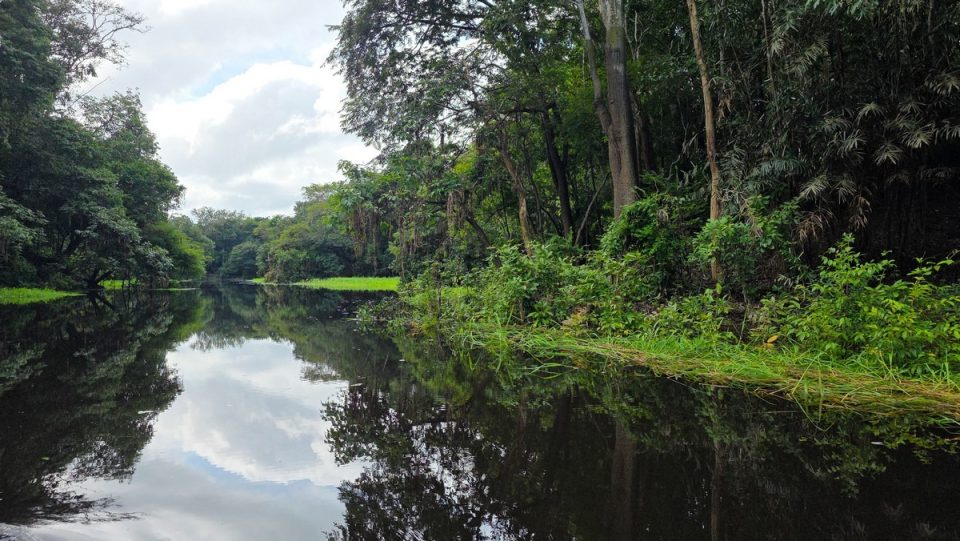
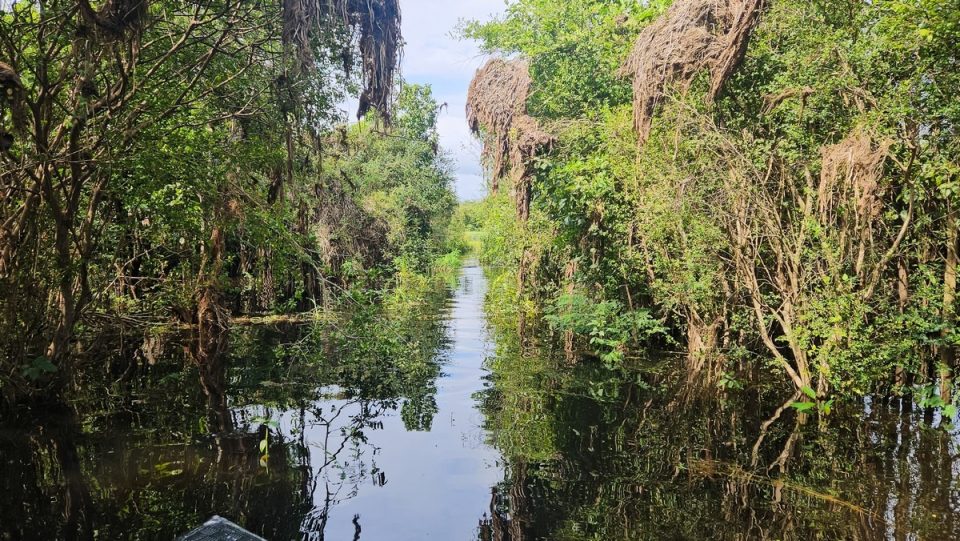
Still, those clouds kept getting closer and bigger, and then it started to drizzle…
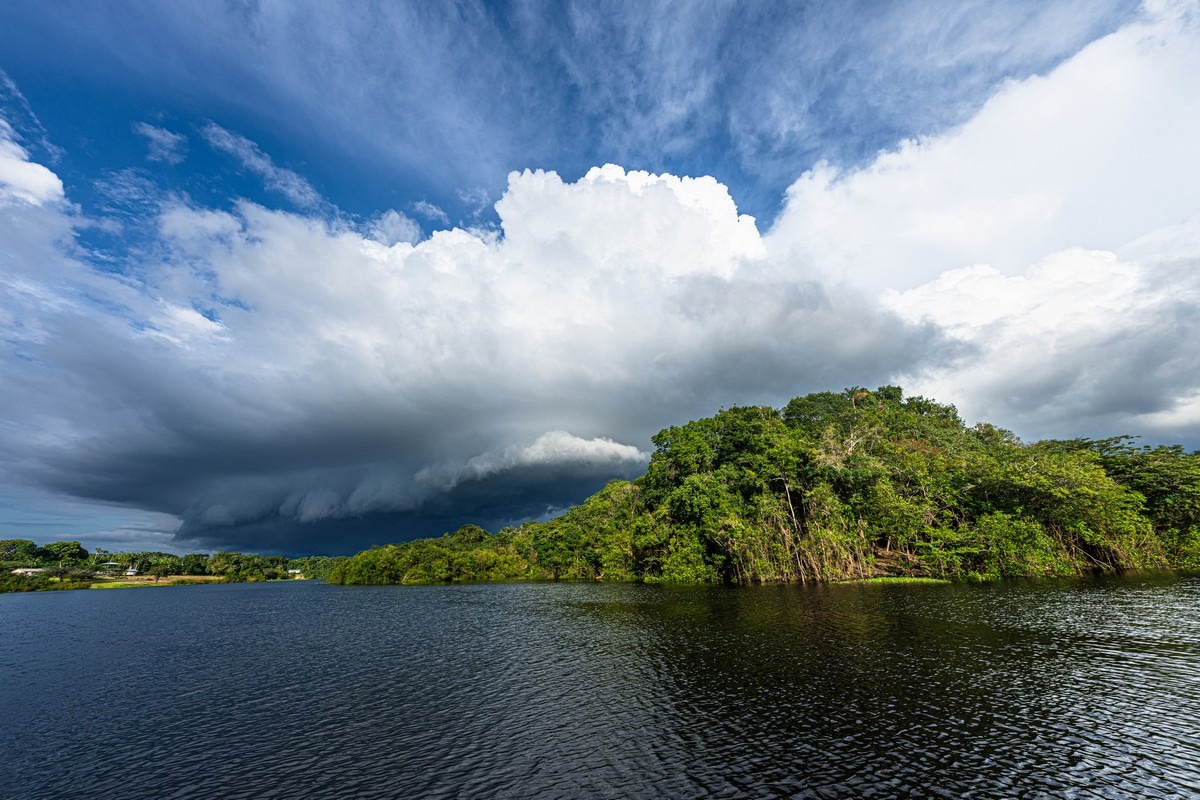
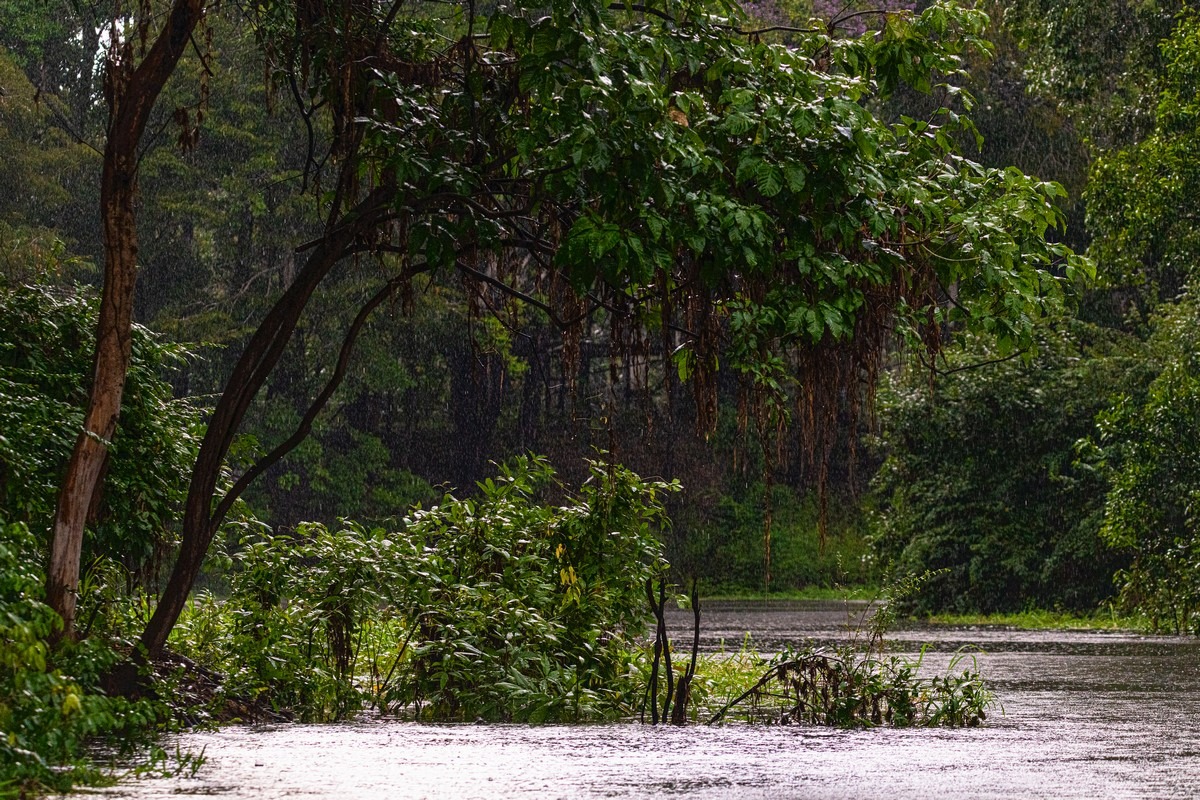
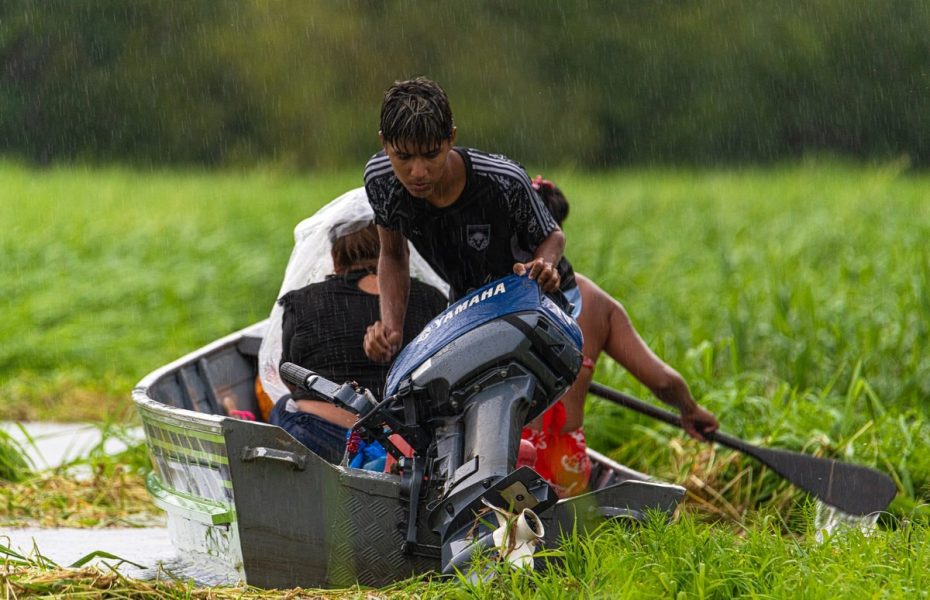
And then: tropical downpour. Still – it’s not called a rainforest for nothing )
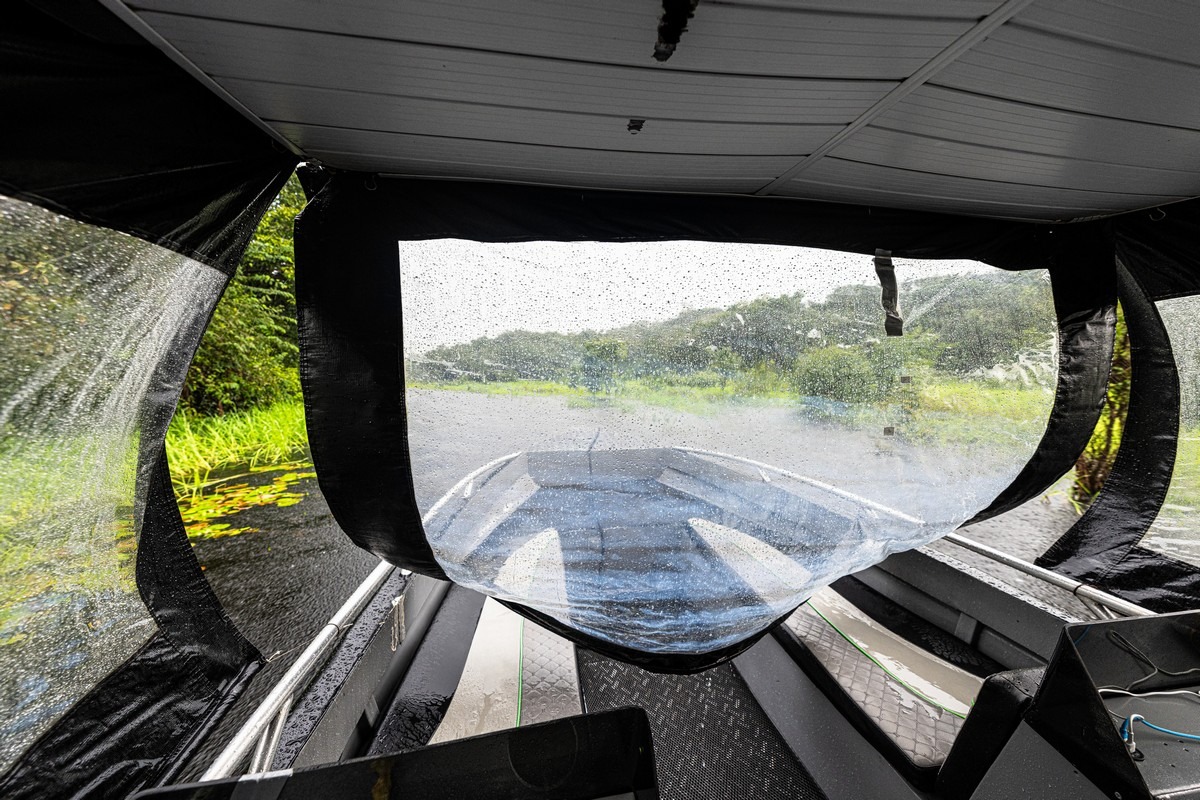
Trying to look around through soaking-wet canopies wasn’t much fun…
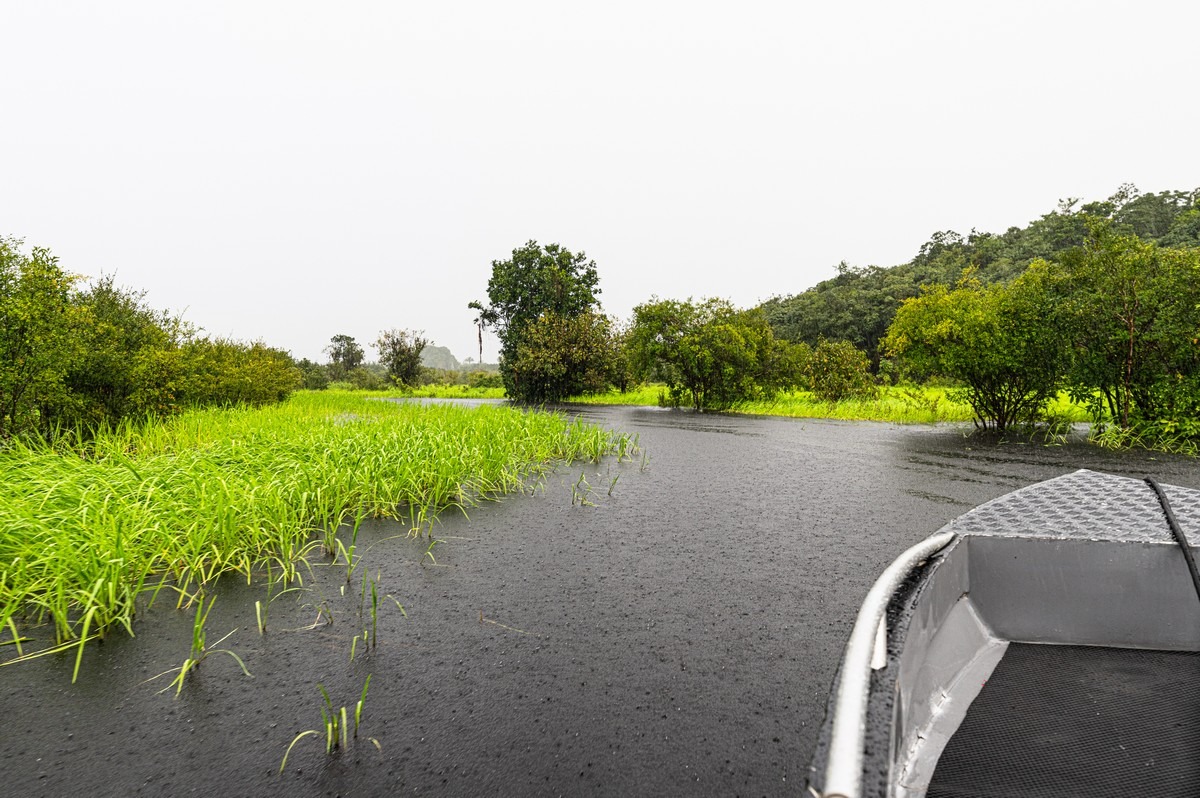
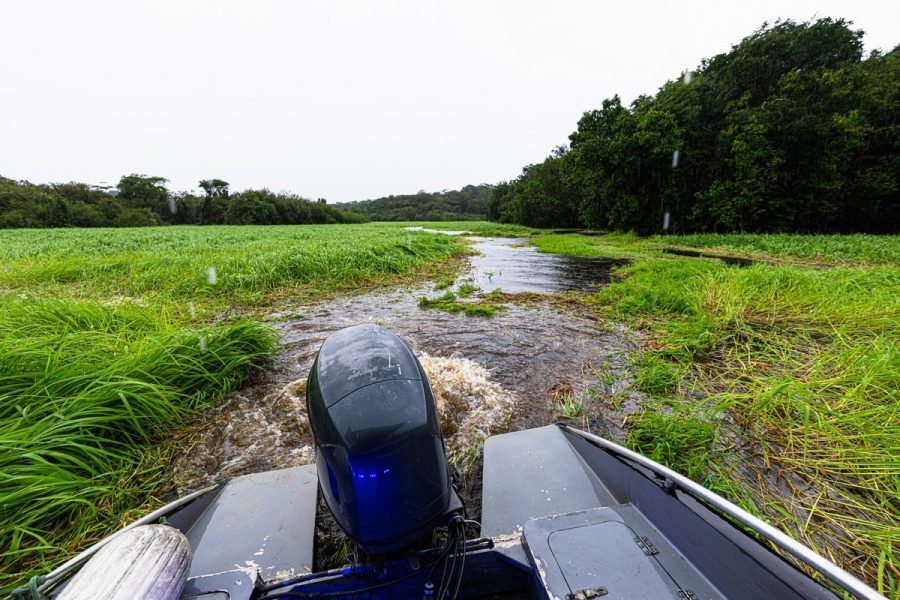
Especially when you have to push through overgrown stretches like these:
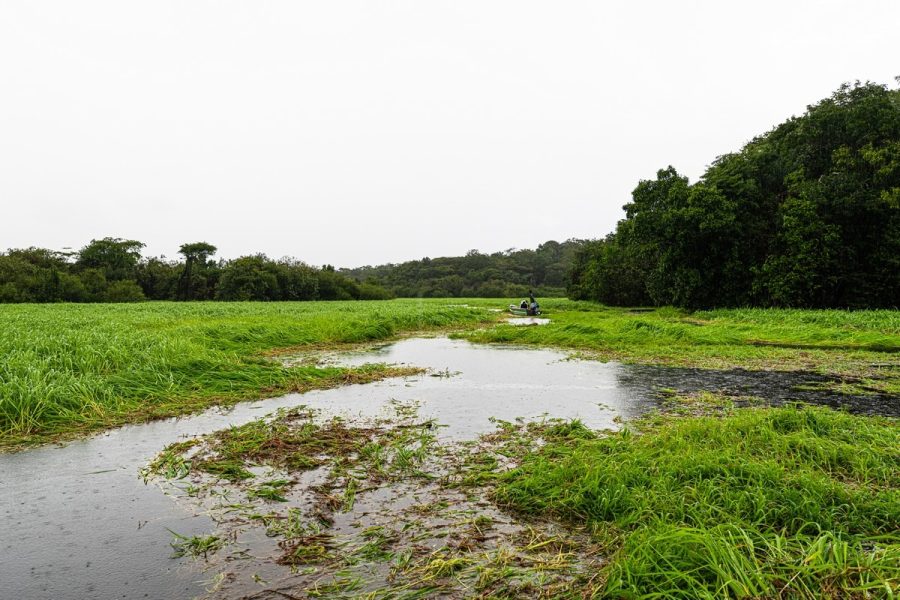
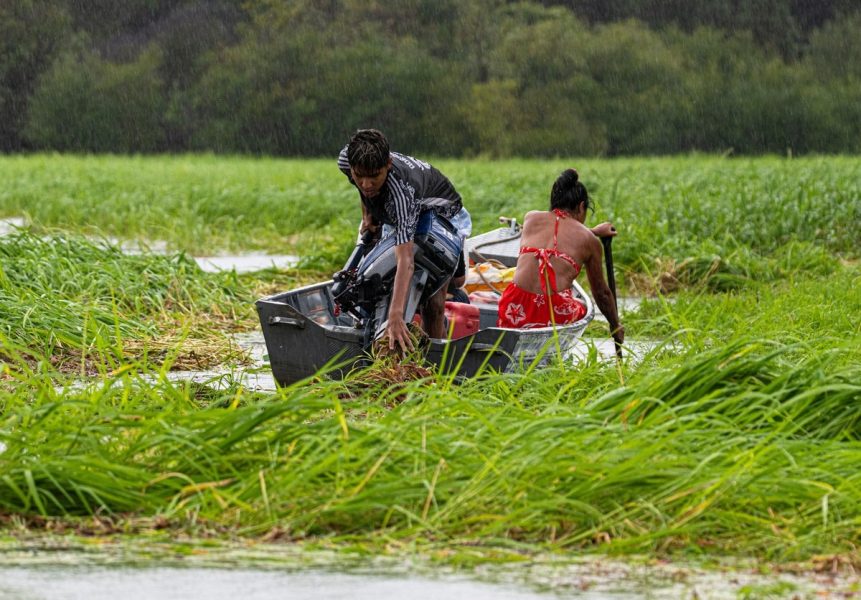
We weren’t alone out there:
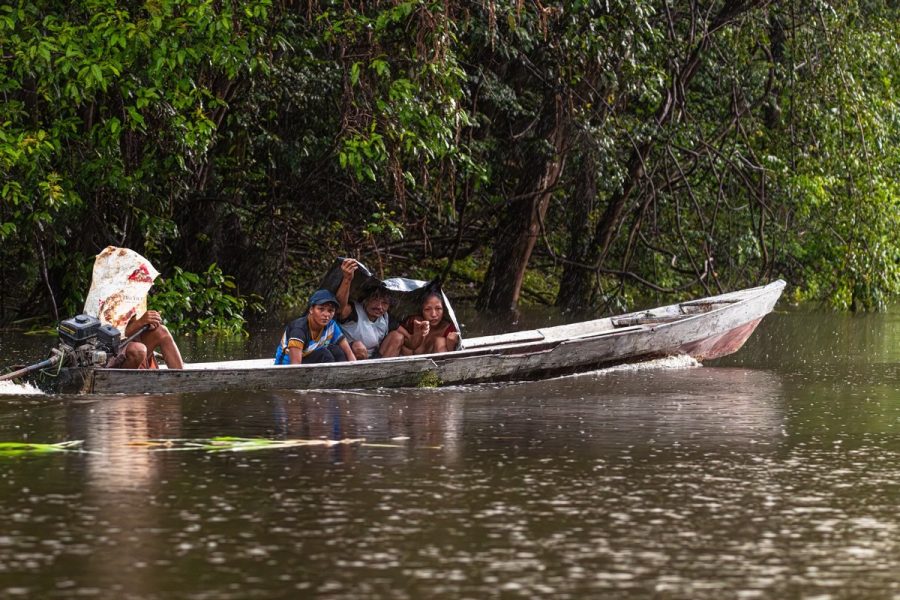
The rain put a dampener on our moods too this day…
But the next day turned out absolutely brilliant!
Right from the early a.m., the weather seemed to be making up for the previous day: the clouds were in a perfectly agreeable mood, and on top of that we’d “parked” right by the entrance to an anabranch – so of course we set off along it!…
Taking a boat ride through the Amazonian – all right, the Rio-Negronian – river labyrinths is pure joy. Kinda like driving along insanely beautiful mountain roads. Views ahead, behind, and to the sides – and all at a nice, unhurried pace:
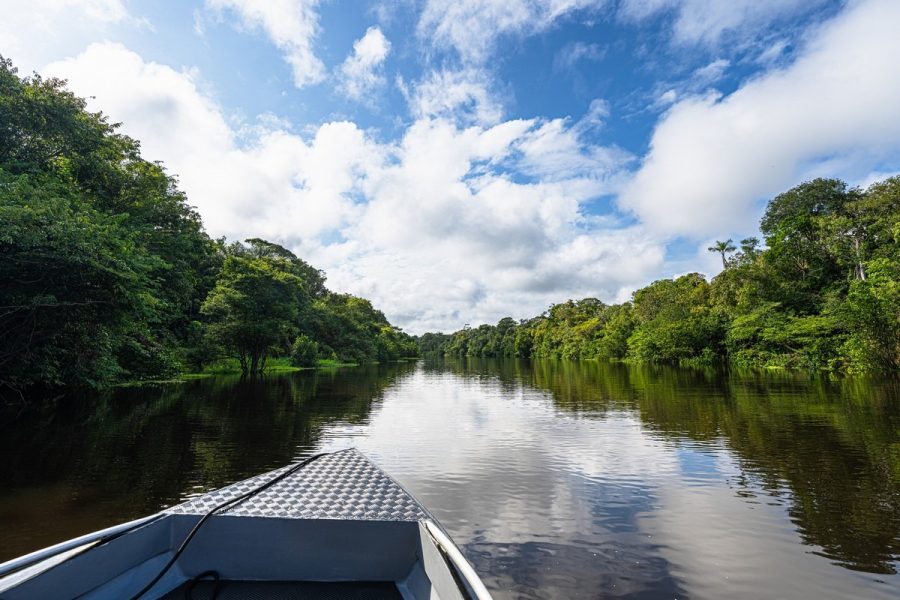
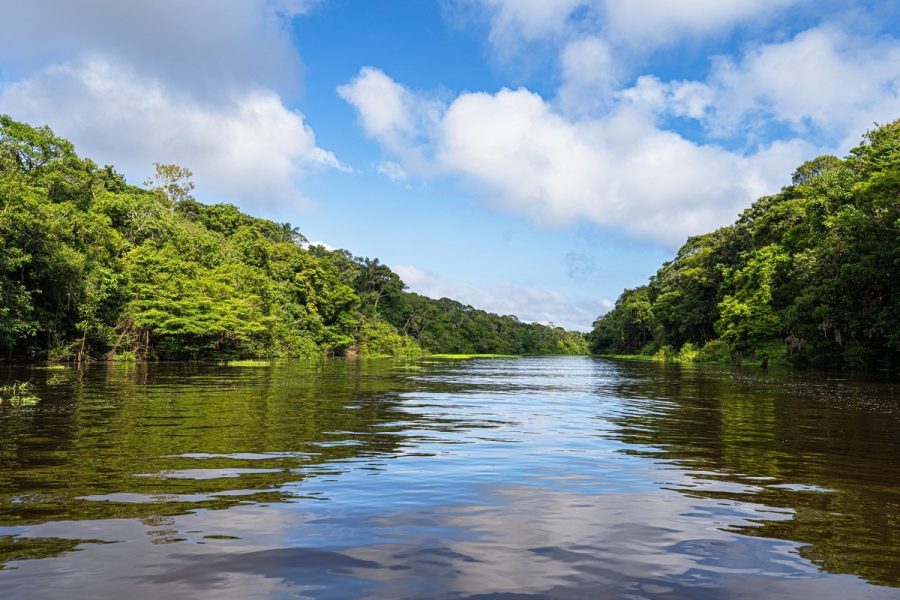
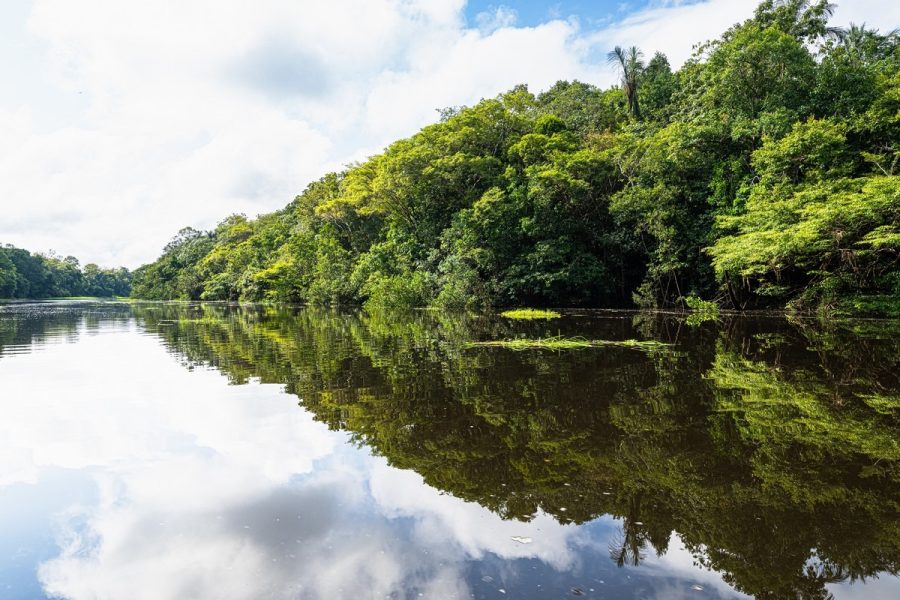
Plus the wonderfully meditative lapping of the water alongside the boat.
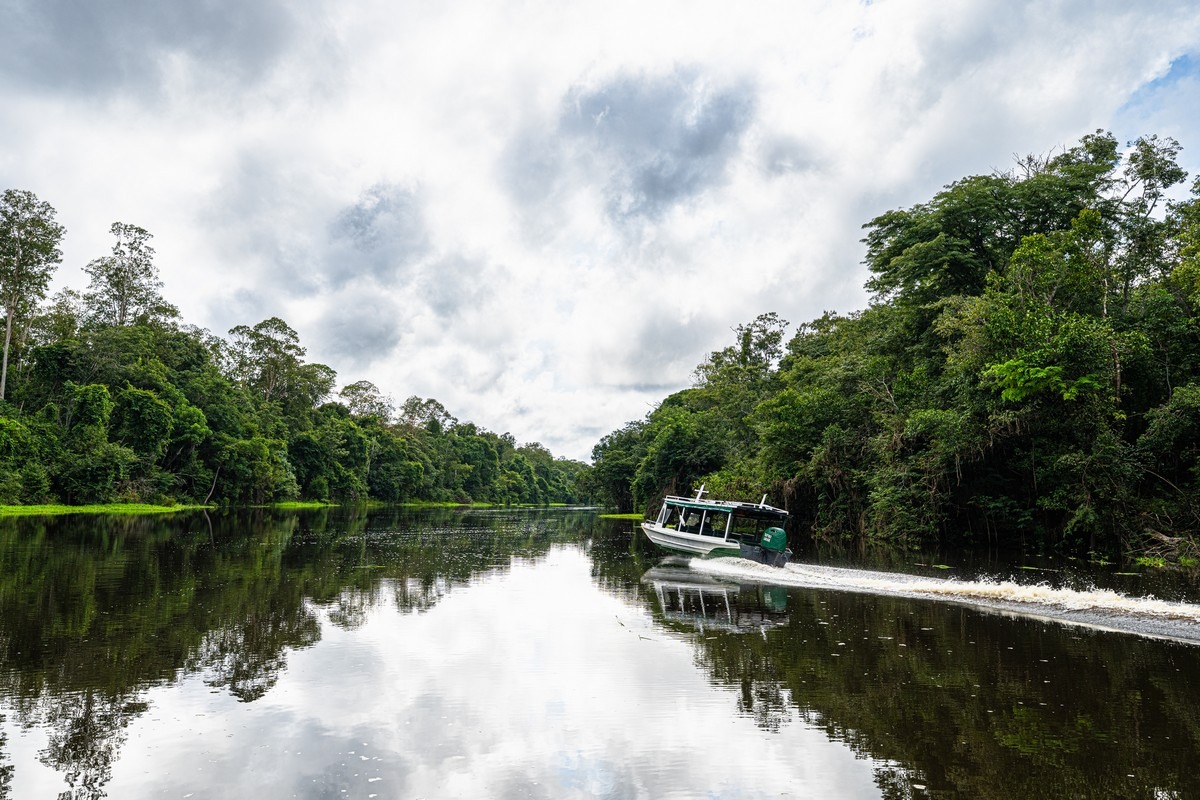
The scenery keeps changing as we keep moving. In places things are wide open:
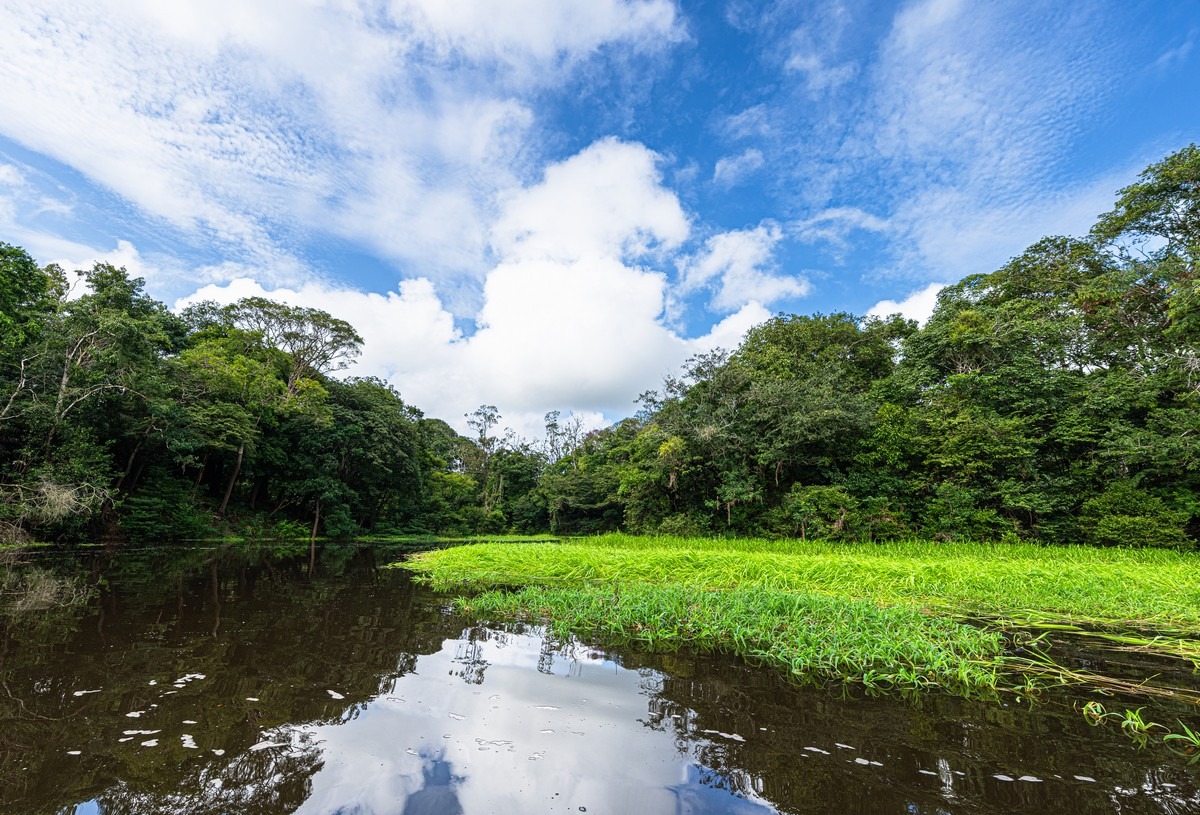
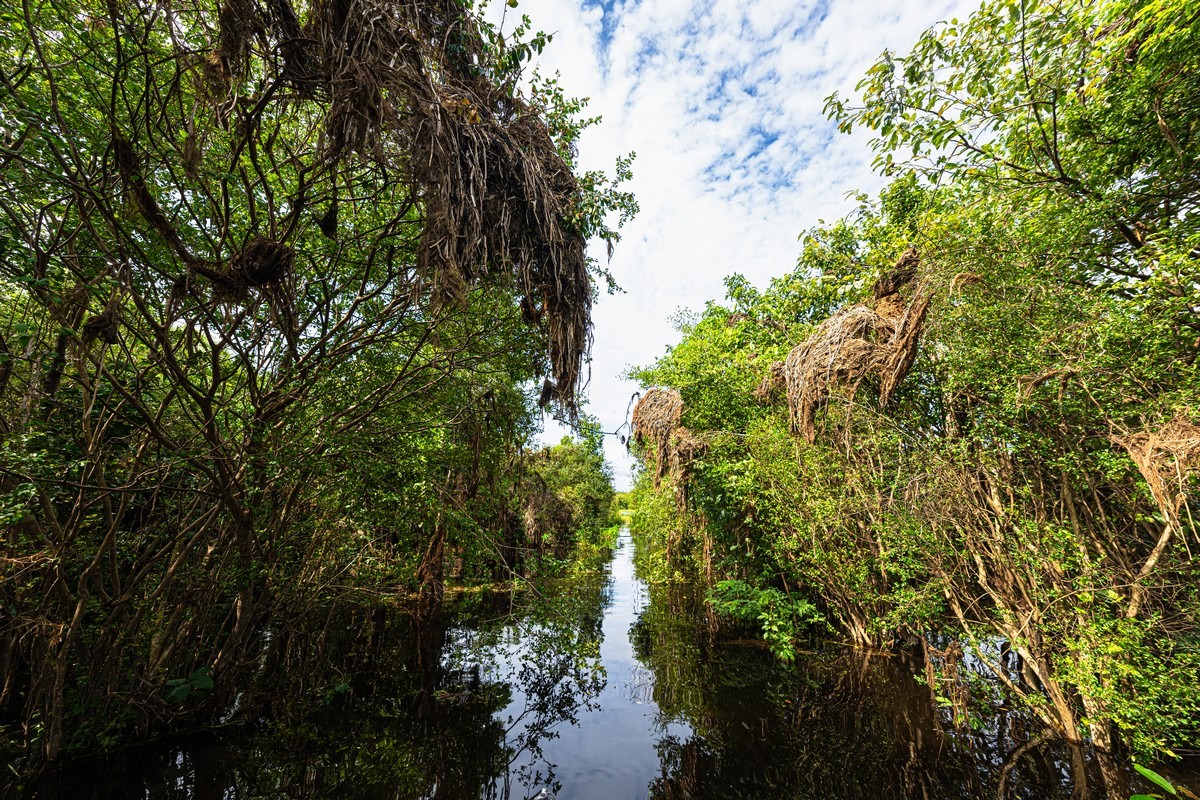
Sometimes it gets very narrow:
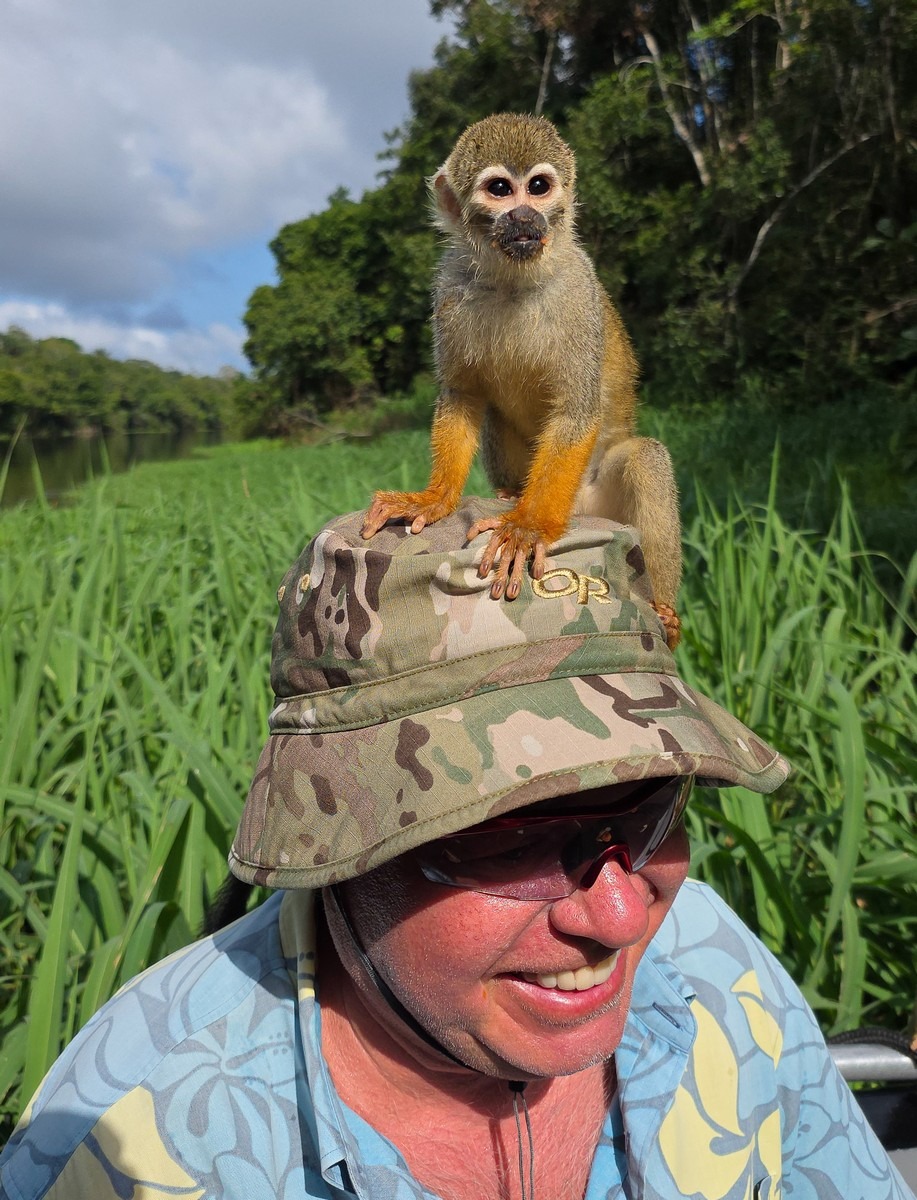
Suddenly, we came under attack from some brazen little monkeys :) As our guide explained, it had rained the day before, so the monkeys were hungry and throwing themselves at any food they could find:
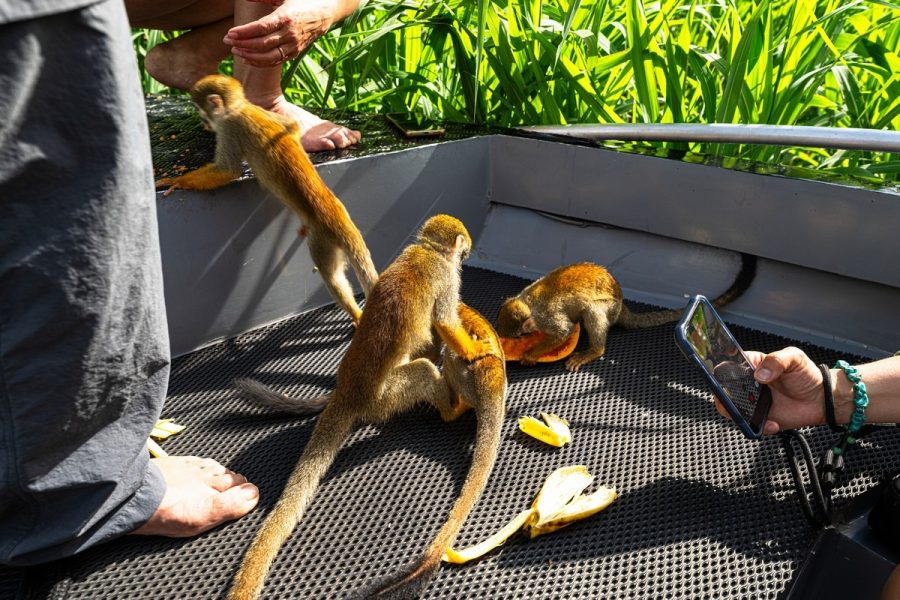
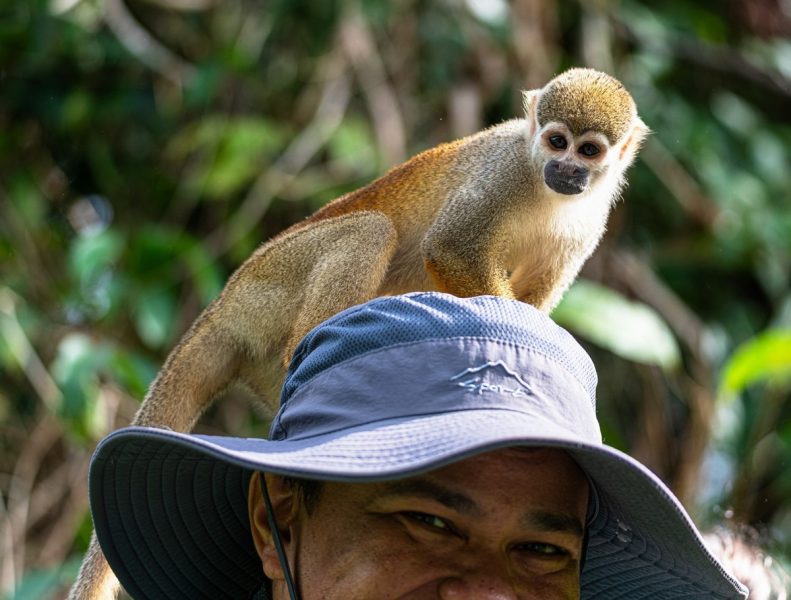
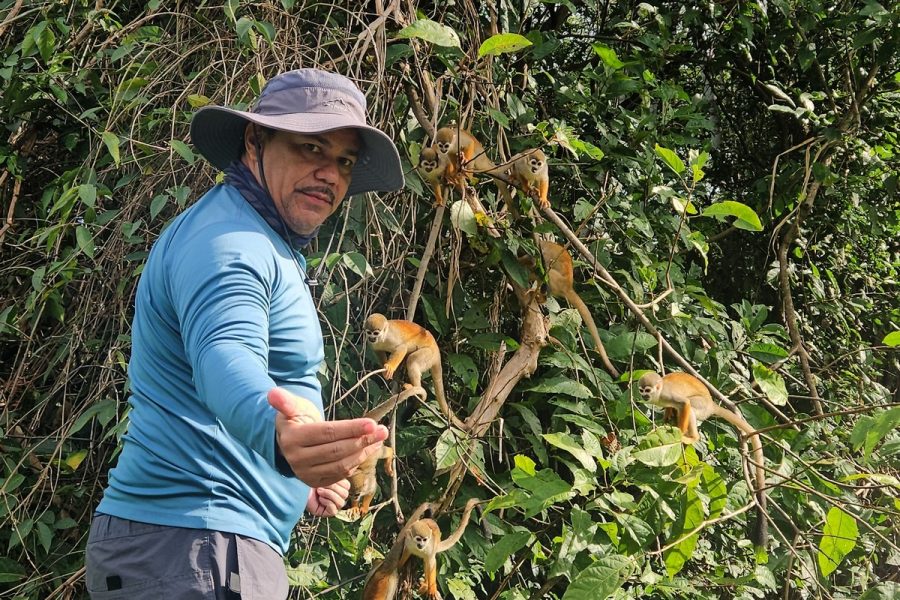
At first they were sizing us up:
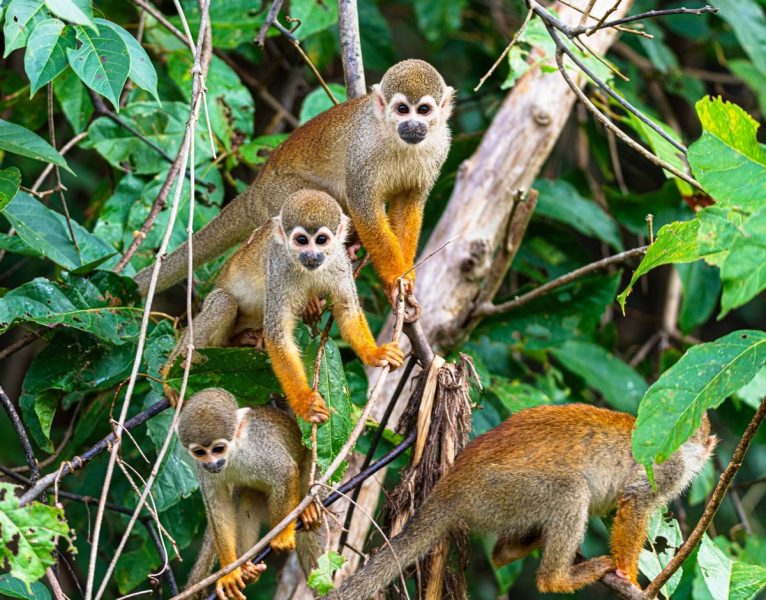
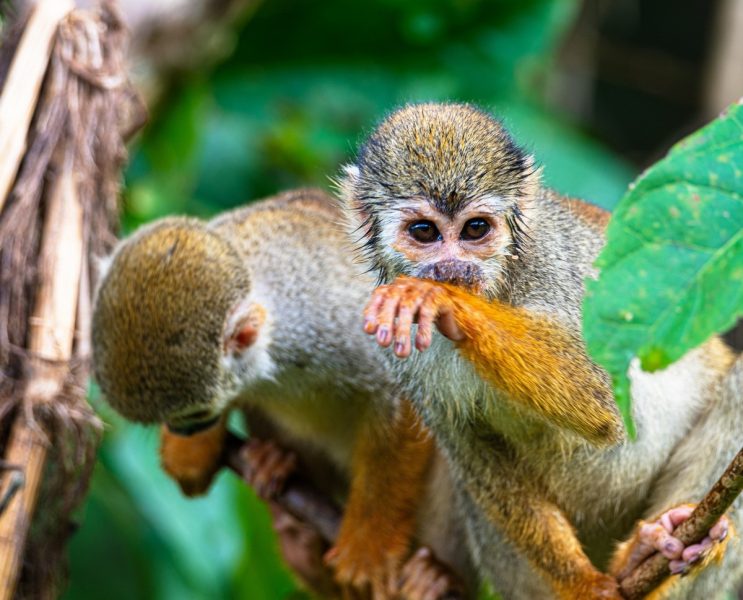
Then they got bolder and basically occupied our boat :)
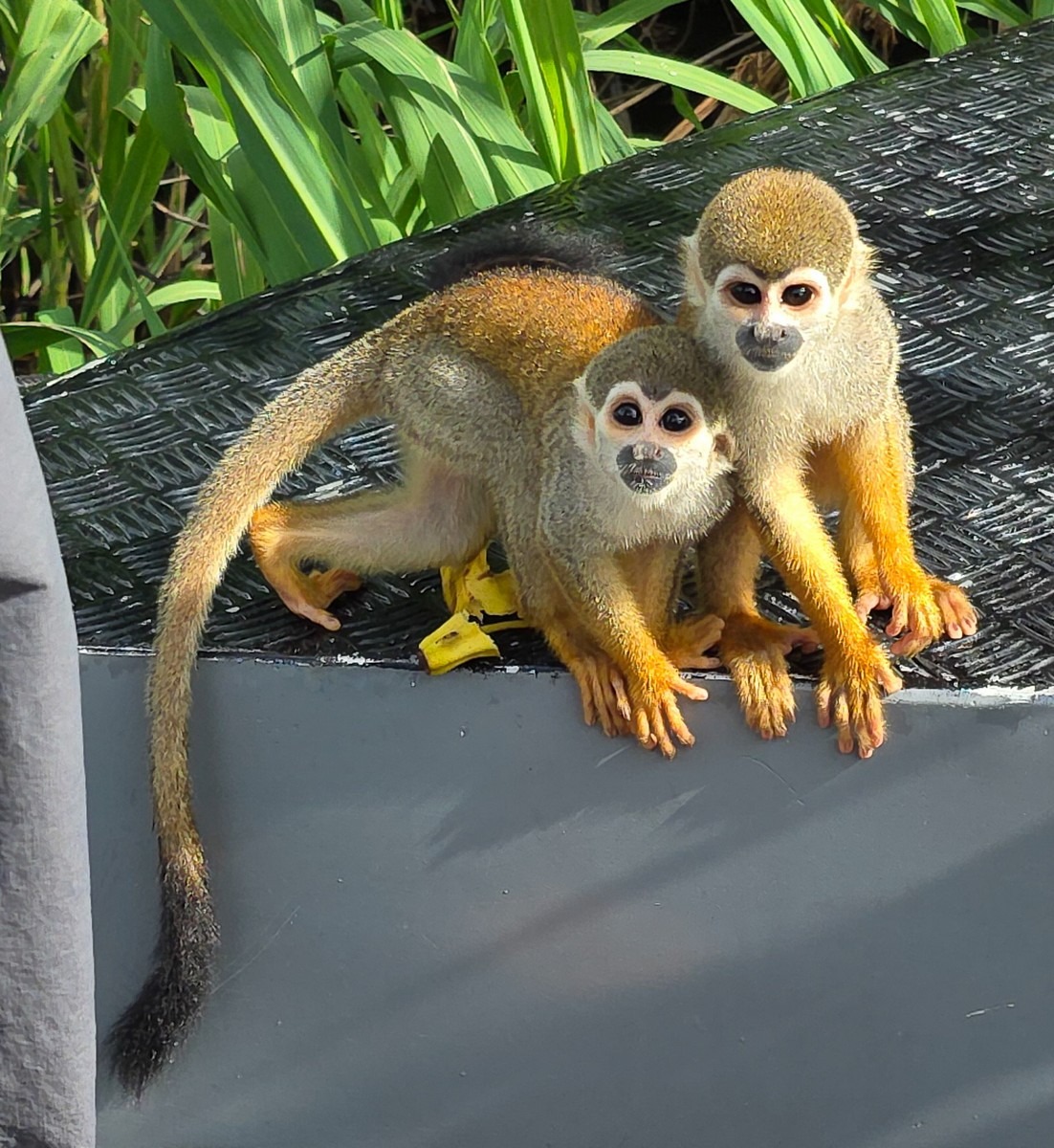
Clearly they were famished :)
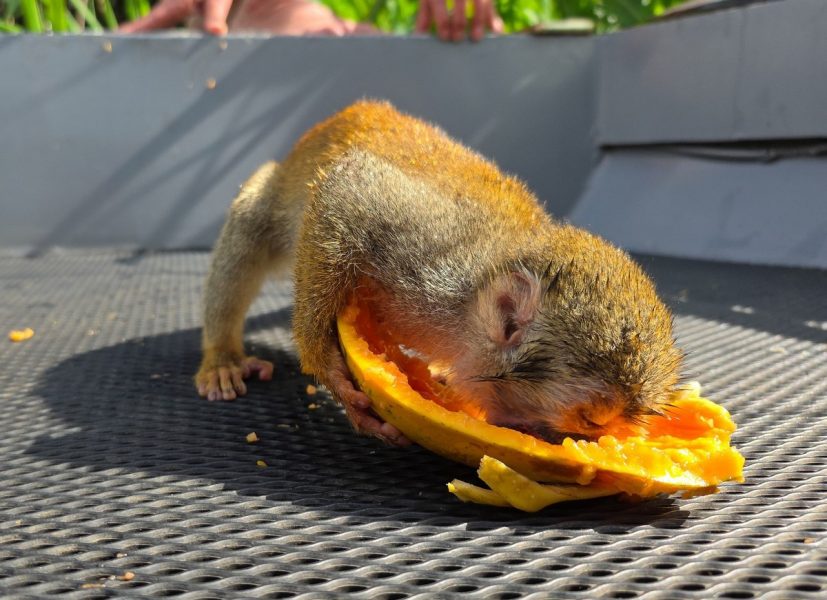
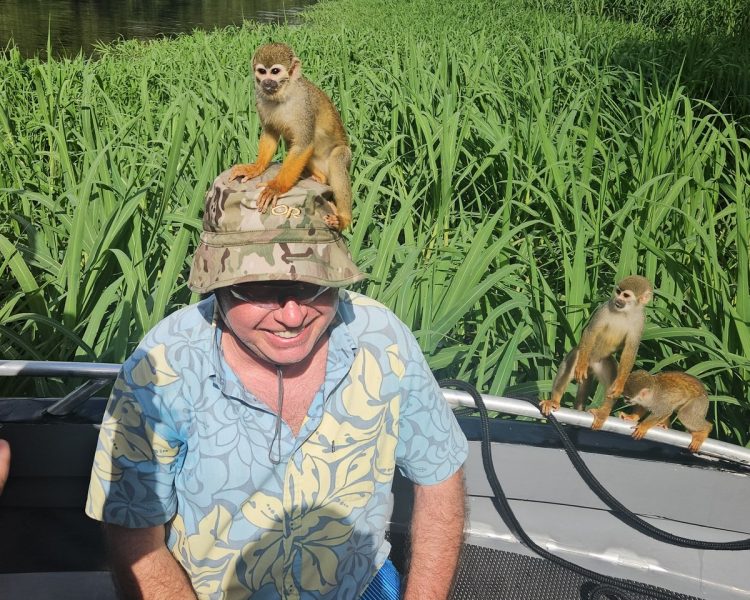
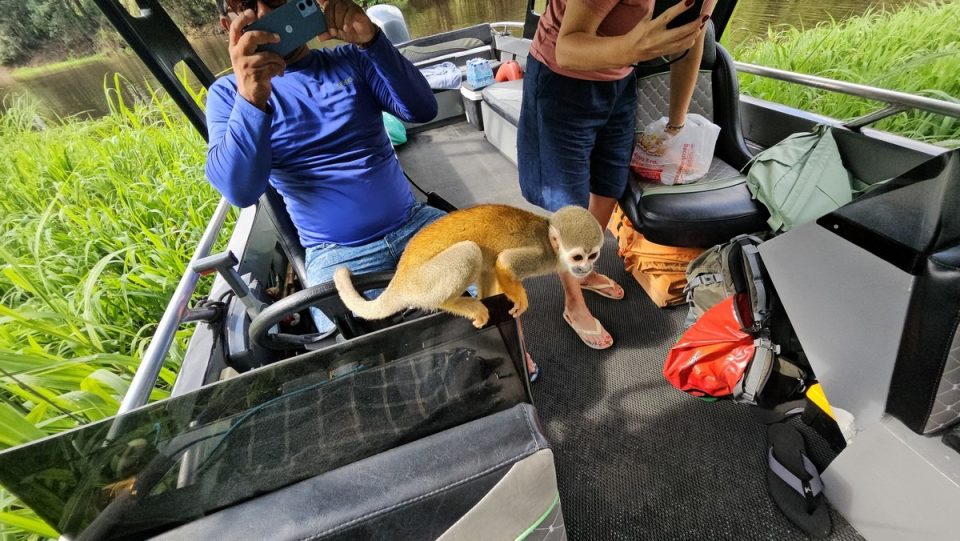
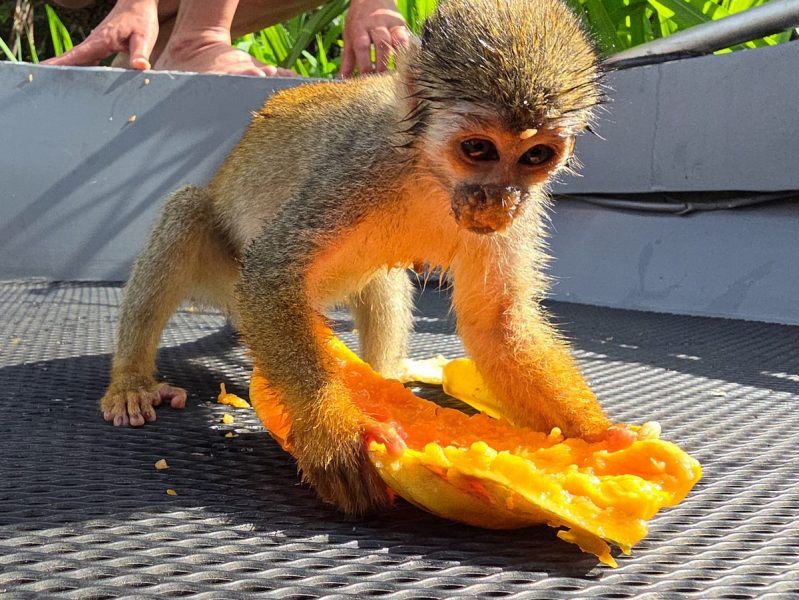
Hilarious! :)
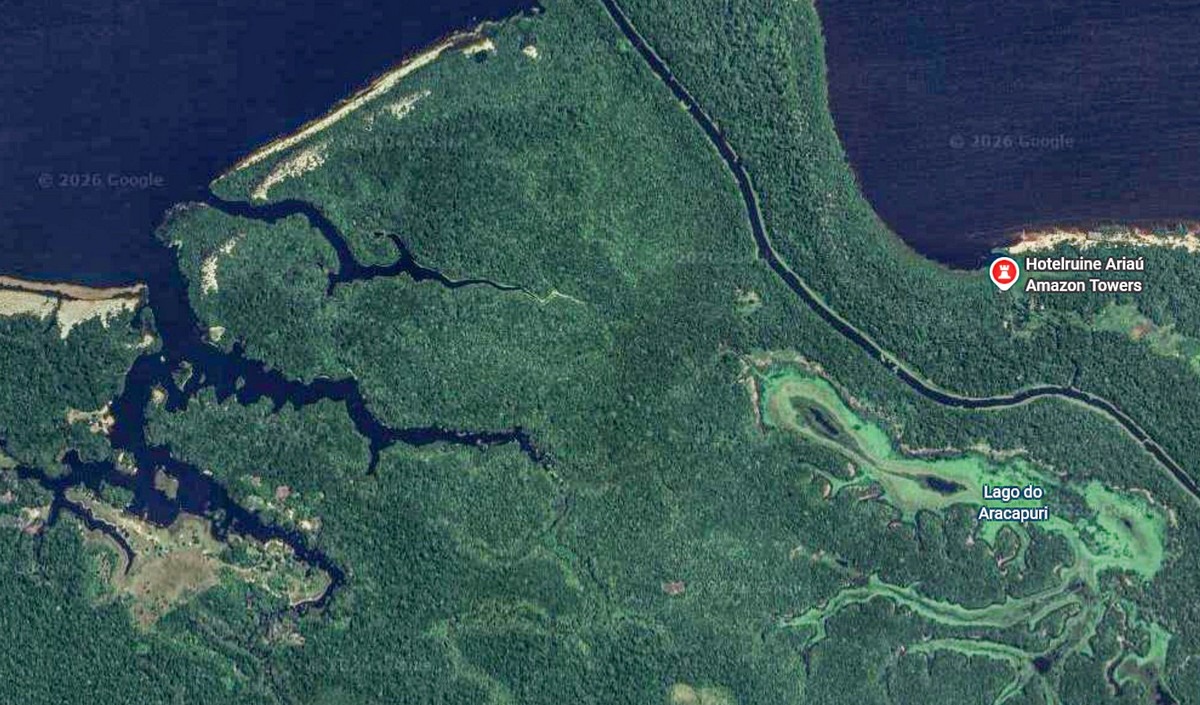
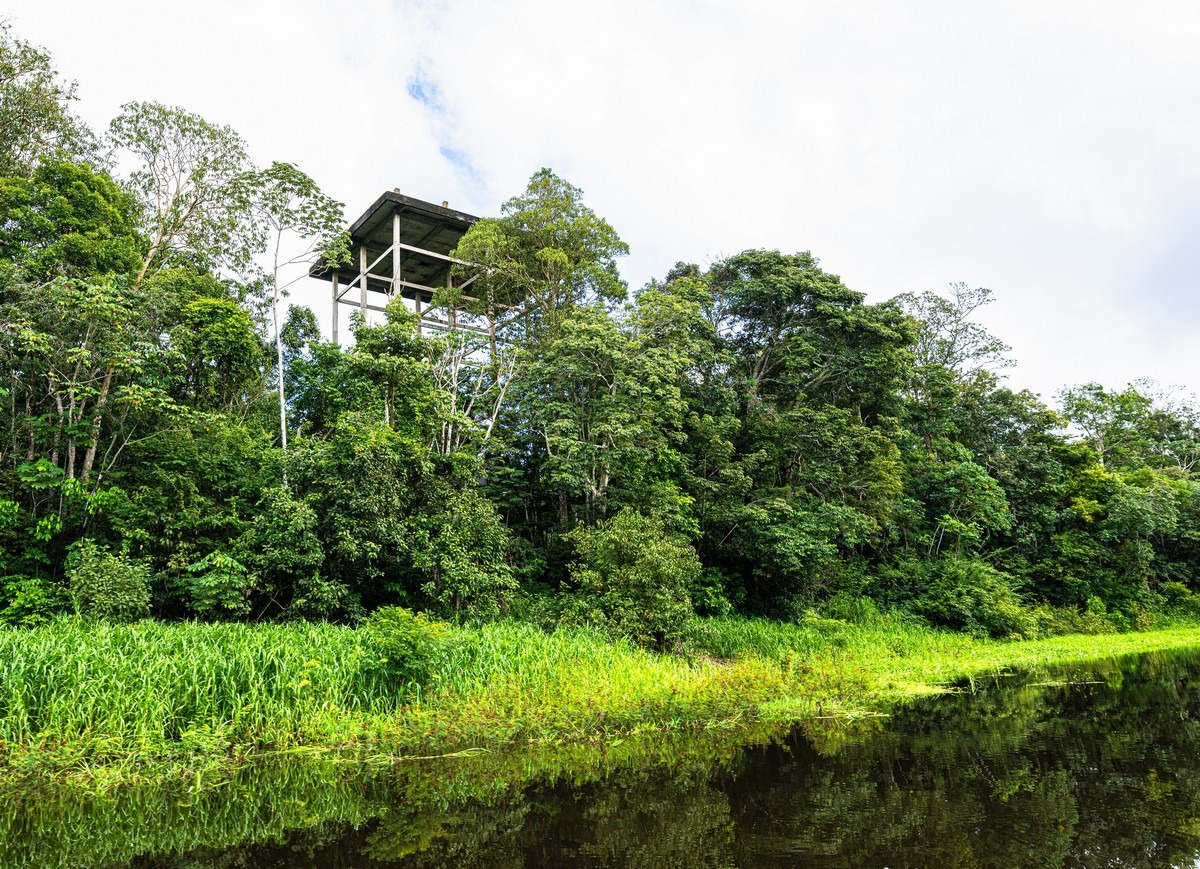
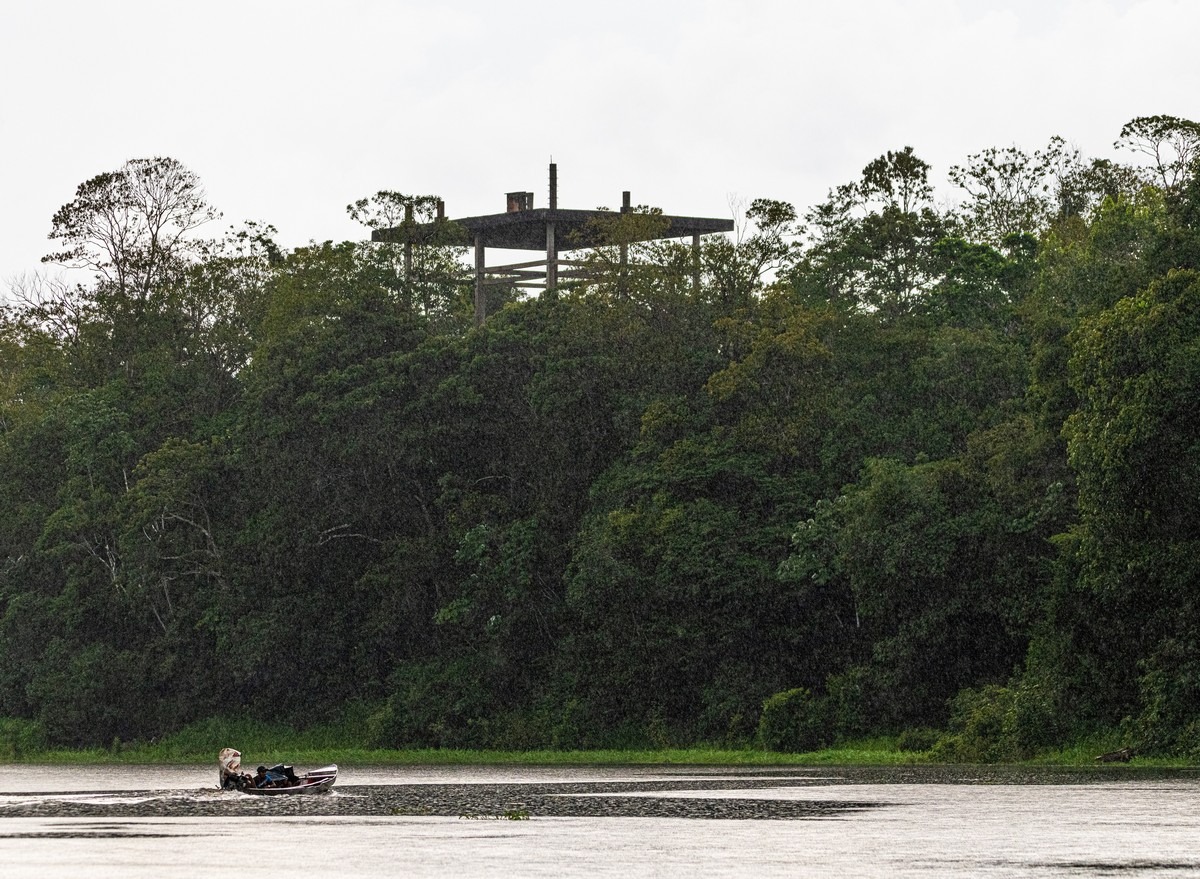
On we went. And then – what’s this? The remains of some reinforced-concrete structure in the jungle ->
And over there – a concrete staircase leading down to the water:
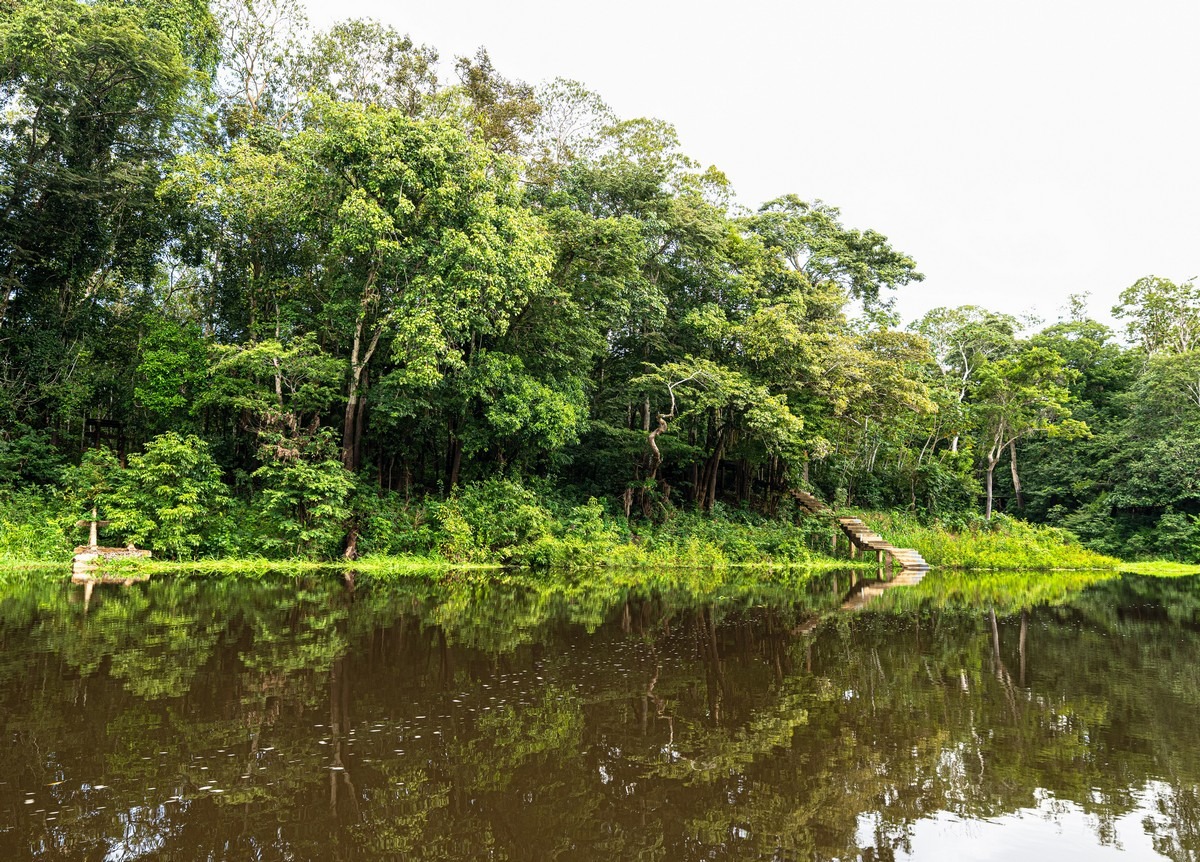
Turns out these are the ruins of the once-famous Ariaú Towers eco-hotel. A local entrepreneur decided to build a hotel that would do minimal harm to the surrounding ecosystem. In the end, six towers were built, with guest rooms set 10–20m above ground level. They were connected by suspended walkways (8km in length altogether). The hotel had around 290 rooms of various types, several pools, restaurants, and so on. In the 1990s it was wildly popular, but then things started going downhill. One source says the decline was triggered by the 9/11 terrorist attack in New York: the overwhelming majority of guests were from the U.S., and after that they were simply afraid to fly. The hotel failed to pivot to a different customer base, racked up debt, went bankrupt, couldn’t be sold, and then ended up simply rotting away. Shame. All the work and money put into it. Oh well – it happens…
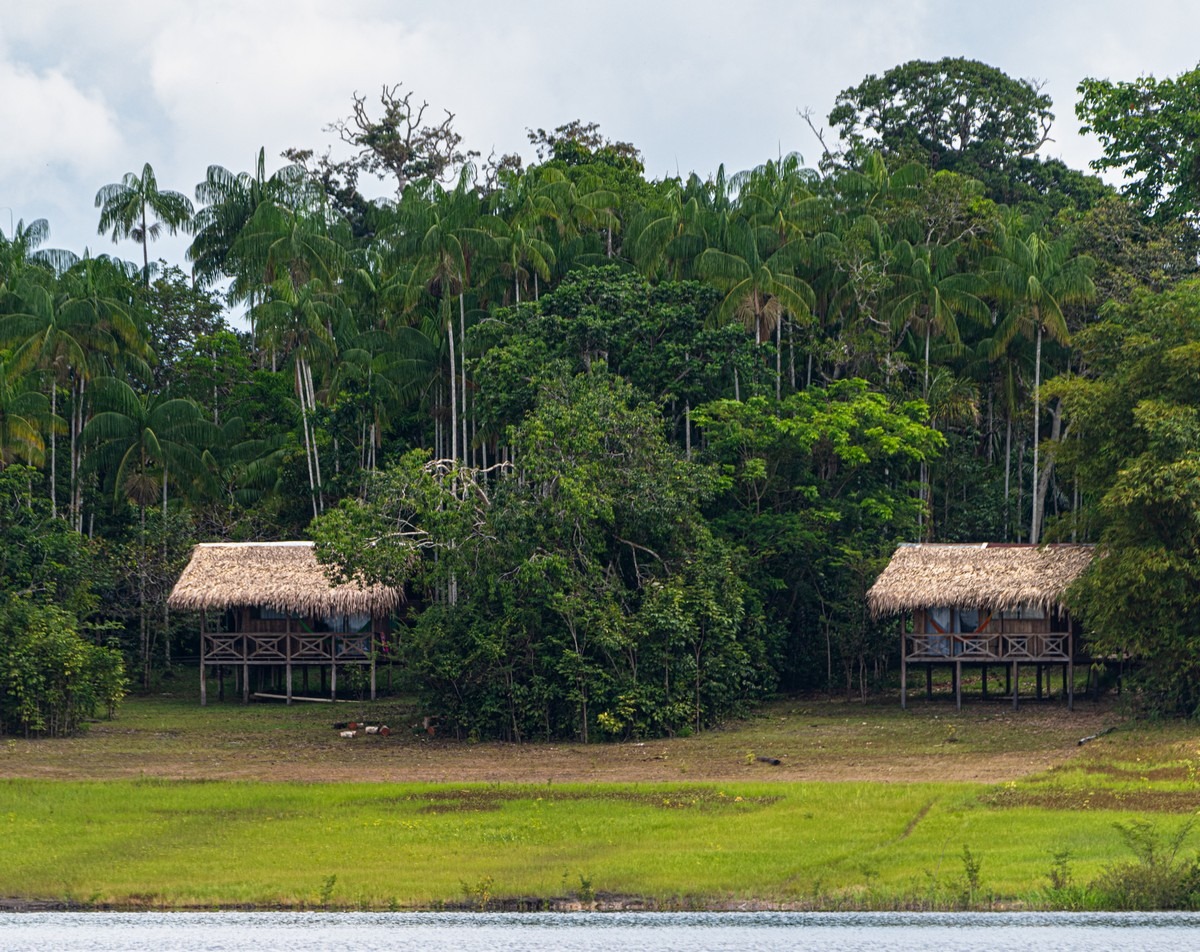
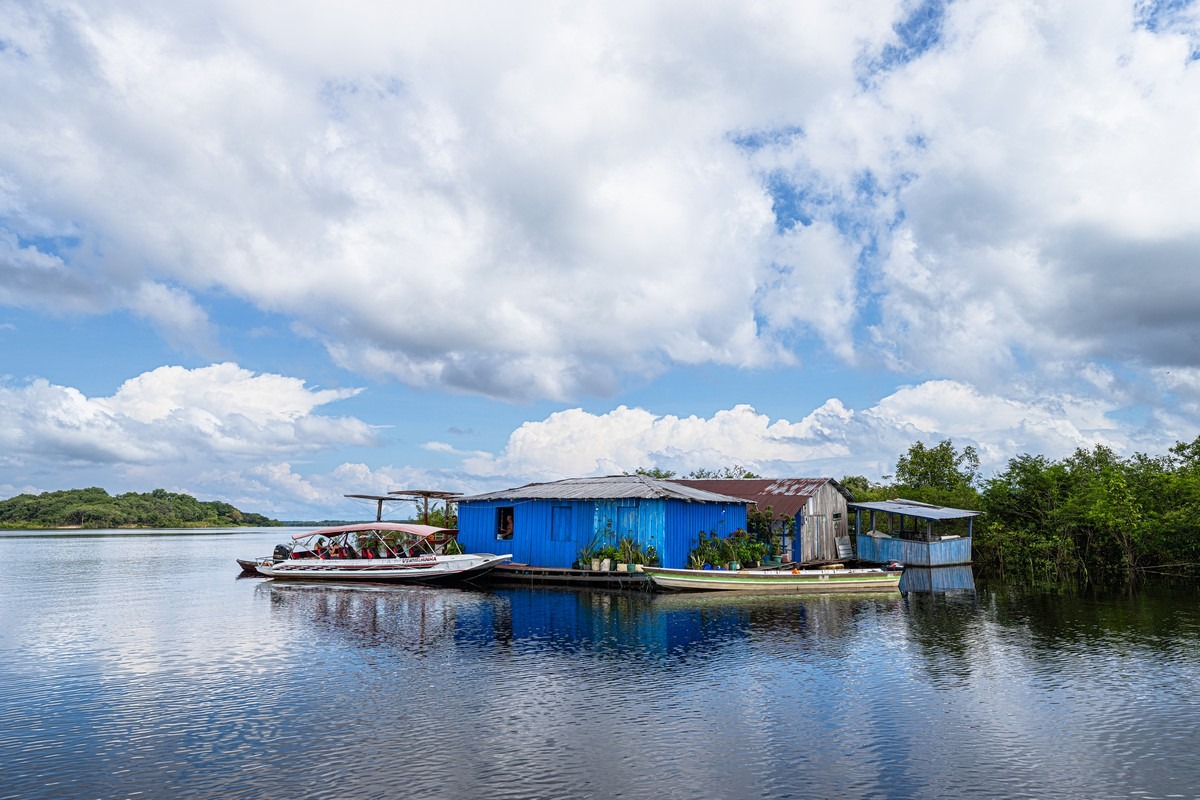
Pretty much all the other buildings here are up on stilts too…
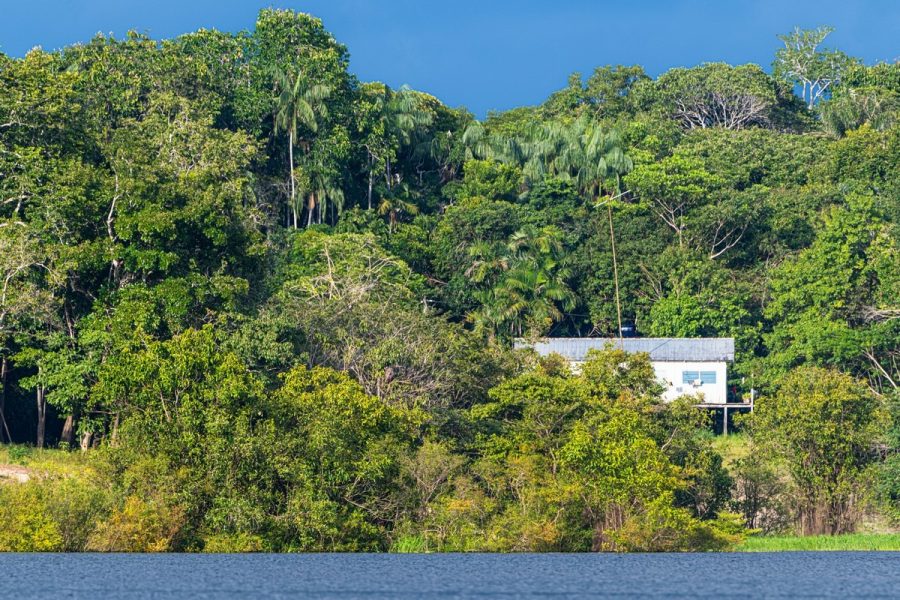
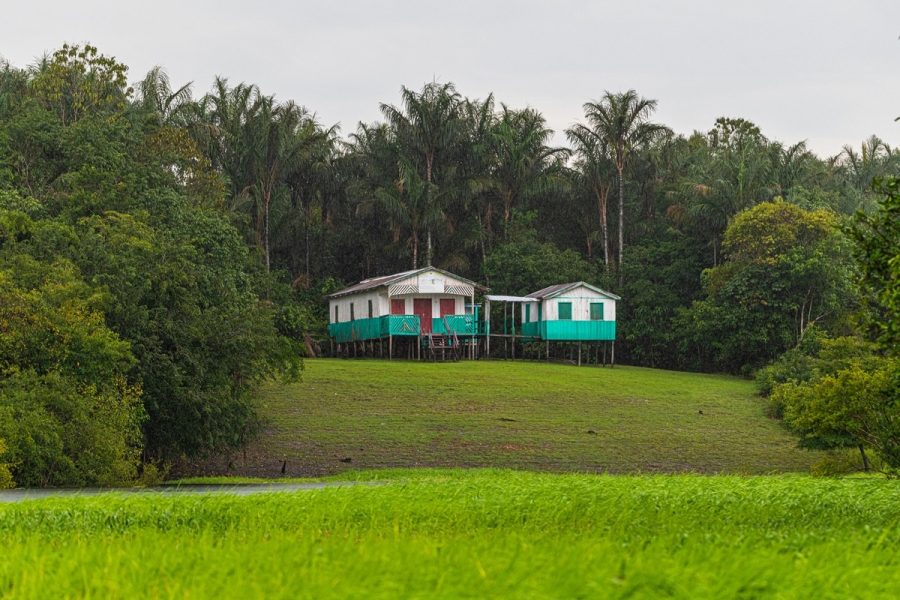
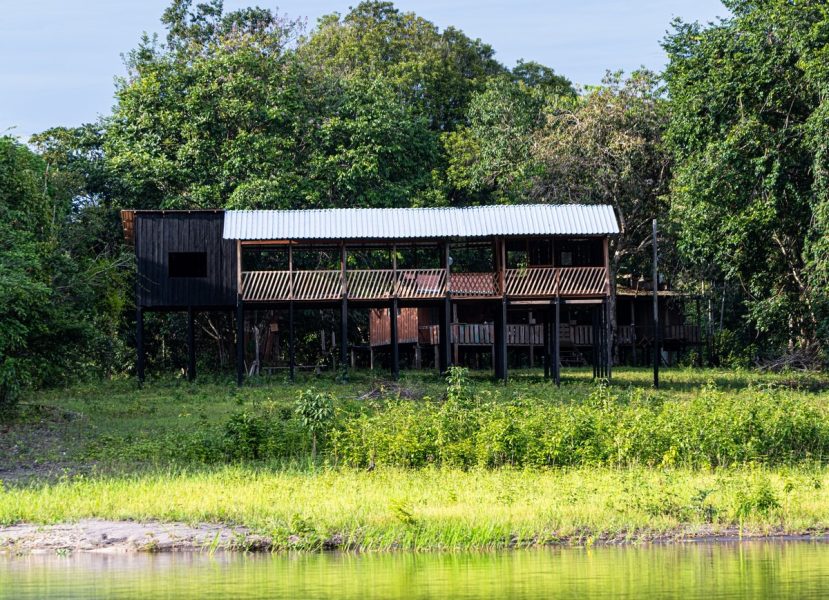
And the reason is that during the seasonal rains in June and July, the river level rises – believe it or not – by as much as 12 meters some years. We were there in January, and the water was three meters above its minimum. That’s why we could see all the stilts clearly.
Now, if you ask Google AI about the Rio Negro’s water level, the result is more than detailed enough. Quoting it here, with river level given above sea level:
The Rio Negro, the Amazon’s largest tributary, is subject to major seasonal fluctuations in water level. Key figures:
– Seasonal variation: on average, the difference between the lowest and highest water levels is 10–15m.
– Absolute levels: near Manaus, the river level usually ranges from 14–22m in the dry period, to 25–30m in the rainy season.
– Records: the historic high was recorded on June 16, 2021 – at 30.02m. The historic low was updated on November 1, 2024, when the level dropped to 12.18m.
Characteristics of the water level in January:
– River condition: January falls within the low-water period, which lasts from October through January.
– Typical values: in this month, the water level is usually in the 17–22m range above sea level, based on measurements at the Port of Manaus.
– Trend: December and January are when the river slowly starts to “gather strength”. The rate of the rise at the start of the year is still low, since the main rainfall peak in the basin comes in the spring months.
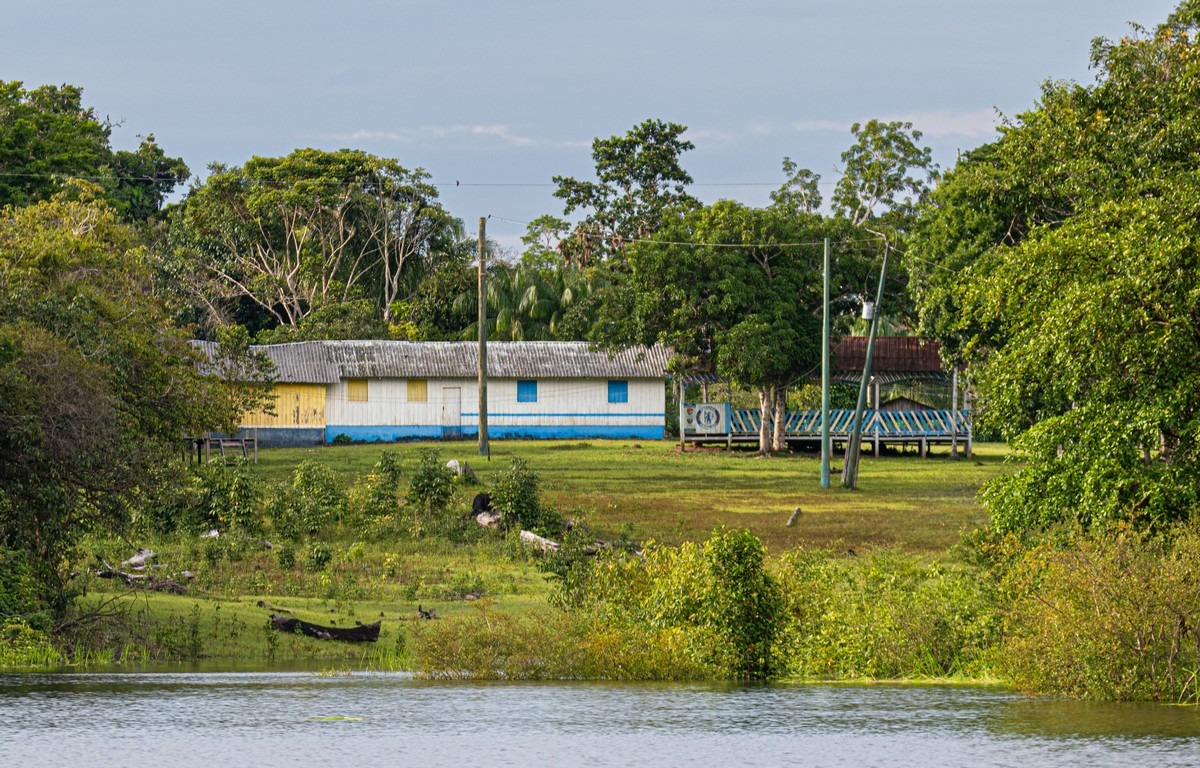
Why this house is built without stilts – no idea.
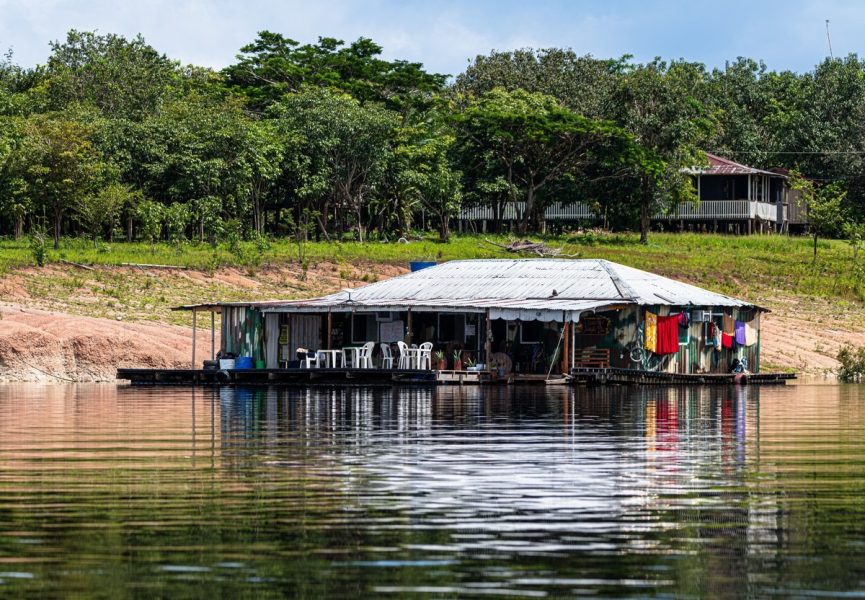
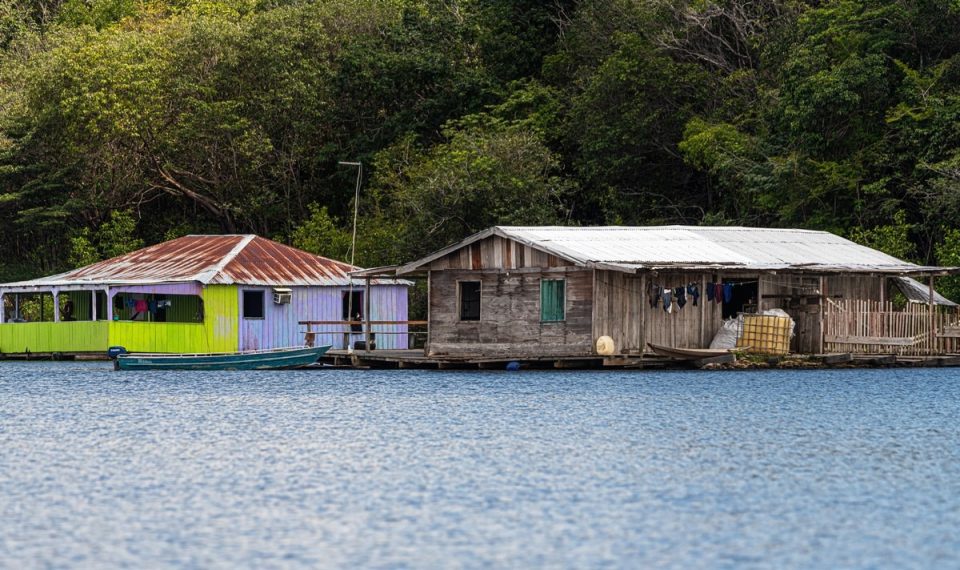
Others don’t bother overthinking it and just live on floating platforms instead :) ->
A gauge post near our land-based hotel:
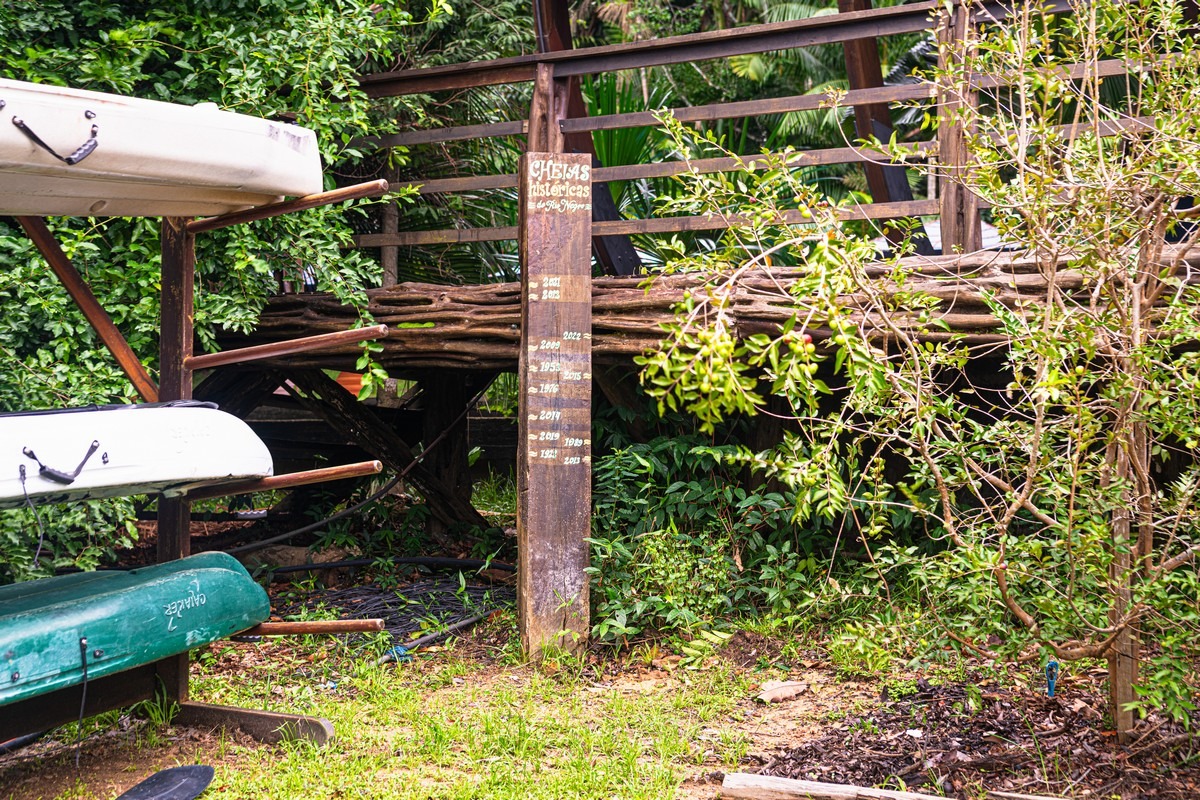
And that’s at a very noticeable height above the current water level! Shame the markings don’t show meters and centimeters.
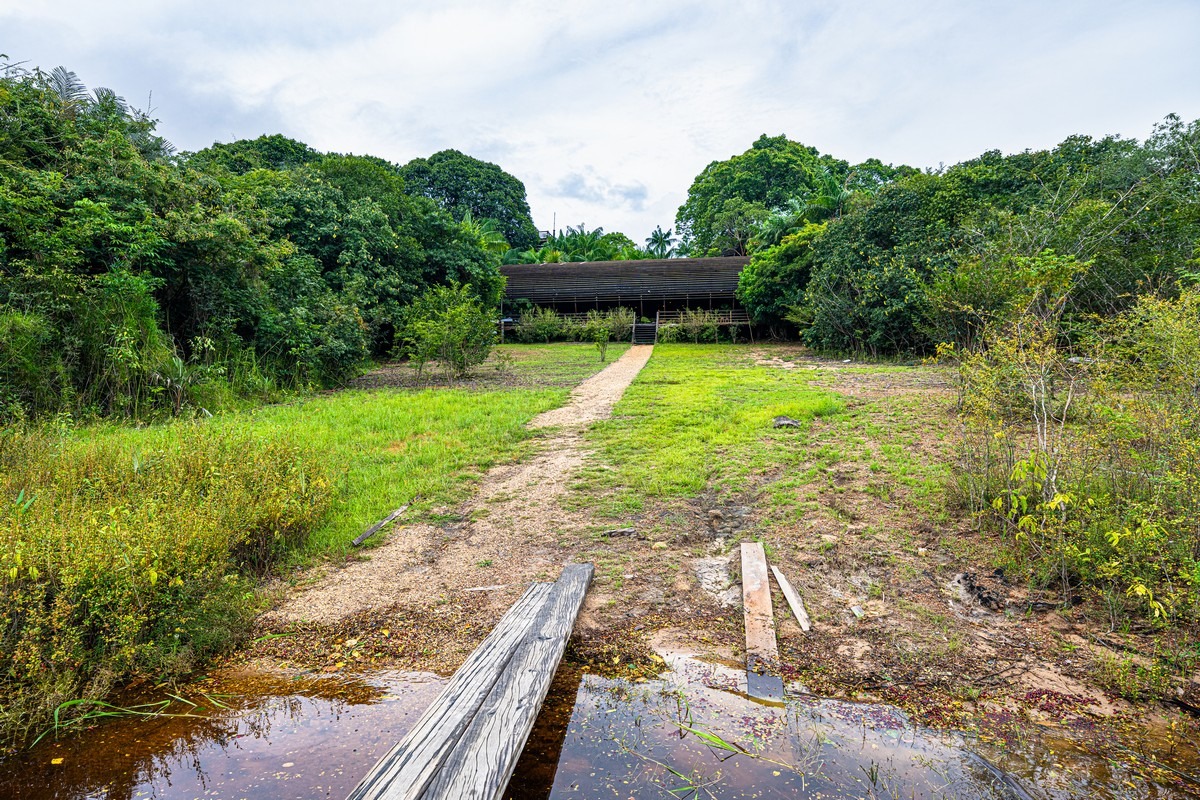
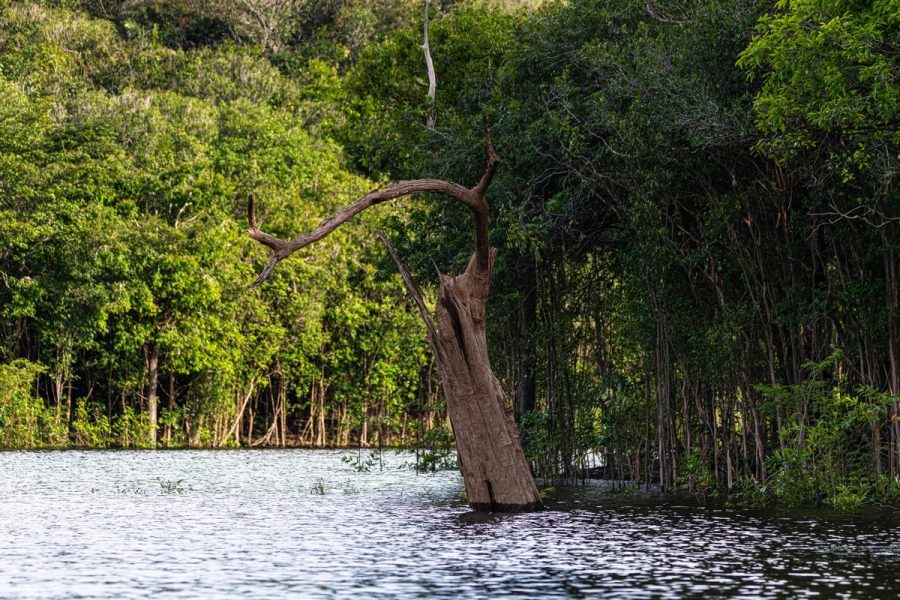
But even by eye you can tell that with 3m of “extra” water, the bushes and trees are standing waist-deep in it:
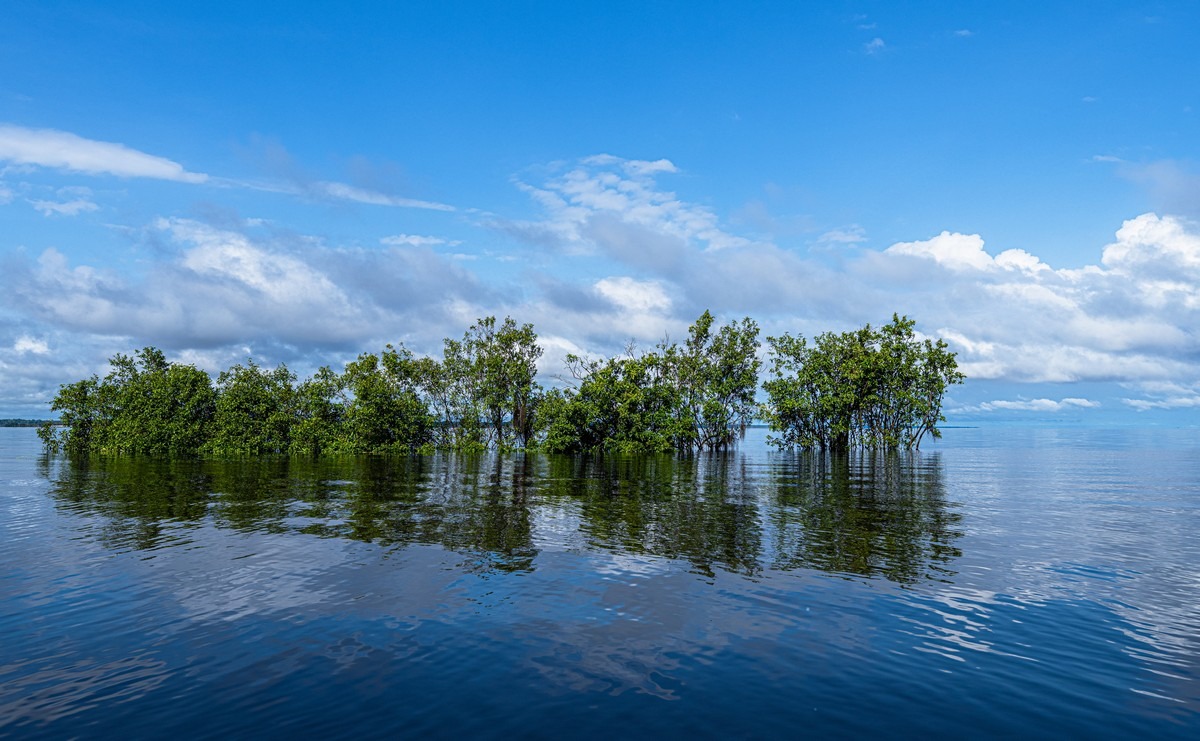
And in June and July it’s another +9m, which means they’ll disappear underwater altogether!
Onward!…
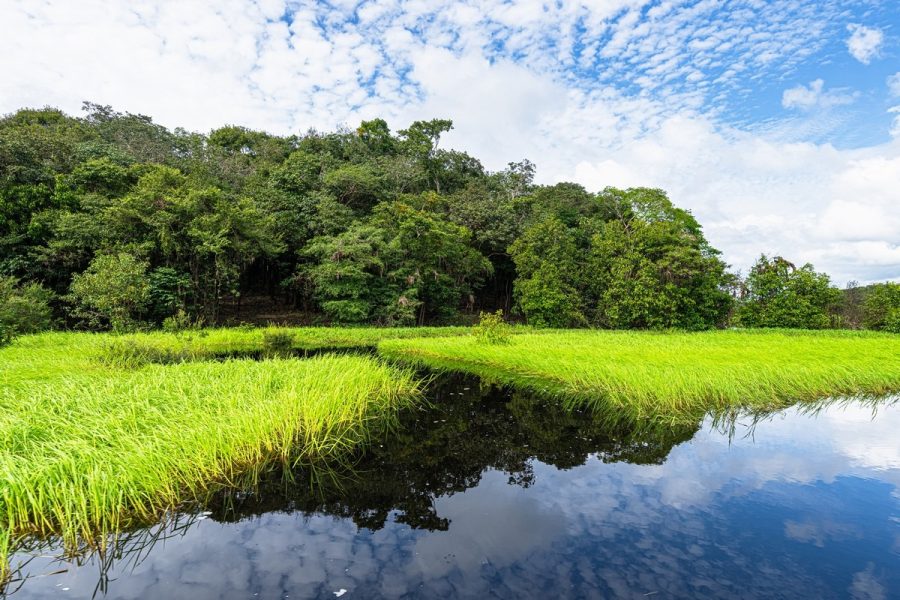
At times the anabranch widens and turns into a lake, then narrows again and gets choked with grass:
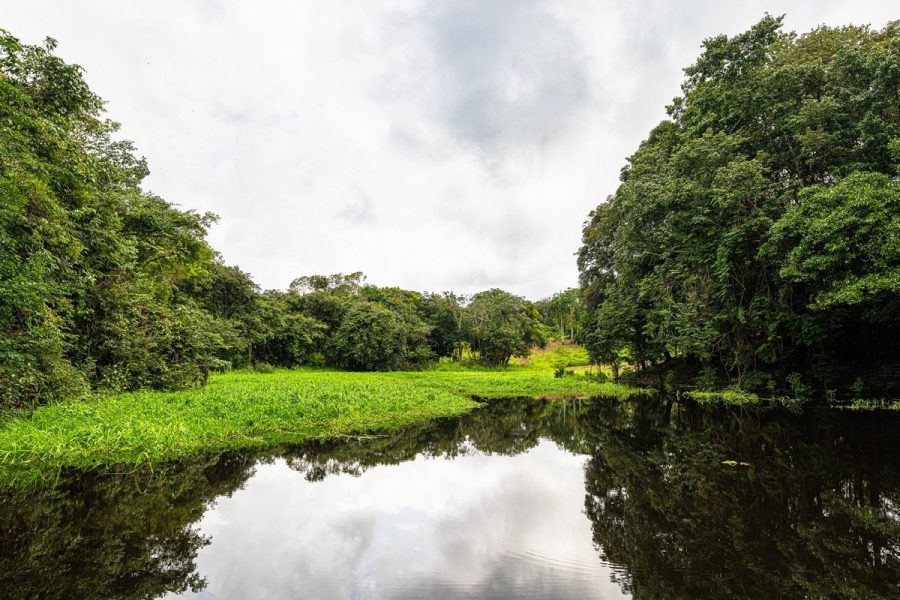
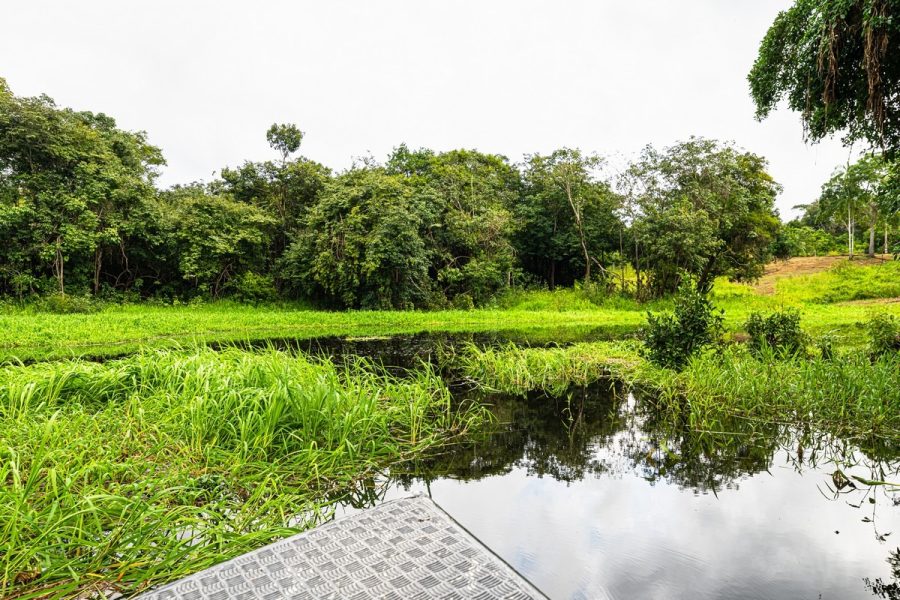
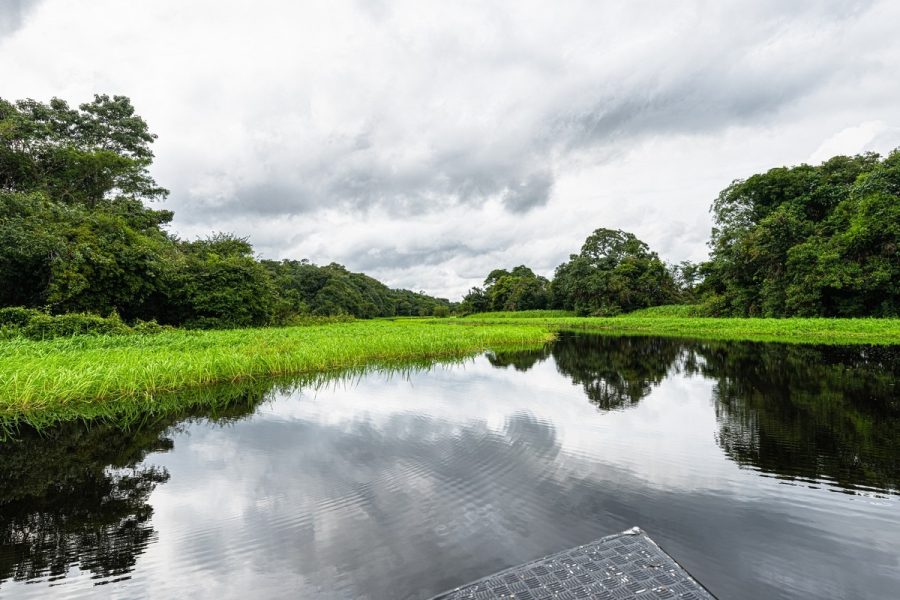
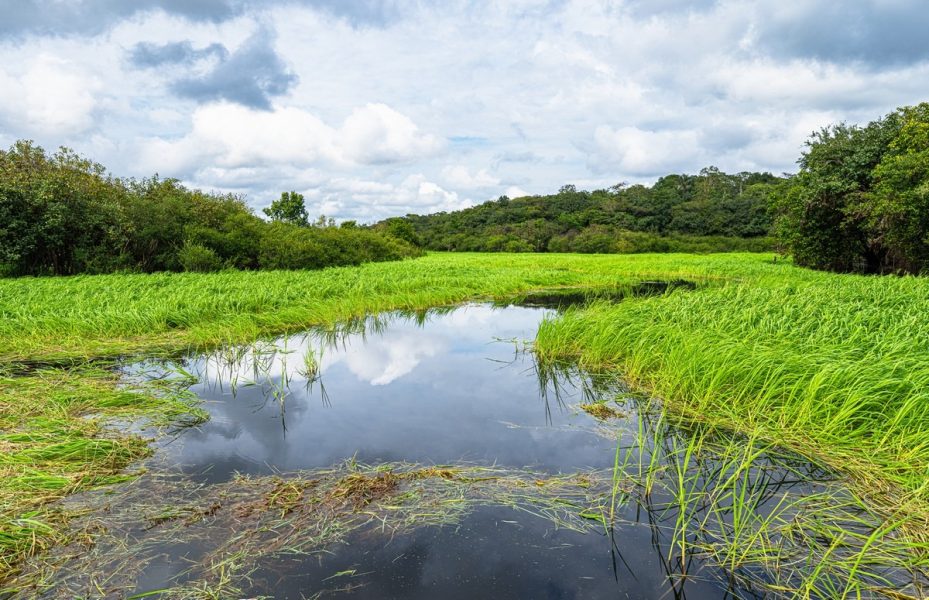
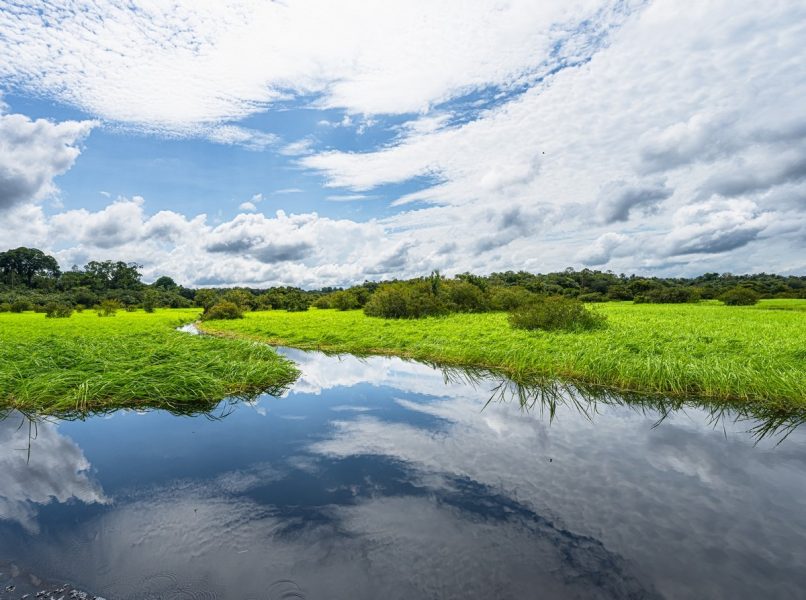
I got curious about how far we’d gone, so I did the math on the map – more than 15km (in two hours)!
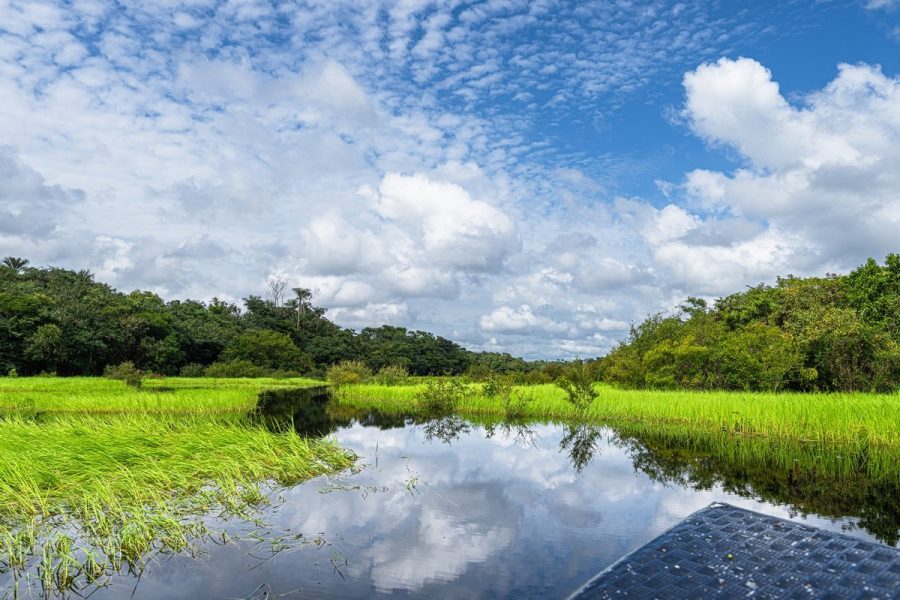
That’s it, we’ve come out of the anabranches onto the big, open water:
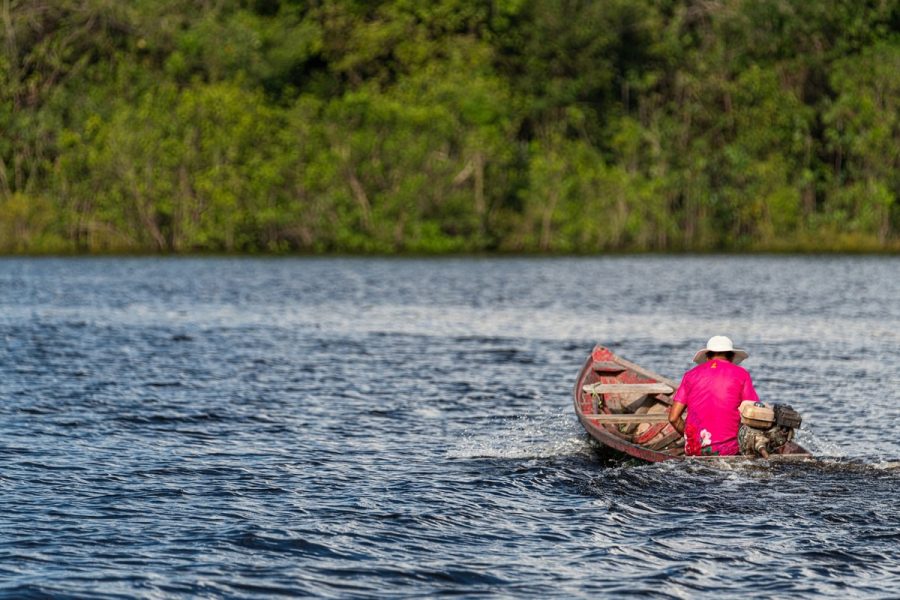
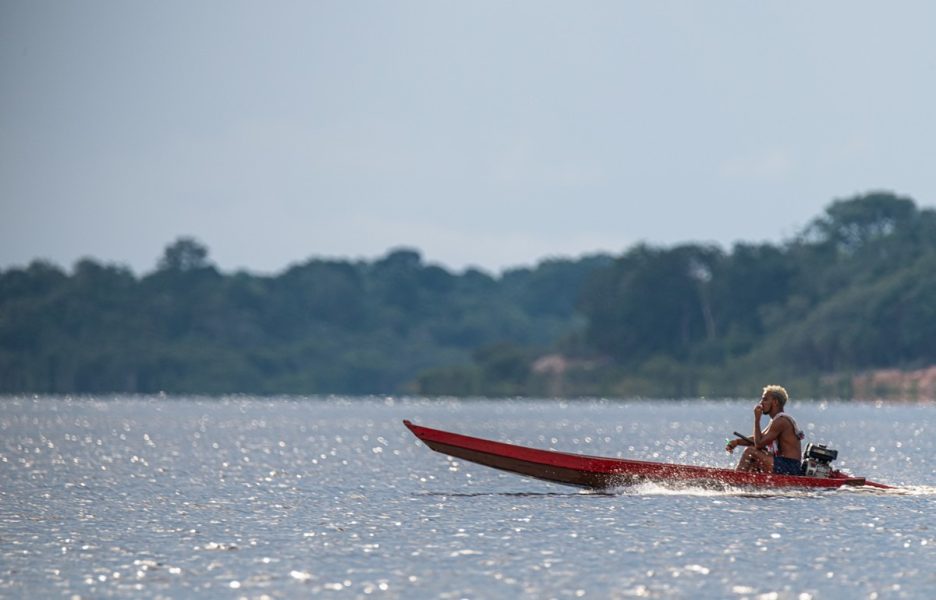
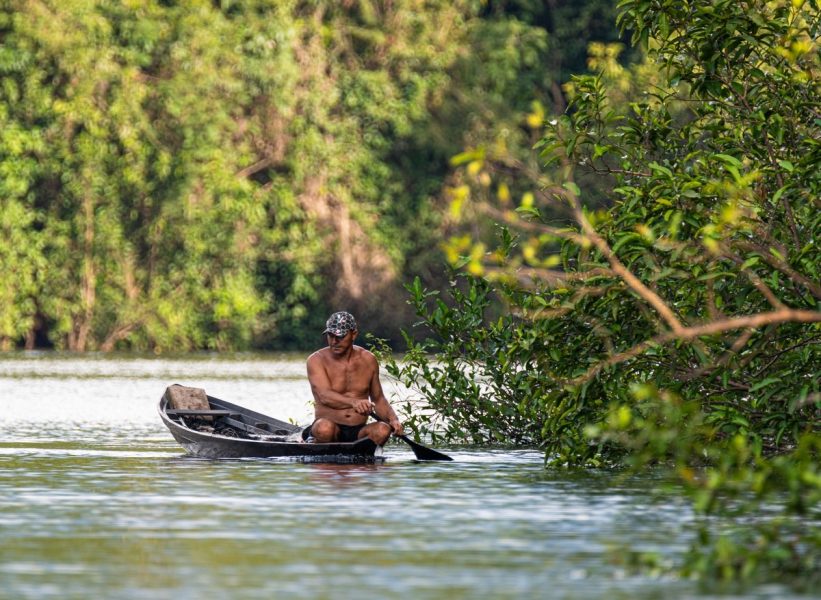
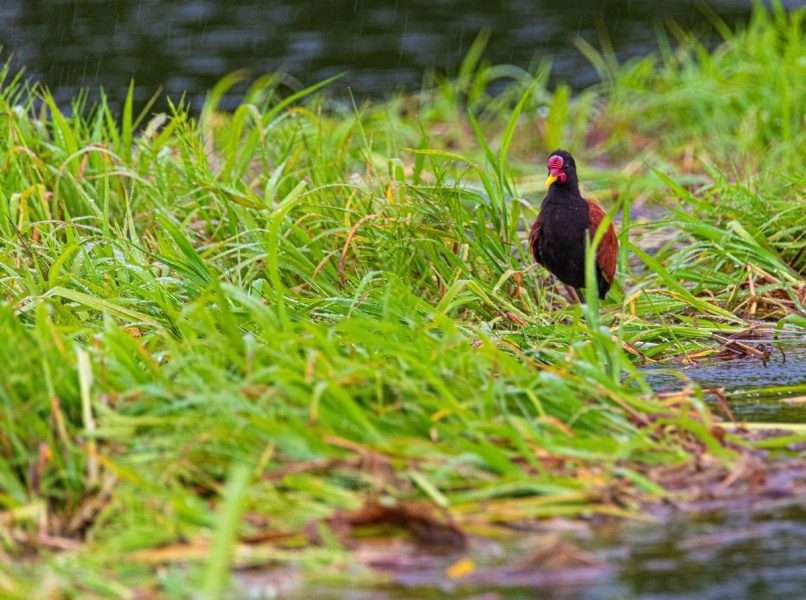
Here are some of DZ’s pics taken with his ultra-long zoom lens:
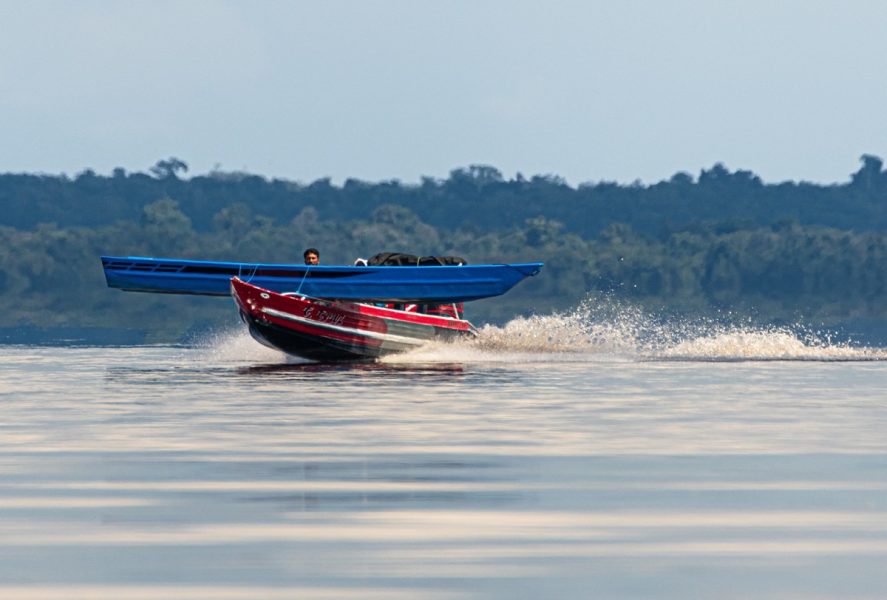
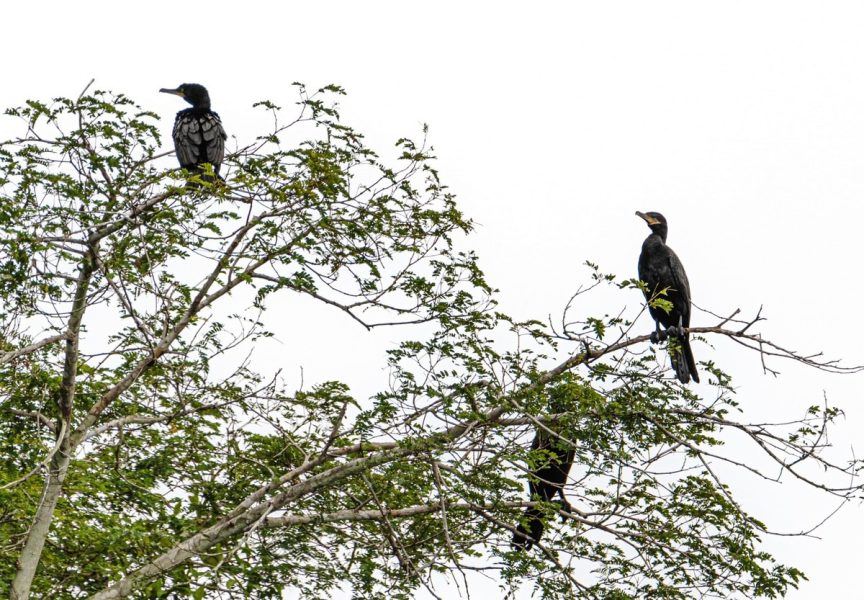
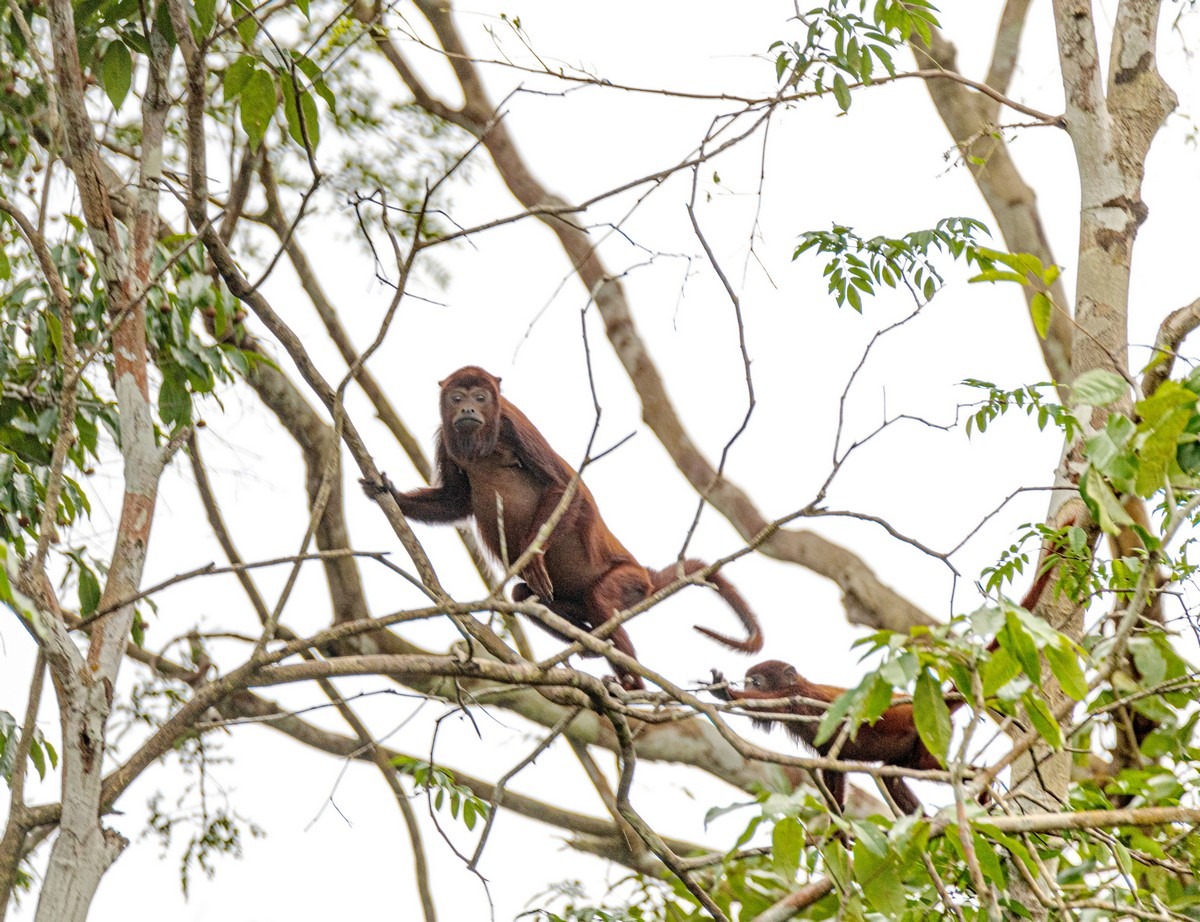
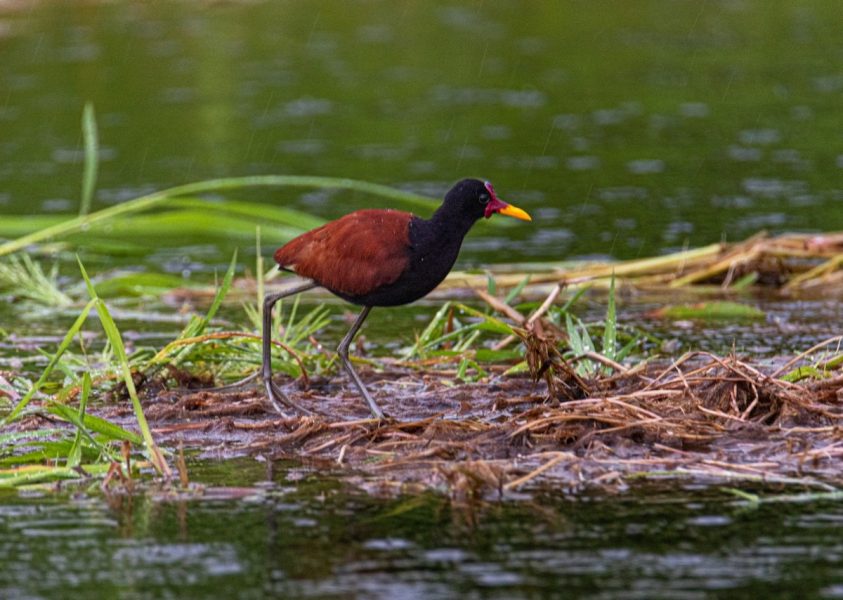
A bird I don’t know, because my ornithology skills are nothing to write home about. I was told it’s a wattled jacana:
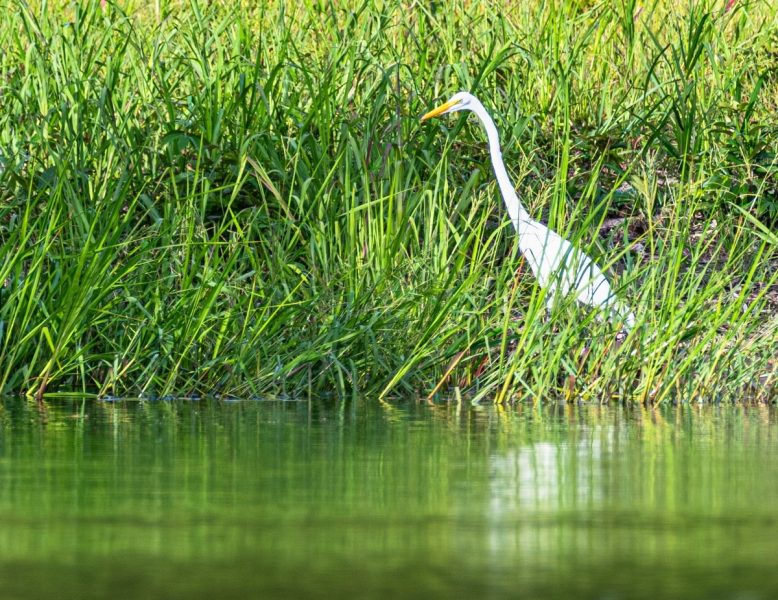
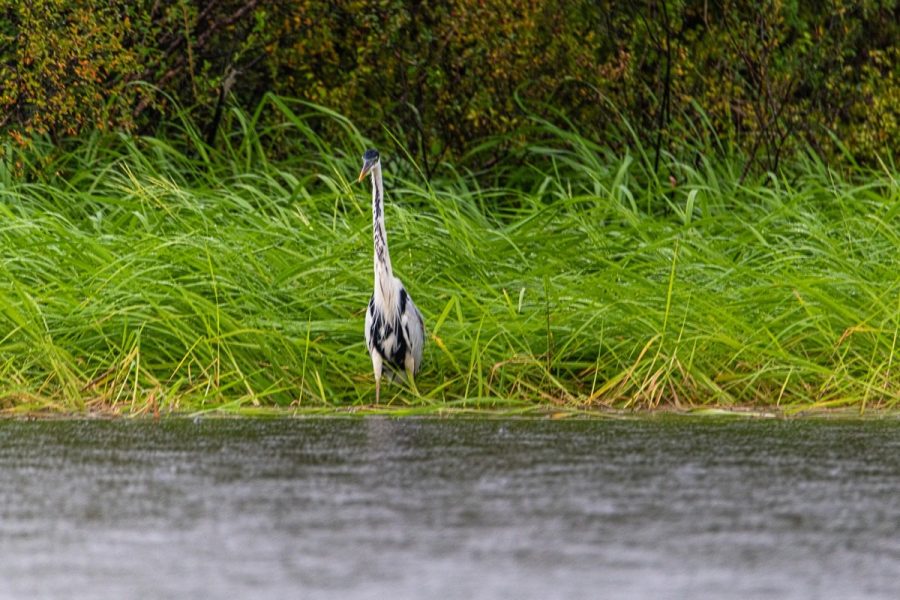
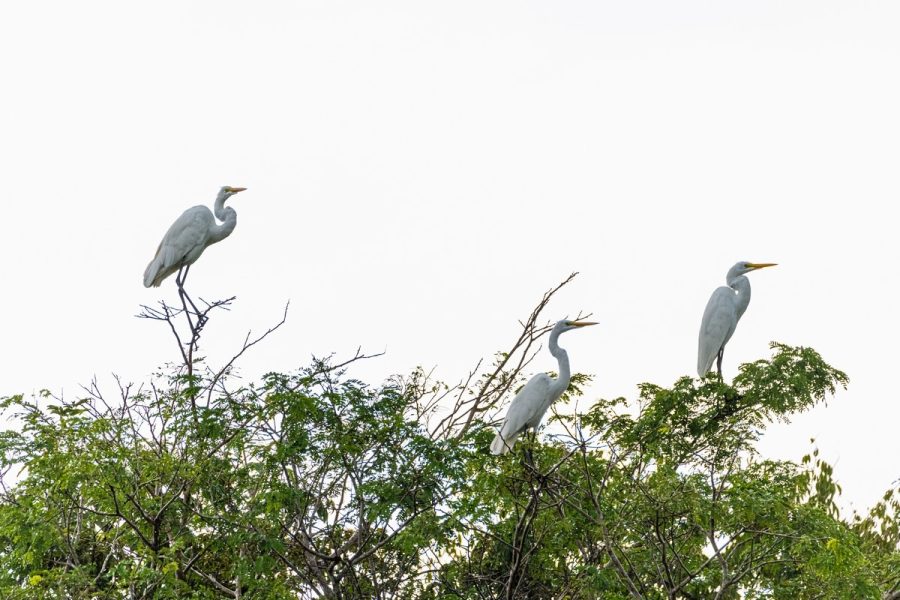
An Amazonian bittern:
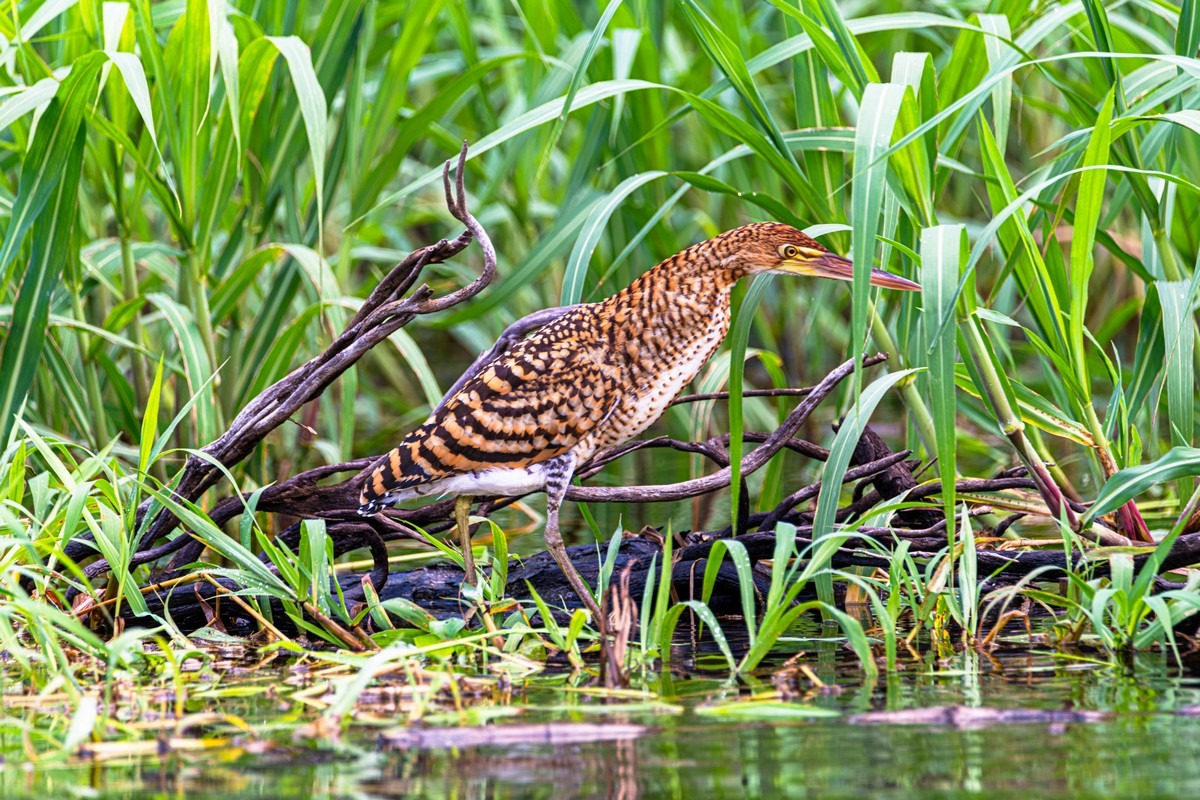
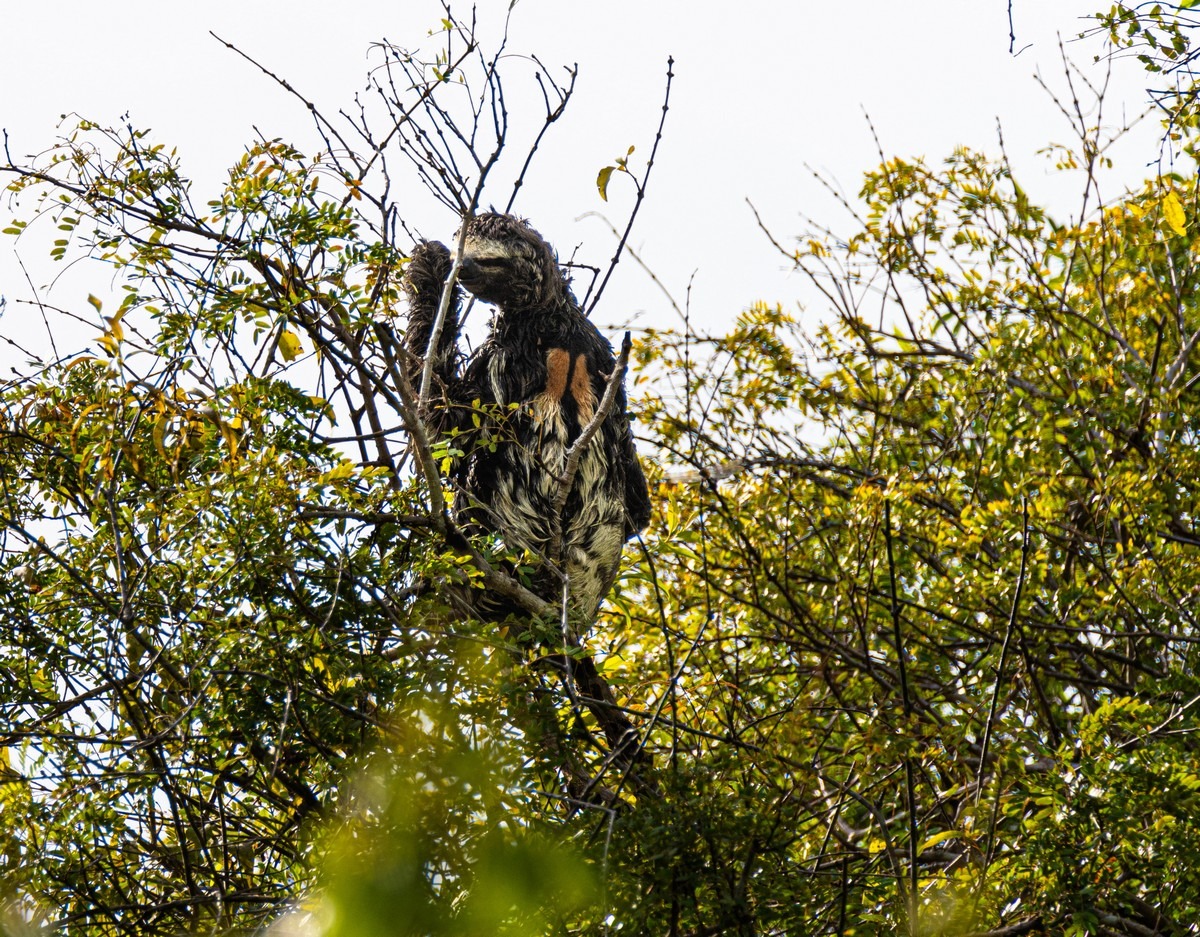
A sloth doing very little (now there’s a surprise!) ->
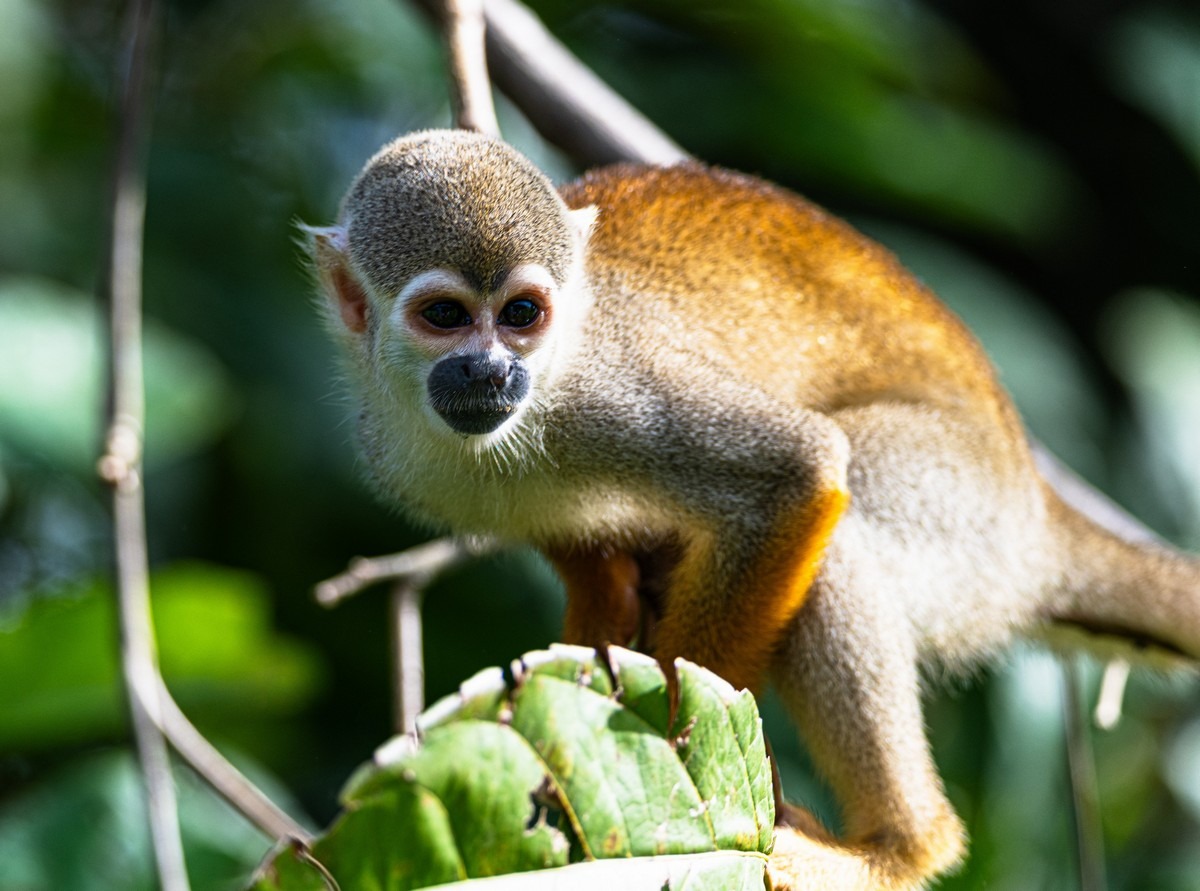
Another cheeky monkey:
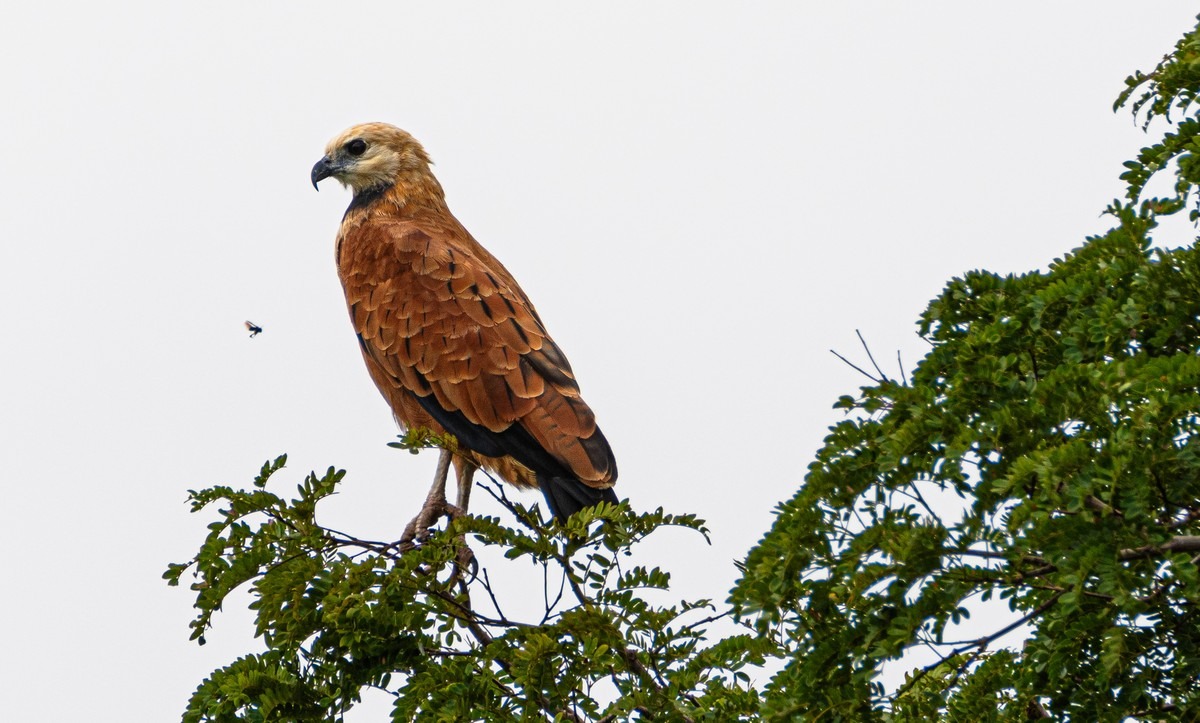
And some other birds of prey. I was told this one’s a black-collared hawk:
More birdies – perched up on cables. I was told this is a belted kingfisher:
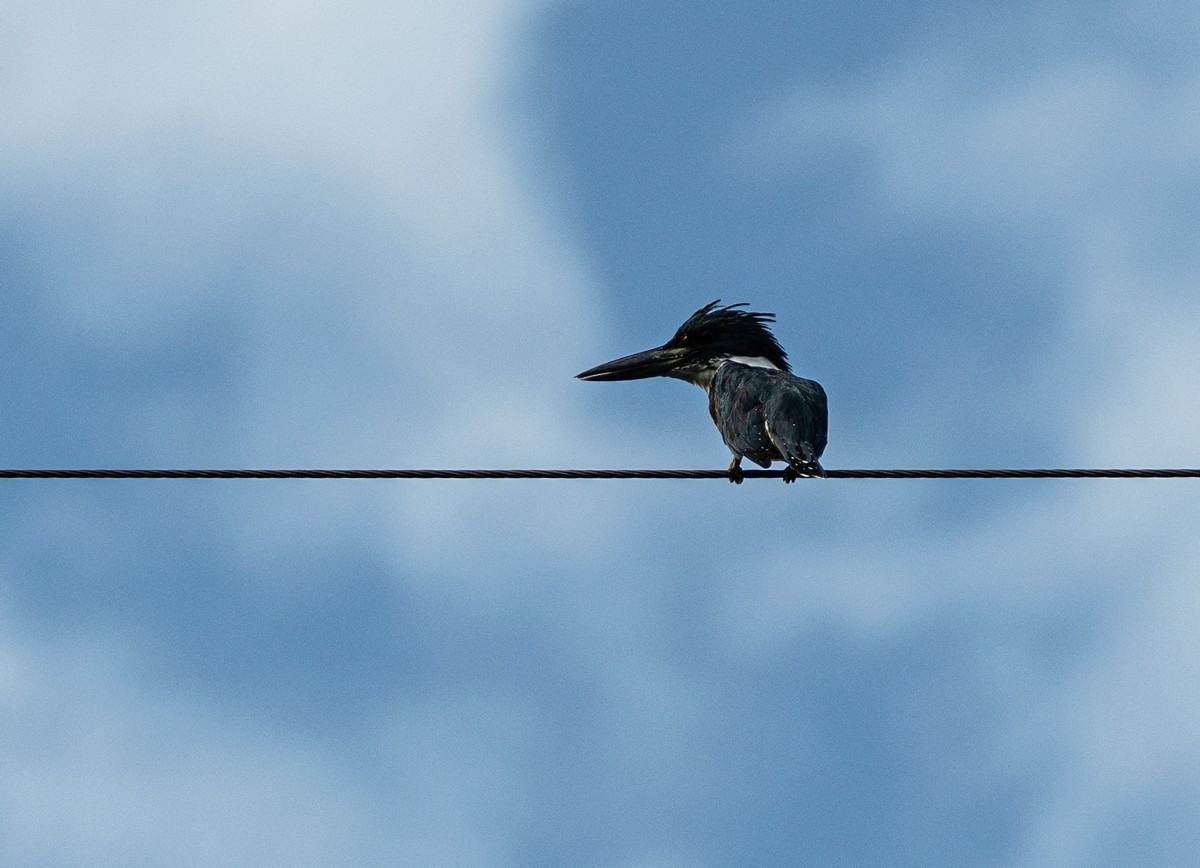
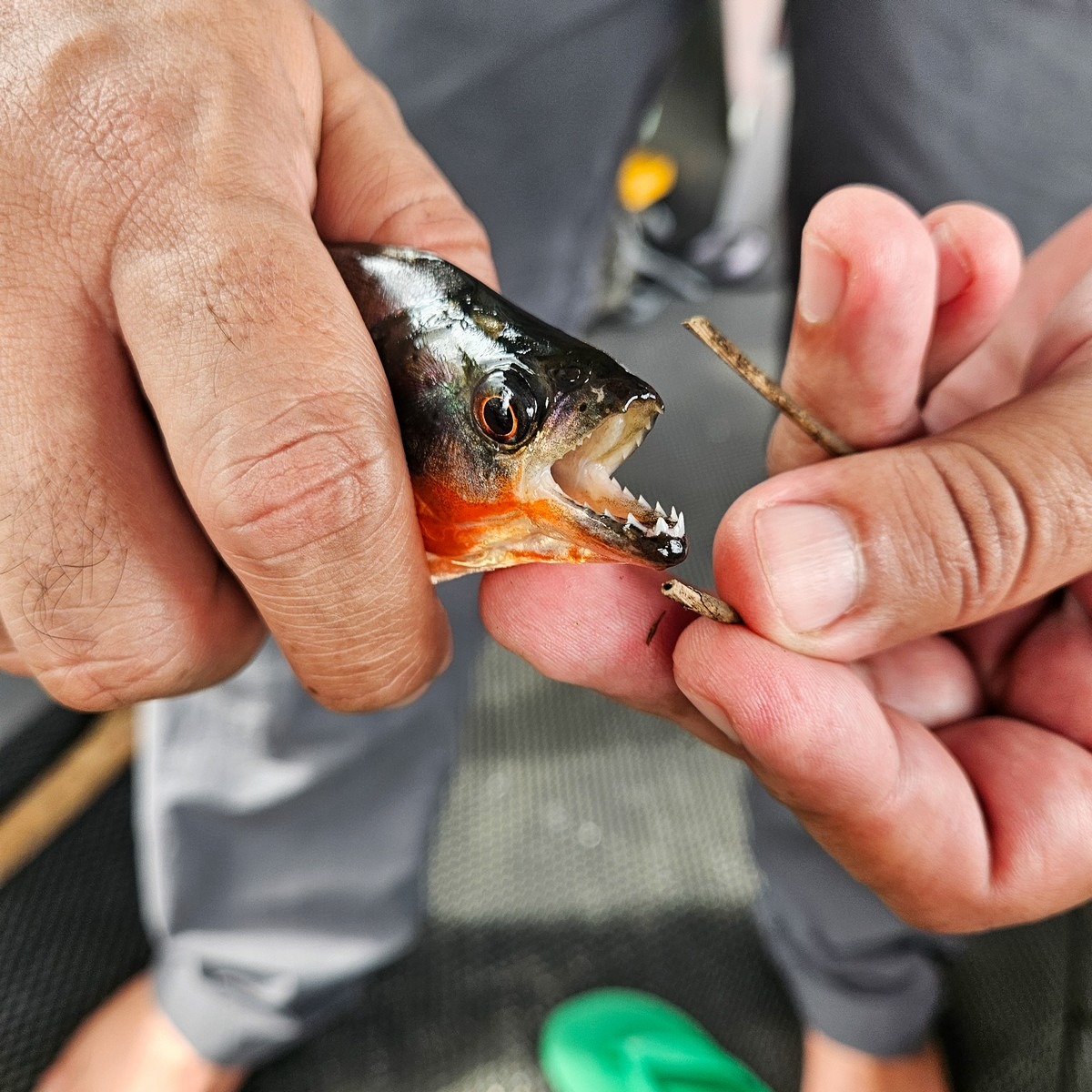
And what about piranhas? First – fun fact: turns out there are around a hundred different species of piranha! They vary in size and behavior, and around Manaus the piranhas are smallish and not especially aggressive. They aren’t a threat to people or large animals, but I still wouldn’t swim in a river where they hang out! Let’s fish for piranhas instead! ->
Piranhas are caught using bloody beef! No, I’m not swearing like a Britisher; I mean the beef is raw and bloody ). And bloody it needs to be: so after a few unsuccessful casts the blood gets washed off the meat so you need a fresh – blood-soaked – piece!
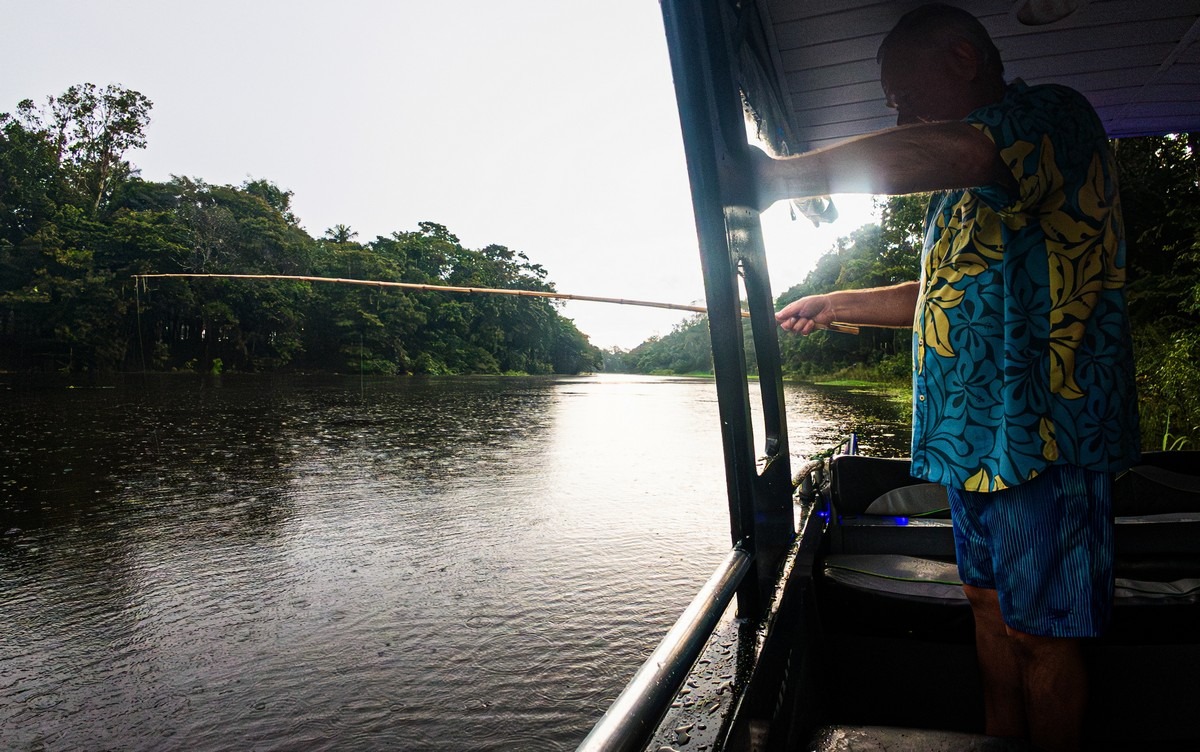
Sadly, we tourists didn’t catch a single piranha, despite giving it our best shot. Our guide, on the other hand, managed to hook a couple. Skills! ->
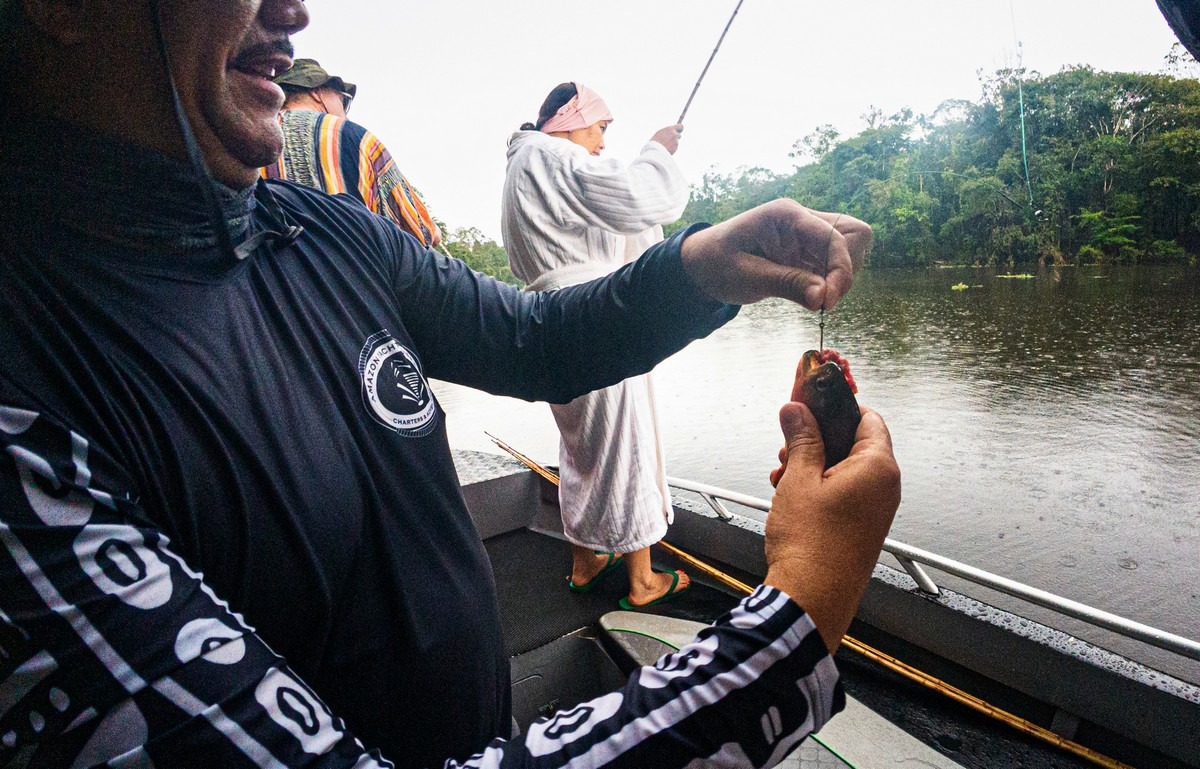
Yikes! ->
Feeding pirarucu – aka Arapaima – is a wonderful spot of unusual fun. It’s one of the largest freshwater fish in the world – growing up to three meters long and weighing as much as 200kg! Here’s a model of one:
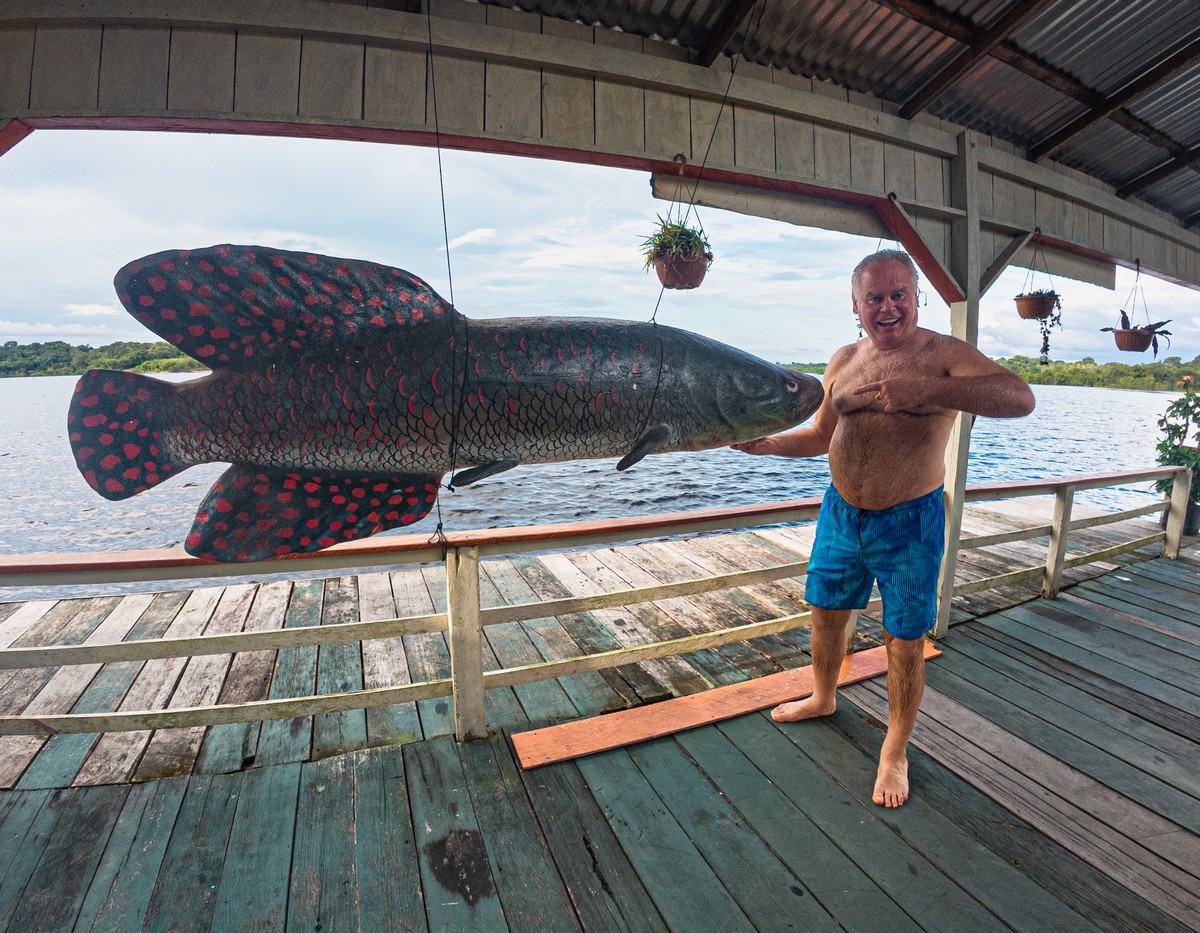
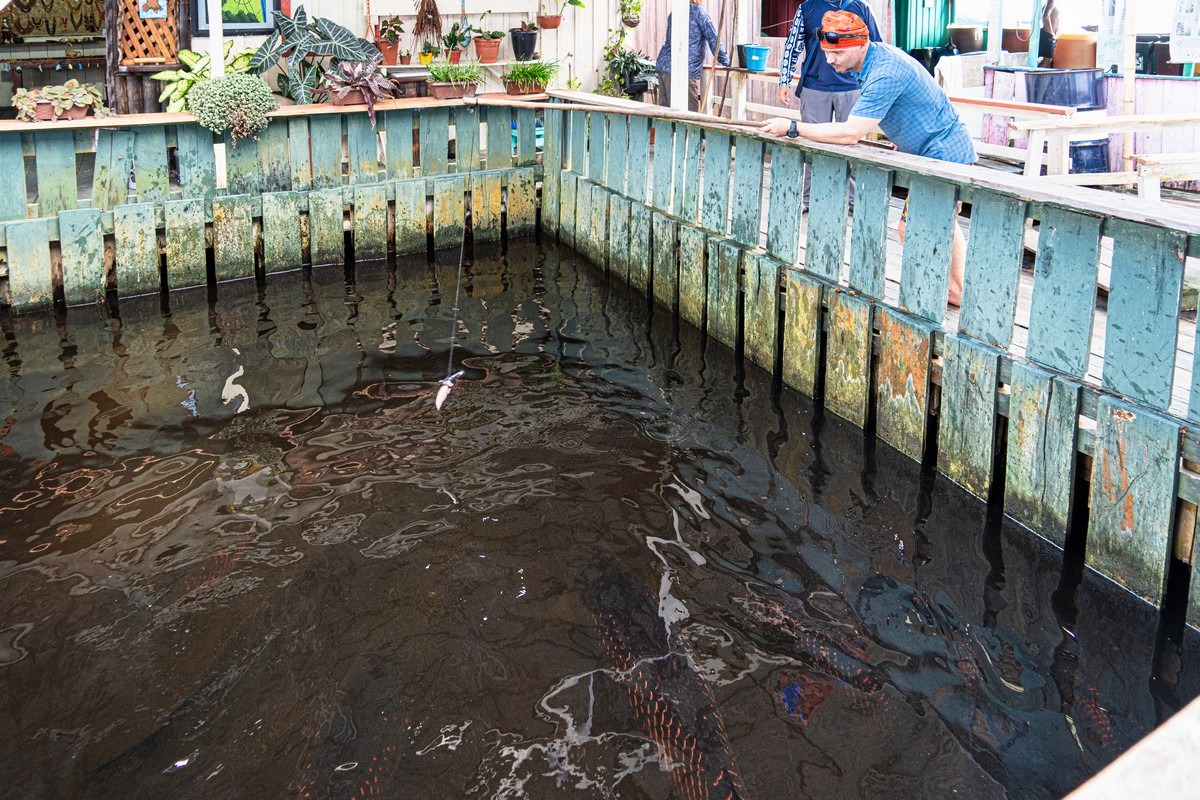
There’s also a small pool where the younger ones splash around. Basically teenage fish:
For a small fee, curious tourists get a rod and some bait so they can feed the fish:
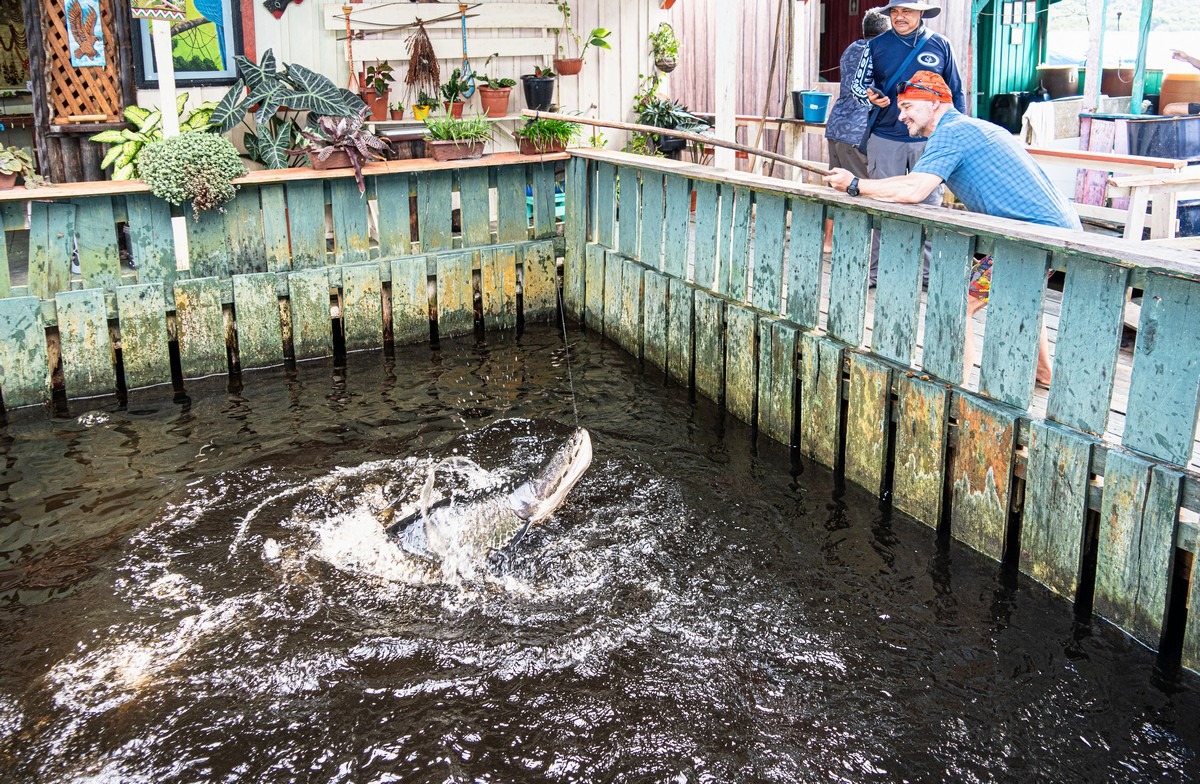
The rod doesn’t have a hook – they just wrap the food around the line. If there were a hook, a tourist of not the most substantial build could end up getting dragged into the pool. Remember – these are gigantic fish (even though they’re mere youngsters), and they pull on the bait with enormous strength. In short – only for the brave!…
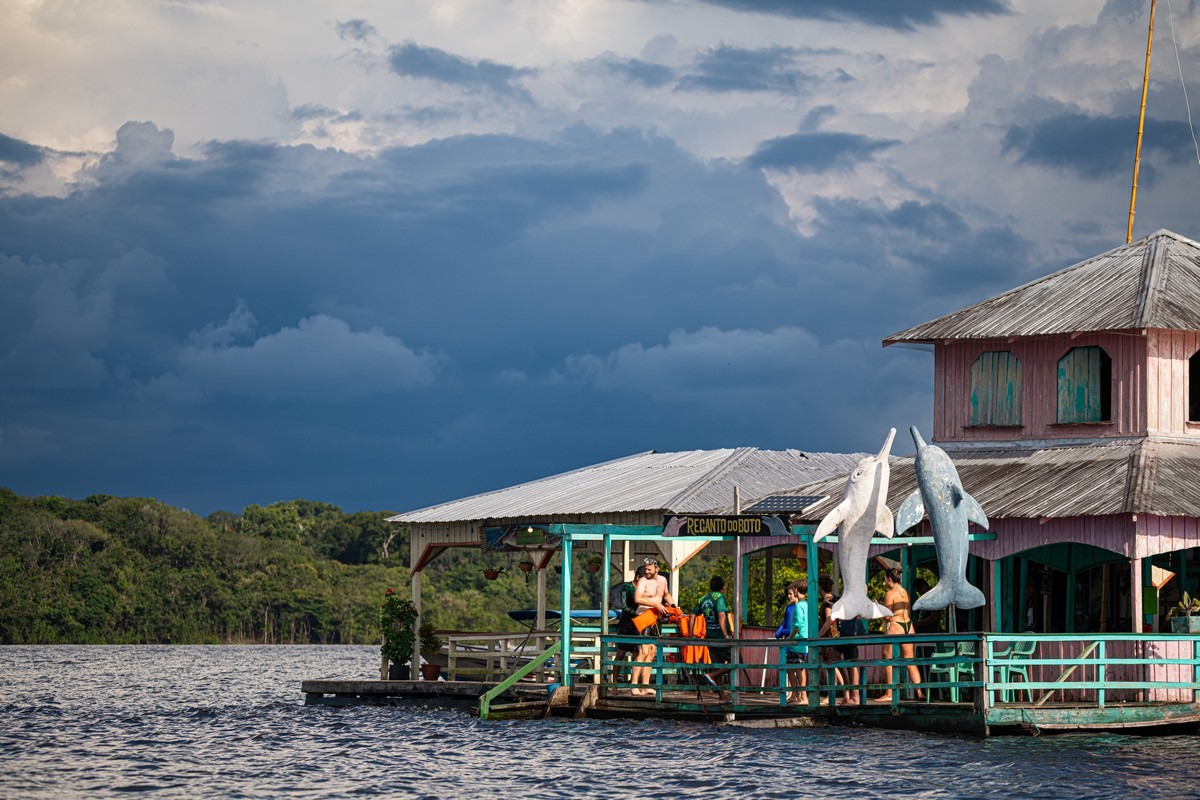
Swimming with pink Amazon river dolphins was probably most fun of all (or perhaps on a par with the monkeys!). There’s a special floating platform set up for this (with pirarucu pools too) plus changing rooms for tourists, and they hand out life jackets and masks for watching the dolphins underwater:
And then – in you go!
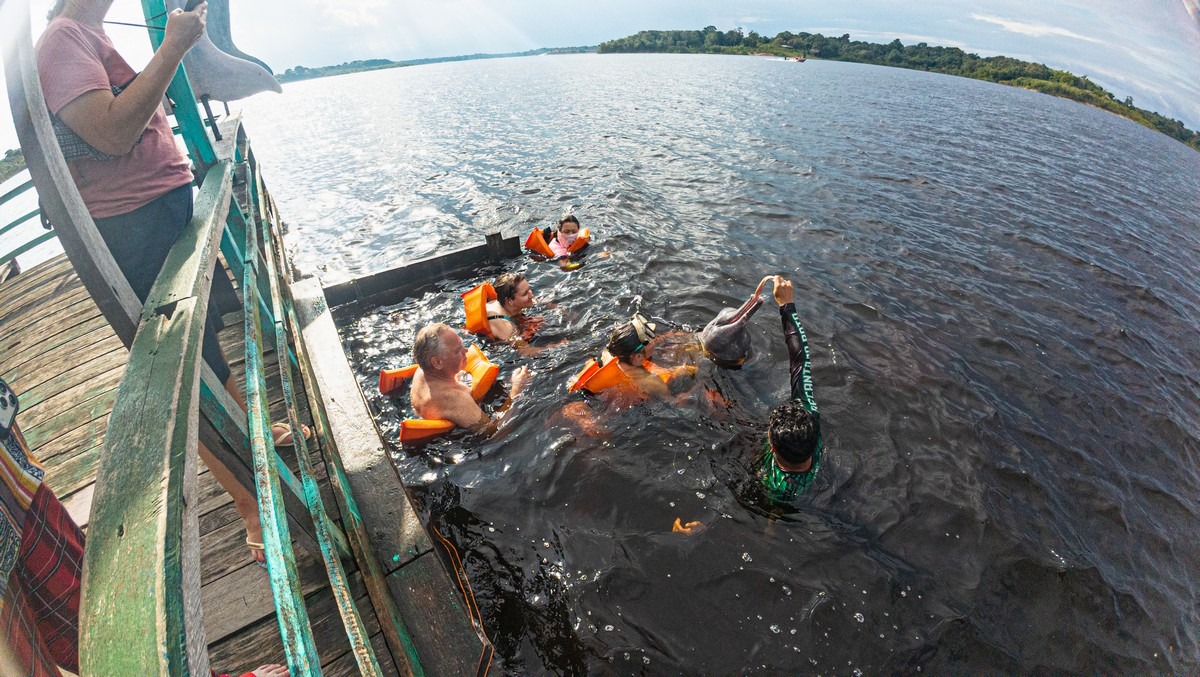
The instructor lures the dolphins in with fish:
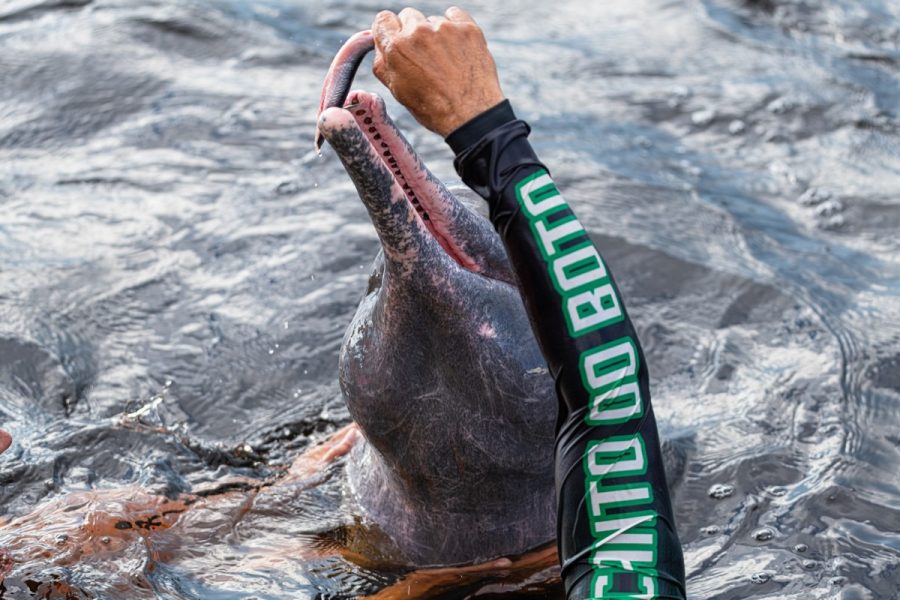
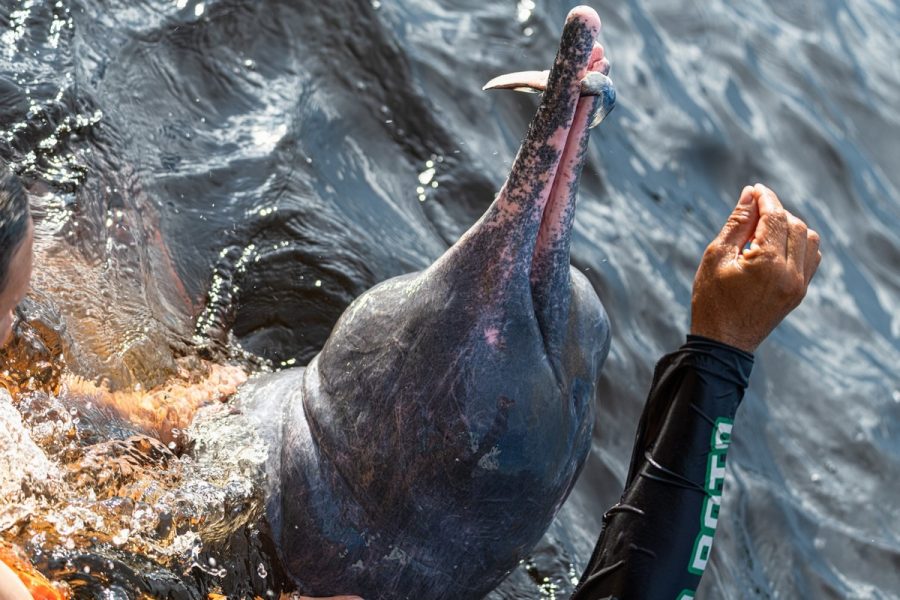
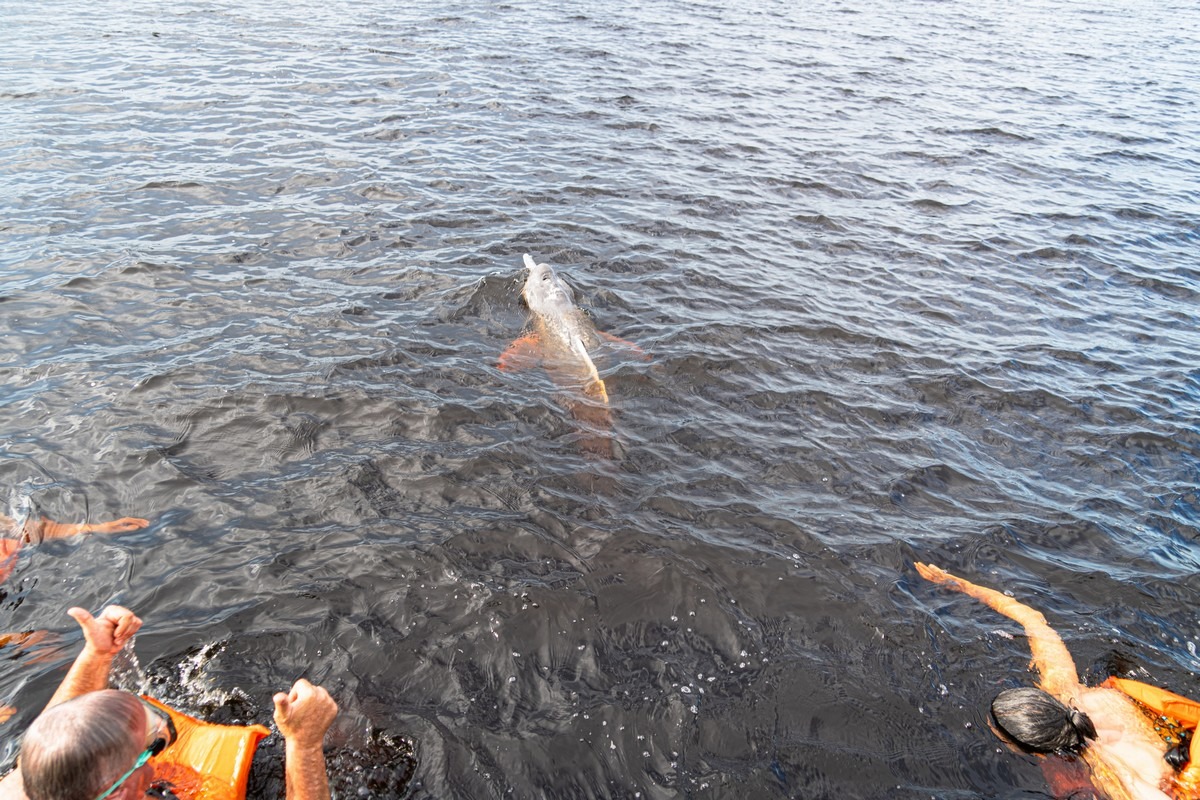
The tourists are allowed to swim around them, pet and stroke them, and watch them underwater…
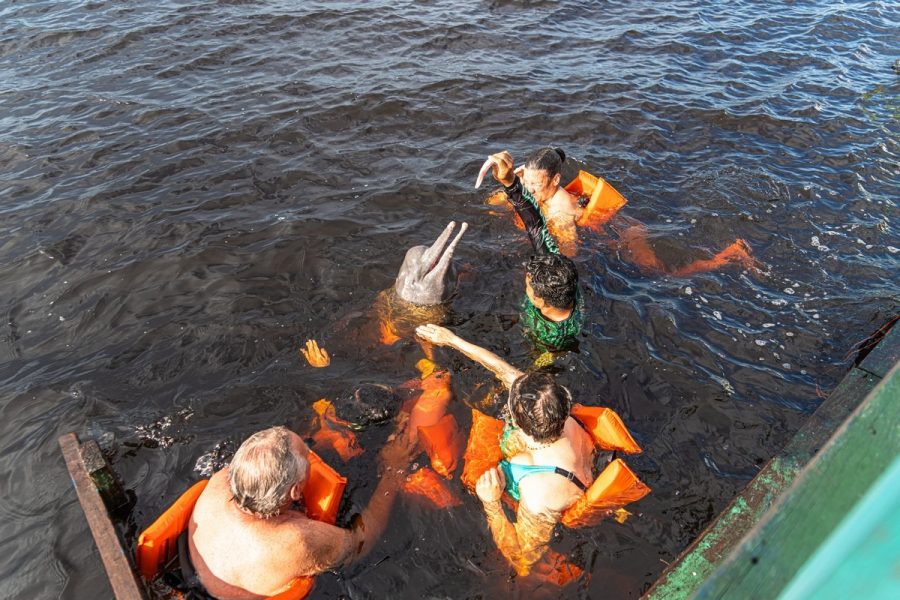
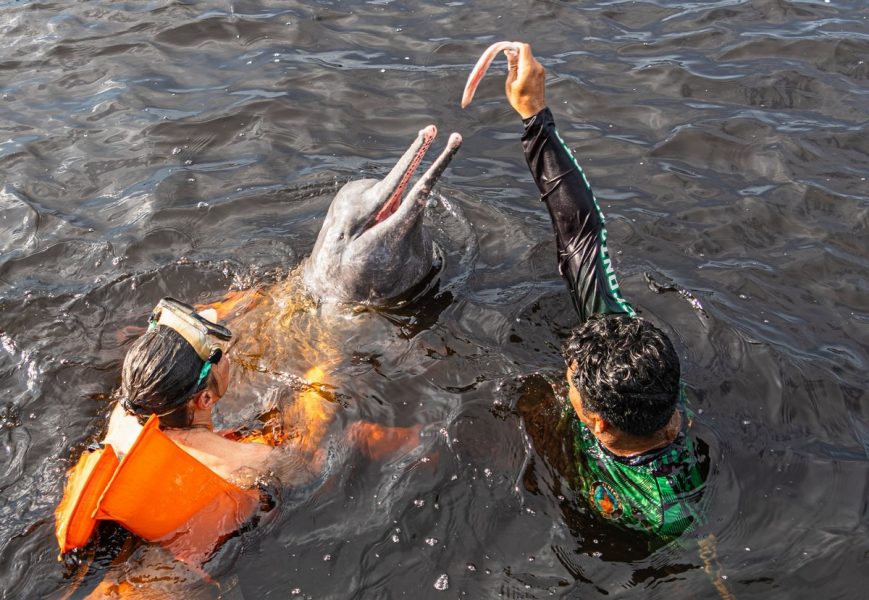
This dolphin has already been fed, but another will be along in a moment. Everybody’s having fun; the dolphins seem to be as well :)
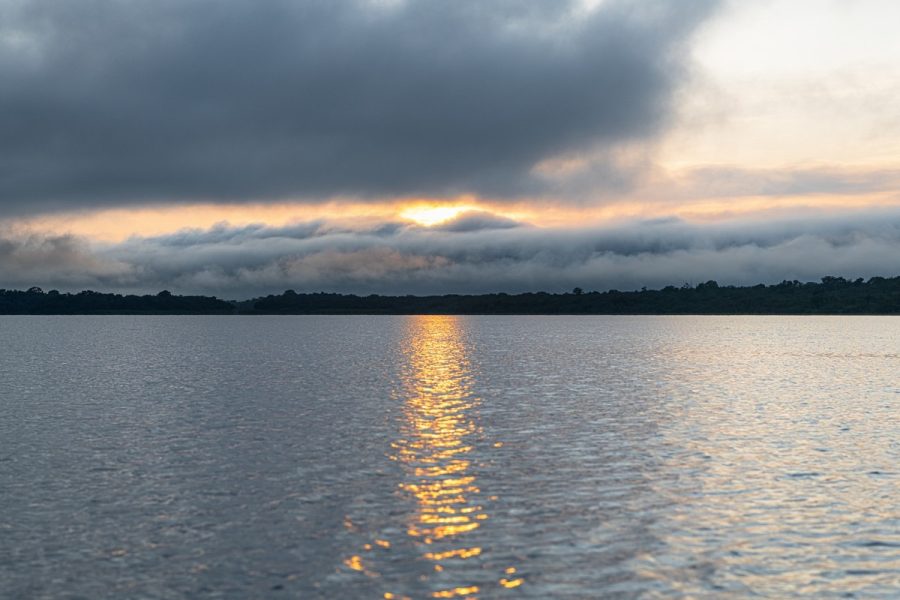
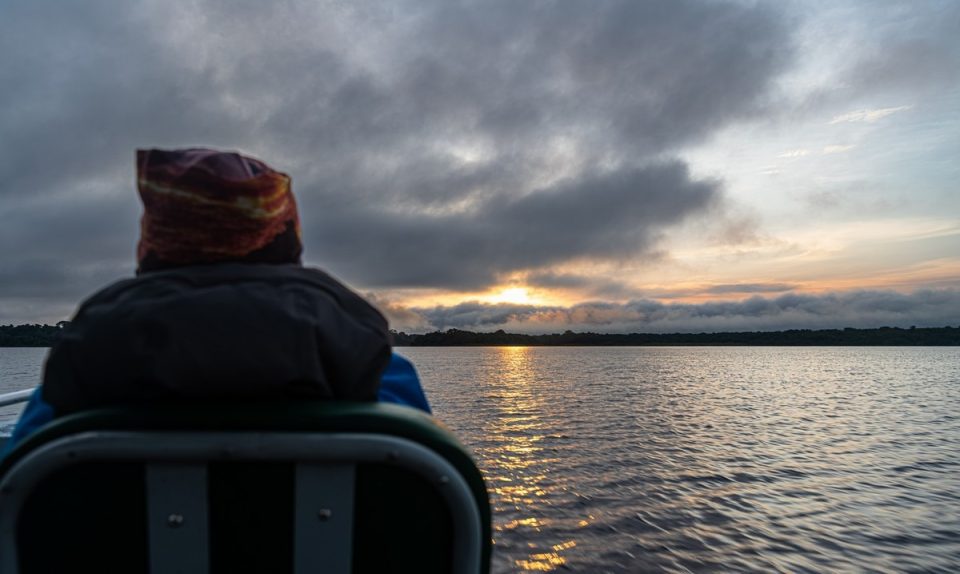
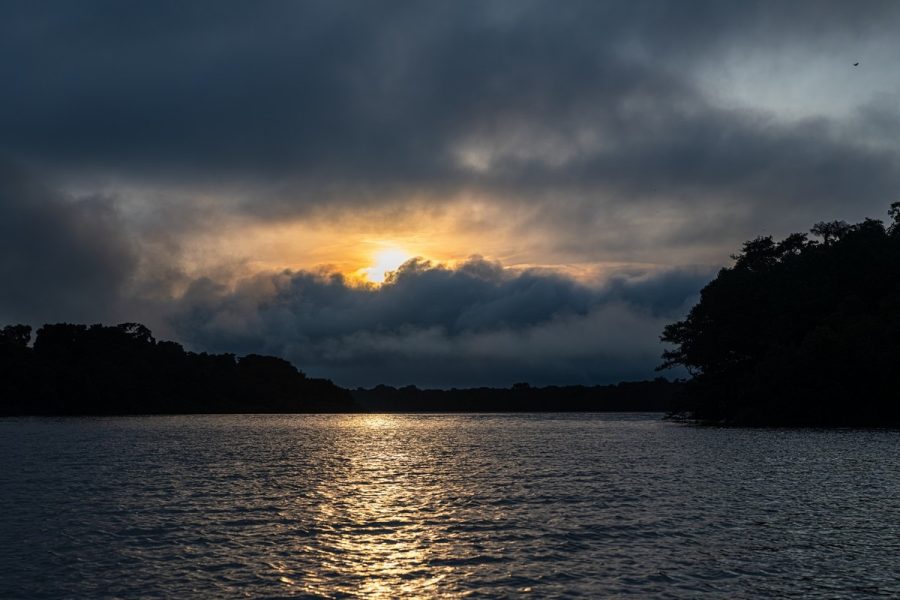
And then came the sunset, and a ride through evening and nighttime anabranches!
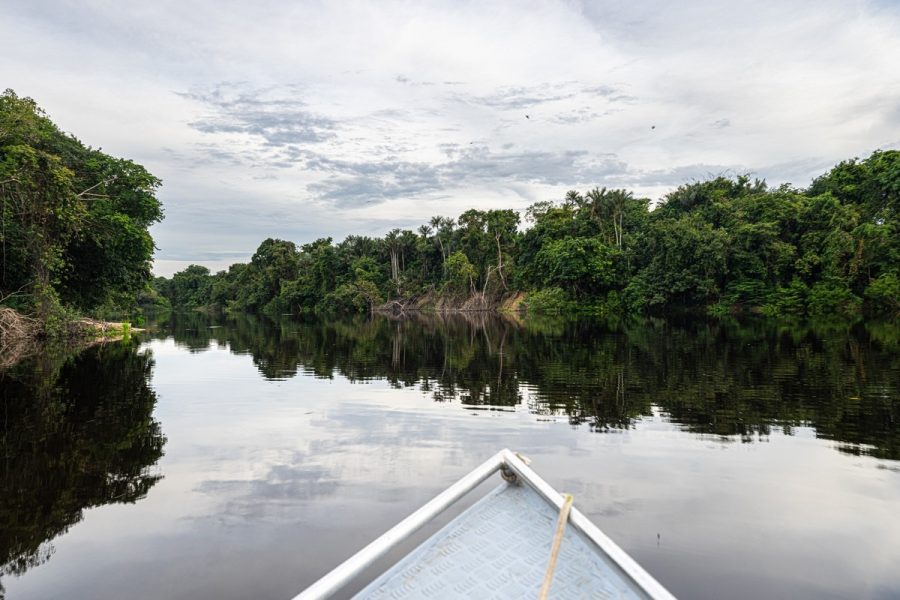
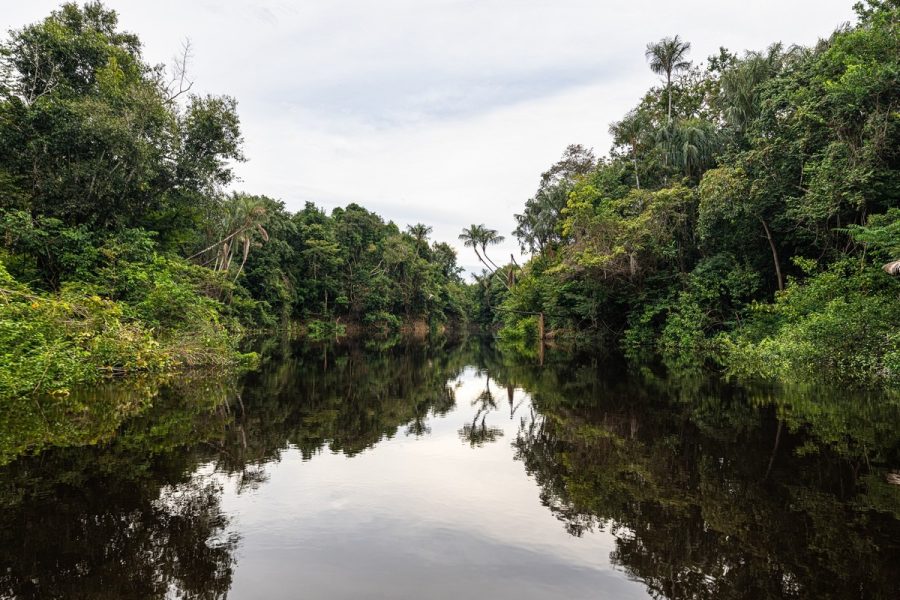
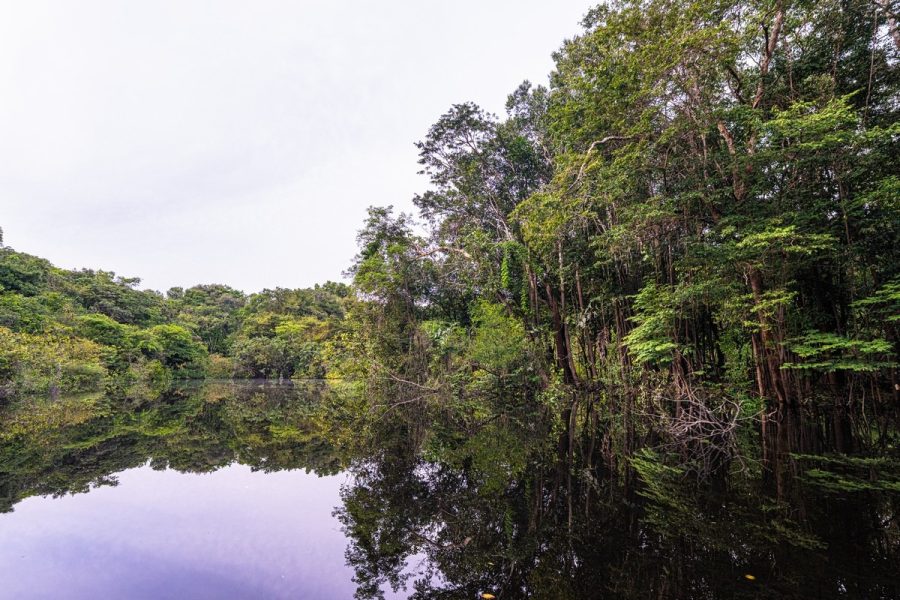
But the sunset was nothing too special:
But once it got completely dark, they took us through backwaters where tropical nocturnal creatures were screeching like mad, and alligators’ eyes were gleaming in the dark. One of the alligators was caught but not photographed, while a small boa wasn’t quite so lucky – it was both caught and photographed:
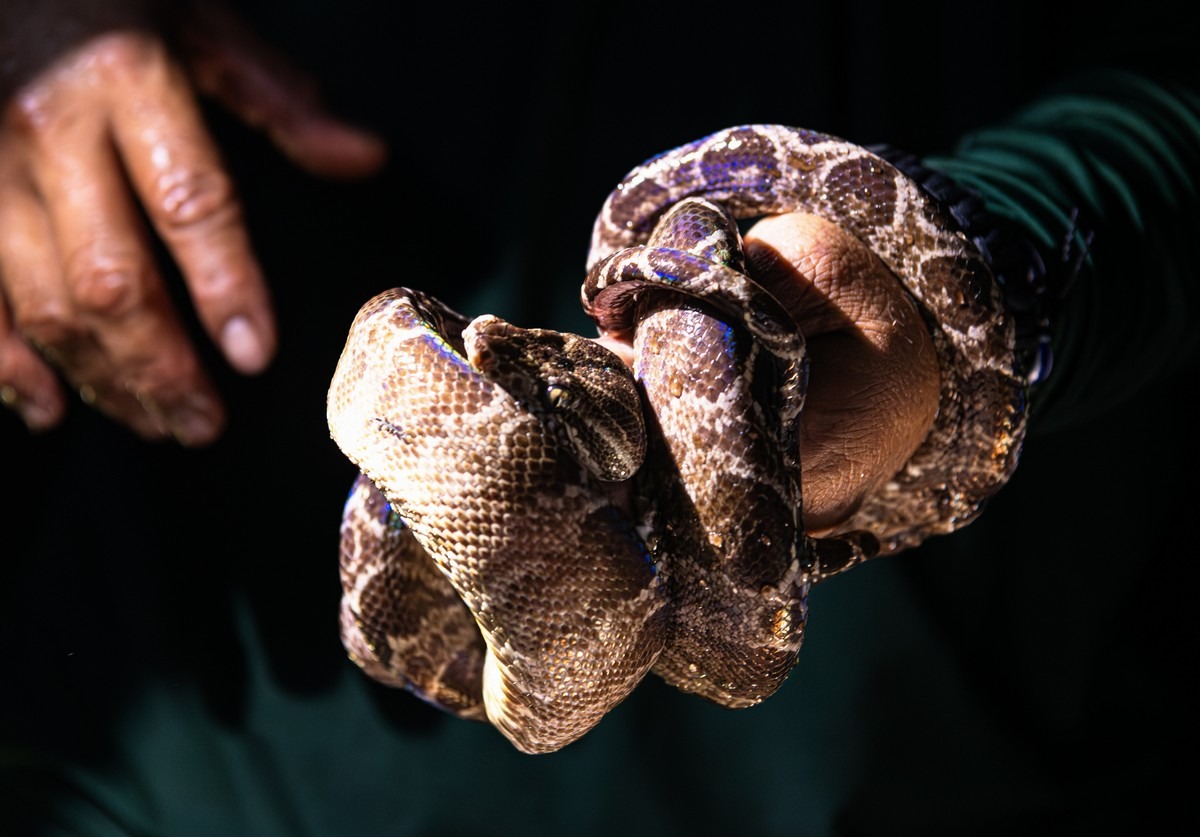
How our guide managed to spot shining snake eyes in complete darkness and from that distance is beyond me.
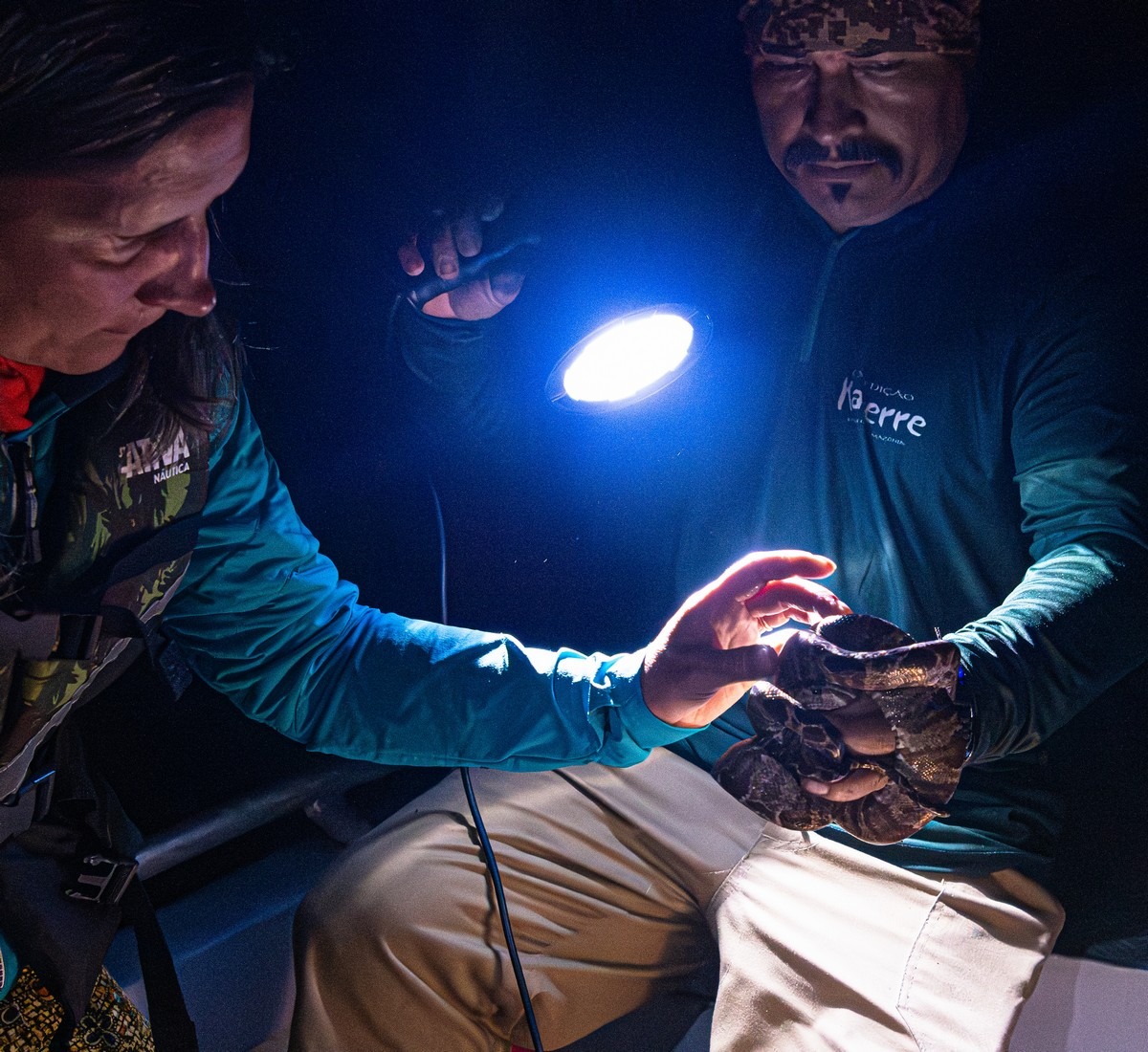
Don’t worry, the reptile was released back into the wild // though not before it was given a double whisky to calm its nerves :)
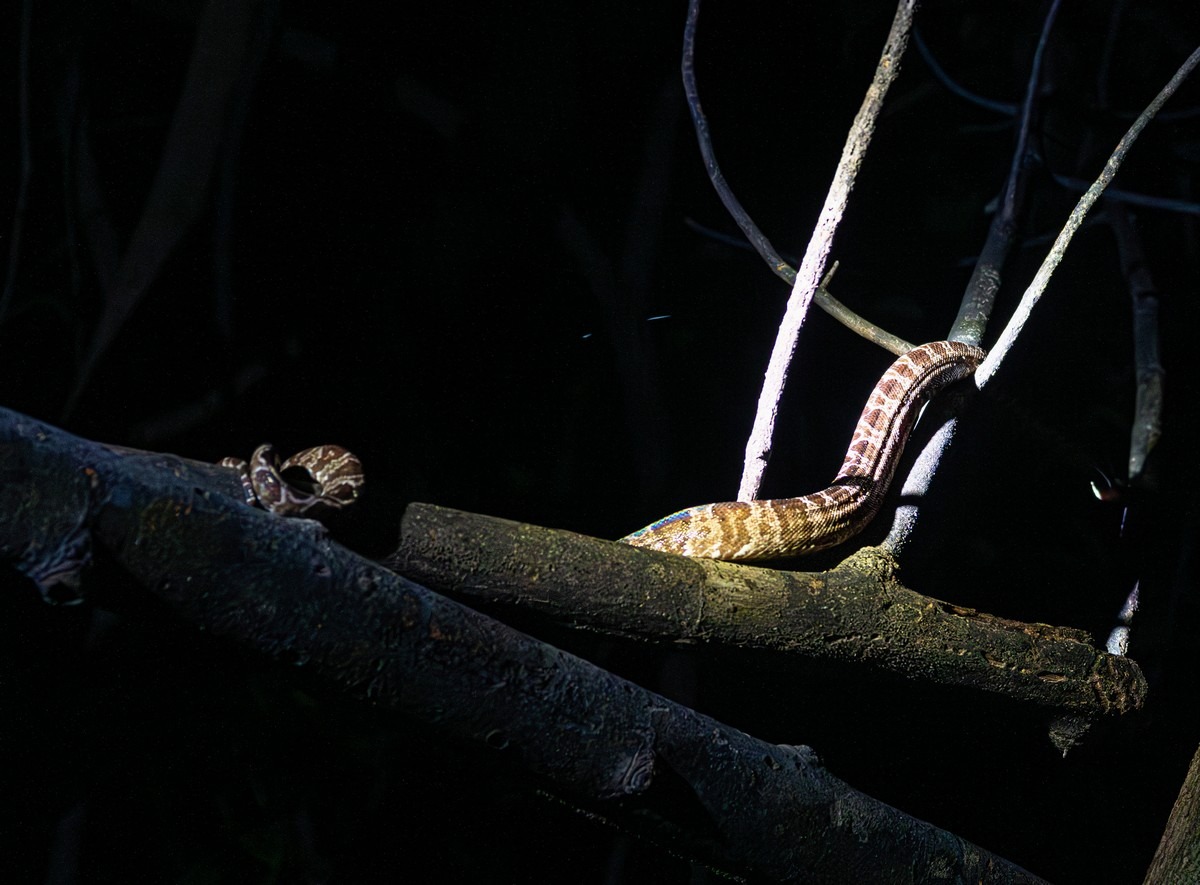
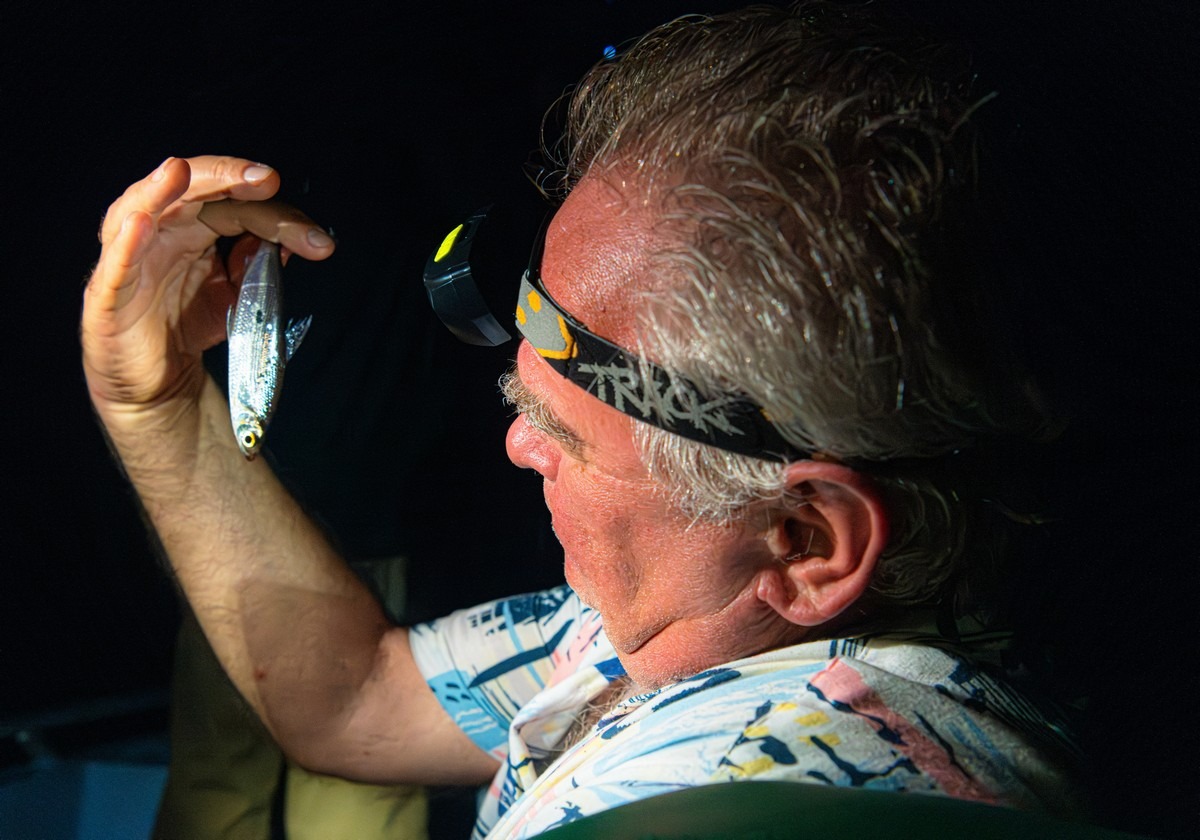
But the funniest part was that something underwater – something obviously big and predatory – spooked the fish, which started leaping out of the water and darting through the air in all directions. One of them flew right at me and smacked into my right side! ->
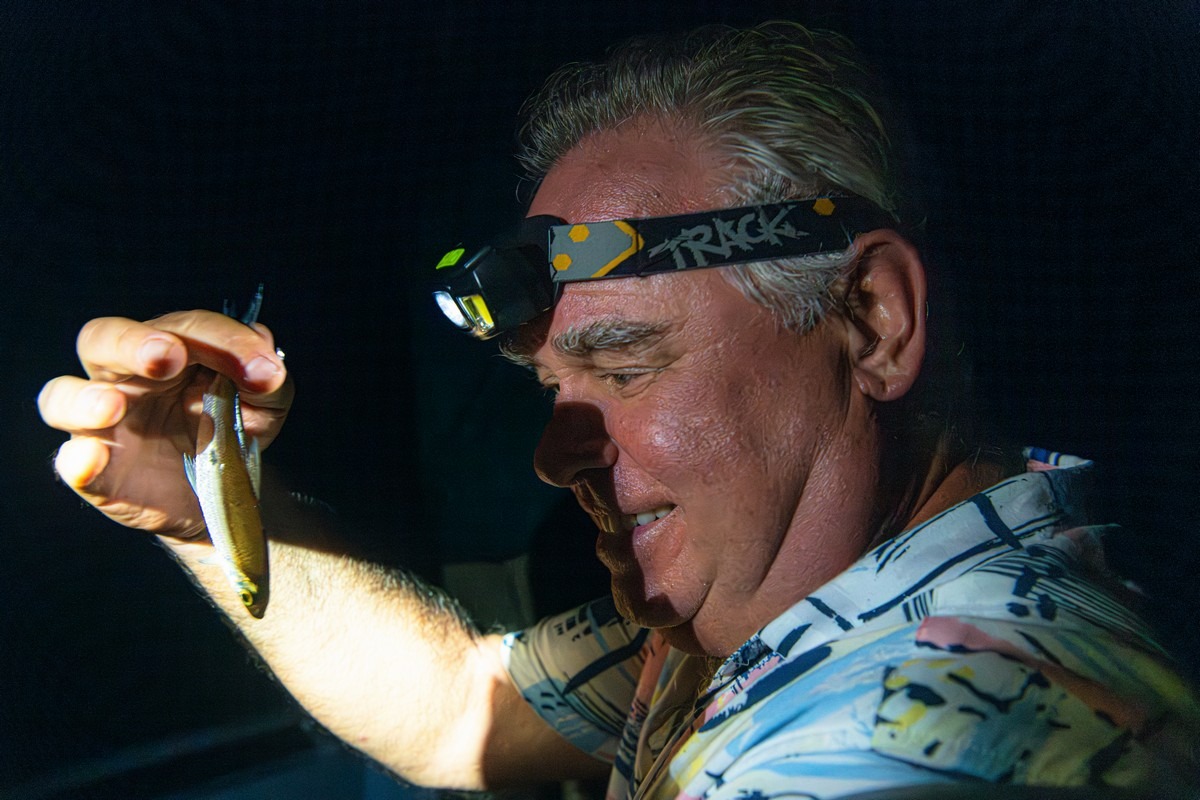
The fish was seized, inspected, talked to, duly recorded for the photo archive, and released back to freedom:
And that was that: Amazonian anabranches – done. And Amazing they were too. Highly recommended!
The best hi-res photos from LatAm-2026 are here.

