
April 1, 2026
Jujuy No. 2: the Mountain of 14 Colors.
// If anyone missed Jujuy №1 – here it is.
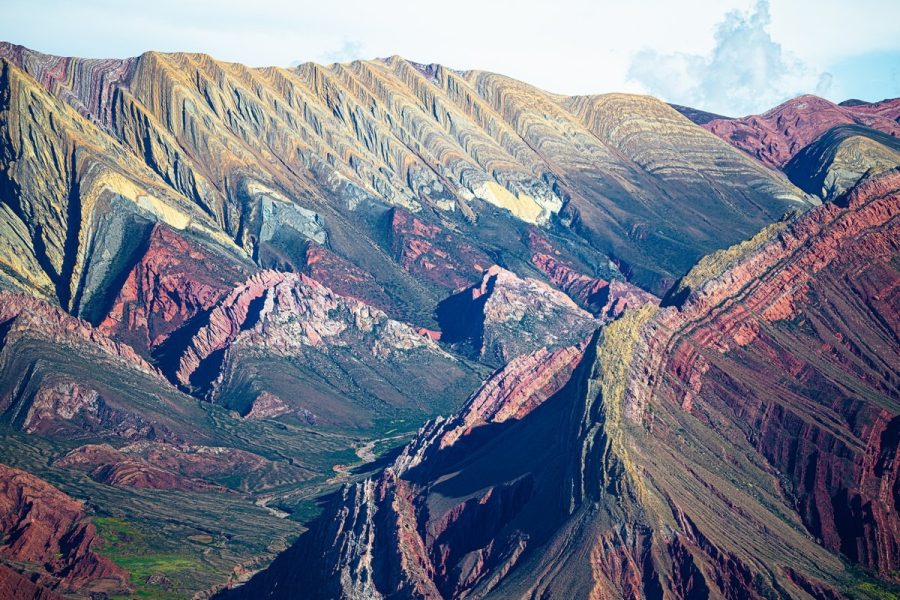
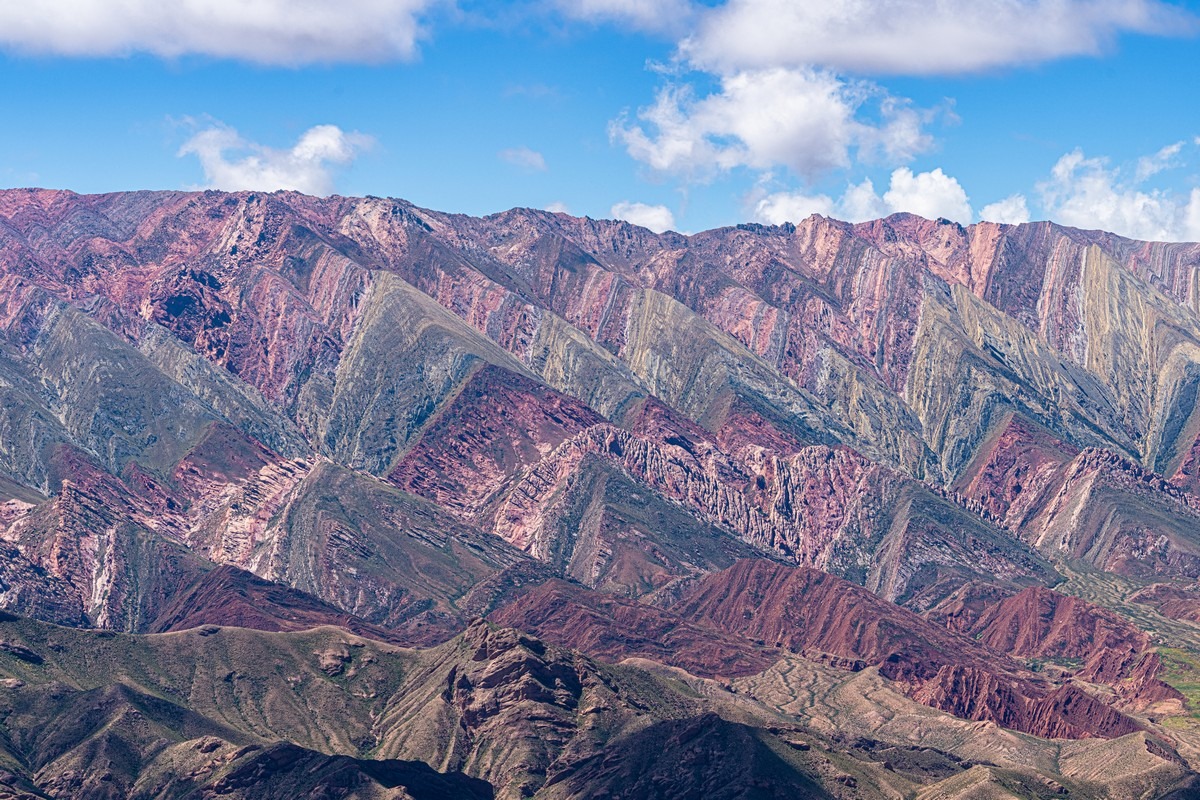
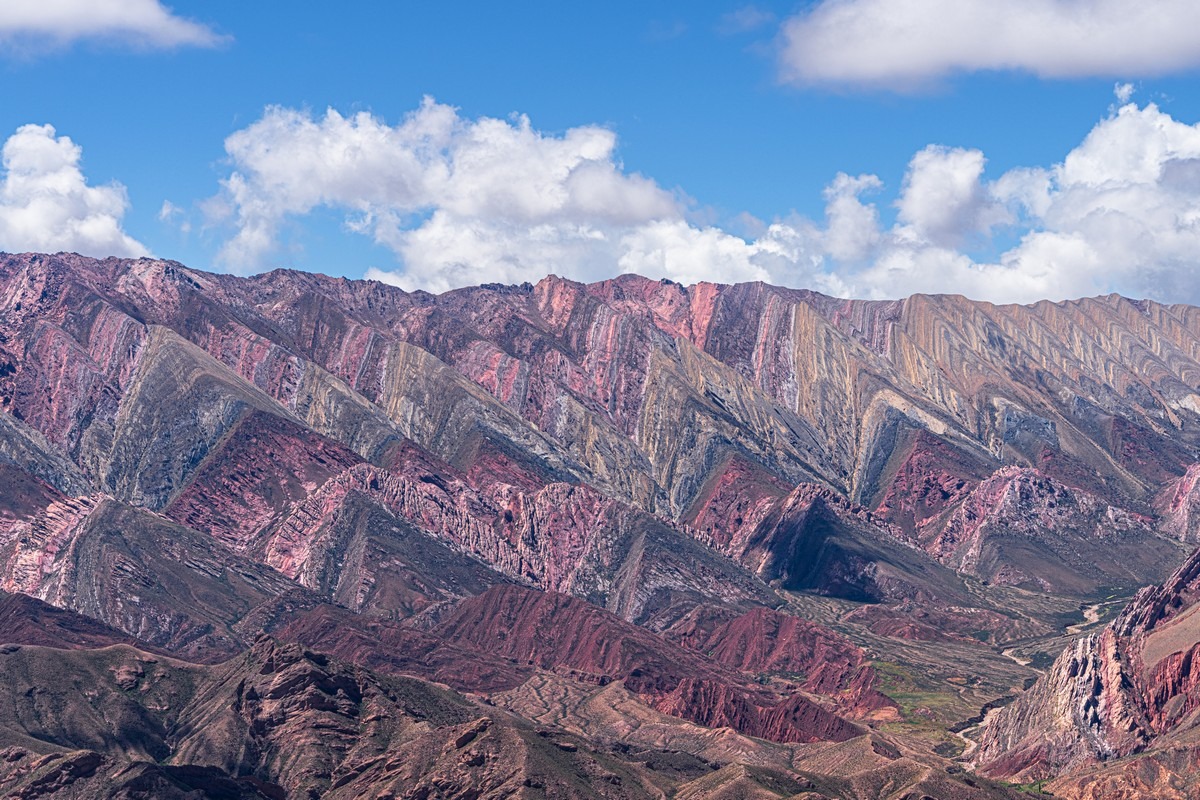
The undisputed highlight of our trip to northern Argentina was the Mountain of 14 Colors, aka the Serranía de Hornocal, in the Quebrada de Humahuaca region – a World Heritage Site. And it (rather – they, but in Spanish the name’s in the singular) really is (are) multicolored! Through some geological miracle, the sedimentary rock here ended up layered in different colors. Then erosion ground some of it down (over millennia) and washed it away, and what we’re left with today is this:
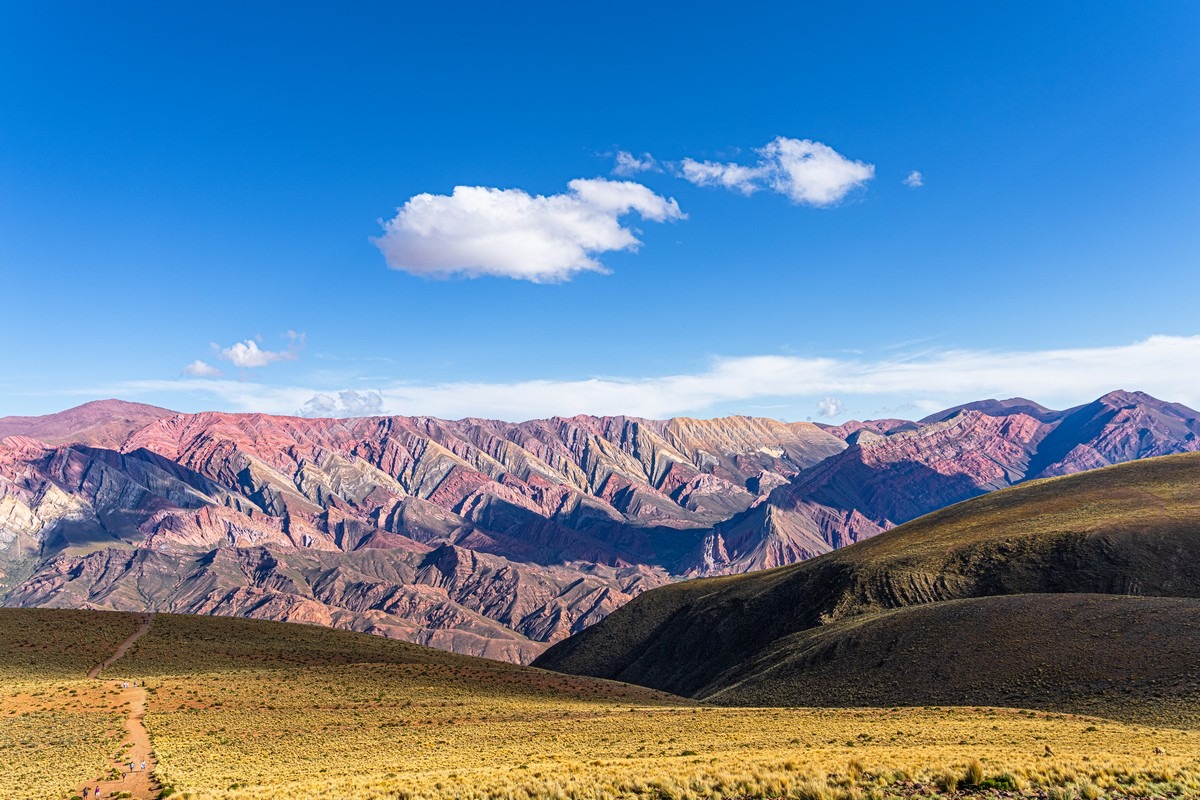
Look closer and it gets even more OMG! ->
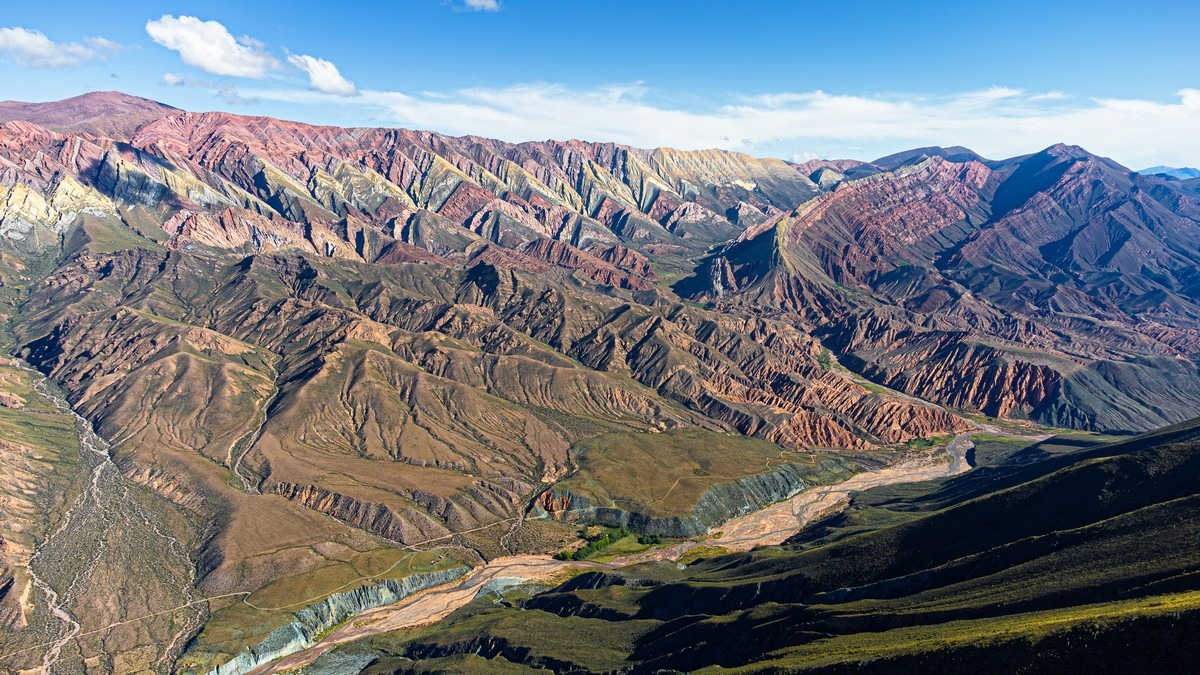
And if you grab the binoculars or crank up the zoom on a telephoto lens – it’s all just fantastic! ->
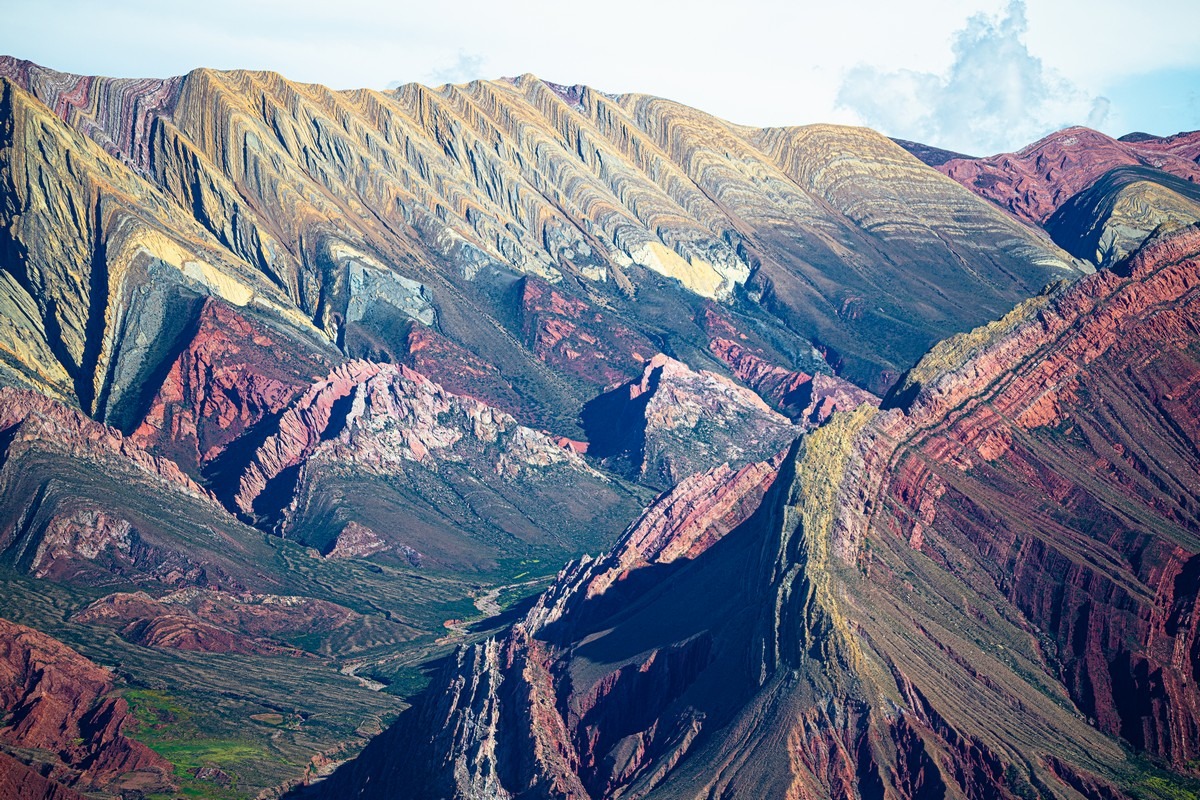
No, folks – this isn’t Photoshopped! This is what it really looks like! ->
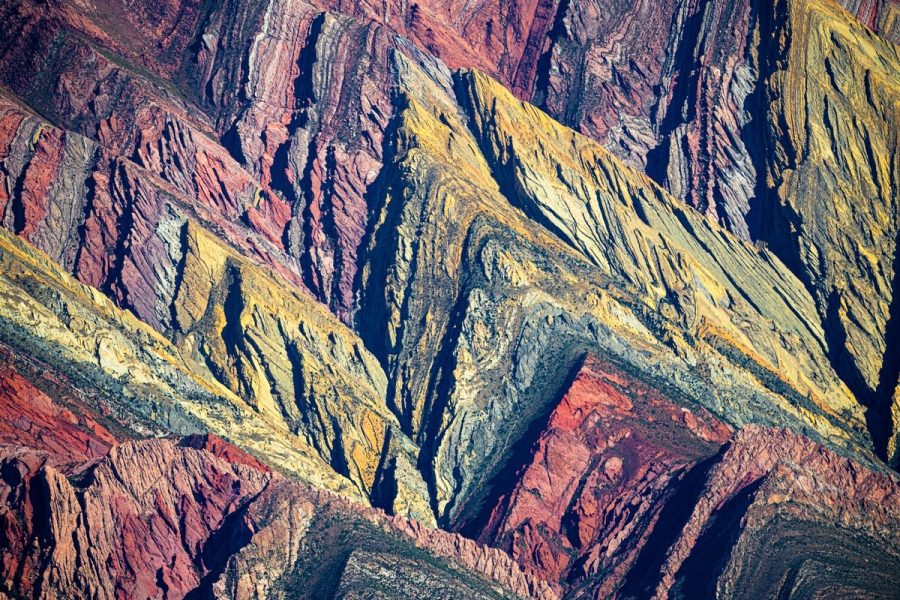
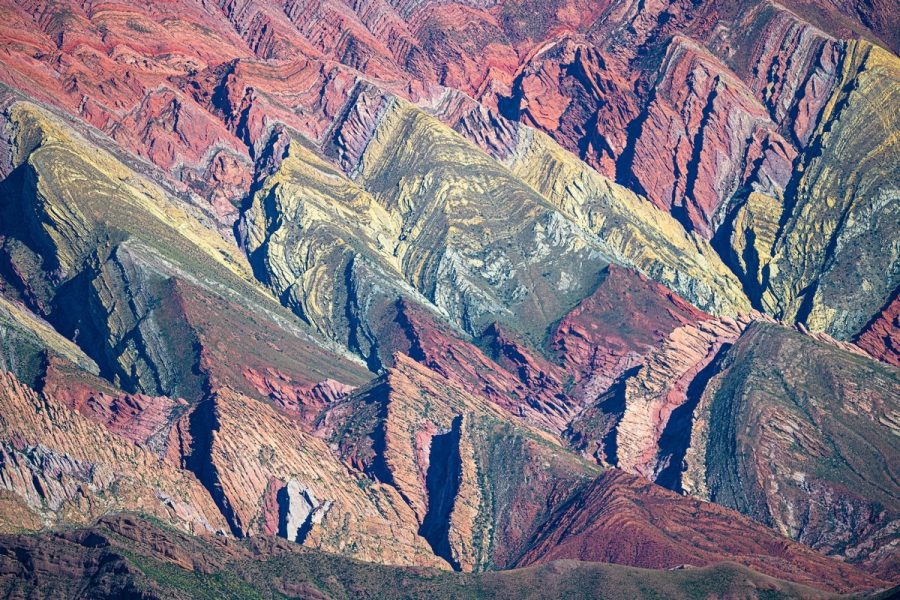
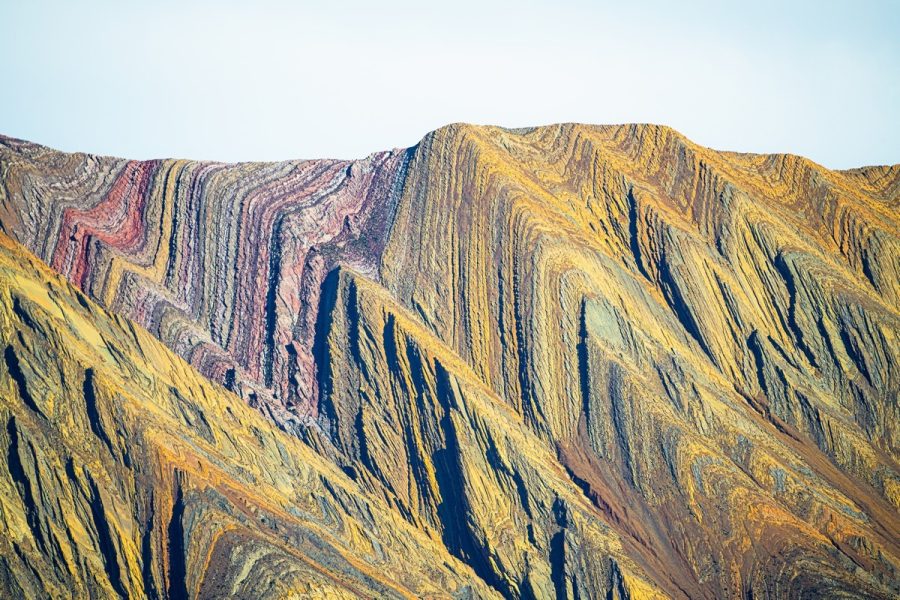
Mother Nature, you really are something else. You create some truly mysterious and unusual stuff. And when viewed from a drone – the colors become all the more strangely fantastic ->
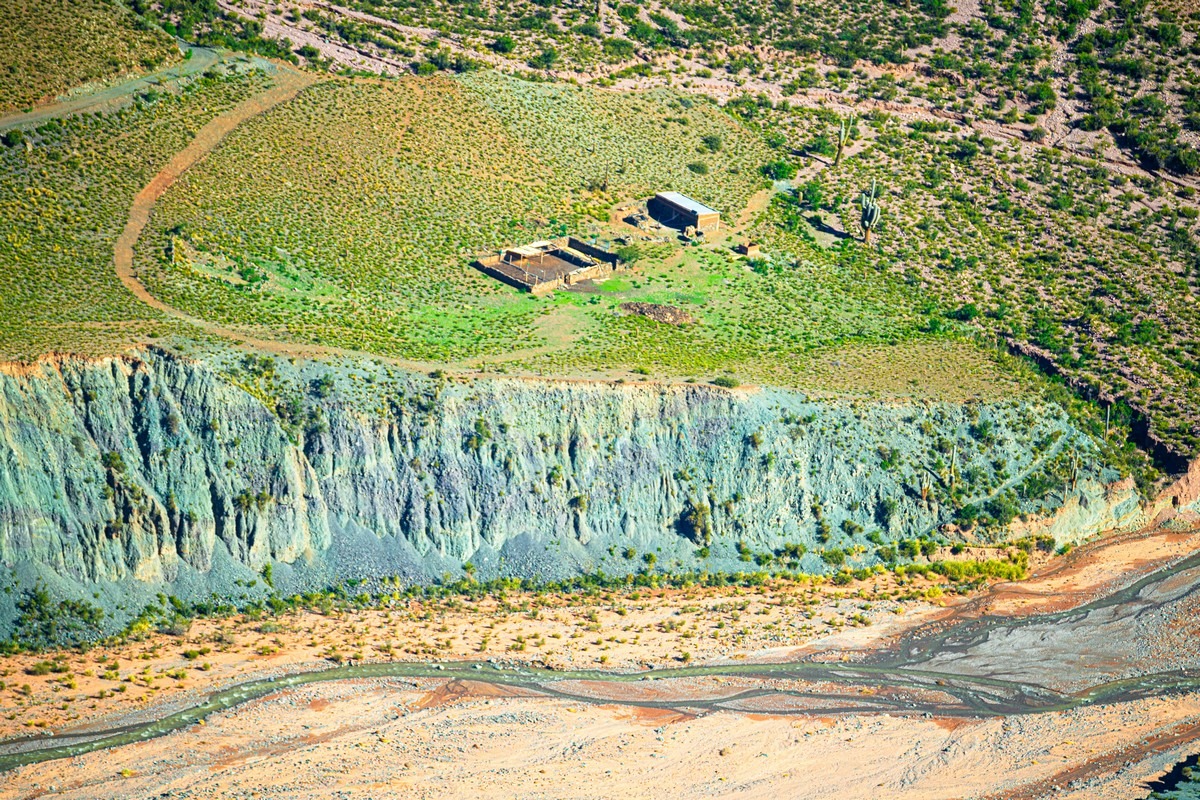
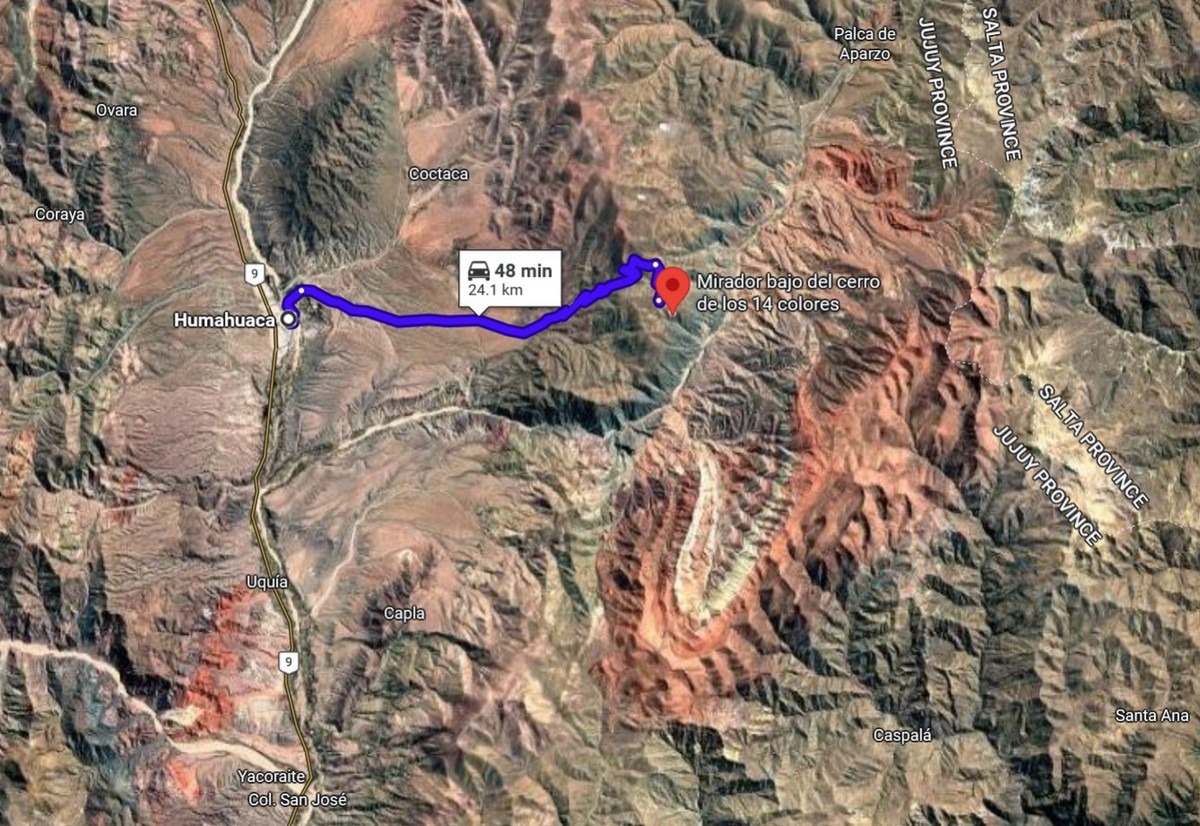
I should probably explain where all this is. Here it is on Google Maps, and here it is, below, duplicated. To remind (or if you zoom out), we’re in northern Argentina, in the province of Jujuy, near the small city of Humahuaca:
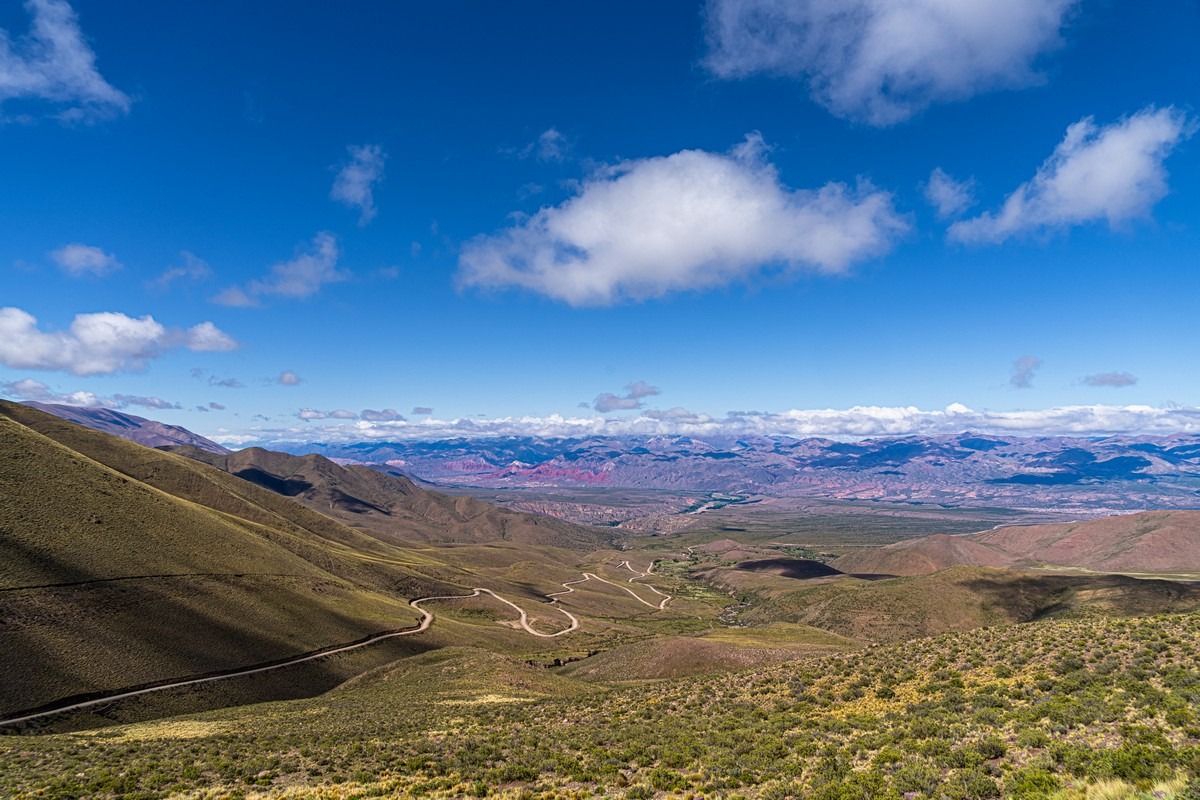
The road there really takes your breath away – in more ways than one. First – literally: you’re already at about 4000 meters above sea-level so you need to move slowly, avoid sudden movements, and breathe deeply); second – figuratively: the scenery is just oh-my-grandiouse-&-gorgeous! ->
Looking back – there’s Ruta 9 – the road we took from Salta through the jungle to get up here in the north:
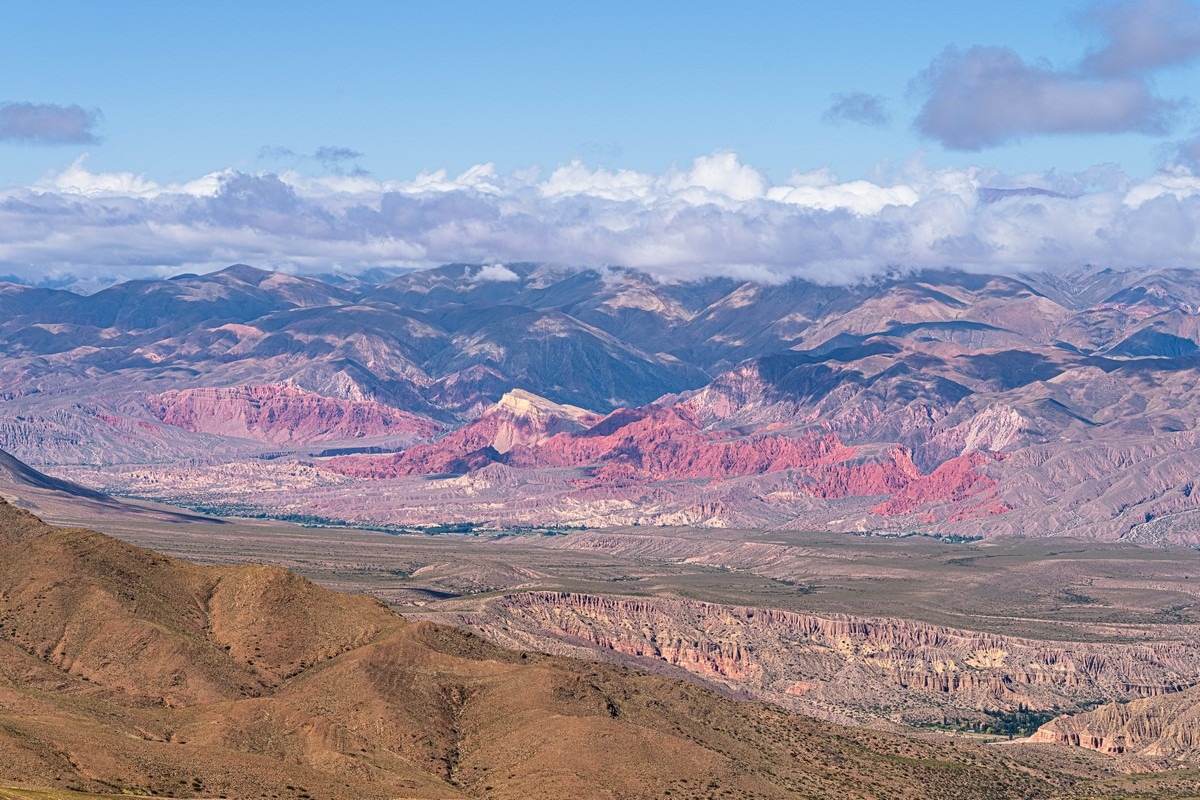
But we need to head in the opposite direction – to where the colors get even brighter. And here we are at the entrance to the Quebrada de Humahuaca:
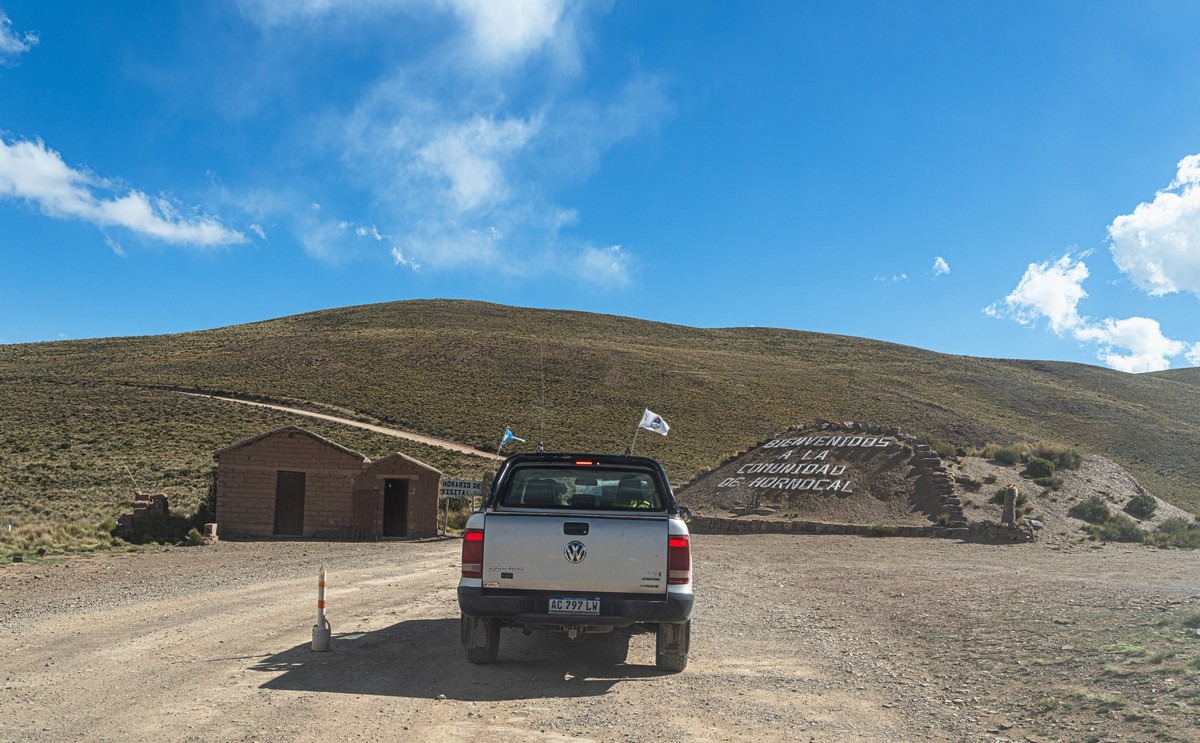
After paying the mandatory entrance fee, tourists are brought to this here viewing platform from where you can see the whole panorama:
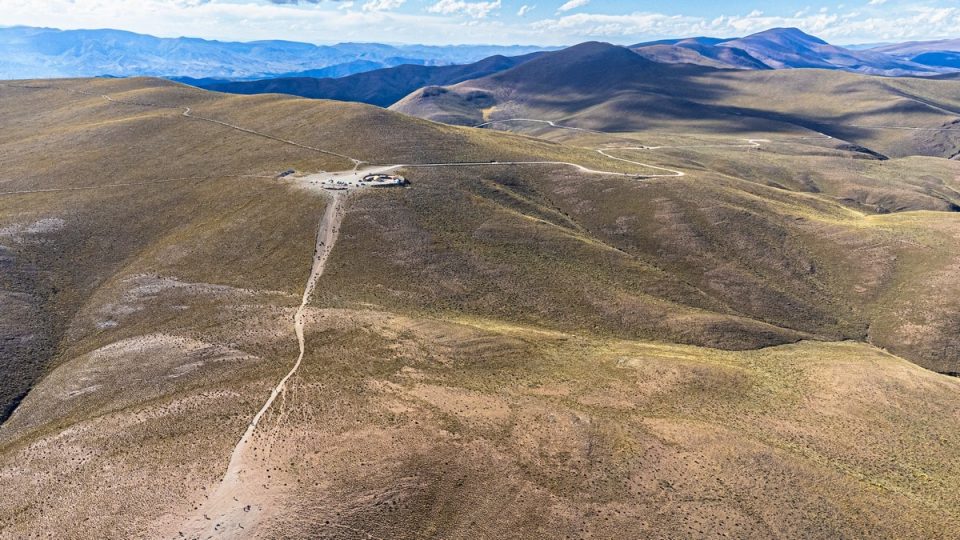
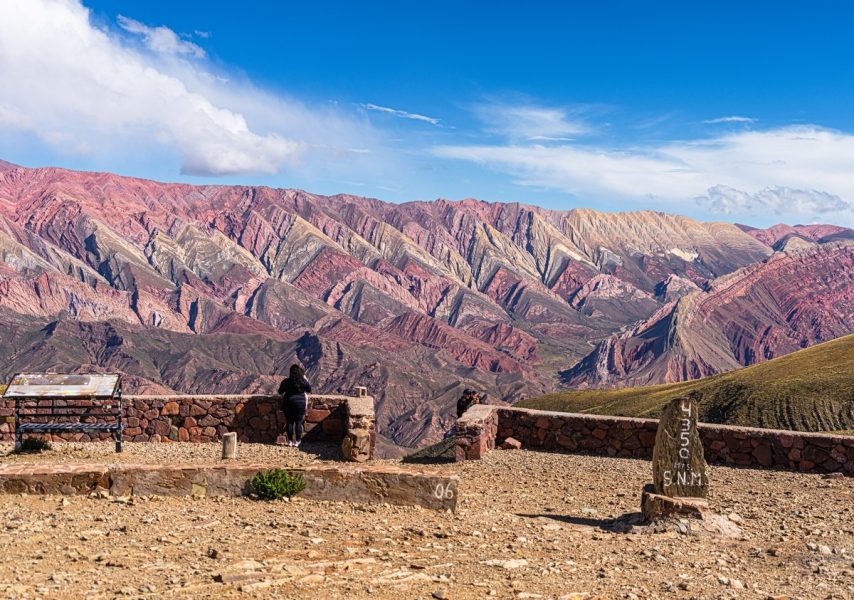
But you really want to walk closer (there’s no road beyond this point) to see all this splendor up close. Walking here is tough though: the altitude here is now almost 4350 meters above sea-level! And not at the summit of the surrounding peaks – just where we’re strolling around:
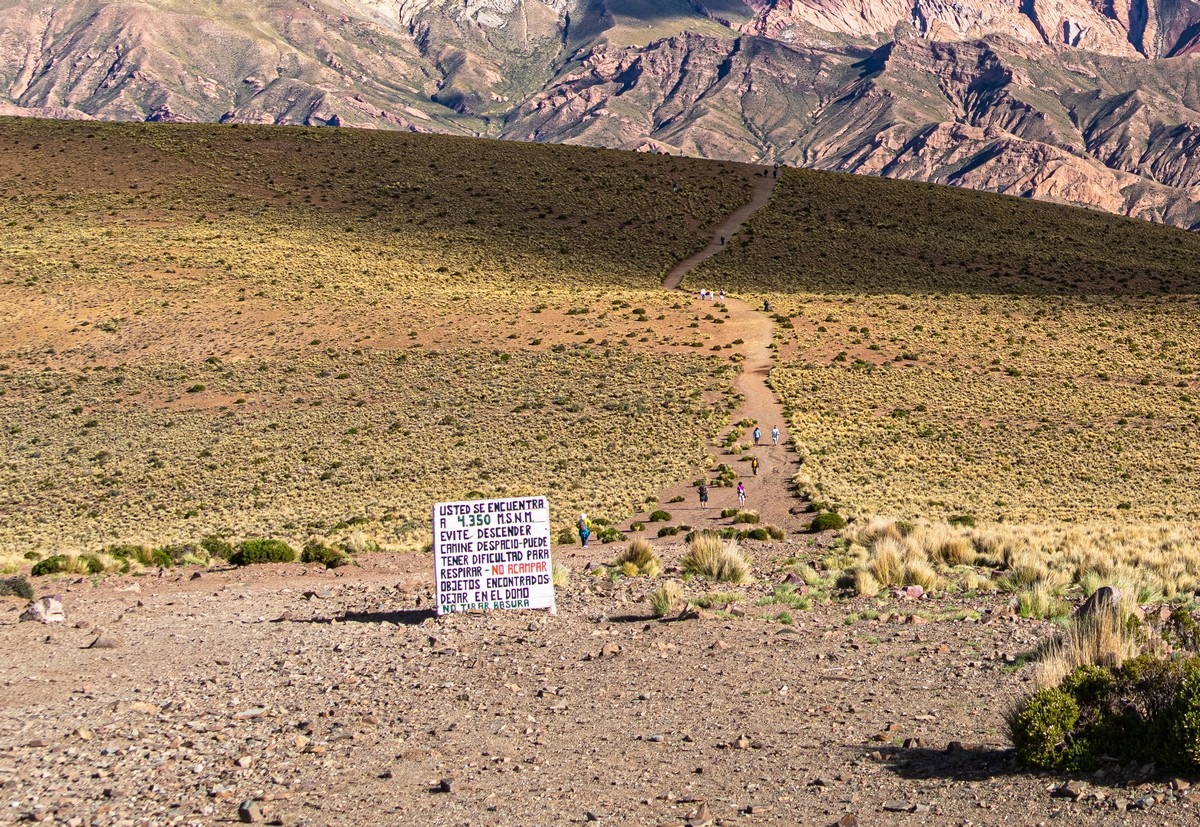
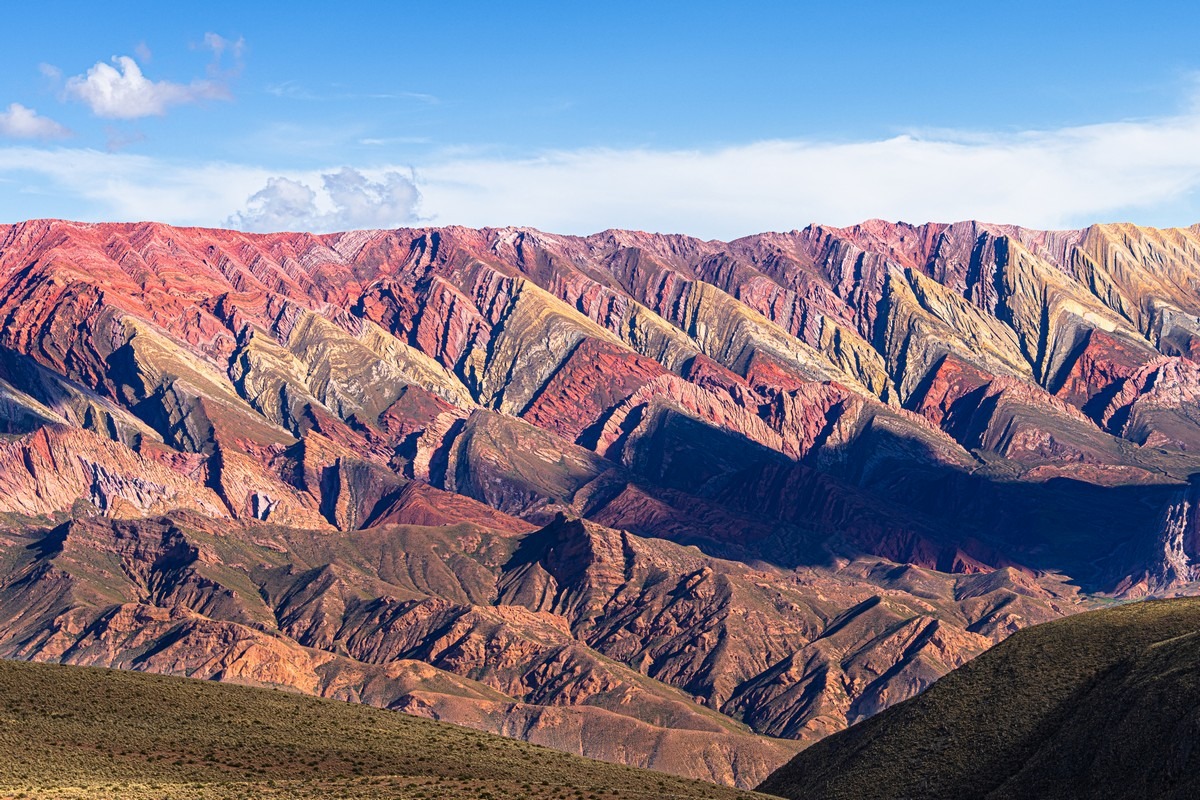
The most important thing: it’s best to come in the evening, since this whole “display” faces west. In the morning and afternoon sunlight washes out the colors and makes them look dull. Accordingly, I highly recommend an evening visit!
However, our sybarite of a guide decided that a lavish lunch at a restaurant with its own vineyards and wine was more important than taking in the jaw-dropping scenery (like – who’s going to hike around at 4400 meters after several glasses of wine?). As a result, we went to see all this beauty in the morning. Big mistake!
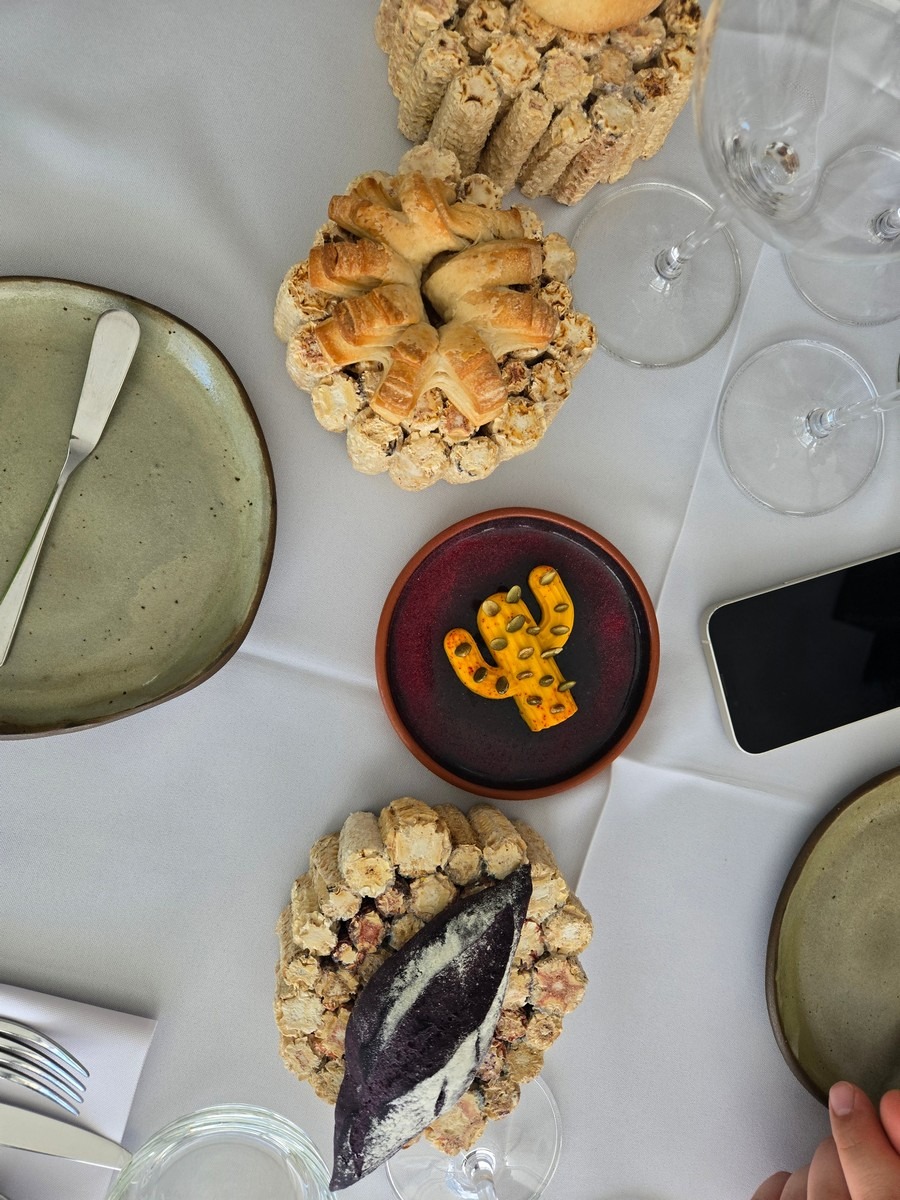
So instead of admiring bizarre natural wonders and the mountain colors at peak lighting, we spent over two hours “enjoying” fancy fusion cuisine. Sure, it was tasty. Sure, it was posh. But, for %*&#’s sake, that’s not what we came for! Sorry – it’s been two months already and I’m still worked up about it!
Not that it was the restaurant’s fault – so here’s a plug, since it was really good.
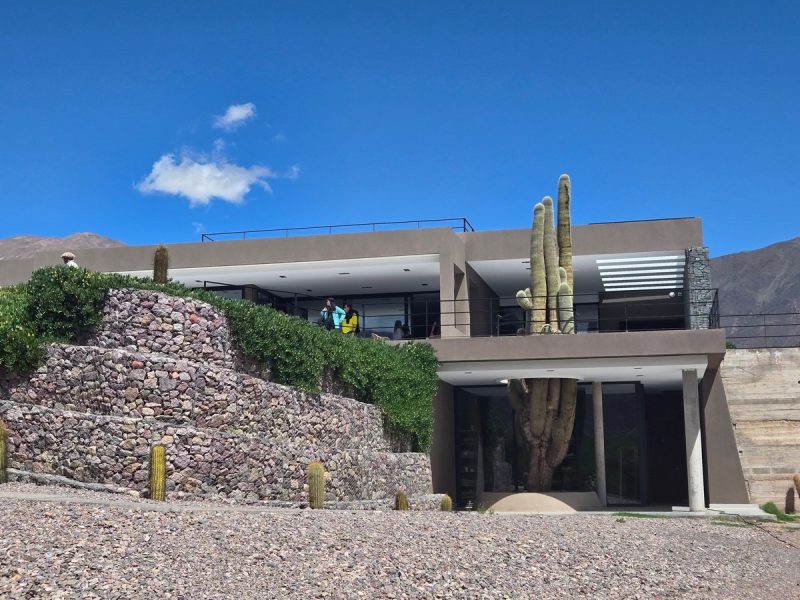
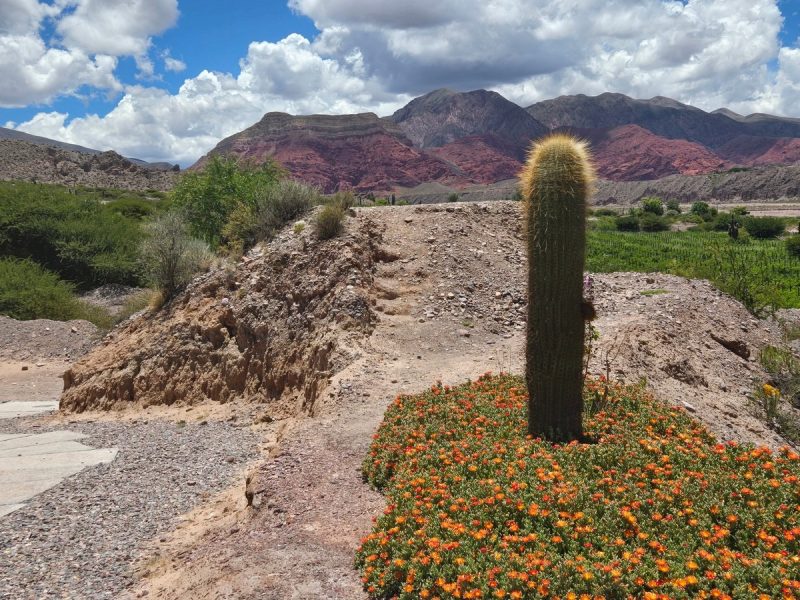
But when I’m in turbo-tourist mode, Michelin-style presentations just don’t do it for me:
So what did we do? Simple: we just went back the following evening since, fortunately, we had enough time in our schedule. And we got to see all that beauty – the beauty we came for – in the evening sun. And the difference is striking!
Here are photos from the same spot – morning vs. evening.
Morning:
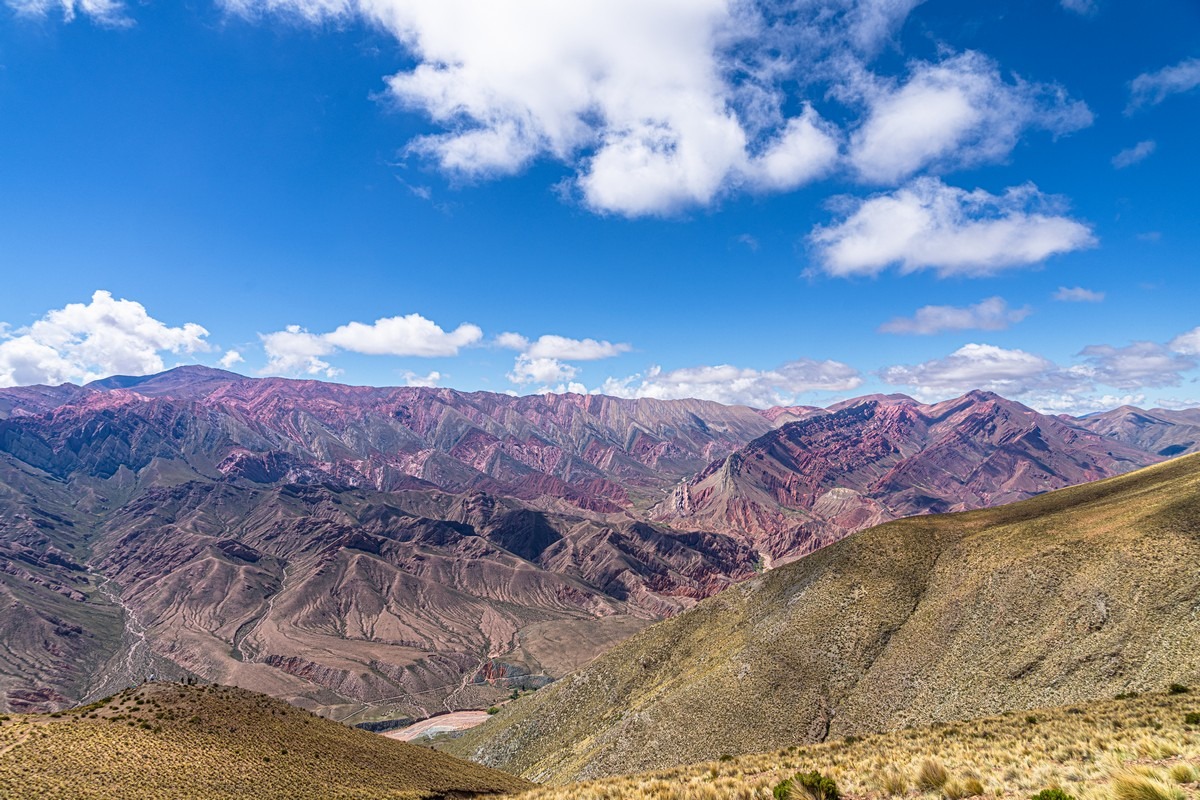
Evening:
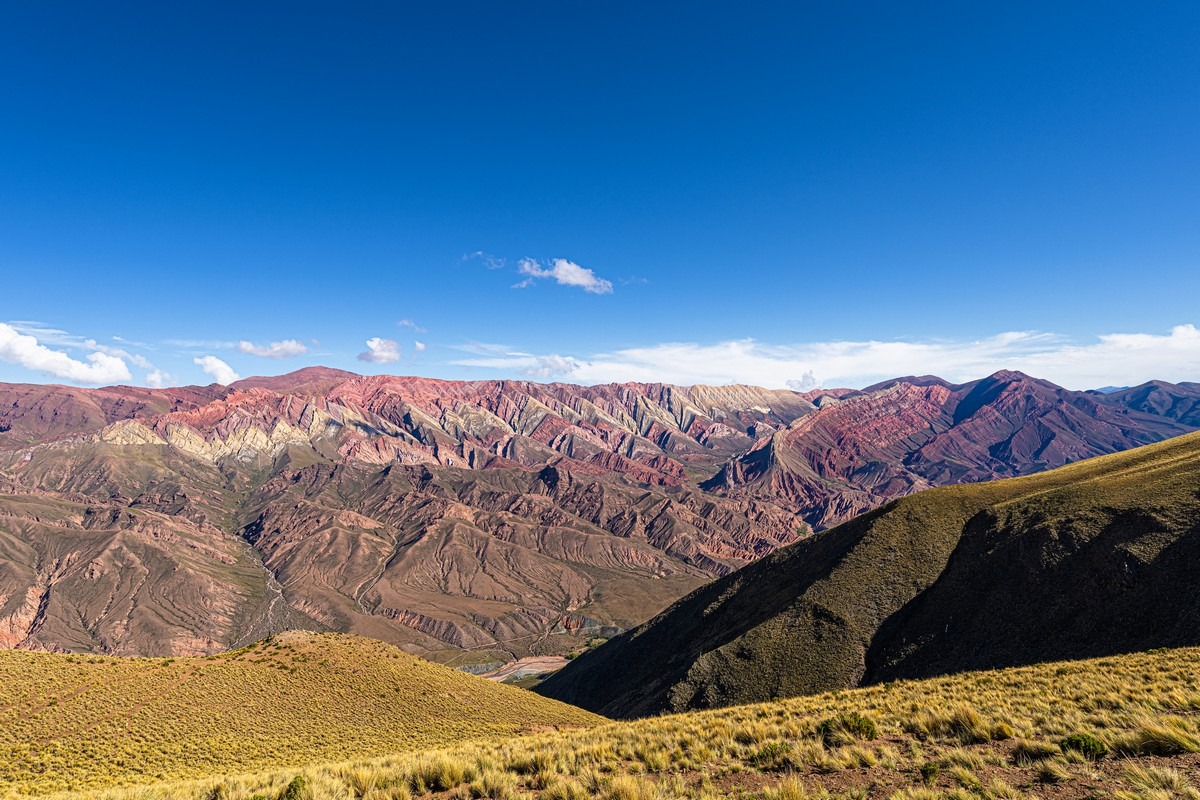
See the difference? And once more…
Morning:
Evening:
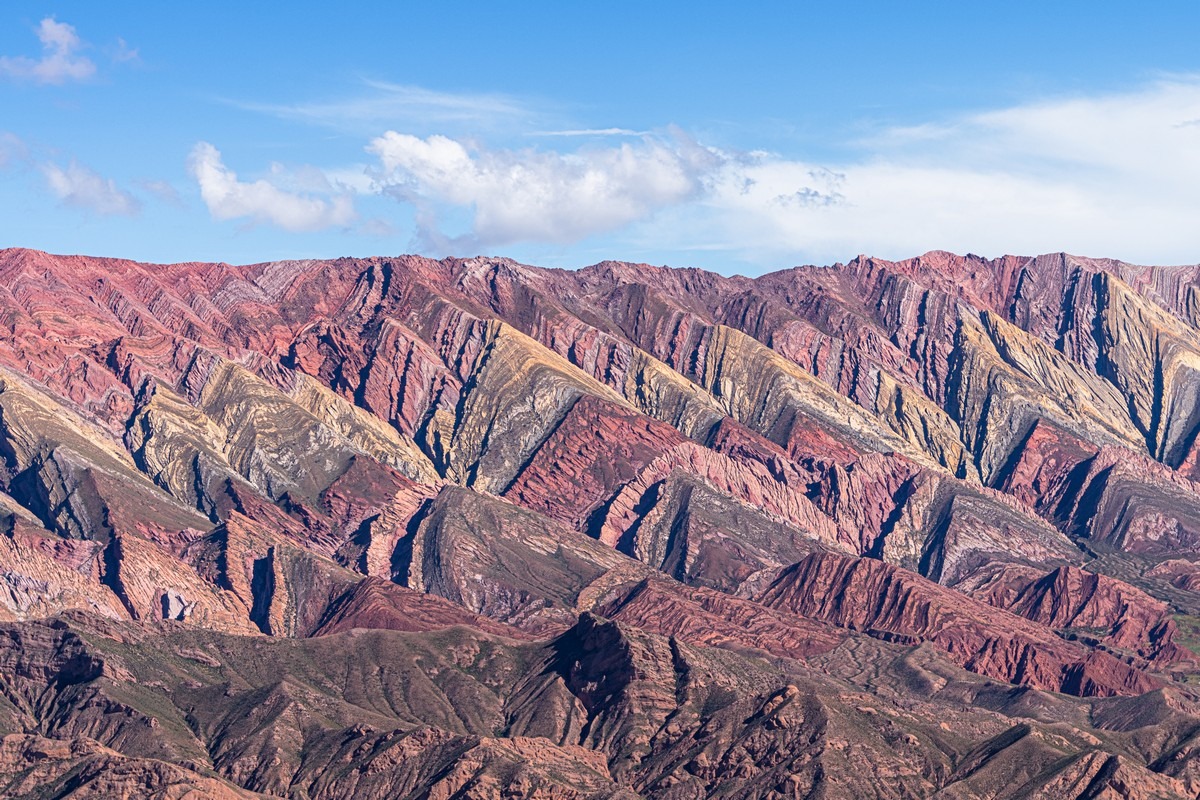
No Photoshop tricks here – just standard post-processing applied identically to both shots:
Evening:
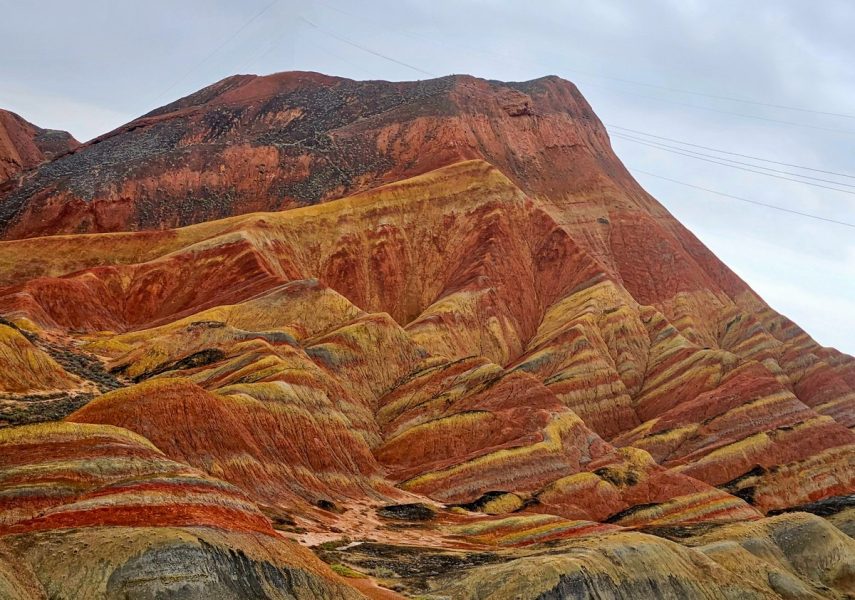
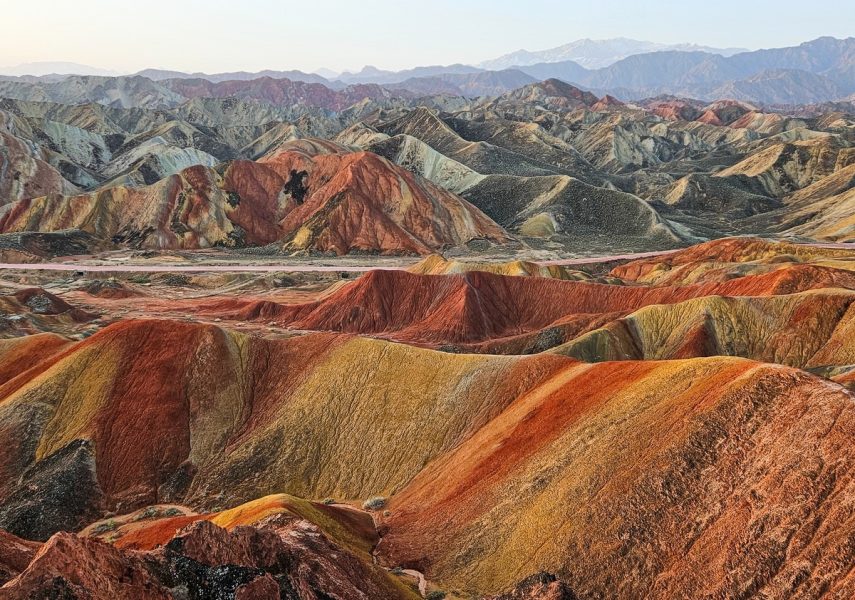
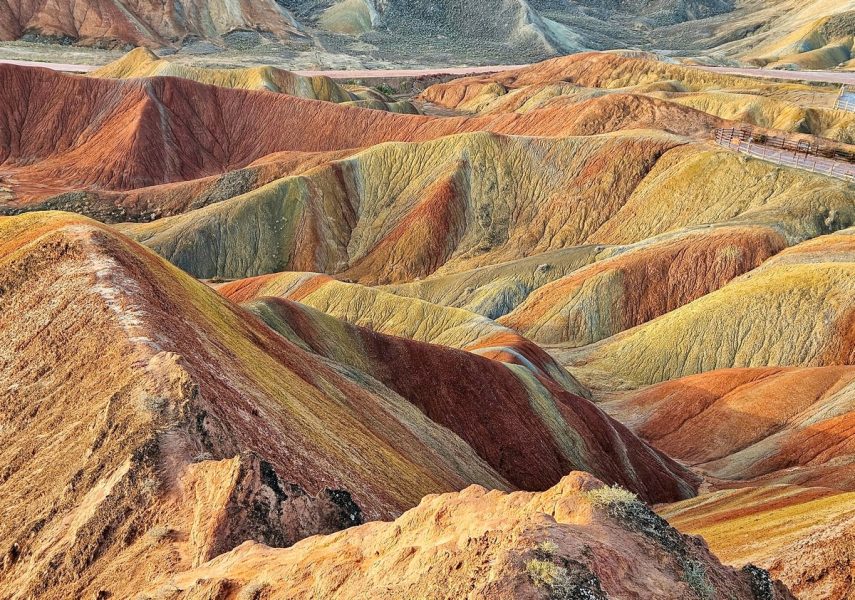
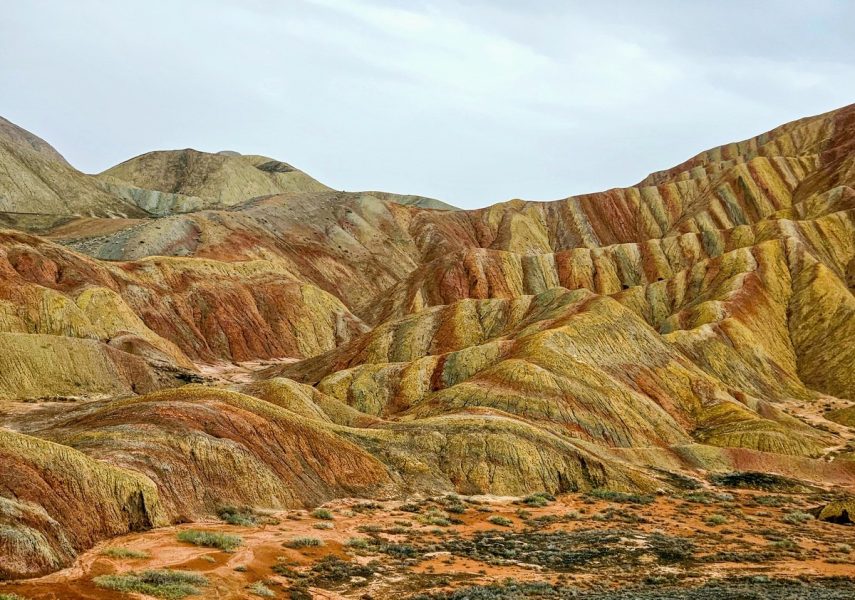
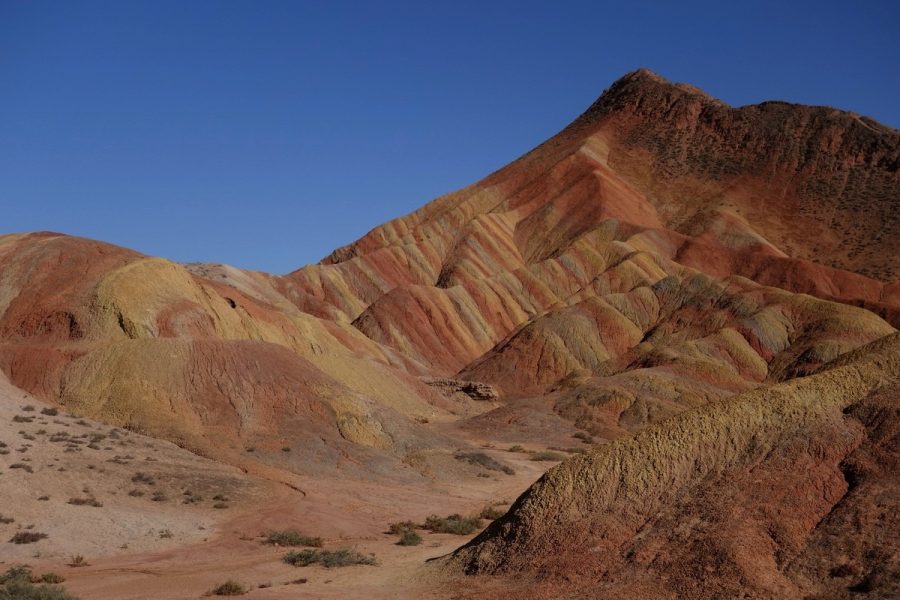
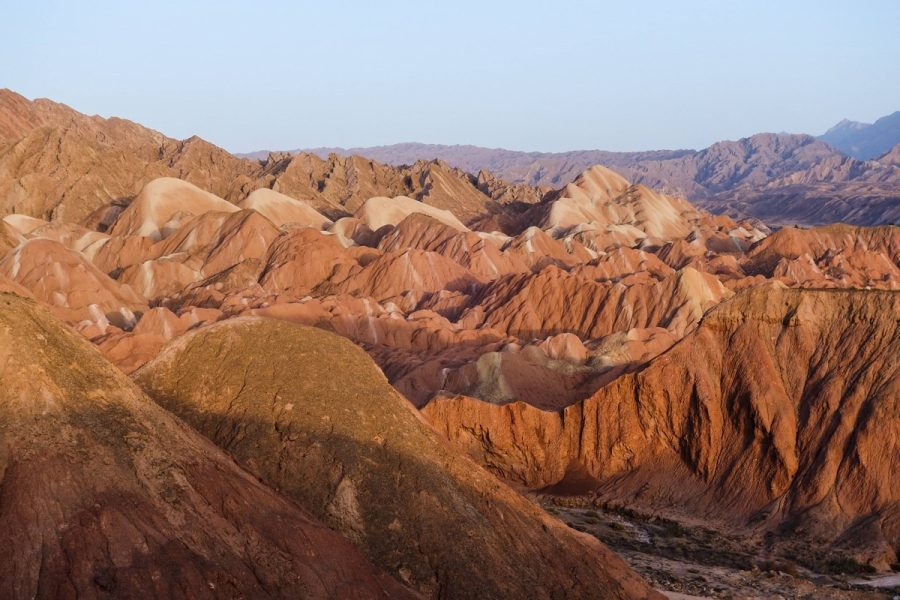
What unpleasantly surprised me is that they don’t let you enjoy the sunset views – which is the whole point! At 6pm they simply close the viewpoint and everyone has to leave. But the rocks look their absolute best at sunrise (if you’re viewing from the east) or sunset (from the west). So if you want to enjoy the world’s most spectacular rainbow rock views, head to Zhangye Danxia in China instead. There they give access well before sunrise so you can catch those early morning colors. And they stay open well past sunset for the same reason. // Here’s my take: there are “developing” countries (like Argentina), there are “developed” countries (self-proclaimed), and then there’s China – a step beyond in a world of its own. Don’t be surprised by that. Just visit once and you’ll understand. (Photos of China’s rainbow mountains are at the link above.)
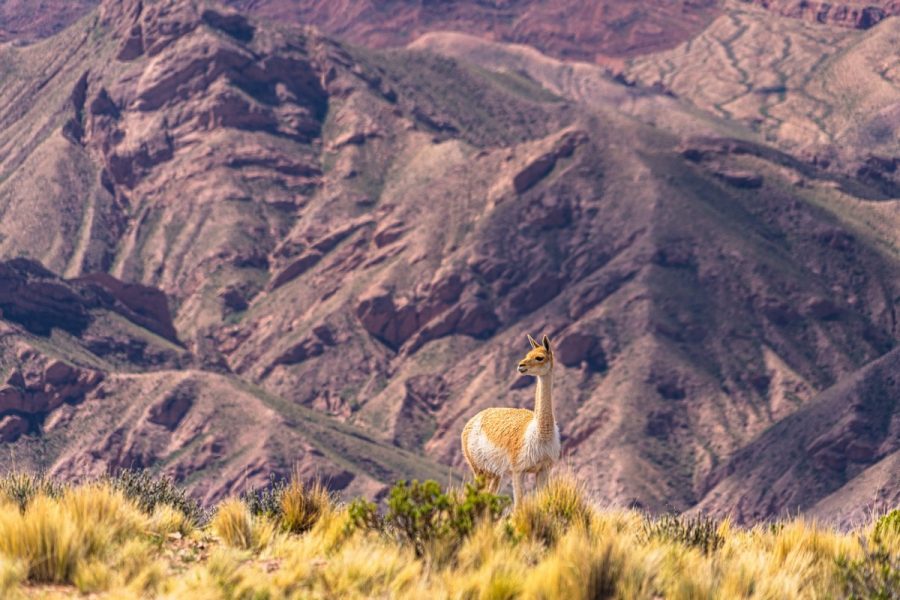
Alright, so as not to completely offend Latin America – here’s something China has none of! ->
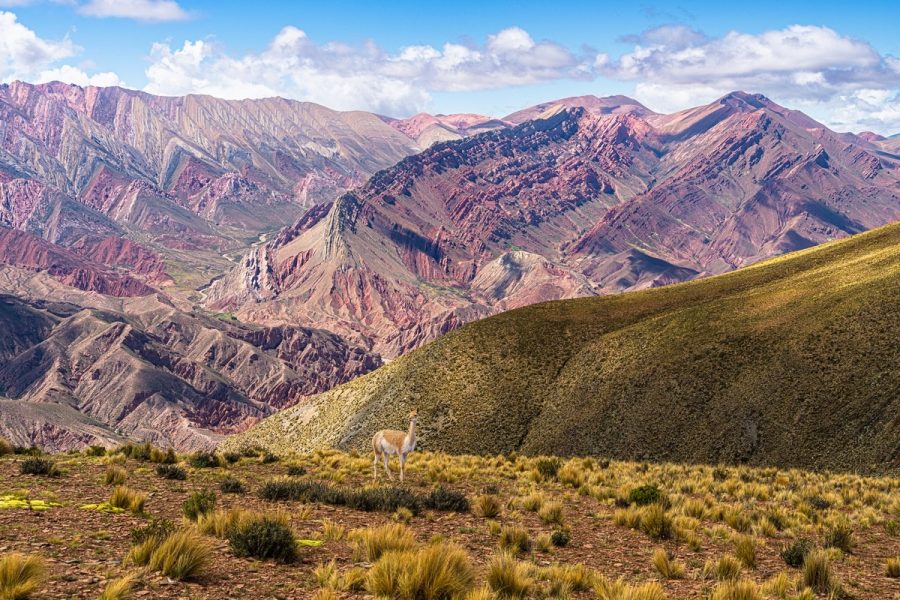
That’s all for today folks; back soon!…
The best photos from LatAm-2026 in high resolution are here.

